
Some nurseries are decorated. An organic modern nursery is grown. This is our complete guide to bringing the warmth of the natural world and the calm of modern minimalism into the smallest, most loved room in your home.
The Warmest Room in the House
Organic modern is what happens when minimalism learns to relax. It keeps the clean lines and uncluttered calm of modern design, then warms every surface with materials straight from nature. White oak with visible grain. Travertine with its soft pitted texture. Boucle you want to sink your hands into. Linen that moves like it is alive. Nothing cold, nothing precious, nothing you are afraid to touch.
The style rests on one simple belief. A room should feel like the outdoors on its best day. Bright but soft. Quiet but full of texture. Every surface invites a hand. That is why it works so beautifully in a nursery. A baby experiences the world through touch first, and an organic modern nursery is a room built for small hands to explore.
There is no sharpness here, and that matters more than it sounds. Furniture edges are rounded. Decor follows curved, pebble like forms. Even the light feels rounder, pooling softly instead of cutting across the room. For parents, that softness reads as safety without a single baby proofing gadget in sight. For babies, it reads as comfort. The room holds you the way you hold them.
It is also a style that forgives real life. The palette is earthy, so a smudge barely registers. The materials are honest, so wear looks like character instead of damage. A travertine side table with a water ring is still beautiful. A boucle chair that has hosted a hundred naps only looks more inviting. This is a nursery designed to be lived in hard, from the first night home through the last of the crib years.
And then there is the parent. You will spend more waking hours in this room than anywhere else in the first year. Night feeds. Early mornings. The long slow work of getting a small person to sleep. The room should take care of you as well. A glider that supports your back. Warm light that does not sting tired eyes. Stone and wood that feel grounding under your feet at three in the morning.
This is one of our design guides, and we placed it right after Japandi for a reason. Where Japandi is quiet and restrained, organic modern is warm and enveloping. Both love natural materials, but this one leans into richness. More texture, more curve, more of nature brought inside. You will find more inspiration in our dreamy nursery decor ideas for the modern mama. More design guides are on the way, each one built the same way. Slowly, carefully, and meant to last.
Build the room from things nature already perfected, and it will never go out of style.
The Key Elements of an Organic Modern Nursery
1. A Curved Crib in Warm Oak
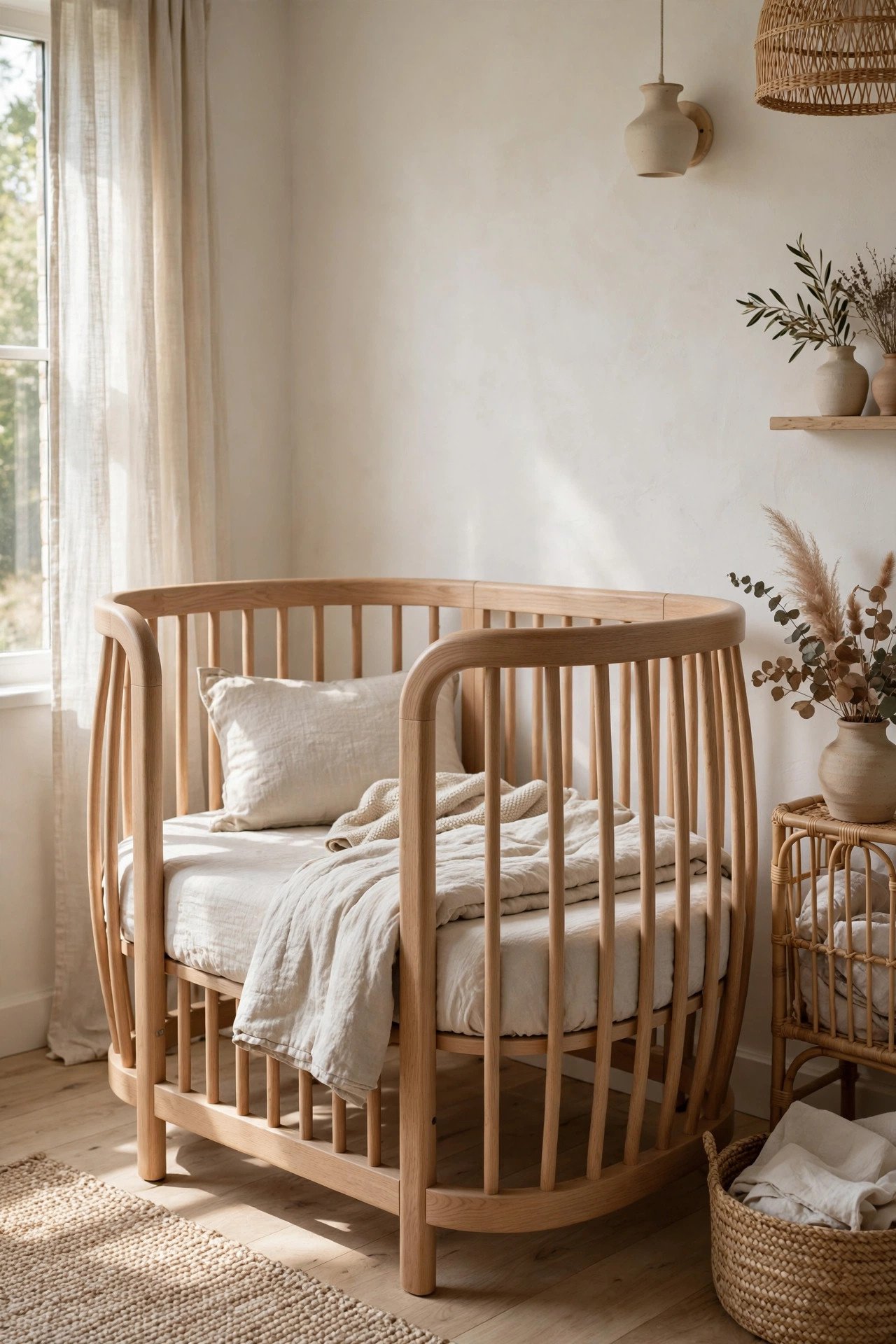
Everything in the room orbits the crib, so this is the piece to get right. In an organic modern nursery, look for a crib with softly curved rails or rounded corners in warm white oak. The curve is doing real work. It softens the largest object in the room and sets the tone for everything around it. A crib with gentle arcs tells the eye that nothing here is sharp, and the whole room relaxes in response.
Finish matters as much as form. Choose a natural oil or matte finish that lets the grain show. White oak has a beautiful open grain that reads as warm without going orange or yellow. Avoid heavy stains and high gloss. The wood should look like wood, not furniture trying to be something else.
Buy the convertible kind if you can. A crib that becomes a toddler bed and then a daybed will serve this room for five years or more. That longevity is the heart of the style. Organic modern is not about buying less for the sake of it. It is about buying well once, and letting the pieces age into the family.
2. Travertine and Natural Stone Accents
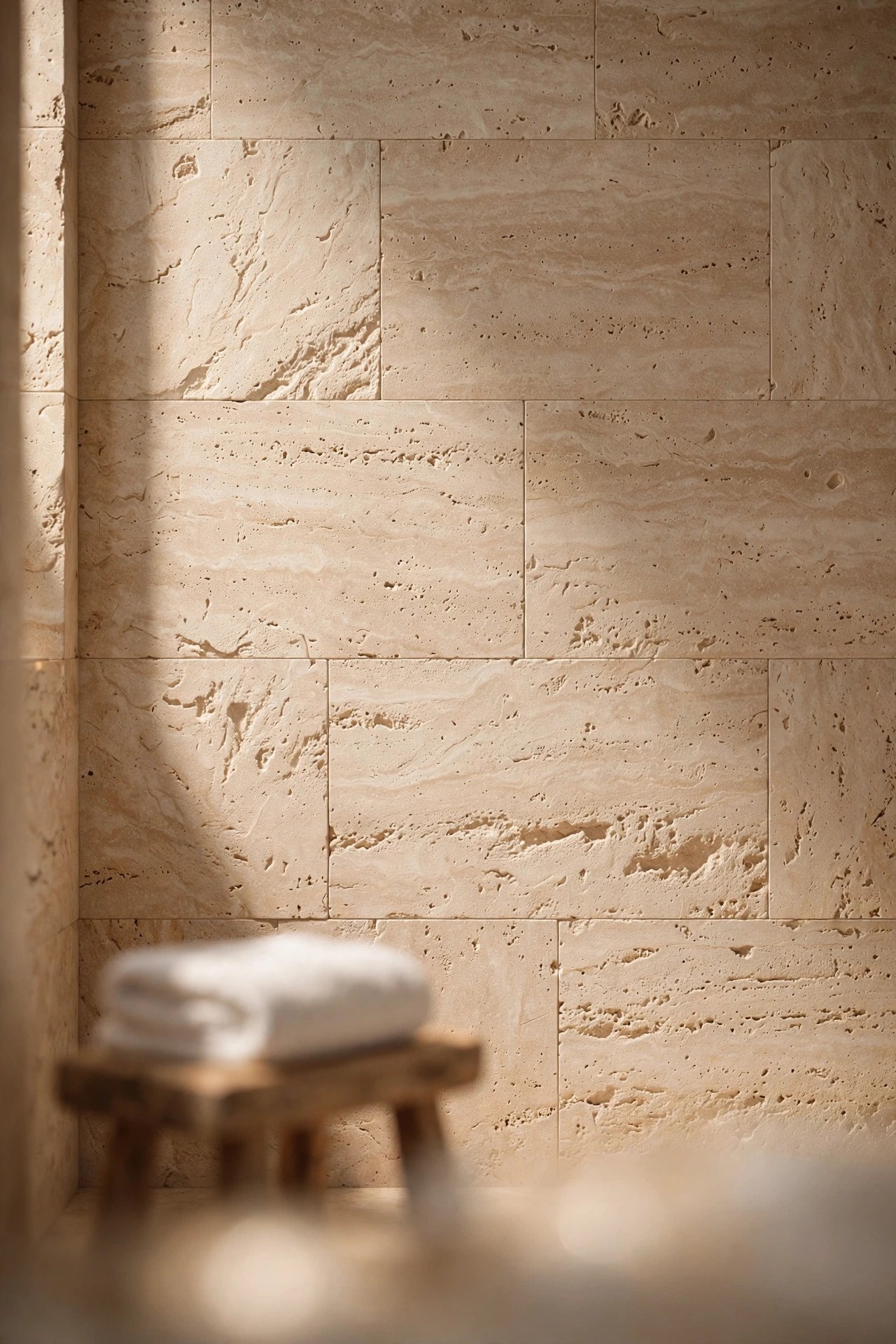
If organic modern has a signature material, it is stone. Travertine brings weight and history into a room that could otherwise float away on softness. A travertine side table beside the glider. A small stone tray on the dresser holding diaper cream and a pacifier. A marble bookend on the shelf. These are the cool, solid notes that keep all the warmth grounded.
You do not need much. Stone is a little like salt. A pinch transforms the dish. One or two pieces are enough to give the room its earthy backbone. Look for honed finishes rather than polished. Polished stone feels formal. Honed stone feels found, like something you picked up on a walk and could not bear to leave behind.
Place stone where hands will find it. The cool touch of travertine against warm wood is one of the great small pleasures of this style. Your baby will reach for it too, which is fine. Stone is sturdy, easy to wipe, and impossible to break by throwing. It was made for this.
3. Layered Boucle and Linen Textiles
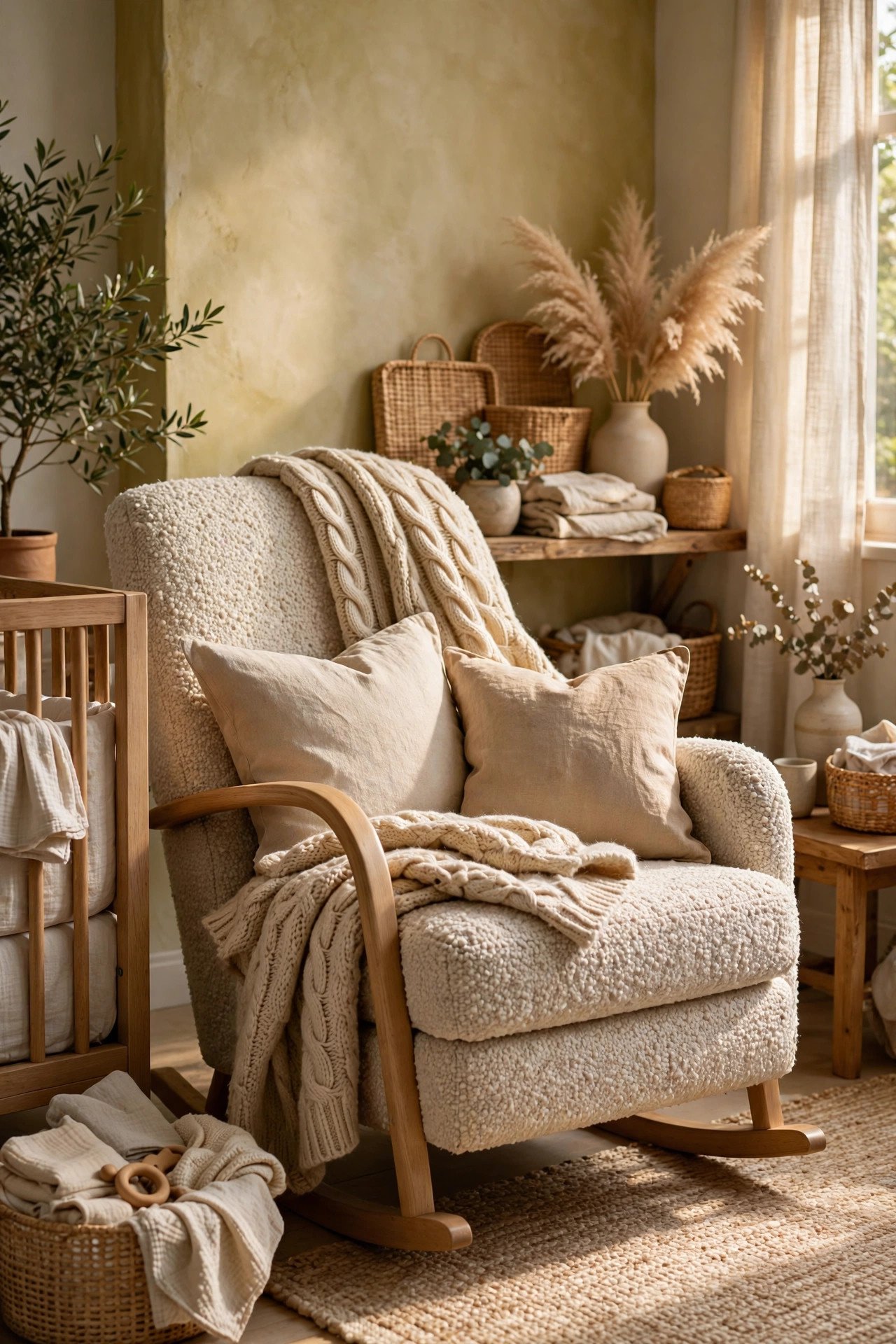
If organic modern has a signature sense, it is touch. This is a style you feel with your hands as much as your eyes. A boucle glider you sink into. Washed linen crib sheets. A chunky wool throw folded over the chair arm. A soft cotton rug underfoot. Each textile is soft in a different way, and that variety is what keeps a neutral room interesting.
Layer texture instead of pattern. Where a traditional nursery might use a printed sheet set and a themed quilt, the organic modern nursery uses four solid textiles in four different weaves. The result reads as rich rather than plain, and it never fights with itself. Our boho nursery decor ideas explore this layering instinct even further, through rattan, jute, and woven textures.
Choose natural fibers wherever the budget allows. Linen, wool, and cotton breathe, which keeps a sleeping baby comfortable through the seasons. They wash well and age gracefully, developing the kind of softness you cannot buy new. Texture is the pattern here. Let it do the talking.
4. White Oak Furniture with Soft Rounded Edges
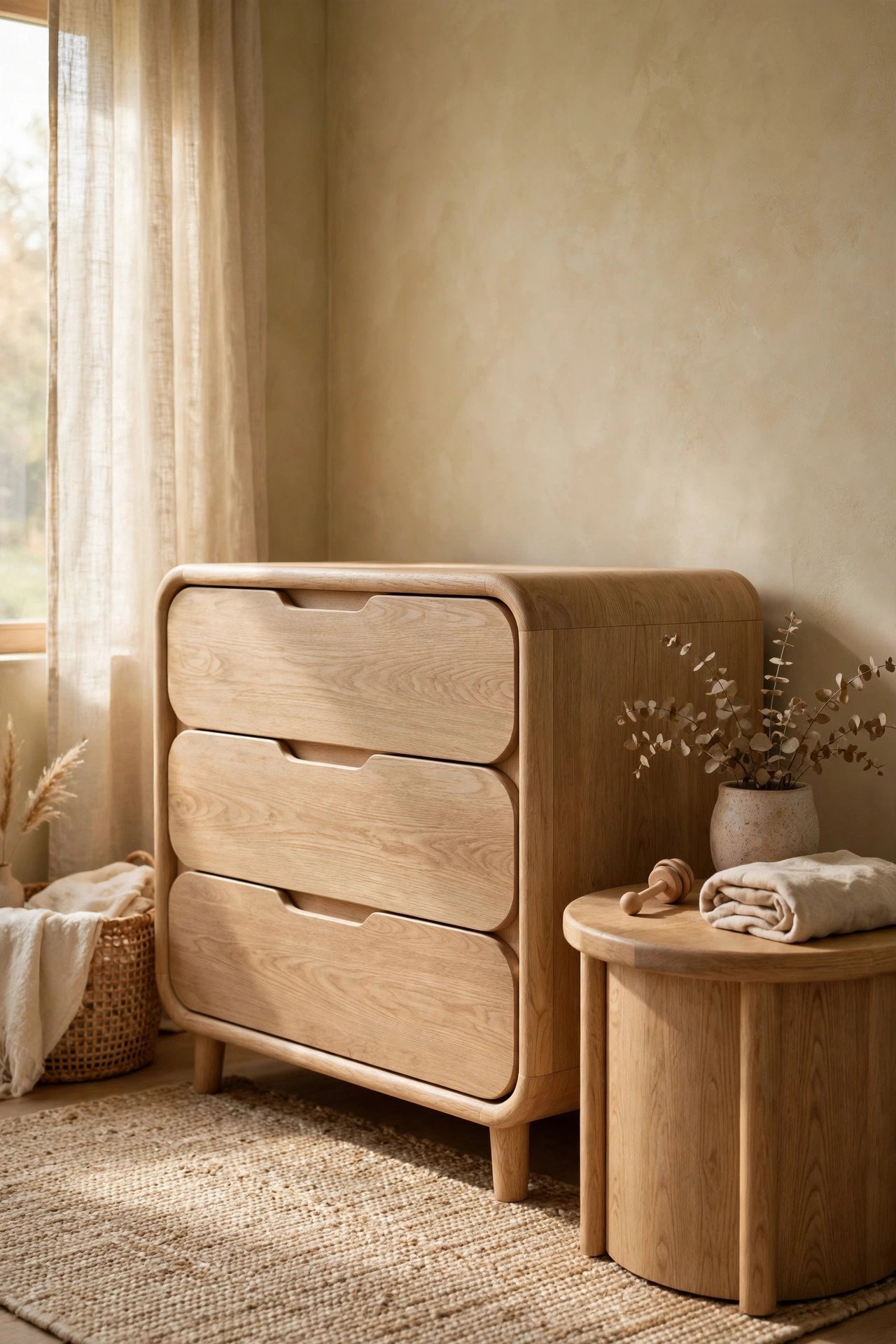
Beyond the crib, every wood piece in the room should share the same language. White oak, soft edges, simple forms. A low dresser with rounded drawer fronts. A small round side table. An open shelf with a curved bracket. When the furniture all speaks oak, the room feels collected rather than decorated, like it grew this way over time.
Keep the silhouettes simple and let the material carry them. A plain oak cube with beautifully rounded corners is more organic modern than an ornate piece in the right wood. The style trusts the material. Grain, warmth, and honest construction are the decoration.
Choose pieces that can leave the nursery one day. A beautiful low dresser works as a changing table now with a contoured pad on top, and as a console in the entryway later. The round side table moves to the living room without a second thought. Nothing here is single use, because nothing here was cheap in spirit.
5. Organic Shaped Decor
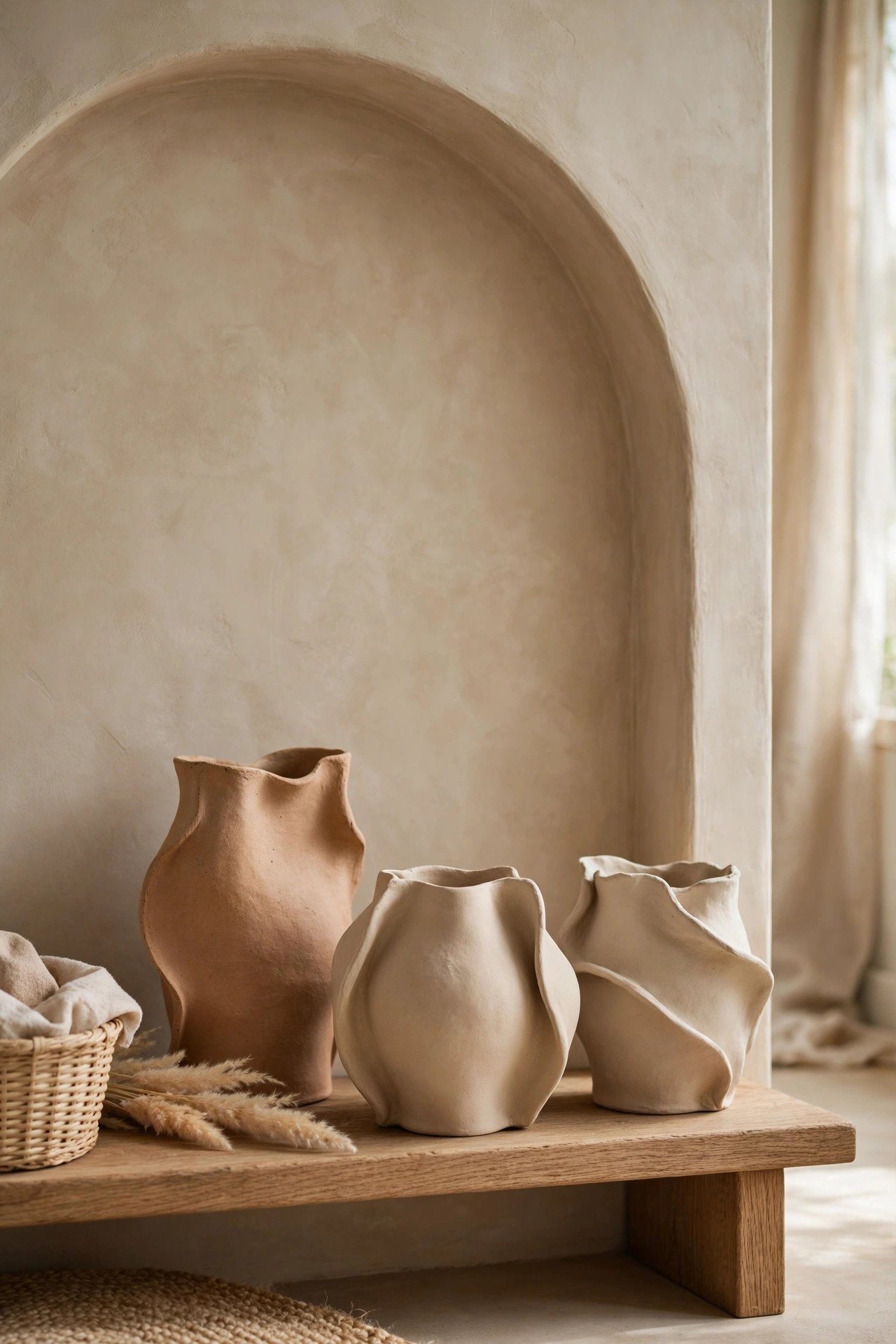
This is where the style gets its soul. Organic modern decor follows the shapes of nature. Pebbles, pods, arches, clouds, rolling hills. A ceramic vase with an irregular hand formed silhouette. A wall hanging in a soft arch. A plush toy shaped like a mushroom or a moon. These forms feel ancient and comforting, like things a child would draw from memory.
Restraint still applies. Choose three or four objects and give each one room to breathe. A single sculptural vase on the dresser says more than a crowded shelf. The eye needs empty space around a curved form to appreciate the curve. Our beautiful animal nursery designs are a lovely companion here if you want to bring gentle creature shapes into the mix.
Mix handmade with refined. A lumpy handmade ceramic beside a smooth stone tray is the whole style in miniature. Perfection next to imperfection. That tension is what makes the room feel alive instead of staged.
6. Soft Ambient Lighting
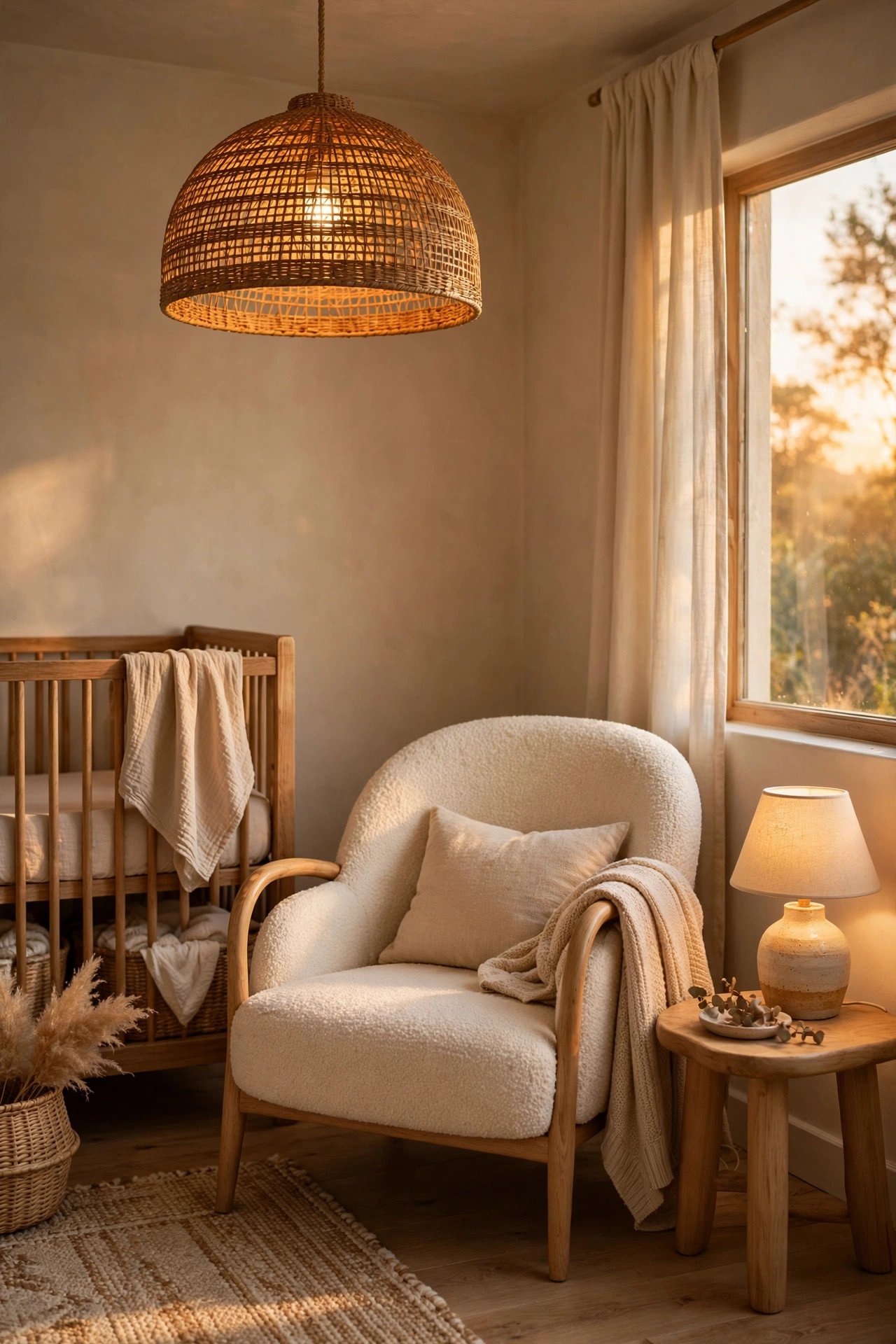
Light is a material in organic modern design, not just a utility. The goal is a room that glows like late afternoon, all day long. Start with a statement pendant in a natural material. A woven rattan dome. A paper globe. An alabaster shade that diffuses light into something you can almost touch. Hung low over the center of the room, it becomes the jewelry of the space.
Layer from there. A ceramic table lamp with a linen shade on the dresser for night feeds. A small warm lamp near the glider. A dimmer on everything, because overhead light at full strength has no place in a calm room. Keep bulbs warm, around 2700K, which is the color of golden hour.
What you are avoiding is the single bright ceiling light that most nurseries rely on. It flattens every texture you worked so hard to layer. Soft pools of warm light in different corners make boucle look deeper and oak look richer. Light is the finish on every other material in the room.
The Palette
Every organic modern nursery is painted from the same small box of earthy colors. Learn their names and where each one lives, and the room almost styles itself.
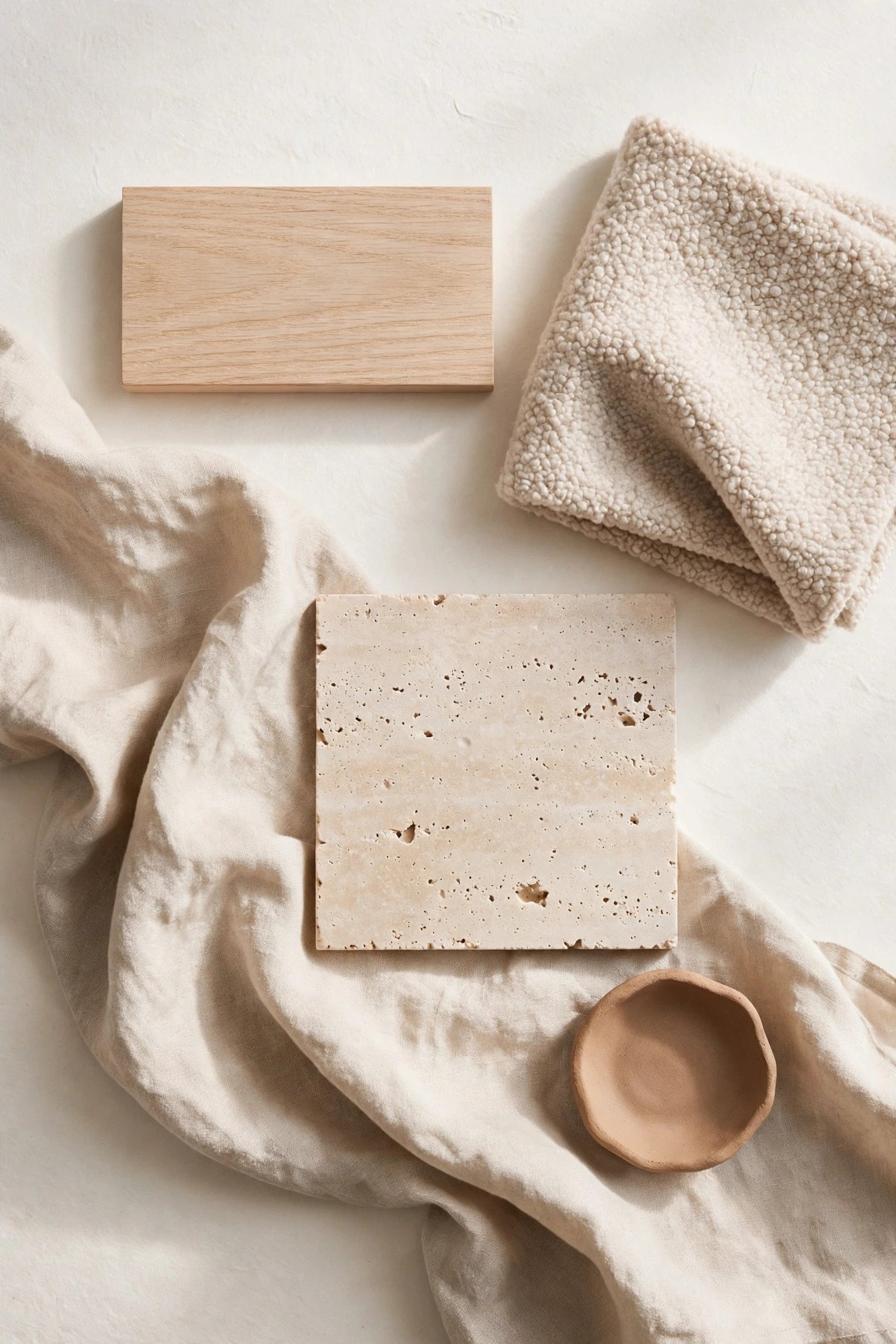
Linen White goes on the walls. It is white with warmth in it, like sun dried sheets. It keeps the room bright without the chill of a true white. If your room gets little natural light, this color will forgive that.
Oat is for the large textiles. The rug. The glider. The curtains. It is a step deeper than the walls, which gives the room gentle dimension without any real contrast.
Camel belongs to leather and mid tone wood accents. A camel leather pouf. The warm undertone of white oak in lamplight. It is the rich middle note that keeps the pale palette from feeling washed out.
Clay is your accent, used sparingly. A handmade ceramic vase. A folded throw. A small stack of books on the shelf. It brings the warmth of earth into the room and keeps all the neutrals feeling alive.
Travertine is less a color than a presence. The creamy beige of natural stone, with its soft pits and veins. It shows up in the side table, the tray, the bookend. It is the cool grounded note that makes the warm notes sing.
Soft Black appears in the smallest doses. A thin metal frame. The base of a lamp. A small sculptural object on the shelf. Just enough dark to give the pale palette something to lean against.
The rule is simple. Walls and big pieces stay in the first three colors. The last three show up in objects you can hold in one hand. For more nursery color inspiration, browse our earthy pink and sage nursery palettes.
Nature never makes anything beige and boring. Neither should you.
How to Style It, Step by Step
Step 1. Empty the room and paint it Linen White. Start with a blank canvas, literally. Two coats of a warm white with a matte or eggshell finish. Warm walls are the foundation of everything that follows, and they make every natural material you add look richer.
Step 2. Lay down the rug. A large textured rug in oat or natural wool anchors the room and defines the play area to come. It should be big enough that the crib and the glider both touch it. The rug is the island everything else gathers around.
Step 3. Place the crib. Put the curved oak crib against the longest wall, away from windows and cords. Leave breathing room on three sides if you can. A crib floating with space around it reads as intentional. A crib crammed in a corner reads as an afterthought.
Step 4. Build the nursing corner. This is the second anchor of the room. Boucle glider, travertine side table, warm ceramic lamp, folded throw within reach. Arrange it the way you will actually sit at three in the morning. Everything you need should be reachable without standing.
Step 5. Add the oak storage and stone accents. Low dresser for clothes and diapers, doubling as the changing station. Then place your one or two stone pieces where hands will find them. Step back and check that every object has a home, and that wood and stone are talking to each other across the room.
Step 6. Hang the pendant, place the decor, then edit. Woven or alabaster pendant in the center. Three or four organic shaped objects, each with breathing room. Then take one thing away. Whatever you remove, the room will be better for its absence. That final edit is the most organic modern thing you will do.
Designer Tips
Let the materials be the pattern. When every surface has texture, you do not need prints. Grain, weave, pits in stone, and the nub of boucle give the eye plenty to explore. Pattern would only compete.
Cap the palette at five tones. Count them on one hand as you shop. If a piece introduces a sixth color, it does not come home. This one discipline does more for the room than any single purchase.
Avoid anything shiny. High gloss finishes, polished chrome, and lacquered surfaces fight the softness you are building. Matte and honed is the rule on every surface, from walls to drawer pulls.
Spend on the crib and the glider, save on the decor. These are the pieces your family touches every day and keeps longest. A beautiful oak crib and a supportive boucle glider with simple decor around them beat budget seating surrounded by expensive styling.
Avoid themed nursery sets. The matching crib bedding, wall border, and lamp in one cartoon motif is the fastest way to undo everything. Solid natural textiles will look better on day one and on day one thousand.
Curve everything you can. Rounded crib rails, an arched mirror, a pebble shaped pouf, a globe pendant. Curves are the visual signature of this style. Every curve you add makes the room feel more organic and less boxy.
Add one living thing, out of reach. An olive tree in a clay pot or a trailing pothos on a high shelf brings the outdoors in for real. Keep it where small hands cannot reach it, and choose a heavy pot that cannot tip.
Avoid matching furniture sets. A crib, dresser, and shelf all in identical oak from one box reads as a showroom. Mix makers and eras within the same material family. Cohesion comes from the wood tone, not the brand.
Finishing Touches to Shop
This guide contains affiliate links. If you buy through them, we may earn a small commission at no extra cost to you.
Once the bones of the room are in place, a few considered pieces complete it. Each one below earns its place by being beautiful, useful, and built to stay. And if you like to mark the seasons softly without disturbing the calm, our 5 Must Have Amazon Fall Decor Finds roundup includes a few textures that layer into this palette nicely.
White Oak Convertible Crib with Curved Rails. Softly rounded silhouette in warm white oak, converts from crib to toddler bed to daybed. The piece the whole room is built around.
Travertine Side Table. Honed natural stone with beautiful pitting, the perfect perch for a bottle, a book, and a warm lamp. Cool to the touch and impossible to outgrow.
Boucle Swivel Glider in Oat. Deep seat, gentle glide, nubby oatmeal boucle that hides a multitude of sins. You will spend hundreds of hours here. Make them comfortable.
Washed Linen Crib Sheet Set in Warm White. Breathable, soft from the first wash, and softer every wash after. The honest textile this style was made for.
Handwoven Wool Rug in Oat and Camel. Warm underfoot, naturally textured, and quiet under a glider. Size up. A rug that is too small shrinks the whole room.
Ceramic Table Lamp with Linen Shade. Hand formed base in a clay tone, topped with a natural linen shade that diffuses light into pure golden hour.
Organic Modern Nursery Q and A
Is organic modern just beige? Will the room look boring?
Only if you forget the texture. Beige and boring happens when a room has flat colors and flat surfaces. The organic modern nursery is the opposite. Layer nubby boucle, veined stone, open grained oak, and washed linen, and the neutrals start to glow. If the room ever feels flat, the answer is never more color. It is more texture.
Can I do this on a budget?
Yes, and the style is kinder to budgets than it looks. The expensive look comes from materials, not labels. A simple oak look crib, a secondhand travertine style side table, and linen look cotton instead of pure linen get you most of the way there. Paint is the cheapest transformation there is, and Linen White on the walls does half the work alone. Spend on the two pieces you touch daily, the crib and the glider, and save everywhere else.
My nursery is tiny. Does this style work in a small room?
It works beautifully in a small room. Rounded furniture, pale warm walls, and a restrained palette are exactly how you make a small room feel larger. Curves keep the eye moving instead of catching on corners. Skip the separate changing table and use the dresser top. Choose the pendant over a floor lamp. Every choice that saves visual space saves real space too.
I already own furniture that is not organic modern. Can I mix it in?
Almost always, yes. A white dresser you already own fits the palette with wood knobs and a stone tray on top. A hand me down armchair works under a boucle throw. What to watch for is material and tone, not style label. If the piece is matte, warm, and natural feeling, it belongs. If it is glossy, cold, or brightly colored, it will fight the room.
Is stone safe around a baby?
Stone itself is wonderfully baby friendly. It is sturdy, easy to wipe clean, and too heavy to pull over. The rules are placement and edges. Keep stone pieces on stable surfaces a cruising baby cannot reach, or choose pieces heavy enough to stay put. Avoid sharp chiseled edges at toddler height and favor honed, softly rounded forms. Like everything in the nursery, anchor tall furniture and do the standard safety checks.
Will this style feel dated in a few years?
That is the best part. Organic modern is built from materials humans have loved for centuries. Oak, stone, linen, and wool do not have trend cycles. A room made of them looks current today and will look current when your baby starts school. Trends come and go in colors and motifs. Nature does not date.
Until the Next Guide
An organic modern nursery is not finished in a weekend. It is gathered slowly, one considered piece at a time, and it gets better as it gets lived in. Start with the walls and the light. Add the crib and the glider. Let the stone and the texture arrive when they are right.
This is one of our design guides, and more design guides are on the way. Each one follows the same idea. Fewer, better choices. Rooms that calm the people in them. If you love this kind of warmth, our warm minimalist living room ideas for fall carry it through the rest of the house. We hope this one brings a little more of the outdoors into your loudest, most wonderful days.