
Some kitchens are workspaces. A European contemporary kitchen is a gathering place. This is our complete guide to bringing old world craft and modern restraint into the room where everyone ends up anyway.
The Room Everyone Ends Up In
European Contemporary is the meeting point of old world craft and modern restraint. From Europe come the materials. Marble with real veining. Oak with visible grain. Brass that mellows with age. From the contemporary side comes the discipline. Clean lines. Hidden clutter. Nothing fussy. Put them together and you get kitchens that feel elegant and lived in at once. Refined, never stiff. Modern, never cold.
It is a style built on the idea that the kitchen is the heart of the home, not a workstation. In Europe, kitchens are where people linger. Morning coffee stretches. Dinner prep becomes the evening’s entertainment. Children do homework at the island while dinner simmers. The room is designed for that lingering. A deep island with room for stools. Open shelves with beautiful things. Light that flatters at every hour. Nothing here is optimized for speed, because speed was never the point.
A contemporary update keeps the romance from tipping into fuss. Traditional European kitchens can get heavy. Dark beams. Ornate carving. Fussy tile. The contemporary hand lightens all of it. Flat front oak cabinets instead of raised panels. One dramatic marble instead of patterned stone everywhere. Brass in small confident doses instead of gold on everything. The result feels collected over decades but functions like it was designed yesterday.
There is a practical side too. European kitchens are built around how people actually cook. Stone that can take a hot pan. Wood that forgives a knife mark. Open storage for the things you reach for daily and closed storage for everything else. This is a kitchen that expects to be used hard and to look better for it. Marble etches. Brass patinas. Oak deepens with age. The materials wear the way good leather does, and that wearing in is part of the design.
And then there is the light. A European contemporary kitchen loves natural light the way a garden loves sun. Pale walls bounce it. Marble glows in it. Brass catches it and throws it back across the room. If your kitchen has a window, this style will make the most of it. If it does not, warm layered lighting does the job beautifully. Either way, the room should feel like late afternoon in a Provençal farmhouse, even at seven in the morning.
This is one of our design guides, and the kitchen felt like the right next room. It is where the family gathers whether you planned it or not, so it deserves to be beautiful on purpose. If you love warmth that flows from room to room, our warm minimalist living room ideas for fall carry the same feeling into the open plan beyond the kitchen. More design guides are on the way, each one built the same way. Slowly, carefully, and meant to last.
Cook the way Europeans do, slowly and with company, and the kitchen will become the room you never want to leave.
The Key Elements of a European Contemporary Kitchen
1. Calacatta Marble with Honest Veining
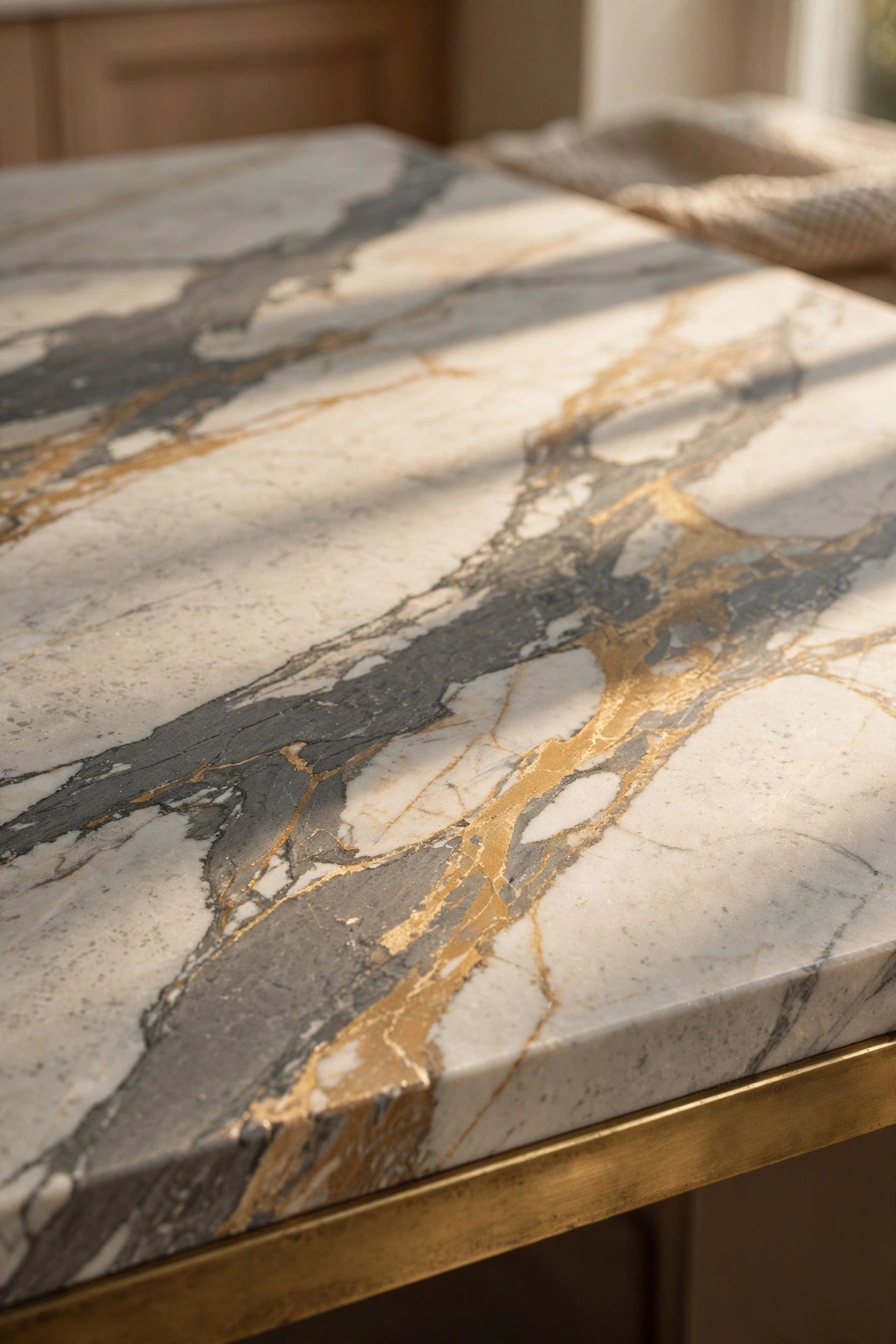
Marble is the soul of this style, and Calacatta is its most beautiful voice. Look for slabs with bold, dramatic veining in soft grey and gold against a warm white ground. The veining is the art. It should look like a landscape seen from above, never like a uniform pattern. Book matched slabs on an island are the dream. One strong stone moment beats three timid ones.
Choose a honed finish, not polished. Honed marble has a soft, low sheen that feels like stone should feel. Polished marble looks like a hotel lobby and shows every etch mark. Honed marble forgives. It also photographs beautifully and never glares under the pendants. If the budget is tight, use the marble where it counts most. The island. The backsplash as a full slab. The pastry board that lives on the counter.
Now the honest part. Marble etches when lemon juice sits on it. It stains if red wine lingers. Seal it yearly and wipe spills the way you would in any kitchen you actually cook in. Then relax. The patina that builds is the whole point of the style. A European kitchen is not meant to look untouched. It is meant to look loved.
2. Warm Oak Cabinetry
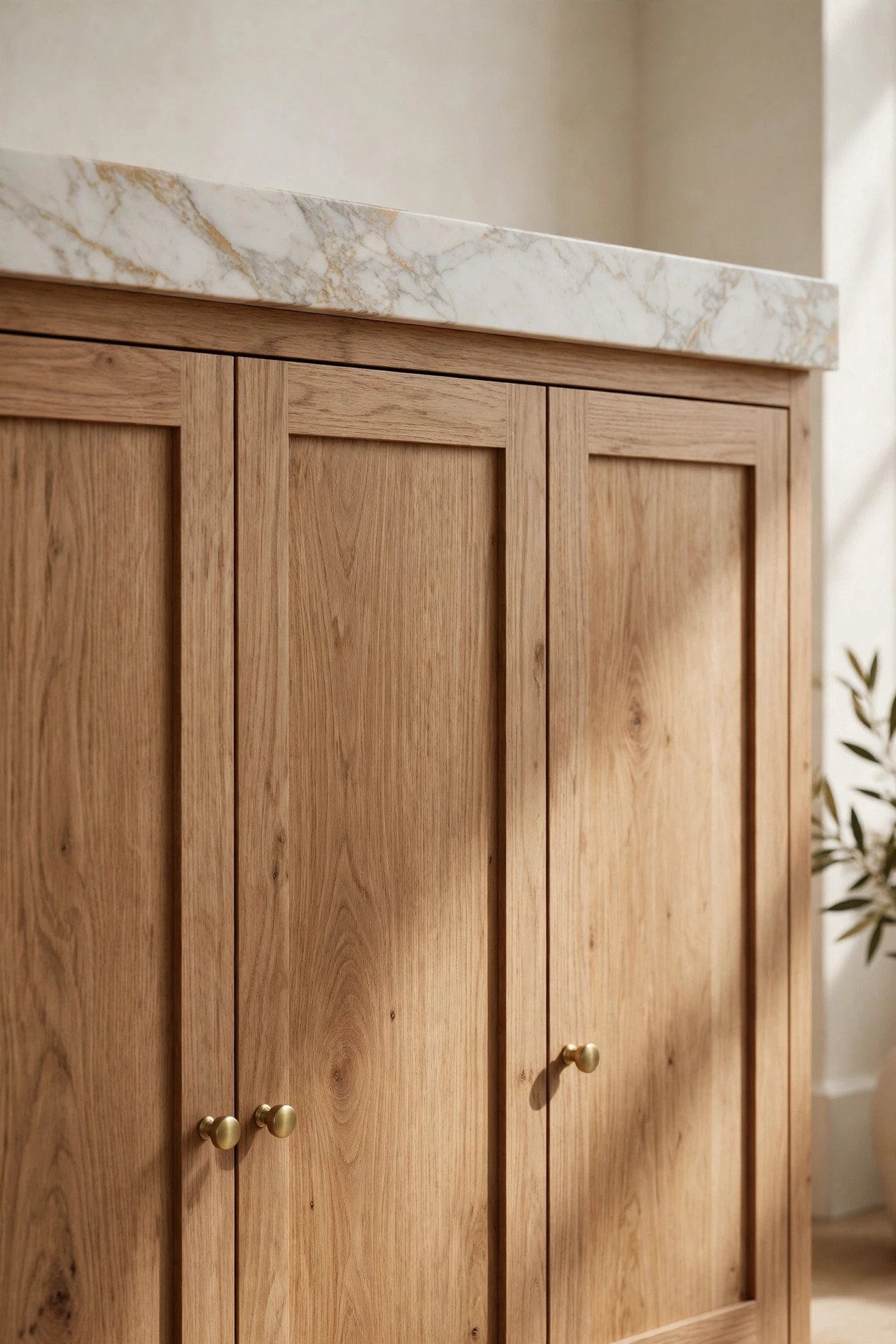
This is where the contemporary half holds up its end. While the European side brings romance, the cabinetry stays disciplined. Flat front doors in white oak or French oak. No raised panels. No ornate molding. Clean planes of wood with the grain doing all the talking. The oak brings warmth that painted cabinets never can, and it never needs repainting.
Finish matters enormously here. Choose a matte seal that lets the grain show through. The color should sit in the middle range, neither pale Scandinavian nor dark traditional. Think of the color of good bread crust. That warmth is what makes the whole kitchen glow. Keep the upper cabinets minimal or skip them entirely on one wall. Open shelves or a single beautiful window do more work than a wall of closed boxes.
Let the wood be the pattern of the room. With flat fronts and visible grain, you do not need decorative tile or busy stone to create interest. The grain moves and shifts across every door. Stand back and the whole wall of cabinetry reads as one calm, warm surface. That calm is what lets the marble and the brass sing.
3. Brushed Brass Details
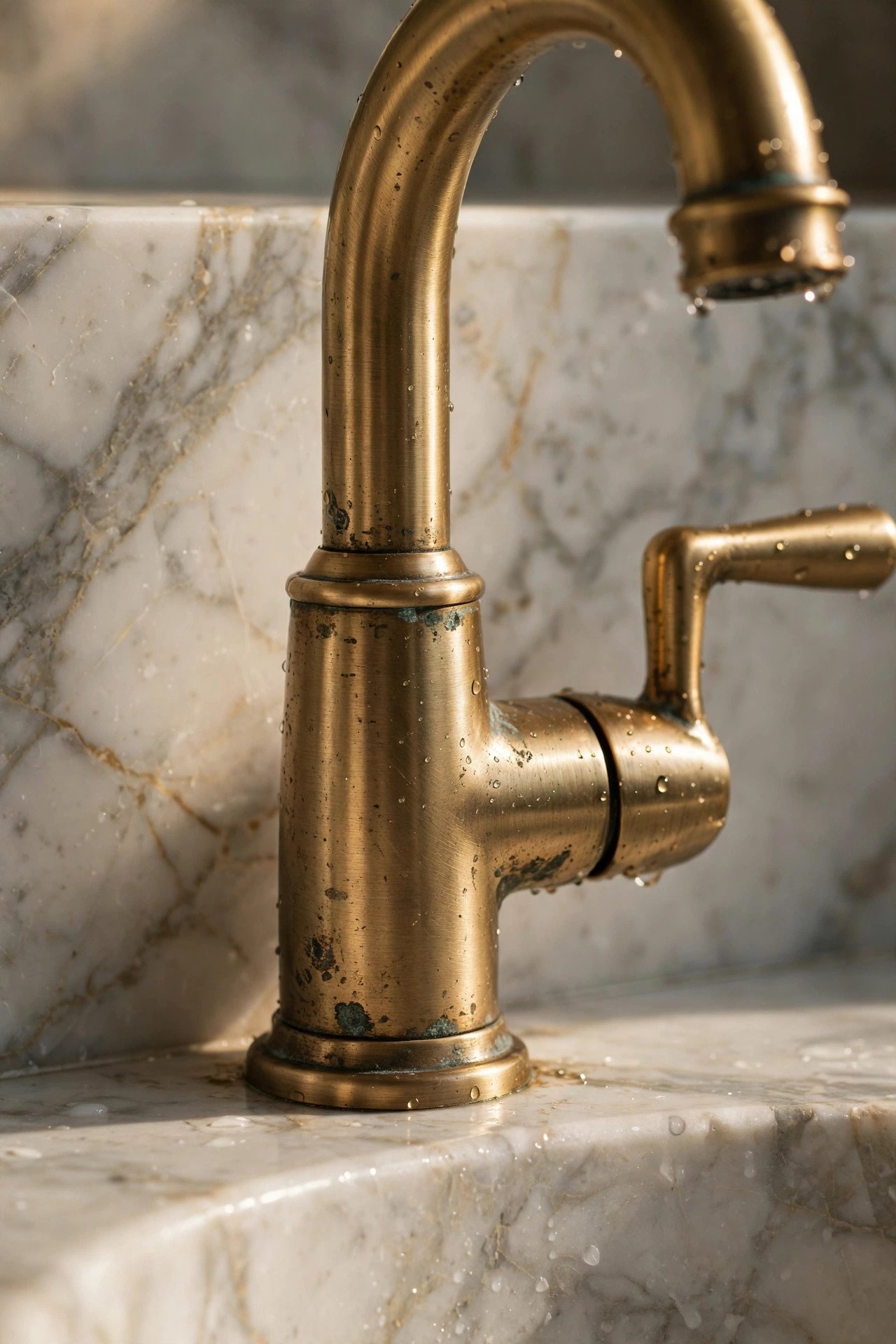
Brass is the jewelry of the European contemporary kitchen. It appears in small, confident doses. The faucet. The rail under the shelf. The knobs or the edge pulls. The pendants. Each one catches the light and warms the whole room. Without brass, the palette of oak and marble could feel flat. With it, everything glows.
Go brushed, never polished. Polished brass is formal and fussy. It demands constant attention and looks wrong the moment it spots. Brushed brass has a soft, low luster that feels handmade. It also ages beautifully. Unlacquered brass will patina and darken in the places you touch most, and that living finish is deeply European. If you prefer it bright, a quick polish brings it back. Either way, it forgives.
Keep the brass consistent and keep it small. Faucet, hardware, rail, light accents. When every golden note matches, the room feels composed instead of decorated. One mixed metal is allowed if it is honest, like black on the range, but let brass be the star.
4. The Limewash or Stone Backsplash
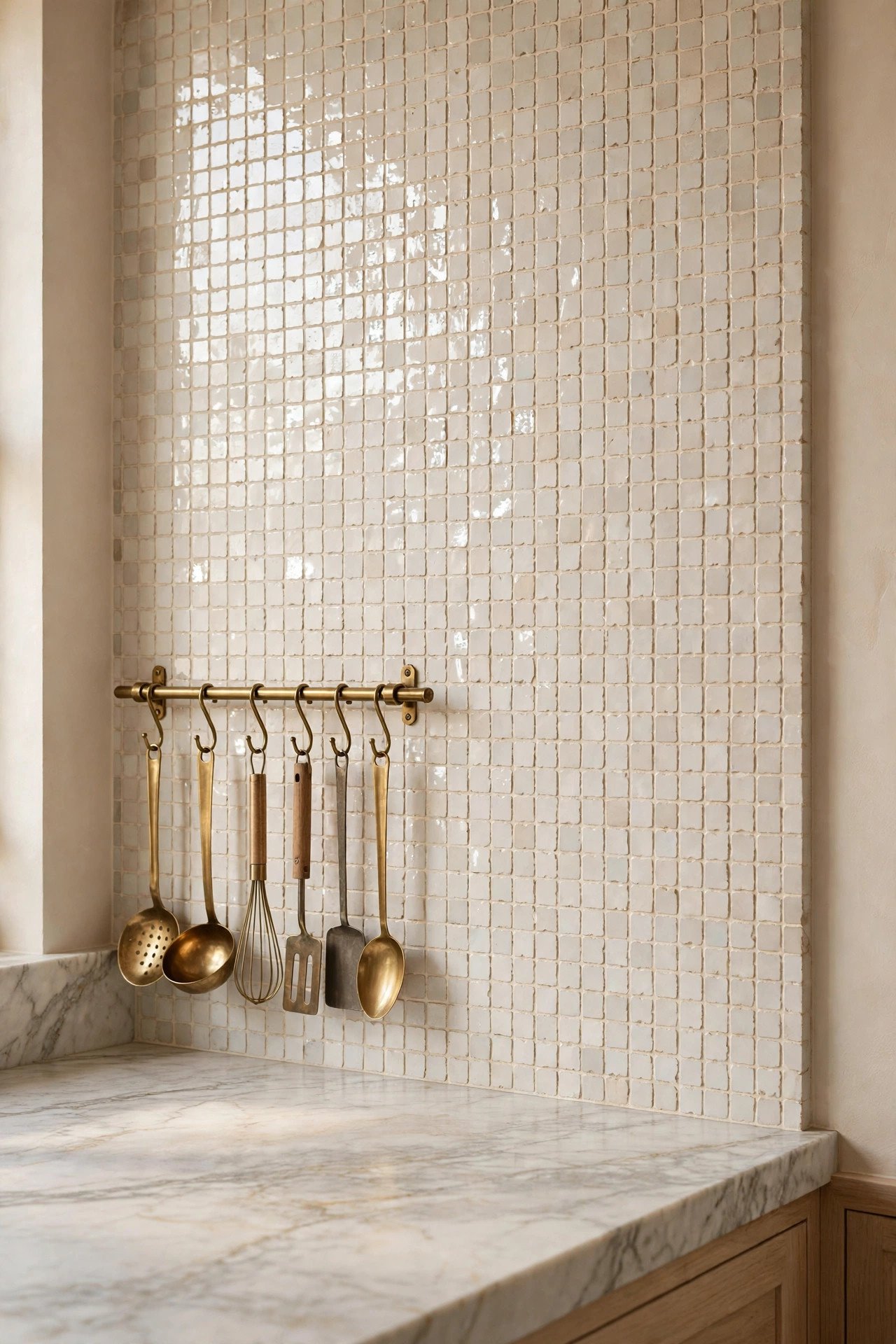
The wall behind the range is the canvas of the kitchen, and this style treats it with restraint. The classic moves are a full slab of the same marble as the counters, handmade zellige tile in a soft white, or limewash plaster sealed for kitchen use. All three share one quality. Texture over pattern. The eye reads movement in the surface instead of a printed design.
A full marble slab backsplash is the most dramatic choice and the easiest to live with. No grout lines to scrub. One continuous piece of art. Zellige is the warmer, more handmade option. Each tile is slightly uneven, so the wall shimmers as light moves across it. It feels like it was made by hands, because it was. Limewash is the most understated. A soft plastered wall in warm white that lets the range and the marble take center stage.
Whatever you choose, run it with intention. A backsplash that stops awkwardly mid wall looks unfinished. Take it to the ceiling behind the range, or run the slab wall to wall. And keep the styling on the open shelves seasonal and simple. Our pumpkin decor ideas that actually look sophisticated show how a few small gourds can mark the season without disturbing the calm.
5. Arches and Soft Curves
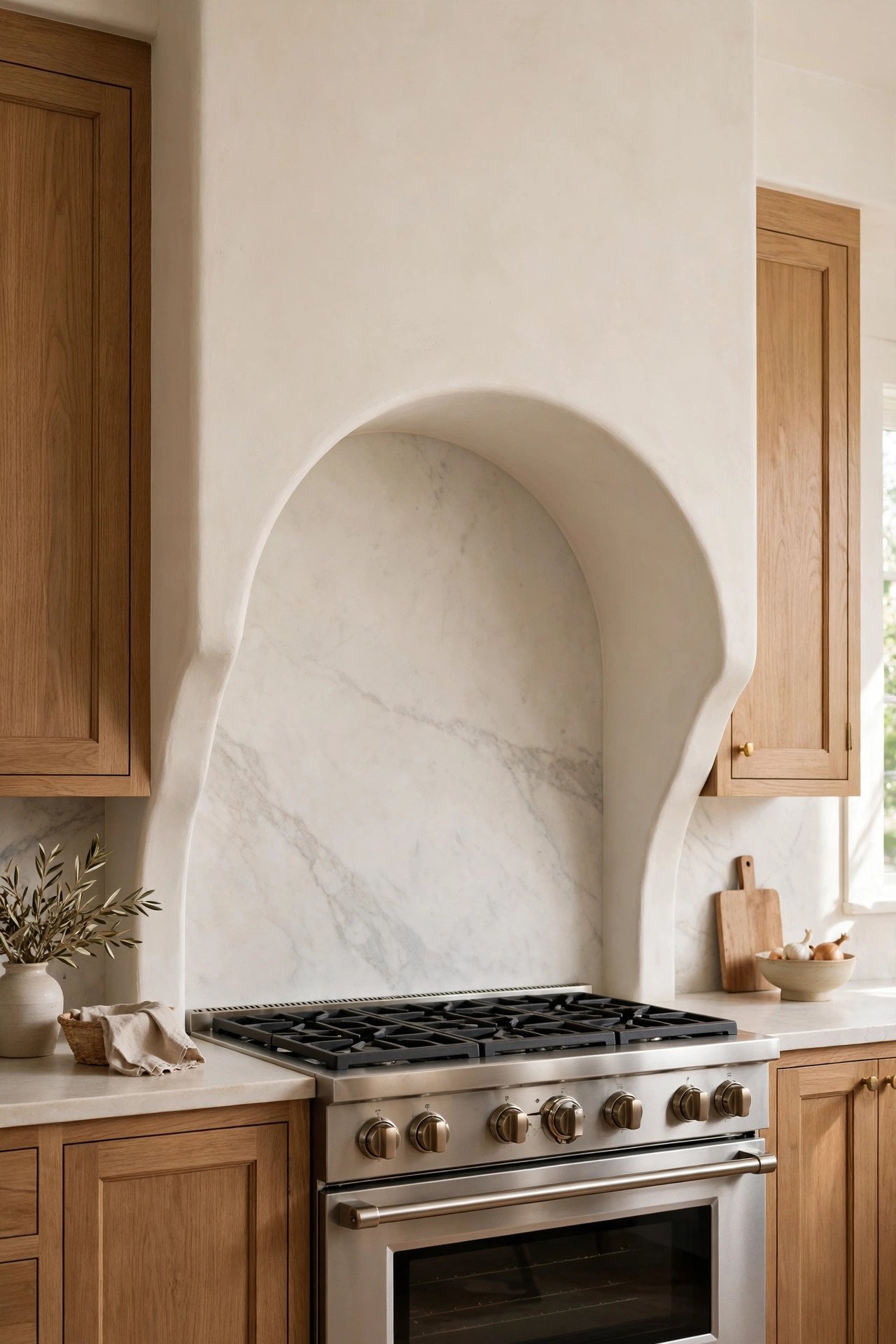
The arch is the signature shape of European design, and the contemporary kitchen uses it to soften all its straight lines. A plastered range hood with an arched profile. An arched niche in the backsplash for olive oil and salt. A curved island corner instead of a sharp one. A doorway with a gentle arch leading to the pantry. Each curve is a small kindness in a room full of rectangles.
Curves do real visual work here. Kitchens are relentlessly rectilinear. Cabinets, appliances, tile grids. Without a counterpoint, the room can feel rigid. One arch changes the whole feeling. It borrows from old European farmhouses and cathedrals, and it makes the contemporary lines feel intentional rather than severe. The contrast between the crisp cabinetry and the soft arch is the entire aesthetic in miniature.
You do not need to renovate to get this. A curved range hood cover can be added over an existing hood. An arched mirror leaned on the counter softens the wall. Even bar stools with curved backs and a round jute rug under the island bring the geometry in. Start with one curve and feel how the room exhales.
6. Sculptural Statement Lighting
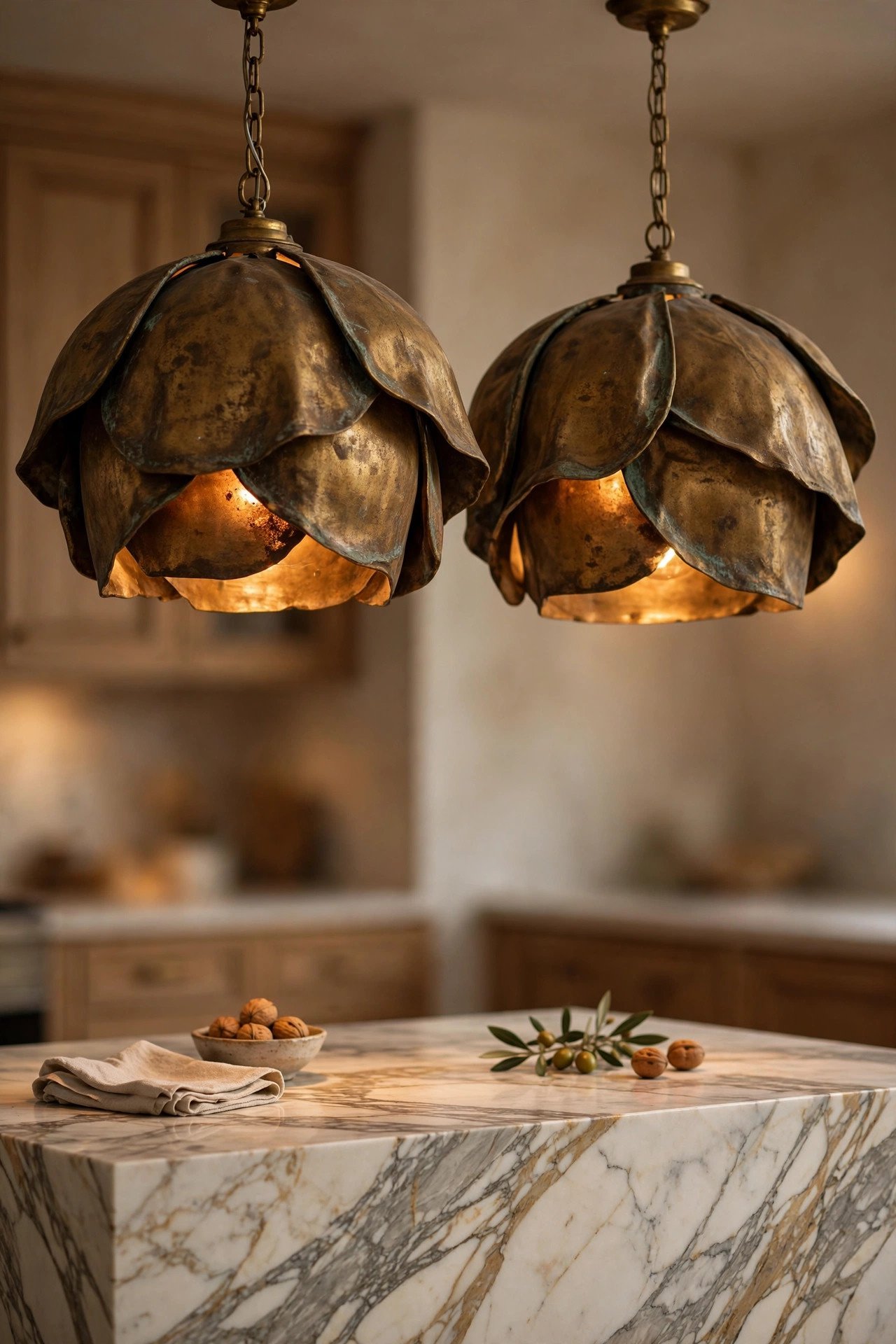
Lighting is the jewelry box of this kitchen, and the pendants over the island are the crown jewels. Go oversized and sculptural. Alabaster pendants that glow like lanterns. Brass domes with a soft patina. Woven rattan shades for a farmhouse note. Linen drum shades for pure softness. Whatever you choose, it should look beautiful switched off. That is the test of a great pendant.
Scale is everything. Most people hang pendants that are too small and too high. Go bigger than feels safe and hang them lower than feels natural, around 30 to 36 inches above the island. At that height they define the gathering zone and put flattering light exactly where faces are. Two large pendants beat three small ones. Let them be the exclamation point of the room.
Layer from there. Under cabinet lighting for task work. A small lamp on the counter for evening warmth, because a kitchen with a lamp feels like a living room and people linger in living rooms. Keep every bulb warm, around 2700K. Cool white light turns marble grey and oak flat. Warm light is not a preference in this style. It is the entire point.
The Palette
Every European contemporary kitchen is painted from the same small box of colors. Learn their names and where each one lives, and the room almost styles itself.
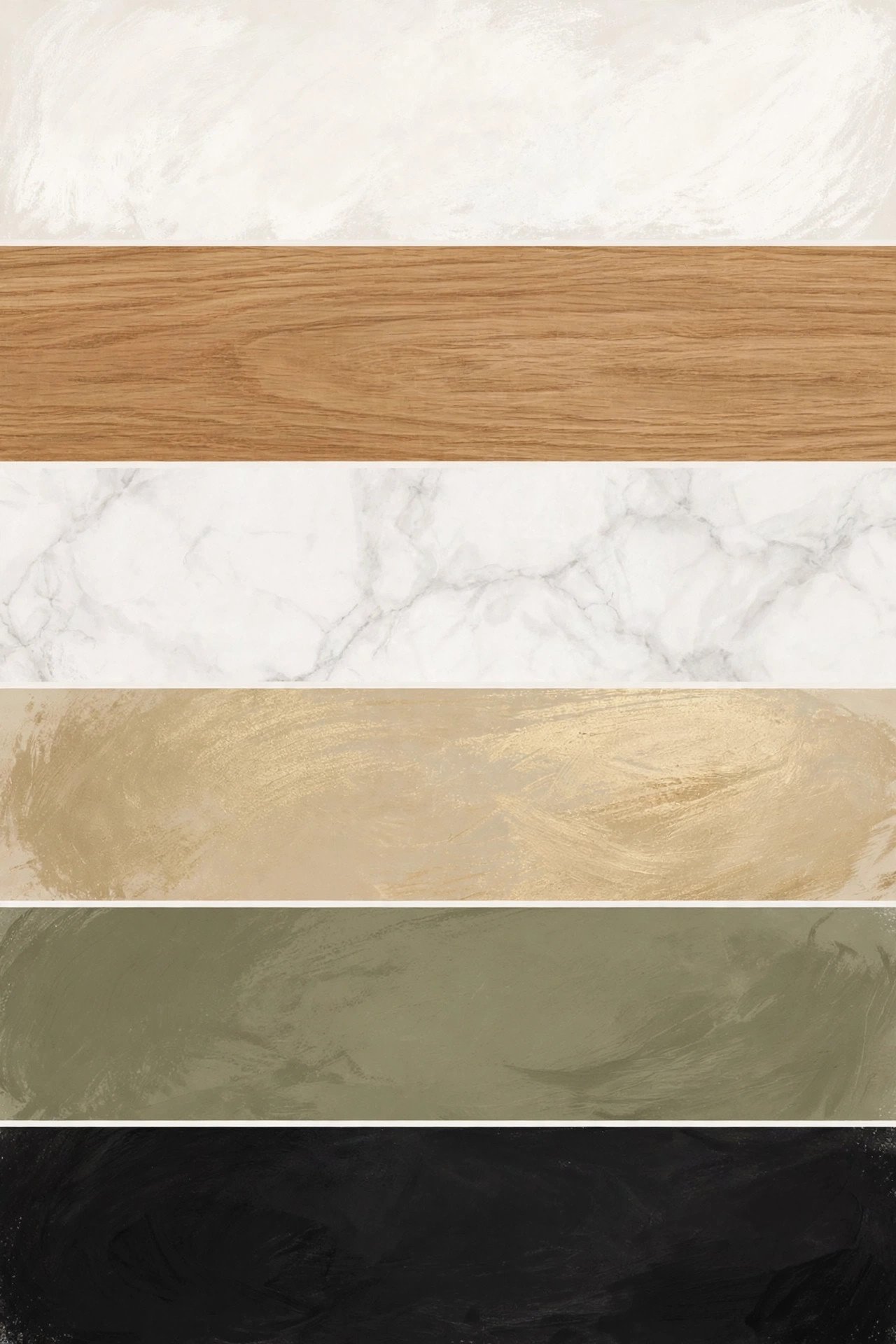
Chalk goes on the walls and the ceiling. It is white with warmth in it, like fresh plaster in morning sun. It keeps the kitchen bright without the chill of a true white and lets the oak and marble do the talking.
French Oak is the cabinetry and the island base. Honeyed, matte, full of grain. When all the wood in the kitchen shares this tone, the room feels carved from one piece of timber.
Carrara is the marble, soft white with grey and gold veining. Counters, backsplash, pastry boards. It brings the luxury and the light in equal measure.
Champagne belongs to the brass. Faucet, rail, hardware, pendant accents. It is gold gone quiet, warm without glitter. Use it in small confident doses and it will glow.
Olive Grove is the living accent. A potted olive tree in the corner. Green glass bottles on the shelf. Linen napkins in soft sage. Just enough green to remind you that European kitchens open onto gardens.
Noir appears in the smallest doses. The range. A thin frame. The faucet handles. Just enough dark to give all that warmth something to lean against.
The rule is simple. Walls and big pieces stay in the first three colors. The last three show up in objects you can hold or move. For more color inspiration across the house, browse our warm minimalist living room ideas for fall, which share this exact warmth.
Elegance is not the absence of clutter. It is the presence of intention.
How to Style It, Step by Step
Step 1. Paint it Chalk and let the light lead. Two coats of a warm white with a matte or eggshell finish on walls and ceiling. Then stand back and watch the room brighten. Take down heavy valances and let the window be a window. The whole style depends on light, so give the room as much of it as you can.
Step 2. Choose the stone before the cabinets. This is the European way and it is backwards from how most renovations run. Find the marble slab you love first, then choose the oak tone that flatters it. Stone is the soul of the room. Everything else is built to serve it. If a full marble kitchen is out of reach, put the real stone on the island and choose a quiet honed quartz elsewhere.
Step 3. Keep the cabinetry quiet. Flat front oak doors, minimal uppers, matte seal. Let the grain be the only pattern in the room. This is the discipline that keeps the romance from tipping into fuss. The cabinets are the calm background. The marble and brass are the foreground.
Step 4. Add the arches and the curves. The plastered range hood with its soft profile. The curved island corner. The arched niche for oils. This is the moment the kitchen turns European. Watch the rigid grid of the room soften like someone exhaled.
Step 5. Layer the brass in small doses. Faucet first, then the rail, then the hardware. Step back after each addition. Brass is powerful and a little goes a long way. When the room glows, stop. The last piece you almost added is the one that would have tipped it over.
Step 6. Style the surfaces, then edit hard. Olive wood boards leaned against the backsplash. Stoneware on the open shelf. A bowl of lemons on the island. Then take one thing away from every surface. Whatever you remove, the kitchen will be better for its absence. That final edit is the most European thing you will do.
Designer Tips
Spend on the stone, save on the styling. The marble is the piece your eye lands on every day and the piece you will keep longest. A beautiful stone with simple open shelves around it beats a budget counter surrounded by expensive decor.
Panel the appliances so they disappear. A refrigerator that looks like oak cabinetry changes the whole room. The kitchen reads as furniture, not machinery. If full paneling is too much, at least choose appliances in quiet finishes and let them recede.
Avoid glossy lacquer cabinets. High gloss fights everything this style is building. It bounces harsh light, shows every fingerprint, and reads as corporate. Matte wood is the whole game. If your cabinets are glossy now, a matte refinish transforms them.
Match your metals and keep to one or two. Brass plus black is the classic pairing. Brass alone is even better. What to avoid is a third metal arriving by accident. Check the faucet, the hardware, the rail, and the lighting together before anything is installed.
Avoid themed country kitsch. The rooster collection. The “Cucina” sign. The novelty wine decor. Kitsch is the fastest way to undo everything. Real materials and honest cooking will say Europe far more eloquently than any souvenir ever could.
Layer boards and ceramics on open shelves. Olive wood cutting boards, cream stoneware, green glass bottles. Group them in odd numbers and vary the heights. Open shelves should look used and loved, not staged. If a shelf looks like a store display, take half of it down.
Warm every bulb in the room. If your kitchen currently has daylight bulbs, swap them for 2700K today. Cool light turns marble grey, oak flat, and brass lifeless. Warm light is the cheapest transformation in this entire guide and it does half the work alone.
Avoid covering every inch of counter. The empty stretch of marble beside the range is not wasted space. It is where you will roll pastry and set down a hot pan. In European kitchens, clear counters are a working philosophy, not a styling choice. Protect them.
Finishing Touches to Shop
This guide contains affiliate links. If you buy through them, we may earn a small commission at no extra cost to you.
Once the bones of the room are in place, a few considered pieces complete it. Each one below earns its place by being beautiful, useful, and built to stay. And if you like to mark the seasons softly without disturbing the calm, our 5 Must Have Amazon Fall Decor Finds roundup includes a few textures that layer into this palette nicely.
Brushed Brass Pull Down Kitchen Faucet. Solid brass body, single lever, pull down sprayer with a soft finish. The jewelry of the sink wall.
Carrara Marble Pastry Board with Brass Handles. A slab of real marble for pastry, cheese boards, and display. Doubles as a trivet for hot pans straight from the oven.
Natural Linen Cafe Curtains, Set of Two. Half height curtains that soften the window without stealing the light. The Provençal touch in a single purchase.
Handmade Stoneware Dinnerware Set in Cream. Sixteen pieces with a handmade look glaze. Beautiful enough for open shelves, sturdy enough for every single day.
Brass Rail with S Hooks for Hanging Utensils. Mounts under the shelf or on the backsplash. Keeps the tools you love within reach and looking completely intentional.
Olive Wood Cutting Board Set of Three. Rich grain, naturally beautiful, gorgeous leaned against the backsplash. The boards you will reach for every day.
European Contemporary Kitchen Q and A
Is this style too formal for a busy family kitchen?
It is formal the way a good restaurant is formal, which is to say not at all once you sit down. The materials are the opposite of precious. Honed marble forgives. Oak hides wear. Brass patinas gracefully. This kitchen is designed to be cooked in hard, eaten in daily, and to look better for it. The elegance is in the materials, not in rules about how you live.
Can I get the look with stock cabinets?
Yes, with the right choices. Choose a flat front oak look door in a mid tone, skip the ornate crown molding, and upgrade the hardware to brushed brass. The stone and the styling do the heavy lifting. A marble look backsplash slab, warm lighting, and honest materials on the counters will carry stock cabinets further than you expect. Spend the savings on the faucet and the pendants, which the eye reads first.
Marble stains and etches. Is it honestly worth it?
If you cook daily and want counters that look untouched forever, choose a honed quartz instead and put real marble on the pastry board and the backsplash. But if you can accept patina, real marble repays you. It stays cool for pastry. It glows in a way no manufactured stone does. And the etching tells the story of meals you actually cooked. Europeans have cooked on marble for centuries. They were onto something.
How do I keep brass looking good without constant polishing?
Choose unlacquered brushed brass and let it live. It will darken and develop character in the places you touch, which is exactly the look this style wants. If you prefer it bright, a quick polish with a soft cloth brings it back in minutes. What to avoid is mixing lacquered and unlacquered brass in one room. Pick one and commit, and the brass takes care of itself.
My kitchen is small. Does European contemporary work in a tight space?
It works beautifully. Pale walls, minimal uppers, and one strong stone make a small kitchen feel larger, not smaller. A marble backsplash slab reflects light. Open shelves replace a wall of boxes. A small round bistro table in the corner gives you the lingering zone without an island. Every trick in this guide scales down. Restraint loves small rooms.
I rent. What can I change without renovating?
Almost everything that matters. The brass rail mounts with minimal holes and transforms the wall. Linen cafe curtains need only a tension rod. A marble pastry board brings the stone in with zero commitment. Warm bulbs screw into existing sockets. Style the open surfaces with boards, stoneware, and a bowl of lemons. Keep the cabinets and the counters. Change the light, the textiles, and everything you can touch.
Until the Next Guide
A European contemporary kitchen is not finished in a weekend. It is gathered slowly, one considered piece at a time, and it gets better as the marble ages and the brass mellows. Start with the light and the stone. Add the oak and the brass. Let the rest arrive when it is right.
This is one of our design guides, and more design guides are on the way. Each one follows the same idea. Fewer, better choices. Rooms that gather the people in them. If you want the same warmth to flow into the open plan, our warm minimalist living room ideas for fall were made for exactly that. We hope this one brings a little more lingering to your beautiful, busy days.