
Some patios are paved. A soft scape garden is planted. This is our complete guide to building an outdoor room where greenery does the decorating, light moves through leaves, and every seat feels tucked into something living.
The Softest Room Has No Walls
Soft scape is a landscape term. It means everything that grows. Soil and roots, leaves and petals, grasses that move when the wind moves. Hard scape is everything else. Stone, concrete, fences, the bones of the yard. Most patios are built the wrong way around. The hard scape goes in first and the plants get whatever corners are left over. A soft scape garden flips that order. The planting comes first and the furniture finds its place inside it.
The feeling is closer to a meadow edge than a backyard. Paths curve instead of running straight. Grasses soften every hard line. Flowers arrive in drifts rather than rows. Nothing is clipped into submission. The garden looks the way nature would have arranged it if nature also owned really good outdoor furniture.
It is a forgiving style, which is good news for the rest of us. A formal garden punishes every weed and every brown leaf. A soft scape garden absorbs them. A little wildness is part of the design, so the garden still looks right in late August when everything is a bit tired. You can garden imperfectly here and still win. Beginners do especially well because the style rewards abundance over precision.
There is a rhythm to it through the year. In spring the bulbs push up and everything is fresh green. In summer the grasses reach full height and catch the light like water. In fall the seed heads turn bronze and hold frost beautifully on cold mornings. Even winter offers something if you leave the structure standing instead of cutting it all down. A soft scape garden is never finished, which is exactly why it never gets boring.
And then there is what it does to the people in it. A patio wrapped in planting feels private without a single fence board. Leaves filter the sun into moving patterns on the ground. Birds arrive because there is something to eat and somewhere to hide. An evening out here slows everything down in a way a bare concrete slab never will.
Fall may be the finest season for it. The grasses turn gold and copper, the seed heads stand tall against grey skies, and the garden asks almost nothing of you. While the rest of the yard winds down, the soft scape garden puts on its best show. A few pumpkins by the door and the season is dressed.
This is one of our design guides, and it may be the most peaceful one we write. If you want to carry that softness to the front of the house too, our fall front entryway ideas show how planting welcomes you at the door.
Plant the garden first, and let the furniture find its place inside it.
The Key Elements of a Soft Scape Garden
1. Naturalistic Planting Drifts
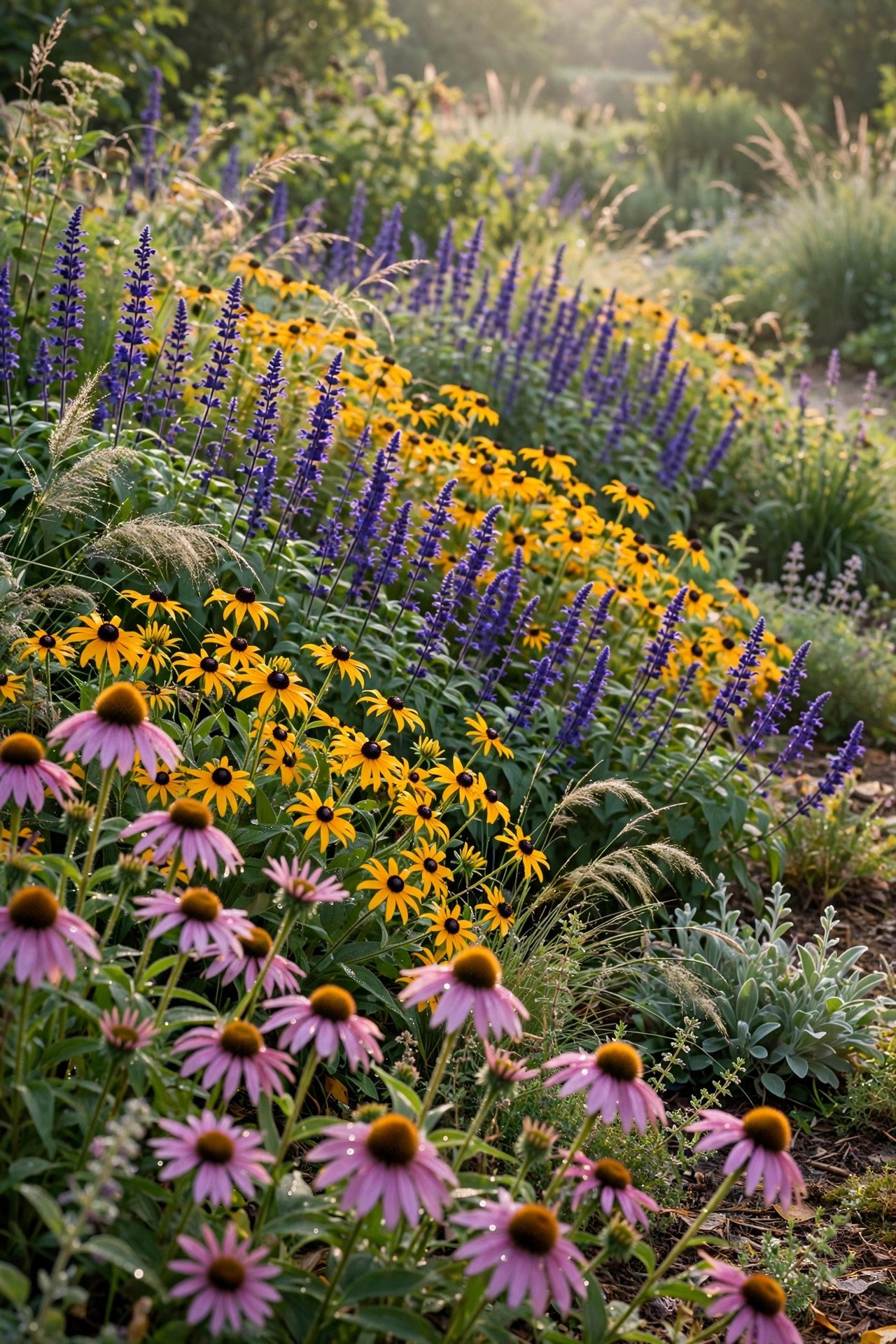
Forget rows and rings. Soft scape planting goes in as drifts, wide sweeps of the same plant flowing through the bed the way they would seed themselves in a meadow. Coneflower, black eyed Susan, salvia, catmint. Plant them in groups of five, seven, or nine and let the edges blur. From a distance the bed reads as color moving through green. Up close every plant still gets its moment.
Repetition is the quiet trick. Use the same plants in several places around the space and the whole garden feels connected, even if the beds are far apart. Three drifts of the same grass on three sides of a patio will tie the space together better than any matching furniture set. Limit yourself to seven or eight plant varieties total. Restraint in the plant list creates abundance in the effect.
Leave room for self seeders. Plants like cosmos, nigella, and verbena will drop seed and pop up where they please next year. Let some of them stay. Those happy accidents are what make the garden feel alive rather than installed.
2. Ornamental Grasses in Motion

If the planting drifts are the melody, grasses are the rhythm section. Fountain grass, little bluestem, switchgrass, Japanese forest grass for shade. They give the garden height, texture, and movement, and they ask for almost nothing in return. Plant them once and they come back fuller every year.
Grasses do something no flower can do. They catch light. A clump of miscanthus backlit by late afternoon sun glows from the inside. On a breezy day the whole planting ripples. That movement is what makes a soft scape garden feel different from a bed of static shrubs. It is never the same garden twice.
Use them as the structure. Tall grasses at the back of beds or in big pots become living screens that hide fences and neighbors. Medium grasses weave between flowering perennials and hold the composition together when the flowers rest. Even one large grass in a generous pot can anchor a small patio. Come fall, the whole planting shifts to bronze and wheat tones without you lifting a finger, which is more than most garden features manage.
3. Weathered Wood Seating
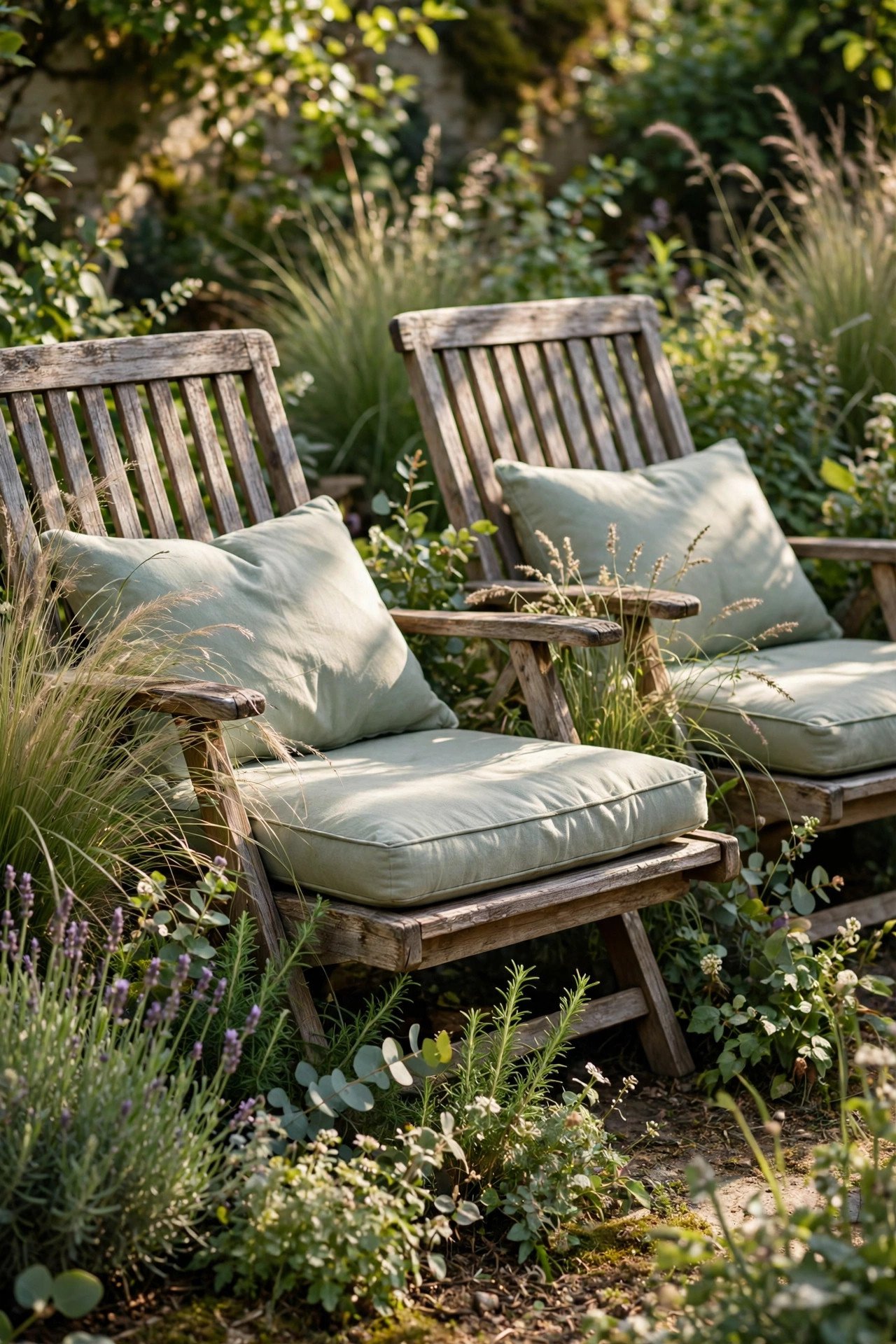
The furniture in a soft scape garden should look like it grew there. Weathered teak, acacia left to silver, bent rattan, simple cedar benches. Avoid anything glossy, chrome, or sharp edged. The garden is soft and the seating should speak the same language.
Comfort matters more here than in any other outdoor style because you will actually sit in this garden. A deep lounge chair with thick cushions. A bench wide enough to curl up on. A dining set you linger at long after the plates are cleared. Choose pieces you would happily read in for two hours, because you will.
Let the planting come right up to the furniture. A chair with grasses brushing its arms feels tucked in and private. A bench half hidden by a drift of salvia feels discovered. Pull the pots and beds close. The goal is to sit inside the garden, not beside it.
4. Soft Outdoor Textiles
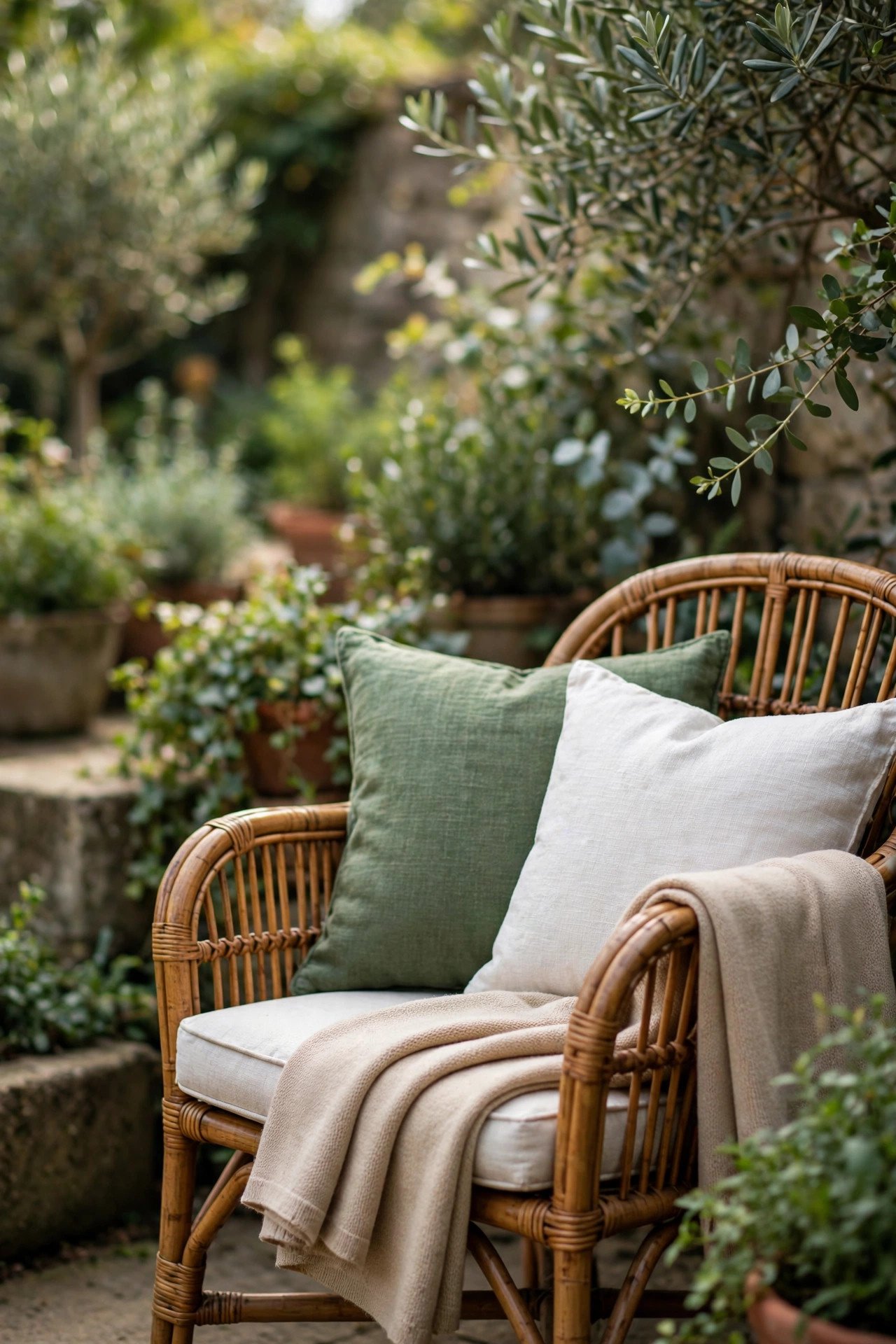
Textiles are what turn seating into a room. Outdoor cushions in botanical greens and warm neutrals. A throw for chilly evenings, because the best garden hours are often the cool ones. An outdoor rug to define the seating area and soften what is underfoot. Each layer makes the space feel more intentional and more comfortable.
Choose performance fabrics without apology. Modern outdoor textiles handle rain and sun beautifully and they come in colors that would have been impossible a decade ago. Look for solution dyed acrylics, which hold their color for years. Washable cushion covers are worth every penny when the garden drops petals and seeds on everything.
Repeat the garden palette in the textiles. Sage cushions against green planting. Linen white throws that echo the white flowers. Clay colored pillows that pick up the terracotta pots. When the textiles and the planting share colors, the boundary between furniture and garden dissolves.
5. Warm Low Light
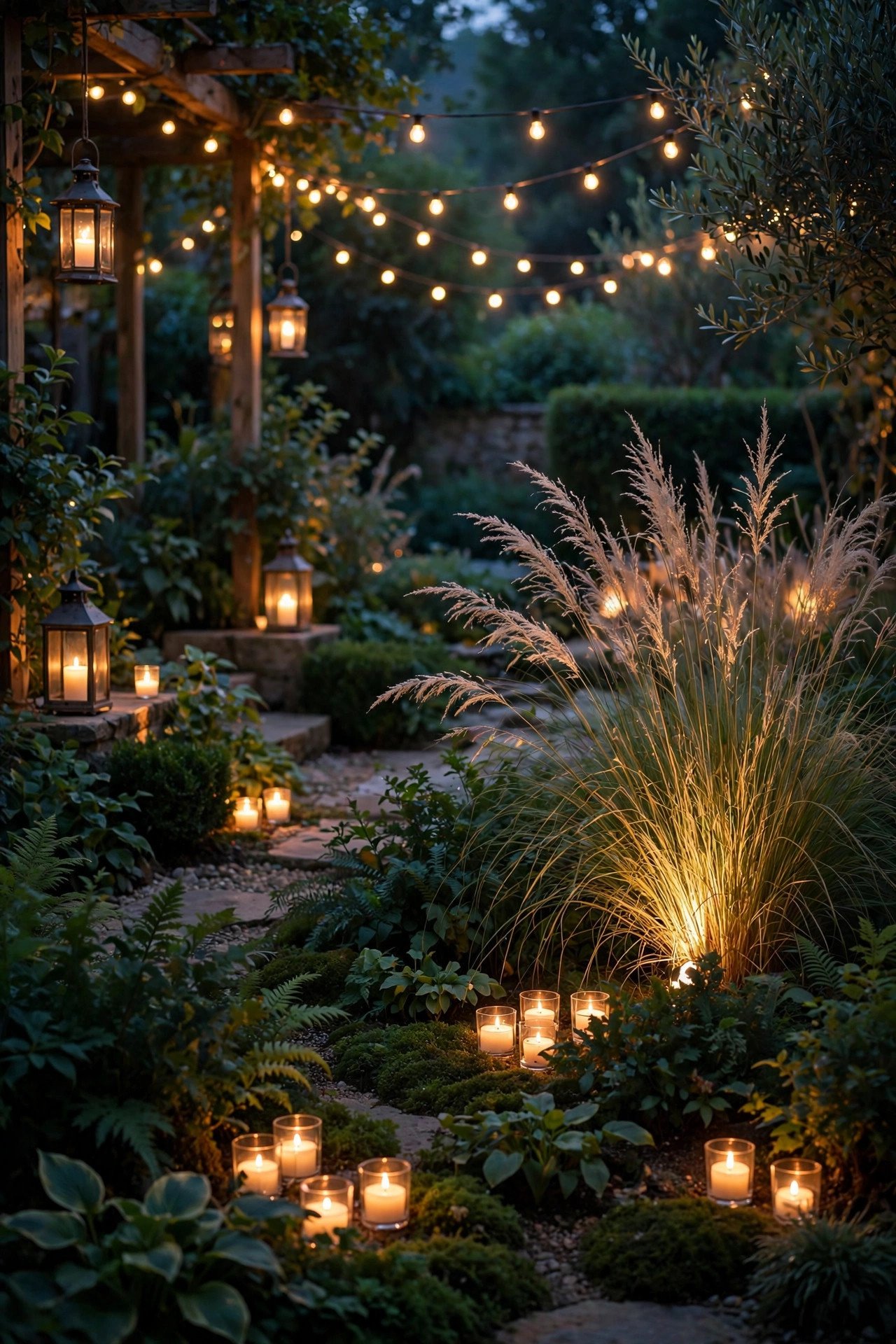
A soft scape garden after dark is pure magic, but only with the right light. Think low and warm. Lanterns at table height. String lights draped through a tree or along a fence. Small solar path lights marking the way through the beds. Candlelight whenever you can manage it safely.
What you are building is pools of glow, not coverage. The garden should stay mostly dark so the lit spots feel special. Uplight one beautiful grass clump or one sculptural plant and let the rest fade into shadow. Darkness is doing real work here. It makes the space feel larger and more mysterious.
Keep every bulb warm, the color of candlelight. Cool white light turns a garden into a parking lot and washes every green to grey. Warm light deepens the greens, gilds the grasses, and makes skin look good. It is the cheapest transformation in the whole garden.
6. Gravel and Stone Underfoot
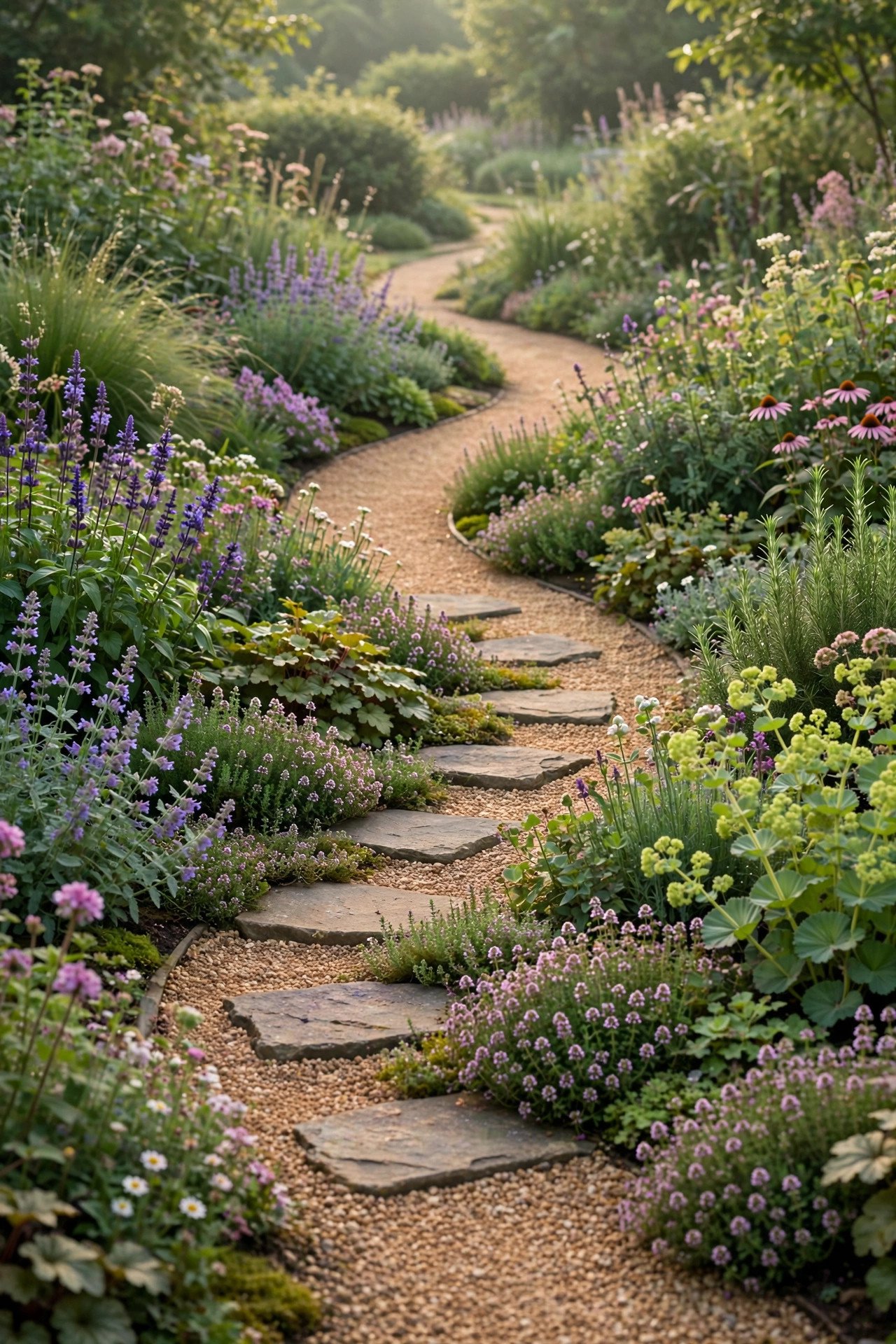
The ground plane matters as much as the planting. Pea gravel, crushed granite, or simple stepping stones set in groundcover give paths a soft crunch and a natural look that concrete never will. They also let rain soak through instead of running off, which the garden will thank you for.
Curve the paths. A straight path hurries you through. A curving path slows you down and hides what is around the bend, which makes even a small garden feel like it has discoveries in it. Let thyme or sedum creep between stepping stones. Let the gravel spill a little into the bed edges. Neat edges are for formal gardens.
Gravel is also the most forgiving surface to install. No permits, no concrete truck, no perfect leveling. Lay landscape fabric, spread three inches of gravel, rake it smooth. A weekend project that changes how the whole space feels underfoot.
The Palette
A soft scape garden is painted in living color, but the supporting cast follows a small quiet palette. Learn these six tones and where each one lives, and the whole space will hang together.
Meadow Mist is the dominant green. Not a sharp Kelly green, not a deep forest. The soft blue green of ornamental grasses and sage foliage. It covers the most ground, so choose plants that live here first.
Soft Sage goes a step deeper. Herbs like lavender and Russian sage, dusty miller, artemisia. It is the foliage color that makes bright flowers pop and keeps the whole planting from going flat.
Linen White is for flowers and textiles. White coneflower, shasta daisies, white cushions, a linen throw. White flowers glow at dusk and stretch the garden day by an hour. Our pumpkin decor ideas show how white and cream keep fall plantings feeling fresh rather than heavy.
Weathered Teak belongs to the furniture. That silvery grey brown of wood left to age gracefully. It sits beautifully against green and never competes with the planting.
Clay Pot is the accent. Terracotta planters, a clay colored cushion, the pot a favorite plant lives in. Warm and earthy, it connects the garden to the house in a way nothing else does.
Evening Haze grounds everything. The soft grey of stone, gravel, and dusk itself. Paths, pots, and lantern glass live here. It is the quiet note that lets the greens sing.
The rule is simple. Planting and big surfaces stay in the first three tones. Furniture, pots, and accents carry the last three. When everything relates, the eye rests, and a resting eye is a calm mind.

A little wildness is not a flaw in the design. It is the design.
How to Style It, Step by Step
Step 1. Watch the light for a weekend. Before you buy a single plant, notice where the sun lands. Which spots get full sun, which stay shady, where the evening light glows. Plants are not decor. They are living things with light requirements, and matching the plant to the light is the whole game.
Step 2. Feed the soil. Dig in several inches of compost wherever you plan to plant. Good soil is the difference between a garden that survives and a garden that thrives. This is the least glamorous step and the most important one.
Step 3. Lay the soft paths first. Gravel, mulch, or stepping stones. Curve them through the space the way you naturally want to walk. Paths define the rooms of the garden before a single plant goes in.
Step 4. Plant the structure. Grasses and larger perennials go in first, in drifts of five, seven, or nine. Step back often and look at the shapes. You are painting with big brushes at this stage.
Step 5. Fill in the flowers. Tuck flowering perennials between the grasses in repeating drifts. Water everything deeply, then mulch three inches thick to hold moisture and discourage weeds.
Step 6. Add the living layer. Furniture pulled close to the planting. Warm low lights. Cushions and a throw. A lantern on the table. Sit down at dusk and check your work. Then let it grow.
Designer Tips
Plant in drifts of odd numbers. Threes, fives, sevens. Even numbers read as formal pairs. Odd numbers read as nature. This one habit will make every bed look designed.
Leave the seed heads standing. Coneflower, grasses, sedum. Their winter skeletons catch frost and feed birds. Cut everything back once in early spring and enjoy the architecture all winter.
Layer three heights. Something low and creeping, something knee high, something tall and airy. Three layers in every bed and the planting will look full from every angle.
Avoid glossy plastic furniture. Nothing breaks the spell faster than a shiny resin chair. If the budget is tight, choose simple wood or metal with a matte finish. The garden forgives simple. It does not forgive shiny.
Choose warm bulbs only. Every outdoor bulb should glow like candlelight. Cool white light flattens greens and kills the mood. Check the box before you buy.
Water deeply and rarely. A long slow soak once or twice a week builds deep roots. Daily sprinkles build shallow roots and needy plants. Deep roots are the secret to a garden that handles a hot week without drama.
Avoid formal clipped hedges. Boxwood balls and sheared hedges fight everything this style stands for. If you need screening, use tall grasses or a loose flowering shrub instead.
Mulch like you mean it. Three inches of shredded bark or leaf mold. It feeds the soil, holds moisture, and makes weeds give up. The best looking gardens are usually the best mulched gardens.
Finishing Touches to Shop
This guide contains affiliate links. If you buy through them, we may earn a small commission at no extra cost to you.
Once the planting is in and the paths are laid, a few considered pieces complete the room. Each one below earns its place by being beautiful, useful, and built for outdoor life. And if you like to layer the seasons in softly, our 5 Must Have Amazon Fall Decor Finds roundup includes textures that sit beautifully beside fall grasses.
Outdoor Wicker Lounge Chair with Soft Cushions. Deep seat, weatherproof weave, cushions thick enough to nap in. The chair the whole garden is arranged around.
Terracotta Planter Set in Three Sizes. Classic clay that ages beautifully. Group them in odd numbers by the seating area and let the planting spill over.
Warm White Outdoor String Lights, 48 Feet. Candlelight colored bulbs on a sturdy cable. Drape through branches or along a fence for instant evening magic.
Weatherproof Outdoor Throw Pillows, Set of Four. Botanical greens and warm neutrals in fade resistant fabric. The fastest way to make any chair look intentional.
Solar Powered Garden Lanterns, Set of Two. No wiring, no fuss. They charge all day and glow all evening at the edge of the path.
Natural Jute Outdoor Rug, 5 by 7. Defines the seating area and softens gravel or deck boards underfoot. Texture that ties the furniture to the garden.
Soft Scape Outdoor Q and A
I only have a small balcony. Can this style work?
Beautifully. Soft scape scales down to pots. One large grass in a generous planter, a trailing plant, a small flowering perennial, and a comfortable chair. Group pots in odd numbers at different heights. You will not have drifts, but you will have the feeling, which is what matters.
Will all these plants mean lots of bugs?
A planted garden has more insect life than a concrete slab, and that is mostly good news. Pollinators, ladybugs, and birds keep the real pests in check. For evenings, a fan near the seating area works better than any spray. Mosquitoes are weak fliers and a gentle breeze sends them elsewhere.
I am not a gardener. What is the lowest upkeep version?
Grasses and tough perennials. Little bluestem, switchgrass, coneflower, black eyed Susan, catmint, sedum. Plant them well, mulch thickly, water deeply the first season, then mostly leave them alone. One spring cleanup a year. That is the whole maintenance calendar.
My yard is mostly shade. Am I out of luck?
Not at all. Shade has its own soft scape palette. Japanese forest grass, hostas, ferns, astilbe, bleeding heart. Shade gardens feel even more tranquil than sunny ones, and the greens glow in low light. Match the plants to the light you have and the garden will thrive.
What does it look like in winter?
Better than you think, if you resist the urge to cut everything down. Grass plumes and coneflower heads catch frost and snow beautifully. Birds work the seed heads all winter. One spring cutback and the whole thing starts again. Winter is the season that proves the structure was good.
I rent. Can I do any of this?
Almost all of it lives in pots. Big planters with grasses, a jute rug over the balcony floor, string lights, a comfortable chair, lanterns. Nothing permanent, everything portable. When you move, the garden moves with you, which renters rarely get to say.
Until the Next Guide
A soft scape garden is not installed. It is grown, season by season, and it rewards patience like nothing else outdoors. Start with the soil and the paths. Add the grasses. Let the flowers find their drifts. Sit in it at dusk and you will understand why this style has such devoted followers.
This is one of our design guides, and more design guides are on the way. Each one follows the same idea. Fewer, better choices. Spaces that calm the people in them. If you love this kind of softness carried indoors, our warm minimalist living room ideas for fall bring the same calm inside. We hope your garden grows wilder and more beautiful every year.