
Some kitchens are built for cooking. A coastal kitchen is built for lingering. This is our complete guide to bringing the light of the shore and the calm of the sea into the hardest working room in your home.
The Breeziest Room in the House
Coastal is the meeting point of the shoreline and the everyday kitchen. From the coast come the colors: salt white, sea glass green, soft blue, warm sand. From a well loved kitchen come the habits: open shelves, honest materials, and nothing too precious to touch. Put them together and you get rooms that feel fresh and easy at once. Bright but never stark. Relaxed but never sloppy.
It is a style built on light and air. Coastal kitchens borrow their feeling from mornings by the water. Sun through linen curtains. Pale wood that glows instead of glares. Stone with soft movement, like the surface of a calm sea. Nothing in a coastal kitchen is dark or heavy, which is exactly why these rooms feel so good to stand in while the coffee brews.
A kitchen turns out to be the perfect place for it. The kitchen is the busiest room in the house, and it is where calm matters most. Mornings are rushed. Evenings are tired. A coastal kitchen lowers the temperature of both. Pale surfaces bounce the light around. Open shelves keep the everyday things within reach. It is the difference between a room that nags you and a room that welcomes you.
There is a practical side too. Kitchens take a beating, but coastal materials are workers. Honed stone hides crumbs and smudges better than polished granite ever will. Washable linen curtains go straight in the machine. Pale painted cabinets show less dust than dark ones. This is a style that was already built for real life, with flour on the counter and a dog under the table.
And then there is the feeling at the end of the day. Most kitchens close down at night feeling a little tired. A coastal kitchen keeps a little of the day in it. The brass faucet catching the last light. A bowl of lemons on the island. The faint smell of salt and citrus. It is a room that stays friendly after the cooking is done.
There is also the way guests respond to it. People relax faster in a coastal kitchen. They lean on the island. They pour a second glass of water. They stay for the conversation instead of drifting to the living room. Light rooms invite people in, and this one was designed from the first brushstroke to do exactly that.
This is one of our design guides, and we saved the kitchen for the season when everyone is thinking about fresh starts. If you want more breezy inspiration for the rest of the house, our warm minimalist living room ideas for fall carry the same easy feeling into the living room. More design guides are on the way, each one built the same way. Slowly, carefully, and meant to last.
Let the light do the decorating, and the room will never feel dated.
The Key Elements of a Coastal Kitchen
1. Pale Painted Cabinetry
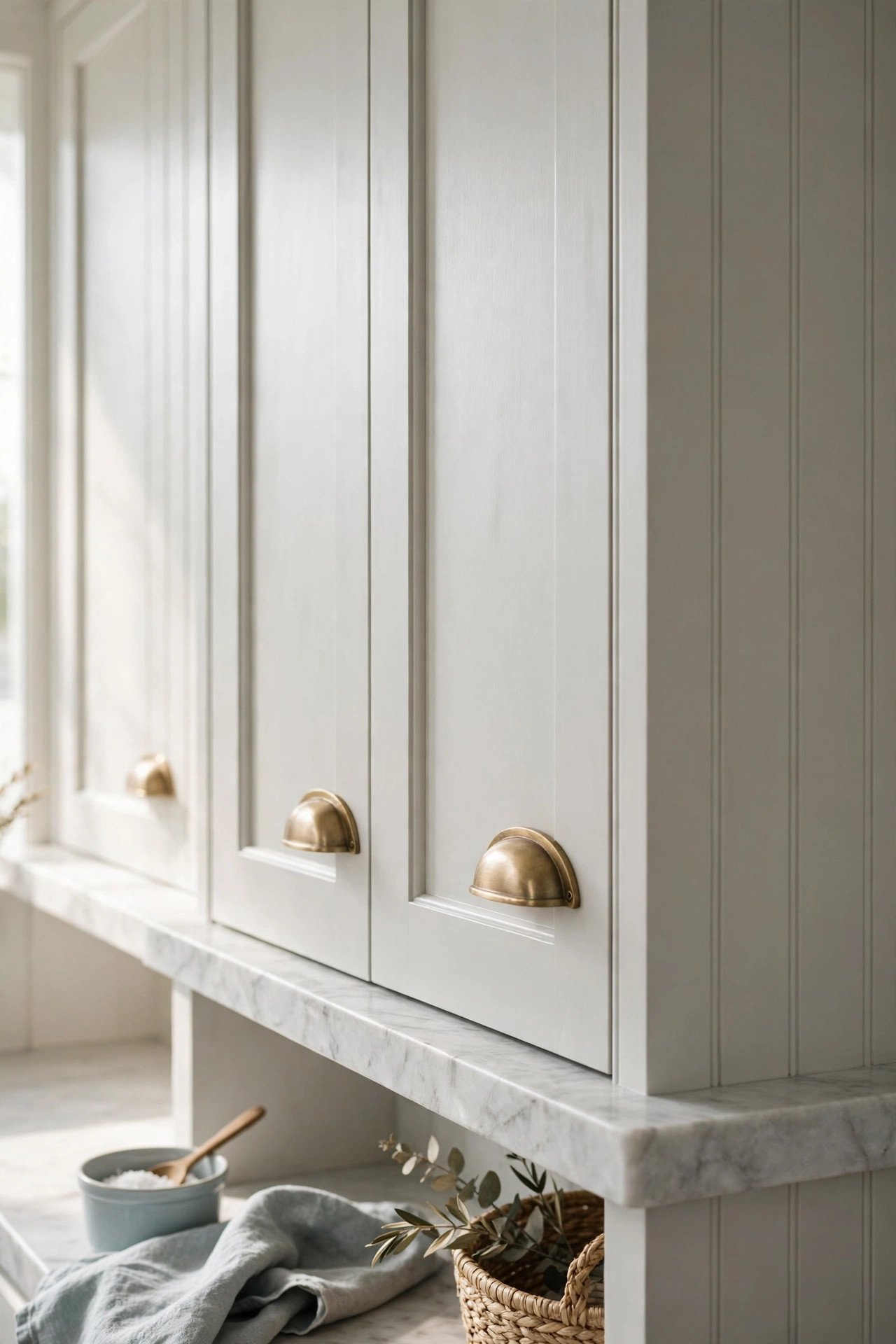
Everything in the kitchen starts with the cabinets, because they cover the most wall. In a coastal kitchen they stay pale. Salt white, sea mist, or the softest blue grey. Painted in a satin or matte finish that drinks the light instead of throwing it back. Dark cabinets can look dramatic, but they shrink the room and fight the airy feeling you are building.
Keep the door style simple. Shaker fronts are the classic choice for a reason. Clean lines, honest joinery, nothing fussy. Glass fronts on a few uppers open the room even more and give you a place to show the pretty dishes. The cabinets are the quiet background. Let them be quiet.
Choose paint that can take a kitchen. A good cabinet enamel in a washable finish will survive steam, splatter, and the daily wipe down for years. Touch ups blend easily on pale colors, which is another quiet argument for keeping them light.
2. Honed Stone with Soft Movement
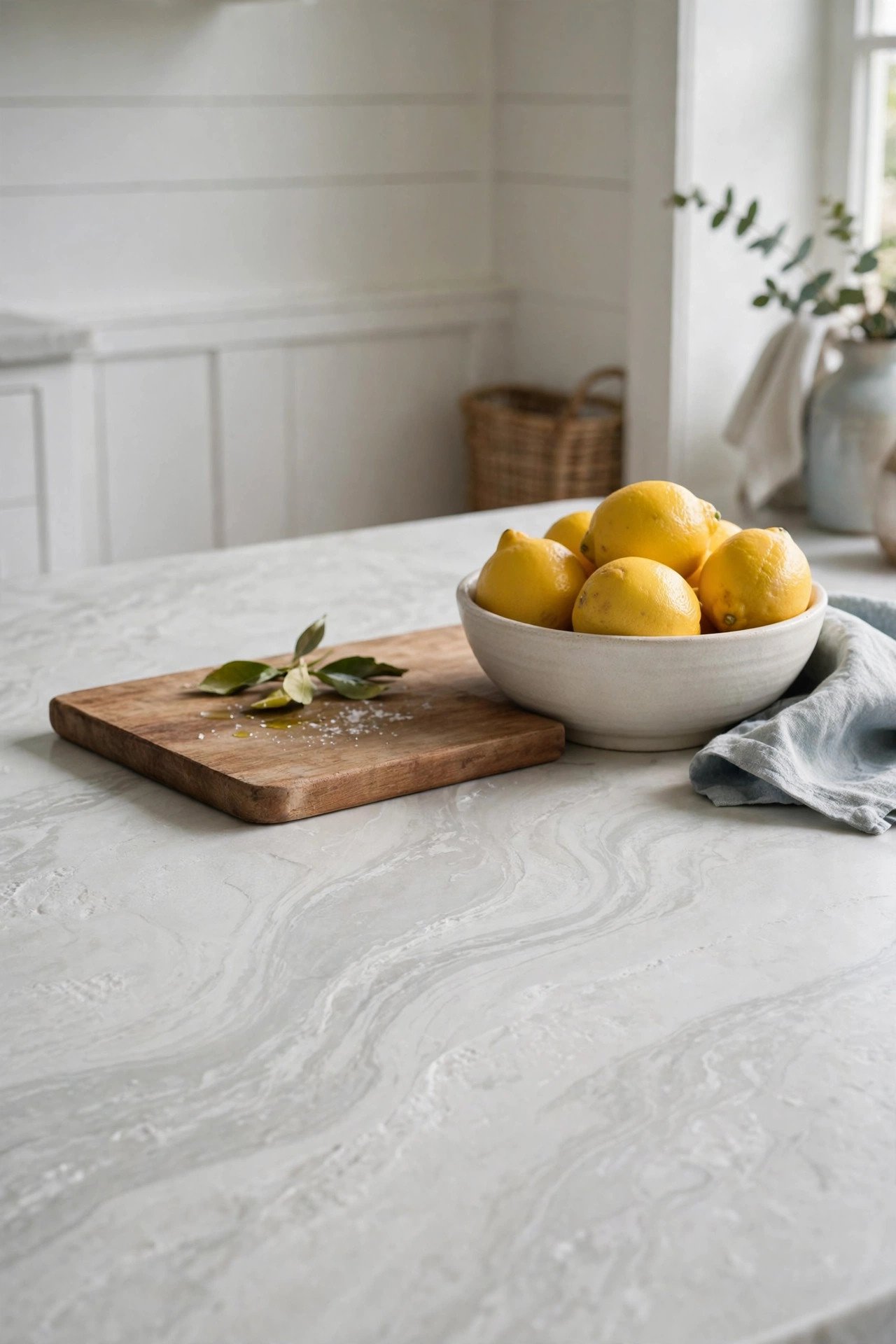
The countertop is the workhorse and the jewel of the room. Coastal kitchens favor honed stone. Marble, quartzite, or a good quartz that mimics them. Honed means matte, not shiny, and that softness is the whole point. Polished stone glares under kitchen lights. Honed stone glows.
Look for veining with gentle movement. Soft grey or warm gold veins drifting through white, like currents in shallow water. Avoid the bold dramatic slabs that belong in a city loft. The coastal countertop should feel calm when you look at it, even with a cutting board and a pile of vegetables on top.
Seal it and stop worrying. Honed stone is forgiving of the small marks of daily cooking, and a good sealer handles the rest. A countertop you are afraid to use is a countertop that owns you instead of the other way around.
3. Sea Glass Blues and Greens
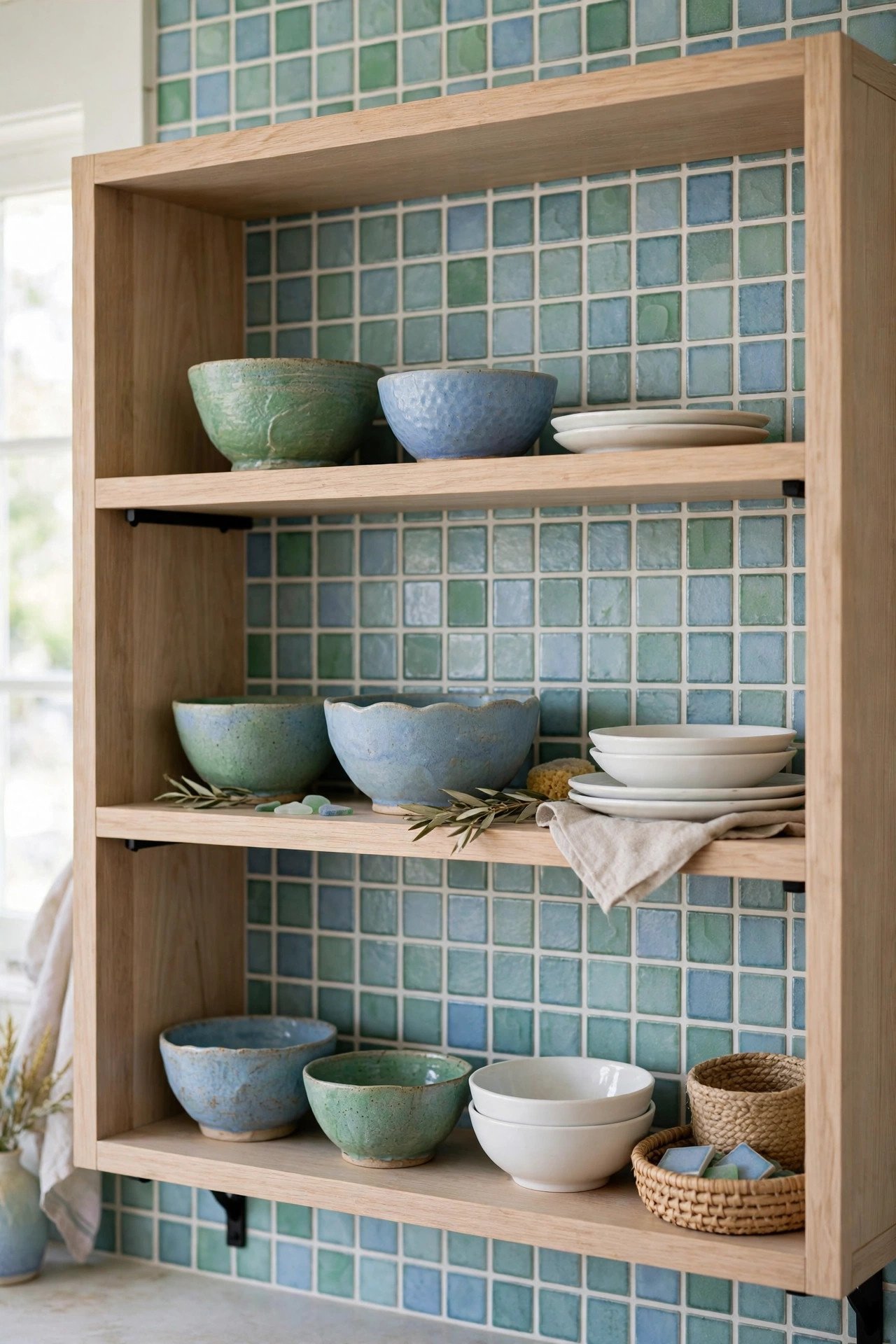
Every coastal kitchen needs its note of blue. Not navy walls or a themed backsplash. Small doses of the colors the sea leaves behind. Sea glass green in a row of handmade tiles. Soft blue in a stack of bowls on the open shelf. The dusty blue of a vintage runner underfoot.
The trick is keeping it watery, never primary. Think of colors that have been softened by sun and salt. A blue with grey in it. A green with mist in it. These tones sit happily next to white and wood without shouting, and they are what make guests say the room feels like the coast without knowing why.
Repeat the color in three places and stop. The tile, the textiles, and one object on the counter. That rhythm is enough. More than that and the room starts to feel decorated around a theme instead of simply fresh.
4. Warm Natural Wood
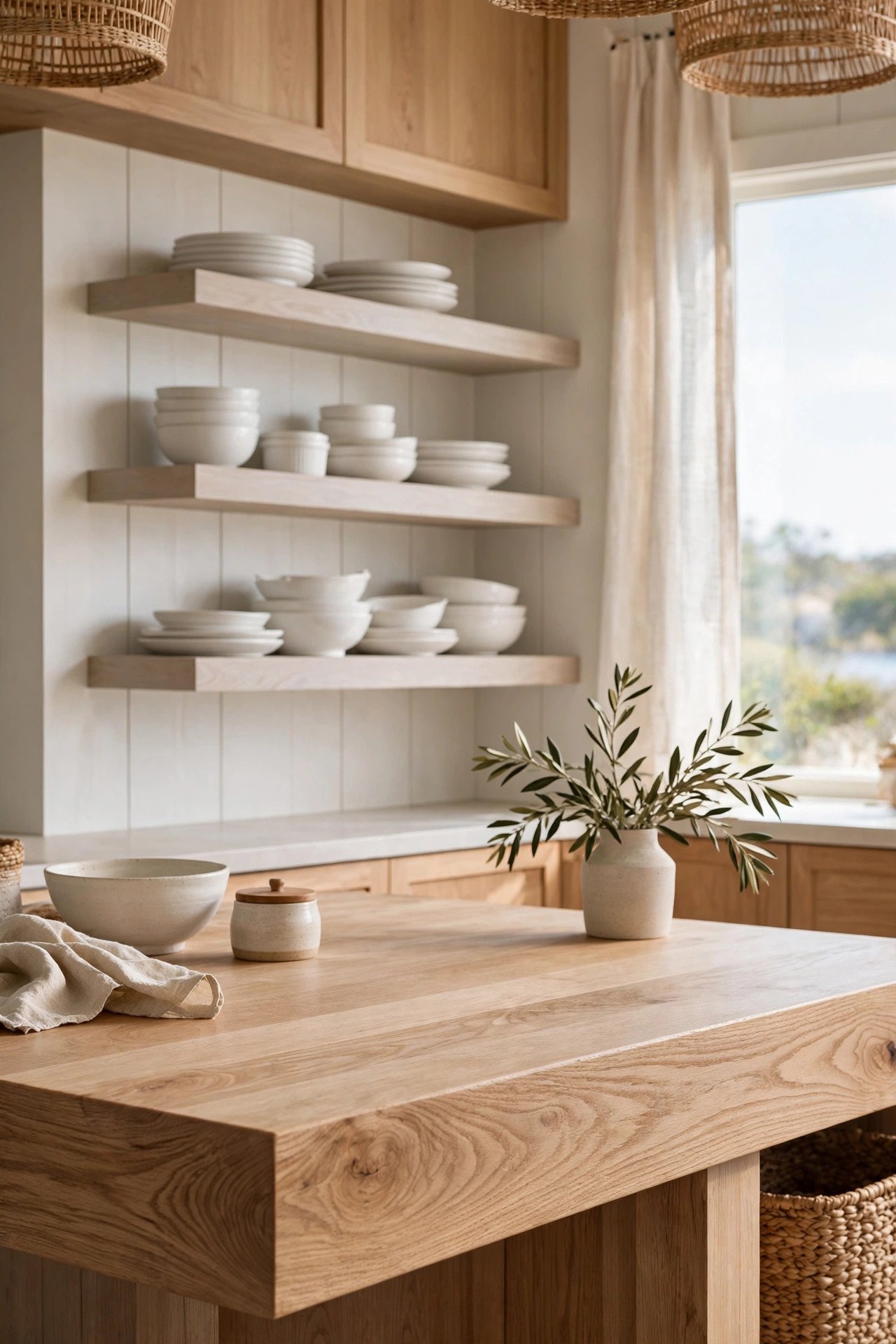
White and blue alone can turn chilly. Wood is what keeps a coastal kitchen warm. A thick oak island top. Open shelves in pale ash. A vintage stool tucked under the counter. Wood brings the driftwood half of the coast into the room, and it gives all that pale paint something to lean against.
Keep the wood light to medium. White oak, ash, maple, or a bleached finish. Dark walnut belongs to a different mood. The grain should show. Wood with visible character keeps the room from feeling like a showroom, and it ages better than any painted surface.
Let the wood be the bridge to the rest of the house. If your living room has warm floors or a wood table, echo that tone in the kitchen shelves or the island. Our boho nursery decor ideas show how natural wood warms pale rooms, and the same instinct works here.
5. Linen and Woven Textures
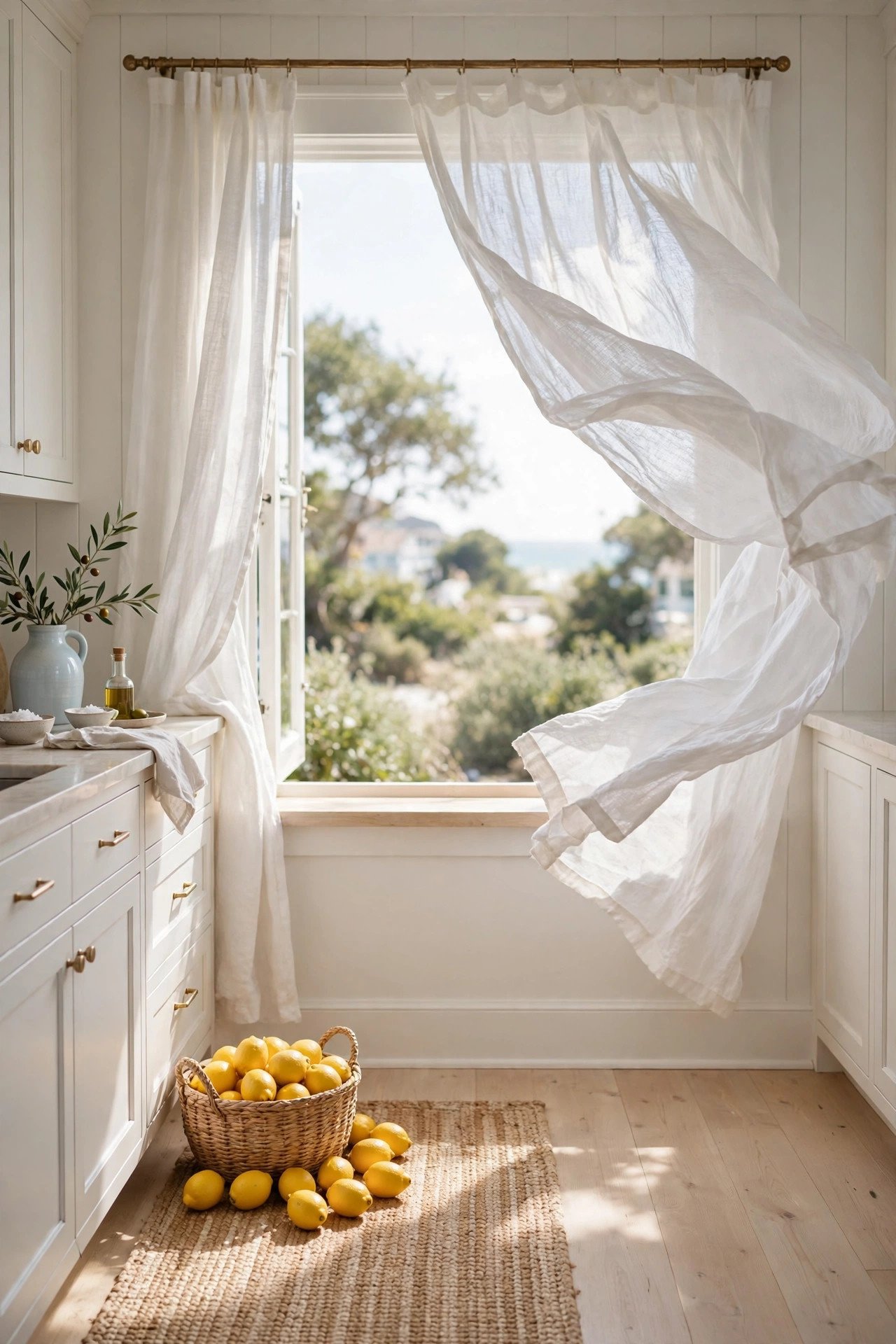
If coastal has a signature sense, it is the feeling of a breeze. Linen cafe curtains that move when the window opens. A jute runner that feels good under bare feet. Woven placemats, a basket for the fruit, a linen apron on its hook. These are the soft things that keep a hardworking kitchen from feeling hard.
Layer them the way the shore layers itself. Smooth stone against nubby jute. Crisp linen against warm wood. The contrast between refined and rough is the entire aesthetic. A kitchen that is all smooth surfaces feels sterile. A kitchen that is all rough texture feels unfinished. The magic is in the mix.
Choose textiles that wash. Linen curtains, cotton runners, and canvas aprons all go in the machine and come out softer. In a kitchen, beauty that cannot be washed is not beauty. It is a chore waiting to happen.
6. Warm Metal Fixtures
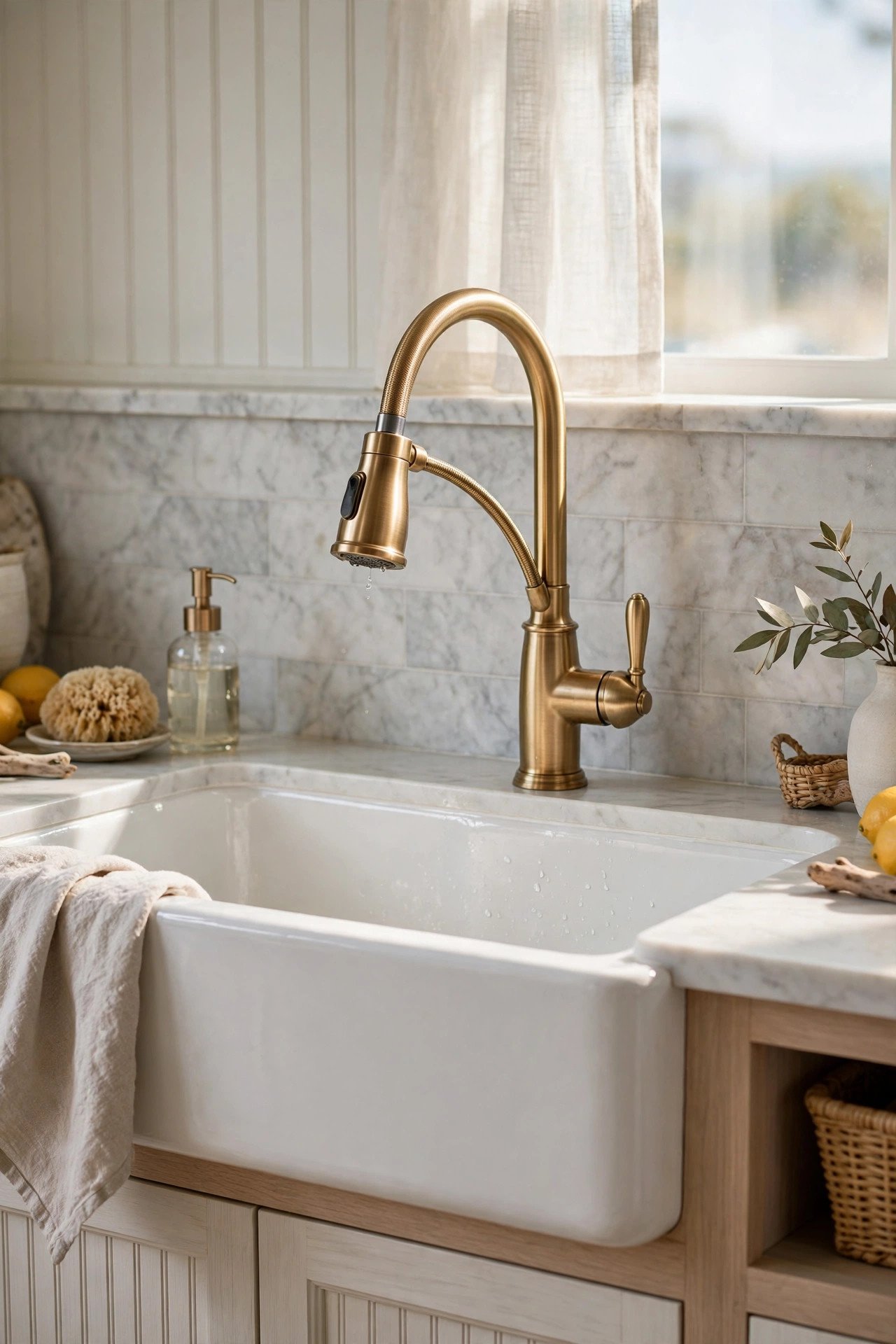
The jewelry of the kitchen is the metal. In a coastal kitchen it stays warm. Brushed brass, aged bronze, or a soft champagne finish. The faucet, the cabinet pulls, the pendant lights over the island. Warm metal against pale cabinets reads like sunlight on water.
Keep the finish consistent and the shine low. Brushed or aged, never mirror polished. Polished brass shows every fingerprint and water spot, which defeats the purpose. A soft brushed finish glows without glaring and looks better in year five than on day one.
Spend here with confidence. The faucet is touched a hundred times a day. Good hardware is the difference between a kitchen that feels solid and one that feels flimsy, and it is the cheapest luxury in the whole renovation.
The Palette
Every coastal kitchen is painted from the same small box of colors. Learn their names and where each one lives, and the room almost styles itself.
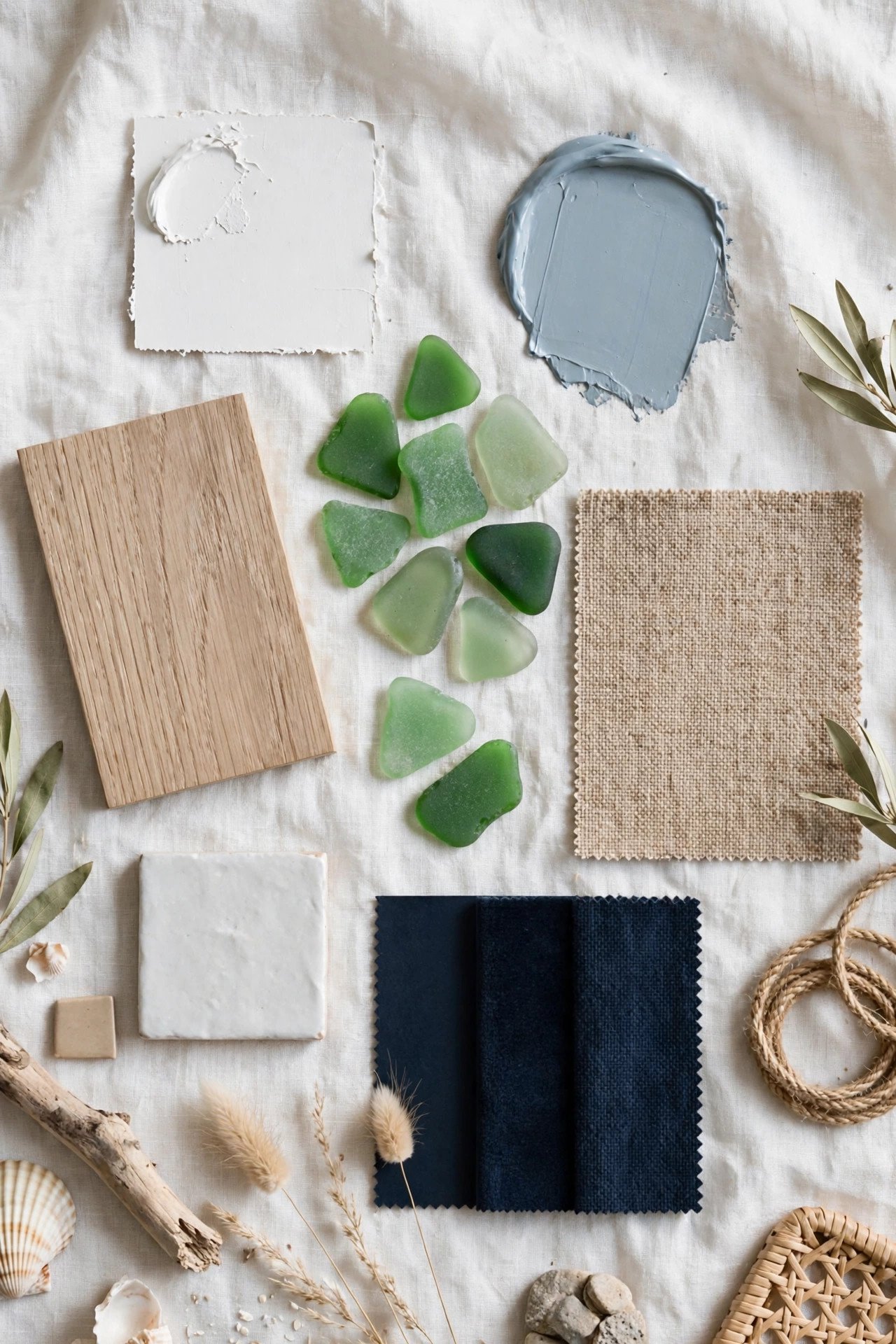
Salt White goes on the walls and the main cabinets. It is white with warmth in it, like sea foam in sunlight. It keeps the room bright without the chill of a true white. If your kitchen faces north, this color will forgive that.
Sea Mist is the softest blue grey, for an island or a bank of lower cabinets. It is the color of the horizon on a hazy morning. Used on one element, it gives the room depth without any real contrast.
Driftwood is the wood tone. Pale, weathered, sun bleached. Open shelves, the island top, a vintage stool. When all the wood in the room shares this tone, the room feels gathered instead of decorated.
Sea Glass is your accent, used with intention. Handmade tiles, a stack of bowls, a linen runner. It brings the living color of the shore into the room and keeps all the neutrals from feeling sleepy. When you are tempted to add more, remember that the sea itself is mostly white and blue with only flashes of green.
Sand Dollar softens the textiles and the floor. A jute runner, linen curtains, a sisal rug by the sink. It is the warm neutral that keeps the blues from turning cold.
Deep Tide appears in the smallest doses. A navy stripe in the runner. The inside of a glass front cabinet painted dark. A single vase. Just enough depth to give all that lightness something to lean against.
The rule is simple. Walls and big pieces stay in the first three colors. The last three show up in objects you can hold in one hand. For more color inspiration, browse our whimsical wallpaper roundup, though in a kitchen, paint beats pattern every time.
Nothing in the room should feel precious. Everything in the room should feel fresh.
How to Style It, Step by Step
Step 1. Lighten the walls. Two coats of Salt White in a washable matte or eggshell. This is the foundation of everything. A pale wall bounces light into every corner and makes even a small kitchen feel twice its size. Do not skip the ceiling. A bright white ceiling lifts the whole room.
Step 2. Refresh the cabinetry. Paint the boxes in Salt White and consider Sea Mist for the island. New cup pulls in brushed brass. If full repainting is too much, start with the hardware. Swapping knobs for brass cup pulls changes the feel of the kitchen in an afternoon.
Step 3. Set the stone. Honed quartzite or marble on the counters, with soft veining. If new counters are out of reach, a large oak cutting board and a stone tray on the existing counter shift the feeling for a fraction of the cost. The eye reads the materials at hand level first.
Step 4. Warm the metal. Brushed brass faucet, matching pendants over the island, cup pulls on every door. Keep every warm finish identical. When all the metal matches, the kitchen feels designed instead of assembled.
Step 5. Open a shelf or two. Remove the doors from one upper cabinet or add floating oak shelves beside the window. Style them with everyday dishes in white and sea glass blue. Leave breathing room. A crowded open shelf is worse than a closed cabinet.
Step 6. Layer the textiles, then edit. Linen cafe curtains. A jute runner. A bowl of lemons on the island. A small olive tree in the corner if the light allows. Then take one thing away. Whatever you remove, the room will be better for its absence. That final edit is the most coastal thing you will do.
Designer Tips
Choose honed over polished on every stone surface. Counters, backsplash, even the soap dish. Honed finishes soften light and hide crumbs alike. Polish is the enemy of calm.
Cap the palette at five tones. Count them on one hand as you shop. If a piece introduces a sixth color, it does not come home. This one discipline does more for the room than any single purchase.
Avoid nautical theme decor. The anchor bookends, the rope mirror, the sign that says beach. Kitsch is the fastest way to undo everything. Real materials and real light will say coastal far more eloquently than any novelty ever could.
Spend on the faucet and the stone, save on the decor. These are the pieces your eye lands on every day and the pieces you will keep longest. A beautiful faucet with simple shelves around it beats a budget faucet surrounded by expensive styling.
Avoid going all cool grey. Grey cabinets, grey floors, grey counters. Without warmth it turns flat and joyless. The Driftwood wood tones and Sand Dollar textiles exist to keep the room human. Warmth is not optional here.
Layer the lighting. Overhead cans on a dimmer for cooking, pendants over the island for the flattering stuff, under cabinet strips for the work zones. One harsh light flattens everything. Three soft ones make the room glow.
Choose washable everything. Curtains, runners, seat cushions, aprons. A kitchen textile that cannot go in the machine is a future regret. Beauty you can wash is beauty that lasts.
Avoid cluttered open shelves. The rule is half full, always. Stack the white bowls, line up the glasses, leave air between groups. An open shelf styled like a shop display will make you close the cabinet doors again within a month.
Finishing Touches to Shop
This guide contains affiliate links. If you buy through them, we may earn a small commission at no extra cost to you.
Once the bones of the room are in place, a few considered pieces complete it. Each one below earns its place by being beautiful, useful, and built to stay. And if you like to mark the seasons softly without disturbing the freshness, our 5 Must Have Amazon Fall Decor Finds roundup includes a few textures that layer into this palette nicely.
Sea Glass Blue Stoneware Dinnerware Set. Reactive glaze in soft ocean tones, dishwasher and microwave safe. The everyday dishes that make open shelves worth having.
Handwoven Jute Runner Rug. Natural fiber, soft underfoot, hides crumbs between cleanings. The Sand Dollar tone, right where you stand.
Brushed Brass Kitchen Faucet with Pull Down Sprayer. Warm finish, solid feel, the jewelry of the sink. Touched a hundred times a day, worth every penny.
Washed Linen Cafe Curtains. Light filtering, machine washable, moving with the breeze. Privacy without blocking the light.
Acacia Wood Cutting Board Set. Three sizes, beautiful enough to leave out. The Driftwood warmth, right on the counter.
Blue and White Striped Cotton Hand Towels. Classic stripe, quick drying, softer with every wash. The Deep Tide note, right where you reach for it.
Coastal Kitchen Q and A
My kitchen is small and dark. Will this style help or hurt?
It helps enormously. Pale walls and cabinets bounce whatever light exists into every corner. A mirror or glass fronts double it. Warm metal and wood keep it from feeling cold. This style was made for rooms that need light, which is exactly what a small dark kitchen needs most.
Can I do this on a budget?
Yes, and paint does most of the work. Salt White on the walls and cabinets, new brass hardware, linen curtains, a jute runner. The faucet is the one place to spend if you can. Everything else can be thrifted, handmade, or slowly collected. Shop secondhand for the wood pieces first, since vintage oak and pine already have the patina this style wants. Fresh is a feeling, not a price tag.
I rent. What can I change without renovating?
Almost everything that matters. Peel and stick backsplash tiles in sea glass tones. New cabinet hardware, kept in a bag for move out day. Linen curtains on a tension rod. A jute runner, open style baskets, a bowl of lemons. A freestanding oak shelf can hold the pretty dishes without touching the walls at all. Keep the counters and the cabinets. Change the light, the metal, and everything you can touch.
How do I keep it from feeling like a beach themed gift shop?
Restraint and real materials. One shell in a bowl, not a shelf of them. Real linen, not printed sailboats. No signs with words on them, no rope wrapped anything. The rule from the palette section holds. If it looks like it came from a souvenir shop, it does not come home.
My kitchen already has warm wood floors. Will the pale cabinets fight them?
They will love them. Warm floors are the Driftwood tone doing its job already. Paint the cabinets Salt White, echo the floor tone in open shelves or the island top, and the room will feel connected instead of patched. What to avoid is adding a second, different wood tone that competes.
Will open shelving just collect dust and grease?
Only if you style it wrong. Keep everyday dishes there, the ones you use and wash constantly. They never sit long enough to gather dust. Reserve closed cabinets for the rarely used pieces. The half full rule from the tips section keeps shelves easy to wipe and pretty to look at.
Until the Next Guide
A coastal kitchen is not finished in a weekend. It is gathered slowly, one considered piece at a time, and it gets better as the stone ages and the linen softens. Start with the light and the paint. Add the wood and the warm metal. Let the rest arrive when it is right.
This is one of our design guides, and more design guides are on the way. Each one follows the same idea. Fewer, better choices. Rooms that lift the people in them. If this kind of freshness speaks to you, our pumpkin decor ideas show how warm autumn tones can layer into a pale kitchen without disturbing the calm. We hope this one brings a little sea air into your every day.