
Some gardens are planted. A zen garden is composed. This is our complete guide to building a quiet corner of your yard where raked gravel, stone, and still water slow everything down.
The Stillest Corner of Your Yard
Every yard has a loud corner and a quiet one. The loud corner is where the grill lives, where the kids run, where the hose gets tangled. The quiet corner is the one you walk past without noticing. It gets the morning sun or the evening shade. Nothing much happens there. That is your zen garden, waiting.
A zen garden is not really about Japan, though it borrows the vocabulary. It is about what happens to your nervous system when the ground is calm, the plants are few, and nothing in the space is asking for your attention. Raked gravel does not need watering. A boulder does not need pruning. The whole point is a garden that gives more than it takes.
This matters more than it sounds. Most of us garden the way we scroll. A little of this, a little of that, always adding. The zen garden is the opposite discipline. It asks what you can take away. Fewer plants. Fewer colors. Fewer objects. What remains has to be beautiful, because there is nowhere for anything ordinary to hide.
You do not need a big yard. Some of the best zen gardens are ten feet square, tucked beside a garage or behind a fence. Small is actually an advantage. A small garden is easy to rake, easy to weed, and easy to keep beautiful. A large one becomes a chore, and a chore is the opposite of zen.
There is also no need to be precious about authenticity. You are not building a temple garden in Kyoto. You are building a place to drink your coffee in the morning and exhale. Borrow the principles. Skip the rules that do not serve your climate or your life. A zen garden in a northern climate will look different from one in Kyoto, and that is exactly as it should be.
This is one of our design guides, and we wrote it for the corner of the yard you keep meaning to do something with. If you love the idea of a calm outdoor room, our fall front entryway ideas bring some of the same quiet thinking to the front of the house. More design guides are on the way, each one built the same way. Slowly, carefully, and meant to last.
A zen garden is not a place to look at. It is a place to be still in.
The Key Elements of a Zen Garden
1. Raked Gravel, the Quiet Ground
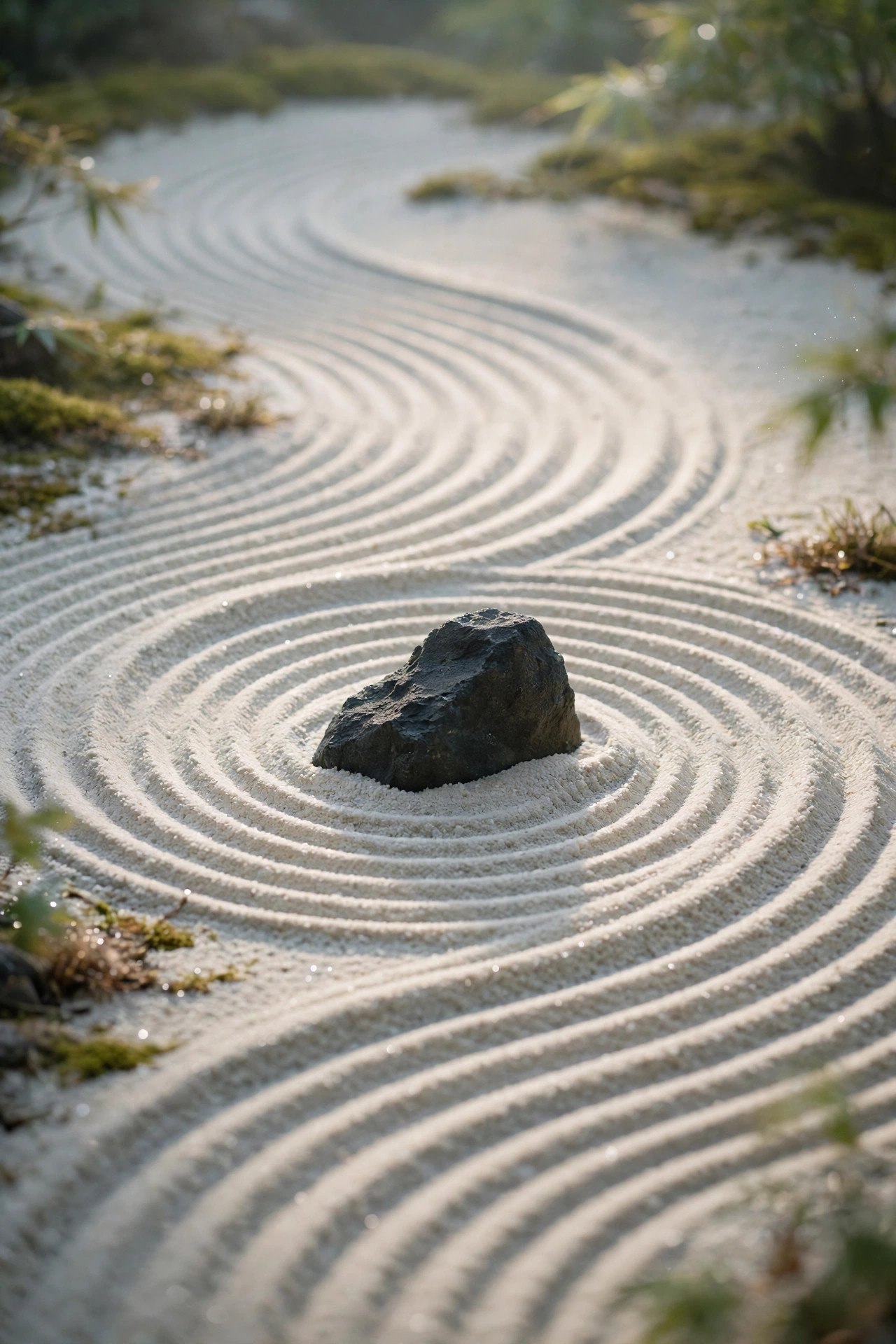
Everything starts with the ground. In a zen garden the ground is not soil to be covered. It is the largest design element in the space. Pale gravel, raked into slow curves, reads as water from a distance and as texture up close. It is the canvas every other element sits on.
Choose a fine crushed gravel in a light tone, something like decomposed granite or pale pea gravel. Lay landscape fabric underneath to stop weeds, then spread the gravel three to four inches deep. Edge the bed with stone, steel, or wood so the gravel stays where you put it and the lawn stays out.
The raking is the ritual. A simple wooden rake with widely spaced teeth makes the classic wave patterns. Rake in the morning when the light is low and the day is quiet. The pattern does not need to be perfect. It needs to be tended. A freshly raked bed tells you, every time you see it, that someone cares for this place.
2. Stones with Presence
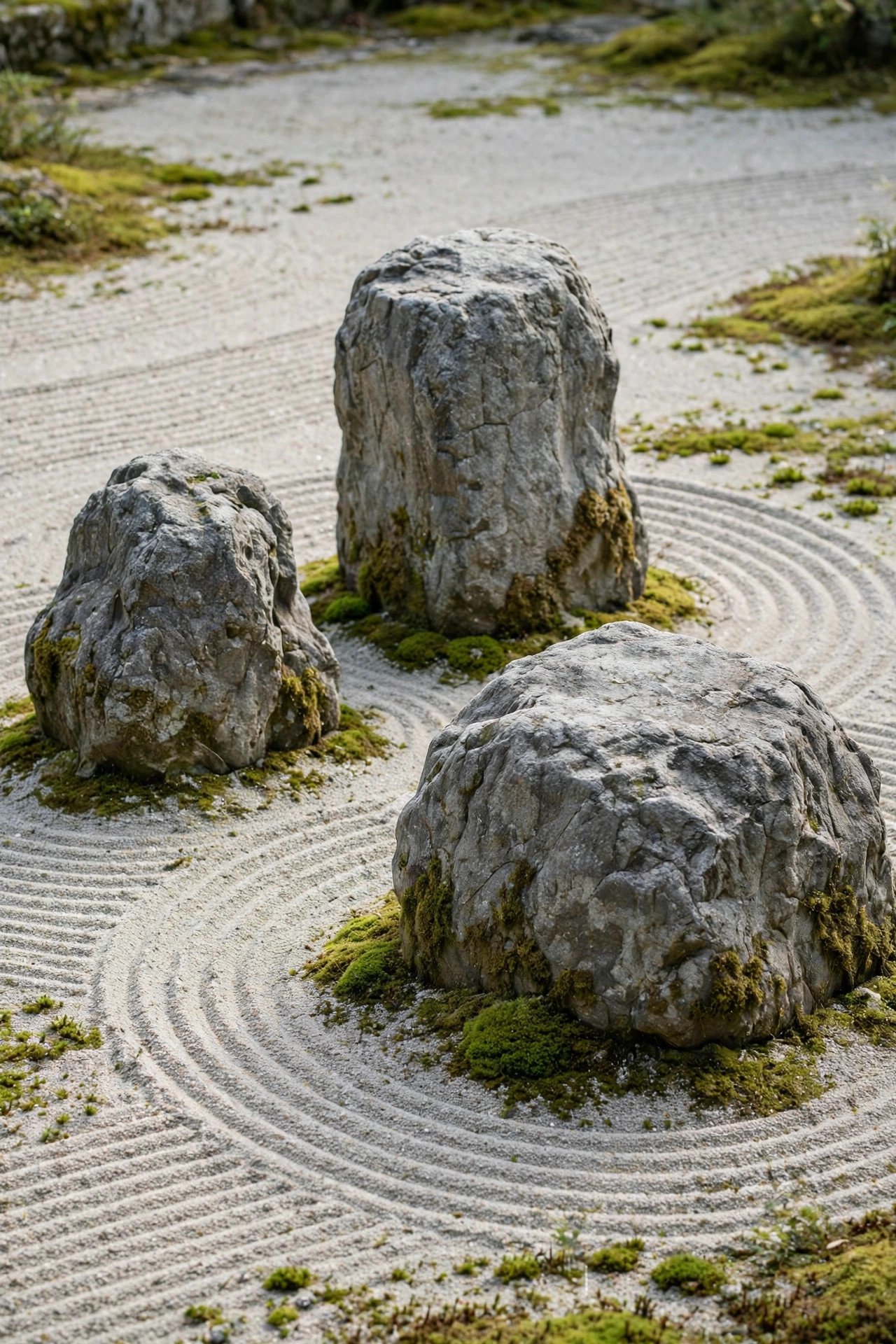
Stones are the architecture of the zen garden. They give it height, weight, and permanence. A good boulder does more work than a dozen small plants. It anchors the space the way a fireplace anchors a room.
Work in odd numbers. Three, five, or seven stones grouped together will always look more natural than pairs. Bury each stone about a third of its height so it looks settled rather than placed. Tilt them slightly, the way stones sit in nature, never perfectly upright.
Buy local stone if you can. A quarry within driving distance sells boulders for a fraction of what a garden center charges, and local stone looks like it belongs. Granite, limestone, and fieldstone all work. What matters is that the stones relate to each other. One red boulder among grey ones will shout. A family of greys will hum.
3. Water, Still and Slow
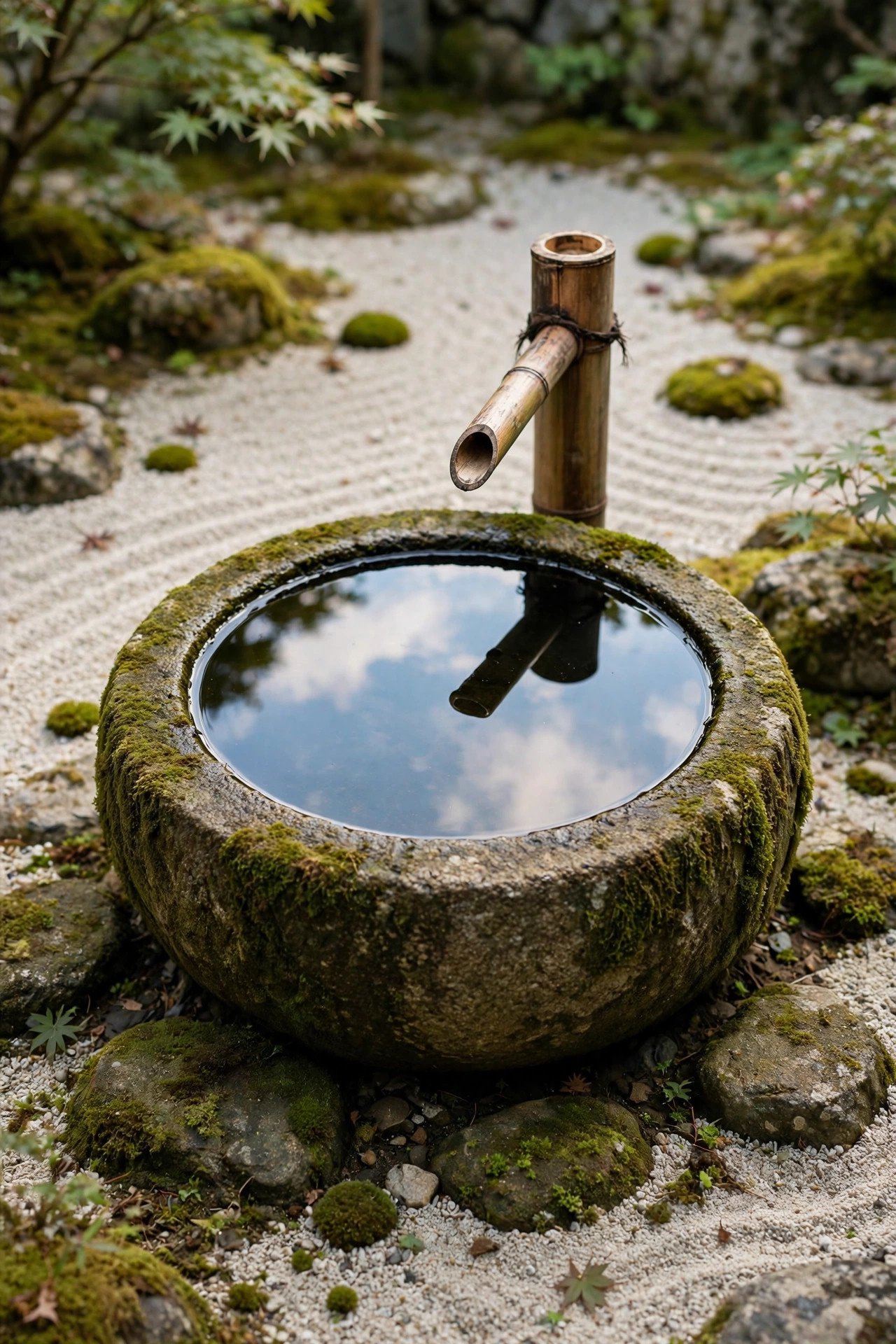
Water in a zen garden is not a feature. It is a mirror. A small basin of still water doubles the sky and quiets the whole composition. You do not need a pond. A stone basin on a bed of gravel, filled from the hose, does the job beautifully.
The classic form is the tsukubai, a low stone basin with a bamboo spout. Water trickles in and overflows softly onto the gravel below. The sound is barely there, which is the point. It is background, not entertainment. A small solar pump keeps it moving without wiring or plumbing.
Place water where you will see it from your seat. That is the only rule that matters. A basin hidden behind the stones is a basin wasted. And keep it simple to clean. A basin you can empty and scrub in ten minutes will stay beautiful. A pond with a liner and a filter is a different hobby entirely.
4. Greenery with Restraint
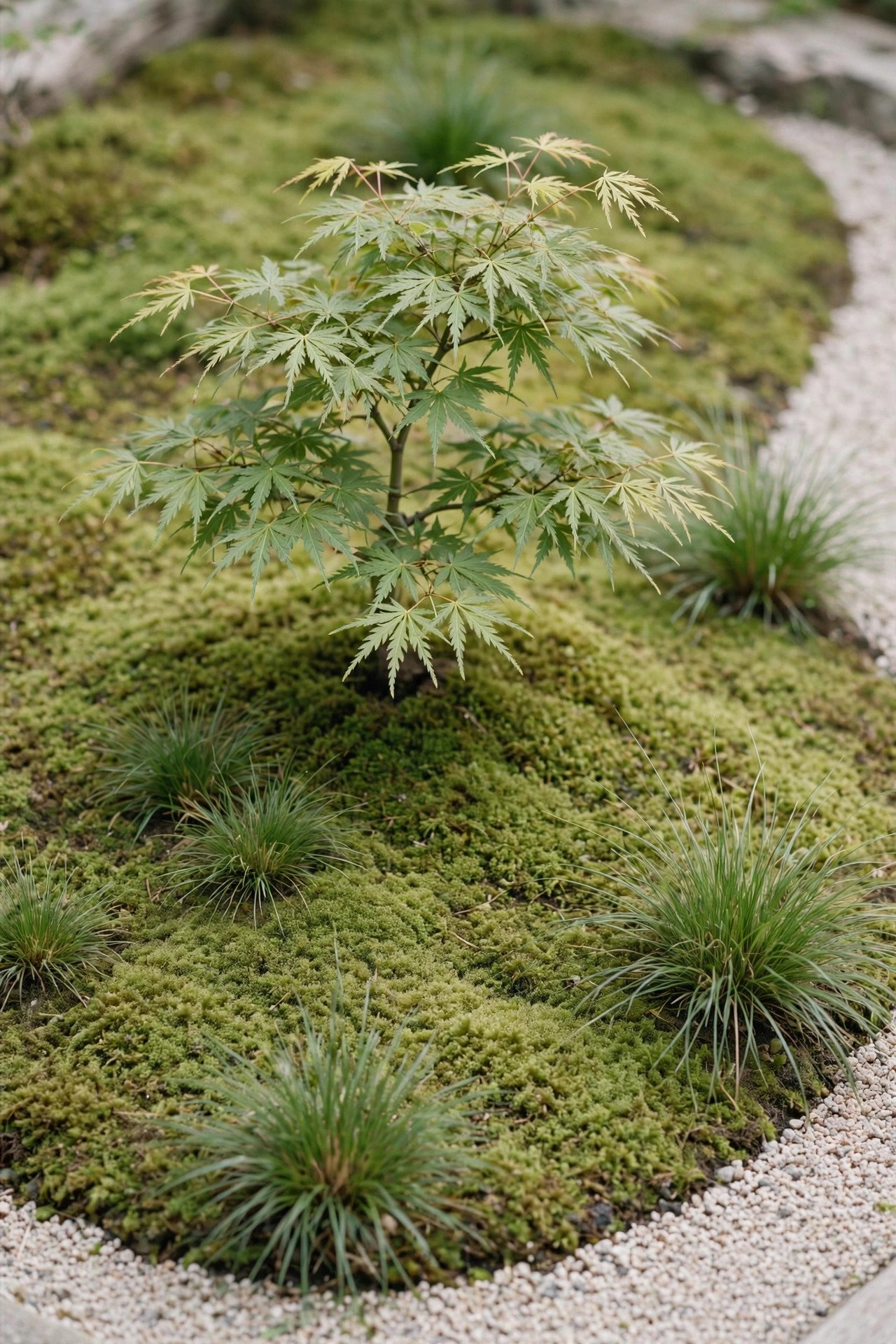
Plants in a zen garden are punctuation, not prose. Every plant should earn its place by being beautiful in at least two seasons and interesting in all four. This is not the garden for the clearance rack impulse buy.
Start with one small tree if you have room. A Japanese maple is the classic choice, and dwarf varieties stay polite in small spaces. Under it, moss or a low groundcover softens the ground. Ornamental grasses add movement. A single pine, pruned slowly over the years, becomes sculpture.
Limit the palette of green. Three to five plant varieties is plenty. When every plant is a different species, the garden reads as a collection. When a few plants repeat, it reads as a design. Our pumpkin decor ideas show the same restraint indoors, where a few good gourds beat a crowded mantel.
Avoid bright flowers. This is one of the few garden styles where blooms are a distraction. If you need color, let it come from the maple in fall or the grasses in late summer seed. The garden is at its best when it is almost monochrome.
5. One Place to Sit
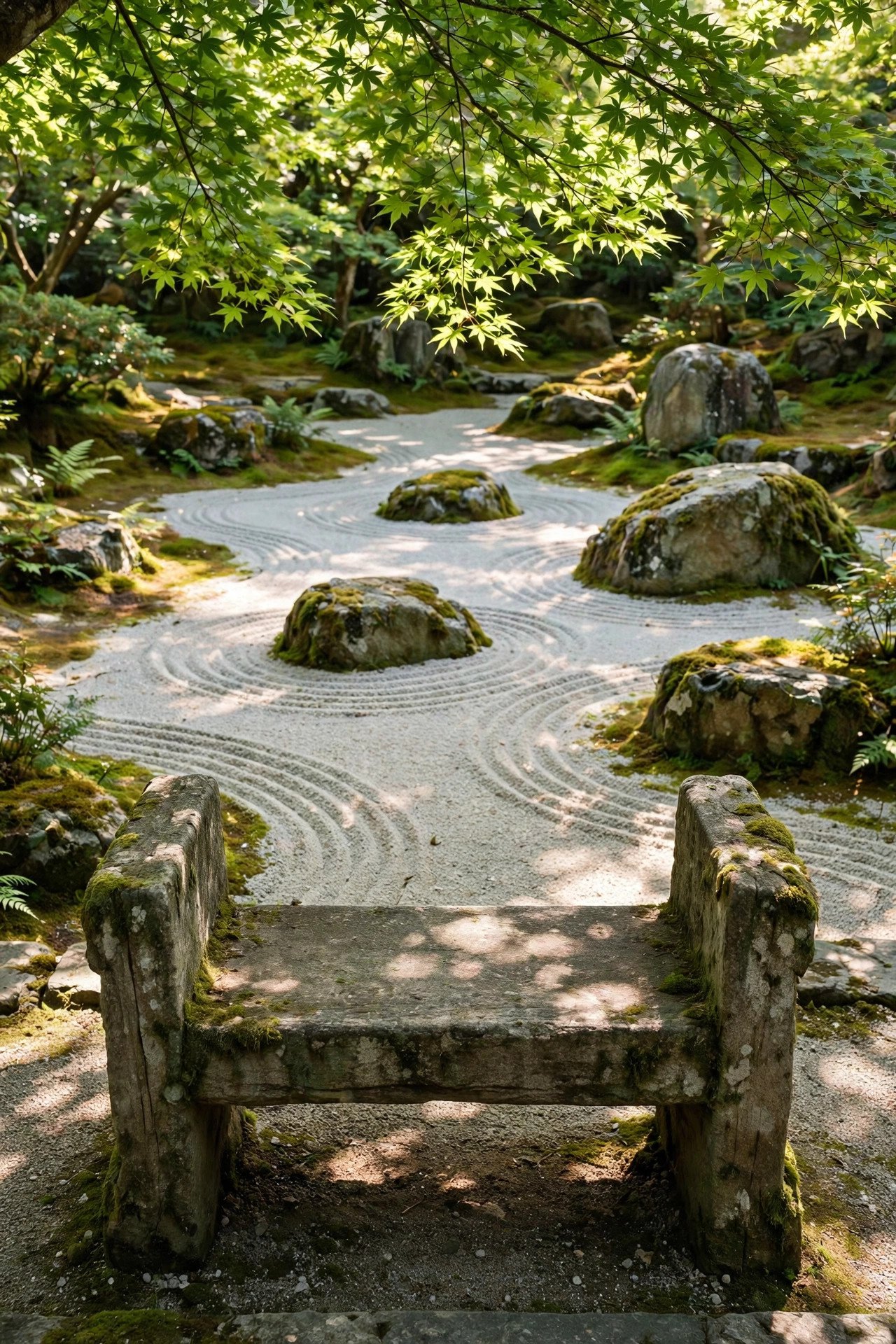
A zen garden without a seat is a picture. A zen garden with a seat is a practice. You need one place to sit, positioned to take in the whole composition, and it should be the most comfortable simple thing you can find.
A stone bench is the traditional choice, and it weathers beautifully. A simple teak bench works just as well and is easier to move. If the garden is tiny, a large flat boulder or a thick round cushion on a low platform is enough. The seat should feel like part of the garden, not furniture placed in it.
Face the seat toward the best view, which is usually the raked bed and the stones. Give it a little shelter if you can. The overhang of a tree, the lee of a fence. A seat that is comfortable in sun and in light rain gets used. A seat that is only pleasant at noon in June does not.
6. Warm Light After Dark
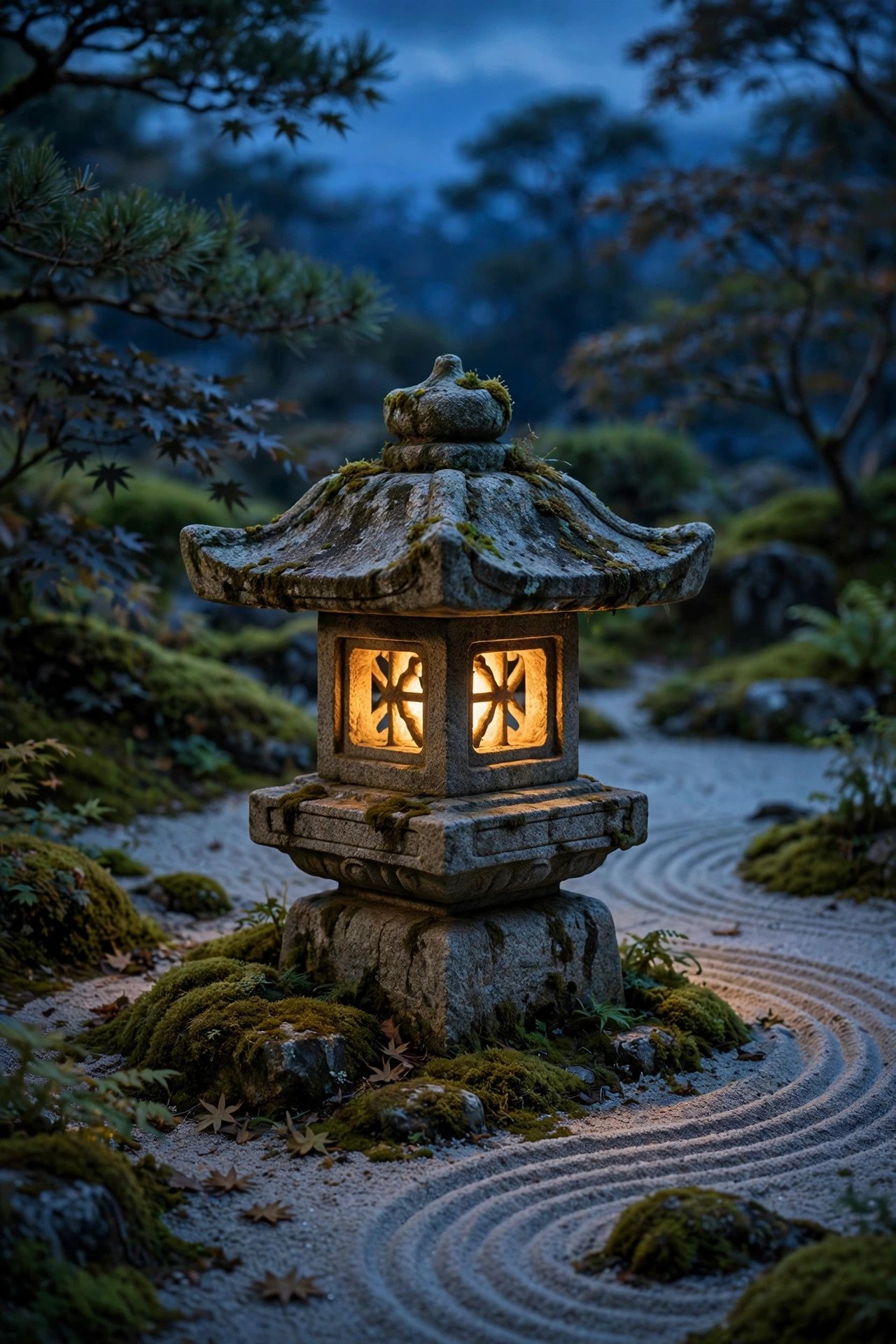
A zen garden should not disappear at sunset. A few points of warm light keep it present in the evening and make it visible from the house, which is when you will look at it most in the colder months.
Stone lanterns are the classic, and a single well placed one is worth more than a row of small ones. Solar path lights have improved enormously. Choose warm white, never cool blue, and keep them low. The light should graze the gravel and catch the edges of the stones, not flood the space.
Candles in glass lanterns are the simplest option of all. Two or three on the ground near your seat, lit when you sit down, blown out when you leave. There is something about real flame that no solar light reproduces. It flickers. It asks for your attention the way the garden does.
The Palette
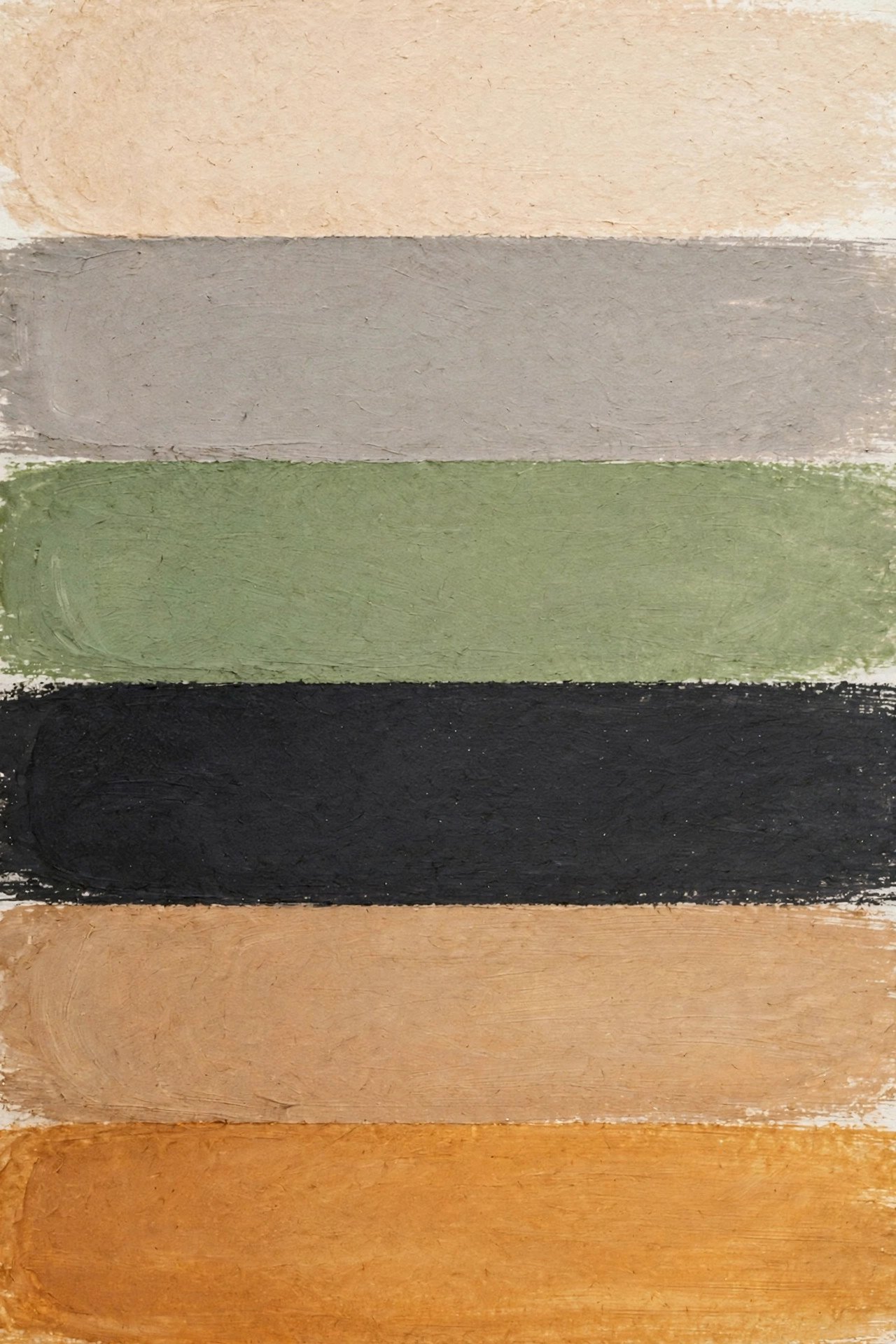
Every zen garden is painted from the same small box of colors. Learn their names and where each one lives, and the space almost styles itself.
Raked Sand is the ground itself. Pale, warm, and light enough to glow at dusk. It covers the largest area, so get the tone right. Too white and it glares. Too dark and it disappears.
River Stone belongs to the boulders, the stepping stones, and the basin. A mid grey with warmth in it. It is the color that ties the garden to the landscape around it.
Moss lives in the shaded corners and at the feet of the stones. It is the softest green there is, and it asks for nothing but shade and a little moisture.
Charcoal Ink shows up in small, strong doses. The stone lantern. A dark ceramic basin. The edging that holds the gravel. Just enough dark to give the pale ground something to lean against.
Bamboo is for the verticals. A simple screen fence. A spout over the basin. Tall grasses that move in the wind. It brings height without heaviness.
Lantern Glow is the color of the garden after dark. Warm amber, candlelit, low. It is not a paint color so much as a reminder. Plan the light the way you plan the plants.
Keep the built elements in the first four colors and let the last two arrive naturally. When the palette stays this quiet, a single red maple leaf on the gravel becomes an event.
Tend the garden a little every day, and it will tend you back.
How to Style It, Step by Step
Step 1. Choose your corner and clear it. Pick the quietest spot you have, ideally visible from a window you look out of daily. Clear everything out. Weeds, old pots, the broken chair. Start with empty ground.
Step 2. Define the ground plane. Lay landscape fabric, set your edging, and spread the gravel three to four inches deep. This is the biggest physical job and the most important. A crisp edge between gravel and lawn is what makes the whole thing read as intentional.
Step 3. Place the stones. Set your boulders in odd numbered groups, buried a third deep, tilted naturally. Step back often. Walk to the window you will view it from. The garden is composed for that view more than for any other.
Step 4. Add the water. Set the basin where you will see it from your seat. Fill it. If you are using a solar pump, place the panel where it gets full sun. Listen for the sound. It should be barely there.
Step 5. Plant with restraint. One small tree, groundcover or moss, a few grasses. Plant in drifts, not dots. Water everything in well. Then stop. You can always add next year. You cannot unsee a crowded garden.
Step 6. Set the seat and the light, then sit. Place the bench or cushion facing the composition. Set the lantern and the path lights. Then sit down with your coffee and do nothing. If the garden does not slow you down in the first five minutes, move one thing and try again.
Designer Tips
Buy stone by the truckload, not by the bag. A local quarry or landscape supplier sells boulders and gravel for a fraction of garden center prices. One delivery beats twenty bags from the hardware store.
Avoid the full koi pond. A pond with fish is a second pet that lives outside year round. It needs filtration, winter care, and heron defense. A simple basin gives you ninety percent of the calm for ten percent of the work.
Rake in the morning. Ten minutes with the rake, coffee in hand, before the day starts. The pattern will not last, and that is the lesson. The garden teaches impermanence whether you want the lesson or not.
Avoid bright annuals. The red geraniums and yellow marigolds belong to a different garden. In a zen garden they read as shouting. If you must have flowers, let them be white and few.
Keep it small enough to tend. A zen garden you can maintain in an hour a week stays beautiful. One that needs a weekend stays weedy. Start smaller than you think. You can always expand.
Avoid plastic ornaments. No resin pagodas, no painted frogs, no color changing globes. Every object in the garden should be made of stone, wood, bamboo, or metal. If it plugs in or looks like it should, it does not belong.
Light warm and low. Every light in the garden should be warm white and close to the ground. Cool white light makes stone look like a parking lot. Uplights in trees are for other gardens.
Avoid the urge to fill every corner. The empty stretch of raked gravel is not wasted space. It is the point. When you feel the itch to add one more plant, rake instead.
Finishing Touches to Shop
This guide contains affiliate links. If you buy through them, we may earn a small commission at no extra cost to you.
Once the bones of the garden are in place, a few considered pieces complete it. Each one below earns its place by being beautiful, useful, and built to stay. For seasonal texture that layers into the calm, our 5 Must Have Amazon Fall Decor Finds roundup has a few natural pieces that work outdoors too.
Granite Pagoda Stone Lantern for the Garden. The single most transformative piece in the space. A hand carved stone lantern glows from within and anchors the whole composition, day and night.
Japanese Zen Garden Rake and Gravel Pattern Tool Set. The right rake makes the ritual easy. Wide spaced teeth for waves, fine teeth for smoothing, and a small hand rake for tight corners.
Solar Powered Water Pump for Birdbath and Basin. No wiring, no plumbing. Drop it in the basin, set the panel in the sun, and the water moves. Still water with a little life in it.
Round Zafu Meditation Cushion in Natural Cotton. For the seat. Firm, low, and honest. Bring it inside when it rains and it lasts for years.
Black Ceramic Tsukubai Style Water Basin. Dark glaze, simple form, deep enough for a small pump. The still dark surface mirrors the sky like nothing else.
Outdoor Glass Candle Lanterns, Set of Two. Warm flame light for the evenings you sit out. Heavy glass stands up to wind, and the glow on gravel is unmatched.
Zen Gardens Outdoor Q and A
I only have a small balcony. Can I still do this?
Yes, and a balcony might be the perfect place. A shallow tray of fine gravel on a sturdy table becomes a desktop zen garden. Add three small stones, a tiny basin or even a dark bowl of water, and one small plant. Rake it with a tabletop rake while your coffee brews. The principles scale down beautifully. Small is not a compromise here. It is the ideal.
What does this cost? I am on a budget.
Less than almost any other garden style. Gravel is cheap by the bag and cheaper by the truckload. Local fieldstone is often free if you haul it. A bag of moss, a young maple, and a bag of grass seed cover the planting. The lantern is the one piece worth spending on. Skip the water pump for now and fill the basin by hand. You can build a beautiful small zen garden for the cost of a nice dinner out.
How much maintenance does it really need?
About an hour a week in the growing season, less the rest of the year. Rake the gravel when it looks tired. Pull the weeds that sneak through the fabric. Top up the basin. Prune the maple once a year. That is honestly it. The zen garden was designed by people who valued contemplation over chores, and it shows.
What about winter? I live somewhere with real snow.
Winter is when the garden earns its keep. Snow on raked gravel and dark stone is stunning, and you will see it from the house for months. Drain the basin before the hard freeze so it does not crack. Bring the cushion inside. Leave everything else. The stone lantern in snow, lit from within, is one of the great winter sights. Our warm minimalist living room ideas for fall carry the same calm indoors while the garden sleeps.
I rent. Can I build something I can take with me?
Build it in containers. A large low planter becomes the gravel bed. Stones sit on top, no burying needed. The basin, the lantern, and the seat are all portable. When you move, the whole garden moves with you. Avoid anything that requires digging or permanent edging. A renter’s zen garden on a patio is completely doable.
Will the neighbors think it is just an empty patch of gravel?
Maybe, at first. Then they will see you out there in the morning with your rake and your coffee, and they will start asking questions. A zen garden is not decorated to impress the street. It is composed to settle the person who tends it. Build it for yourself. The admiration tends to follow anyway.
Until the Next Guide
A zen garden is not finished in a weekend. It is raked and re raked, adjusted stone by stone, and it gets better as the moss settles in and the maple finds its shape. Start with the ground and the stones. Add the water and the seat. Let the rest arrive when it is right.
This is one of our design guides, and more design guides are on the way. Each one follows the same idea. Fewer, better choices. Spaces that calm the people in them. If you love this kind of quiet outdoors, browse our fall decor ideas for ways to carry it through the seasons. We hope this one brings a little more stillness to your busiest days.