
Some patios are furnished. An earth tones patio is rooted. This is our complete guide to building an outdoor room in clay, sand, stone, and sage, the kind of space that feels like it grew there instead of being delivered there.
The Most Honest Room of the House
Every house has one room that cannot lie. Indoors, you can fake a mood with paint and curtains. Outdoors, the light is real, the wind is real, and anything precious gets humbled fast. That is exactly why the outdoors is the best place to practice earth tones. Clay, sand, stone, and sage were outside before they were ever inside. They do not fade in the sun. They do not argue with the garden. They get better the more weather they see.
Earth tones are the meeting point of the landscape and the living room. From the landscape come the colors. Terracotta, dune, river rock, olive. From the living room comes the comfort. Deep seats, soft throws, light you can read by. Put them together and you get a space that works like a room and feels like the ground it sits on. Natural but never rugged. Comfortable but never fussy.
It is a style built on golden hour. Anyone who has watched the sun go down over a garden knows the moment this palette was made for. Terracotta pots glow. Linen cushions go honeyed. Stone holds the warmth of the day a little longer. An earth tones patio is designed to be at its best in the evening, which is exactly when you will use it most.
A patio turns out to be the perfect place for this restraint. Outdoor space is limited in most homes, and every piece has to earn its footprint. A small patio with four beautiful pieces in warm earth tones feels generous. The same patio crowded with bright plastic and busy patterns feels like a storage yard. Fewer, better choices matter more outside than anywhere else.
There is a practical side too. Earth tones hide real life. Dust on a sand colored cushion barely shows. A terracotta pot with a water mark looks more authentic, not less. Faded black plastic chairs scream neglect. Weathered teak whispers that someone lives here and loves it.
And then there is you. The person who will drink coffee out here in May and wrap up in a blanket out here in October. An outdoor room extends your home by a season on each end if you style it right. Morning light on stone. Evening candles in glass. The faint smell of cedar and cut grass. It is the cheapest addition you will ever build.
This is one of our design guides, and we could not wait to get outside with this one. If the rooms inside your house are getting calmer and warmer, the patio is where that feeling finishes. You will find more inspiration for the threshold between indoors and out in our fall front entryway ideas that make your home feel warm and welcoming. More design guides are on the way, each one built the same way. Slowly, carefully, and meant to last.
Design for golden hour, and the space will forgive every other hour of the day.
The Key Elements of an Earth Tones Outdoor Room
1. A Grounded Seating Set in Teak or Acacia
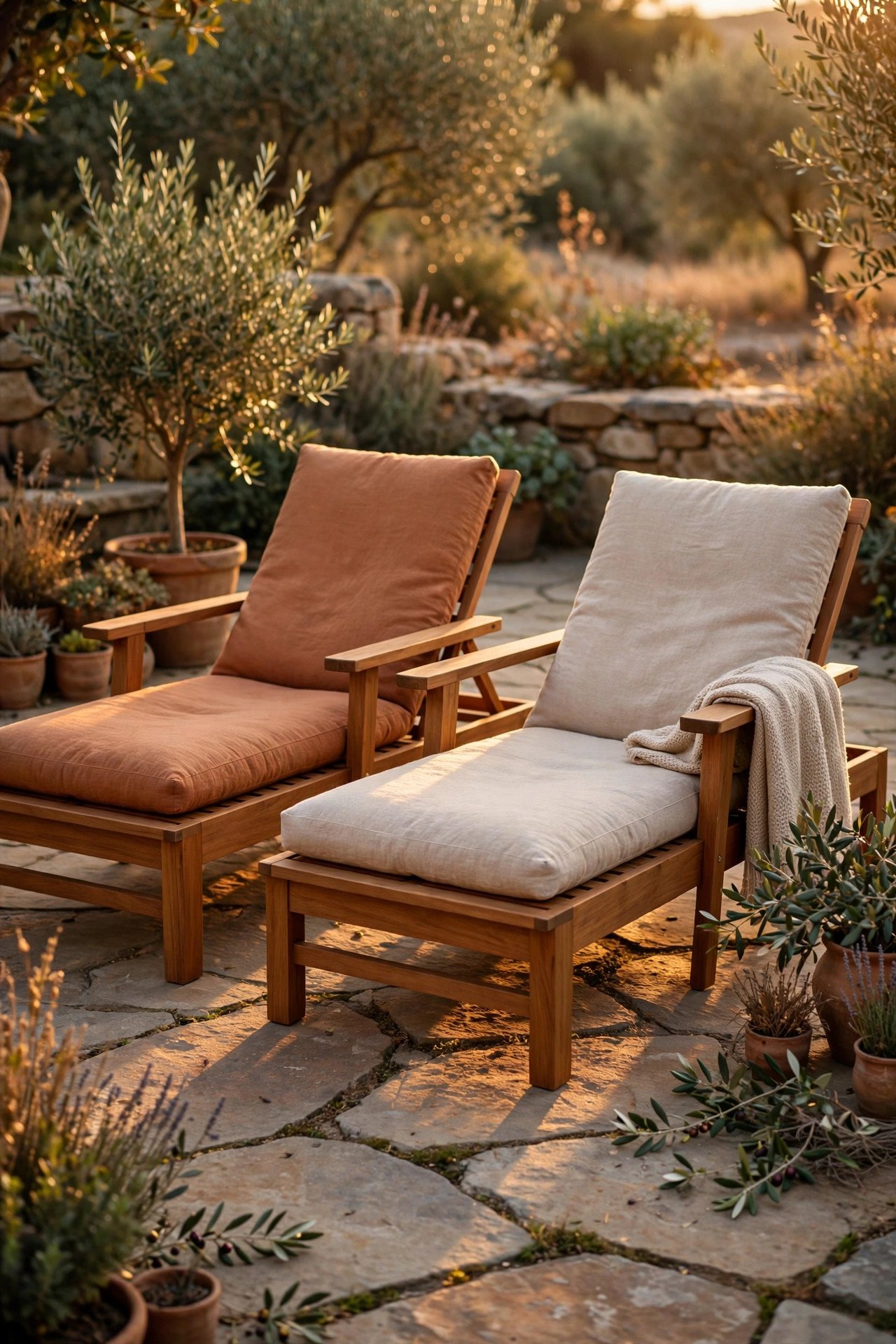
Everything outdoors orbits the seating, so this is the piece to get right. Look for solid teak or acacia with simple lines and a low, settled profile. The wood should look like it belongs next to soil and stone, not like it escaped from a dining room. Deep seats, real weight, joinery you can see.
Finish matters as much as form. Let teak go silver if you love that look, or oil it once a season to keep the honey tone. Acacia holds a warm brown with minimal care. What you are avoiding is the fake wood grain printed on metal, which peels, chips, and lies about what it is. Real wood weathers. Fake wood just fails.
Buy fewer seats than you think you need. Two generous lounge chairs and a small side table beat a six piece set that crowds the patio. Outdoor rooms are for lingering, not for seating charts. Leave space to walk around everything with a tray in your hands.
2. Terracotta and Clay Planters
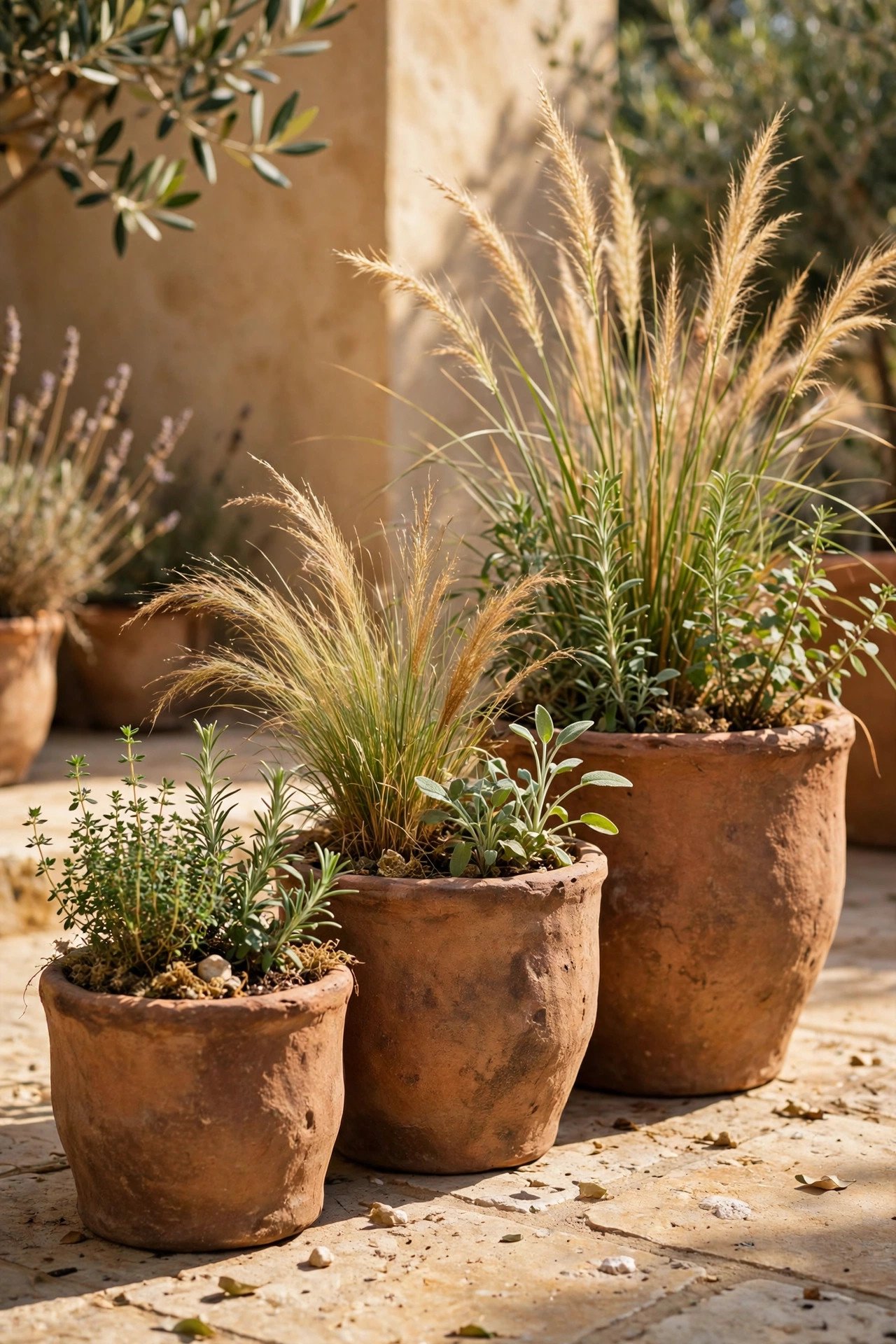
Terracotta is the heartbeat of this style. It is the color of canyon walls and garden soil, and a little of it goes a very long way. Think a trio of clay pots by the door, a big planted urn anchoring a corner, small herb pots lined along the table. These are small doses of a powerful color, and that restraint is what keeps it sophisticated.
Choose pieces with variation. Real terracotta is never one flat orange. It shifts from blush to rust to deep sienna in different light, and handmade pots carry thumbprints and kiln kisses that make each one slightly different. Let those imperfections show. They are what separate the real thing from the imitation.
Group in odd numbers and vary the heights. Three pots of different sizes read as a composition. Six identical pots in a row read as a garden center. Fill them with things that spill and trail. Rosemary, thyme, trailing verbena. They belong in the same burnt orange family as our pumpkin decor ideas, which is why this palette slides so easily into fall.
3. Layered Outdoor Textiles
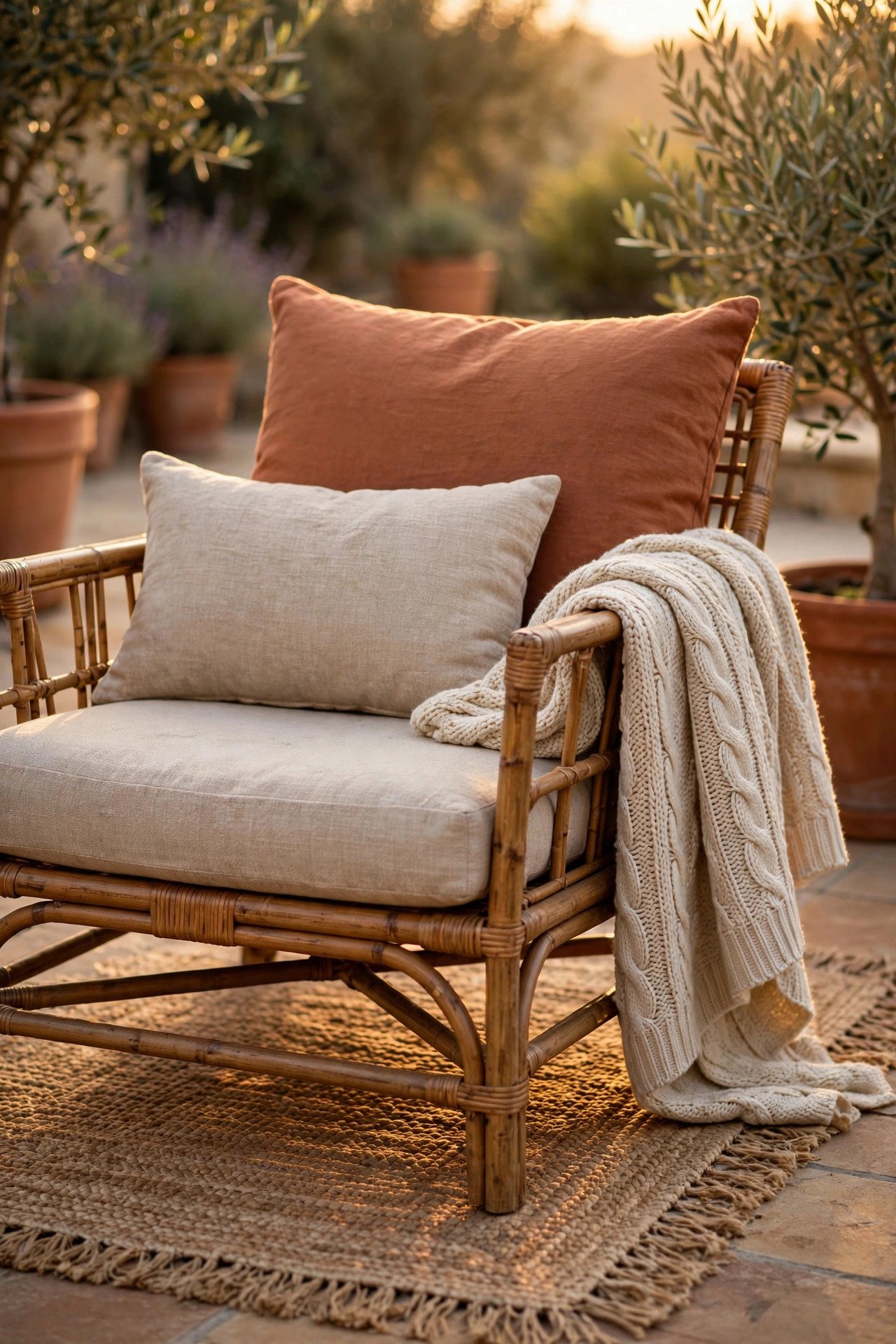
If earth tones have a signature sense, it is touch. This is a style you feel with your hands as much as your eyes. A flat weave outdoor rug in jute and sand. Linen look cushions in clay and oat. A knit throw for the cool evenings. Each one is soft in a different way, and that variety is what keeps a neutral patio interesting.
Layer the way you would indoors. Rug under the seating, cushions on the chairs, throw over the arm. The pieces just need to be tougher. Solution dyed acrylic and outdoor rated cotton laugh at sun and sudden rain. Bring the throw inside when the sky turns truly dark, and it will last for years.
Keep the colors in the family. Creams, oatmeal, soft rust, faded terracotta, a whisper of sage. The textiles can carry the most pattern in the space, so let them, as long as every piece shares at least one tone with another. The same layering instinct runs through our warm minimalist living room ideas for fall, which proves this palette works as well on a sofa as it does on a patio.
4. Warm Lantern and Candle Light
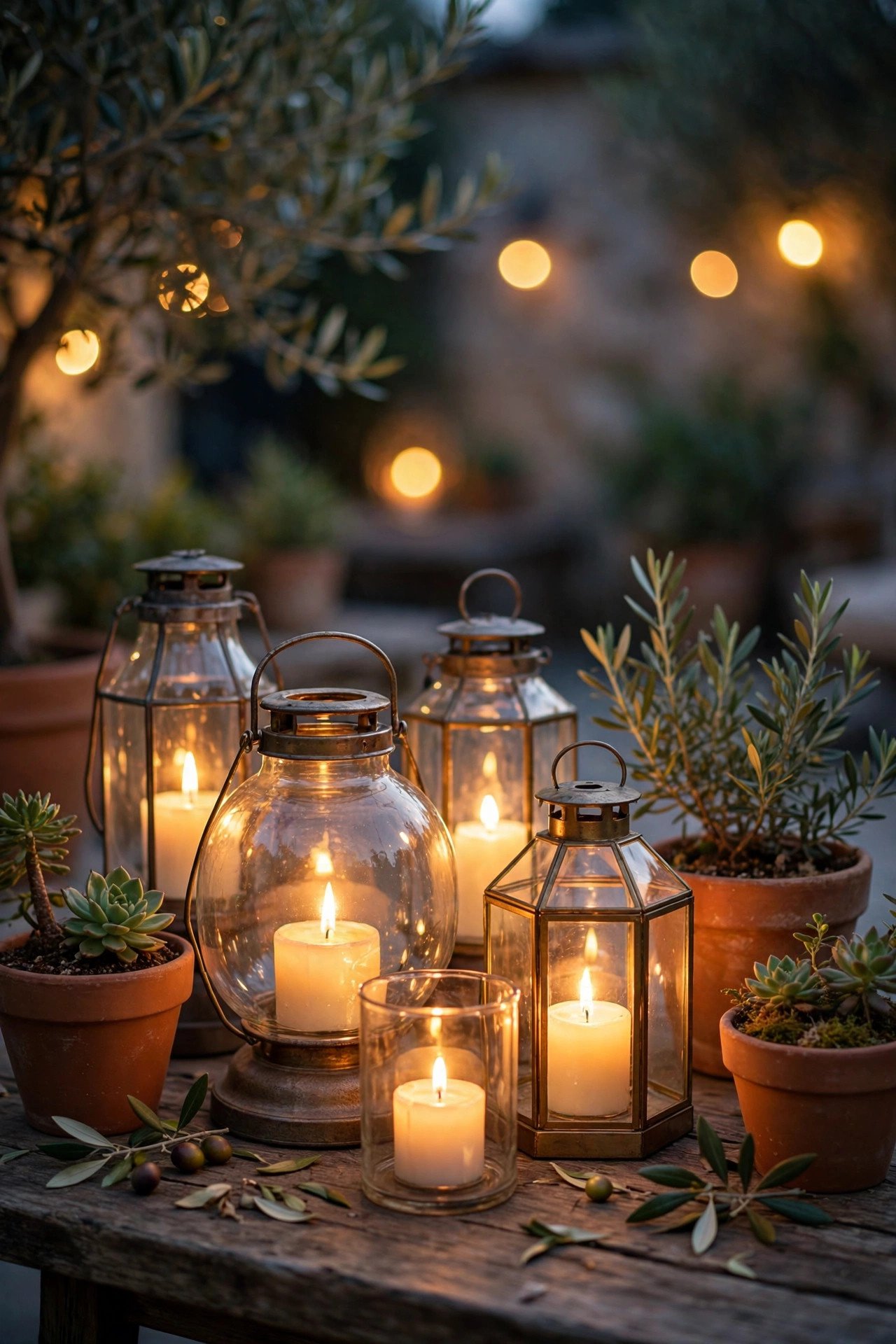
Light is a material outdoors, not just a utility. The classic move is a cluster of lanterns at different heights. Glass hurricanes on the table, a big rattan lantern on the ground, a few small candles tucked among the planters. At dusk they become a constellation. Your patio will glow the way restaurants try to fake with expensive fixtures.
Layer from there. Solar path lights along the edge of the patio for guidance. One warm string of lights overhead if you have a pergola or a tree to hang them from. Keep every bulb warm, around 2700K, which is the color of late afternoon sun.
What you are avoiding is the single harsh floodlight that most patios rely on. It flattens the garden and wakes everyone up. Soft pools of light in different corners make the space feel held after dark. That feeling is the whole design. And unlike indoor lighting, you get the stars for free.
5. Natural Stone and Gravel Underfoot
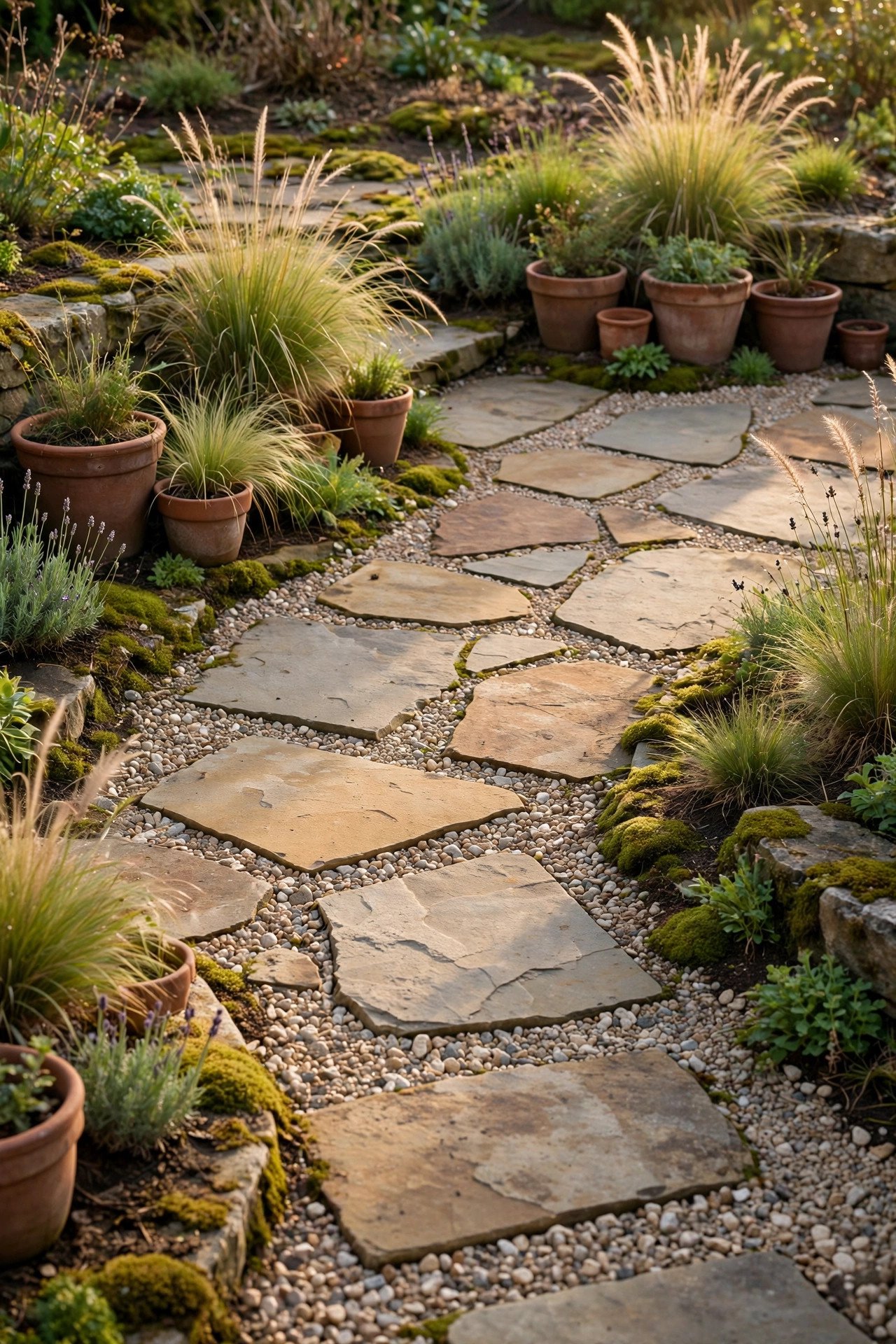
The ground is the largest surface in any outdoor room, and it sets the tone before a single chair arrives. Natural stone pavers, a bed of pea gravel, a simple concrete pad softened with a rug. These are the honest floors of the earth tones palette. They drain well, they age gracefully, and they never fight the garden around them.
Work with what you have. A plain concrete patio becomes a different place under a large jute rug and a ring of planters. A patch of grass becomes a room with the addition of a gravel circle and a fire bowl. You do not need to rip anything out. You need to frame what is there.
Let the edges go a little soft. Stone with moss in the joints. Gravel spilling gently into the planting beds. A patio with crisp perfect edges reads as a showroom. A patio with soft edges reads as a garden that happens to have chairs in it. That softness is the difference between landscaping and a place you actually live.
6. Sculptural Greenery and Grasses
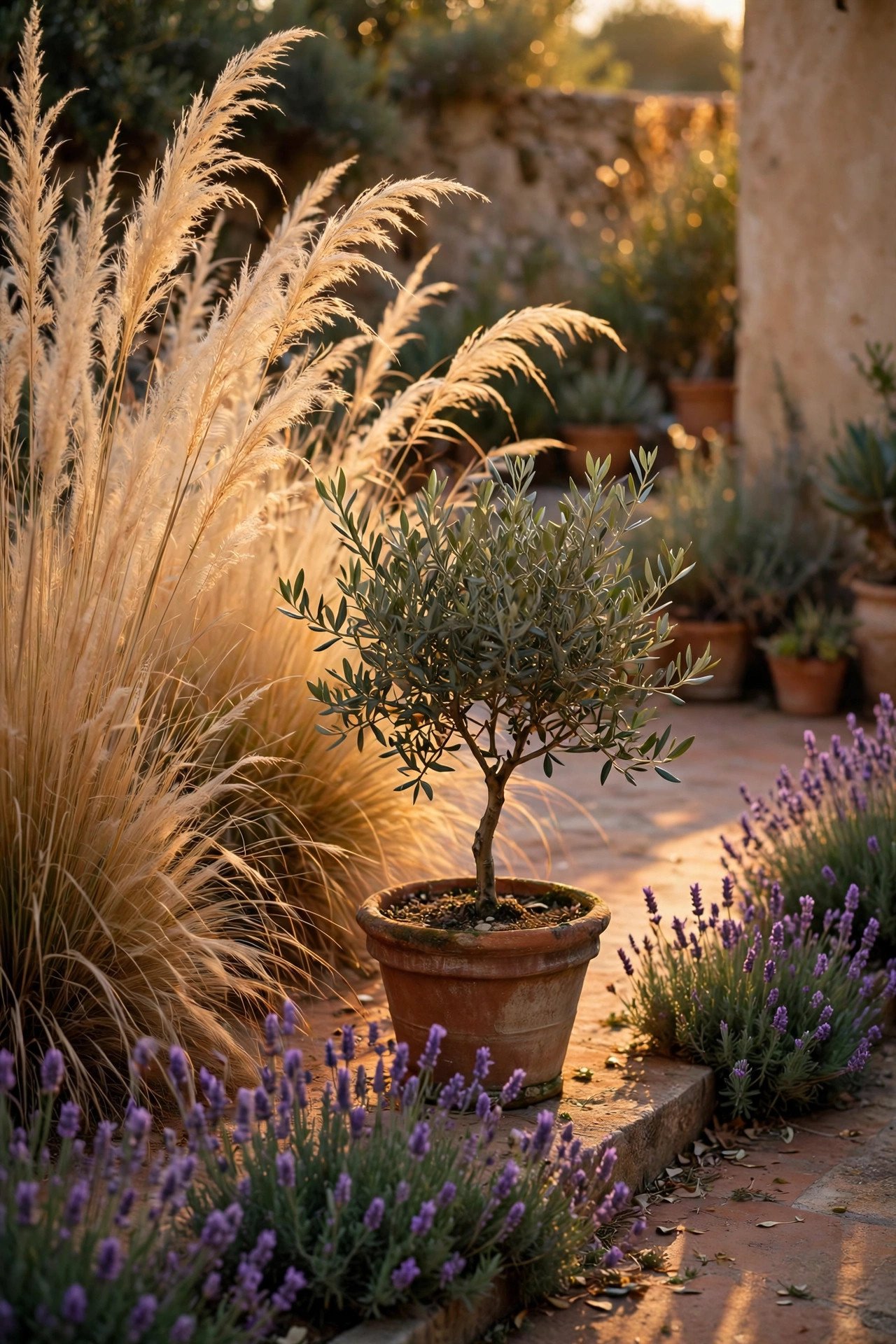
An earth tones patio without plants is a sentence without a verb. The greenery is what makes the palette feel alive instead of decorated. But choose with honesty. Fussy flowers that need deadheading every morning will turn your relaxing patio into a chore list.
Go sculptural and structural instead. Ornamental grasses that move in the wind. A small olive tree in a terracotta pot. Lavender along the edge for scent. Boxwood balls for year round shape. These plants have presence without demanding constant attention, and their silvery greens are the perfect cool note against all that warm clay.
Pot them beautifully or plant them boldly. A big grass in a handmade clay pot is a sculpture. A drift of lavender along the patio edge is a painting. Either way, give the plants room to be seen. Crowded plants read as a nursery. Spaced plants read as design.
The Palette
Every earth tones outdoor room is painted from the same small box of colors. Learn their names and where each one lives, and the space almost styles itself.
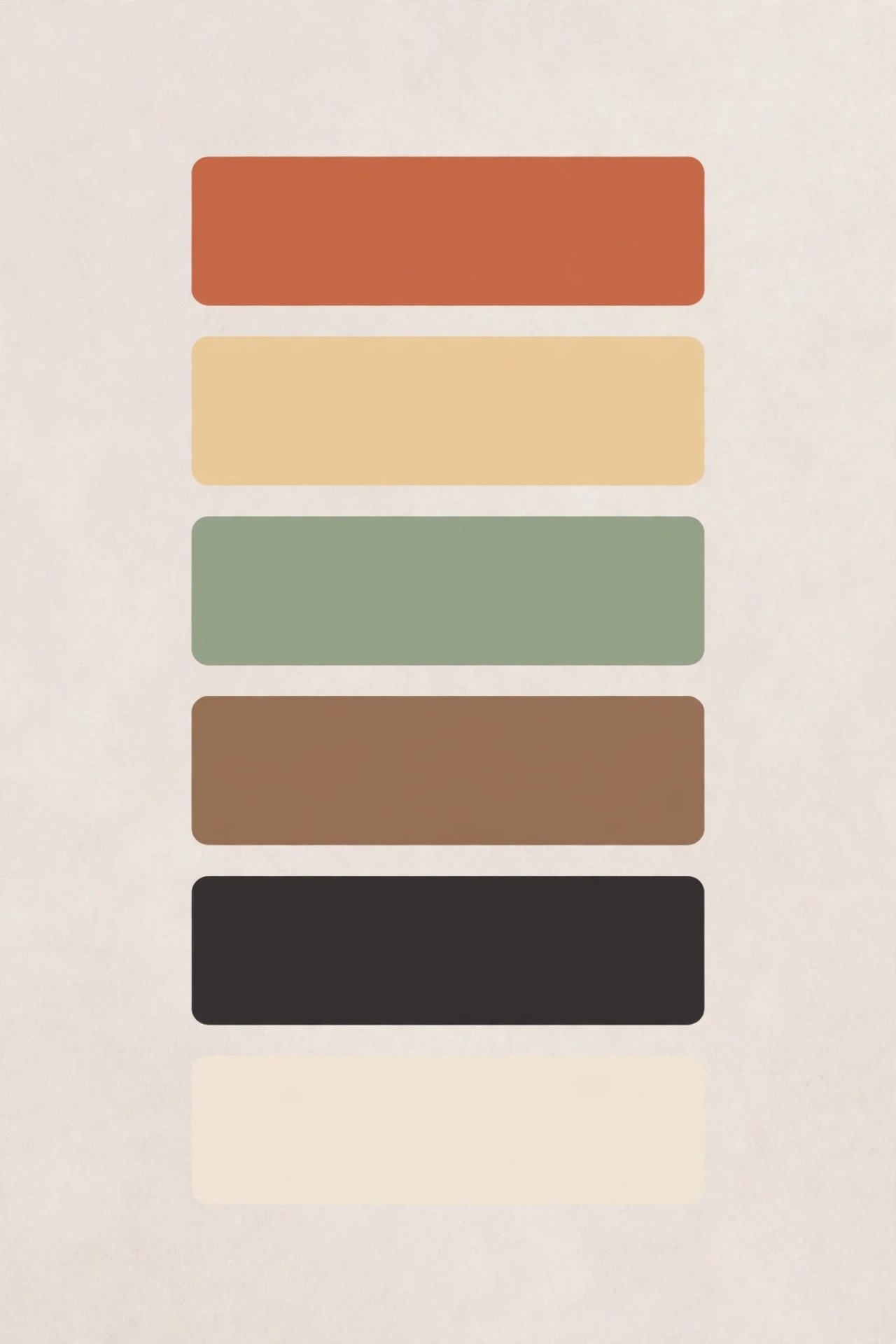
Sunbaked Clay is your signature, used with intention. Terracotta pots, a rust colored cushion, the glow of a clay chiminea. It brings the heat of the earth into the space and keeps all the neutrals from feeling sleepy.
Dune is for the large surfaces. The rug. The gravel. The big cushions. It is the color of sand in late afternoon, and it gives the space gentle dimension without any real contrast.
Sage Brush belongs to the living things. The dusty green of lavender leaves and ornamental grass, echoed in one textile or one small object. A green glass lantern. A linen pillow. Just enough green to remind you the garden is alive.
Weathered Oak is the wood tone. Teak gone silver, acacia kept honeyed, driftwood grey. Chairs, tables, the bench. When all the wood in the space shares this family, the furniture melts into the landscape.
Charcoal Ember appears wherever the evening shows through. The fire bowl. The lantern frames. The grill you actually use. Just enough dark to give all that warmth something to lean against after sunset.
Linen softens the small things. The throw. The napkins. The shade of the umbrella. It keeps the deeper tones from feeling heavy and gives the eye somewhere to rest.
The rule is simple. Big surfaces stay in the first three colors. The last three show up in objects you can carry inside with one hand. For more seasonal color inspiration, browse our fall decor ideas.
Nothing out here should be precious. Everything out here should be loved.
How to Style It, Step by Step
Step 1. Watch the sun for a weekend. Before you buy anything, notice where the light falls. Morning coffee needs eastern sun. Evening wine wants the western glow. The shadiest corner is where the reading chair goes. A patio styled against the sun fights you all summer. A patio styled with it does half the work alone.
Step 2. Lay the ground. Define the room. A large outdoor rug over concrete, a gravel circle on grass, stone pavers where the mud was. The floor is the largest surface after the sky, so it does the second most work. Make it big enough that all four chair legs sit on it.
Step 3. Place the seating. Two lounge chairs angled toward each other, not in a straight line. Conversation happens at an angle. Leave room to walk around with a tray. The seating is the furniture of the space, so let the wood show. This is not the place for plastic.
Step 4. Add the planters. Trios of terracotta at the corners and the door. Herbs on the table. One big statement pot where the eye lands first. Plants are the walls of an outdoor room. They give privacy, scent, and movement without a single fence panel.
Step 5. Layer the textiles. Rug down, cushions on, throw over the arm. This is the fun part. Layer until it feels like a hug, then stop. Bring the softest pieces inside when storms come, and they will last for years.
Step 6. Light it, then edit. Lanterns at three heights. Candles among the planters. Then take one thing away. Whatever you remove, the space will be better for its absence. That final edit is the most earth tones thing you will do.
Designer Tips
Choose real materials over lookalikes. Teak, clay, stone, linen. The outdoors punishes fakes faster than any room inside. Real materials weather into beauty. Imitations just weather.
Cap the palette at five tones. Count them on one hand as you shop. If a piece introduces a sixth color, it does not come home. This one discipline does more for the space than any single purchase.
Avoid matching patio sets. The table, chairs, and bench should not all come from the same box. Earth tones are collected, not purchased in one trip. Mismatched pieces in the same wood tone look intentional. A matching set looks like a showroom.
Spend on the seating, save on the decor. You will live in those chairs all summer. Make them deep and solid. The pots and lanterns can be thrifted and nobody will ever know.
Avoid cool white string lights. If your patio currently has daylight colored bulbs, swap them for 2700K today. Cool light turns terracotta grey and makes linen look blue. Warm light is not a preference in this style. It is the entire point.
Avoid plastic anything visible. If it must be plastic for budget or weather reasons, hide it. Storage boxes behind the bench. Plastic pots inside clay cachepots. What the eye sees should be honest material.
Plan for the shoulder seasons. A basket of throws by the door, a fire bowl or a good chiminea, and wind rated candles. These three things add two months to your outdoor year. Spring and fall are the best patio months. Do not surrender them.
Leave some wild alone. The corner where the grass grows a little long, the planter you let go to seed. In earth tones design, a little wildness is a material like clay or stone. Protect it.
Finishing Touches to Shop
This guide contains affiliate links. If you buy through them, we may earn a small commission at no extra cost to you.
Once the bones of the space are in place, a few considered pieces complete it. Each one below earns its place by being beautiful, useful, and built to stay. And if you like to mark the seasons softly without disturbing the warmth, our 5 Must Have Amazon Fall Decor Finds roundup includes a few textures that layer into this palette nicely.
Solid Acacia Wood Outdoor Lounge Chair. Deep seat, slatted back, weathers to a beautiful silver if you let it. The anchor of the whole space.
Terracotta Planter Trio in Graduated Sizes. Handmade look clay with drainage holes and saucers. For the herbs, the grasses, and the big statement olive.
Outdoor Area Rug in Jute and Sand, 5 by 8. Flat weave, weather rated, soft under bare feet. Defines the room in one unroll.
Solar Powered Glass Lantern Set of Three. Charges by day, glows warm by night, no wiring needed. The constellation makers.
Weather Resistant Throw Pillows in Clay and Oat, Set of Four. Solution dyed covers that laugh at sun and sudden rain. The comfort layer.
Cast Stone Garden Stool. Side table, extra seat, plant stand. Heavy enough that the wind leaves it alone.
Earth Tones Outdoor Q and A
My patio is tiny, basically a balcony. Does this still work?
It works better small. A balcony is one rug, two chairs, and a wall of planters. That is the whole guide in miniature. Choose a bistro scale, keep the palette tight, and let the plants do the decorating. Small spaces force the restraint this style wants anyway.
How do I keep it looking good without constant upkeep?
Choose plants that thrive on neglect and materials that age well. Ornamental grasses, lavender, sedum. Teak, clay, stone. Hose the rug off in spring. Oil the wood once a year if you want the honey tone, or never if you love silver. This style is designed for people who would rather sit in the garden than work in it.
Can I do this on a budget?
Yes, and the style almost demands it. Earth tones are about fewer, better pieces, which means you buy less overall. Spend on the seating. Save with a gravel circle instead of pavers, terracotta pots from the garden center instead of the design store, and solar lanterns instead of wired lighting. Warm bulbs cost almost nothing and do half the work alone.
I rent. What can I change without upsetting the landlord?
Almost everything that matters. Rugs, planters, lanterns, and furniture all leave when you do. A gravel circle can go over grass and be raked away later. Solar lights need no wiring. Keep the structure. Change everything you can carry.
What about winter? Do I pack it all away?
Bring the textiles and the tender plants inside. Everything else can stay. Teak, stone, and clay are unbothered by snow. A fire bowl under a dusting of snow is one of the prettiest sights a garden offers. Design for four seasons and winter becomes a feature, not an ending.
How do I deal with mosquitoes and still use the space at night?
Layer the defenses the pretty way. Citronella in terracotta pots, which are real plants and really help. Fans, which mosquitoes cannot fly against. And keep the lantern light warm and low rather than bright white, which draws every bug in the neighborhood. A screened candle or two does the rest.
Until the Next Guide
An earth tones patio is not finished in a weekend. It is gathered slowly, one clay pot and thrifted lantern at a time, and it gets better as the wood silvers and the grasses grow tall. Start with the seating and the ground. Add the clay and the light. Let the rest arrive when it is right.
This is one of our design guides, and more design guides are on the way. Each one follows the same idea. Fewer, better choices. Spaces that hold the people in them. If you want to carry the warmth back inside, our warm minimalist living room ideas for fall pick up right where the patio leaves off. We hope this one brings a little more golden hour into your every day.