
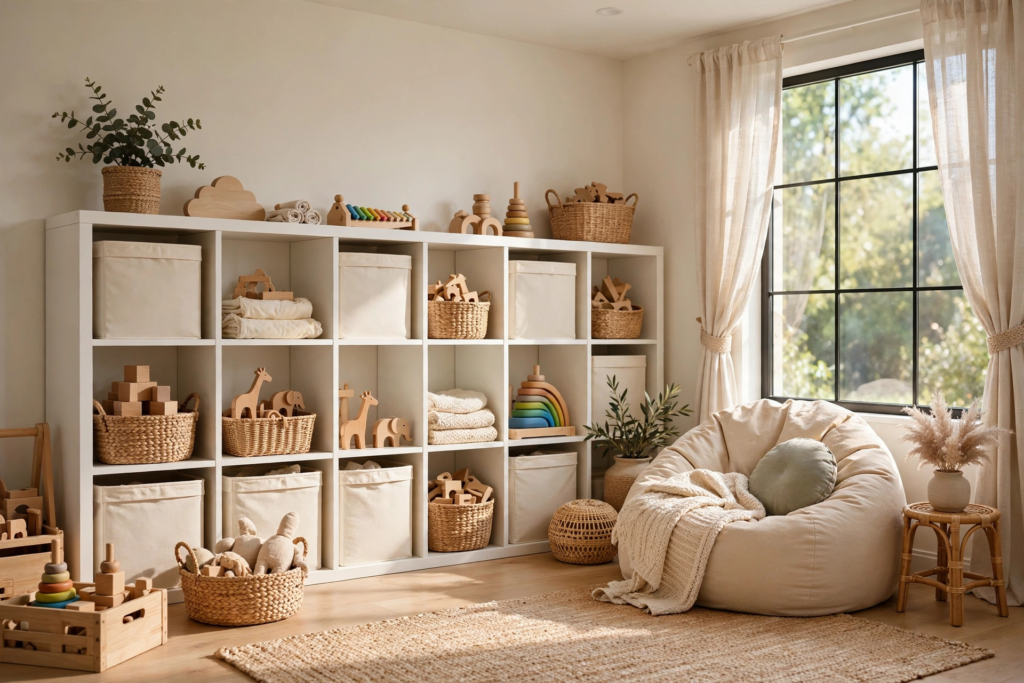
Let me tell you what our playroom looked like a year ago. You opened the door and a wave of plastic came at you. LEGO underfoot. Doll clothes on the rug. A puzzle with exactly nine pieces missing, which is somehow worse than a puzzle with all of them missing. We called it the toy room, but really it was the room where toys went to form a society without us.
Here is what I finally figured out. The playroom was never a storage problem. It was a room problem. I kept buying bins and baskets and the mess kept winning, because bins do not fix a room that has no plan. The day I stopped shopping for storage and started designing the room, everything changed. Zones first. Bins second. That order matters more than anything else in this post.
This post is 19 playroom organization ideas that actually work for real families. Not a showroom playroom where nobody plays. A real room where kids build and paint and dress up and make gloriously huge messes, and then put it all away without a meltdown. From layout tricks to labeling systems to cleanup routines, every idea here is tested by actual kids with actual sticky hands.
One rule runs through all of it. If your kids cannot reach it, see it, or understand it, they will not maintain it. Every shelf in this post sits at kid height. Every system is simple enough for a four year old. The pretty parts live up high where grown ups can admire them. The working parts live down low where little hands do the work. That is the whole philosophy.
Love these ideas? Get more every week.
Join the newsletter for seasonal decor and cozy home inspiration.
Zone it first: the layout trick that changes everything
Before you buy a single bin, grab a rug and some painter’s tape. The layout of the playroom decides whether your storage works or fails, and most playrooms have no layout at all. Just toys, everywhere, all at once. These five ideas give the room a floor plan first, so every bin you add later has a job and a zone to belong to.
1. Start With Zones, Not Bins
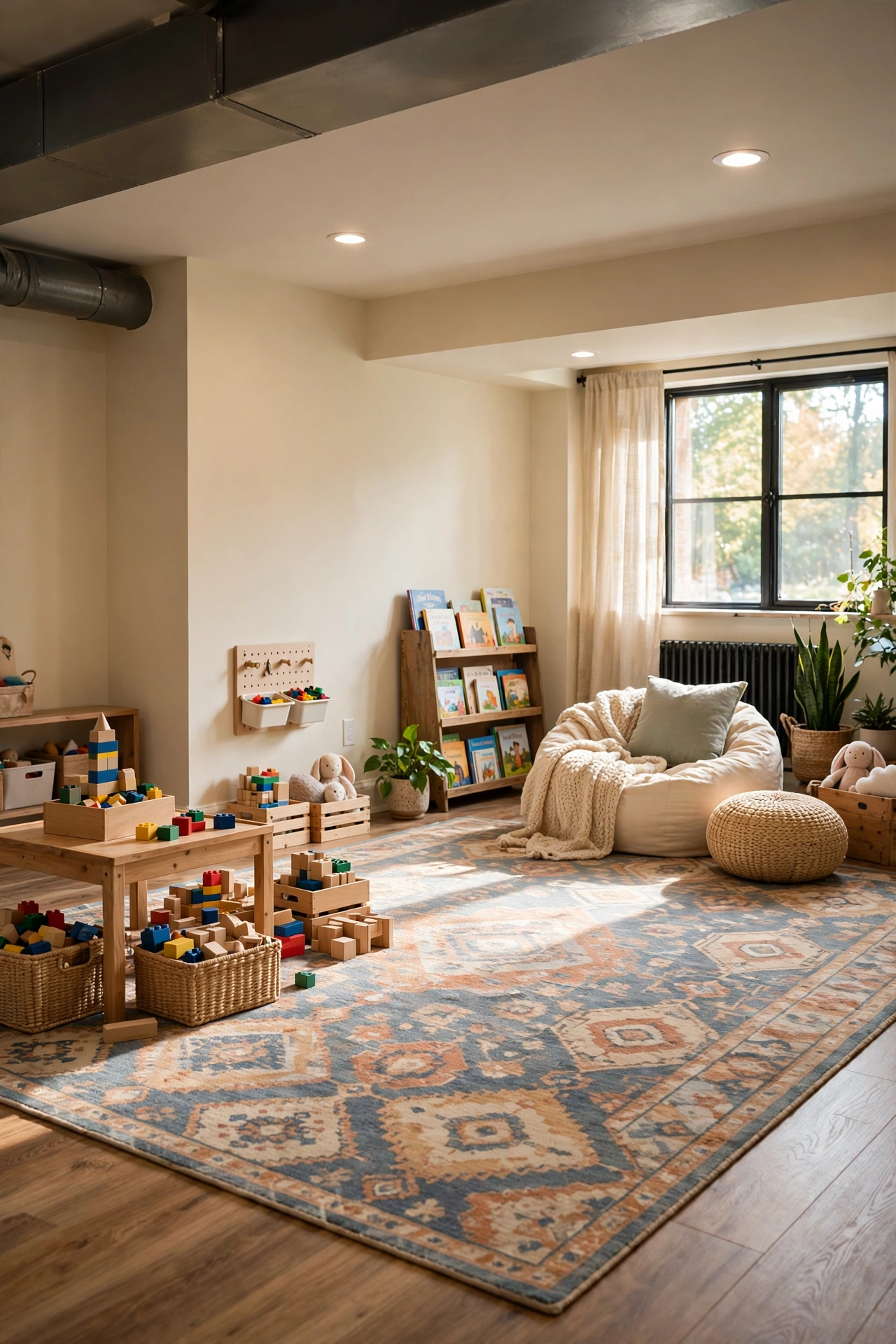
A playroom without zones is just a box of toys with walls. Divide the room into three or four zones and the chaos starts organizing itself. A building zone with a rug and the blocks. A reading zone with a chair and the books. An art zone with a table and the supplies. Each zone gets its own storage, right there, within arm’s reach.
The rug is the cheapest zone maker you own. Lay a big flat rug down and you have drawn a boundary without building a wall. Toys that wander off the rug get walked back to the rug. It also swallows the sound of a thousand bricks hitting the floor, which your ears will thank you for. Painter’s tape works for a trial run. Tape the zones on the floor for a week, watch how the kids actually play, then commit to furniture.
Keep it to three zones, four at most. Every zone you add is another little world to maintain, and kids can only keep track of so many. Three well defined zones that the kids actually use will beat six pretty zones they ignore. Start small. You can always add a zone later when the first three are running smoothly.
Shop This Look
This post contains affiliate links. If you buy through them, I may earn a small commission at no extra cost to you.
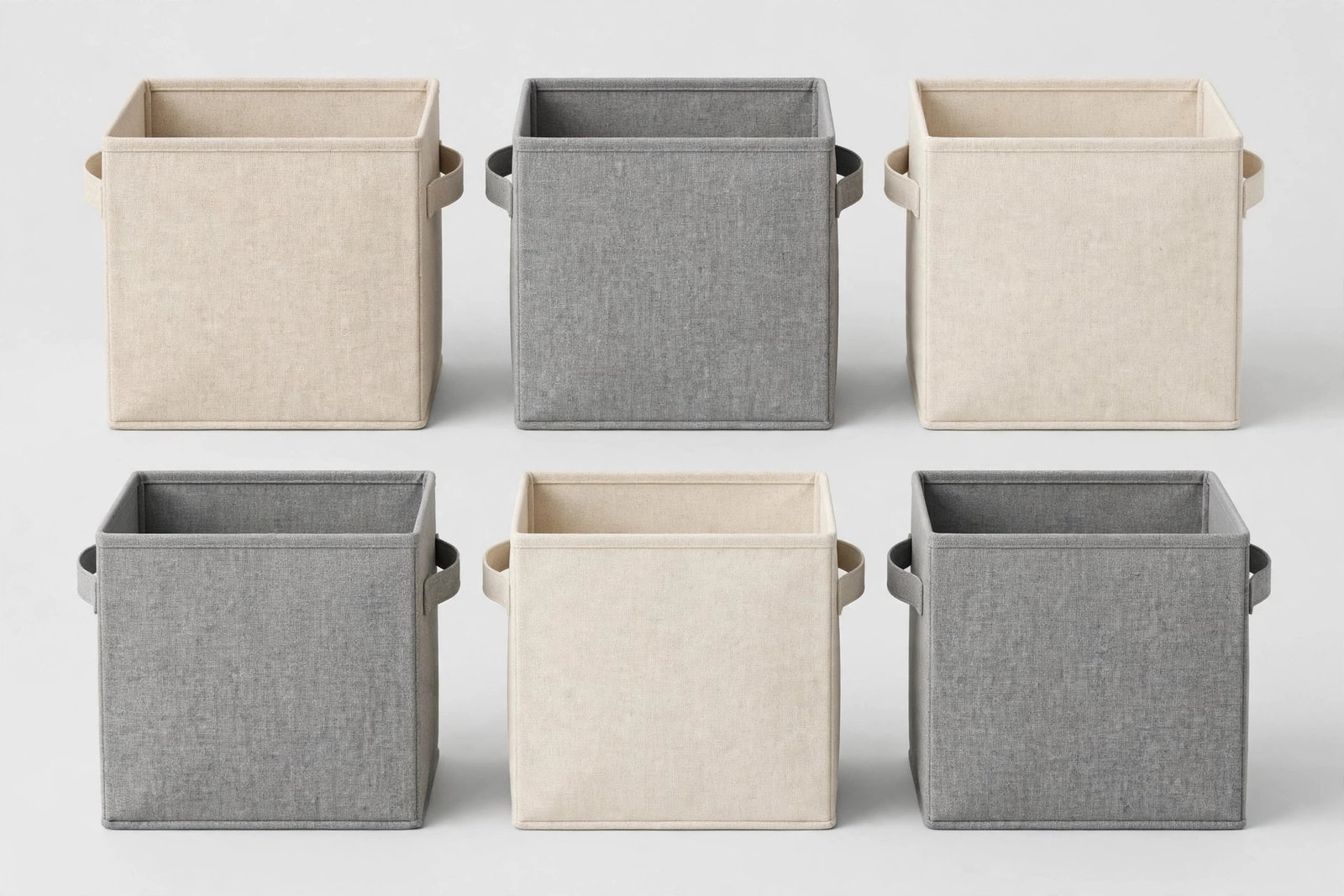
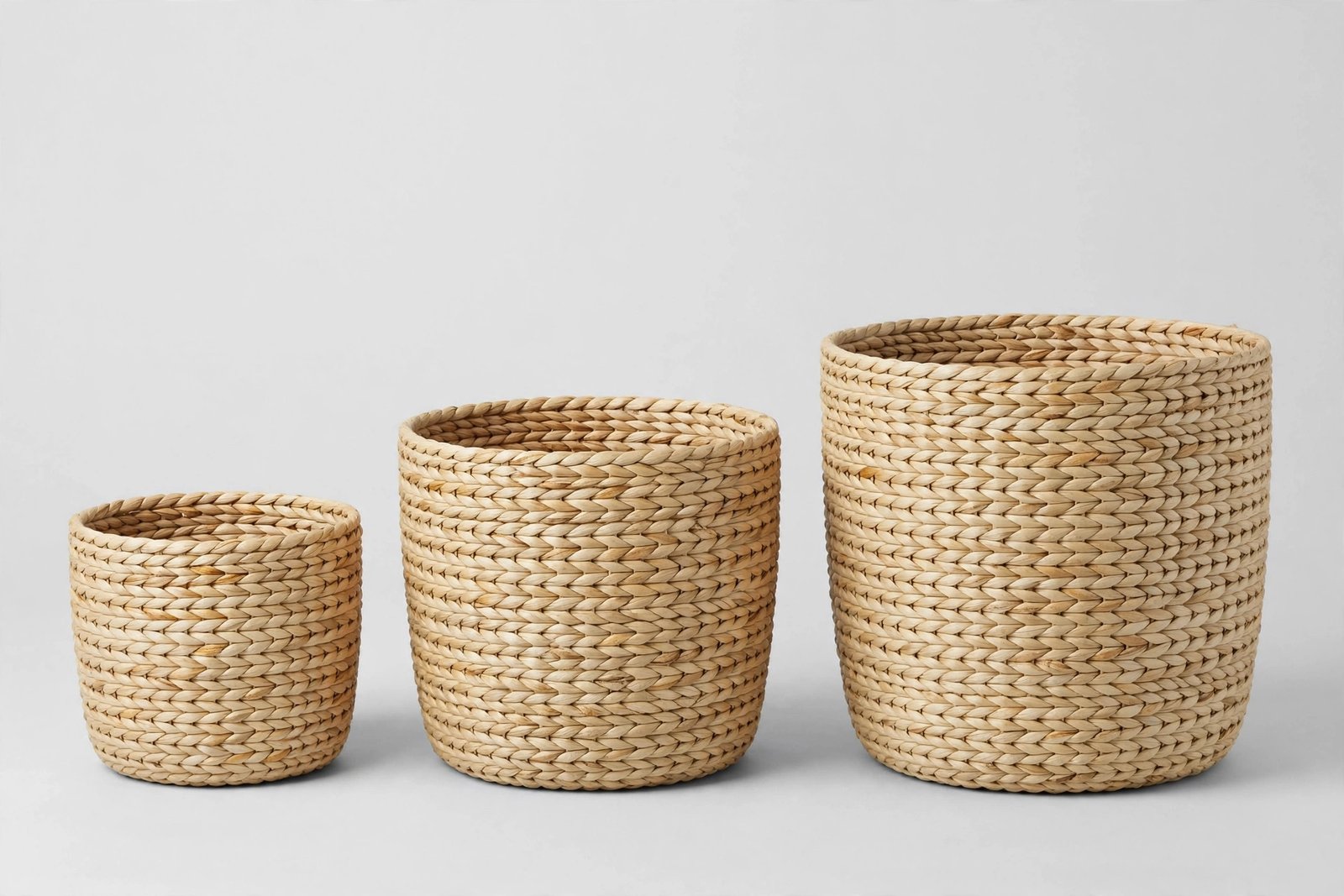
A few favorites featured in the ideas above:
2. Low Open Shelving at Kid Height
If your kids cannot see the toys, the toys do not exist. That is the harsh truth behind low open shelving. Closed cabinets and deep toy boxes are where toys go to be forgotten. Low open shelves put everything on display at eye level, so the kids actually play with what they own instead of begging for new stuff every other week.
Keep the shelves low enough that your smallest kid can reach every single bin. That is the whole point. A shelf the kids need you for is a shelf you will be maintaining forever. Two shelves high is the sweet spot for most playrooms. The bottom shelves hold the daily toys in labeled bins. The top holds the pretty display pieces.
Anchor the shelf to the wall. I am saying this like a mom who has watched a bookshelf wobble, because I am. A low shelf is a climbing invitation for toddlers, and a wall anchor turns a hazard into furniture. Ten minutes, two screws, done. Then the kids can pull bins in and out all day without anything going somewhere it should not.
3. A Storage Bench That Seats the Whole Crew
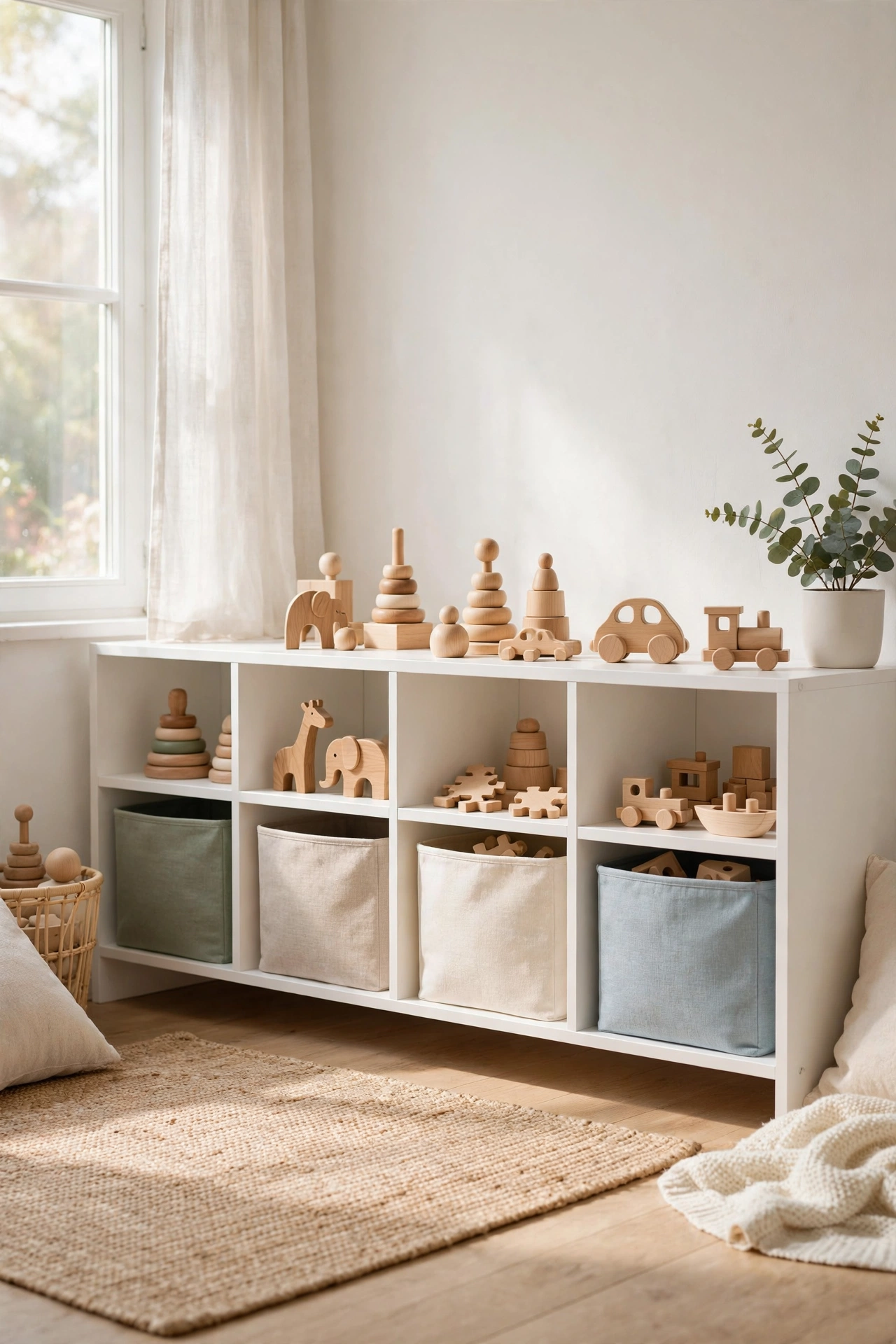
A storage bench in the playroom is seating and storage in one piece of furniture, and playrooms need both badly. Kids need somewhere to sit besides the floor. Toys need somewhere to live besides the floor. One bench solves both. Ours sits against the wall and holds every board game we own plus the dress up capes.
Go for a bench with cubbies or a lift up top, not a solid bench with no storage inside. The cubbies take fabric bins, which means labeled categories the kids can pull out and shove back. The lift up top is even simpler. Open, toss, close. A two year old can run a lift up bench. That is the standard. If a two year old cannot use it, it is decor, not storage.
Put a cushion on top and it becomes the reading spot, the time out spot, and the best seat in the house for watching sibling performances. A bench the kids love sitting on is a bench that stays in the room and stays useful. The storage inside is almost a bonus. Almost.
4. High Shelves for the Grown-Up Stuff
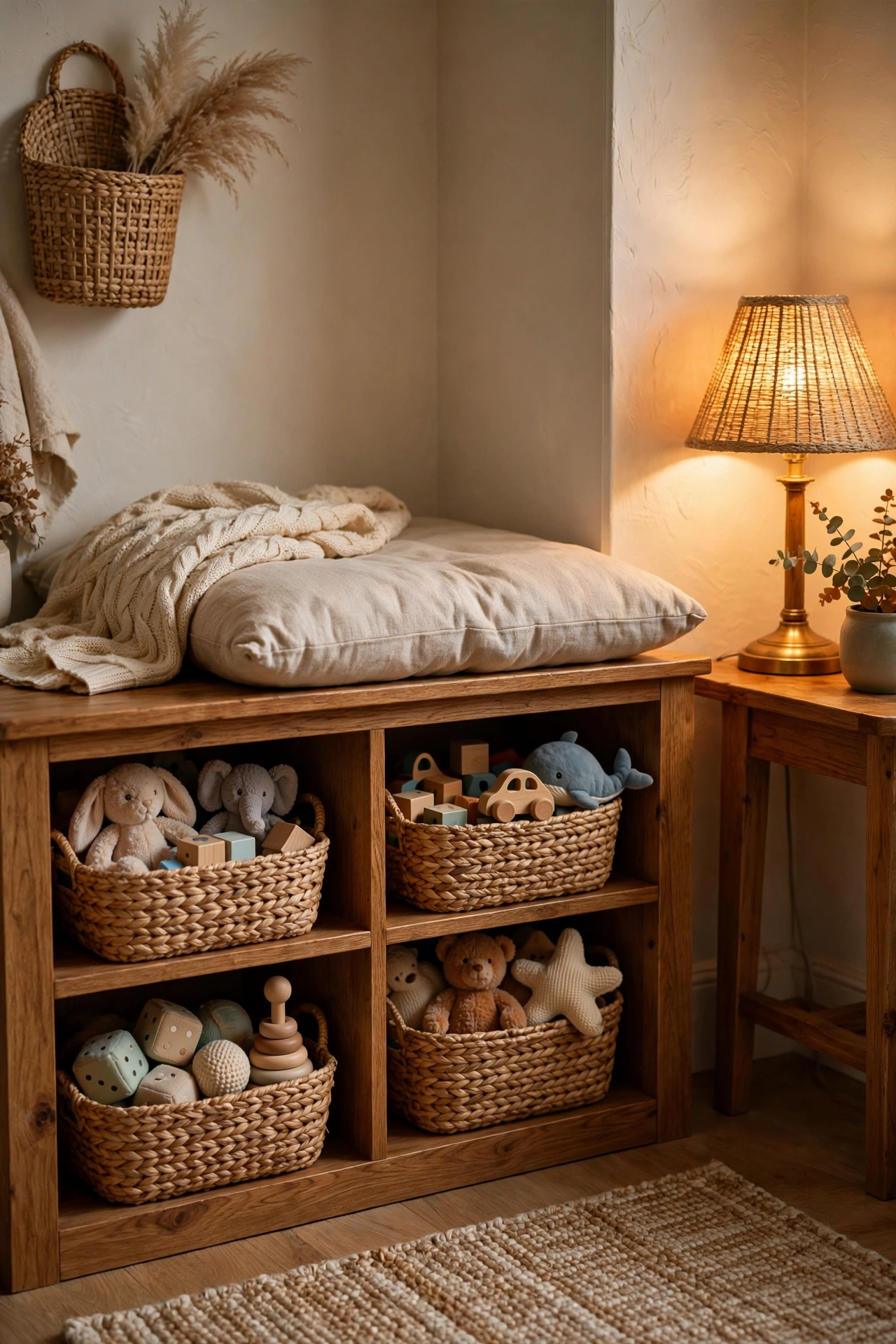
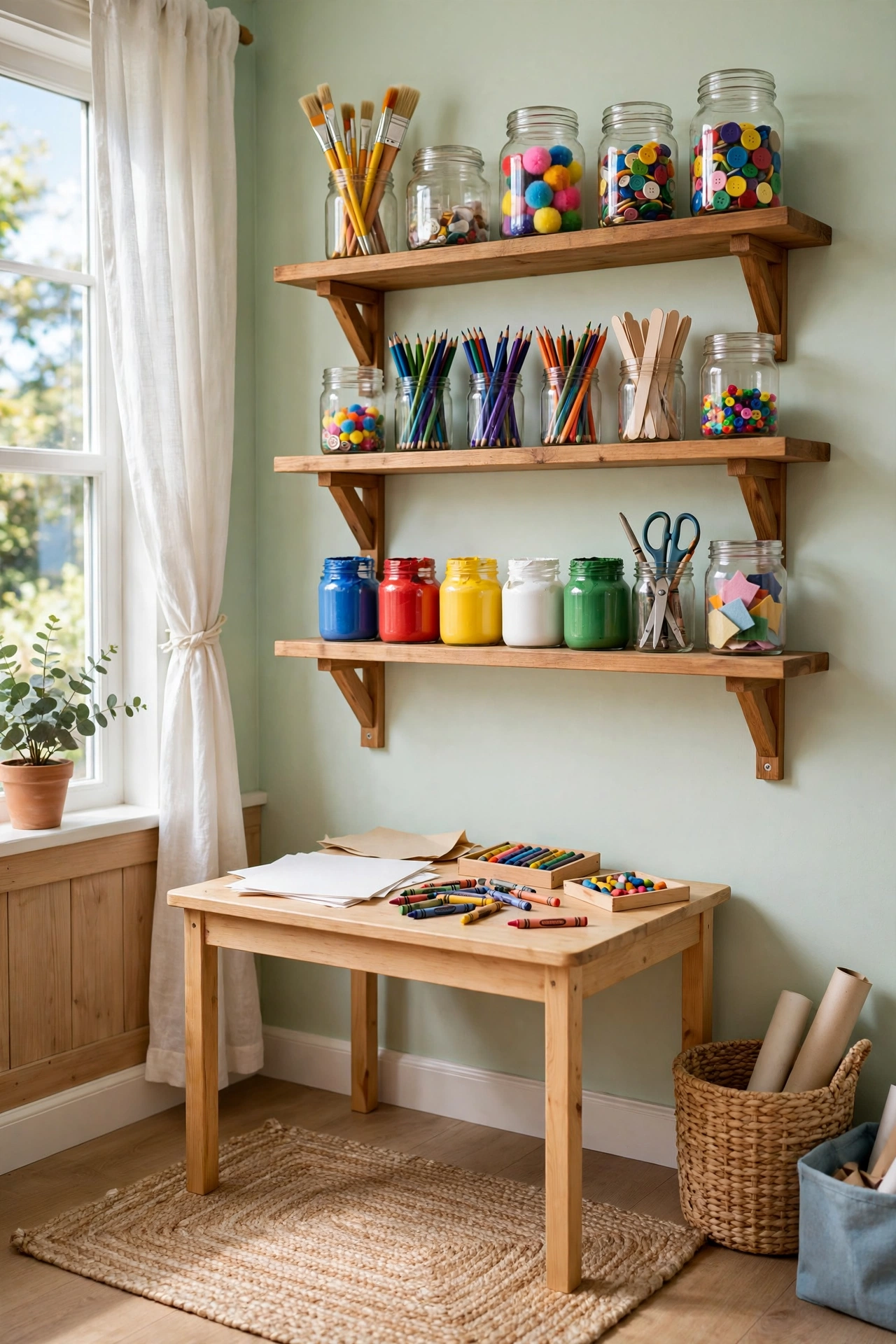
Not everything in the playroom is for the kids. The good art supplies. The paint. The craft kit with the tiny beads. The model set with the instructions nobody reads. These live on high shelves, out of reach, and that is a feature. Some things are parent supervised, and the shelf enforces it without a single argument.
High shelves also give the playroom a finished look. Down low is the kid world, colorful bins and busy shelves. Up high is your world. A few pretty baskets. The nice supplies in matching containers. Maybe a plant the kids cannot water to death. The room looks designed instead of exploded, and you did not have to hide a single toy to get there.
Use the high shelves for the rotation stash too. The bins waiting for swap day can live up there, labeled and ready. When it is time to rotate, you pull down the next set and put the current set up. The kids never see the stash, which keeps the rotation feeling fresh. Out of sight really is out of mind, in the best possible way.
5. A Reading Corner With Book Ledges
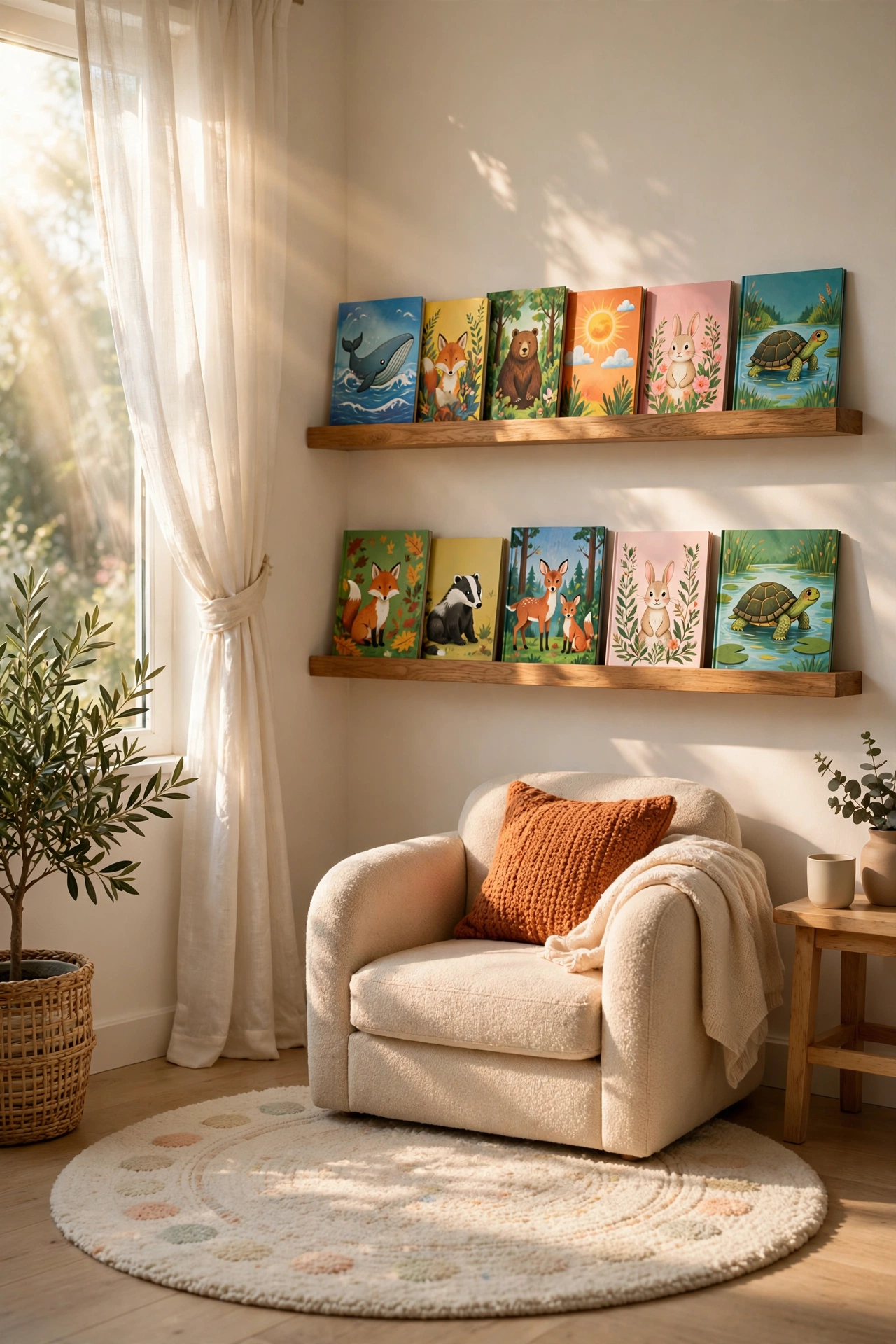
Books on a regular bookshelf show their spines, and spines do not sell books to kids. Book ledges show the covers, and covers are irresistible. A reading corner with two or three book ledges turns the books into a display the kids actually browse. Ours gets used ten times more than the old bookcase ever did.
Keep the ledges low and shallow. The books face forward, the kids can see every cover, and putting a book back is just sliding it onto the ledge. No shelving. No alphabetizing. No system to maintain. A forward facing ledge is the only bookshelf a kid will voluntarily keep tidy, because tidy and messy look almost the same on a ledge.
Add the cozy and the corner becomes a destination. A small armchair or a pile of floor cushions. A soft rug. A lamp with warm light. Kids go where the cozy is. If the reading corner is the nicest seat in the playroom, the books get read. If a bedroom corner needs the same cozy treatment, my cozy fall bedroom ideas will get you there.
Storage that works as hard as they play
Once the zones are set, the storage has to earn its place. Playroom storage takes a beating. It gets yanked, climbed on, and stuffed beyond reason. These five ideas are the workhorses. Labeled systems, a rotation station, and the carts and tables that make the daily mess manageable.
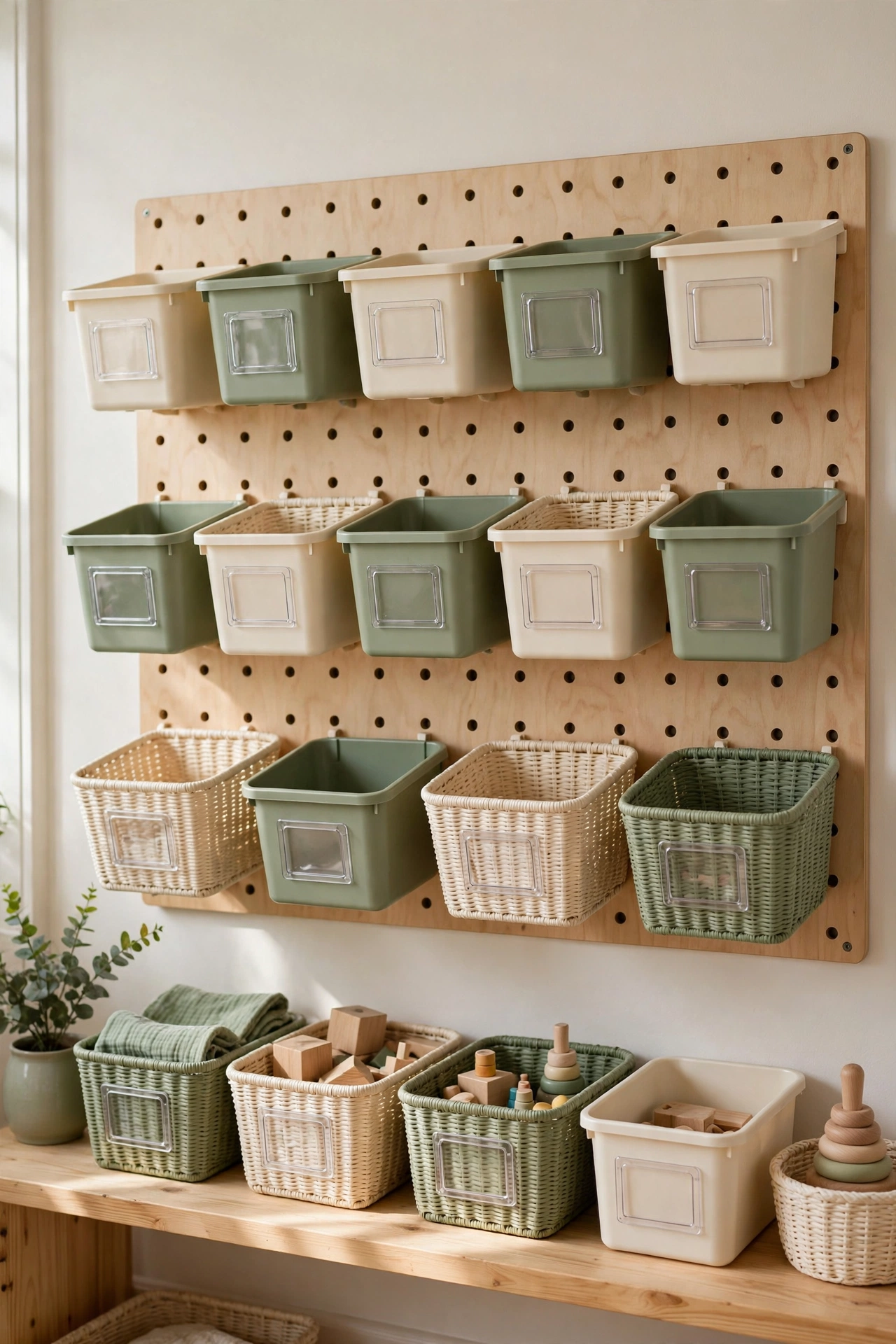
6. Labeled Bins for Every Single Category
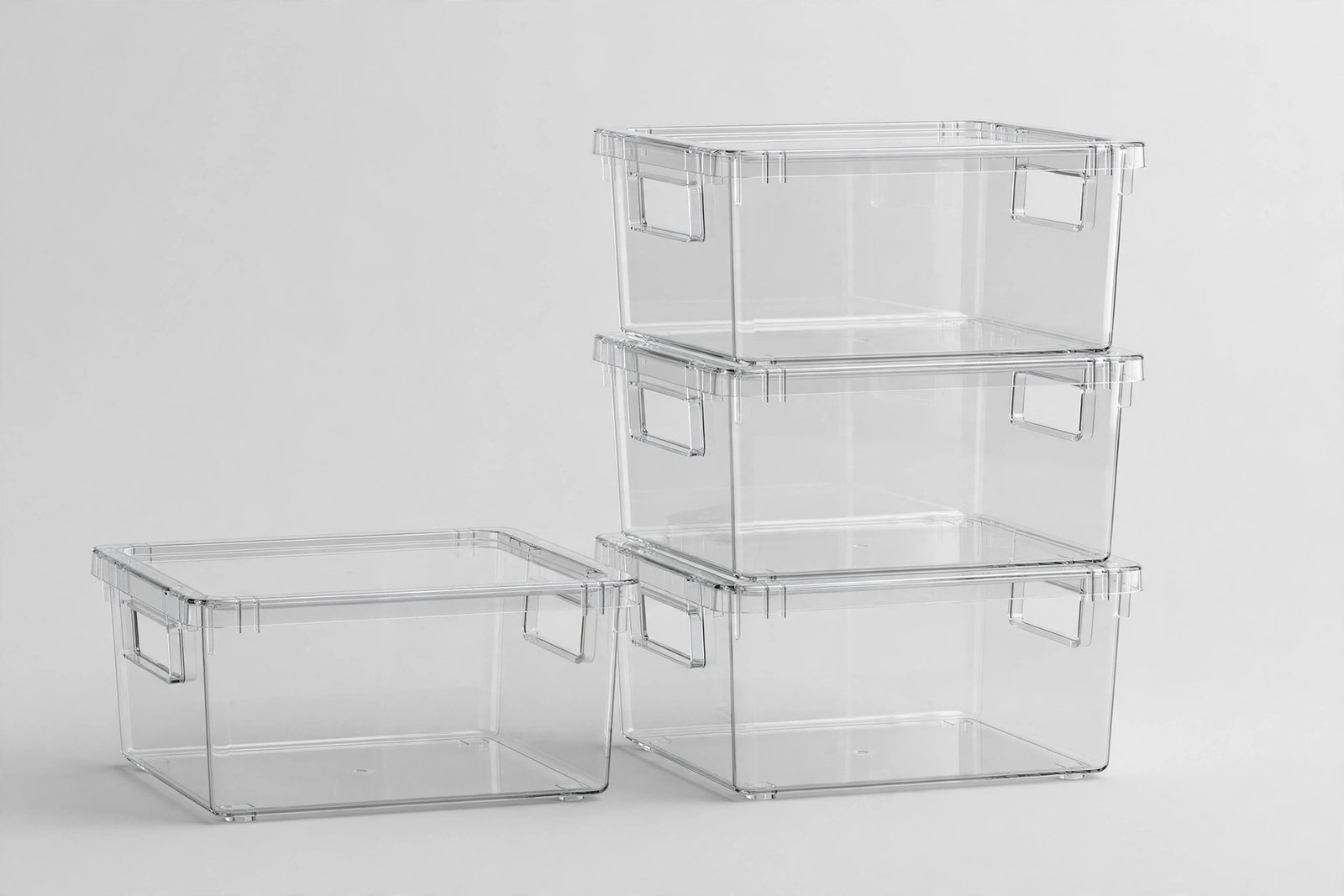
Every toy needs a home with a name on it. Not a vague home like the toy bin. A specific home. Cars. Dolls. Blocks. Play food. Dinosaurs. When every category has its own labeled bin, cleanup stops being a negotiation and starts being a sorting game. Even toddlers can match a toy to a bin when the label shows them how.
The narrower the category, the better the system works. A bin labeled toys is a junk drawer with a lid. A bin labeled train tracks is a system. Yes, you will end up with more bins. That is fine. Ten specific bins that the kids actually use will beat one giant bin that eats everything and gives nothing back.
Put the labels where the kids look, which is the front of the bin at their eye level, not the top. And make the labels durable. Paper labels last about a week in a playroom. A label maker or laminated picture labels will survive the daily yank and shove for years. This is the one place where spending a little more pays off every single day.
7. A Toy Rotation Station That Runs Itself
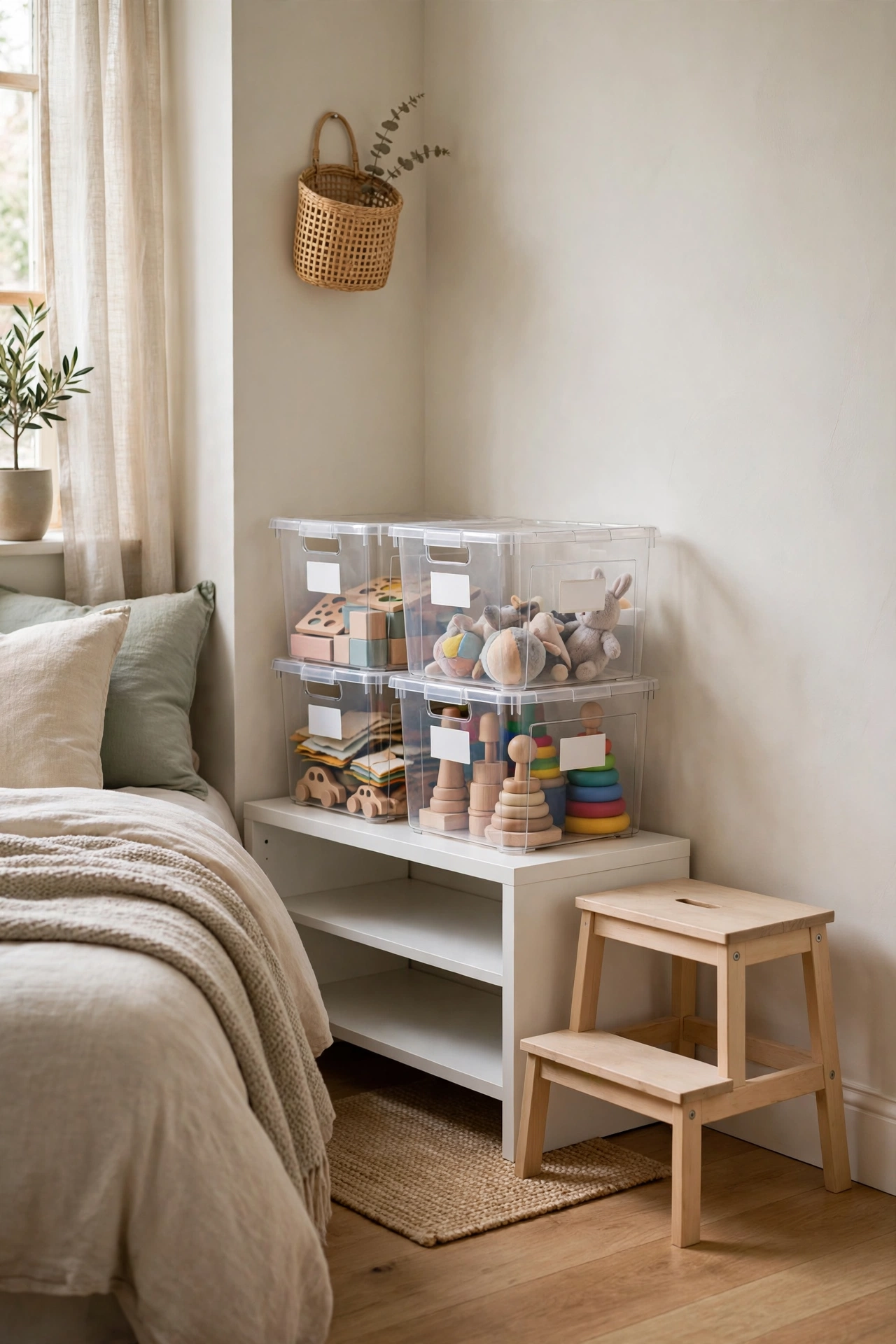
Toy rotation is the closest thing to a magic trick in parenting. Put out six to eight toys, store the rest, and swap every week or two. The kids play with old toys like they are brand new. The playroom stays manageable because there are only a few things out. You spend zero dollars and it feels like Christmas morning on swap day.
The station is just a low shelf with labeled bins, but the location matters. Put it in a closet or a corner the kids do not browse, because the whole trick depends on the stored toys being forgotten. Our station lives in the guest room closet. The kids know it exists and they still light up every single swap day. Forgetting is a feature.
Keep a simple list taped inside the closet door of what is stored and when it last came out. Without the list, you will rotate the same three bins and forget the rest exist. With the list, every toy gets its turn and nothing gathers dust for a year. Ten minutes on a Sunday night and the whole system runs itself all week.
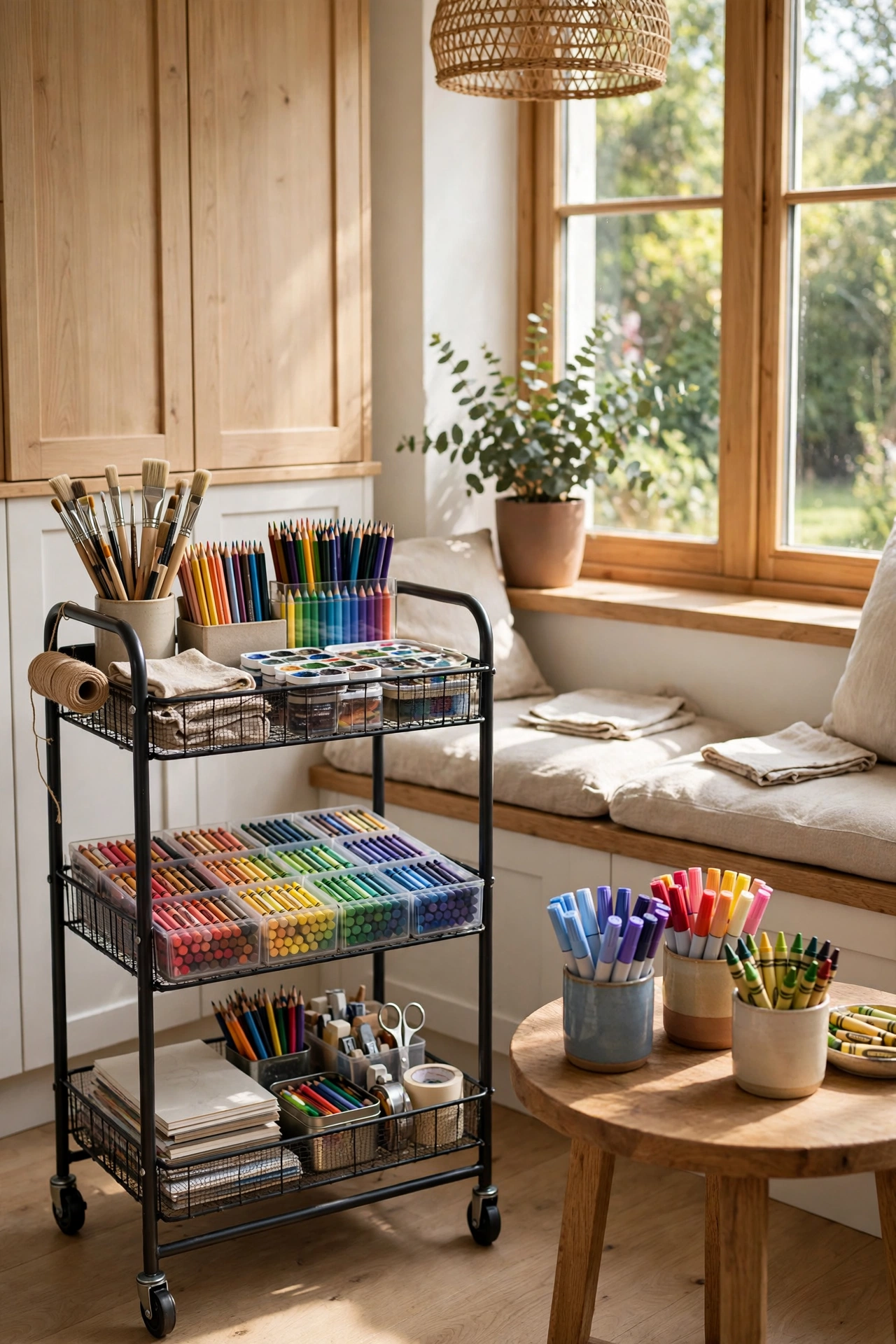
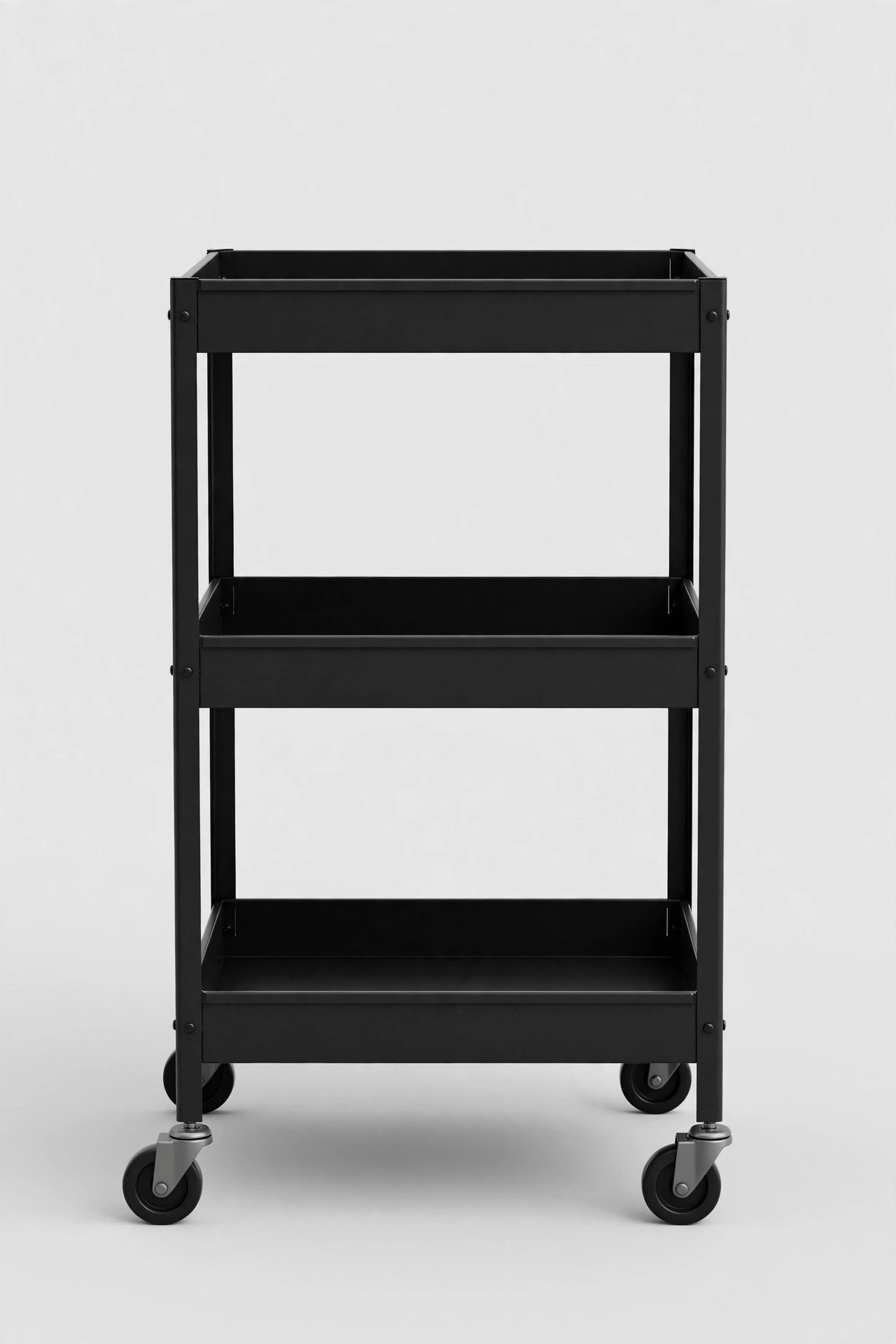
8. The Rolling Art Cart
Art supplies are the glitter bomb of the playroom. They escape every container, they stain every surface, and they multiply in the dark. A rolling cart contains the whole operation in three tiers. Markers on top. Paper in the middle. Stickers and stamps on the bottom. Craft time ends, the cart rolls into a closet, and the glitter stays in the cart. Mostly.
The wheels are the whole idea. An art station bolted to the middle of the room becomes permanent clutter. A cart that rolls to the table for projects and rolls away after is a system. The kids wheel it out themselves, which they love, and wheel it back, which you love. Independence for them. Sanity for you.
Sort each tier with cups and small trays. Loose markers in a big open tier become a tangled nest in about three days. Little cups for markers, crayons, and pencils keep everything visible and grabbable. Keep the paint off the cart entirely. Paint lives on a high shelf in the laundry room. The cart is for the dry stuff. Trust me on this.
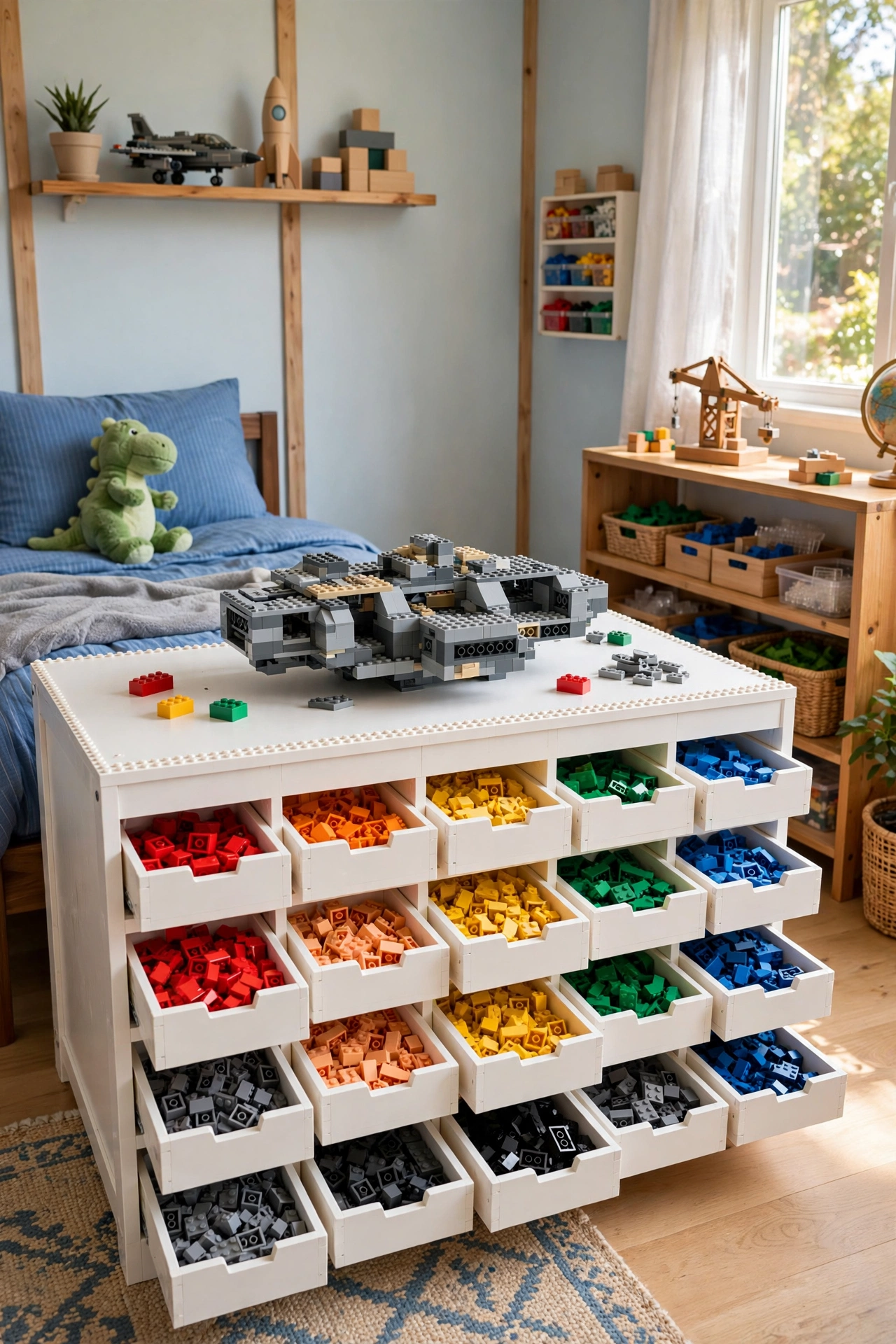
9. A LEGO Table With Built-In Sorting
LEGO bricks are wonderful and they are also tiny chaos agents that migrate to every room in the house. A building table with built in sorting drawers gives them a home base. The bricks live in the drawers, sorted by color. The building happens on top. The creations in progress slide onto a tray and onto a shelf. The whole LEGO life cycle, contained.
Sort by color, not by set. I know the sets come with instructions and numbered bags. I also know your kids build dragons out of three different sets while the instructions gather dust. Color sorting makes creative building faster and cleanup obvious. Red goes in the red drawer. A four year old can run this system.
The table location is the rule that makes it work. Small piece toys live at the table. They do not travel to the living room. They do not visit the bathtub. When the bricks have a home base, they stop appearing in your bed. Mostly. Nothing is perfect. But the table cuts the migration by about ninety percent, and that is a win.
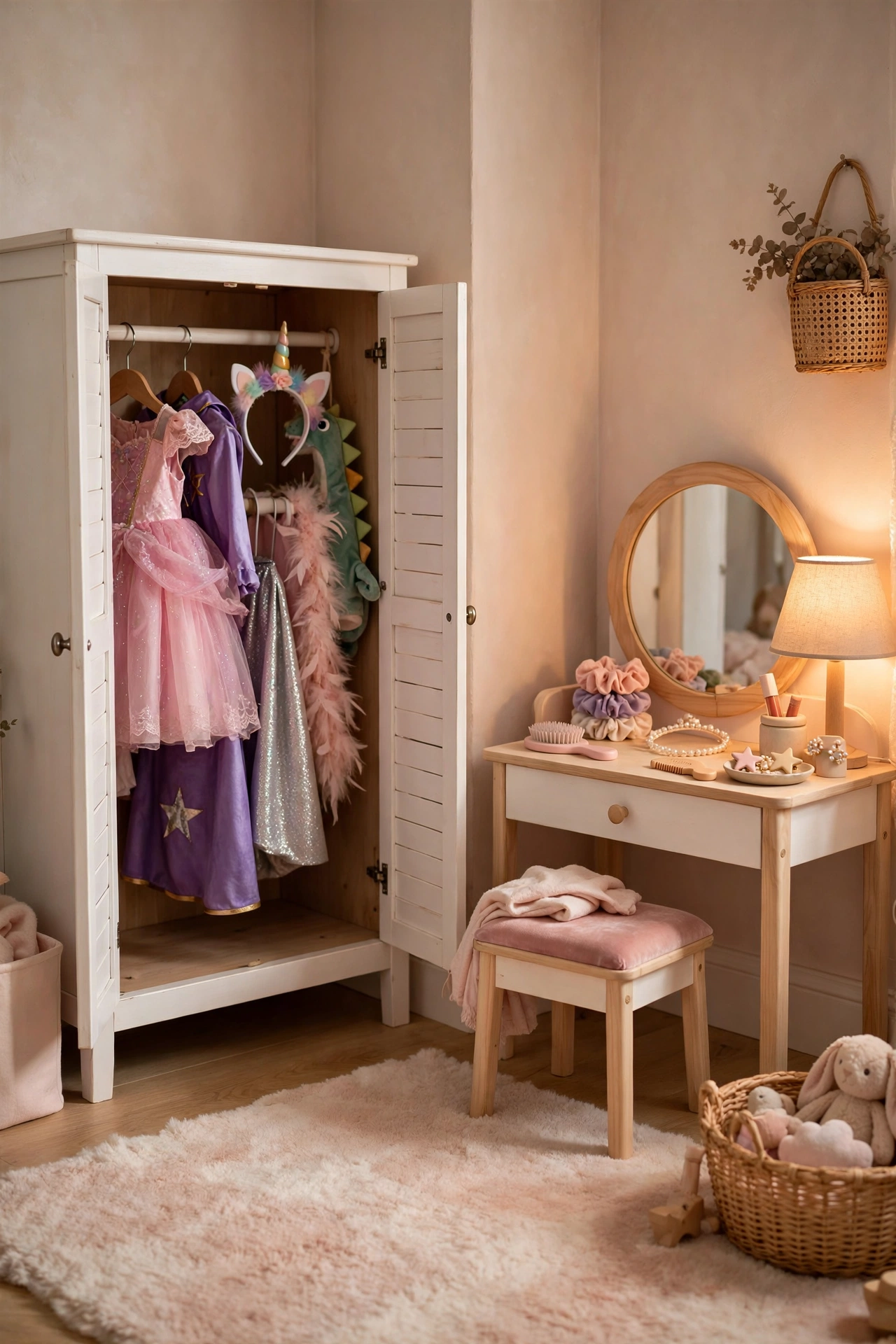
10. A Dress-Up Corner With Its Own Wardrobe
Dress up clothes are the kudzu of the playroom. Capes, crowns, and princess dresses spread across every surface and tangle into one giant knot. A small wardrobe just for dress up ends the sprawl. Everything hangs or folds in one place. The kids can see every costume, which means they actually wear them instead of wearing the same firefighter costume for six weeks straight.
A small freestanding wardrobe or even a garment rack works. The key is that it is theirs and it is only for dress up. Hooks inside the door for crowns and wands. A low shelf for shoes and boots. A little mirror on the wall beside it, because trying things on in front of a mirror is half the fun and it keeps the fashion show in one corner.
Purge the dress up collection twice a year. Costumes with broken zippers, capes with mystery stains, and the itchy tutu nobody wears all need to go. A wardrobe that is not overstuffed is a wardrobe the kids can actually use. When every hanger is full, it is time for the donation bin, which conveniently lives by the front door.
Tame the tiny things
The tiny things are what make a playroom feel out of control. The board games with the lids that never fit. The stuffed animals staging a takeover. The figurines underfoot at midnight. These four ideas tame the small stuff, which is really what tames the room.
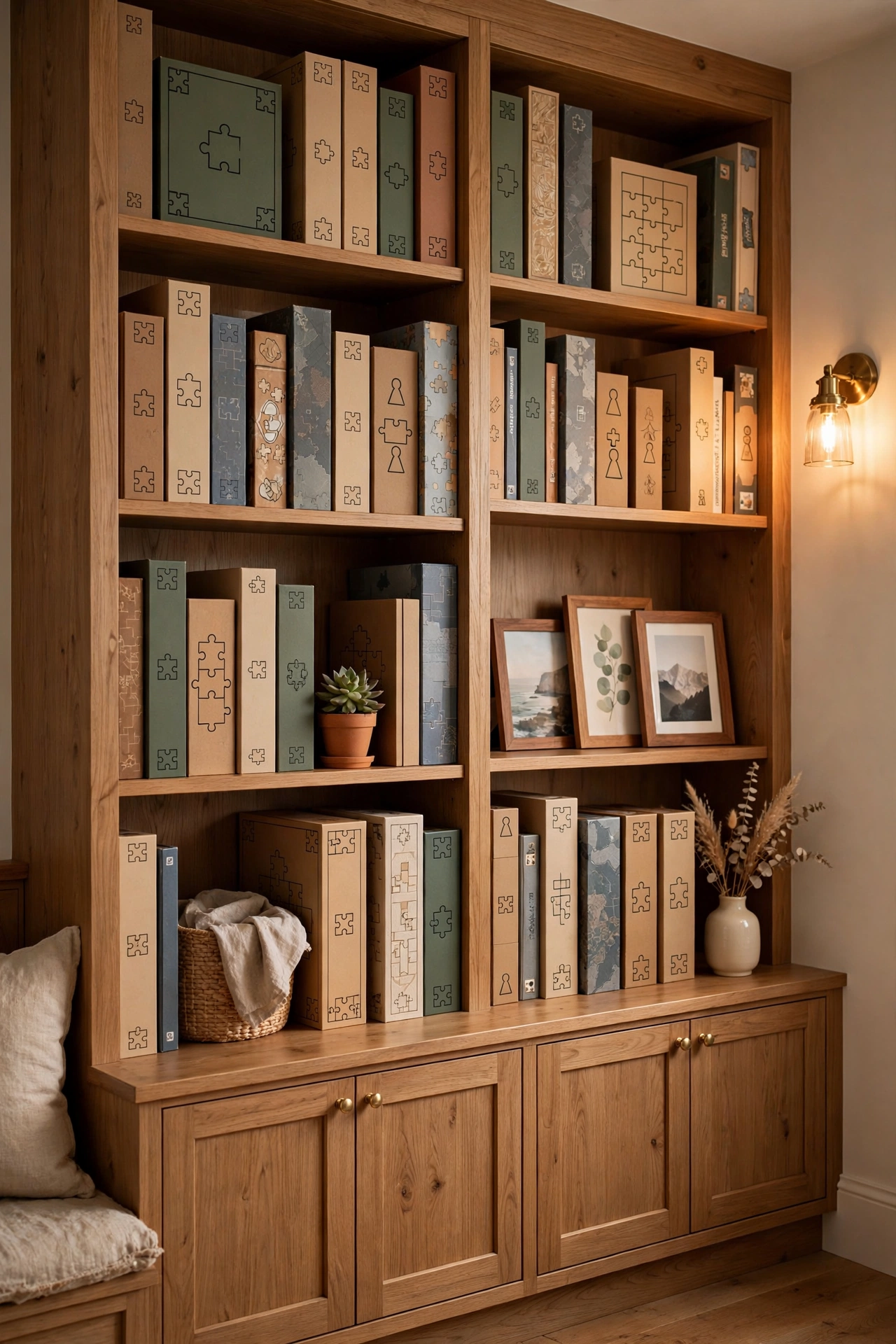
11. Store Board Games Like Books
Stack board games flat and you get a leaning tower that avalanches every time someone wants the one on the bottom. Store them upright like books on a shelf and the whole problem disappears. You can see every game. You can pull one out without disturbing the rest. It looks like a little game library and it works like one.
Use bookends or a shelf with dividers to keep them upright. Board game boxes are flimsy and they will slump without support. A simple shelf with the boxes filed vertically, spines out, is the entire system. Purge the games with missing pieces while you are at it. A game that cannot be played is just a box taking up shelf space.
This works for puzzles too. Zip the puzzle pieces into a labeled bag, rubber band the bag to the box, and file it upright with the games. No more dumping the box to check if the pieces are all there. The bag tells you. The shelf stays neat. Game night gets easier, which means game night actually happens.
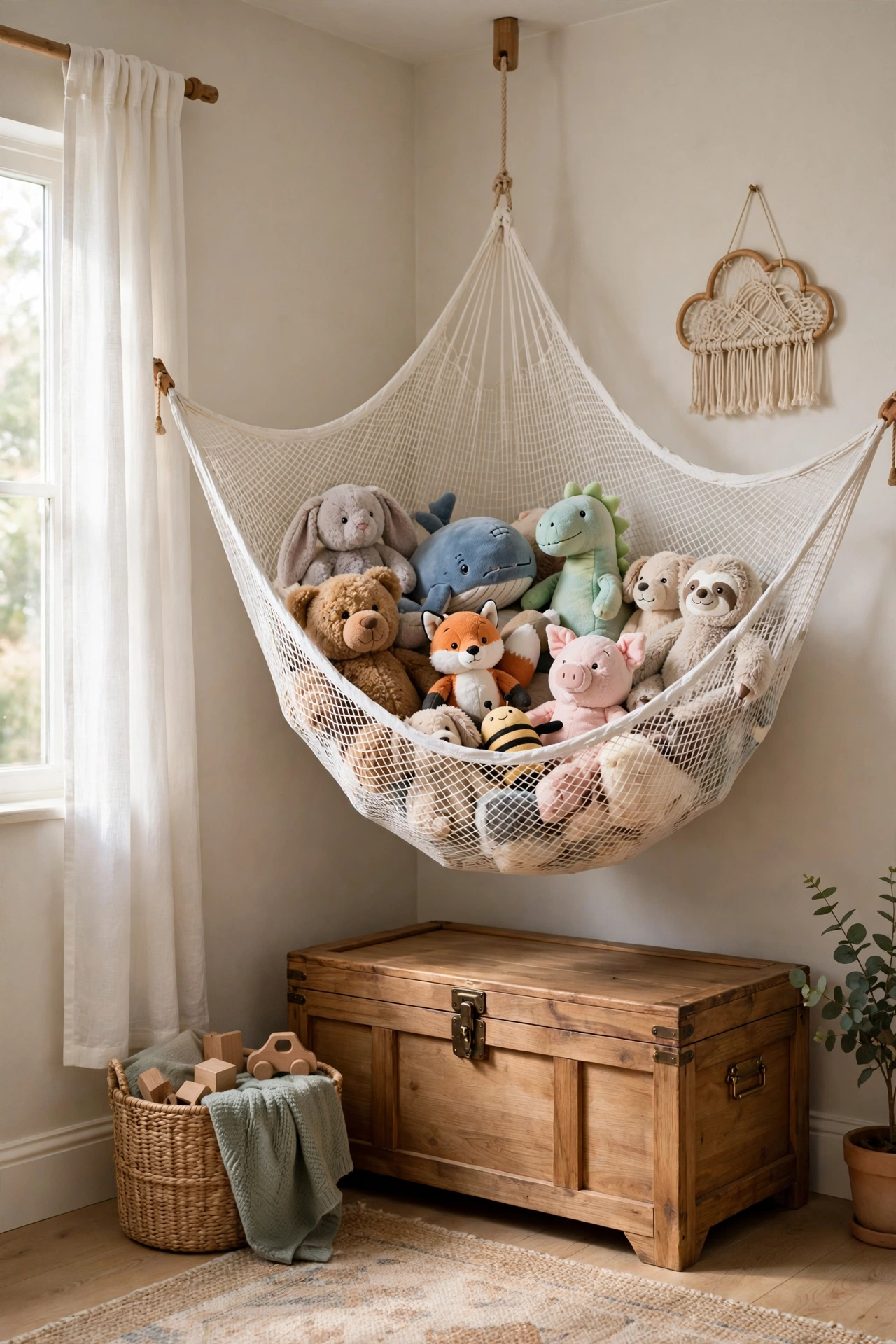
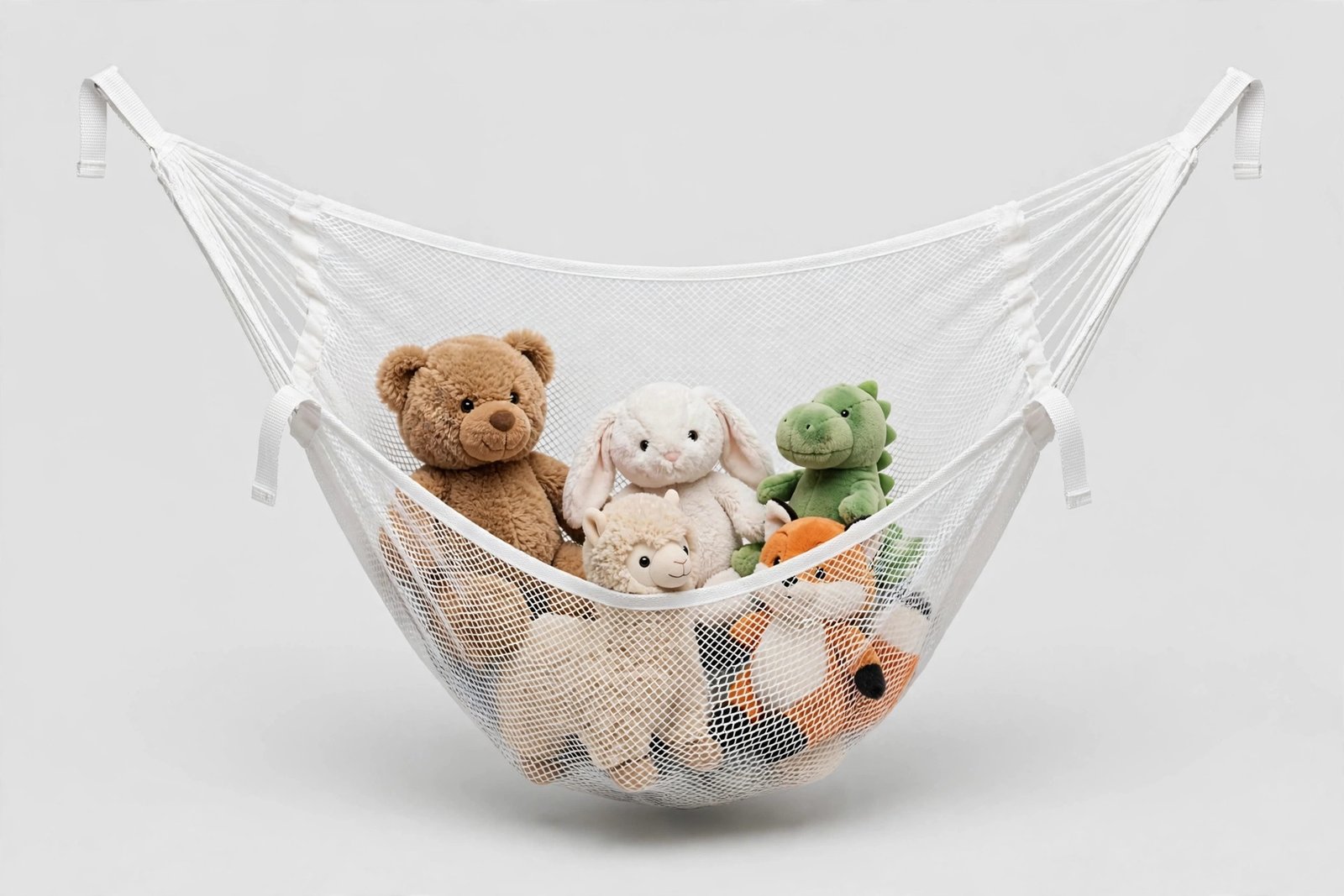
12. A Corner Hammock for the Stuffy Army
Stuffed animals reproduce in the dark. I am convinced. One day there are five on the bed. The next day there is a mountain and you cannot find the pillows. A mesh hammock strung across a playroom corner corrals the whole collection into something that looks cute instead of overwhelming. The stuffies become decor. The floor becomes visible. Everybody wins.
The corner is wasted space anyway, which is what makes this so satisfying. You are not giving up a single square foot of play area. The hammock hangs up high where the air is, the stuffies pile in soft and visible, and the kids can still reach their favorites. Toss to clean up. Reach to play. It is the lowest effort system in this entire post.
Do a stuffy census twice a year. If an animal has not been cuddled in six months, it graduates to the donation bin. The hammock only works if it is not stuffed to bursting. A hammock at a comfortable full looks charming. A hammock straining at the seams looks like a cry for help. Edit ruthlessly. The favorites will thank you.
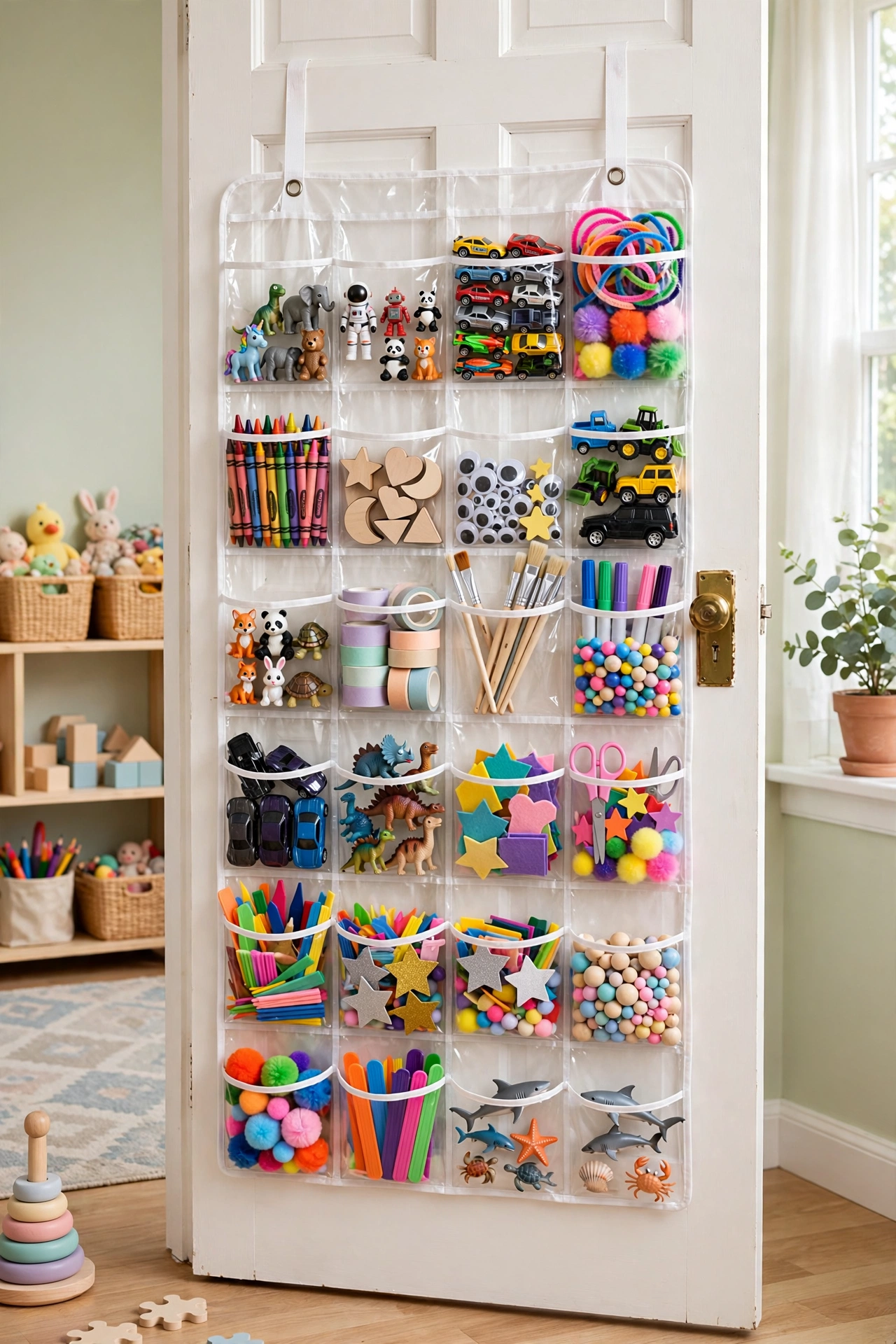
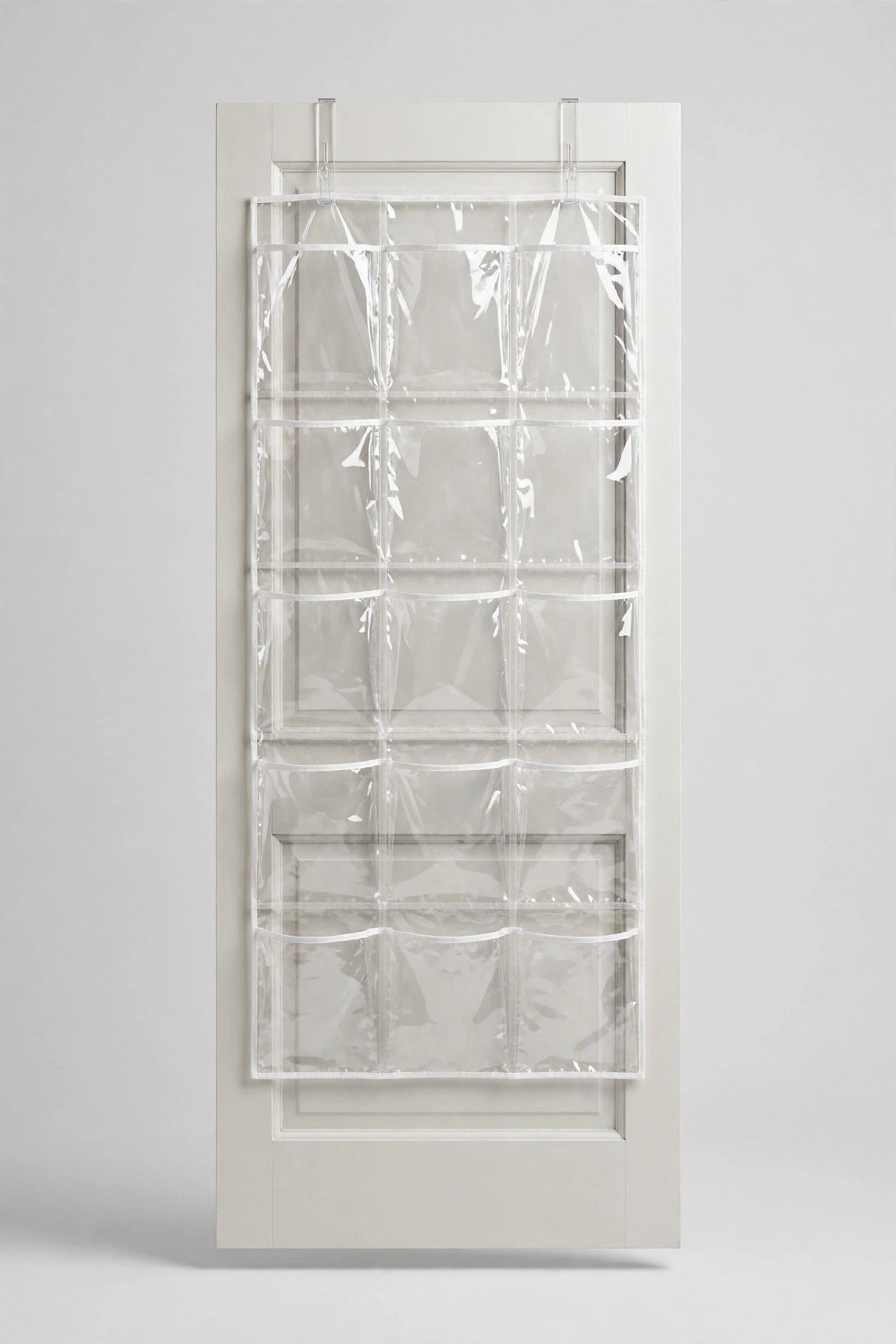
13. An Over-Door Organizer for Tiny Toys
The back of the playroom door is free real estate and most of us waste it. A clear over door organizer turns it into a display wall for tiny toys. Figurines. Craft supplies. The little things that otherwise live on the floor waiting to be stepped on. Clear pockets mean the kids can see everything and grab what they want.
Clear is doing all the work here. Opaque pockets are mystery pouches that the kids will dump out to search. Clear pockets are a menu. The kids shop the door, pick their tiny toys, and put them back in the right pocket because they can see where everything goes. Visibility is the whole cleanup strategy for small things.
Keep the top pockets for your stuff. The craft supplies you dole out. The stickers you ration like currency. The bottom two rows are kid territory. And check the pockets monthly. Tiny toys breed in pockets the same way they breed everywhere else. A quick sort keeps the door from becoming a second toy box.
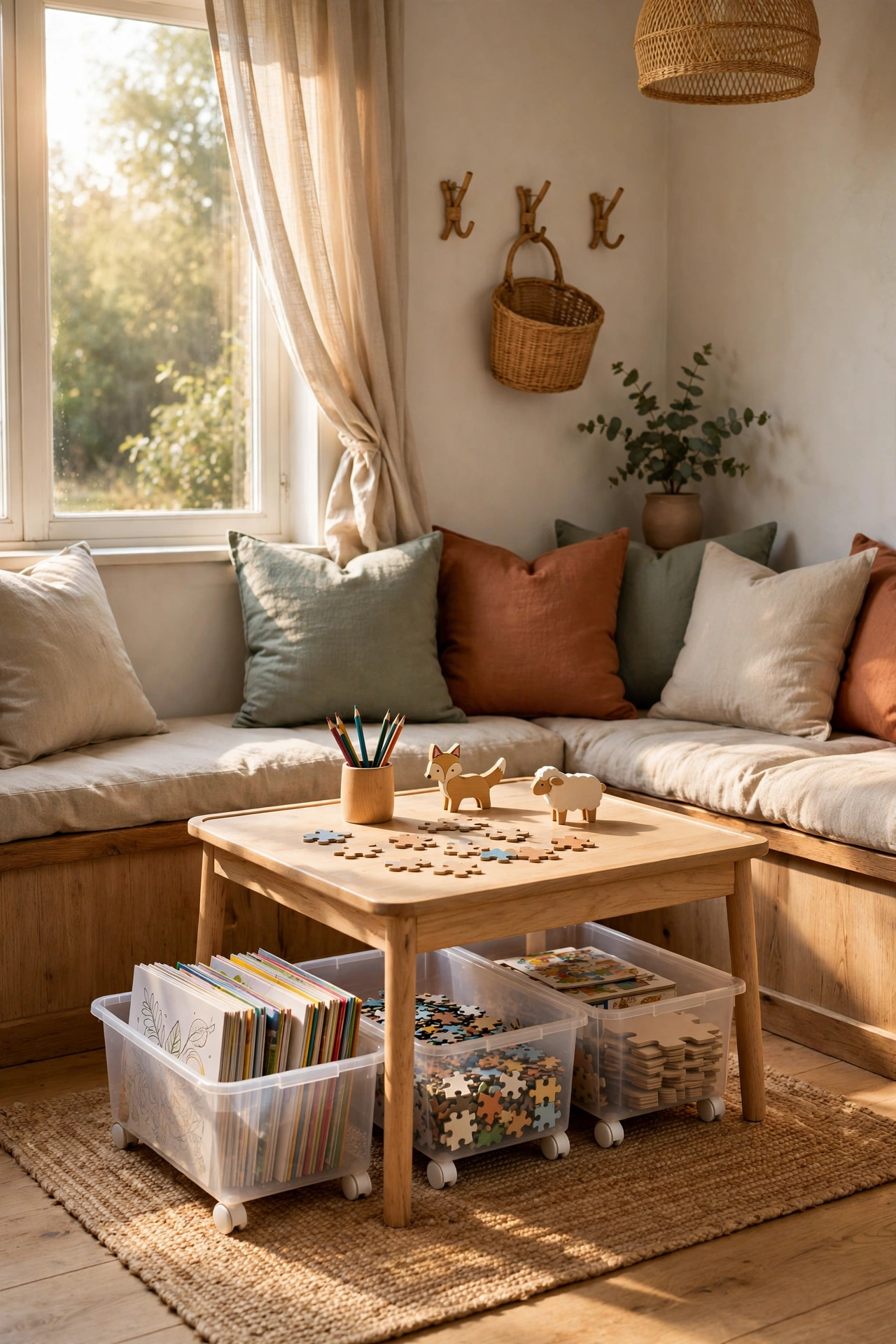
14. Rolling Bins Under the Activity Table
The space under the kids activity table is dead space until you roll bins into it. Shallow rolling bins slide under the table and hold the coloring books, the sticker pads, and the crayon cups right where the kids use them. Playtime starts without a trip across the room. Cleanup is a shove. The bins disappear under the table and the room looks instantly tidier.
Shallow matters more than you think. Deep bins under a table become black holes where coloring books go to bend and crayons go to melt together. Shallow bins keep everything visible and reachable. The kids can see the whole collection at a glance, which means they actually use it instead of dumping it out to see what is inside.
Label the bins even though they are small. Coloring books. Stickers. Crayons and markers. Three bins, three labels, zero confusion. And this is the perfect spot for the picture labels, since the bins sit low where little eyes look. When the bins roll, the labels go with them, and the system survives the daily chaos.
Systems that keep it tidy
Storage is only half the battle. The other half is the systems that keep the room reset day after day. These five ideas are the routines and rules that make the playroom stay tidy without you becoming the full time toy manager.
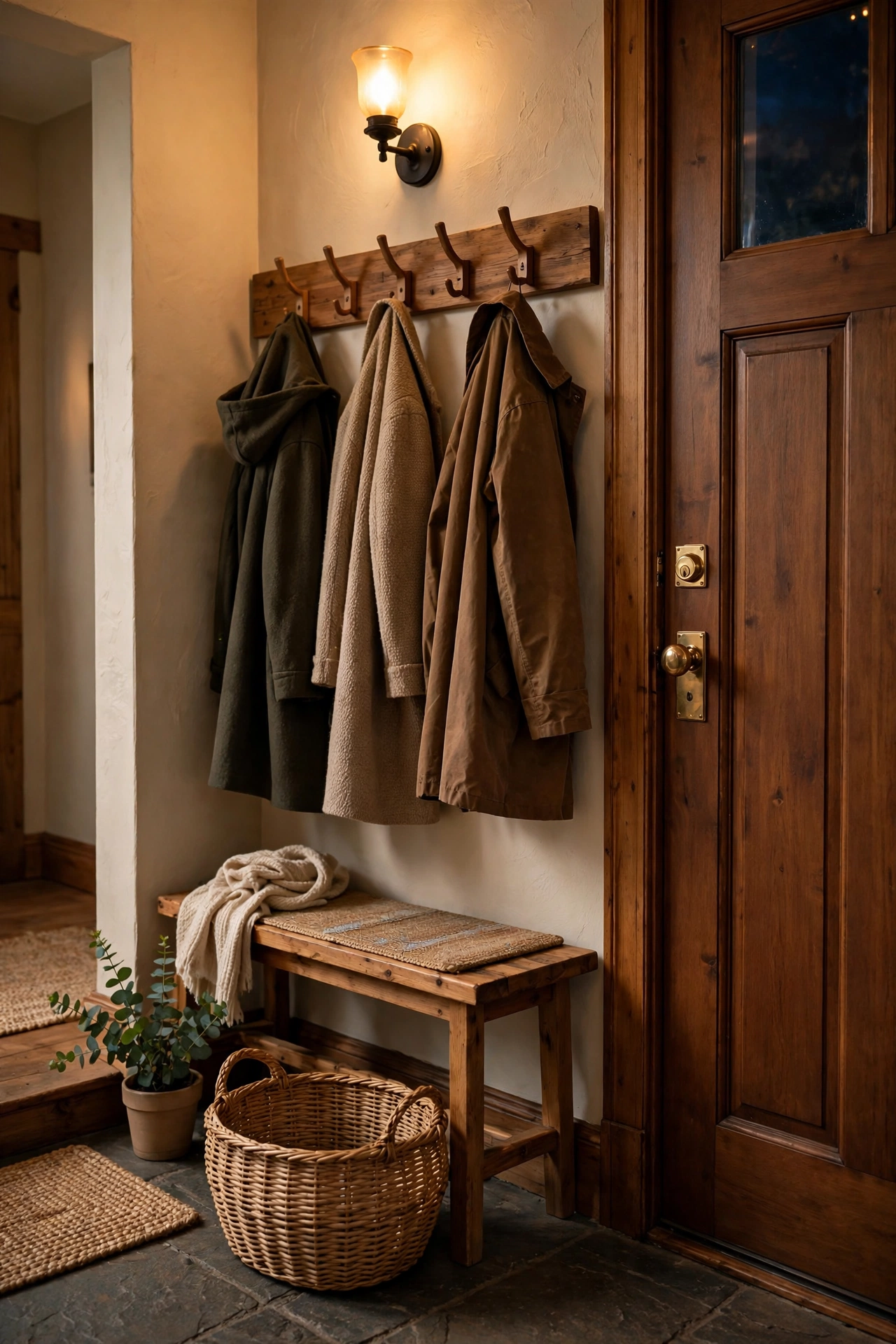
15. The Donation Bin by the Door
Toys come in faster than they go out. Birthdays. Holidays. Grandparents. The playroom has a one way valve and it is clogging. A donation bin by the front door fixes the flow. Broken toy. Outgrown toy. Toy nobody has touched in months. It goes in the bin on the way out, not in a pile you will deal with later. Later never comes.
The location is the trick. A donation box in the garage is a good intention. A donation bin by the front door is a habit. You pass it every day. The kids pass it every day. When the bin is full, it goes to the donation center on the next errand run. Make it a nice woven basket so it looks like decor, not a chore waiting to happen.
Involve the kids in the choosing. Not in a big emotional purge, just the steady drip. Has anyone played with this in a month. No. In the bin. Kids are surprisingly good at letting go when it is one toy at a time and their idea. If your entryway needs the full welcoming treatment too, my fall front entryway ideas will get the whole space feeling warm.
16. Picture Labels for Kids Who Can’t Read Yet
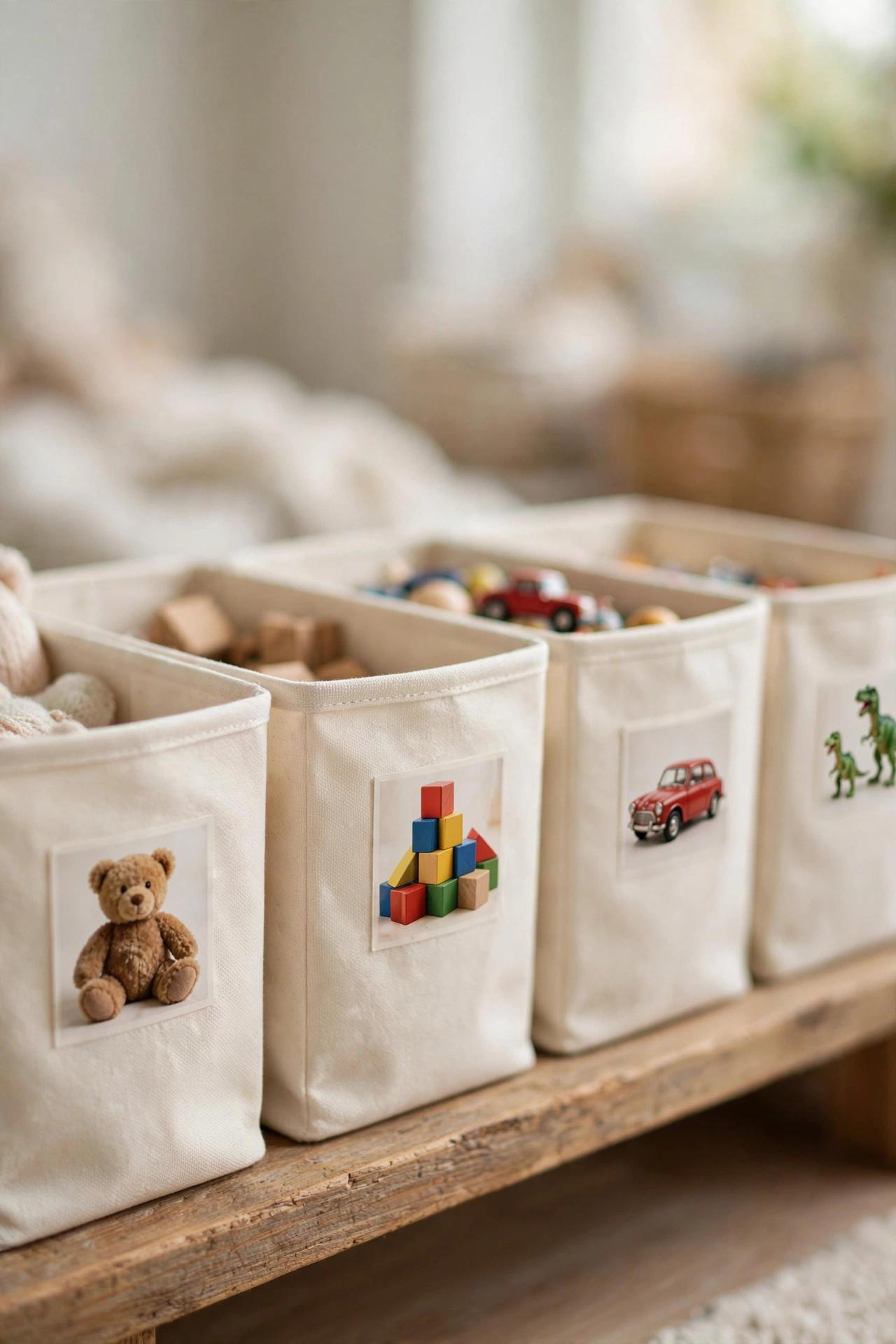
Word labels are useless to little kids who cannot read yet. Picture labels are magic. A photo of the actual toys that live in the bin, stuck right on the front, tells them exactly where things go. Blocks go in the bin with the block picture. Dolls go in the bin with the doll picture. Cleanup becomes a matching game, and toddlers love matching games.
Take the photos yourself with your phone. A quick snapshot of the bin contents, printed small and taped or slipped into a label holder. Real photos beat clip art every time because they show the actual toys, the actual bin, the actual system. When the bin contents change, snap a new photo. Thirty seconds and the label is current again.
Pair the picture with the word for the kids who are learning to read. Picture on top, word underneath. The little ones match the picture. The bigger ones start reading the words. One label grows with both kids, and you only make it once. This is the highest return labeling trick in the whole post.
17. Seasonal Swap Bins in Storage
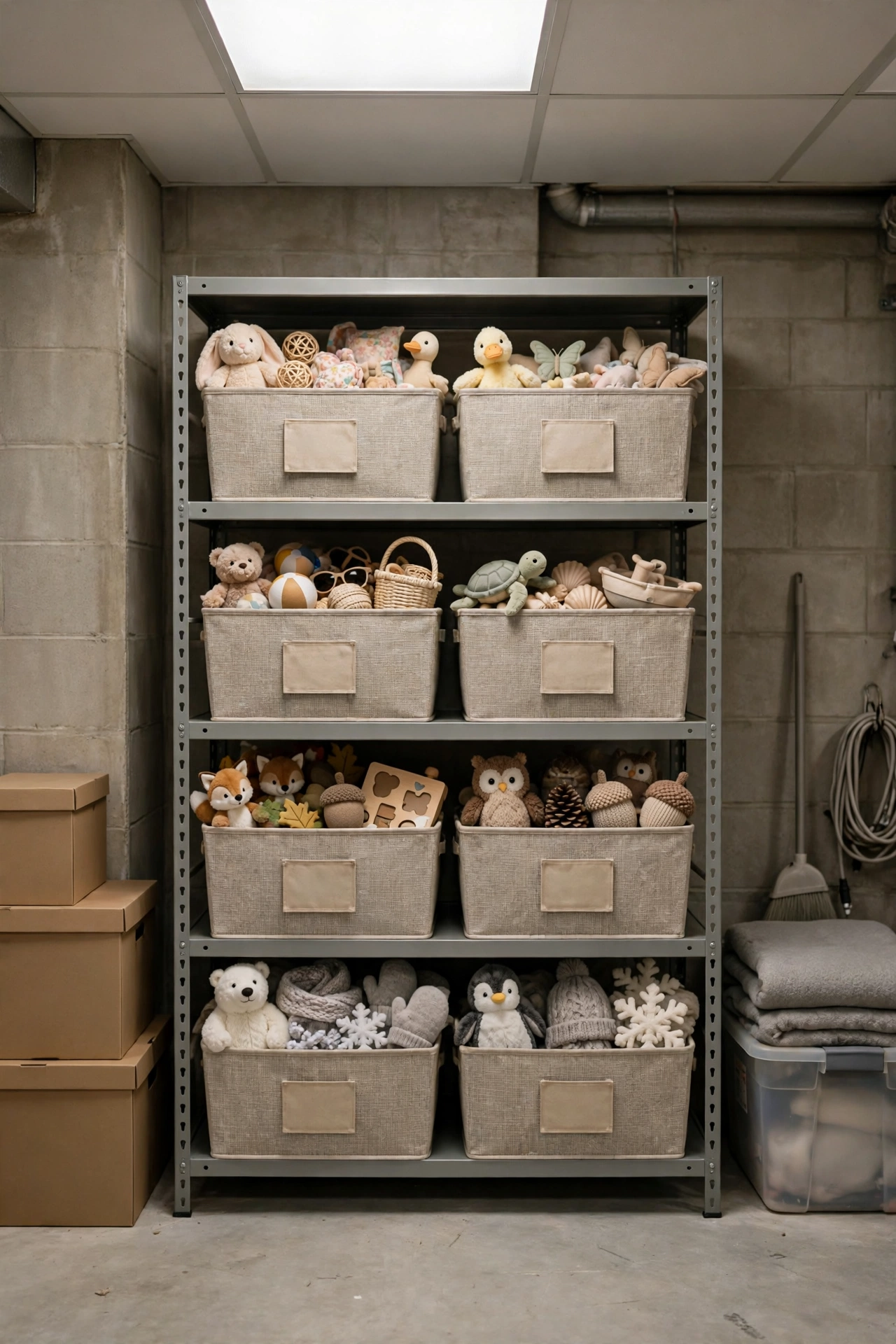
Some toys are seasonal and they should not take up prime playroom real estate all year. The beach toys in January. The snow toys in July. The holiday crafts in March. Seasonal swap bins in the basement or garage hold the off season stuff, labeled and waiting. The playroom only holds what is in season, which means less stuff and more play.
The swap itself is the fun part. When the seasons change, the kids help carry the bins up and trade them out. Old favorites come back like long lost friends. The summer toys return in June and it is basically a holiday. You bought nothing. The kids are thrilled. The playroom stays fresh without a single new purchase.
Keep the bins truly seasonal and truly labeled. Summer. Winter. Holiday. Three bins, maybe four. If a bin has not been opened in a full year, its contents are not seasonal, they are forgotten, and forgotten toys should visit the donation bin. Be honest. The storage room is not a toy retirement home.
18. A Kid-Sized Cleanup Caddy Station
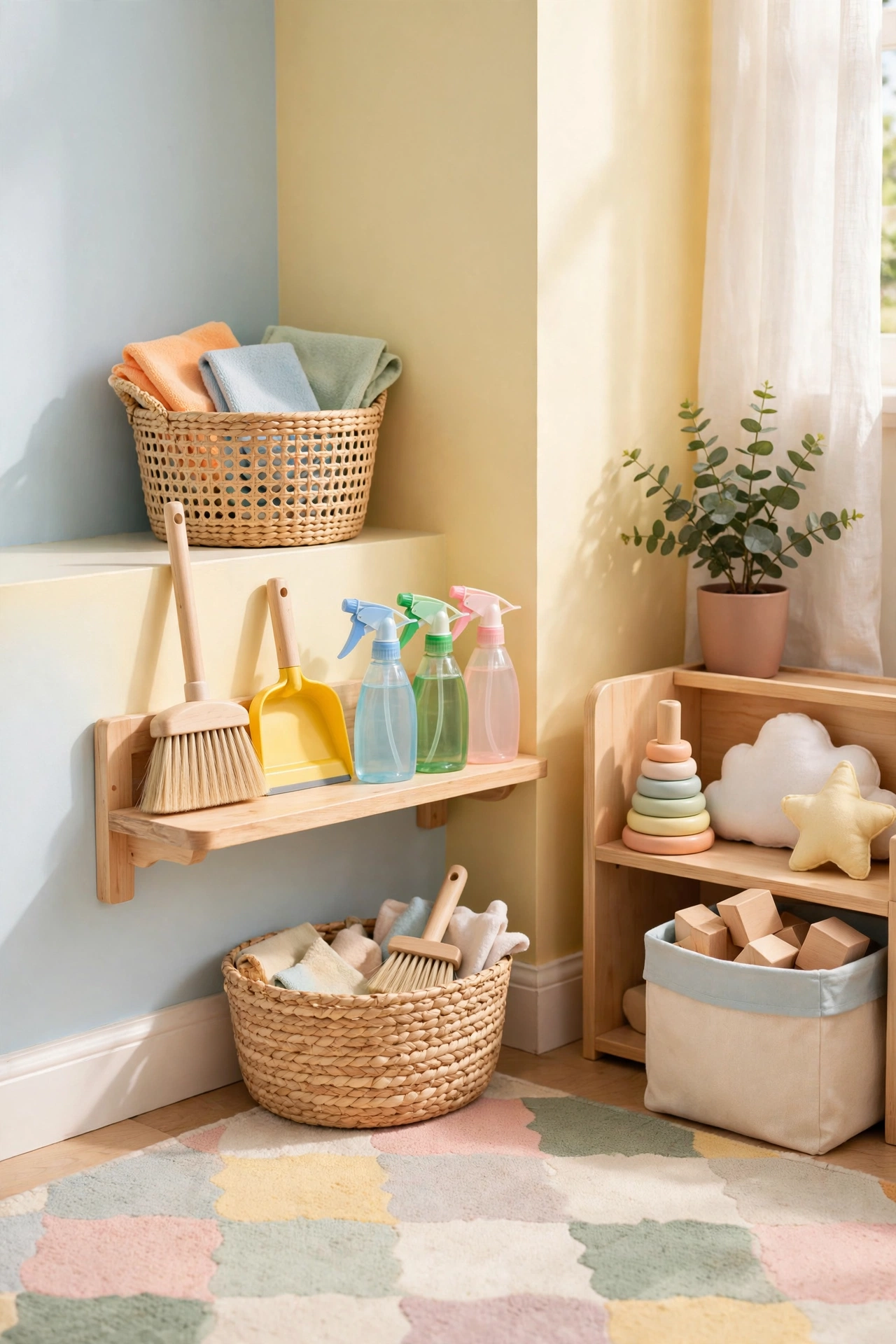
Cleanup fails when the tools live in another room. A kid sized caddy station in the playroom corner puts everything the kids need within reach. A small bin for trash. A duster for the shelves. A little hand broom for the crumbs. When the tools are right there, cleanup stops being a production and starts being a habit.
Keep the caddy small and light enough for the smallest kid to carry. If they can carry it, they will use it. If it is heavy or awkward, it becomes your job, and you already have a job. Stock it with their size everything. Small broom. Small dustpan. A spray bottle of water for the brave ones. Kid tools for kid jobs.
Make the caddy station the last stop of playtime. Ten minutes before dinner, the caddy comes out and the room gets its reset. Same time, same routine, every day. Kids thrive on the routine and the room thrives on the consistency. A playroom that gets a daily ten minute reset never reaches disaster level. It just stays good.
19. A Rotating Display Shelf for Favorites
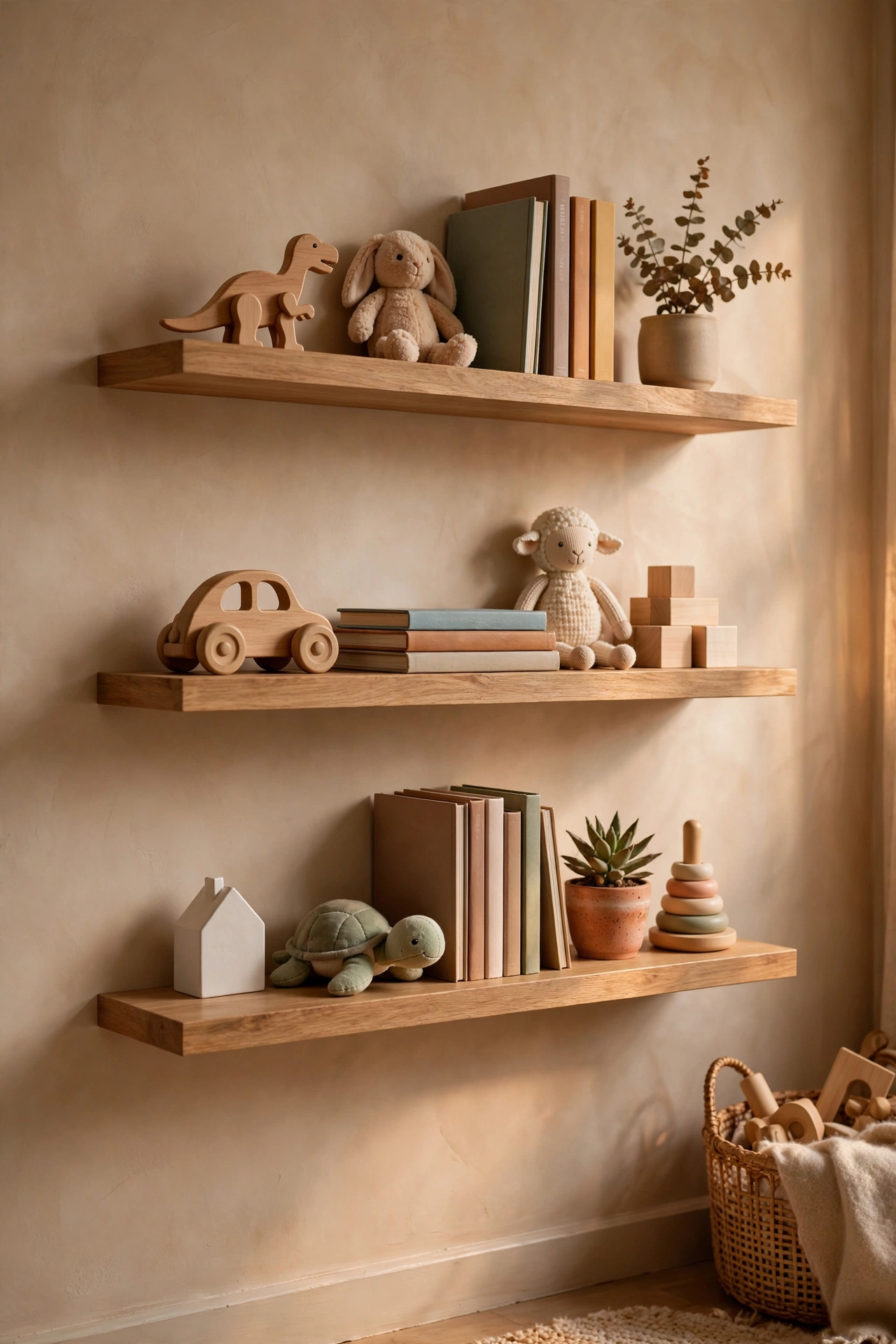
Kids have favorite toys the way adults have favorite mugs. They want them seen, not stored. A rotating display shelf gives the current favorites a place of honor. Two or three floating shelves on the playroom wall, styled with the five or six toys that matter most right now. It looks beautiful and it makes the kids feel famous.
The rotation is what keeps it special. Every week or two, the kids choose a new lineup for the shelf. Old favorites go back into the bins. New favorites get their moment. It is a tiny ceremony and the kids take it very seriously, which is adorable and also very useful. The shelf teaches curation. The bins stay manageable.
Keep the display shelf high enough that it is display, not play. This is the museum, not the toy box. The toys on the shelf are for admiring between play sessions. When a favorite graduates from the shelf, it goes back to active duty in the bins. The shelf never gets crowded because the rotation never stops.
More Favorites
This post contains affiliate links. If you buy through them, I may earn a small commission at no extra cost to you.
A few more favorites from the ideas above:
Start with the zones, not the shopping cart
You do not need to do all nineteen of these this weekend. Please do not try. Pick the idea that made you nod the hardest while reading, and do just that one. Tape the zones on the floor. Hang the hammock. Set up the donation basket by the door. One change, lived with for a week, will tell you what the room needs next.
Then add the next layer. A playroom is a system you build over time, not a makeover you finish in a day. Every zone you define makes the next cleanup faster. Every label you stick on makes the kids a little more independent. Every routine you start compounds. A month from now you will open that door and the wave of plastic will be gone. Just a room where your kids play hard and clean up easy.
The real secret is that the best playroom is not the tidiest one. It is the one the kids can run themselves. A room where a four year old can find the blocks, build the tower, and put the blocks back without asking you for help. That independence is worth more than any matching set of bins. Build the room for the kids who live in it, not the guests who peek in.
If this calm, organized feeling is spreading through your house, my warm minimalist living room ideas keep the main rooms serene, and my organic modern living room post brings that same natural warmth to the family spaces.
Start with the tape. Draw the zones. Watch what happens. Then come back and tell me which idea changed your playroom, because I want to hear everything.
Get Fresh Home Ideas Every Week
Seasonal decor ideas, organizing tips, and cozy home inspiration, straight to your inbox.
More Ideas You Will Love
Keep browsing for more seasonal inspiration: