
A minimalist living room is not an empty room. It is a room where every piece earns its place, every surface can breathe, and nothing competes for your attention. This is one of our design guides, and it walks you through building that kind of calm, step by step.
The Calmest Room in the House
The living room is the only room in the house that has to be everything at once. It is the landing pad after work, the homework table, the movie theater, the conversation corner, and the first thing guests see. Most living rooms answer that pressure by accumulating. One more chair. One more shelf. One more small thing on the coffee table. Slowly, without anyone deciding it, the room starts to hum.
Minimalism is the opposite decision, made on purpose. Not less for the sake of less, but less of everything that does not serve the room. What remains is generous. A sofa deep enough to disappear into. Light that flatters everyone in it. Wood with grain you can see from across the room. The style has a reputation for being cold, but real minimalism is warm. Cold minimalism is just a room that is not finished yet.
This matters more in the living room than anywhere else because this is where your nervous system lands at the end of the day. Visual clutter is not a moral failing. It is simply noise, and noise keeps the mind working when the body is done. Studies of how people feel in their homes keep landing on the same finding. Calmer rooms, calmer people. A minimalist living room lowers the volume of the whole house.
There is also a freedom in it that people do not expect. Fewer pieces means each piece can be better. One beautiful oak coffee table instead of three almost right ones. One lamp with a glow you love instead of two you tolerate. The budget does not have to grow. It just gets focused. And when every object has breathing room around it, even modest pieces look considered.
If you have been circling this style, wondering whether it can feel like home and not like a showroom, this guide is your answer. We will build the room from the walls out, one decision at a time. For a seasonal take on the same calm, our warm minimalist living room ideas for fall show how this palette handles autumn beautifully.
A minimalist room is not missing things. It has finished deciding.
The Key Elements of a Minimalist Living Room
1. A Low, Deep Sofa in Washed Linen
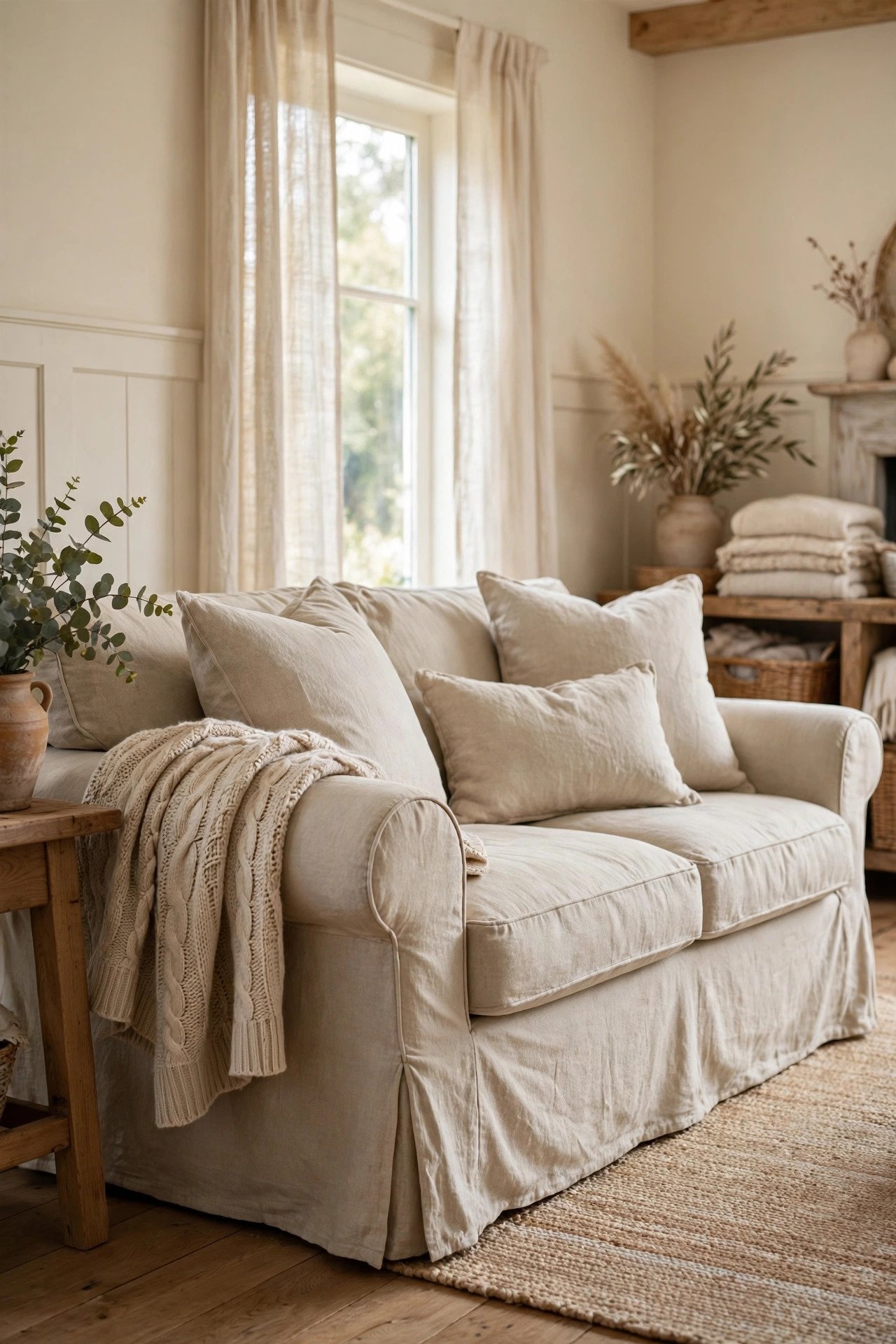
The sofa is the room. In a minimalist living room there is nowhere for an almost right sofa to hide, so choose slowly. Look for a low profile frame, deep seats, and a slipcover or upholstery in washed linen or a linen look weave. The low height keeps sightlines open, which is the oldest trick in calm design. When you can see over the back of the sofa from the doorway, the room feels twice as large.
Color should come from the quiet end of the spectrum. Warm white, oatmeal, natural flax, soft greige. These are colors that hold light instead of reflecting it hard. A white sofa in the wrong white can feel clinical. In the right warm white, it feels like a cloud that happens to be furniture.
Comfort is non negotiable. Minimalism has no patience for a beautiful sofa nobody sits on. Test the seat depth against how you actually lounge. If you curl up, you need depth. If you sit upright with a book, you need back support. The room only works if this one piece works hard, so let it be the piece you spend on.
2. Honest Wood with Visible Grain
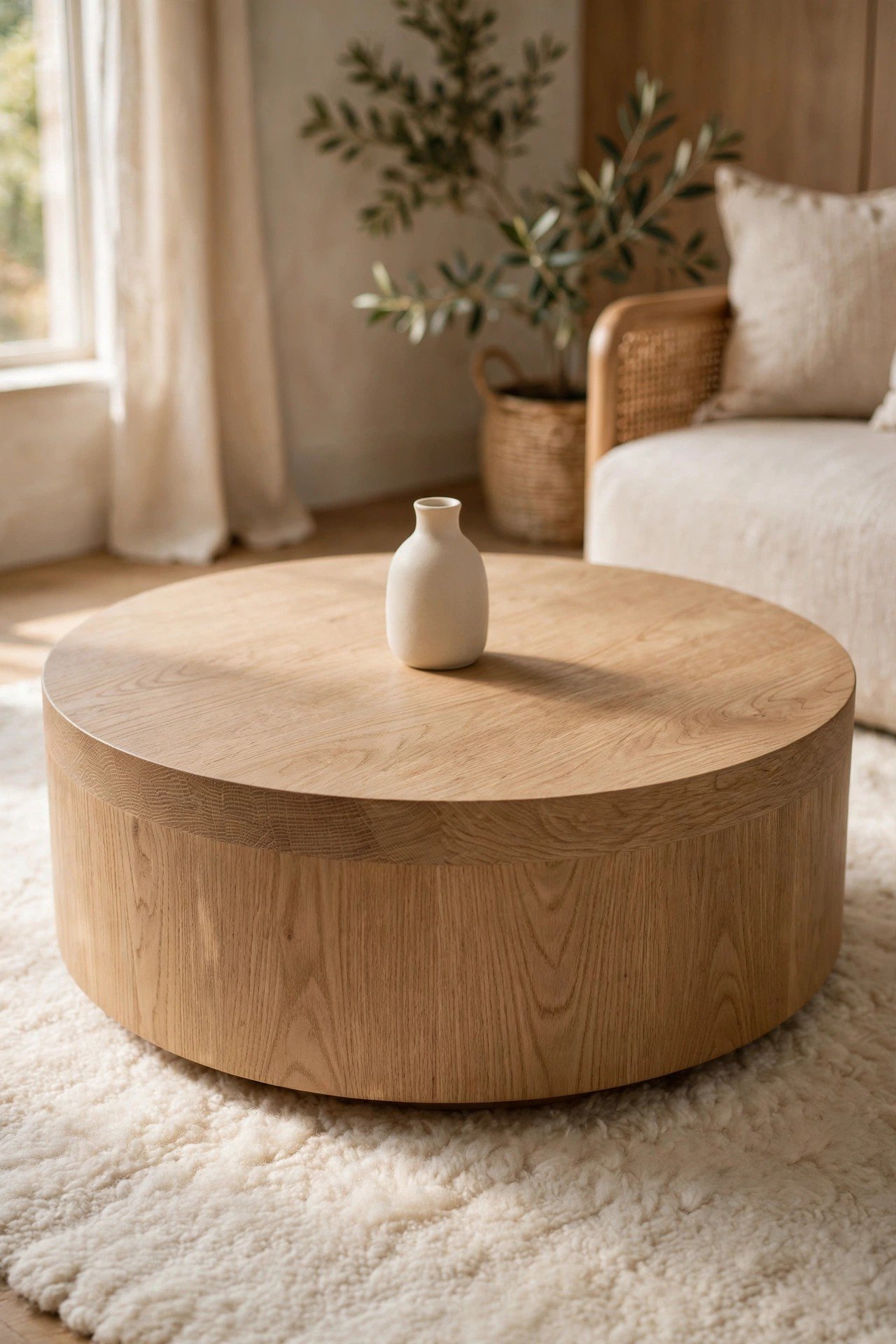
Wood is the warmth engine of a minimalist room. With color kept quiet and pattern kept out, the grain of real wood becomes the visual interest. Choose light oak, ash, or white washed finishes with a matte seal. You want to see the story in the surface. The cathedral arches, the straight grain, the small knots. That character is doing the decorating.
One strong wood piece anchors the room. A round coffee table is the classic move, because a circle softens all the straight lines a sofa brings. A low media console in the same wood family ties the wall together. Keep the wood tones in the same neighborhood. Mixing pale oak with dark walnut in a minimal room creates a contrast the style did not ask for.
Finish matters enormously. Matte or natural oil, never high gloss. Glossy wood throws sharp reflections that fight the softness everywhere else. Run your hand across it in the store. If it feels like wood, it will look like wood in your home.
3. Warm White Walls with Soft Edges
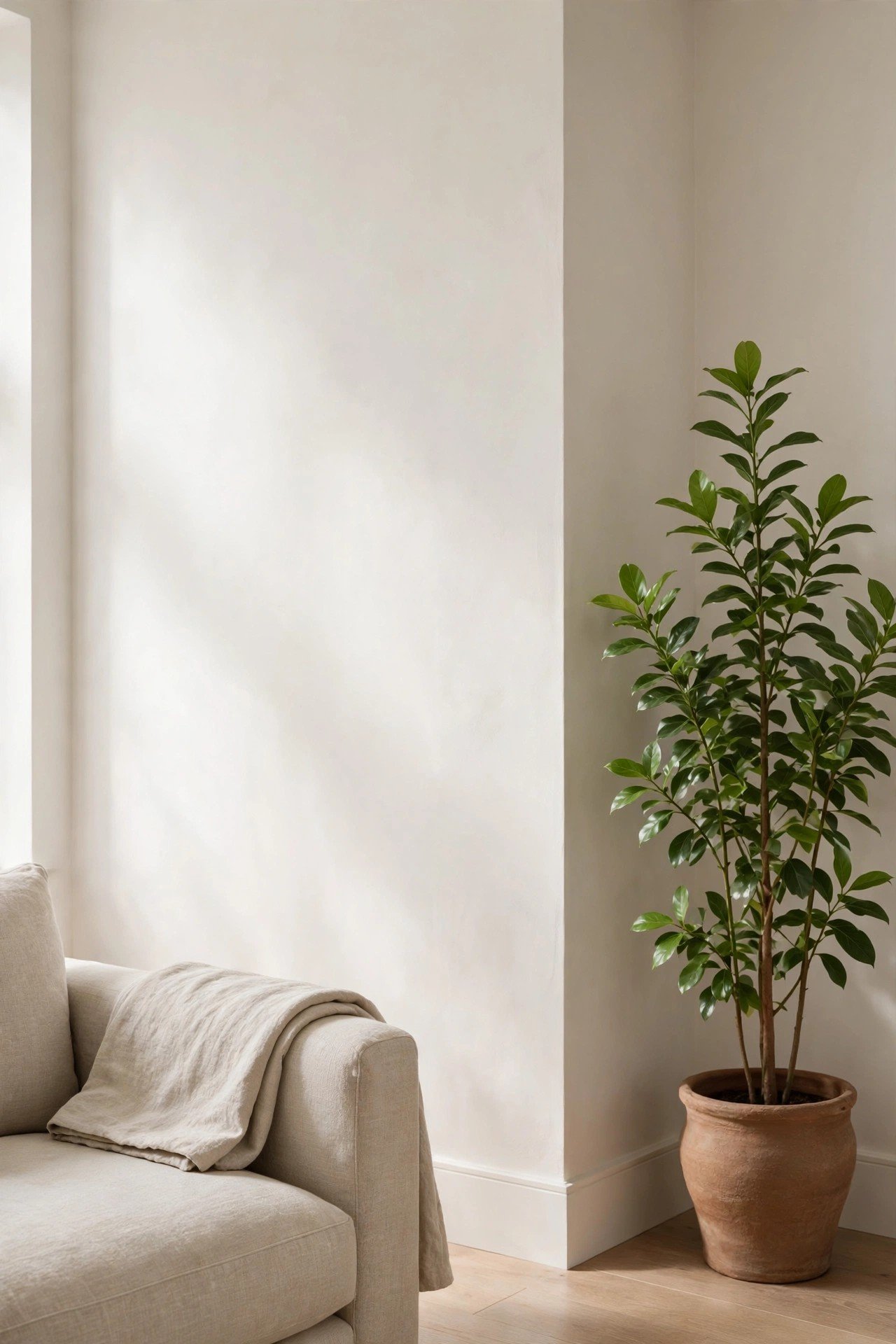
The walls are the canvas, and in minimalism the canvas shows. Stark blue white makes a room feel like a gallery that forgot the art. Warm white, the kind with a whisper of cream or greige in it, makes the same room feel like morning. Paint is the cheapest square footage you will ever buy, and here it does the heaviest lifting.
Matte finish, always. Flat paint absorbs light instead of bouncing it, which removes the last bit of visual harshness. In a room with little on the walls, the wall surface itself becomes a feature. Every roller mark and sheen difference would show, so take the time to do two careful coats.
Leave the walls mostly bare. This is the discipline the whole style rests on. One quiet piece of art, hung at eye level where it can be seen from the sofa, is plenty. The empty wall is not waiting for something. It is doing its job, giving your eyes a place to rest.
4. Texture Layered Like Weather
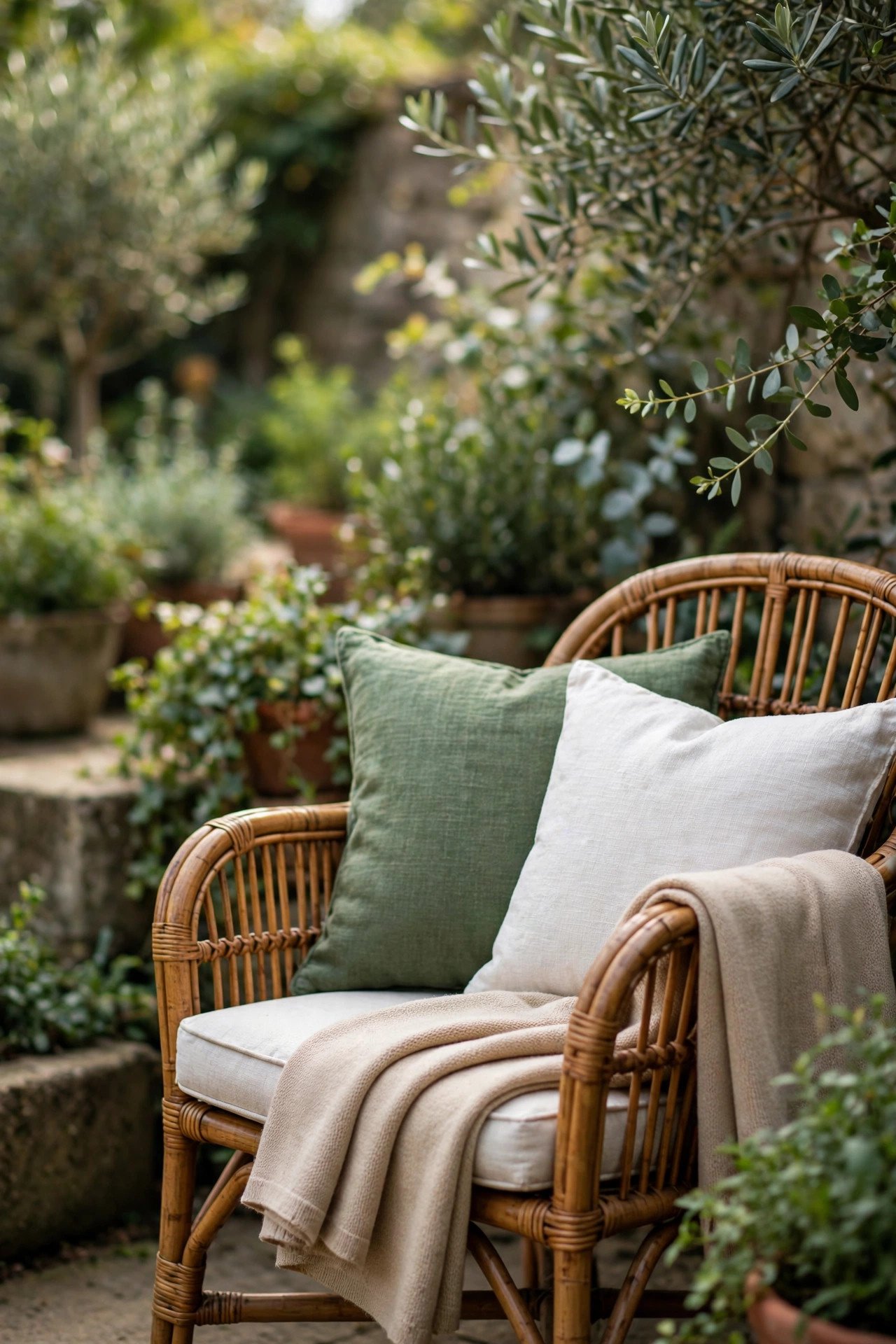
Here is the secret that separates warm minimalism from the cold kind. When color and pattern step back, texture steps forward. A chunky wool throw over the sofa arm. A jute rug under the coffee table. A boucle cushion that begs to be touched. Linen curtains that filter light into something golden. Each one is quiet on its own. Together they make the room feel rich.
Layer the way nature does. Rough against smooth. Nubby against flat. A coarse jute rug underfoot, a soft wool throw at hand, a smooth ceramic vase on the table. That contrast is what keeps a neutral room from going flat, and it never argues with itself the way competing patterns can.
Choose natural fibers where you can. Wool, linen, cotton, jute. They age with grace, which is the whole philosophy. A linen cushion that softens over two years is not wearing out. It is becoming more itself. If you love how natural textures behave in small doses, they are doing the same work at full scale here.
5. Sculptural Light with a Warm Glow
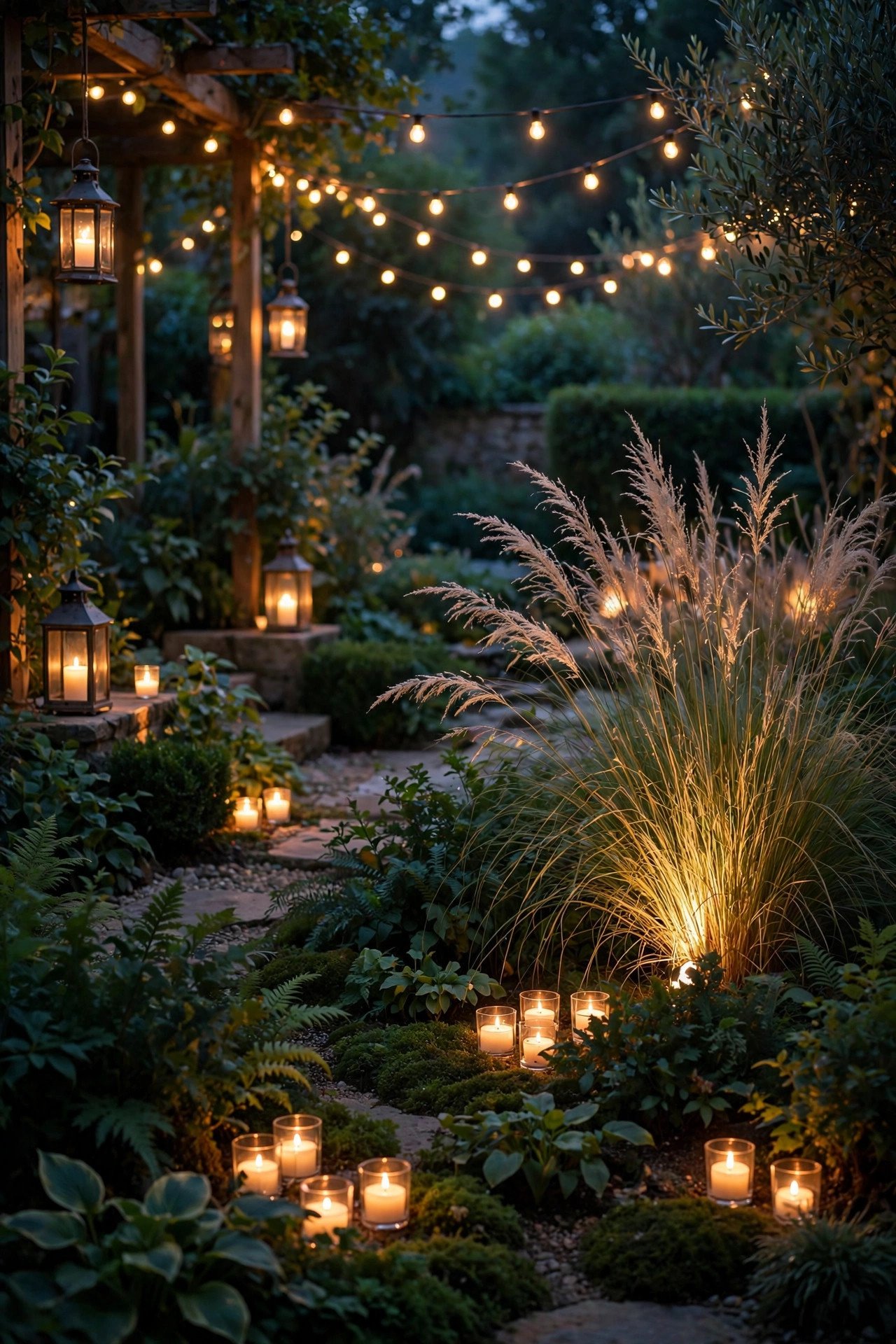
In a minimal room, lighting is decor. A paper globe pendant, an arc floor lamp with a linen shade, a small ceramic table lamp with a warm bulb. These pieces earn their footprint twice, once as light and once as sculpture. Choose forms with simple, confident silhouettes. A sphere. An arch. A soft cone. Nothing fussy.
Warmth of light is everything. Bulbs around 2700K, the color of late afternoon, make wood glow and linen look golden. Cool daylight bulbs will undo the palette in one flip of a switch. Put the main lights on dimmers. A minimalist room at full brightness feels exposed. The same room at seventy percent feels held.
Layer three heights. Something overhead or tall, something at table height, and something low, like a small lamp on a stack of books or a candle on the coffee table. Light at three levels gives the room depth that furniture alone cannot.
6. One Quiet Focal Point
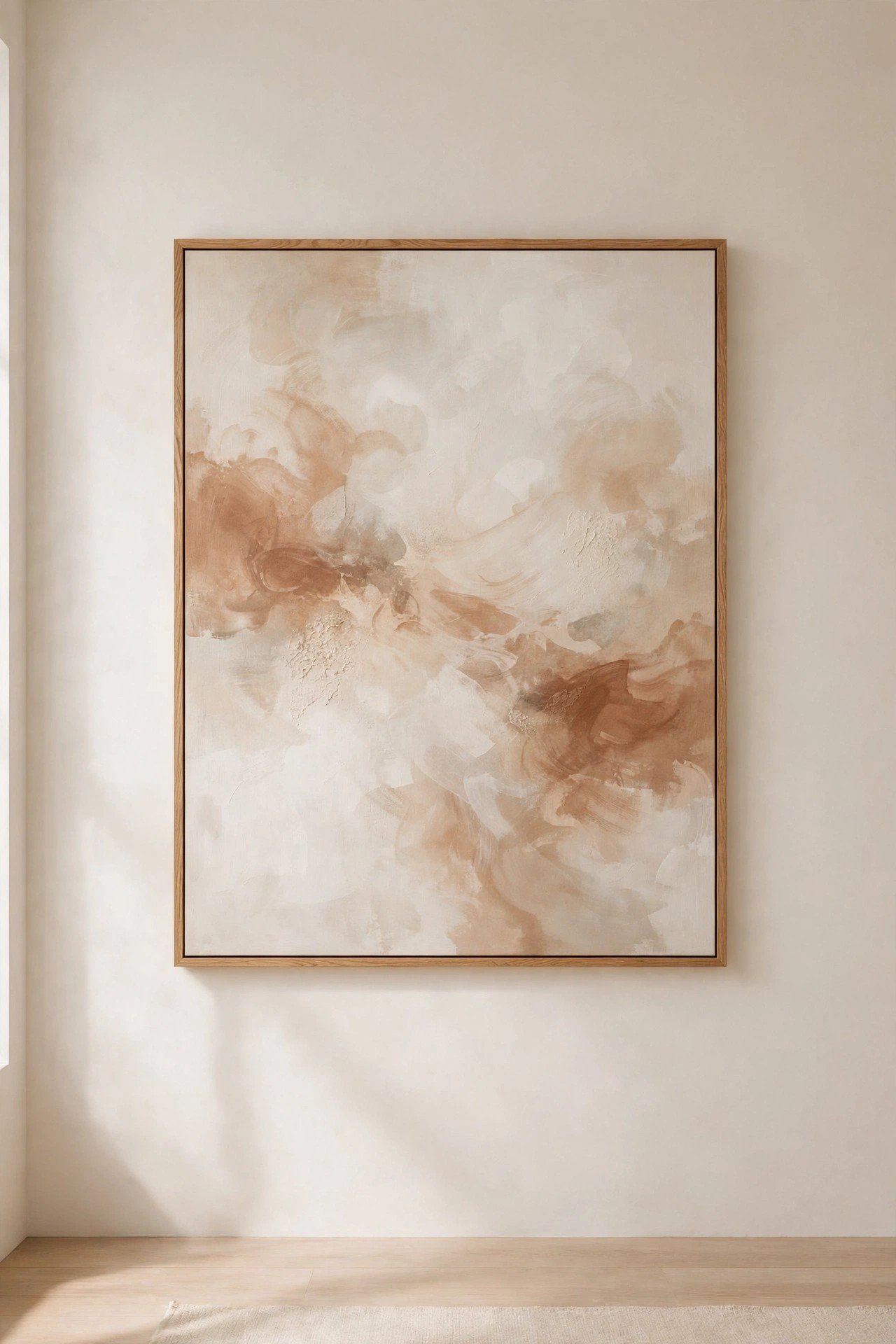
Every calm room needs one place for the eye to land. Not five. One. A large abstract canvas in soft brushstrokes. A sculptural vase with a single branch. A beautiful object on the coffee table that you chose slowly. This is the period at the end of the room’s sentence.
Scale is the trick. In a quiet room, the focal point can be larger than you think. A big piece of art on an empty wall looks intentional. A small piece on the same wall looks lost. Give it room. Nothing should crowd it or compete with it.
Choose it last, after everything else is in place. Live with the room for a week first. You will know what it is missing once the noise is gone. Often it is not another thing at all, but one right thing. That patience is the difference between decorated and composed.
The Palette
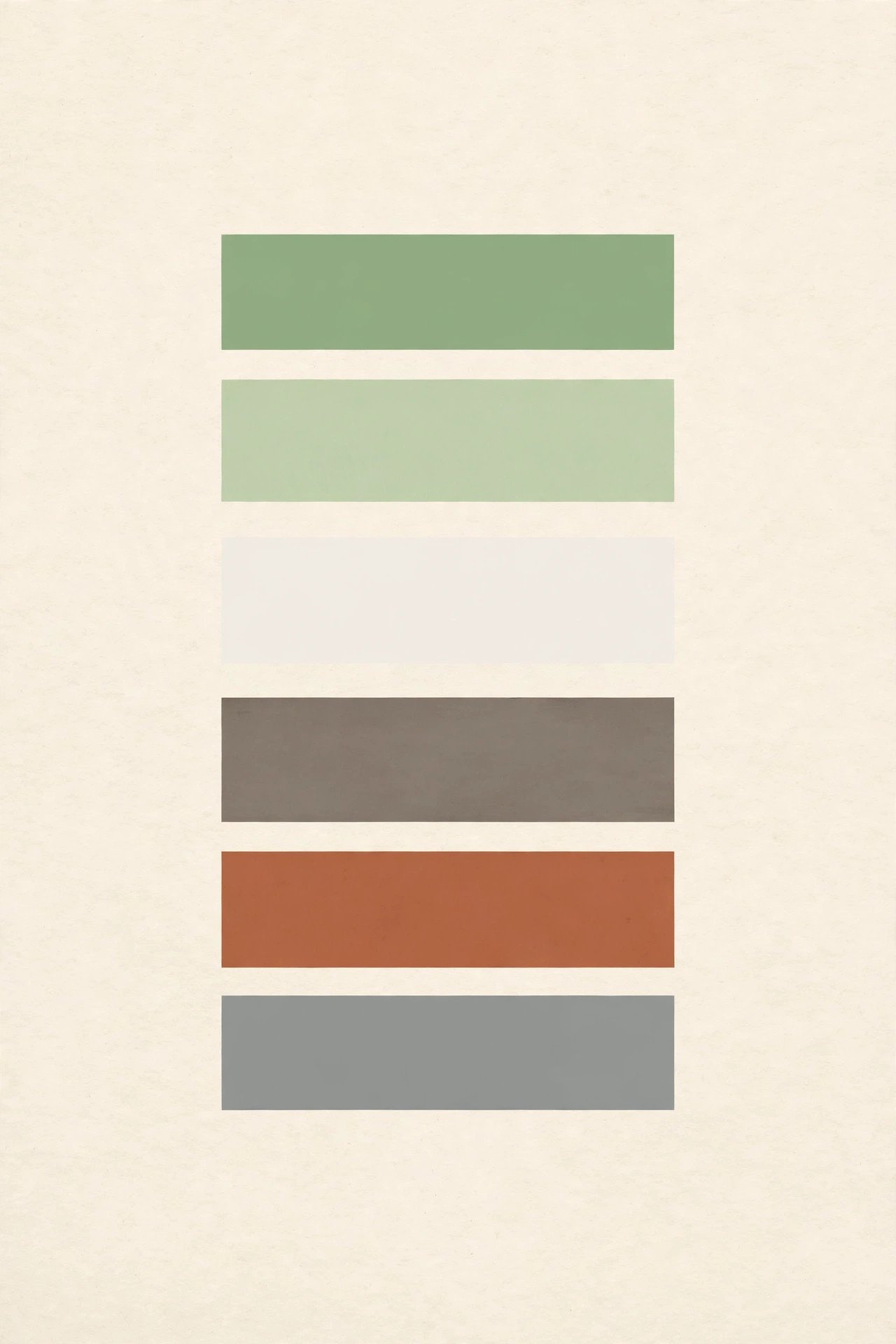
A minimalist living room is painted from a small, warm box of colors. Learn their names and where each one lives, and the room nearly styles itself.
Gallery White goes on the walls and ceiling. It is white with warmth folded in, like morning light on paper. It keeps the room bright without a trace of chill. In a north facing room, it forgives the cool light. In a south facing room, it glows.
Warm Fog is for the largest soft pieces. The sofa. The curtains. The big rug. It is one step deeper than the walls, which gives the room gentle dimension with no real contrast. Everything upholstered should live here.
Pale Oak belongs to the wood. Coffee table, console, frames, the legs of the sofa if they show. Think of pale oak in shade, honeyed but light. It is the bridge between the pale envelope and the deeper notes.
Stone grounds the small heavy things. A grey ceramic vase. A stone bookend. A concrete planter. It is the cool note in a warm room, and cool notes make warm notes sing.
Clay Blush is the accent, used with restraint. A folded throw. A handmade pot. The cover of a book left on the table. It brings the faintest warmth of earth into the room and keeps the neutrals from going flat. Our pumpkin decor ideas that actually look sophisticated show how this exact tone handles the autumn months.
Espresso Ink appears in the smallest doses. The cord of the floor lamp. A thin picture frame. Dark metal legs on a side table. Just enough dark to give all that pale space something to lean against.
The rule is simple. Walls and big pieces stay in the first three colors. The last three show up in objects you can lift with one hand.
When everything in the room is quiet, the things you love finally get heard.
How to Style It, Step by Step
Step 1. Clear the room completely. Take everything out. Every piece of furniture, every object, every frame. You cannot compose a calm room around the clutter that is already there. Live with the empty room for a day if you can. Notice the light. Notice where your eyes go. That is your floor plan talking.
Step 2. Paint it Gallery White. Two coats, matte finish, walls and ceiling. This single change does half the work of the entire style. Everything you bring back in will look calmer against it, including pieces you already own.
Step 3. Lay the rug and place the sofa. A large rug in Warm Fog or natural jute, big enough that the front legs of the sofa sit on it. Then the sofa itself, facing the best light or the view, not the television by default. The room is for people first. The screen can be the secondary citizen.
Step 4. Add the wood anchor. Coffee table in Pale Oak, centered on the rug with room to walk around it. If you need media storage, a low console in the same wood family goes on the longest wall. Step back and check the balance. Wood on one side of the room only will make it feel lopsided.
Step 5. Layer light and texture. Floor lamp with a warm shade in the reading corner. Table lamp on the console. Throw and cushions on the sofa in three different weaves. Curtains if the windows need softening. Each layer should feel like it was always there.
Step 6. Choose the focal point, then edit. Hang the one piece of art or place the one sculptural object. Then remove one thing from the room. Whatever you take away, the room will be better without it. That final edit is the most minimalist thing you will do.
Designer Tips
Buy the best sofa you can afford. It is the piece you touch every day and the visual anchor of the room. A great sofa with simple surroundings beats an average sofa with expensive styling around it.
Cap the palette at six tones. Count them as you shop. If a piece introduces a seventh color, it stays in the store. This single discipline does more for the room than any purchase.
Avoid the gallery wall. A grid of small frames is visual chatter, and chatter is what you are editing out. One large quiet piece will always serve a minimal room better than twelve small loud ones.
Let cords disappear. Nothing breaks calm faster than a tangle of black cables behind the console. Cord covers, a cable box, and a power strip mounted under the furniture take an afternoon and change everything.
Avoid styling every surface. The coffee table gets one vignette, not three. The console gets breathing room between objects. Empty surface is not unfinished. It is the pause that makes the styled moments work.
Choose closed storage over open shelves. Open shelves demand constant curation and collect visual noise. A credenza with doors swallows the remotes, the chargers, and the board games, and the room exhales.
Avoid trendy statement pieces. The sculptural chair everyone has this year will date the room by next year. Minimalism is at its best when it is timeless. Simple forms in honest materials do not expire.
Add one living thing. A olive tree in a clay pot. A tall snake plant in a stone planter. Something alive softens every straight line in the room and reminds the space that it is a home, not a showroom. Choose a pot with weight so it feels permanent.
Finishing Touches to Shop
This guide contains affiliate links. If you buy through them, we may earn a small commission at no extra cost to you.
Once the bones of the room are in place, a few considered pieces complete it. Each one below earns its place by being beautiful, useful, and built to stay. And if you like to mark the seasons gently, our 5 Must Have Amazon Fall Decor Finds roundup includes textures that layer into this palette without disturbing the calm.
Stonewashed Linen Throw Pillow Covers, Set of 4. The fastest way to warm up a sofa. Stonewashed linen in oatmeal and flax, softer with every wash, with hidden zippers that keep the look clean.
Solid Oak Round Coffee Table. Pale oak with visible grain and a matte finish. The round shape softens the room’s straight lines and keeps traffic flowing around it.
Rice Paper Globe Floor Lamp. Sculpture by day, moon by night. Diffused warm light with no glare, on a slim stand that disappears into the corner.
Handwoven Wool Area Rug in Ivory. Undyed wool with a soft hand feel. Size up. A rug that is too small shrinks the whole room, and this is the piece that defines the seating area.
Minimalist Ceramic Vase Set. Matte stoneware in warm white and clay. Beautiful empty, better with a single branch. The quiet focal point for the coffee table or console.
Light Oak Media Console with Doors. Closed storage that looks like furniture. Hides the media clutter behind pale oak doors and keeps the longest wall calm.
Minimalist Living Room Q and A
Will a minimalist living room feel cold or stark?
Only if you skip the texture and the warm light. Stark happens when a room has pale colors and nothing to touch. Layer wool, linen, jute, and warm wood grain, keep the bulbs at 2700K, and the room feels like being held. If it ever feels bare, the answer is never more stuff. It is more texture.
I have kids. Is this style realistic for a family?
Yes, with washable choices. Slipcovered sofas, indoor outdoor rugs in natural looks, closed storage for the toys, and rounded furniture edges. Minimalism with kids is not about perfection. It is about having fewer things to tidy, which is the greatest gift a busy parent can give themselves. Baskets with lids are the whole system.
Can I do this on a budget?
The style almost demands it. Fewer pieces means you buy less overall. Paint is the cheapest transformation there is, and Gallery White on the walls does half the work alone. Spend on the sofa, save with simple oak look pieces, secondhand baskets, and linen look cotton. Decluttering costs nothing and changes everything.
My living room is small. Does minimalism work there?
It works better in a small room than any other style. Low furniture, pale walls, and hidden storage are exactly how you make a small space feel larger. Choose the sofa with visible legs so light passes under it. Skip the armchair and use a floor cushion or a small stool that tucks away. Every choice that saves visual space saves real space too.
I already own furniture I love. Can I mix it in?
Almost always, yes. What matters is finish and color, not style label. A beloved armchair works under a linen throw in the palette. A dark wood piece you inherited can anchor one corner if everything around it stays pale. If a piece is glossy or brightly colored, it will fight the room. Everything else can stay.
How do I keep it from sliding back into clutter?
Give everything a home with a door or a lid, and follow the one in, one out rule for decor. When a new object arrives, an old one leaves. Do a ten minute reset each evening. Baskets catch the daily drift. The room stays calm because the system is simple, not because you are disciplined.
Until the Next Guide
A minimalist living room is not decorated in a weekend. It is edited over time, one considered decision at a time, and it gets better as it gets lived in. Start with the clear out and the paint. Add the sofa and the wood. Let the light and the texture arrive next.
This is one of our design guides, and more design guides are on the way. Each one follows the same idea. Fewer, better choices. Rooms that calm the people in them. If you want to see this palette dressed for the season, our warm minimalist living room ideas for fall carry it straight through autumn. We hope this one brings a little more quiet to the busiest room in your house.