

There is a moment at every December dinner that I wait for. The plates are cleared or the soup has just landed, the overhead lights go low, and the middle of the table starts to glow. Candles flicker against greenery, brass catches the light, and the whole room seems to soften around that one long line of warmth down the center of the table. Guests lean in. Voices drop a little. Dinner suddenly feels like an occasion, even on a Tuesday, even if it is just soup and good bread.
That glow is not an accident, and it does not require a florist. The centerpieces I love most are built from things I already own and a handful of pieces I reach for every single year. A mini tree in an old crock. A nutcracker standing on a cake stand. Candles, always candles, in whatever holders I can gather. The secret is not buying a matched set. The secret is a tray or a board underneath it all, one ribbon color repeated until the table looks intentional, and heights that rise and fall like a little skyline.
The seed of this whole look started on my kitchen counter, of all places. A small pine in a speckled stoneware crock, tied with a deep green velvet bow. A classic red and gold nutcracker keeping watch from a wooden cake stand. Two ribbed white mugs with green bows on their handles, a jar of marshmallows nearby, and a striped linen towel tossed over the edge of the marble. It was meant to be a cocoa corner. It turned into the most complimented spot in the house, and I started wondering why the dining table could not have the same magic.
So this list is that counter vignette, grown up and stretched down the middle of a table. Everything here follows a few rules I never break. Build on something flat so the whole arrangement lifts off in one piece when the food arrives. Keep the middle low enough to see faces across the table. Repeat your ribbon color in at least three places. Work in odd numbers and let the heights wander. And when in doubt, add another candle. Here are my nineteen favorite ways to make a Christmas table glow.
Love these ideas? Get more every week.
Join the newsletter for seasonal decor and cozy home inspiration.
Greenery First: The Base of Every Great Centerpiece
1. A Mini Tree in a Stoneware Crock
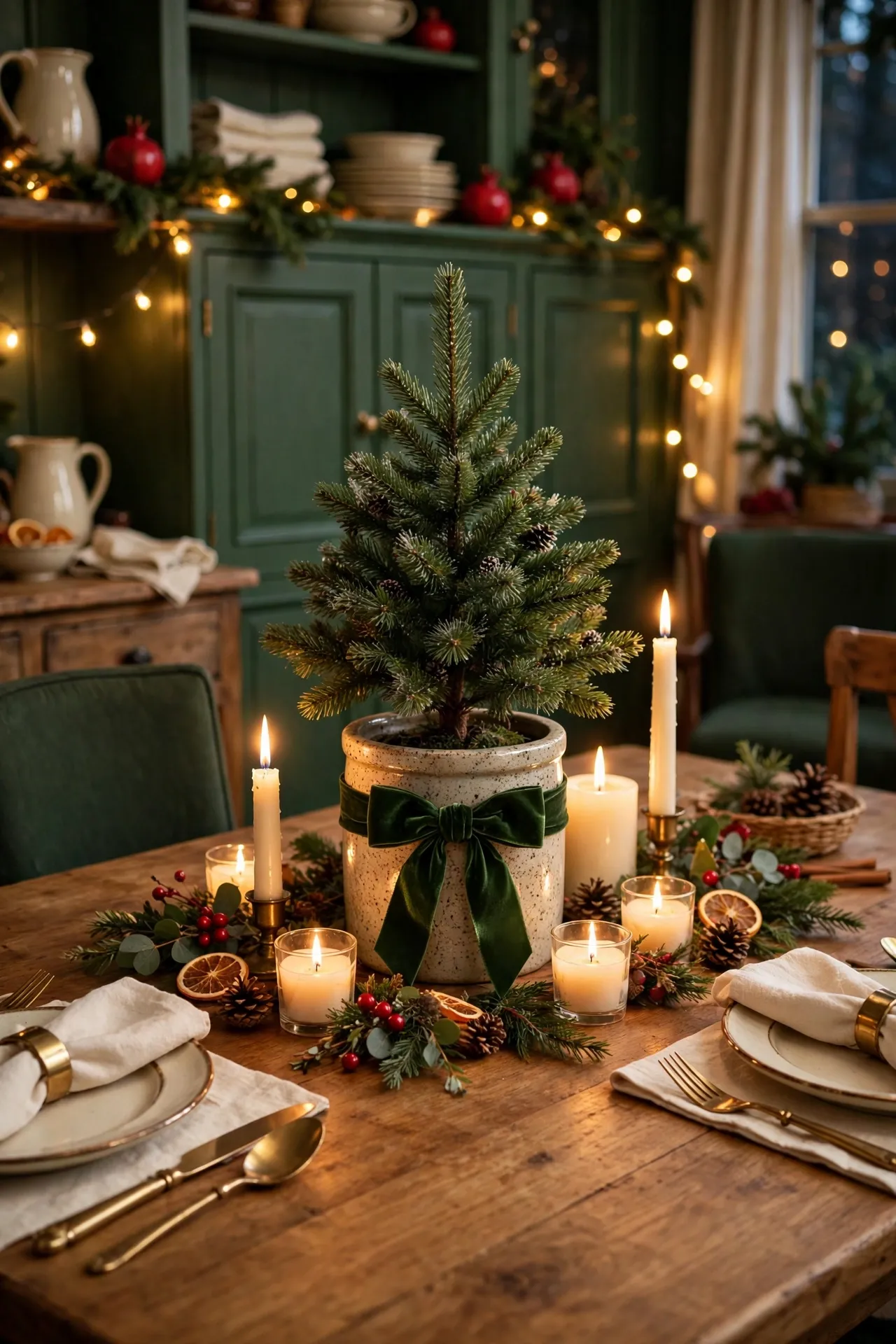
This is the hero of the whole look, and it started on the kitchen counter. A small pine, the kind with soft layered branches and a few pinecones already tucked into it, planted in a speckled stoneware crock and finished with a deep green velvet bow tied right at the rim. On the counter it says Christmas has arrived in the kitchen. Moved to the middle of the dining table, it becomes the anchor that everything else arranges itself around. It has height without width, presence without fuss, and it looks just as good at a casual breakfast as it does at Christmas dinner.
The crock matters more than people expect. Stoneware has weight and warmth that a plastic pot or a shiny tin never will, and the speckled glaze reads collected rather than bought. If your tree comes in a plain nursery pot, drop the whole thing into the crock as is and stuff the gap with moss or crumpled kraft paper. Nobody will ever know. Choose a tree somewhere between one and two feet tall for a table. Any taller and it starts blocking faces, and the whole point is that people can see each other over and around it.
Style it simply and let it lead. Set the crock on a wooden board with two brass candlesticks flanking it and a few loose pinecones at its feet, and you honestly have a complete centerpiece. Tie the same green velvet ribbon around your napkins or your candleholders so the color shows up two more times down the table. That repetition is what makes guests assume you planned the whole thing weeks ago, when really you built it in fifteen minutes from a counter vignette you already loved.
Shop This Look
Here are the pieces that get you this look without the hunt.
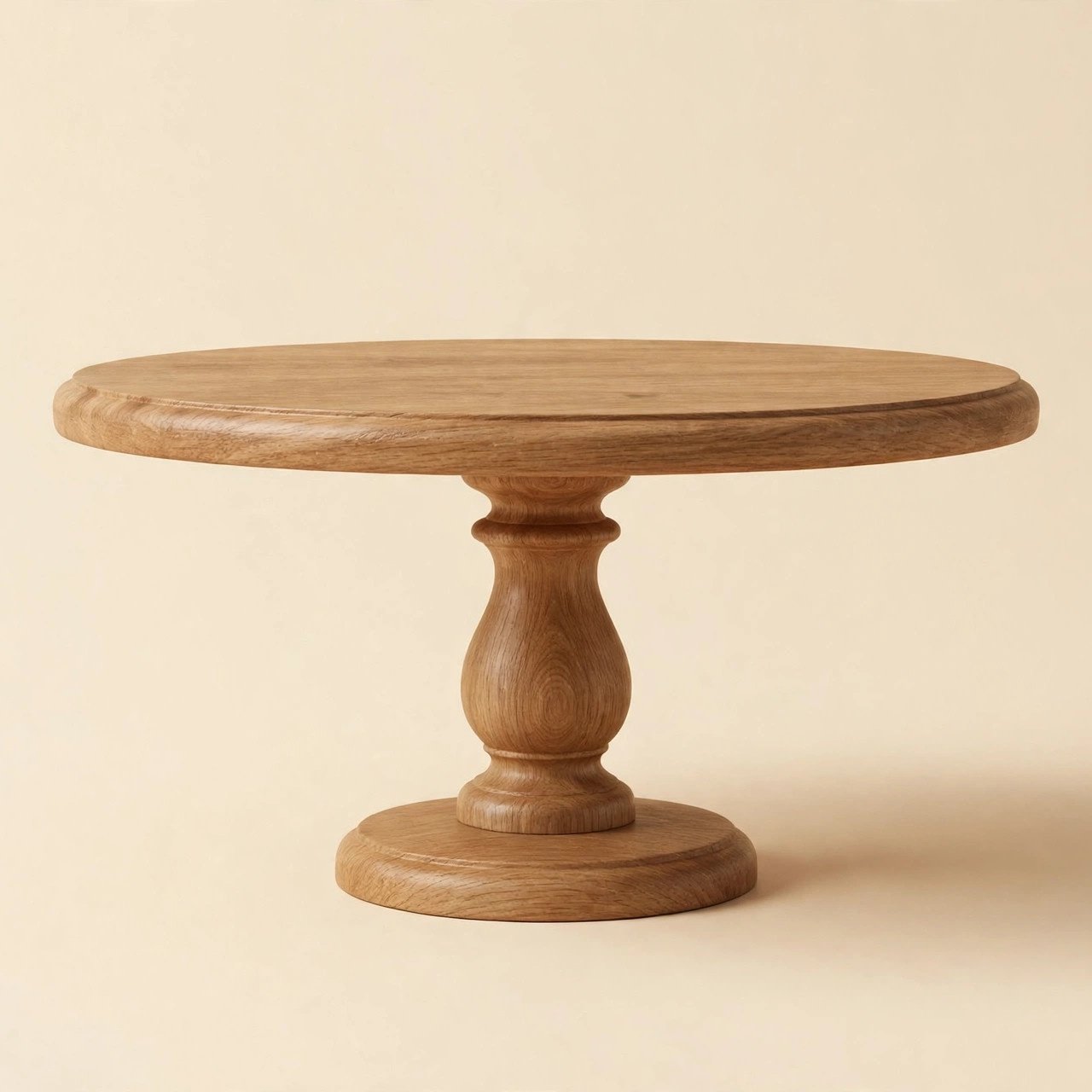
HOMESPHERE Acacia Wood Cake Stand with Lid, 12 Inch
The riser trick from the inspo photo. A pedestal stand lifts one statement piece above the plates and makes the whole centerpiece feel styled.
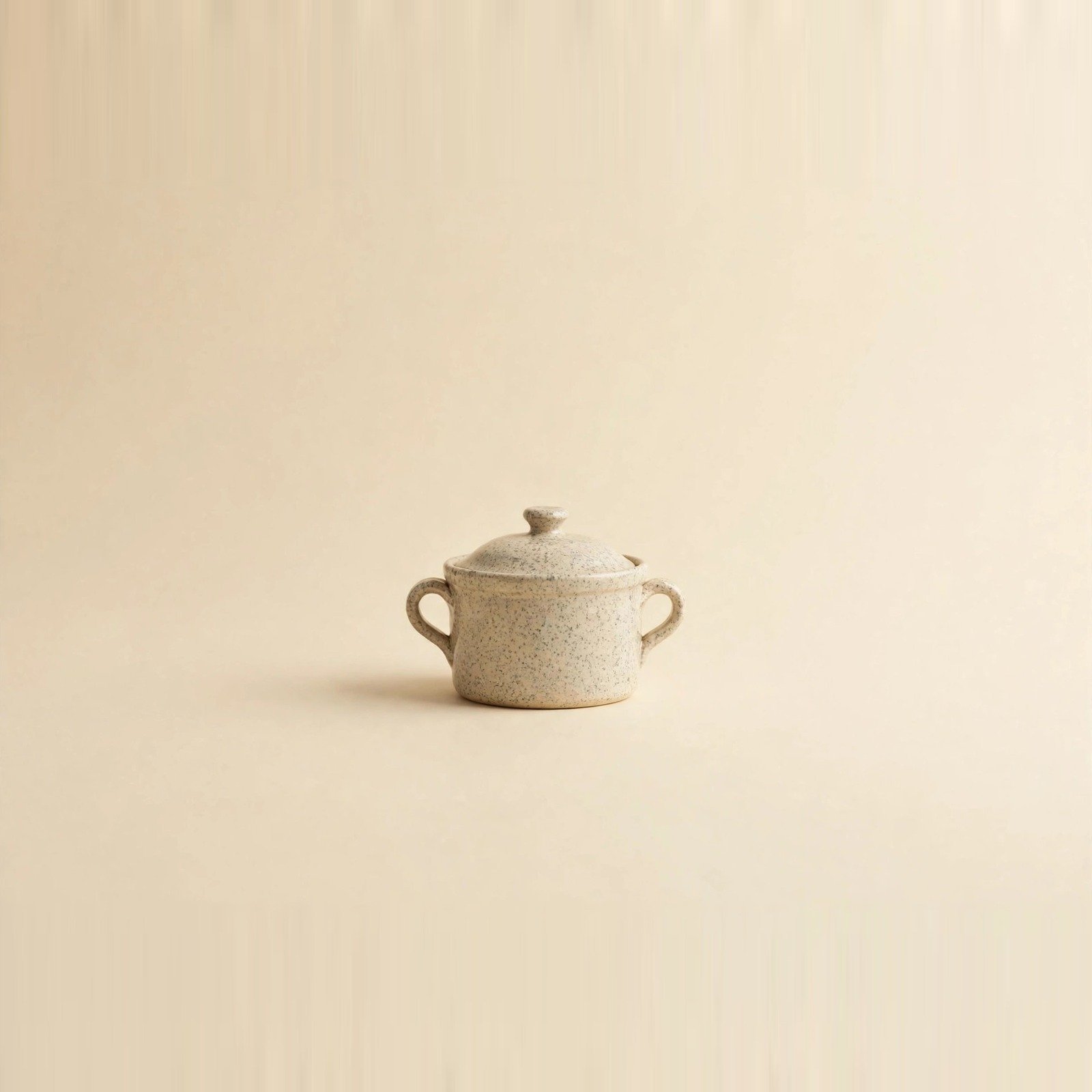
DOWAN Ceramic Utensil Crock, 7.2 Inch, White
A sturdy ceramic crock that works as a mini tree pot at Christmas and a utensil holder the other eleven months of the year.

National Tree Company Pre-Lit Flocked Mini Christmas Tree, 2 Ft
A two foot flocked mini tree with pinecones and warm lights already on it. Drop it in a crock, tie on a bow, and the hero centerpiece is done.
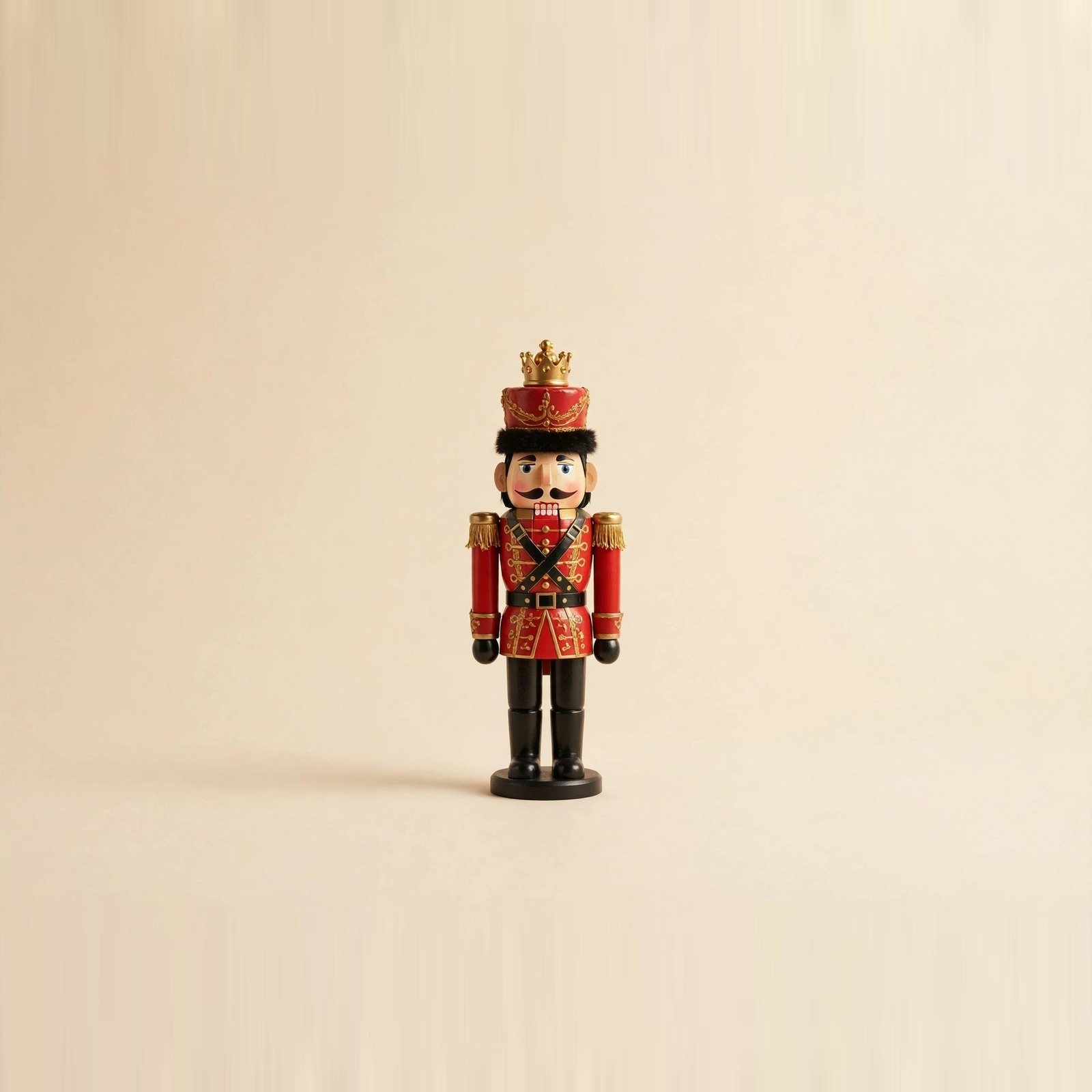
Season 2 Season Wooden Nutcracker King Figurine, 15 Inch
A fifteen inch wooden nutcracker king with a regal, classic look. He stands guard on a cake stand and steals the table in the best way.
This post contains affiliate links. That means if you make a purchase through one of these links, I may earn a small commission at no extra cost to you. As an Amazon Associate I earn from qualifying purchases. I only recommend products I genuinely love for your home. See our affiliate disclosure for details.
2. A Low Garland Runner With Candles Tucked In
When I want the table to feel lush but I only have twenty minutes, I lay a garland straight down the middle and tuck candles into it like they grew there. A cedar or mixed pine garland, real if I can get it and good faux if I cannot, unspooled along the center line of the table with the ends curling a little at each side. Then come the candles. Votives in glass holders, slim tapers in low brass bases, maybe one fat pillar where the garland bends. The greenery swallows the bottoms of the holders and all you see is flame floating in green.
The trick is keeping it low and loose. A garland runner should read like a hedge in miniature, never a wall. Press it flatter than feels natural, spread the branches wide instead of tall, and leave honest gaps where plates and serving dishes need to land. If a branch wants to climb into the gravy boat, bend it back down. I also run the garland a little shorter than the table so nothing dangles near laps or chair arms. Low, wide, and calm is the whole personality of this one.
Tuck in extras with a light hand. A few pinecones, three slim orange slices, a short strand of red berries pressed into the green. I repeat whatever ribbon I am using that year by tying tiny bows at the base of two or three candles rather than wrapping the whole garland, which can look busy fast. When the lights go down, this runner becomes a river of green with lights winking through it, and it might be the most forgiving centerpiece on this entire list. Imperfection does not show. It just looks abundant.

3. A Long Wooden Dough Bowl of Cedar and Pinecones
Some centerpieces ask for attention. A dough bowl full of cedar and pinecones just sits there being beautiful and asking for nothing. I fill a long wooden dough bowl, the kind with worn edges and a little wobble, with clippings of cedar and juniper laid in loosely, then tumble in pinecones of every size I have gathered. A few ornaments in red or gold nestle down into the green like they rolled there on their own. Set on a bare wood table, it reads rustic and generous. Set on a linen runner, it reads almost elegant. Either way it takes eight minutes.
Because everything sits inside the bowl, this is the most moveable centerpiece I own. Soup tureen coming to the table? Lift the bowl, set it on the sideboard, put it back for dessert. The bowl also solves the crumbs and drips problem that loose greenery creates. Every needle and flake stays corralled. Pieces that work all year earn their storage space in my house.
Play with the fill across the season. Early December I keep it green and plain, all cedar and cones. The week of Christmas I add clove studded oranges and a short string of battery lights pushed down into the branches so the bowl glows from inside. Curly willow branches or a few cinnamon sticks tied with twine add height at the ends if your bowl looks flat. Just keep the middle saddle low, because somebody always ends up passing the potatoes right over it.

4. Bottle Brush Trees on a Wooden Riser
Bottle brush trees are the hardest working small decor I own, and a cluster of them on a wooden riser might be my favorite five minute centerpiece. Take a low wooden stand or a thick board, the kind meant for cakes or cheese, and plant a little forest on it. Five trees is my magic number, in cream, deep green, and one or two in a soft gold, all different heights so the tops step up and down like a roofline. A sprinkle of fake snow or a drift of white felt underneath finishes the scene. It looks like a tiny village square waiting for its people.
The riser is what makes it a centerpiece instead of a scatter of decorations. Height underneath gives the trees presence, and the defined footprint means the arrangement has edges, which lets you place it, photograph it, and move it as one piece. I set the riser slightly off center on the table and balance it with a pair of tapers at the bare end, or I run two smaller risers down a long table with candles between them. Odd numbers again. One riser alone in the center works for a round table, two or three march beautifully down a long one.
My trees have come from everywhere over the years, craft stores, the dollar store, the fancy shops in a splurge year, and mixed together they look better than any matched set. Keep the palette tight, greens and creams with one metallic, and the ragtag origins disappear. Kids rearrange them constantly at my table and I have decided that counts as an interactive centerpiece. When January comes they line the mantel for a few last weeks of winter, because a little forest is hard to say goodbye to.

5. Magnolia Leaves and Berry Sprigs Down the Middle
For the dinners when I want the table to feel a little dressed up, I reach for magnolia leaves. Each leaf is two decorations in one, glossy deep green on one side and a rich copper brown on the other, so a simple line of them down the table already looks layered and expensive. I lay them in a loose overlapping row, flipping every third or fourth leaf to show the brown, then weave in sprigs of red berries at intervals. No foam, no wire, no form underneath. Just leaves lying flat, behaving beautifully, and staying fresh looking for days.
The flatness is the gift here. This arrangement barely rises an inch off the table, which makes it perfect for a crowded feast where every square inch has a job. Dishes can overlap the leaves. Elbows can land on them. Conversation crosses right over the top without anyone ducking around a tall vase. Then, because flat alone can read plain, I set three low brass candlesticks directly on the leaf line and let the flames do the rising. The light slides across the glossy leaf tops and the whole middle of the table shines like water.
If fresh magnolia is hard to find near you, the better faux stems are genuinely convincing and you can reuse them for years. Real leaves dry into lovely muted tones and can stay out all season, though they get brittle, so build the row and then leave it alone. I have also mixed in eucalyptus or olive branches when I want a softer gray green note against the dark magnolia. A final scatter of whole walnuts or chestnuts along the row adds weight and warmth, and guests always end up turning them over in their fingers while they talk.

Candlelight Does the Heavy Lifting
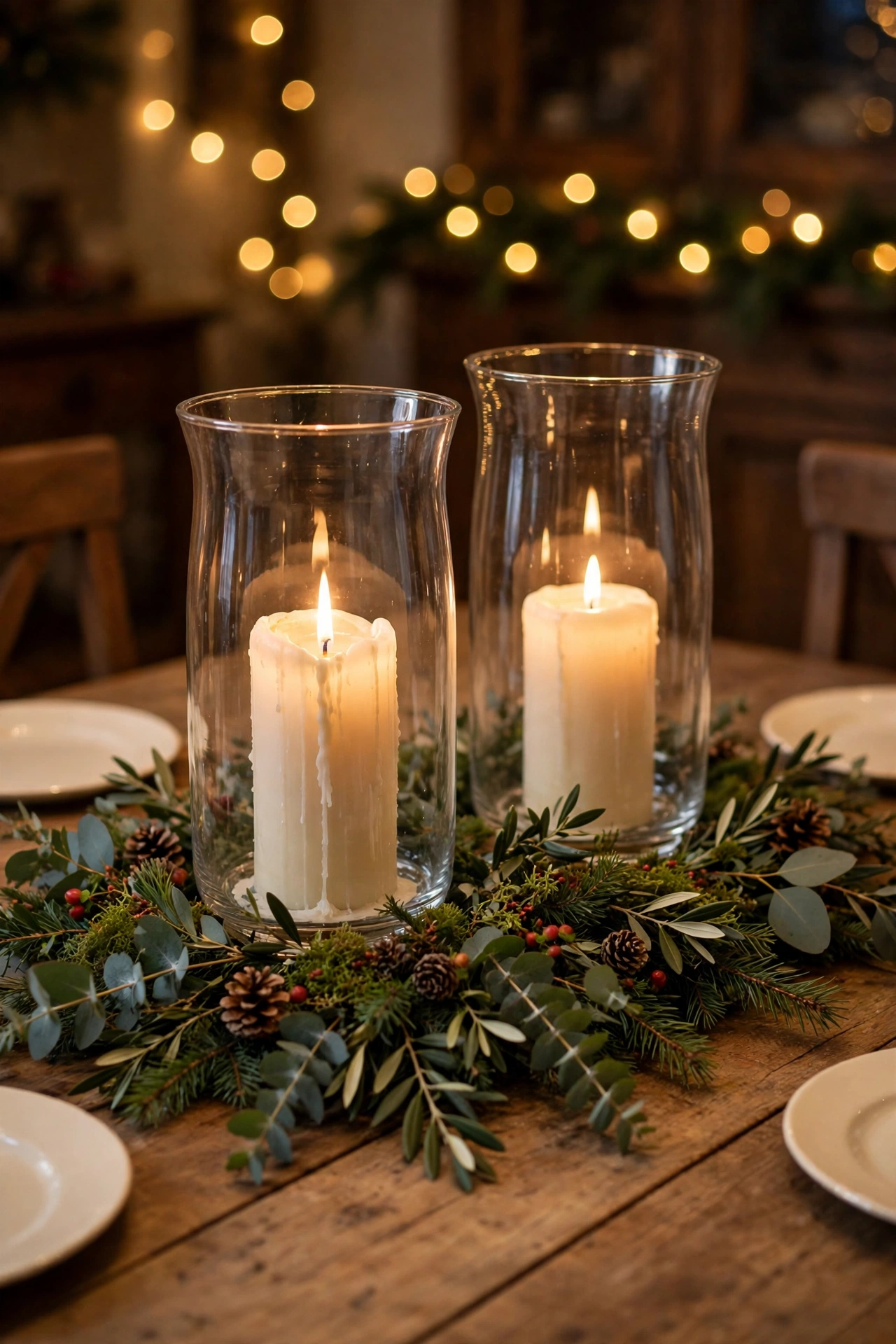
6. Hurricane Lanterns With Fat Pillar Candles
If candlelight is the heavy lifter of the Christmas table, hurricane lanterns are the workhorses. A tall glass chimney around a fat pillar candle gives you a big, steady flame that will not gutter every time somebody laughs or the door opens. I line up three down the middle of the table, pillars in cream or deep red, and tuck greenery around their bases so the glass rises straight out of the green. After dark the effect is pure lantern light, warm and tall and calm, like eating dinner in the best lit barn in the world.
Hurricanes earn their keep at a real table with real people. The glass shields the flame from sleeves, napkins, and enthusiastic hand gestures, which means I can relax in a way I never quite do around open votives near a tablecloth. They also protect the candle itself from drafts, so pillars burn evenly instead of tunneling down one side. For a long table I sometimes trade the middle lantern for a lower bowl of greenery to vary the skyline, but honestly three in a row has a ceremony to it that I love.
Choose pillars with presence. Skinny candles look lost inside a big chimney, so go for the wide ones, three inches across or more, and let them burn an hour before guests sit down so the tops melt into that soft lived in glow. Flameless pillars with a real wax feel work beautifully here too, especially on a timer, and nobody across the table can tell. Scatter a few loose cranberries or small pinecones inside the base of each hurricane, on the glass floor around the candle, for a little color caught in the light.
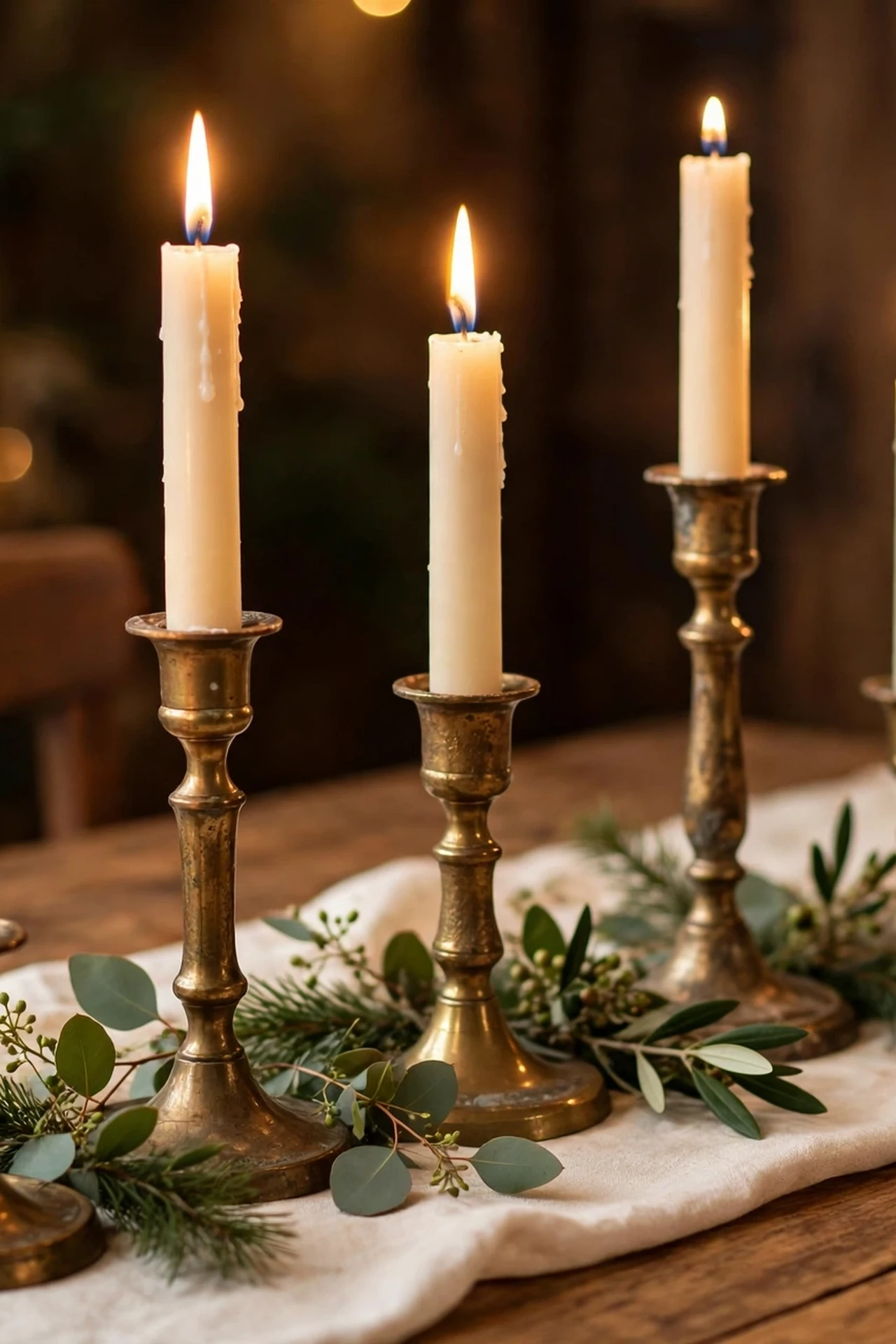
7. A Row of Taper Candles in Mixed Brass Holders
Nothing makes a table feel instantly more elegant than a row of tapers, and nothing makes it feel more collected than holders that do not match. Mine have been gathered for years, tall brass, short brass, one heavy antique that leans a fraction to the left, a pair of modern ones my sister gave me. Marched down the middle of the table with ivory or deep green candles, they look less like a set and more like a story. The flames sit at slightly different heights, which somehow makes the light feel alive.
The arrangement is forgiving in every direction. Space the holders unevenly, closer in the middle, drifting wider at the ends. Weave a thin line of greenery or a ribbon between them if the table wants softness, or leave the row bare on wood for a cleaner look. Tapers drip, so put a drip catching disc under each candle or accept the wax as part of the patina. I accept the wax. It scrapes off the brass with a fingernail, and a table that shows signs of many good dinners is a table I trust.
Height is the one thing to manage. Tapers are tall, and tall candles in the middle of the table can slice sightlines if they sit right at eye level. The fix is simple. Keep flames either clearly above the eye line when seated or use shorter tapers, and cluster them toward the center of the table rather than in front of each place. Test it the honest way. Sit in the chairs on both sides, look across, and adjust until your favorite faces are framed by candlelight instead of hidden behind it.
8. Floating Candles and Cranberries in a Glass Bowl
This is the centerpiece that makes people ask if I hired help, and it is water, a bag of cranberries, and three candles. Fill a wide glass bowl or a low cylinder vase two thirds full of water, drop in a generous handful of fresh cranberries and a few sprigs of rosemary or pine, then float two or three small candles on top. The berries bob at different depths, the greenery drifts, and the flames reflect in the water and the glass until the whole bowl seems lit from inside. It is simple physics and it looks like a magic trick.
Fresh cranberries are one of the great cheap decorations of the season. They float, they hold their color for days in water, and their red against green is Christmas in its purest form. Change the water every second day and the arrangement lasts a week. For a long table, I make two smaller bowls instead of one large one and set them where the serving dishes will not crowd, with a taper at each end of the table to bookend the glow. On the kitchen island, one big bowl beside the cocoa mugs carries the whole counter.
A few hard won tips. Float the candles last, right before guests arrive, because they drift to the edges over time and a gentle nudge recenters them. Keep the water level an inch below the rim so passing a platter does not slosh it. And use unscented candles here more than anywhere, since the bowl sits inches from the food.

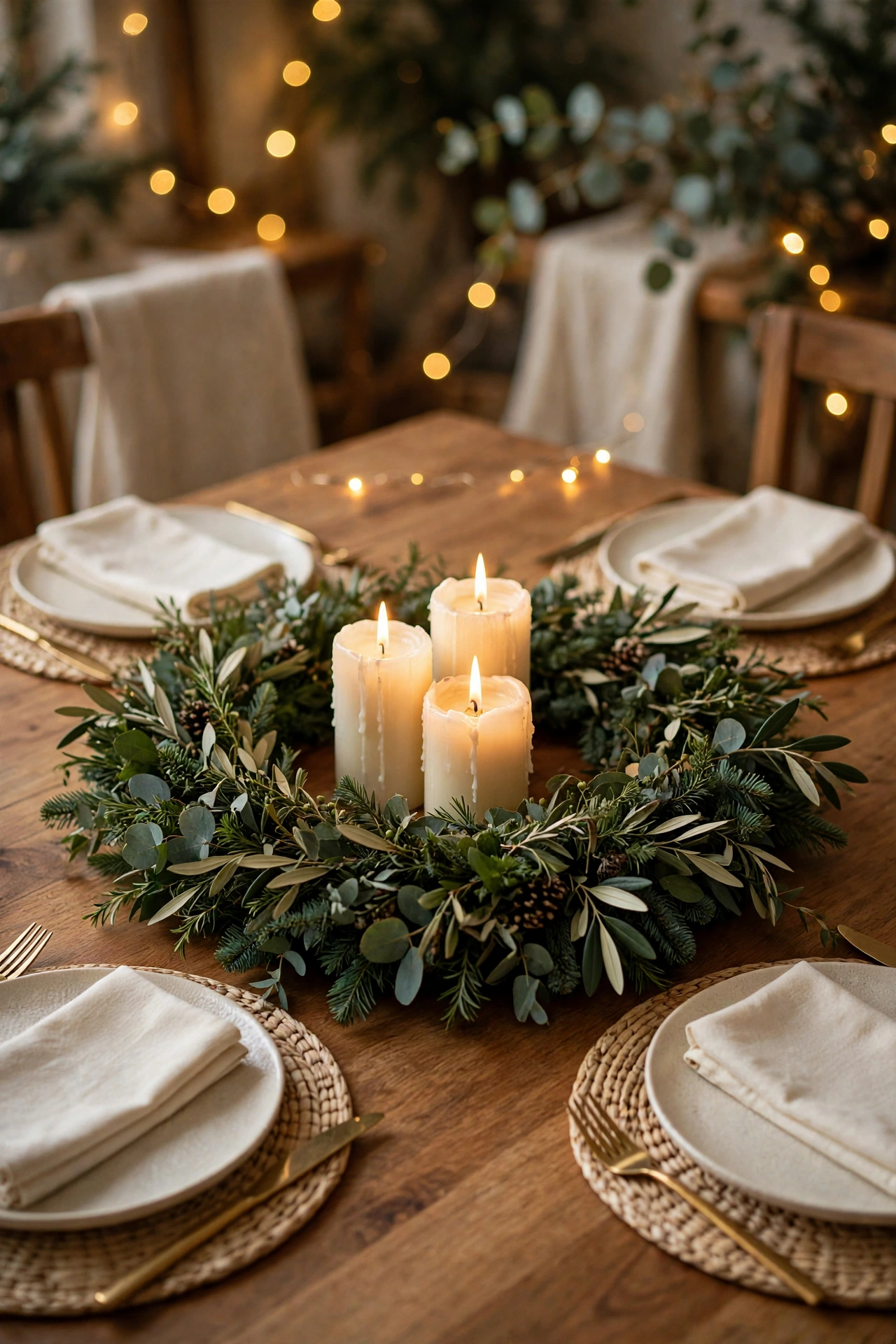
9. A Greenery Wreath Ring With Candles in the Middle
Take a wreath, lay it flat, and put candles in the hole. That is the entire technique, and it produces the roundest, most generous looking centerpiece on this list. A plain green wreath, real or faux, laid in the center of the table becomes an instant ring of forest, and the empty middle is a stage waiting for whatever you love. Three chunky pillars. One big hurricane. A cake stand with a nutcracker, if you are borrowing from this list. The wreath frames it, softens it, and makes even a single candle look like a decision.
Round tables were made for this idea, but it works on a rectangular table too if you treat the wreath as the center anchor and stretch low greenery or ribbon tails off two sides. The ring shape also solves the passing problem elegantly. Everything tall lives inside the ring where arms rarely reach, and the wreath itself is low enough to pass dishes over. Fluff the branches outward rather than up, tuck in a few pinecones or ornament balls at the joins, and tie one bow at the front where it faces the room. That bow is one of your three ribbon repetitions, so choose the color with the whole table in mind.
If you make your own ring, a plain grapevine or wire wreath form wrapped with leftover garland clippings works and costs nearly nothing. I keep one faux ring that returns every year, and I change only what stands in the middle, which makes this the fastest fancy centerpiece I know. Candles one night, a bowl of ornaments the next, a small tree on the third. The wreath is the frame. The frame makes everything inside it look like art.
10. Mercury Glass Votives Scattered Like Starlight
Mercury glass is candlelight with the volume turned up. The speckled silver finish lets a votive glow through in a dozen tiny points, so each little cup looks dusted with stars. I scatter them down the whole table, seven or nine of them, never in a straight line, tucked between plates and greenery and serving bowls like they landed there by chance. Alone they are small. Together, when the room goes dim, the table looks crossed by a small galaxy, and every place setting sits near its own pocket of light.
The scatter is the style here, so resist the urge to measure or align. I place two close together near the center arrangement, one far down by the bread basket, a pair flanking the water pitcher. Silver is classic, but gold and a warm rose tone mix beautifully with the deep greens and reds of this palette, and mixing metals keeps it from reading too frosty. Real tea lights give the truest flicker, though the flameless versions with a warm tone are close and let me scatter without counting flames near the tablecloth edge.
Mercury glass votives are also my favorite centerpiece helper for other ideas on this list. They fill gaps. A dough bowl that looks lonely gets two votives at its feet and suddenly it is a scene. A nutcracker on a stand gets one at the base and gains a spotlight. Buy them in a mixed box when you see them on sale in October, because in December you will use every single one.

Give the Table a Statement Piece
11. A Nutcracker Standing Guard on a Cake Stand
Every table in this look needs one piece with a little personality, and at my house it is a nutcracker standing guard on a wooden cake stand. The stand gives him a stage and six inches of importance. He wears the classic colors, deep red and gold with white trim, and from his perch in the middle of the table he looks less like a decoration and more like the host of the evening. This came straight from that kitchen counter vignette I keep mentioning. He stood beside the cocoa mugs all December, and the dining table simply recruited him.
Build the scene around his feet. A ring of greenery on the cake stand, a few red berries, one small pinecone, and the stand becomes a tiny stage set. Flank him with the two tallest candles of the table so he stands in a pool of light, and repeat his red somewhere else low on the table, in the napkins or a ribbon, so he belongs to the whole arrangement rather than floating above it. Kids take him deadly seriously. Ours gets greeted by name, fed imaginary cookies, and consulted about seating.
One figure is charming. A whole regiment marching down the table is a different party, and if that is your party, I applaud it. For this look, though, a single statement figure works because the eye needs one place to land. Choose yours by the same rule. A wooden reindeer, a ceramic Santa, a small brass angel. Whatever makes you a little bit happy every time you pass the table. Put it on the riser, light it well, and let everything else play a supporting role.

12. A Gingerbread Village Under a Glass Cloche
A glass cloche turns anything under it into a treasure, and a tiny gingerbread village under a cloche becomes the centerpiece people lean over all night. Set three or four miniature gingerbread houses on a wooden board or a cake stand, dust the ground with powdered sugar snow, add the smallest bottle brush trees you own, and lower the glass dome over the whole scene. The glass catches the candlelight from the rest of the table and bends it around the little houses until the village looks lit from within. It is a snow globe you built yourself.
There are two roads here. Bake and build the houses if that is your joy, keeping them small and simple, since detail vanishes under glass anyway. Or cheat happily with the ceramic and wooden village houses sold everywhere in November, which will last a decade of Decembers. I have done both and the table cannot tell the difference. What matters is scale. Everything under the dome should be small enough that the scene reads as a world, with sugar snow heaped against the doors and one tiny wreath hung on the biggest house.
The cloche earns bonus points at a real dinner. It keeps curious fingers and drifting napkins off the display, and it keeps powdered sugar where it belongs. Around the base of the dome, lay a ring of greenery and set two votives close so the glass picks them up. When the meal is over and the board needs to move for dessert, the whole village travels in one lift, dome and all, to the sideboard, where it glows for the rest of the evening.

13. A Big Bowl of Ornaments in Red, Gold and Cream
Some nights the centerpiece should take four minutes and zero thought, and that is the night for a big bowl of ornaments. Take your largest beautiful bowl, wood, silver, white ceramic, whatever you have, and fill it to a gentle dome with baubles in red, gold, and cream. Mix matte with shiny, a few glittered ones for catch light, and let the sizes wander. Tuck a short strand of greenery around the rim, set the bowl on a board or a folded linen, and surround it with votives. In candlelight the ornaments do what ornaments do best. They multiply the light.
This is also the kindest centerpiece to build from what you already own, because every household has orphan baubles that never make the tree. The chipped ones go at the bottom. The odd ones from sets long broken find a home. If you want it to feel more designed, hold the palette to three colors and vary only finish and size, which is the same rule that keeps the tree looking calm. I have made this bowl in all gold for a fancy dinner and it looked like treasure, but the red, gold, and cream mix is the one that feels like Christmas morning.
If you love a little project, this is the table to show off your handmade pieces. The ideas in this guide to ornaments that look store bought were born for a bowl like this, where guests can pick them up and turn them over in the light. Add a few pinecones and cinnamon sticks through the bowl for texture, and rest one perfect ornament on each folded napkin to tie the places to the center. Simple, generous, and finished before the oven timer goes off.

14. A Vintage Style Sleigh Filled With Greenery
A sleigh on the table sounds like a lot until you see one doing its job. A vintage style sleigh, wood or metal, the kind sized for a doll or a doorstep, parked in the middle of the table and heaped with greenery becomes a boat carrying Christmas down the table. I fill mine with cedar and pine until it spills over the sides, tuck in red berries and two or three ornaments deep in the green, and set a pair of candlesticks rising from behind it like masts. The shape is pure storybook, and it points the whole table toward celebration.
The sleigh shines on long tables because its length works with the room instead of against it. Angle it slightly rather than lining it up with military precision, and let a tail of greenery escape the back so it looks freshly loaded. Presents can ride in it too. Two tiny wrapped boxes tucked among the branches, tied with your ribbon color, make the scene feel generous and slightly mischievous, as if the sleigh stopped mid delivery to join the dinner.
Old sleighs turn up at thrift stores and estate sales all autumn, often dusty and occasionally wobbly, and a wobble is fine for a piece that sits still. If yours is a new reproduction, age it by company rather than by craft. Surround it with tarnished brass, worn wood, and real greenery and nobody asks for its papers. Keep the fill low in front of the runners so plates are not fighting branches, and when dinner ends the sleigh retires to the sideboard or the porch, still full, still cheering up the room.

15. A Lantern With a Tiny Tree Inside
A lantern with a tiny tree inside is a whole winter scene in a box, and it might be the most asked about centerpiece I own. Take a large lantern with clean glass panels, the kind sold for pillar candles, and instead of a candle put a miniature tree in it. Stand the tree on a drift of fake snow or a round of white felt, add the tiniest pinecones and one small red ornament, and close the door. If the lantern has room, a battery tea light tucked behind the tree makes the whole thing glow like a window seen from a snowy street.
Because the scene is sealed, it can sit very close to the food without shedding a single needle into it, which makes lanterns the diplomat of the centerpiece world. I often use two, one at each end of the greenery arrangement, or a single lantern as the whole centerpiece on a small table with votives around it. The metal frames come in black, brass, and worn white, and I choose by the rest of the table. Brass for the glow years, black when I want the tree inside to look like a forest at night.
Lanterns also travel through the season better than almost anything else here. After Christmas dinner mine moves to the entryway, then to a bathroom counter for January, glowing at guests who least expect it. Swap the tree for a small house or a pair of cardinals and the scene changes without a single new purchase. If you buy one statement piece this year, buy the lantern. Everything else on this list can be gathered. The lantern is the stage that makes gatherings look like art.

The Finishing Touches (Some of Them Edible)
16. A Cocoa Tray Centerpiece for the Kitchen Island
Not every centerpiece belongs on the dining table. The kitchen island is where December actually happens in my house, and a cocoa tray built like a centerpiece turns that workhorse surface into the warmest seat in the room. Start with a big wooden tray or board. On it goes the speckled crock with its mini tree and green velvet bow, the nutcracker on his little stand, ribbed white mugs with bows on their handles, and a glass jar of marshmallows catching the light. It is the inspo vignette, whole and entire, and it anchors the island like it was designed for it.
The tray is the discipline. An island collects mail, homework, and groceries by nature, but a tray draws a border and declares this square of counter is decor, defended territory. Everything inside the border is beautiful. Everything outside it can be chaos and the island still reads festive. I keep the cocoa things genuinely stocked, good mix, marshmallows, a small dish of crushed candy cane, because a vignette you actually use gets refreshed and fluffed without thinking. A pretty display that serves nothing slowly turns into clutter. This one earns its place nightly.
If your household takes cocoa seriously, build the island tray near a full Christmas cocoa station setup and let the two play together, station for the making, tray for the showing off. Add a small stack of striped linen towels folded at the tray edge, red and cream to echo the season, and a candle in a hurricane at the back for height. When friends drift into the kitchen, and they always drift into the kitchen, they land at this tray like it is a tiny Christmas market. That is a centerpiece doing the best work a centerpiece can do.

17. Cranberries, Oranges and Cloves in a Cut Glass Bowl
This is the centerpiece your nose notices first. A cut glass bowl heaped with oranges studded in cloves, fresh cranberries poured around them like rubies, and a few cedar sprigs laid over the top fills the middle of the table with color and the whole room with the smell of Christmas itself. The cut glass does what it was made to do. It takes the candlelight from both sides and breaks it into sparkle through the fruit, so the bowl glows in layers, red and orange and green, like something from an old still life painting.
It is also gloriously cheap and completely compostable, which matters in a season that generates a lot of tinsel. A bag of cranberries, a handful of oranges, a small jar of whole cloves. Press the cloves in patterns if you have a quiet half hour, stripes or a simple star, or stud them at random while listening to something festive. Press them in the night before at the earliest, though. Studded oranges keep their scent for days, but the fruit is happiest fresh, and the cranberries will hold a week in the bowl if the room is cool.
Set the bowl on a cake stand or a stack of two boards to lift it into the candlelight, and rim it with votives so the glass has light to work with. As the days pass, this centerpiece edits itself. An orange goes to a recipe, cranberries go to a sauce, and I top the bowl back up from the grocery bag. When the season ends there is nothing to store and nothing to wrap in tissue. The whole thing returns to the earth and the recipe box, and the bowl goes back to holding lemons like it never had a holiday career.

18. A Gingerbread Cookie Platter That Doubles as Dessert
The most practical centerpiece ever invented is dessert, arranged early and eaten late. A big platter or a wooden board piled with gingerbread cookies, houses and stars and trees, dusted with powdered sugar and edged with greenery, sits in the middle of the table all through dinner doing double duty. It decorates. It perfumes the room with ginger and spice. And when the plates are cleared it simply becomes the final course, carried nowhere, already exactly where it needs to be. Guests start negotiating for the corner house before the soup arrives, which I count as excellent dinner theater.
Build it like a scene rather than a stack. Stand a few cookies upright against a small ramekin hidden under the sugar snow, lay the rest in overlapping drifts, and scatter a handful of red candies or sugared cranberries for color. A dusting of powdered sugar over everything right before guests sit down gives that fresh snowfall look, and a sprig or two of rosemary reads as tiny trees among the houses. Keep the platter on a board with handles or the cake stand, because even a dessert centerpiece should obey the rule of moving in one lift.
Honesty requires me to report the attrition. Cookies vanish. A tree loses its top to a passing nephew, a star disappears during the salad course, and the scene develops a certain lived in charm by dessert. I bake extras and keep them in the kitchen for quiet repairs and for the cook, who has earned first pick. If baking is not happening this year, a good bakery platter arranged with the same care fools absolutely everyone. The point is not the recipe. The point is a centerpiece that ends the meal by feeding people.

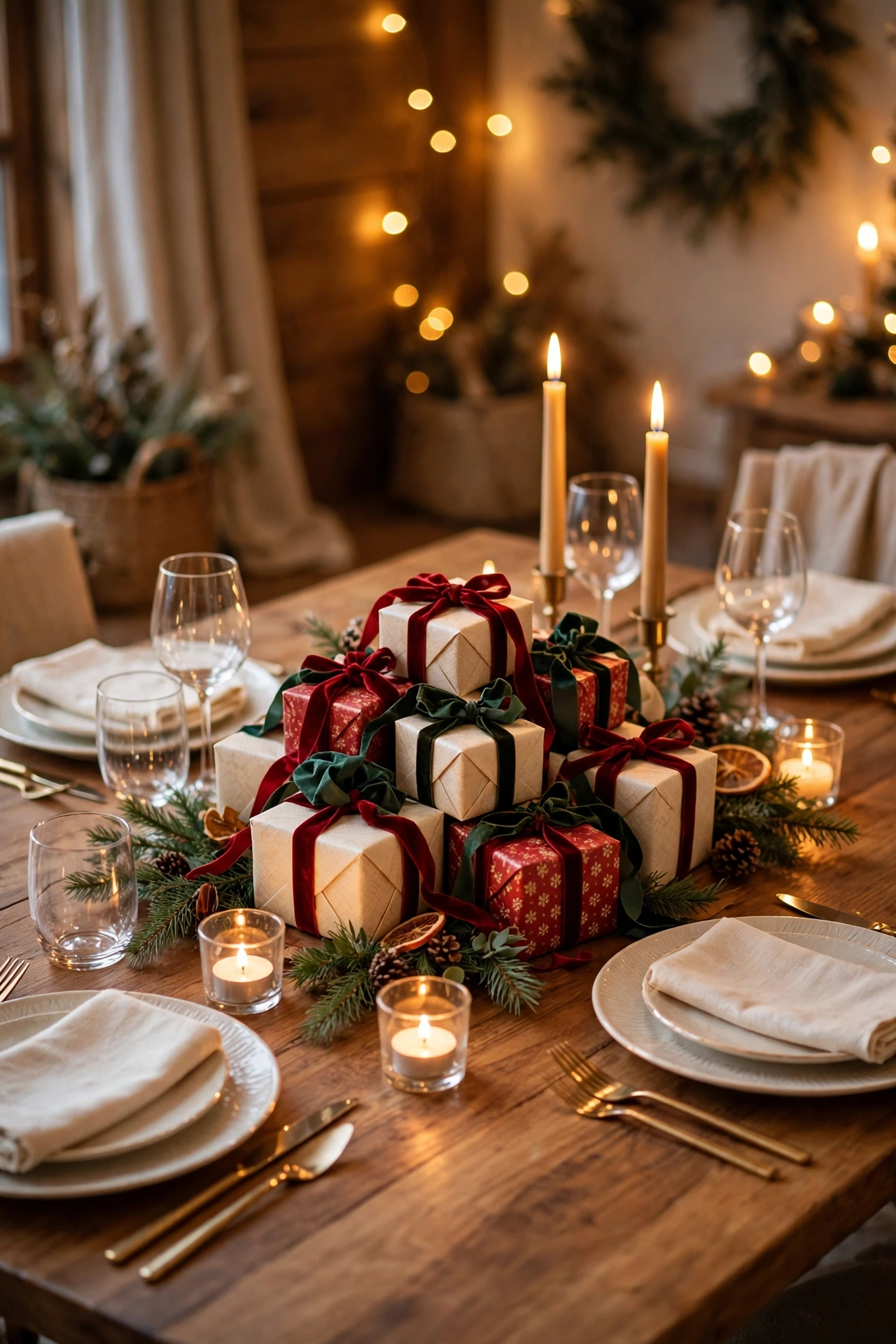
19. Tiny Wrapped Gifts Piled in the Middle
End the list with the merriest centerpiece of all, a small pile of tiny wrapped gifts right in the middle of the table. Five or seven little boxes, wrapped in cream and red paper with deep green velvet ribbon, stacked and tumbled among the greenery like they slid off the sleigh. They catch the candlelight on their ribbons, they repeat your table colors one final time, and they create the most wonderful low level suspense, because every guest spends dinner wondering whether one of them has their name on it.
They can. That is the trick worth stealing. Wrap something small and real for each person at the table, a chocolate, an ornament, a tiny candle, and write names on the bottoms where nobody can peek. At dessert, the pile becomes the ceremony. Reach in, find yours, open it at the table. It turns a finished dinner into an occasion and costs less than a floral arrangement. Or fill the boxes with nothing at all and reuse them purely as decor for years. I have done both. The empty years still glow, but the full years get talked about until Easter.
Arrange the pile with the same rules as everything else on this list. Odd numbers, heights that step, the biggest box low in the center and the smallest ones perched and leaning. Weave the greenery through the bottom layer so the gifts look nestled rather than dropped. And if your table theme leans calm and flocked, take the color cues from these neutral Christmas tree ideas and wrap in cream, kraft, and white with one red ribbon for punctuation. Either way, the message lands. This table was set by somebody who was thinking about the people coming to sit at it.
More Favorites for a Glowing Table
Here are the pieces that get you this look without the hunt.
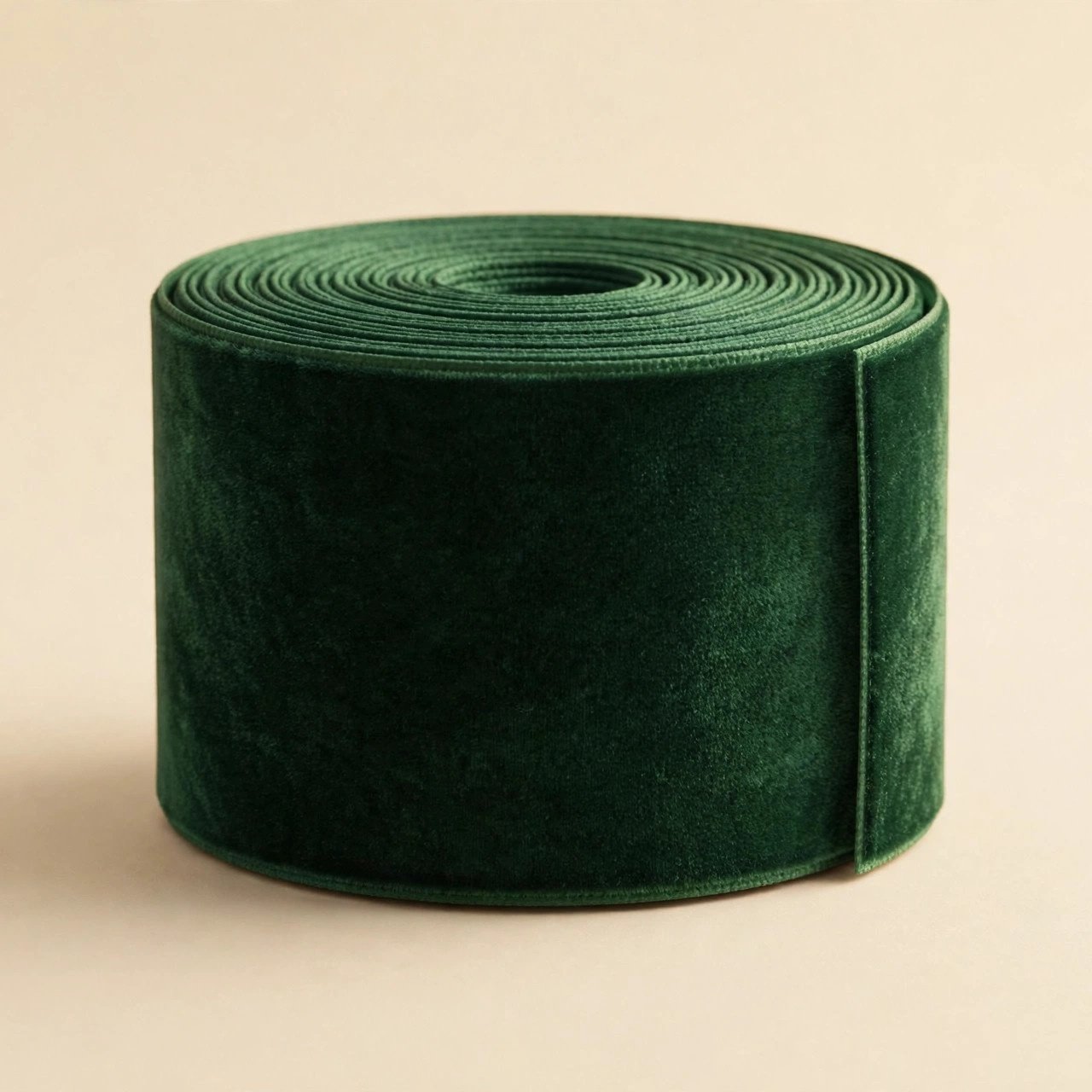
Ribbli Olive Green Velvet Wired Ribbon, 1 Inch x 10 Yards
Wired velvet ribbon in a deep olive green. One roll ties the bows on the crock, the mugs and the napkins so the whole table matches.
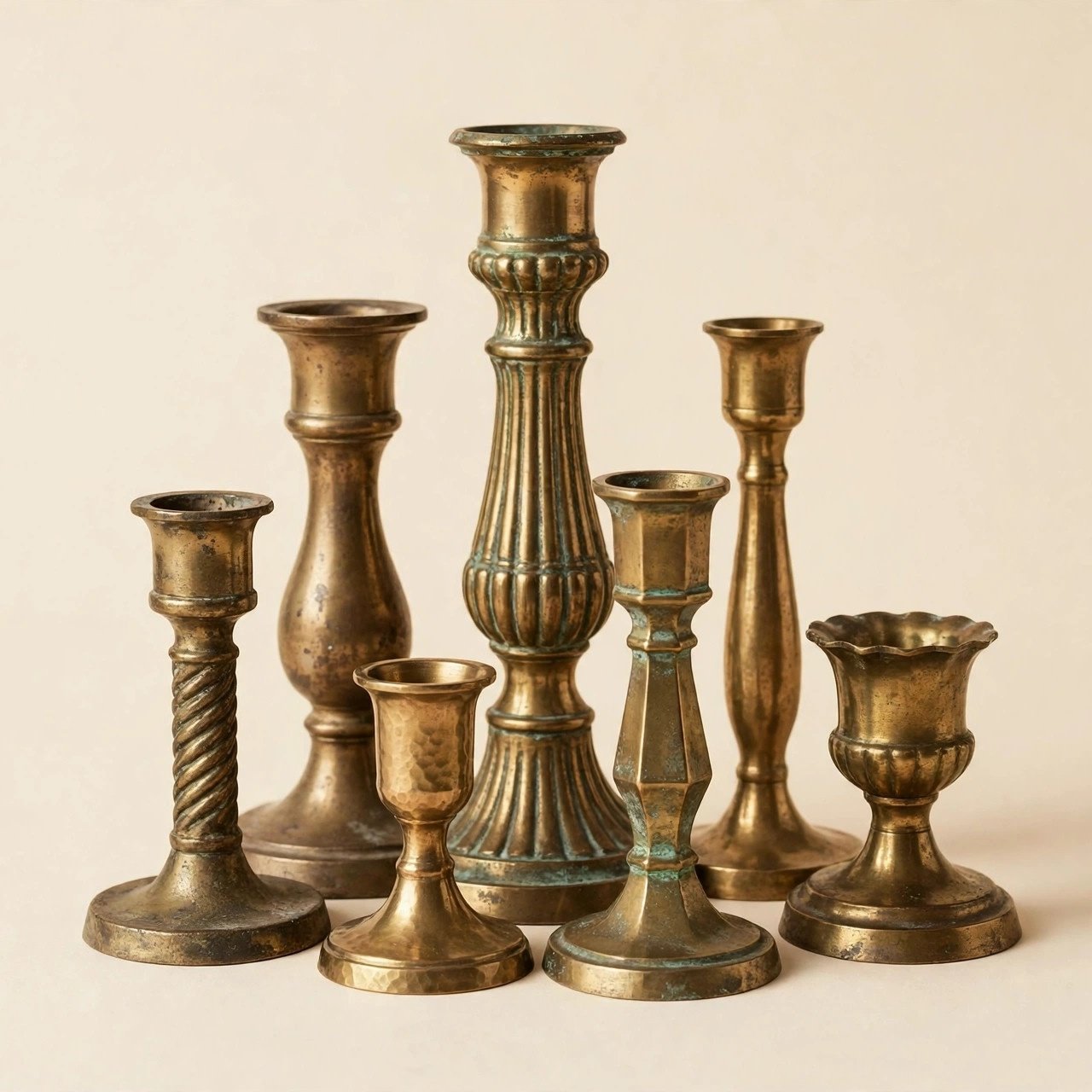
NUPTIO Brass Taper Candle Holders, Set of 3
A set of three brass tone taper holders in graduated heights. Mix them down the table and the candlelight does the decorating for you.
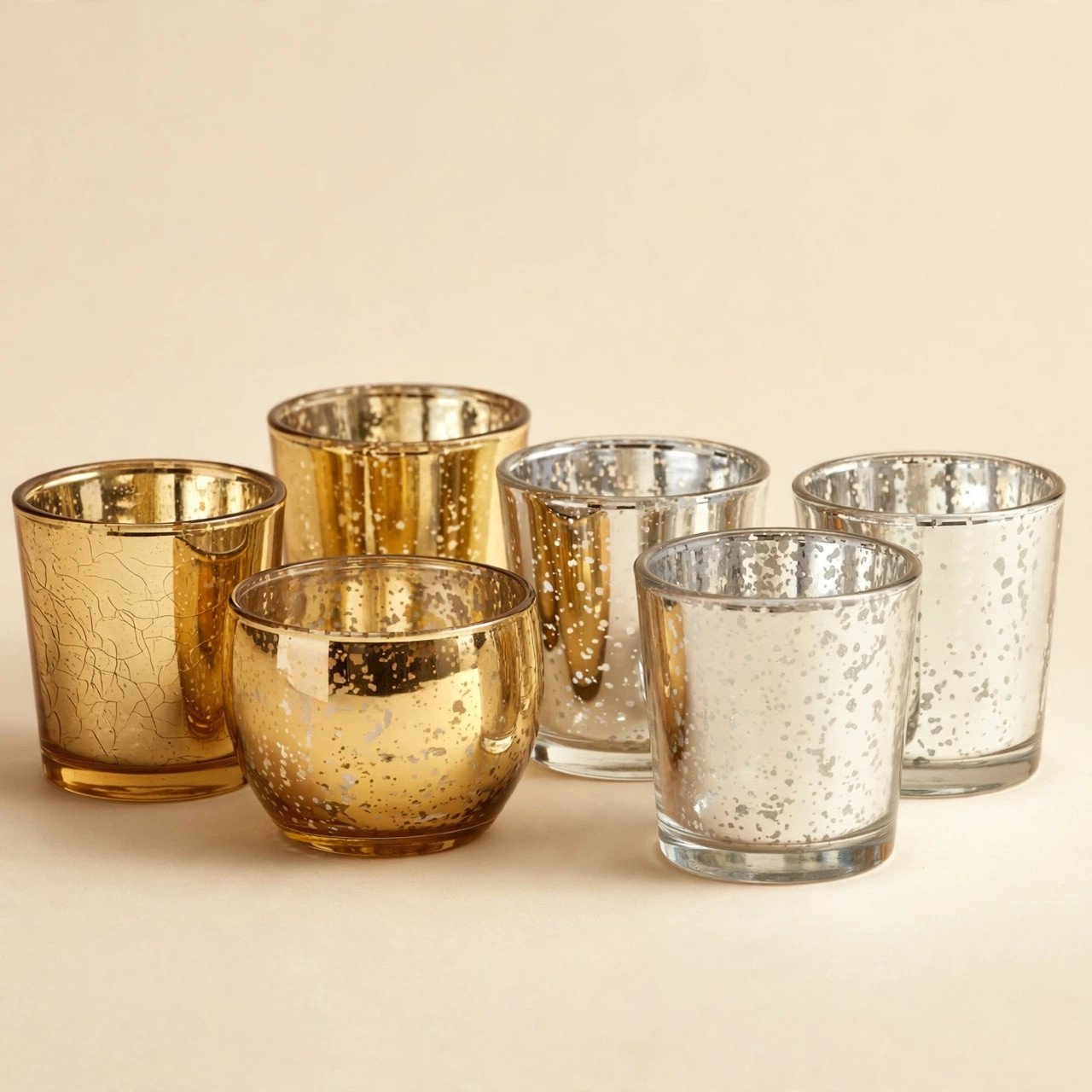
Volens Silver Mercury Glass Votive Holders, Set of 72
Silver mercury glass votives that glow like little moons. A big set means you can scatter them down the whole table without rationing.
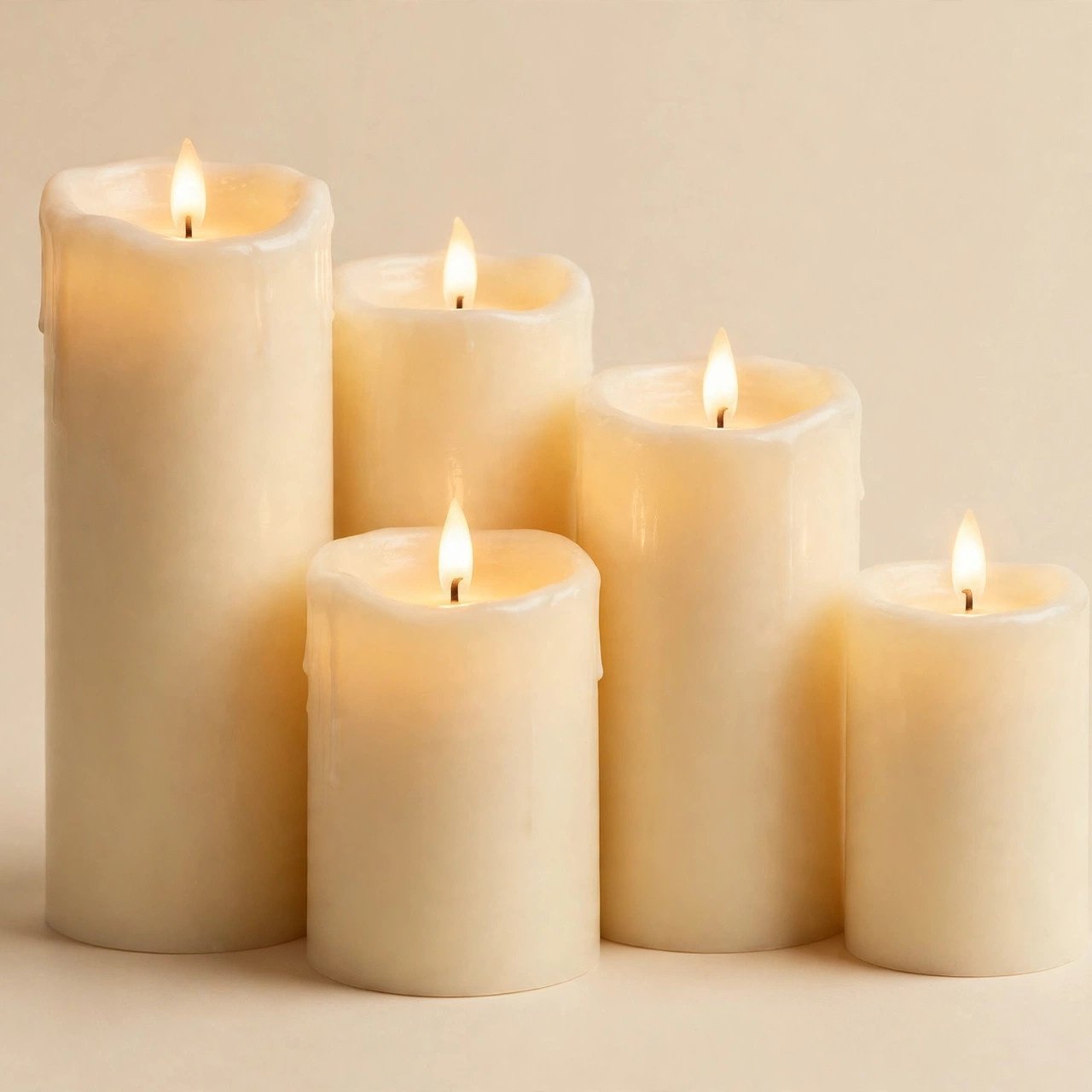
Hausware Flameless Candles with Remote, Set of 9
Nine ivory flameless pillars in real wax with a remote and timer. All the glow of candlelight with none of the worry near greenery.
This post contains affiliate links. That means if you make a purchase through one of these links, I may earn a small commission at no extra cost to you. As an Amazon Associate I earn from qualifying purchases. I only recommend products I genuinely love for your home. See our affiliate disclosure for details.
You do not need all nineteen of these, and you certainly do not need them all on one table. Pick a base, greenery or a wreath ring or a good dough bowl. Choose your light, hurricanes or tapers or a galaxy of little votives. Add one statement piece with a personality, a nutcracker or a village under glass, and finish with something alive, fruit or cookies or little gifts with names on the bottoms. That formula has never once failed me, and it scales from a Tuesday soup night to the full Christmas dinner without changing its bones.
What I keep learning, December after December, is that the table is where the season slows down enough to be felt. The tree gets admired in passing, but the centerpiece gets lived with, leaned over, and lit night after night. If the grand rooms inspire you, let them. Browsing magical Christmas scenes you will wish were real and gathering elegant Christmas living room ideas is half my November fun. But a glowing table in your own dining room beats a perfect room in a picture, because your people actually sit at yours.
And if your taste runs quieter than mine, know that half this list shrinks gracefully. One bowl, one candle, one small tree. The gentle approach in these minimalist Christmas decor ideas pairs beautifully with a table, because candlelight does not need company to be beautiful. Start where you are, light what you have, and let the middle of your table glow.
With love and light
Get Fresh Home Ideas Every Week
Seasonal decor ideas, organizing tips, and cozy home inspiration, straight to your inbox.
More Christmas Ideas You Will Love
Keep browsing for more seasonal inspiration: