

It is 6:45 pm. You announced bath time fifteen minutes ago. One kid is naked and running. The other is hiding under the table. The bathroom floor is already wet and nobody is even in the tub yet. You will spend the next forty minutes negotiating, splashing, fishing toys out of the drain, mopping the floor, and wrestling someone into pajamas. Bath time was supposed to be the calm part of the evening. Instead, it is a full theatrical production, and you did not audition for this.
Here is the good news: bath time does not have to be a production. With a little setup and a simple rhythm, it can become what it was always meant to be: a calm, warm wind down that gets the kids clean and sleepy. This post gives you the whole system: the bathroom setup that prevents mess, the routine that eliminates negotiations, the toy situation under control, and how to handle the kids who fight every step.
Love these ideas? Get more every week.
Join the newsletter for seasonal decor and cozy home inspiration.
TL;DR: Bath Time Without the Drama
- Set up the bathroom once: a toy corral, a toiletry caddy, towels within reach, and a bath mat that actually stays put.
- Same order every night: a predictable bath rhythm eliminates most negotiations and stalling.
- Contain the toys: a small rotating set in the tub beats forty toys and a clogged drain.
- Prep everything before the water runs: towels, pajamas, and lotion laid out means no dripping kid waiting while you search.
- Not every night needs a full bath: quick rinses and washcloth wipe downs count on busy nights.
Why Bath Time Becomes a Production
Think about what bath time actually involves: transitioning away from play, getting undressed, getting into water (which some kids love and some kids hate), sitting still-ish while getting washed, getting out, getting dried, getting dressed again, and then moving to the next bedtime step. That is a lot of transitions for a tired little person. And it all happens at the exact hour when their patience is thinnest and yours is too.
Most bath time drama comes from three sources. First, the transition: stopping something fun to start something mandatory. Second, the environment: a bathroom that is not set up for kids means you are constantly fetching things, mopping, and managing chaos. Third, the lack of rhythm: when bath time is different every night, kids test the boundaries every night. Fix those three, and the production becomes a routine.
And here is a reframe that helps: bath time is not separate from bedtime. It is the opening act. A calm bath sets up a calm bedtime. A chaotic bath wires everyone up right before you need them winding down. If bedtime has been a battle at your house, simplifying bath time is one of the highest leverage changes you can make. The evening is a dimmer switch, and bath time is where you start turning it down.
The Plan: Your Calm Bath Time System
Step 1: Set Up the Bathroom Once
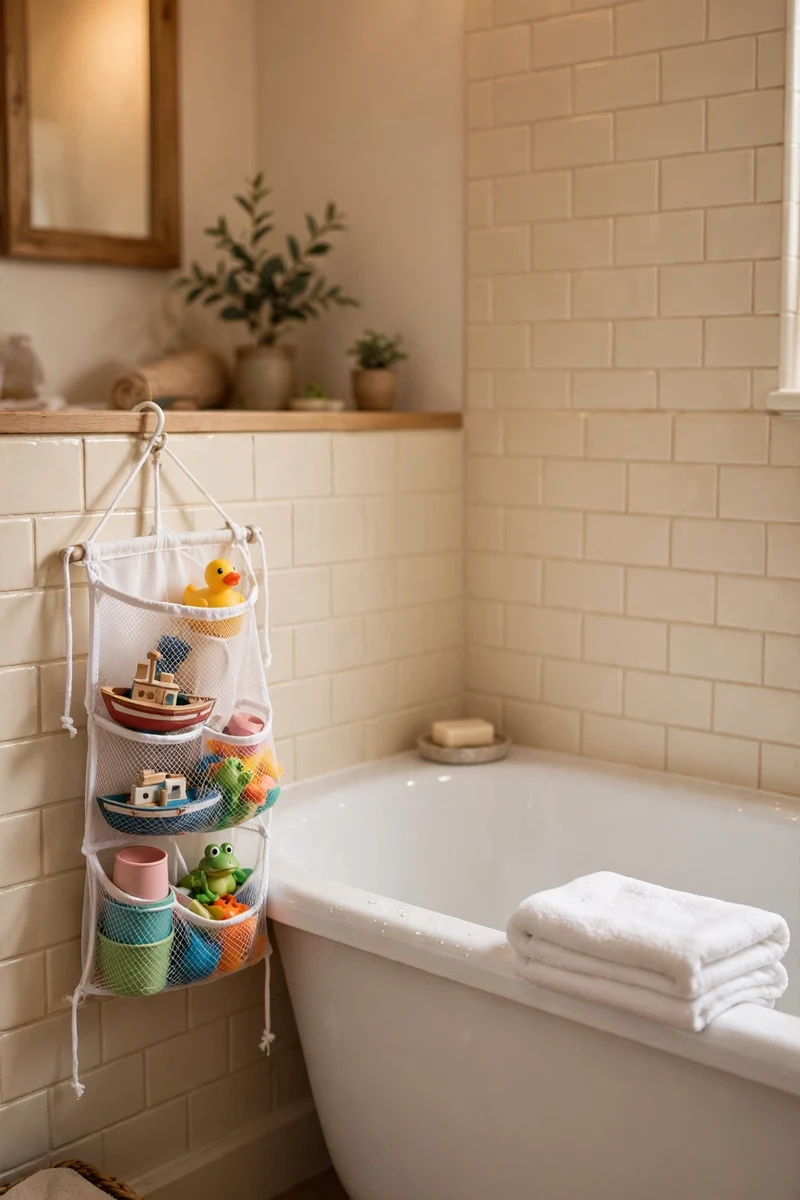
A kid ready bathroom prevents most bath time mess and fetching. Set it up once, enjoy it nightly.
Walk into your bathroom and look at it from a kid’s height. Can they reach the soap? Is there somewhere for the toys that is not the drain? Is the towel where you can grab it with a wet, slippery child in your arms? Most bathrooms are set up for adults, and every mismatch creates a mid bath crisis.
The essentials: a mesh toy organizer that hangs over the tub or suctions to the wall (toys go in, water drains out, no more fishing toys from the drain), a small caddy with shampoo, soap, and a washcloth at kid height, a non slip mat inside the tub and a bath mat outside it that actually stays put, and hooks at kid height for towels and robes. A plastic cup for rinsing hair beats a screaming fit under the faucet.
Keep the cleaning supplies out of reach but the kid supplies within reach. The goal is a bathroom where everything needed for the bath is already there, so you never leave a wet child unattended to go fetch something. Set it up once on a weekend. It pays off every single night.
Step 2: Prep Everything Before the Water Runs
Towels, pajamas, lotion, and diaper laid out before anyone gets wet. No dripping kid waiting while you search drawers.
This is the simplest step and the most skipped. Before you call the kids, lay out everything for after the bath: towel on the hook or the closed toilet lid, pajamas laid out, clean diaper if needed, lotion, hairbrush, and any bedtime stuff like a sleep sack. Everything in a little row, ready to go.
Why does this matter so much? Because the post bath window is when kids are wet, cold, slippery, and losing patience fast. Every minute you spend hunting for pajamas is a minute of shivering and whining. When everything is laid out, the transition from tub to dressed takes three minutes and feels smooth instead of frantic.
Make this part of your own routine, not something you do while managing the kids. Two minutes of prep while they finish playing, then you call them. You are the stage manager, and the show runs smoothly because everything is in its place before the curtain goes up.
Step 3: Run the Same Bath Rhythm Every Night
Same order, same steps, every night. Predictability eliminates negotiations.
Kids fight transitions they do not expect. When bath time is the same sequence every night, there is nothing to argue about. The rhythm might be: play warning, potty, undress, into the tub, play for ten minutes, wash (hair first, then body, so the worst is over), rinse, out, towel, lotion, pajamas, teeth. Same order, every night.
Use a visual cue for the play to wash transition, since that is where most stalling happens. A sand timer, a waterproof clock, or a song: “when the timer runs out, we wash.” The timer is the boss, not you. Kids argue with parents. They do not argue with timers.
Keep the bath itself reasonably short. Fifteen to twenty minutes is plenty for little kids. Marathon baths sound fun but they lead to wrinkly overtired kids, cold water, and a harder transition out. Short and sweet beats long and chaotic. Save the epic bath sessions for lazy weekend mornings when nobody is tired.
Step 4: Tame the Toy Situation
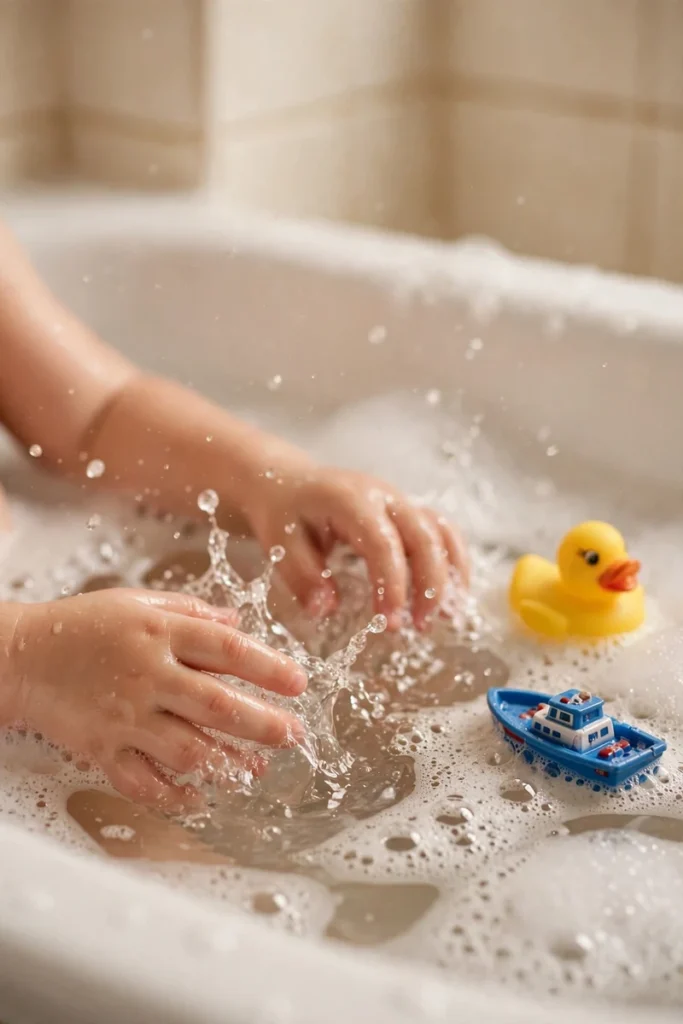
Fewer toys, rotated regularly. A small set in the tub beats a mountain of them.
Bath toys multiply like rabbits. They come in party favor bags, they get bought on sale, grandparents contribute, and suddenly the tub is so full of plastic that there is no room for the child. Then the drain clogs, the toys get slimy, and bath time cleanup takes longer than the bath.
The fix: keep five to eight bath toys in active rotation and store the rest. A mesh bag or bin under the sink holds the reserves. Every couple of weeks, swap a few. The “new” toys feel exciting, the slimy ones get a vinegar soak, and the tub stays navigable. Kids play more creatively with fewer toys anyway. Constraints breed imagination.
Choose toys that do not hold water inside. Squirters and hollow toys grow mold where you cannot see it or clean it. If you already own them, squeeze them out after every bath and soak them weekly in a vinegar solution. Better yet, phase them out in favor of cups, funnels, boats, and foam letters. Simpler toys, less mold, happier mom.
Step 5: Handle the Hair Washing Battle
Hair washing is the number one bath time battleground. Make it faster, gentler, and more predictable.
So many kids who love baths hate hair washing. The water in the face, the soap in the eyes, the tipping back: it is a lot of sensory input for a little person. The key is making it quick and predictable so the dread shrinks.
Tactics that work: wash hair first, so it is over early and the rest of the bath is pure fun. Use a plastic rinse cup or a visor to keep water off the face. Let them hold a dry washcloth over their eyes like a superhero mask; the sense of control helps enormously. Count down out loud: “three rinses and we are done.” Predictability turns panic into patience.
And lower the frequency if you can. Little kids do not need their hair washed every night. Two or three times a week is plenty for most. On other nights, a quick body wash is enough. Fewer hair washing battles means less dread around the whole bath. Pick your battles, and let this one happen less often.
Step 6: Build the Wind Down Into the Bath
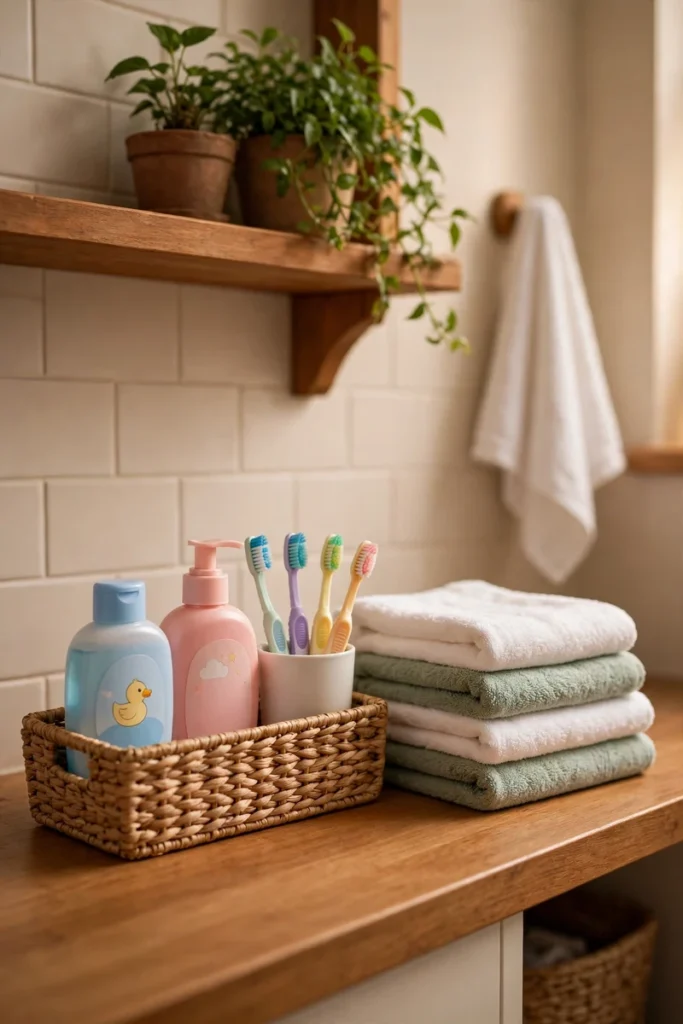
The bath is not just cleaning. It is the start of sleep. Make it feel that way.
Warm water naturally makes kids sleepy. It raises body temperature, and the cooldown afterward triggers drowsiness. You can amplify this by making the bath itself calming: dim the bathroom lights or use a nightlight, play soft music, keep voices low and slow. The bath becomes a sensory signal that the day is ending.
Save the wild play for earlier in the evening. Bath play should be gentle: pouring, floating, quiet imagination games. If the bath turns into a splash party every night, the kids come out wired instead of sleepy, and you have undone the whole point. Fun, yes. Frenzy, no.
End the bath the same way every night: a calm rinse, a warm towel, a little lotion massage, pajamas. The lotion step is secretly brilliant. It is warm touch, it slows everyone down, and it signals comfort. Many parents find that the post bath lotion and pajama routine does more for bedtime cooperation than anything else in the evening.
Step 7: Know When to Skip the Full Bath
Not every night needs a production. Quick rinses and wipe downs are legitimate bath times.
Here is the permission you might need: kids do not need a full bath every single night. On busy evenings, late nights, or days when everyone is already overtired, a quick shower rinse, a washcloth wipe down of the important areas, or even just washing hands and face and brushing teeth is completely fine.
This is especially true for babies and toddlers. A full bath two or three times a week plus wipe downs on other nights keeps them perfectly clean. Overbathing dries out little skin anyway. Let the schedule serve your family, not some imaginary standard.
Having the “light bath” option in your back pocket also defuses the power struggle. When a kid is melting down at the thought of a bath, offering the quick version often gets cooperation where the full version got war. “Just a quick rinse tonight” feels manageable to a tired kid. And a manageable bath that happens beats a perfect bath that causes a forty minute standoff.

Bath Time for Different Ages
The system works for everyone, but the details shift as kids grow. Here is how to tune it.
Babies (under 1): Keep it short, warm, and simple. A baby bath two or three times a week is plenty. Have everything within arm’s reach before the baby goes in, because you will not be putting them down mid bath. A soft towel warmed in the dryer is pure luxury. Talk or sing through the whole thing; your voice is the calm.
Toddlers (1 to 3): This is peak bath chaos age, and also peak bath joy. They want to stand, splash, pour, and drink the water. Let them play, but hold the boundaries that matter: bottom stays down (safety), no standing, gentle hands. Keep baths short, because overtired toddlers and water are a volatile mix. The pre bath prep matters most at this age, since you cannot leave them for a second.
Preschoolers (3 to 5): They can start doing more themselves: washing their own body with a soapy washcloth, rinsing with the cup, getting out and drying with supervision. Give them jobs and they will rise to them. This is also the age of elaborate bath imagination games. Let the games be calm ones. A “car wash” for toys beats a splash war.
School age (6+): Many kids this age can bathe mostly independently, with you nearby. Set the expectations: wash everything, rinse the tub, hang the towel. Do a quick check the first few weeks (the “did you use soap” era is real). Respect growing privacy needs. Knock before entering. Independence with dignity.
Making Bath Time Fun (Without the Chaos)
Calm does not mean boring. A few simple touches make bath time something kids look forward to, without turning it into a circus.
Rotate the novelties. Keep a small stash of bath extras and bring out one at a time: bath crayons, color changing tablets, foam shapes, a new funnel, glow sticks for an evening bath with dimmed lights. Novelty on rotation stays exciting. Everything all the time becomes background noise.
Play calm games. “What sinks, what floats” with household objects. Pouring races with different sized cups. A toy car wash station. Washing a doll’s hair. These games are engaging without being wild. They keep kids happily in the tub, seated, while the warm water does its sleepy work.
Read in the tub. Waterproof books exist and they are wonderful. Or just read a regular book aloud while they soak. A story in the bath combines two calming rituals into one, and it is genuinely lovely. Many families find that bath plus book means the kids are practically asleep before pajamas.
Let them choose. Which towel tonight? Which pajamas are laid out? Bath bomb or no bath bomb? Small choices give kids a sense of control, and control reduces resistance. A kid who chose their towel is a kid who gets out of the tub to use it.
The Towel Laundry Reality
Let us talk about the hidden cost of bath time: towels. A family with little kids can generate a mountain of damp towels every week. Without a system, they pile up on the bathroom floor, start smelling, and become yet another thing to deal with.
Give everyone their own hook and their own towel. One towel per person, hung up after every bath to dry. Kids’ towels get washed twice a week, not after every use. A towel that dries properly between baths does not need daily washing. The hook is the key: a towel on a hook dries, a towel on the floor festers.
Do a dedicated towel load twice a week. Do not let towels mingle with the general laundry chaos. Two towel loads a week, hot water, done. If the laundry mountain has been its own battle at your house, separating towels into their own predictable loads simplifies everything.
Keep a small hamper in or near the bathroom. Dirty towels and washcloths go straight in, not on the floor. When the hamper is full, it is towel laundry day. Simple, visual, no thinking required. And teach the kids to toss their own washcloth in. Another tiny job they can own.
When Bath Time Becomes Your Favorite Part of the Day
Here is something nobody tells you at the start: once the system is running, bath time often becomes the best part of the evening. The house is quieting down. The kids are warm and relaxed. The day’s chaos is literally washing away. Many parents say the bath is where they have their sweetest moments with their kids: the unhurried conversations, the silly songs, the small confidences shared in the warm water.
Protect that. Do not rush through it to get to the next thing. The fifteen minutes of calm bath time is not a delay in your evening. It is the point of your evening. Sit on the closed toilet lid, slow down, and be there. The emails can wait. The dishes can wait. This warm, wet, giggly window is childhood, happening right in front of you.
Use it as connection time. Ask about their day. Tell them something small about yours. Play the calm game. Sing the silly song. These are the moments kids remember when they are grown: not the perfect routine, but the feeling of being unhurriedly, warmly, completely with their parent. The system gives you the calm. What you do with the calm is up to you.
And on the nights when it is still a production despite everything, laugh about it later. Some baths will be chaos. The toddler will flood the floor. Someone will cry about the shampoo. You will mop in your socks. It is fine. The system works most nights, and most nights is a triumph. Give yourself the same grace you give them.
Try It Tonight: The 10 Minute Bathroom Reset
Before tonight’s bath, spend ten minutes setting the stage:
- Corral the toys. Pull out everything except eight favorites. Bag the rest for rotation.
- Set out the after bath lineup: towel, pajamas, lotion, brush. All in a row.
- Put the soap and washcloth where little hands can reach them.
- Hang the towel where you can grab it without leaving the tub side.
- Run the bath, then call the kids. Water ready, stage set, no fetching mid bath.
Tonight’s bath will feel different. This weekend, add the toy organizer and the kid height hooks to make it permanent.
Mistakes to Avoid
Starting the bath when everyone is already overtired. If bath time keeps exploding, it might be starting too late. Move it 20 minutes earlier and watch the drama shrink. An overtired kid cannot handle transitions, and bath time is all transitions. Earlier is easier.
Leaving the bathroom mid bath to fetch things. Never leave a child unattended in water, and never put yourself in the position of needing to. The pre bath prep exists for safety as much as sanity. Everything laid out before the water runs. No exceptions.
Letting the toy collection grow unchecked. Every bath toy you own lives in your tub, gets slimy, and needs cleaning. Cap the collection. When new ones arrive, old ones leave. One in, one out keeps the tub swimmable and the cleaning manageable.
Turning every bath into a full hair washing event. If hair washing is the battleground, fight it less often. Body wash nightly, hair a few times a week. The bath stays pleasant, the dread stays low, and everyone’s skin is happier.
Skipping the wind down and going straight to bed. Bath to bed needs a buffer. After the bath: pajamas, teeth, a book or two, then sleep. Rushing from tub to bed with no transition just moves the chaos to the bedroom. The calm you built in the bath needs a bridge to survive the hallway.
What About…?
What about kids who are terrified of the bath? Take it slow and give them control. Let them play in an empty tub with toys first. Then add an inch of water. Let them control the faucet (with supervision). Never force it. Fear fades with positive experiences, and every gentle bath builds trust. If the fear is intense or sudden, check for a specific cause: water too hot once, soap in eyes, a scary drain sound. Fix the cause and the fear often resolves.
What about siblings sharing a bath? Shared baths are lovely until they are not. They work well for close in age siblings who play nicely. Set the rule upfront: gentle play only, no splashing wars. At the first sign of real conflict, separate baths become the rule for a while. And as kids get older, privacy needs change. Follow their lead. There is no required age to stop sharing; there is just the age where someone wants privacy, and then it is time.
What about the bathroom mess? Water everywhere, every night. Contain it. A big absorbent bath mat outside the tub, towels on the floor for the truly splashy nights, and a quick squeegee or towel wipe of the floor as part of the routine. Teach kids to stay seated (the timer helps: “we stay in the tub until the timer”). And accept some water. Baths involve water. The goal is less mopping, not zero mopping.
What about single parents doing bath time solo with multiple kids? Bathe them together if ages allow, or bathe the youngest first while the older one does a calm activity (coloring, audiobook) in the next room. Prep everything for both kids before starting. And on the hardest nights, remember the light bath option. A wipe down and early bed beats a perfect bath and a midnight meltdown. You are doing enough.
Here is to bath times that feel like a warm exhale instead of a circus act. Set up the bathroom once, run the same rhythm nightly, and let the warm water do what it does best: wash the day away and carry your little ones gently toward sleep. You have got this, mama.
Get Fresh Home Ideas Every Week
Seasonal decor ideas, organizing tips, and cozy home inspiration, straight to your inbox.
More Parenting Ideas You Will Love
Keep reading for more calm-home inspiration: