
You know the scene. The school bus pulls away, the front door bursts open, and suddenly your house sounds like a small tornado touched down in the hallway. Backpacks hit the floor. Shoes go flying in two different directions. Someone is starving. Someone else is crying because their snack broke in half. You have exactly two hours before dinner, homework, and the whole evening shift starts, and you are spending most of it playing referee and cleanup crew.
If your afternoons feel like chaos with a clock running, you are not doing anything wrong. You are just missing a system. And that is good news, because a system is something you can build once and let run itself. This post gives you the exact after school routine that turns those wild two hours into something calm, predictable, and honestly kind of lovely. Your kids will know what comes next. You will stop repeating yourself forty times. And by dinner, everyone is still speaking to each other.
Love these ideas? Get more every week.
Join the newsletter for seasonal decor and cozy home inspiration.
TL;DR: The After School Routine That Runs Itself
- Same order, every day: snack, then movement, then homework, then free time. Kids relax into predictable rhythm within about a week.
- Build the landing zone: one hook, one basket, one folder per kid by the door. Backpacks and papers stop living on the floor.
- Snacks are scheduled, not negotiated: a self-serve snack station ends the “I’m starving” loop and buys you 20 quiet minutes.
- Homework happens before screens: a set spot and a set start time remove the nightly argument entirely.
- Teach it once, then step back: a picture chart for little kids or a checklist for older ones means you stop being the reminder machine.
Why Afternoons Feel So Hard (It Is Not You)
There is a real reason the after school hours feel harder than the rest of the day combined. Your kids have spent six or seven hours holding it together. Sitting still. Being quiet. Following rules. Sharing. By the time they walk through your door, their self control tank is completely empty. What you are seeing is not bad behavior. It is decompression. They fall apart at home because home is the safe place to fall apart.
Knowing that changes everything. It means the goal of your afternoon is not perfect behavior. It is giving their tired brains a predictable path from “wound up and wiggly” to “calm and ready for the evening.” Kids who are running on empty cannot handle open ended time. “Go play until dinner” sounds simple to us, but to a depleted six year old it is a blank page with no instructions. Structure is not the enemy of fun here. Structure is what makes fun possible, because nobody is melting down.
And here is the part nobody talks about: you are depleted too. You have been working, managing the house, maybe running errands, and now you get the hardest shift of the day with no break in between. A routine that runs itself is not just for the kids. It is for you. It means you stop making a hundred tiny decisions between 3 and 6 pm. The routine decides. You just follow along.
The Plan: Build an After School Routine That Runs Itself
Here is the exact system, step by step. Do not try to install all of it on day one. Pick one step, get it running, then add the next. In two weeks, your afternoons will look completely different.
Step 1: Create a Landing Zone by the Door
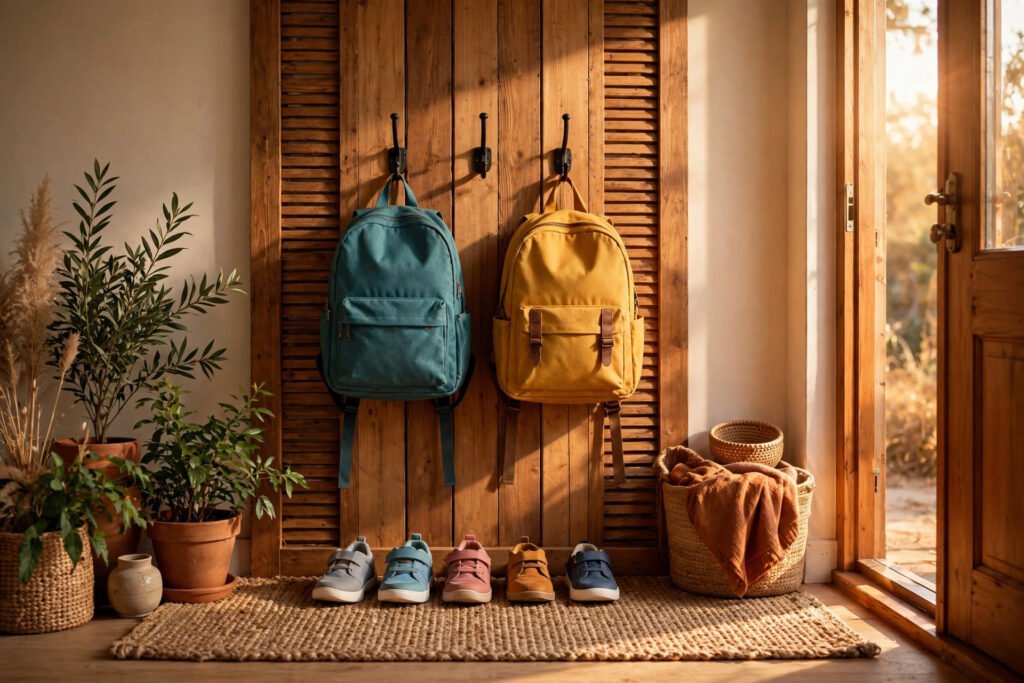
Everything that comes home from school gets one home by the front door, and nothing lives on the floor.
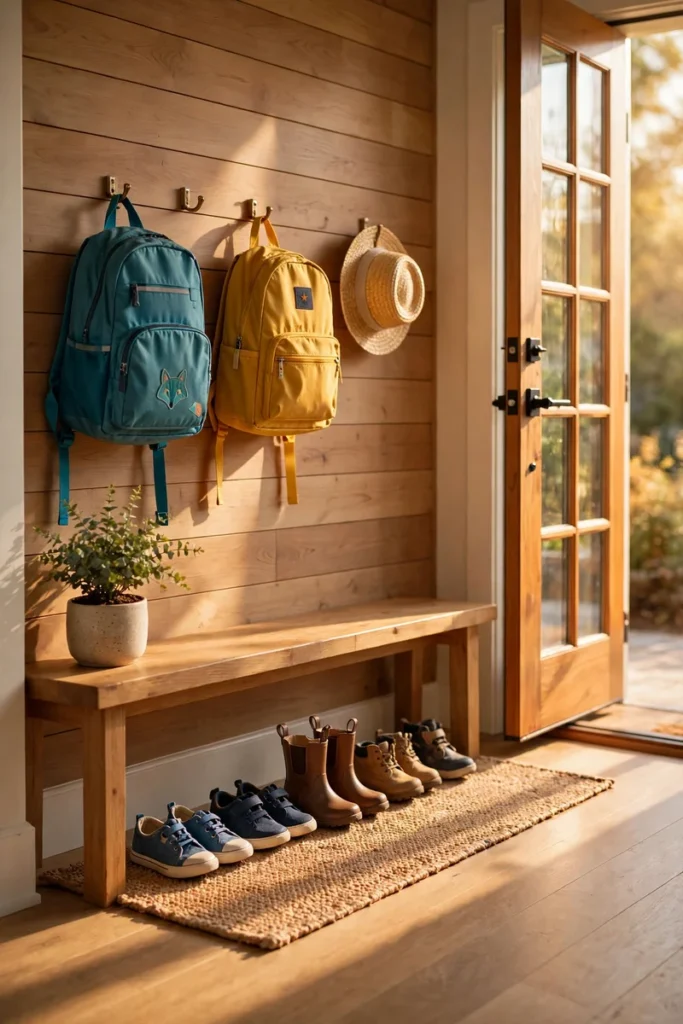
Half of afternoon chaos is stuff chaos. Backpacks, lunch boxes, jackets, shoes, library books, the mysterious rock from the playground. When every item has a designated spot within five steps of the door, the “dump and run” habit disappears. Give each kid one sturdy hook for their backpack and jacket, one basket or cubby for shoes, and one wall file or magazine holder labeled for school papers.
The paper part matters more than you think. Every day, kids bring home a blizzard of permission slips, reading logs, and artwork. If there is no landing spot, those papers scatter across your counters and die there. One folder per kid, hung right by the door, catches all of it. You empty the folders once a day (more on that in a minute) and the counter stays clear.
Keep it simple and low. Hooks at kid height, baskets they can actually reach. If the system requires them to stretch, climb, or fold things neatly, they will not use it. Make the right choice the easy choice. A backpack tossed onto a hook takes two seconds. A backpack carried upstairs to a bedroom takes a trip nobody wants to make.
Step 2: Feed Them Within Ten Minutes of Walking In
A fed kid is a different kid. Snack first, everything else second.
Kids come home genuinely hungry. School lunch was hours ago, and many kids barely eat it because they would rather talk to their friends. That hunger shows up as whining, fighting with siblings, and crying over broken crackers. You cannot reason with a hungry child, and you cannot start homework with one either. So snack comes first. Always.
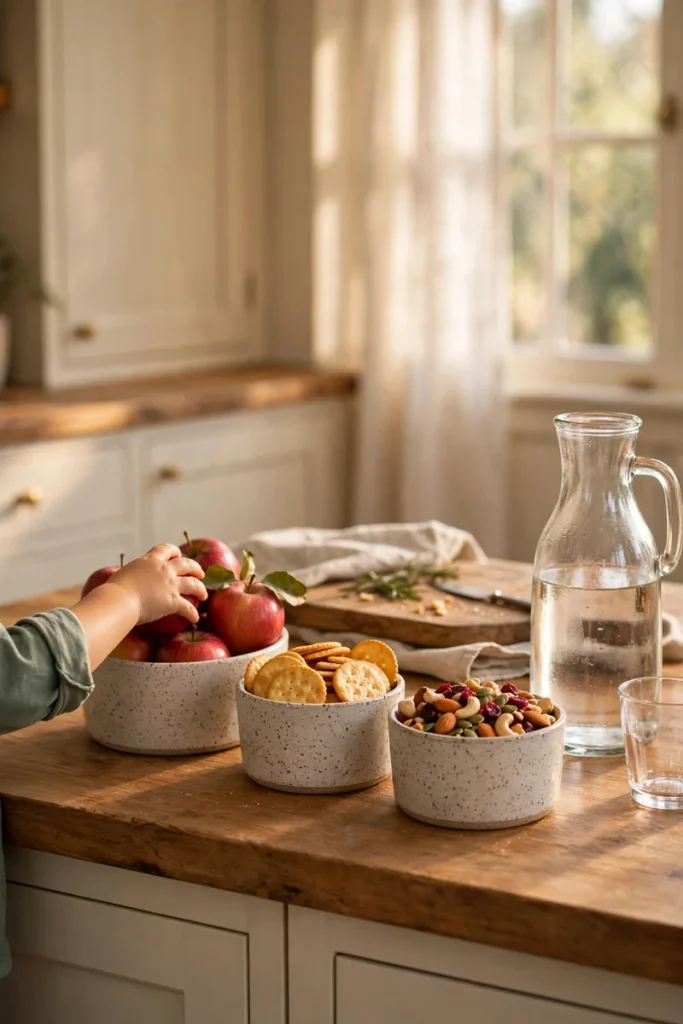
The trick that makes this step run itself is a self-serve snack station. Dedicate one low shelf in the pantry or one basket on the counter to after school snacks. Stock it with two or three options you approve of, and let the kids serve themselves. When snack is a decision you have to make and prepare, it becomes one more thing on your plate. When kids can grab an apple, a cheese stick, and a small handful of crackers on their own, you just bought yourself twenty minutes of peace.
Keep the options boring on purpose. If the snack station has exciting choices, it becomes a negotiation. Two or three solid options, rotated weekly, is plenty. And yes, this pairs beautifully with a calmer approach to food overall. If mealtimes have been a battleground at your house, the same low pressure philosophy that works for picky eaters works here too: offer good food, skip the power struggle, trust their appetites.
Step 3: Let Them Move Before You Ask Their Brain to Work
Wiggly bodies need to move before tired brains can focus. Play first, homework second.
This is the step most parents skip, and it is the one that changes the most. Kids have been sitting all day. Their bodies are buzzing with stored up energy. Asking them to sit down and do math worksheets the minute they finish their snack is asking for a fight you will lose. Give them 30 to 45 minutes of real physical play first.
This does not need to be organized or pretty. Backyard, sidewalk chalk, bikes, a dance party in the living room, wrestling on the couch cushions. The only rule is that bodies move. On rainy days, keep a short list of indoor energy burners: balloon volleyball, an obstacle course through the furniture, a “freeze dance” playlist. The goal is joyful, sweaty, slightly wild play.
You will notice the difference within days. A kid who has run around for half an hour sits down to homework like a different child. The wiggles are gone. The focus is there. You just traded 30 minutes of play for an hour of homework battles avoided. That is a trade worth making every single day.
Step 4: Set a Fixed Homework Time and a Fixed Homework Spot
Homework happens at the same time, in the same place, every day. No negotiation, no reminders.
This is where the routine really starts running itself. Pick a homework start time that works for your family and treat it like an appointment. Not “after you finish playing” (vague, arguable) but “homework starts at 4:30” (clear, final). Put it on the routine chart. When the time comes, everyone knows what happens. You stop being the bad guy who interrupts fun, because the clock is the bad guy now.
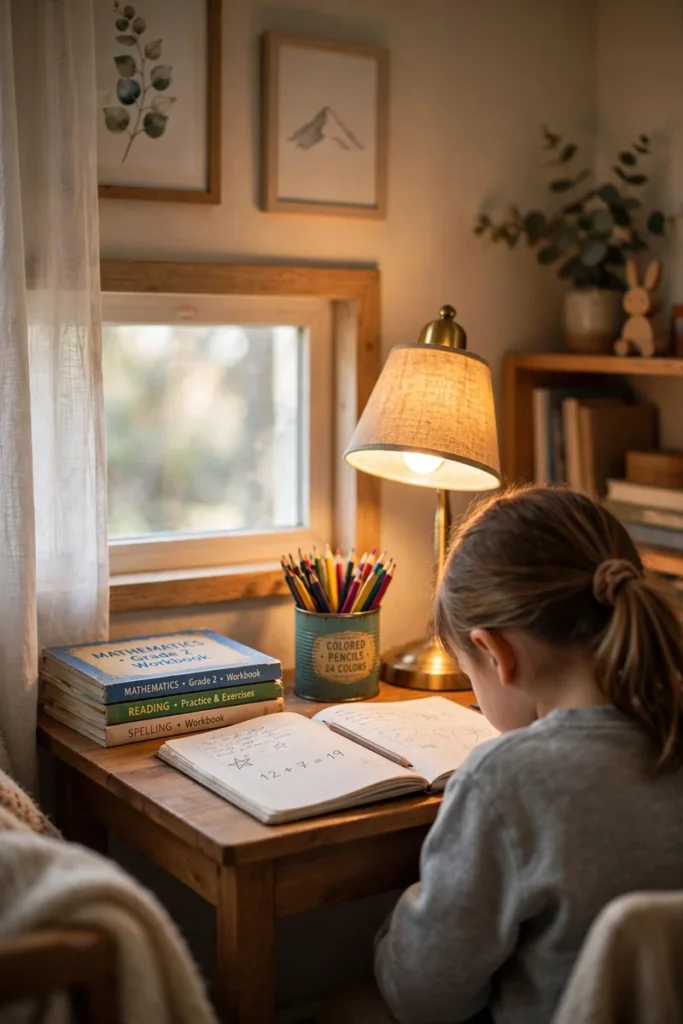
The spot matters just as much as the time. Kitchen tables work for younger kids who need you nearby, but they come with distractions: snacks being prepped, siblings wandering through, the TV in the next room. If homework always dissolves into chaos at the kitchen table, it is worth setting up a small dedicated homework station. Even a corner of a bedroom with a small desk, good light, and supplies in reach can transform focus.
Stock the spot once and refill it monthly: pencils, erasers, crayons or markers, a ruler, scratch paper. Every minute your kid spends hunting for a pencil is a minute the homework momentum dies. A little caddy of supplies that lives at the homework spot removes the number one homework delay tactic in the book.
Step 5: Use a Visual Chart So You Can Stop Repeating Yourself
Put the routine on the wall and let the chart be the boss instead of you.
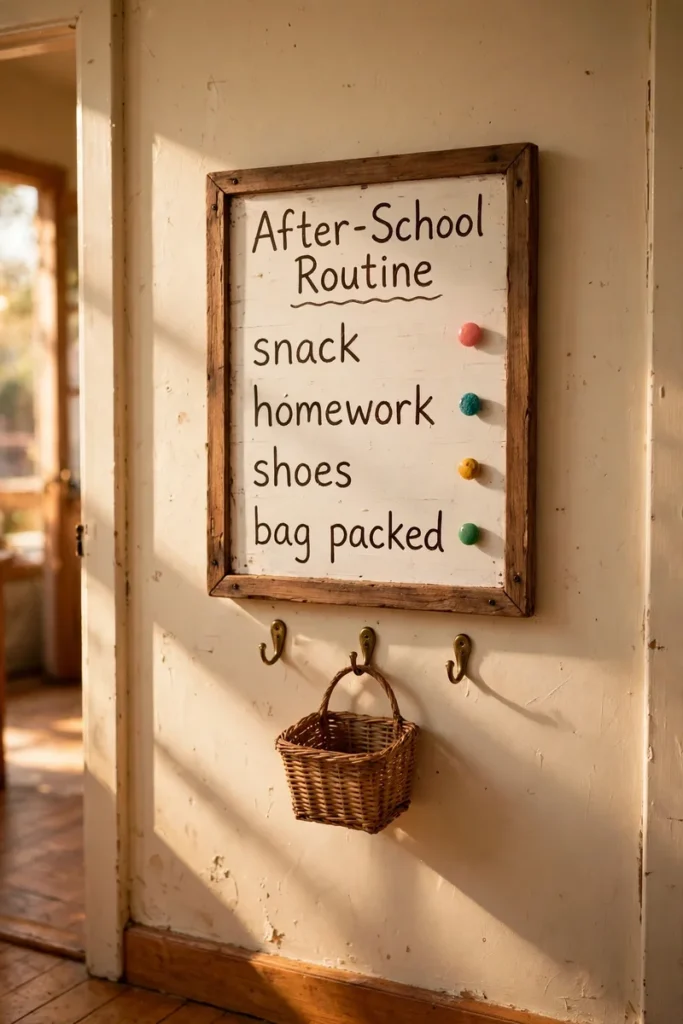
Here is the secret to a routine that truly runs itself: get the steps out of your mouth and onto the wall. For kids under seven, a picture chart works beautifully. Simple drawings or printed photos showing each step in order: backpack on hook, shoes in basket, wash hands, snack, play outside, homework, free time, dinner. For older kids, a written checklist they can tick off with a dry erase marker feels grown up and satisfying.
The magic is not in the chart itself. It is in what the chart replaces. Instead of you saying “did you hang up your backpack, did you wash your hands, did you start your homework” forty times, you point at the chart. “Check the chart.” Two weeks of consistent pointing, and they stop needing the prompt at all. They just follow the pictures.
Let the kids help make the chart. When they choose the pictures, the colors, and the order of the fun steps, they own the routine. A routine they helped build is a routine they follow. A routine imposed from above is a routine they resist. This one craft project pays off every single afternoon for months.
Step 6: Build in Real Free Time (Yes, Including Screens)
Protect a chunk of true free time every afternoon, because kids need unstructured hours too.
After homework is done, the rest of the afternoon belongs to them. This is not wasted time. Unstructured play is where creativity, problem solving, and independence grow. Some days that means building an elaborate Lego city. Some days it means zoning out with a show. Both are fine.
If screens are part of your afternoons, give them a clear container instead of fighting about them daily. A set amount of screen time after homework is finished removes the negotiation completely. The rule is simple and visual: homework done, chart checked, then screens until dinner. If you need help setting healthy boundaries around devices without daily battles, the approach in our screen time guide works perfectly alongside this routine.
Resist the urge to overschedule this window. Kids do not need every afternoon packed with activities. Two or three scheduled activities per week is plenty for most families. The rest of the time, boredom is a feature, not a bug. Bored kids invent games. Overscheduled kids melt down.
Step 7: Close the Loop With a Two Minute Evening Reset
End the afternoon the way you started it: everything back in its home, ready for tomorrow.
The routine that runs itself includes its own cleanup. Before dinner, or right after, build in a two minute reset. Backpacks get repacked for tomorrow. Lunch boxes go by the sink or get emptied. The paper folder gets a quick check for anything that needs your signature. Shoes go back in the basket.
This tiny habit is the bridge to calm mornings. So much of the morning panic comes from things that were never reset the night before: the missing shoe, the unsigned form, the lunch box still full of Tuesday. Two minutes in the evening saves twenty minutes of chaos the next morning. If your school mornings have been rough, this is the missing piece.
Make it a game for little kids (“beat the timer!”) and a non negotiable for bigger ones. Either way, it becomes automatic fast. And when everything is reset, the landing zone is clear and ready to catch tomorrow’s tornado.
What the Routine Looks Like at Different Ages
One routine does not fit every kid. The skeleton stays the same, but the details shift a lot between a four year old and a twelve year old. Here is how to tune it.
Preschoolers and kindergartners (ages 3 to 5) need the routine to be almost entirely physical and visual. Their version is: snack, big movement, a little bit of “homework” (which at this age means coloring, puzzles, or reading together), and lots of free play. The picture chart is essential here, because they cannot read a checklist yet. Keep each step tiny and concrete. “Hang backpack” works. “Get organized” does not. Expect to walk them through it for a few weeks. They will get it, and then they will do it with enormous pride, because little kids love being competent.
Elementary kids (ages 6 to 10) are the sweet spot for this system. They can follow a checklist independently, they have real homework that benefits from the fixed time and spot, and they are old enough to own their landing zone completely. This is also the age where sibling dynamics peak, so build in that separate decompression time if you have more than one. Let them choose their homework spot and decorate their checklist. Ownership is everything at this age. A kid who picked their own desk lamp will sit at that desk.
Tweens (ages 11 to 13) need the routine to feel like respect, not control. Drop the picture chart and switch to a simple written agreement: what happens, in what order, by when. Give them real input on the schedule, including when screens happen. Many tweens do homework better with music or in short bursts with breaks, so let them propose a system and hold them to it. The landing zone still matters (their backpacks are heavier and their papers are more important), but frame it as their command center, not your rule. If they help design it, they will use it.
Multiple ages at once is the real life scenario for most of us. Run one shared rhythm with individual details. Everyone lands at the door the same way. Everyone snacks at the same time. Then the paths split: the little one goes outside to play while the older one starts homework earlier, or vice versa. The chart can be shared for the common steps with personal add ons. You are conducting one orchestra, not playing five instruments yourself.
How to Roll This Out Without Losing Your Mind
If you are staring at seven steps and feeling overwhelmed, here is your rollout plan. One step per week. That is it.
Week one: the landing zone. Hooks, baskets, folders. Teach it once, point at it for a week. By day five, the backpacks are landing themselves.
Week two: the snack station. Set up the self serve shelf and stock it. Announce the new rule once: snack happens first, you serve yourself. Enjoy your twenty minutes of quiet.
Week three: movement before homework. Start protecting that play window. Push homework later if you have to. Watch the homework battles shrink.
Week four: the fixed homework time and spot. Set the time, set up the spot, stock the supplies. This is the week the evenings change.
Week five: the chart. Make it together on a weekend. Hang it up. Start pointing instead of nagging.
Week six: the evening reset. Add the two minute tidy before dinner. Mornings get easier almost immediately.
Six weeks sounds slow. It is not. It is six weeks to a permanently calmer house. Compare that to six more months of shouting “shoes!” every day at 3:15. Slow rollout is how routines actually stick, because nobody is overwhelmed, including you. And if life gets crazy in week three and you pause for a bit, just pick up where you left off. The system is patient. It will wait for you.
One more tip that makes the whole thing last: do a tiny Sunday reset. Five minutes, once a week. Restock the snack station, check that the hooks and baskets are still working, glance at the chart to see if any step needs tweaking. Kids grow, schedules shift, and a routine that never gets updated slowly stops fitting. A five minute weekly tune up keeps it running smoothly all year. Think of it like watering a plant. A little regular attention beats a dramatic rescue every time.
Try It Tonight: The 15 Minute Landing Zone
You do not need the whole system to feel a difference tomorrow. Tonight, spend 15 minutes building just the landing zone.
- Clear one stretch of wall near the door your kids actually use.
- Hang one hook per kid at their shoulder height. Command hooks work fine.
- Put one basket per kid underneath for shoes.
- Tape one folder per kid to the wall (or slide magazine holders onto a shelf) and label them with names.
- Walk the kids through it once tomorrow after school: hook, basket, folder. That is the whole tour.
Tomorrow afternoon, watch what happens. The backpacks will not be on the floor. The papers will not be on the counter. One small zone, one big exhale. Then add the snack station next.
Mistakes to Avoid
Starting everything on Monday. Overhauling the whole afternoon at once overwhelms everyone, including you. Add one step at a time, about one per week. Slow is fast here.
Making the routine too rigid. The order stays the same, but the timing can flex. Some days play runs long because the neighbor kids are out. Some days homework takes ten minutes. A routine is a rhythm, not a prison schedule. If you enforce it like a drill sergeant, the kids will rebel against the whole thing.
Skipping the snack. It sounds small, but feeding kids immediately is load bearing. Every step after it works better on a full stomach. Do not try to squeeze homework in before snack to “get it over with.” You will pay for it in tears.
Doing it for them. The whole point is that the routine runs itself. If you hang up the backpack, unpack the folder, and set out the snack every day, you have built yourself a job, not a system. Teach it, supervise it for a week, then step back and let the chart do the reminding.
Comparing your afternoons to someone else’s highlight reel. The mom on social media with the color coded routine chart and the smiling kids is showing you her best day, not her every day. Your routine will be messier. The chart will fall off the wall. Someone will lose a shoe. That is normal family life, not failure. Build the system for your real house, with your real kids, on your real tired days. A routine that survives a chaotic Tuesday is worth ten perfect ones that only work when everything goes right.
Forgetting about yourself. Build your own landing moment into the routine. While the kids have their snack and play, you get ten minutes to change clothes, drink water, and breathe. You cannot pour calm into the afternoon from an empty cup. Protecting your reset is part of the system, not a luxury.
What About…?
What about kids who go to aftercare and get home at 5:30? Compress, do not skip. The same order still works in miniature: snack in the car or right at the door, 15 minutes of movement, homework, then dinner. The rhythm matters more than the duration. Even a 45 minute version gives kids the predictability their brains crave.
What about siblings who fight the second they are in the same room? Build separation into the routine. Different snack spots, different play zones for the first 30 minutes. Many siblings need decompression time apart before they can be pleasant together. If the fighting is constant, the strategies in our sibling fights guide pair well with this routine.
What about homework that takes forever and eats the whole evening? Set a homework end time, not just a start time. When the time is up, homework stops and gets a note to the teacher if needed. An evening swallowed by homework means something is off: too much assigned, or the environment needs adjusting. Protect dinner and bedtime. Those matter more than the last three worksheet problems.
What about days when everything falls apart anyway? Some afternoons will be disasters. Someone is sick, the bus was late, you had a terrible day at work. The routine is a default, not a law. On hard days, do the minimum: snack, kindness, early bedtime. The routine will be there tomorrow. Consistency over weeks matters far more than perfection on any single day.
Here is to afternoons that feel less like survival and more like the gentle landing your whole family deserves. Start with the landing zone tonight, add one step at a time, and watch your kids start running the routine themselves. You have got this, and they have got this too.
Get Fresh Home Ideas Every Week
Seasonal decor ideas, organizing tips, and cozy home inspiration, straight to your inbox.
More Parenting Ideas You Will Love
Keep reading for more calm-home inspiration: