
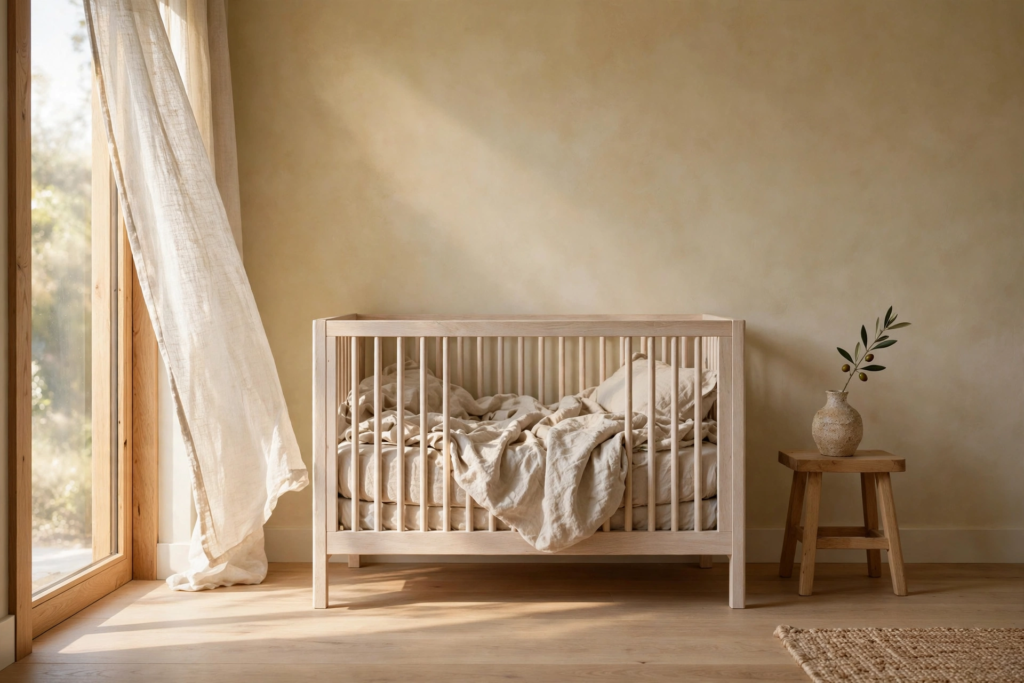
Close your eyes and picture the nursery at seven in the evening. The sun is low and the light coming through the window is the color of honey. The curtains are oatmeal linen and they are moving just a little, the way curtains move near the ocean when the evening breeze picks up. The room smells like clean cotton and warm wood. Under your bare feet there is a jute rug, rough in the best way, with a soft wool rug layered on top of it for the 3am feeds. Everything in the room is quiet. Nothing is shouting. Your shoulders drop the second you sit down. That is what a coastal nursery feels like, and I am a little obsessed with it.
Here is the thing about coastal style right now. It grew up. It is not anchors and rope and signs that say beach. The new coastal is softer and quieter. Think of it as the feeling of the coast, not the theme of it. Sand underfoot. Linen drying in a breeze. Driftwood worn smooth by water. Sea glass in that perfect muted green. I have been taking this whole look and extending it into the nursery, and honestly it might be my favorite room to do in this style. A baby room should feel like a deep breath, and coastal done right is basically a deep breath in room form.
The palette does almost all of the work. Warm white and sand on the big surfaces. Oatmeal linen everywhere you can put it. Weathered wood, jute, seagrass, and rattan for texture. Then the quiet color notes. A muted sea glass green. A little camel. A whisper of rust. Aged brass where the light catches. Sophisticated and muted, never bright. That restraint is the whole game, and it leads me to my first principle for this room. Coastal is a feeling, not a theme. The second you add a kitschy sign or a bright turquoise pillow, the feeling breaks. Keep it natural, keep it muted, and the room will do the rest.
I put together 19 ideas that build this room from the walls outward. Some are weekend projects. Some are one beautiful purchase that changes everything. Every one of them follows the same quiet rules. Let the light do the decorating. Texture is the color. Every piece earns its floor space. And if you want the full foundation first, you can browse all of our design guides for the palettes and pairings behind every style we cover, including the coastal look I broke down room by room in my 19 airy coastal kitchen ideas post.
Let us start with the shell, because everything pretty sits on top of it.
Love these ideas? Get more every week.
Join the newsletter for seasonal decor and cozy home inspiration.
The shell: walls, windows, floors, and light
1. Limewash the Walls in Warm Sand
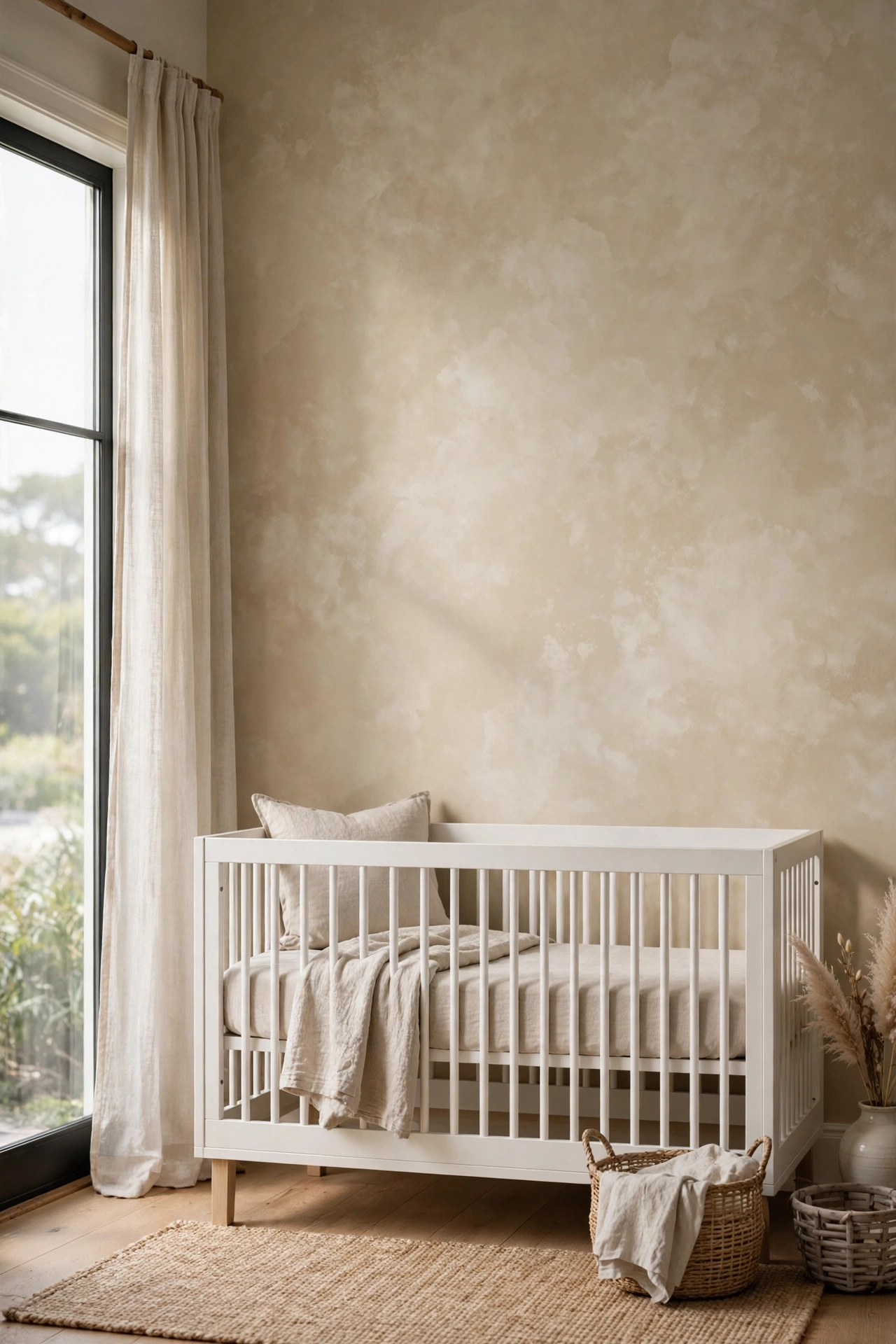
Flat paint in a nursery can feel a little stark, especially when the sun hits it straight on. Limewash fixes that in a single weekend. The finish has this soft movement to it, like plaster touched by hand, and in a warm sand tone it makes the whole room glow. It looks like the inside of a dune. I am not exaggerating when I say this one change sets the tone for the entire room. Every other idea below looks better against these walls.
Pick a limewash in warm sand, pale oatmeal, or soft clay. Keep the ceiling a simple warm white so the room still feels tall and open. Do your test patch on the wall that gets the evening light, because that is when you will live in this room most, and limewash shifts in the most beautiful way as the light changes. Two coats, loose overlapping strokes, and you are done. It is the most forgiving paint finish I have ever used.
Shop This Look
This post contains affiliate links. If you buy through them, I may earn a small commission at no extra cost to you.
A few favorites featured in the ideas above:


2. Oatmeal Linen Curtains That Move with the Breeze
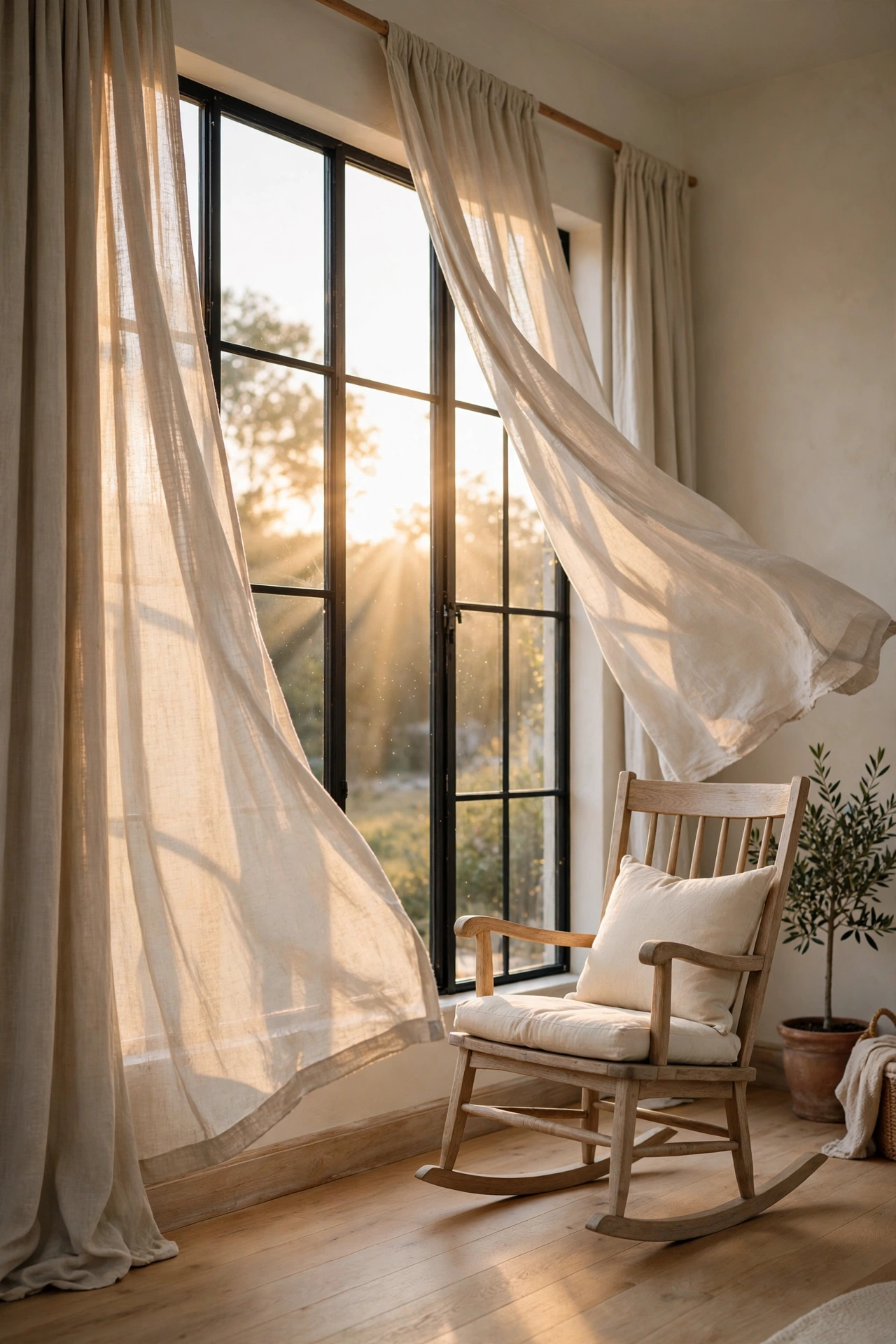
Curtains are the lungs of a coastal room. Heavy drapes would suffocate the whole feeling. Oatmeal linen panels, hung high and wide, do the opposite. They filter the light into something golden and soft, and they move. That movement is half the coastal feeling. On a breezy day the whole room feels alive in the calmest possible way. I always say let the light do the decorating, and these curtains are how you let it.
Hang the rod at least six inches above the frame and let the panels kiss the floor. If you need real darkness for naps, put a simple blackout roller behind the linen. You get the glow during the day and the dark at nap time, and nobody sees the practical layer. Wash the linen once before hanging so it softens up and gets that beautiful rumpled drape.
3. Layer a Jute Rug with a Soft Wool Rug
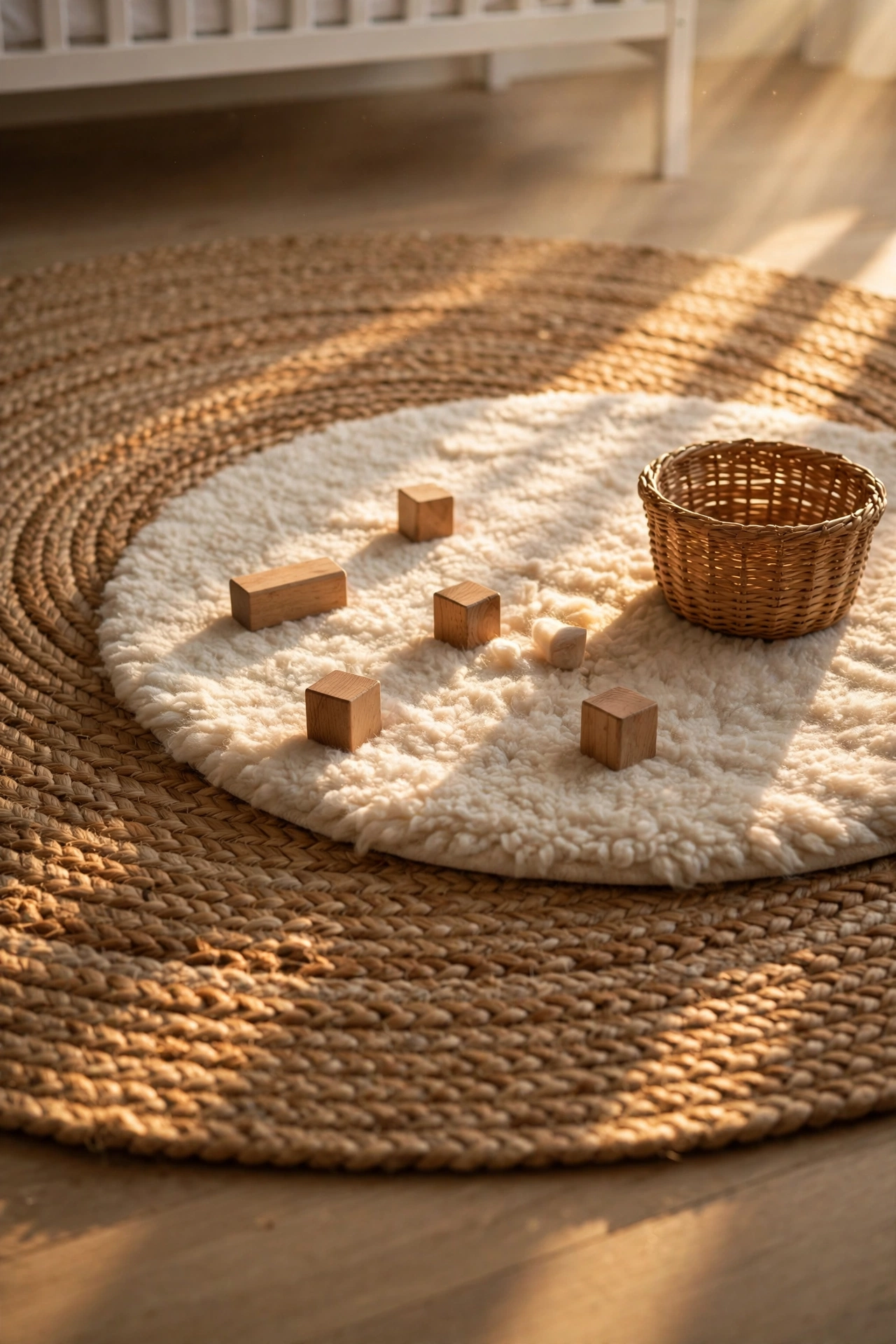
A coastal nursery floor should feel like the beach under a blanket. One rug cannot do both jobs, so I layer. Start with a big round jute rug. It brings that sandy texture and it is tough enough for real life. Then layer a smaller soft wool or cotton rug on top, right where you will sit for feeds and where the baby will do tummy time. Rough below, soft on top. That contrast is delicious under bare feet.
Keep the jute rug large enough to anchor the crib and the glider. The top rug should be washable if you can find one you love, because babies are babies. I love a round jute with a rectangular or sheepskin layer on top. The shape contrast keeps it from looking like a matched set, and a coastal room should never look matched. It should look collected.
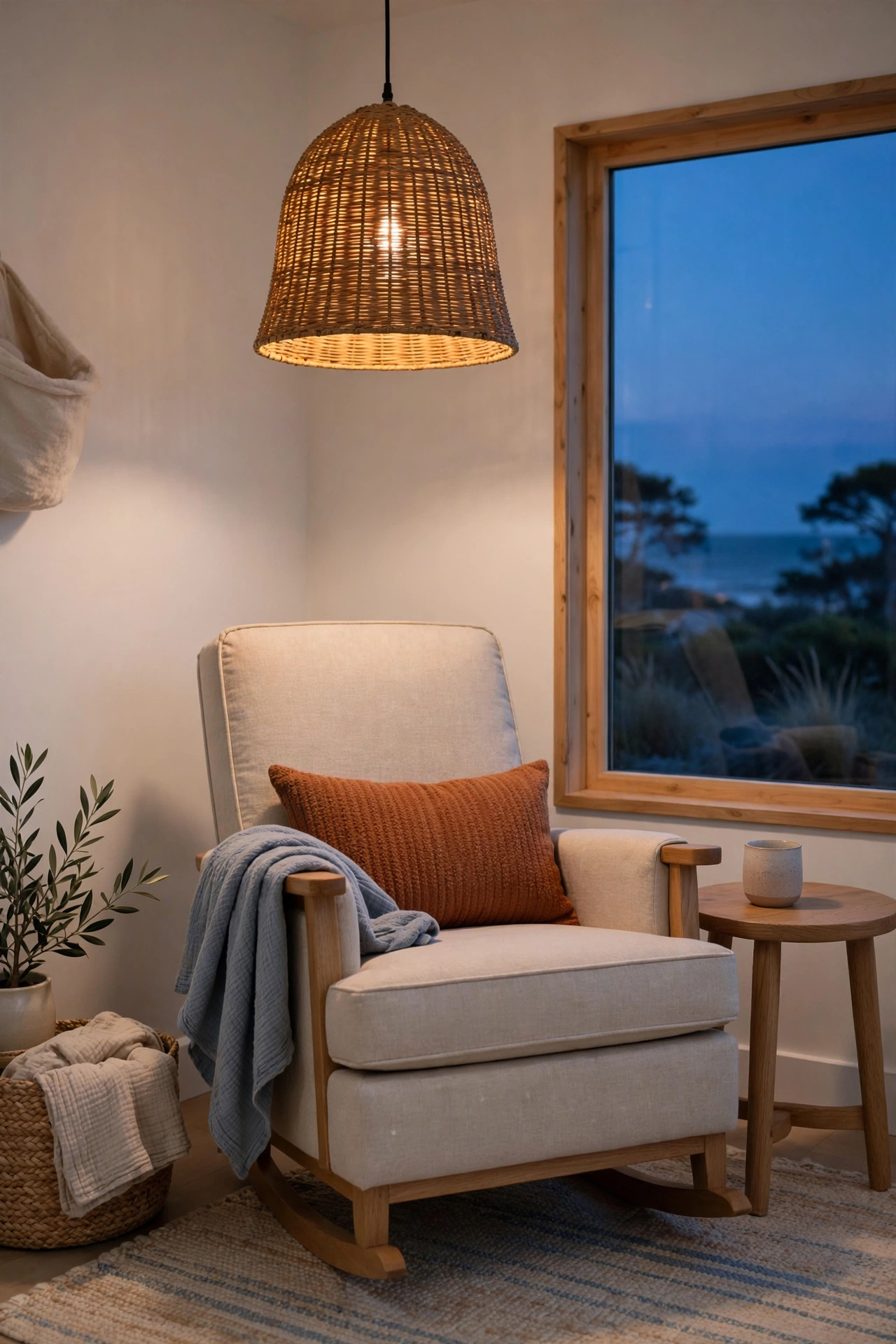
4. Hang a Rattan Pendant Low Over the Nursing Corner
Overhead lighting in a nursery is usually the enemy. That single ceiling light blasting down at midnight is the opposite of calm. A rattan pendant hung low over your nursing corner changes the whole evening mood. The weave throws the most beautiful patterned light on the ceiling, like sunlight through palm leaves, and the glow is warm and low instead of harsh. This is the light you will nurse by, rock by, and doze off under. It matters more than almost any other light in the room.
Hang it so the bottom of the pendant sits about five and a half to six feet off the floor, low enough to feel intimate, high enough that nobody bonks their head. Put it on a dimmer. At full brightness it is cheerful for daytime play. Dimmed down at night it is basically a sunset you control. Choose a natural rattan, not a stained dark one. The light needs to pass through the weave.
5. One Sea Glass Accent Wall Behind the Crib
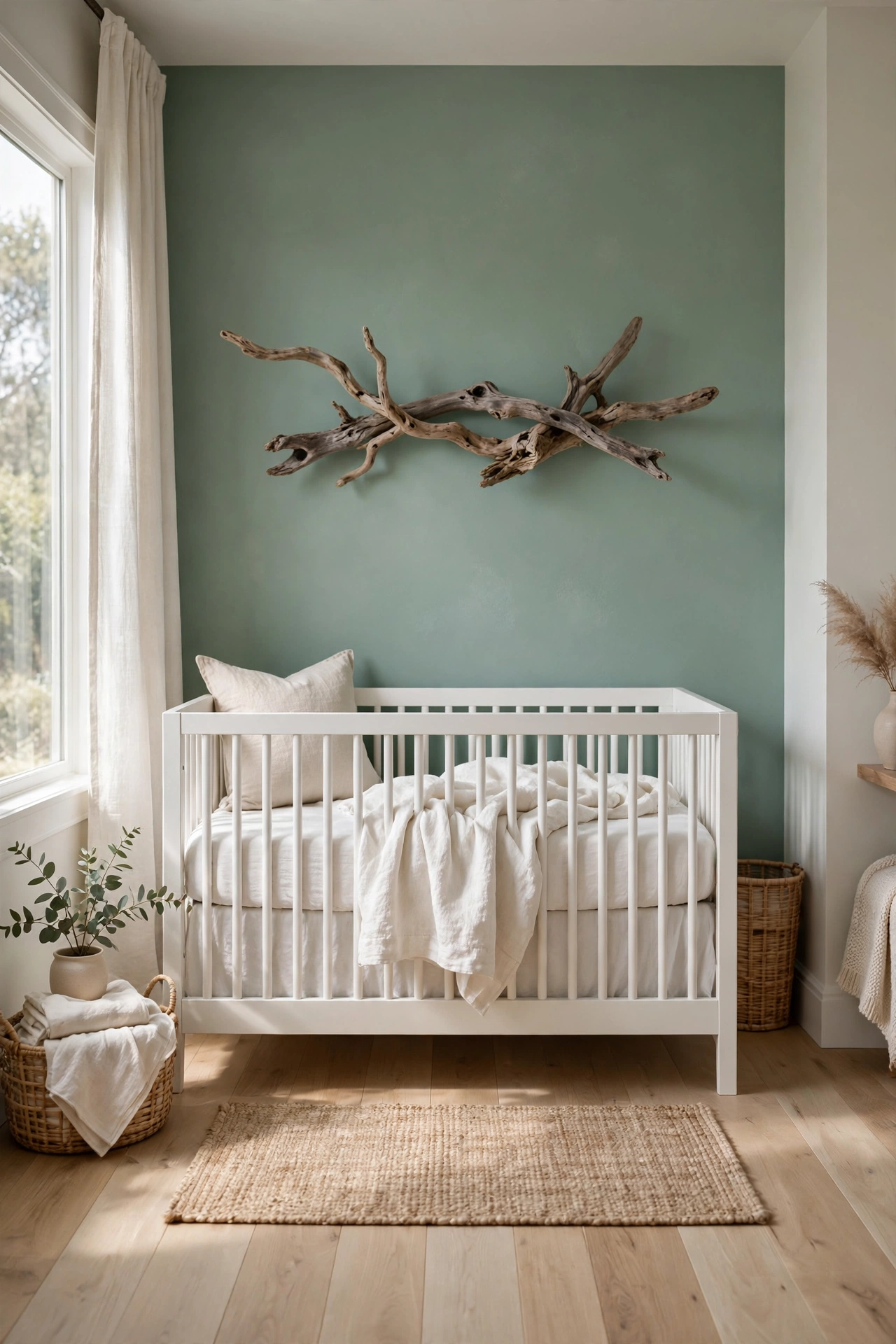
Every coastal room needs one quiet note of the sea, and this is mine. One wall in muted sea glass green, that soft sage with a whisper of blue, like the color of water over sand. Put it behind the crib so it becomes the backdrop for the sweetest view in the room. It is color, but it is barely color. It reads as calm, not as a statement. Guests will say the room feels peaceful and they will not quite know why. That is the sea glass wall doing its work.
Keep it to one wall. The other three stay warm white or sand so the room stays light and open. And keep the green muted. Hold the swatch up in daylight and squint. If it looks like the ocean on a postcard, it is too bright. If it looks like a stone you would pick up on a walk, it is right. Pair it with warm white bedding and natural wood and it will never feel cold.
The furniture that does the work
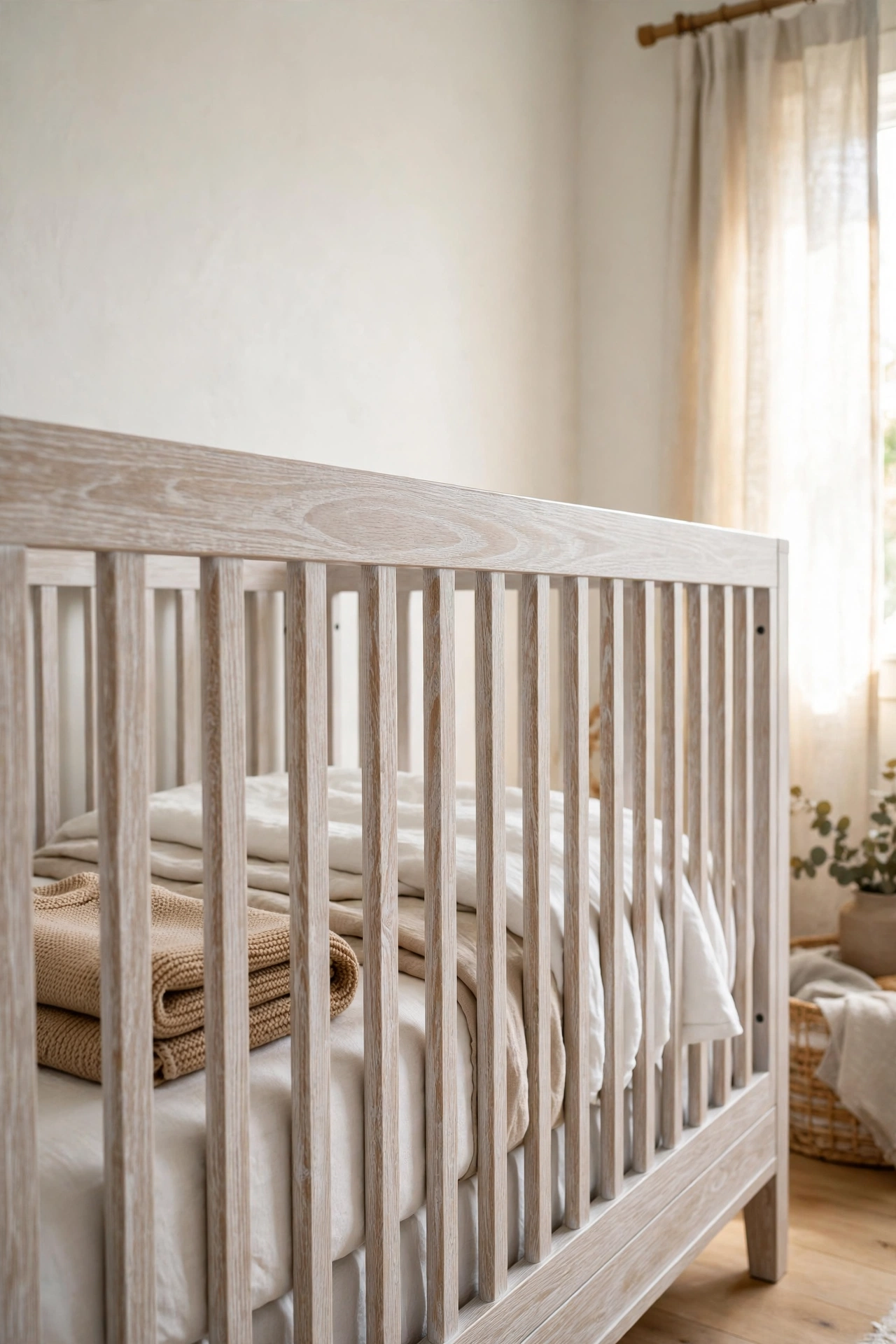
6. A Whitewashed Oak Crib as the Quiet Anchor
The crib is the biggest thing in the room and it sets the tone whether you want it to or not. A whitewashed oak crib is my pick every time for coastal. The whitewash lets the wood grain show through softly, so it has warmth without heaviness. A stark white crib can feel a little cold against all that sand and linen. A dark wood crib fights the lightness. Whitewashed oak sits right in the middle, like driftwood that someone polished just a little. It anchors the room without weighing it down.
Look for simple slat lines and a low profile. The fussy carved cribs do not belong in this style. And think ahead. A convertible crib that becomes a toddler bed and then a daybed will live in this room for years, and the whitewash finish ages beautifully. It is one of those purchases that feels expensive once and then pays you back every single day.
7. A Natural Linen Glider with a Rust Lumbar Pillow
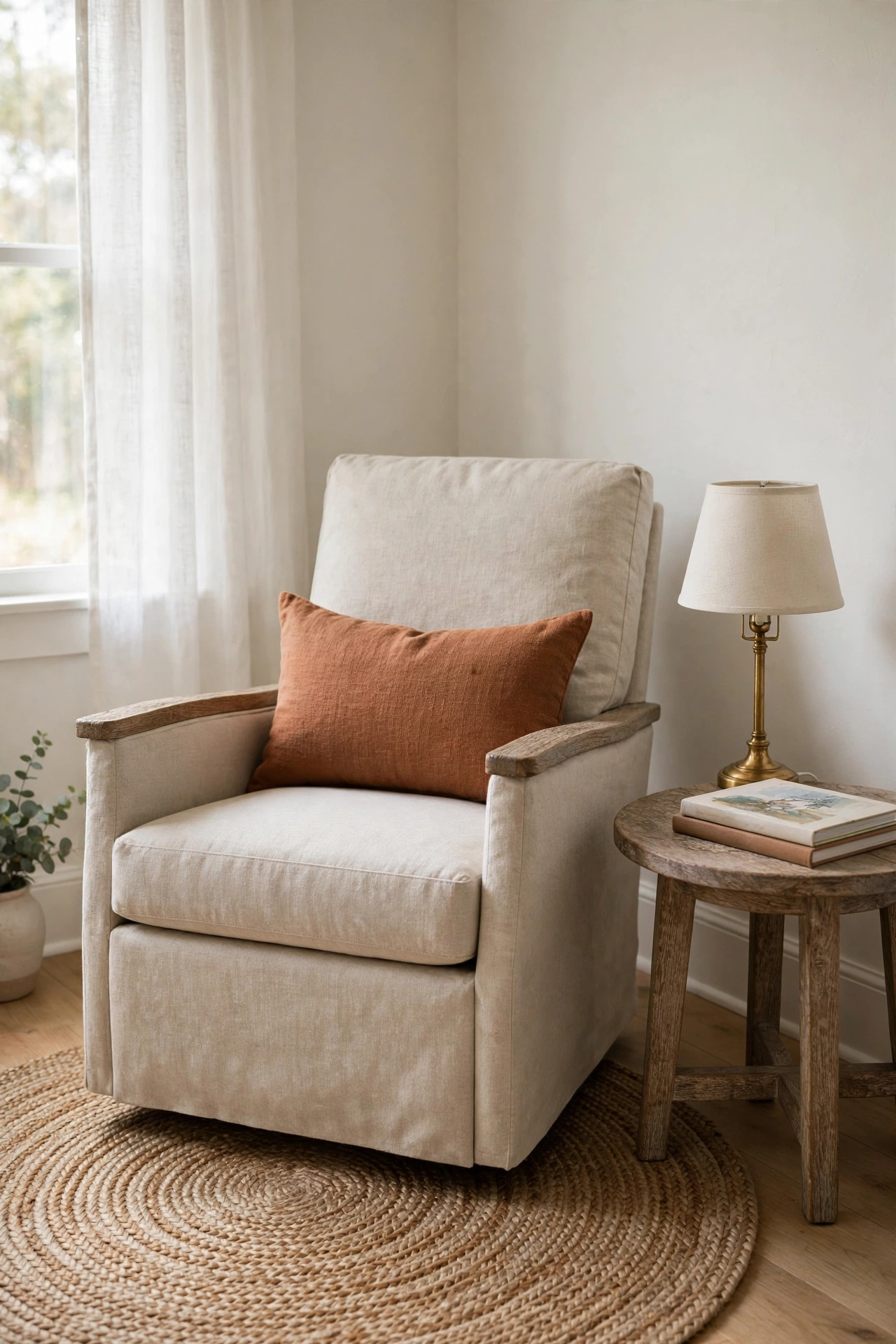
You will spend more hours in the glider than anywhere else in your home for the first year. It deserves to be beautiful. A glider in natural oatmeal linen looks like it belongs on a covered porch, and that is exactly the feeling we want. The one quiet punch of color comes from a single lumbar pillow in rust. Rust against oatmeal linen is one of my favorite combinations in the world. It is warm, it is earthy, and it keeps the neutral room from feeling washed out.
Test the glide in person if you can. A beautiful chair that glides like a shopping cart is not worth it. Look for a smooth quiet motion, armrests at the right height for nursing, and fabric you can spot clean. The ottoman matters more than you think. Your feet will thank you at 2am, and a matching ottoman in the same linen keeps the corner looking calm instead of cobbled together.
8. A Weathered Wood Dresser as the Changing Station
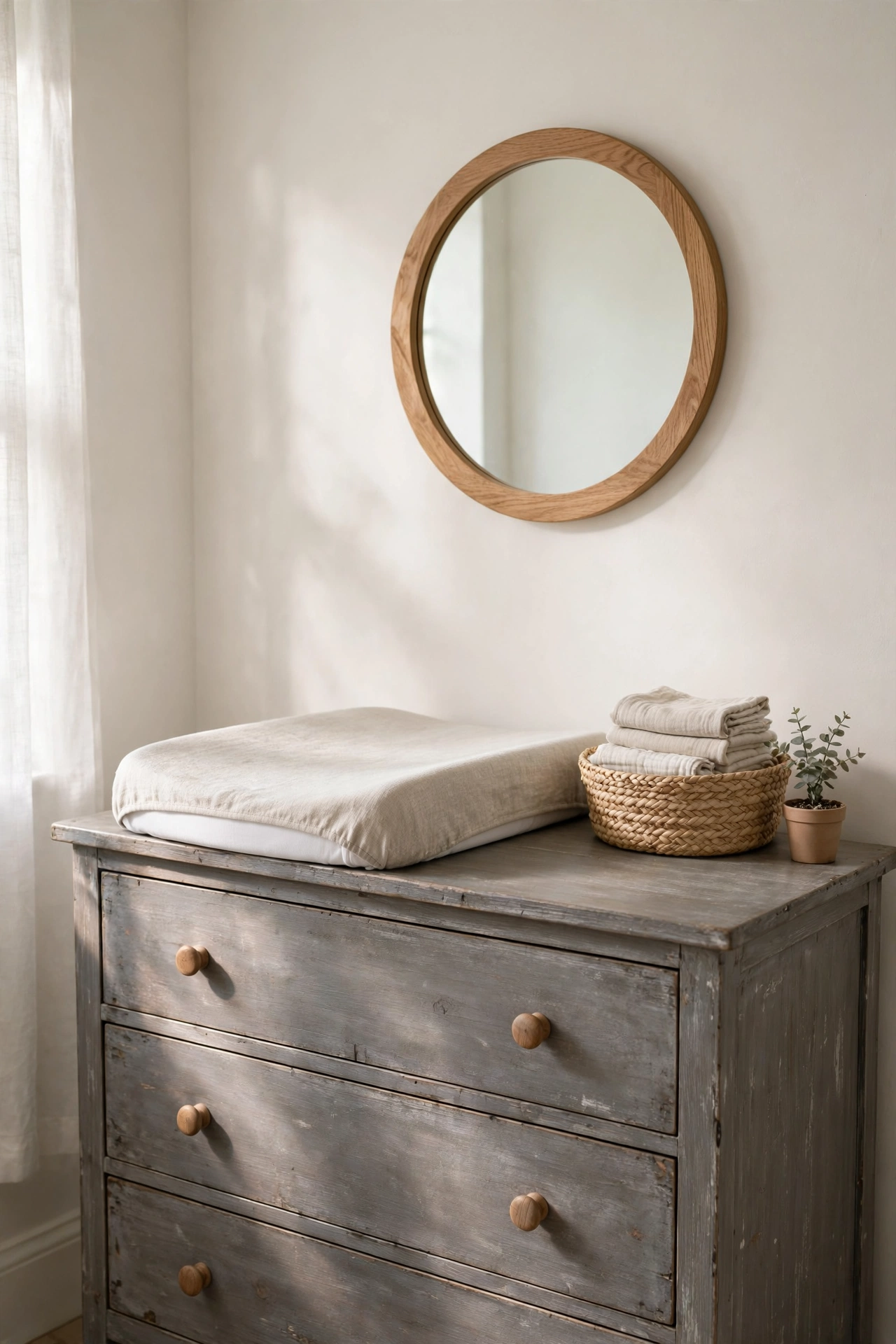
A dedicated changing table is a piece of furniture with a very short career. A beautiful dresser has a long one. Find a dresser in weathered gray wood, the kind that looks like it spent a decade near the sea, and top it with a contoured changing pad in an oatmeal cover. You get all the drawer storage for diapers and onesies, and when the diaper days end you simply lift off the pad and you have a gorgeous dresser for a big kid room. That is furniture thinking ahead.
The weathered finish is doing real design work here. It brings in the driftwood note without any actual driftwood craft projects. Style the top simply. The pad, a small seagrass basket with rolled muslins, and one tiny plant. That is it. A changing station collects clutter faster than any surface in the house, so give everything else a drawer to live in.
9. Driftwood Floating Shelves with Breathing Room
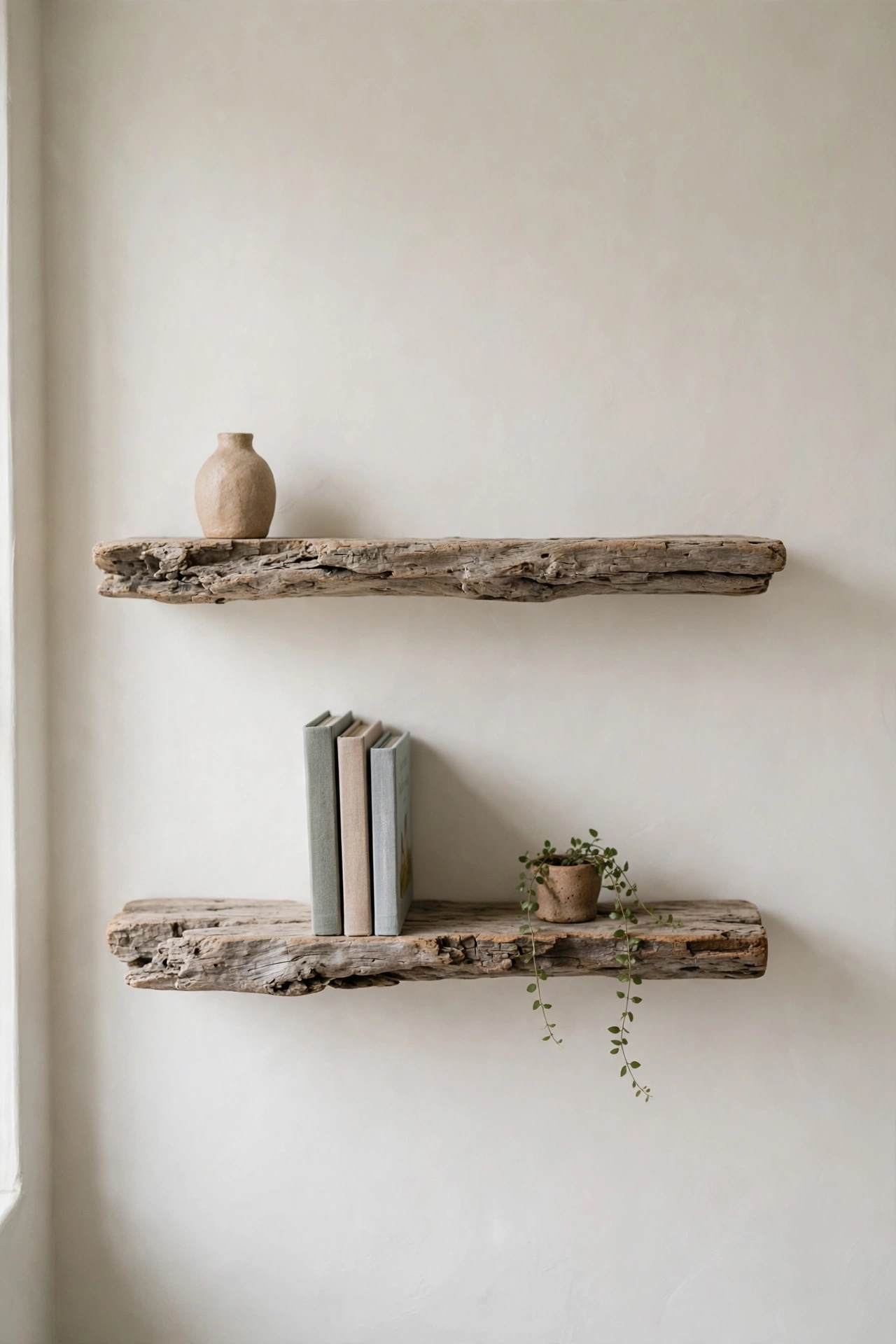
Walls need something, but a nursery does not need a lot. Two driftwood floating shelves are enough. The rough wood brings in that found on the beach texture, and the styling rule is simple. Leave most of the shelf empty. A small handmade vase. Three picture books with their spines out. One tiny plant. Then glorious empty space. Empty space is a design choice, not a failure to decorate. In a small room it is what keeps everything feeling calm instead of crowded.
Hang them at a height where you can reach what you need but a standing toddler cannot grab everything. That is usually higher than your instinct says. And keep the shelves shallow. Deep shelves become clutter caves. A narrow driftwood ledge forces you to curate, which is the whole point.
10. A Reading Nook for the Stories to Come
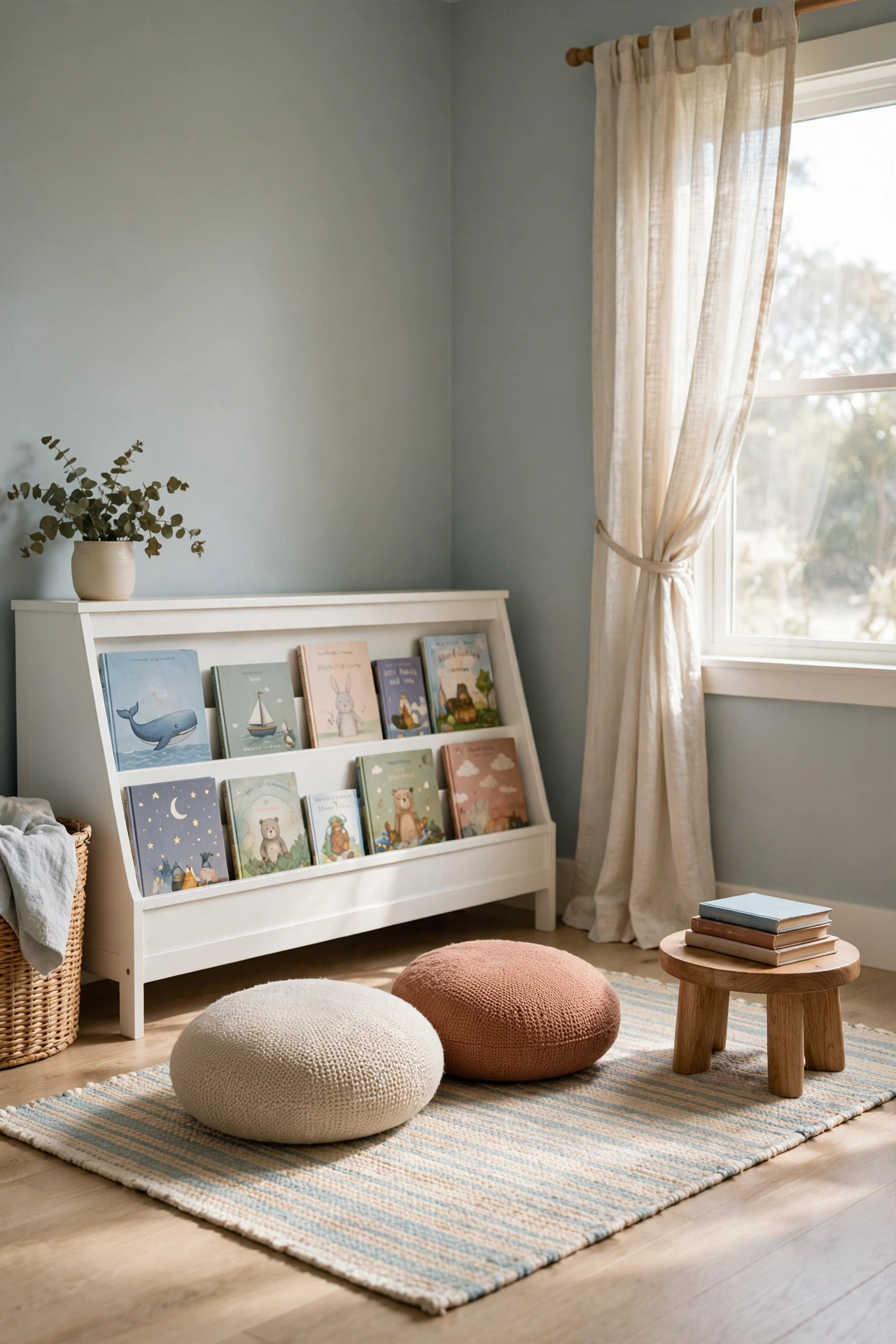
A coastal nursery is not just for sleeping. It is for the slow mornings to come, the board books, the lap sitting. Carve out one corner as a reading nook and the room gains a whole second life. A low white bookcase with books facing out, because babies choose books by their covers. Two round floor cushions in oatmeal and faded rust. A small flatweave rug to define the corner. That is all it takes. It does not need to be big. It needs to be inviting.
Put the nook near the window if you can. Natural light makes reading time feel magical, and the linen curtains are right there doing their golden hour thing. This is also where the room grows with your child. The crib eventually leaves. The reading nook stays, and it becomes the corner where a three year old disappears with a stack of books.
Texture is the color
11. Seagrass Baskets with Lids for the Toy Chaos
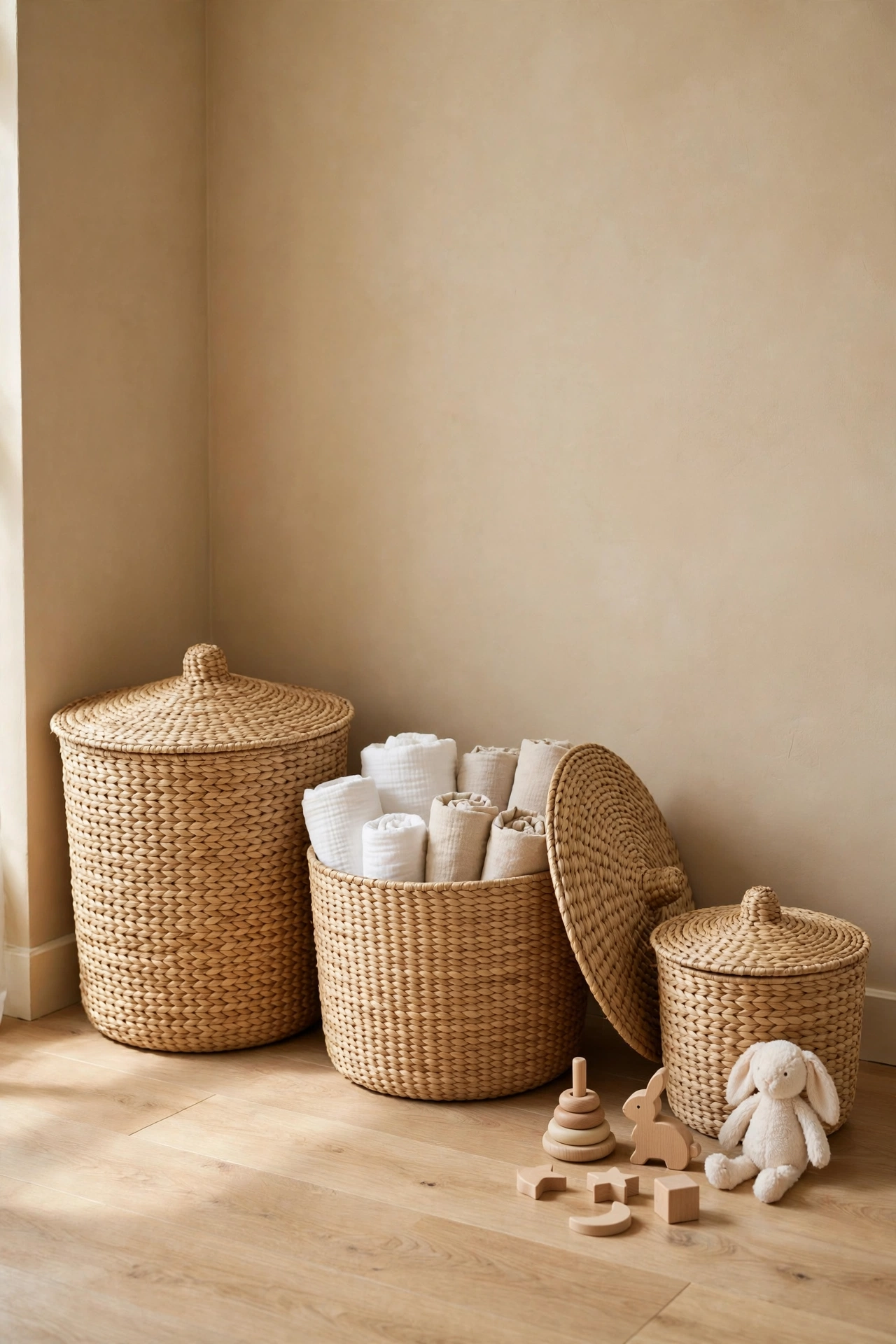
Every nursery has a secret, and the secret is that babies come with an astonishing amount of stuff. Seagrass baskets with lids are how you keep the secret. They hold the toys, the spare sheets, the outgrown clothes waiting to be stored, and they look like decor while they do it. I am a firm believer that storage should be beautiful enough to leave out, because in a nursery there is nowhere to hide it. These baskets are the workhorses dressed in their Sunday best.
Get them in graduated sizes and cluster three together. The lids matter. Open baskets look fine for about a day and then they become visual clutter. Lidded baskets look calm even when they are stuffed to the brim. Use the biggest for toys, the middle for linens, the smallest for the random things that otherwise end up on the dresser.
12. Linen Crib Bedding in Sand and Warm White
Here is my hill to die on. Crib bedding should be simple, soft, and safe, and linen in sand and warm white checks every box. Layer a fitted sheet in warm white, then a light linen blanket in sand folded at the foot for looks during the day. That is it. No bumpers, no pillows, no stuffed animals in the crib. The beauty here comes from the fabric itself, the rumple of washed linen, the way it catches the light. Texture is the color, remember. You do not need a pattern when the material is this good.
Wash everything before the baby arrives so it is soft from day one. Linen gets better with every wash, which is a lovely metaphor for the whole room. And buy two of every sheet. Blowouts do not respect your laundry schedule, and a 3am sheet change is dramatically less miserable when the backup is right there.

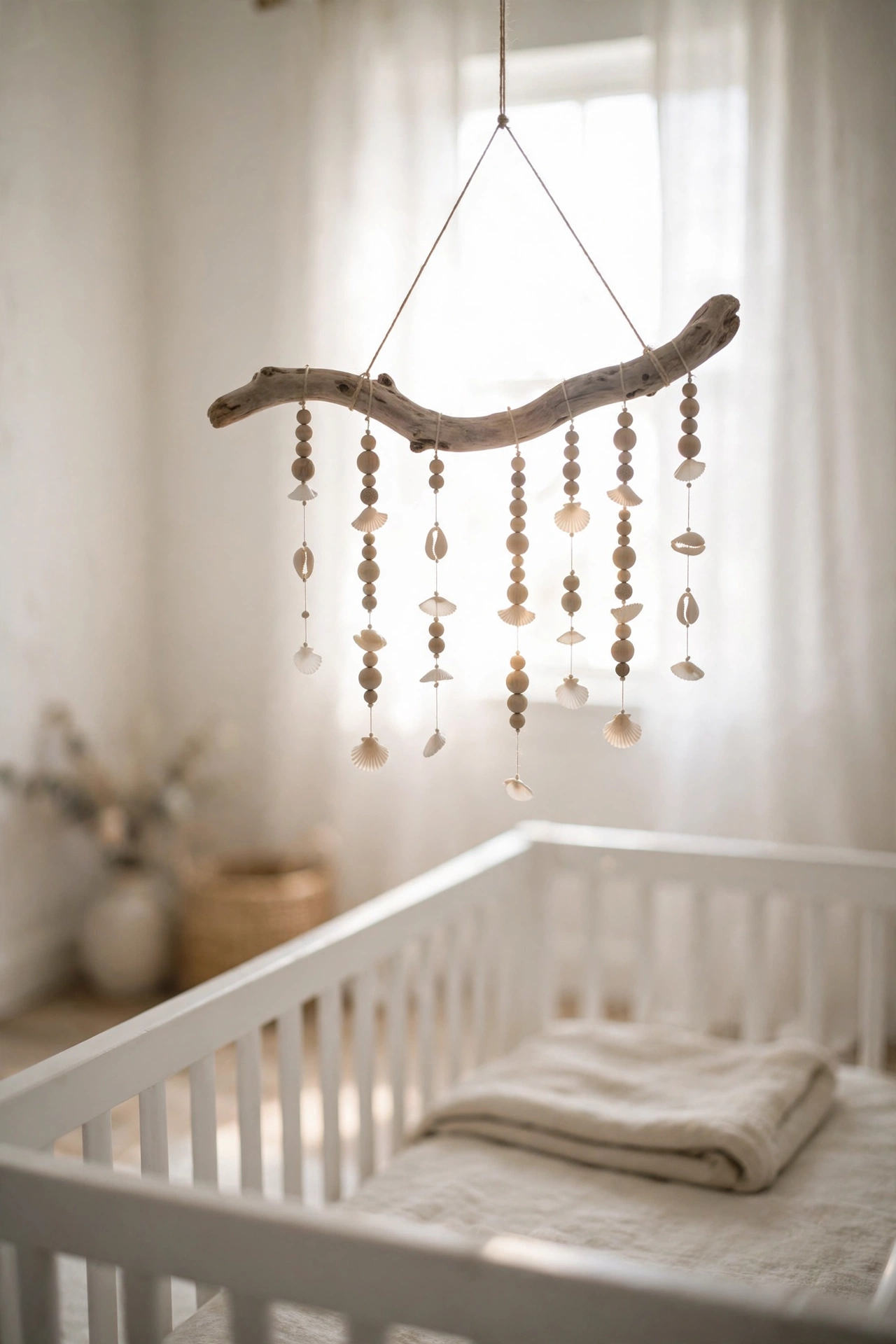
13. A Driftwood and Wooden Bead Mobile
A mobile is the jewelry of the nursery. It hangs in the air and catches the light and gives the baby something dreamy to gaze at. Mine is a curved piece of driftwood strung with wooden beads in oatmeal and sand and a few tiny shell shapes. It moves in the smallest breeze from the window. It is handmade looking without requiring you to actually be crafty, although it is a genuinely easy weekend project if you are.
Hang it over the crib but high enough that it is purely for looking, not for grabbing. About two feet above the rail is the sweet spot. Keep the palette tight. Oatmeal beads, sand beads, natural wood, a few shells. The moment you add bright painted beads it stops being coastal calm and starts being a toy. This one is decor that happens to delight a baby, not the other way around.
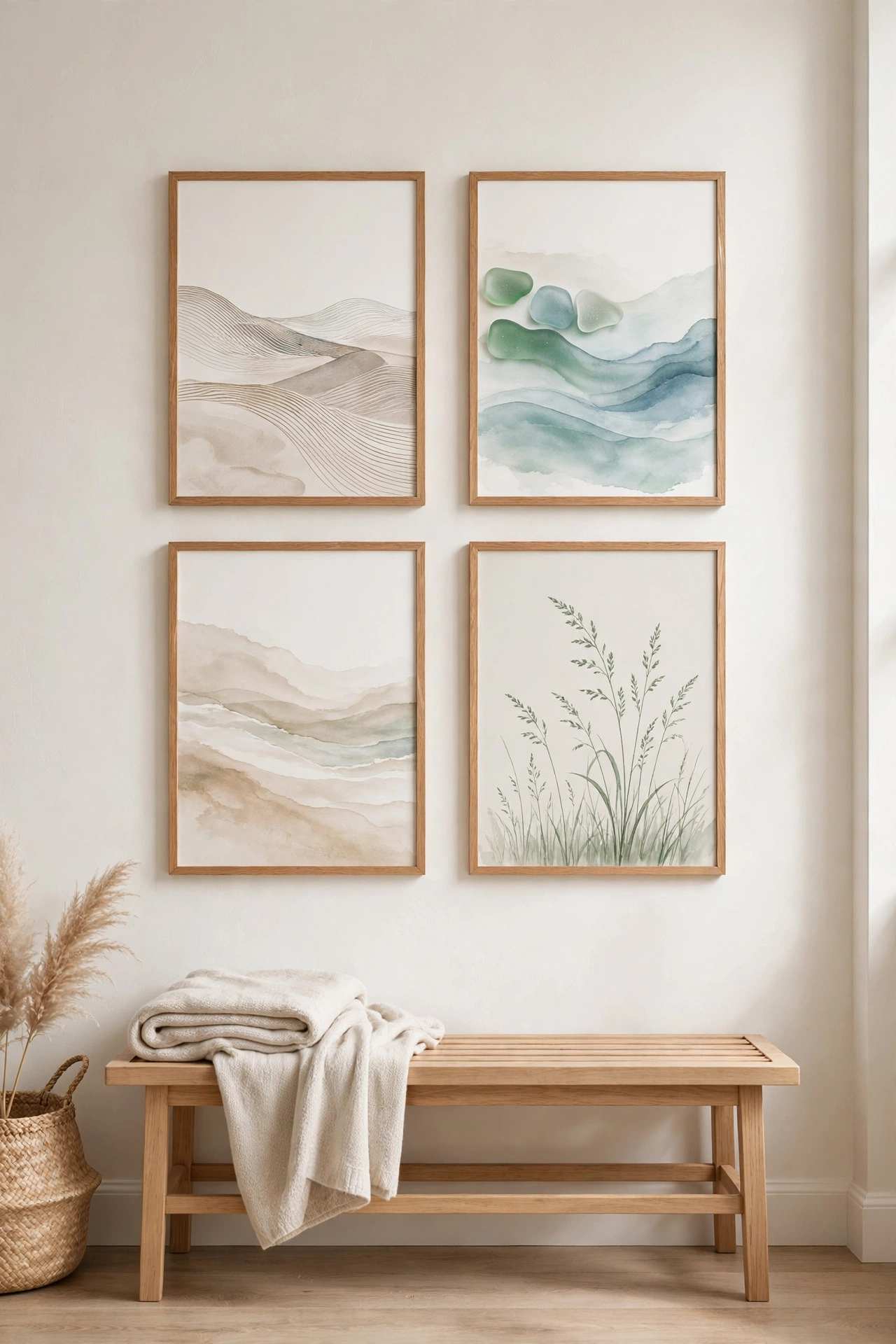
14. A Small Gallery Wall of Muted Coastal Art
Bare walls in a nursery can feel unfinished, but one big piece of art can feel heavy. A small gallery wall is the answer. Four prints in thin oak frames, hung in a loose grid. Abstract dune lines. Soft wave washes in sea glass and sand. A simple study of beach grass. Nothing literal. No lighthouses, no quotes about the sea, no anchors. Remember the principle. Coastal is a feeling, not a theme. The art should feel like the coast the way a deep breath feels like the coast.
Keep the frames identical and thin. Matching frames are what make a gallery wall look intentional instead of random. Hang the center of the grouping at about your eye level, not the baby’s. This art is for you, for all those hours you spend in the glider staring at the walls. Make them worth staring at.
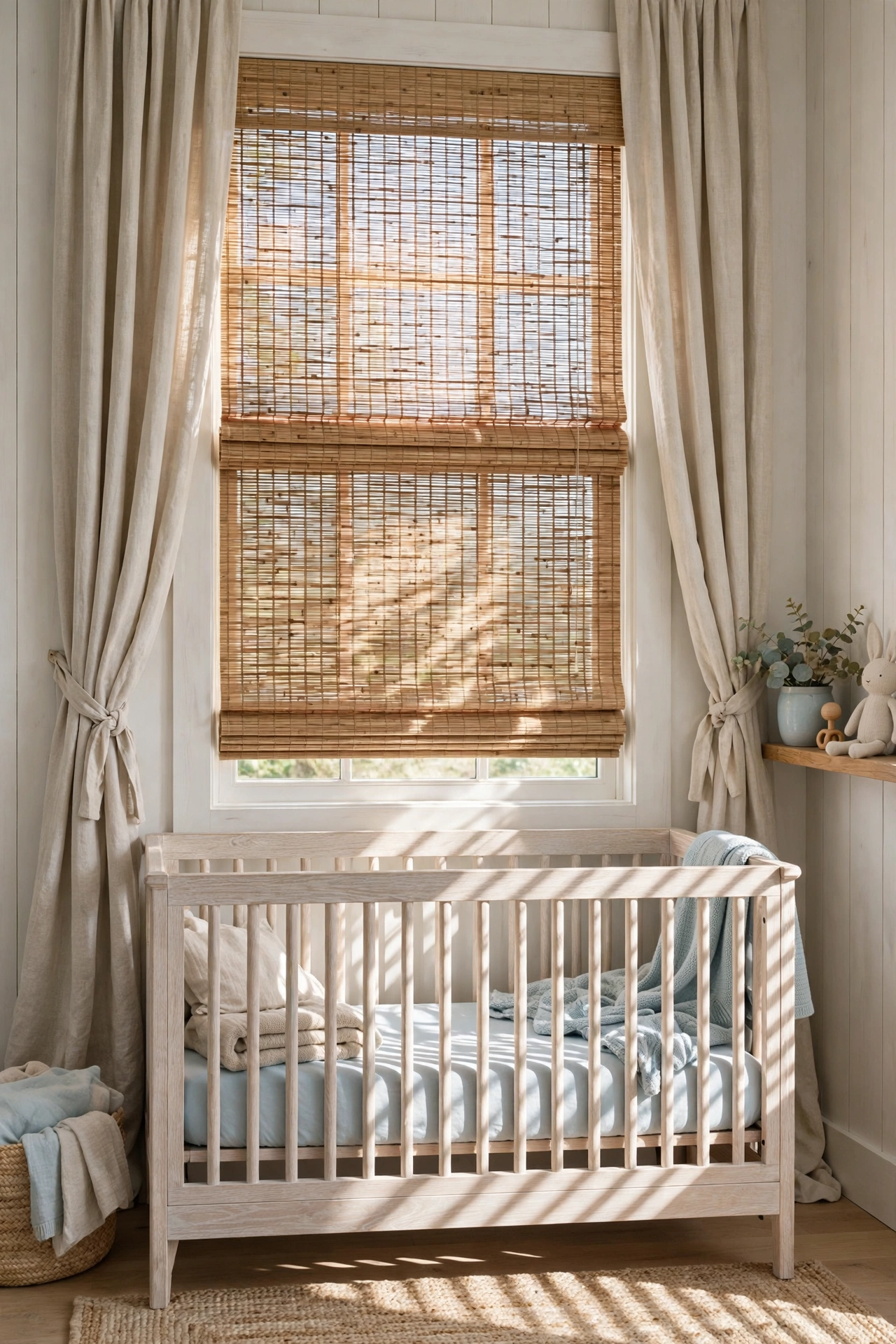
15. Woven Wood Roman Shades Under the Linen
We already have the linen curtains for glow. Now add the practical layer that also happens to be gorgeous. A woven wood roman shade in natural bamboo tones, mounted inside the window frame, half drawn under the linen panels. During the day the light filters through the weave and throws the softest striped shadows across the room. It is one of those details that makes people ask who your designer was. The answer is you, and it took twenty minutes to hang.
The shade gives you light control without a single piece of plastic or vinyl in sight. Every material in this room stays natural, and that consistency is what makes the whole thing feel so calm. Choose a shade with a liner if the window faces the street. Privacy matters, and a lined shade still looks like woven wood from inside.
The finishing touches
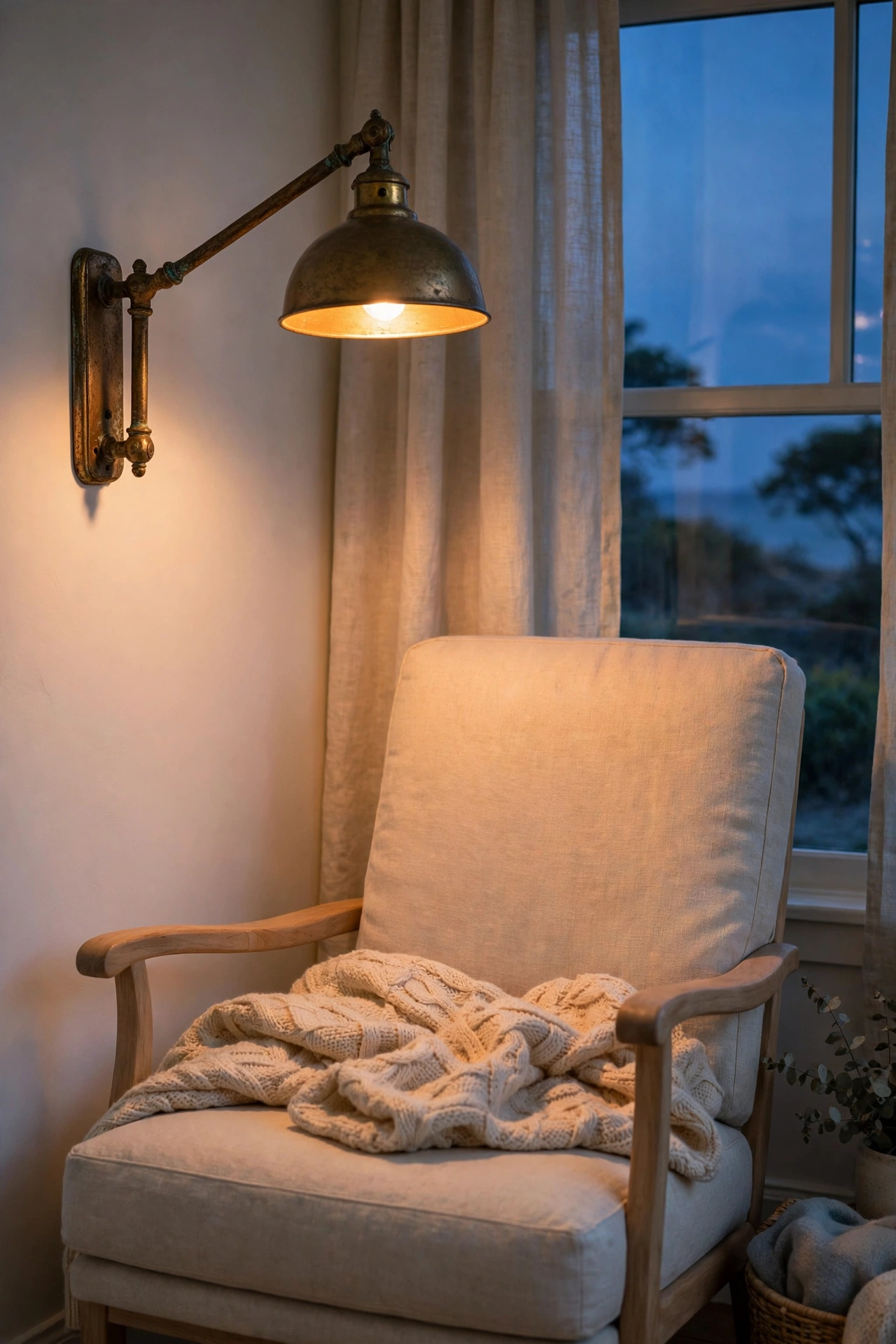
16. An Aged Brass Sconce Beside the Glider
Night feeds need light, but they need the right light. Bright enough to see what you are doing, dim enough that nobody fully wakes up. An aged brass swing arm sconce beside the glider is my favorite solution. Brass against the sand and linen palette is like jewelry on the wall. It catches the daylight beautifully, and at night it throws a small warm pool of light exactly where you need it. The swing arm means you can pull it close or push it away without getting up. When you are holding a sleeping baby, not getting up is everything.
Hardwire it if you can, but a plug in sconce with a cord cover works just as well and rents just fine. Put it on the wall at about shoulder height when you are seated. Too high and it lights the ceiling. Too low and it glares in your eyes. Shoulder height is the sweet spot where the light lands on the baby, not on you.
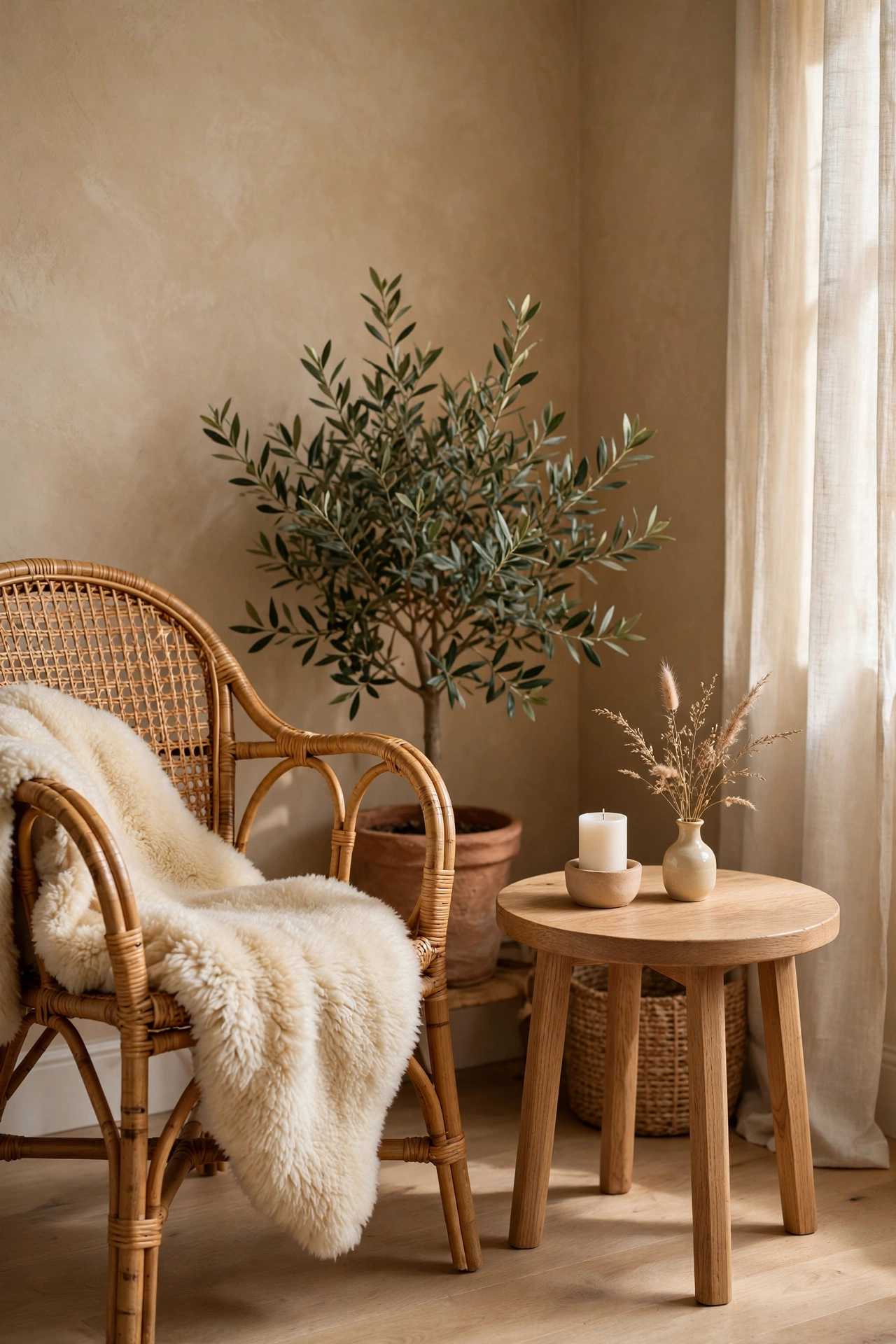
17. A Rattan Chair Draped with a Sheepskin
Every nursery needs a second seat. Not for the baby. For you, for your partner, for grandma who comes to hold the baby while you shower. A bent rattan chair in the corner, with a soft sheepskin thrown over one arm, is the prettiest spare seat I know. It keeps the woven texture story going, it is comfortable enough for real sitting, and when the nursery days are done it moves to a bedroom or a reading corner without missing a beat.
The sheepskin is doing more than looking soft. Draped over the arm it breaks up the rattan visually and adds that touch of luxury that makes a room feel finished. Tuck a small side table beside it with room for a candle and a tiny vase of dried grasses. Now the corner is not just a chair. It is a moment.
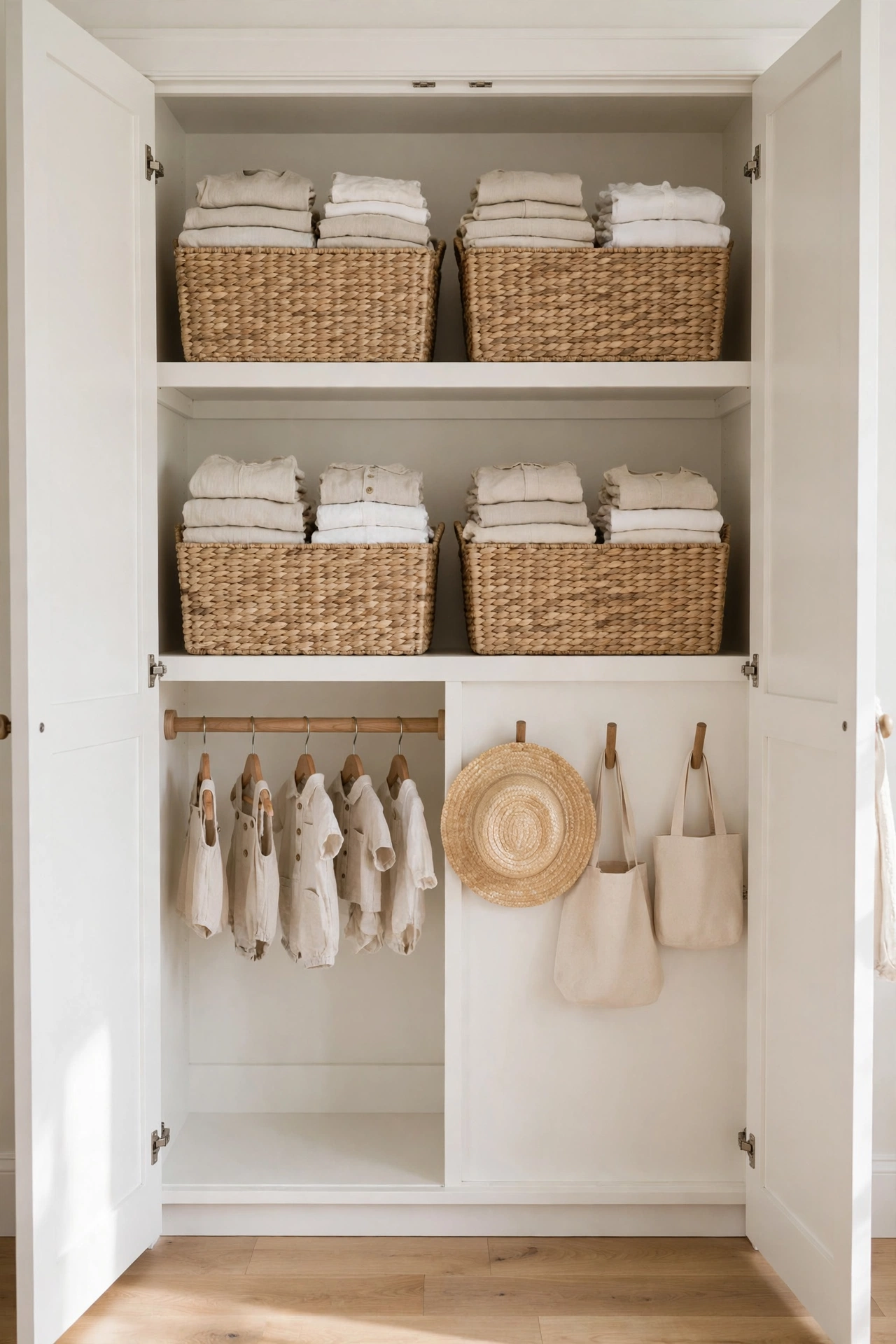
18. An Open Closet Fitted with Woven Bins
Closets in nurseries are usually a sad rod and a dark hole. Ten minutes of intention turns yours into the hardest working storage in the house. Pull the doors off if you can, or leave them open. Add woven seagrass bins on the shelves for folded clothes in oatmeal and white. Hang tiny linen outfits on small hangers at a low height. Put three wooden peg hooks on the inside wall for the sun hat, the diaper bag, and the little canvas tote. Suddenly the closet is part of the room instead of a cave beside it.
The trick is keeping it pretty enough to leave open, because open is what makes a small nursery feel bigger. Matching bins, folded clothes in your palette, tiny hangers all facing the same way. It takes five minutes to maintain and it makes the whole room feel orderly. Every piece earns its floor space, and in the closet every piece earns its shelf space too.
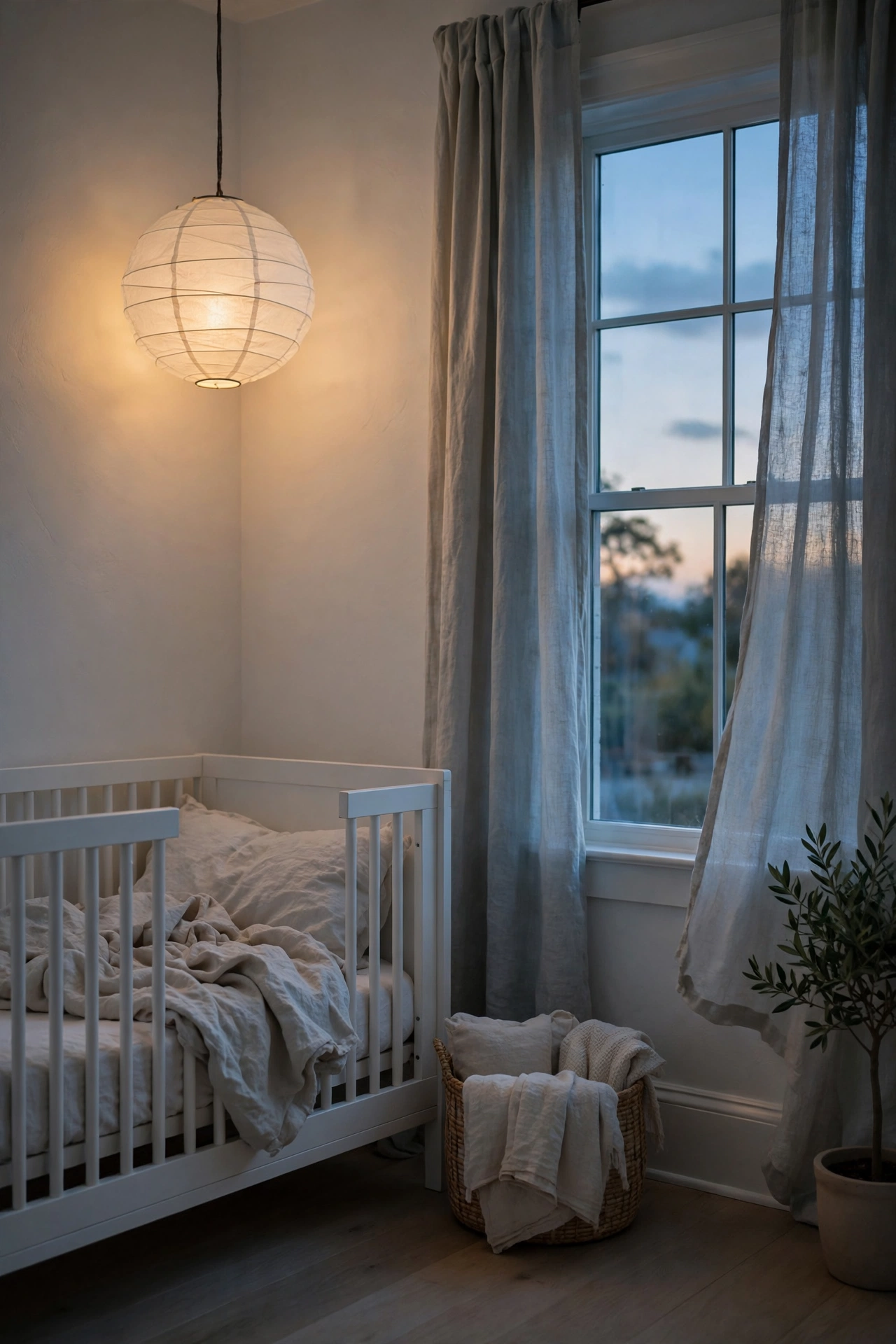
19. The Evening Glow: A Paper Lantern Night Light Ritual
The last idea is not furniture or paint. It is a ritual. Every evening, as the light fades, turn on a single paper globe lantern in the corner of the nursery. That is the signal. The day is done. The room goes soft and golden and hushed. The baby learns what it means faster than you would believe. Light becomes language. Glow means sleep is coming, and the whole room exhales with you.
A paper lantern is perfect for this because the light is diffuse and gentle, never a harsh point. It glows like the moon through fog. Put it on a timer so it fades on by itself at bedtime, one less thing for a tired parent to remember. Pair it with a white noise machine and you have a full sensory bedtime cue. Sound and light, soft and steady, every single night. Rituals are what turn a pretty room into a peaceful one.
More Favorites
This post contains affiliate links. If you buy through them, I may earn a small commission at no extra cost to you.
A few more favorites from the ideas above:


Bring the coast home
You do not need all 19 ideas. Please do not try all 19 at once. Pick the one that made you exhale when you read it. Maybe it is the limewash walls in warm sand. Maybe it is the rattan pendant glowing low at bedtime. Maybe it is simply the permission to leave some empty space on the shelves. Start there.
The formula for a coastal nursery is simpler than it looks. A calm base in warm white and sand. Layers of linen, jute, rattan, and weathered wood for texture. One quiet note of sea glass, never a shout. Light that glows instead of glares. And storage that hides real life behind beautiful weave. Coastal is a feeling, not a theme. Let the light do the decorating. Texture is the color. Every piece earns its floor space. Keep those four ideas in your pocket and you cannot go wrong.
If you want the complete foundation, browse all of our design guides for the palettes and pairings behind this look, and my 19 airy coastal kitchen ideas post shows the same style grown up for the rest of the house.
Start with one quiet wall, one warm light, and one deep breath. The calm will follow.
With love and light
Get Fresh Home Ideas Every Week
Seasonal decor ideas, organizing tips, and cozy home inspiration, straight to your inbox.
More Nursery Ideas You Will Love
Keep browsing for more seasonal inspiration: