
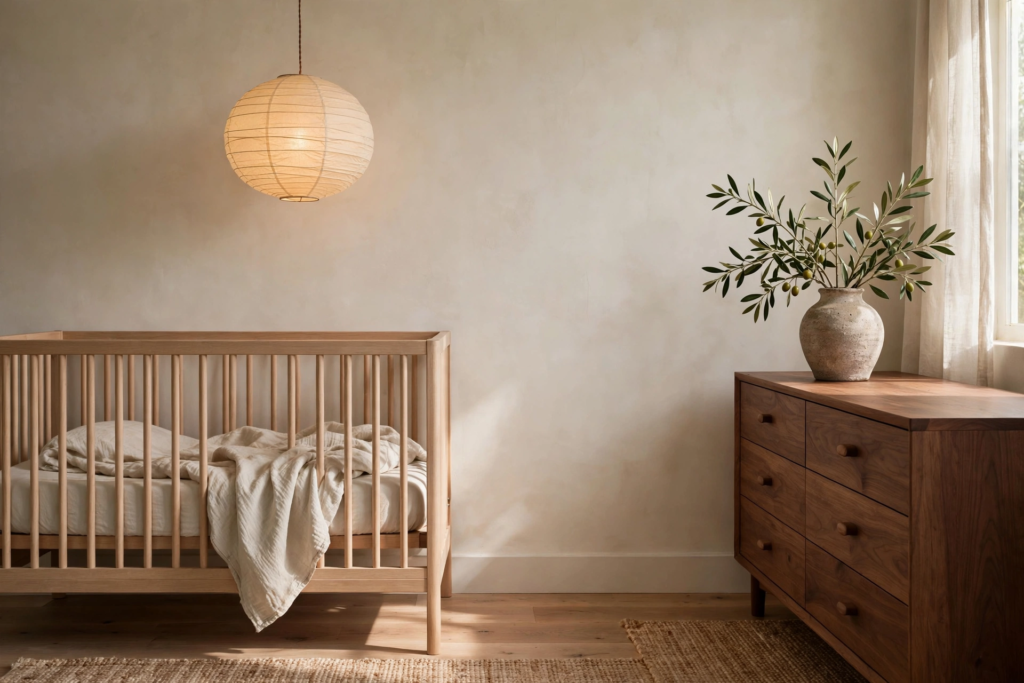
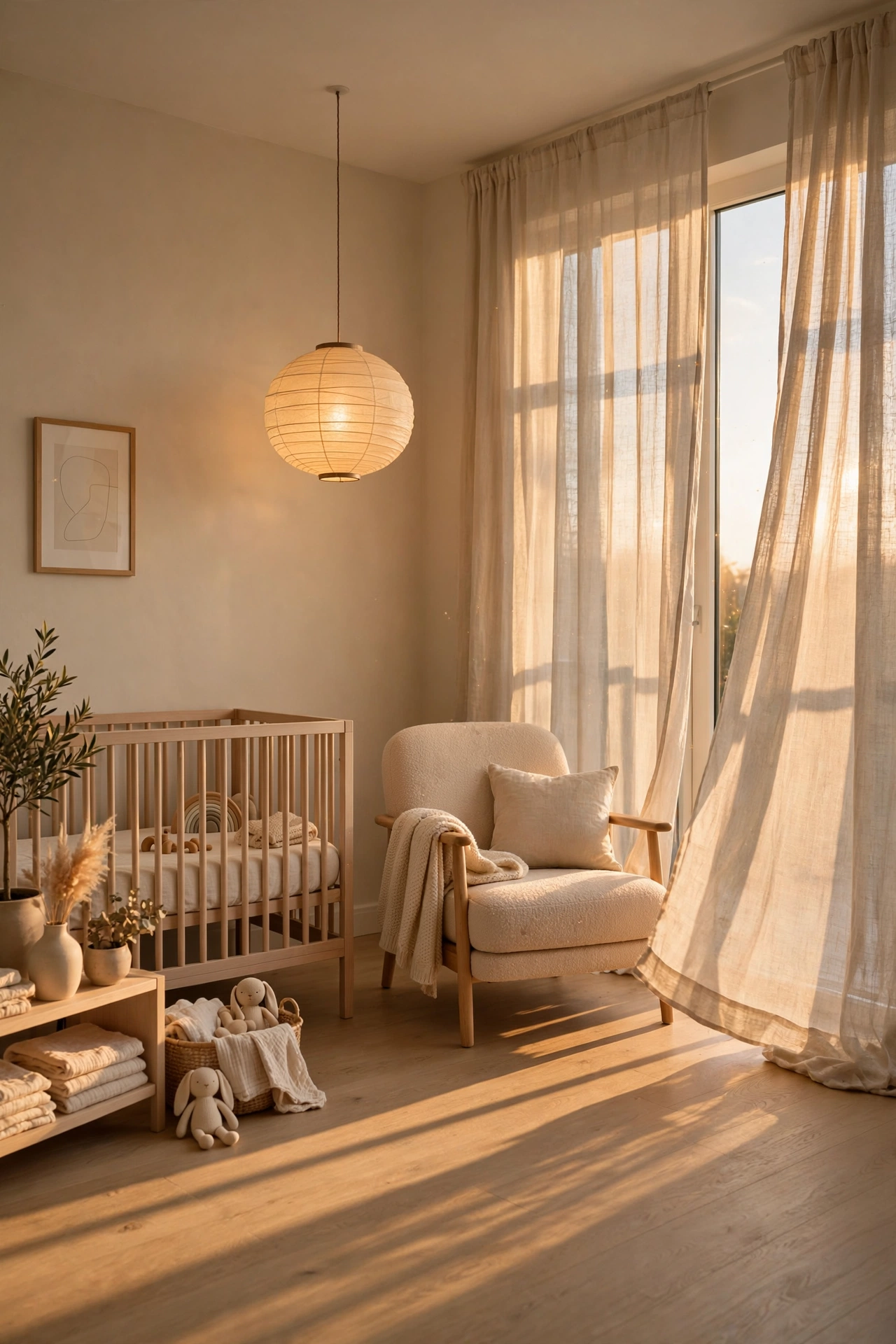
Close your eyes and picture the nursery at eight in the evening. The sun has dropped low and the room is washed in honey colored light. The curtains are linen and they move just a little in the breeze from the window. Somewhere a sound machine hums its soft white noise. The air smells faintly of clean cotton and warm wood. You sit down in the nursing chair and your shoulders drop two full inches. That is the whole goal here. A room that lowers your heart rate the second you walk in.
That feeling has a name and it is having a real moment right now. Japandi. Japanese calm meets Scandinavian warmth. It is the calm minimal nursery trend I keep seeing done right, and when it is done right it never feels cold or stark. It feels like a deep breath. The palette does most of the work. Oatmeal and warm white on the big surfaces. Light oak and walnut for the wood. Then small warm notes. Camel. Rust. Olive. A little chocolate brown. Brass where it catches the light. Warm minimalism, not cold minimalism. That is principle one, and it guides every single idea below.
I put together 19 ideas that build this room from the walls outward. Some are weekend projects. Some are one beautiful purchase that changes everything. Every one of them follows the same quiet rules. Every piece earns its place. Let the wood do the talking. And if you want the full foundation first, my Japandi Nursery design guide walks through the palette, the materials, and the pairings that make this style work.
Let us start with the shell of the room, because calm starts with the walls, the light, and the floors.
Love these ideas? Get more every week.
Join the newsletter for seasonal decor and cozy home inspiration.
The shell: walls, light, and floors
Before you buy a single thing, look at the envelope of the room. Japandi nurseries feel calm because the big surfaces are quiet. Soft walls. Pale floors. Light that glows instead of glares. Get this part right and almost everything you add afterward will just work. Empty space is a feature, not a flaw. That is principle two, and the shell is where it lives.
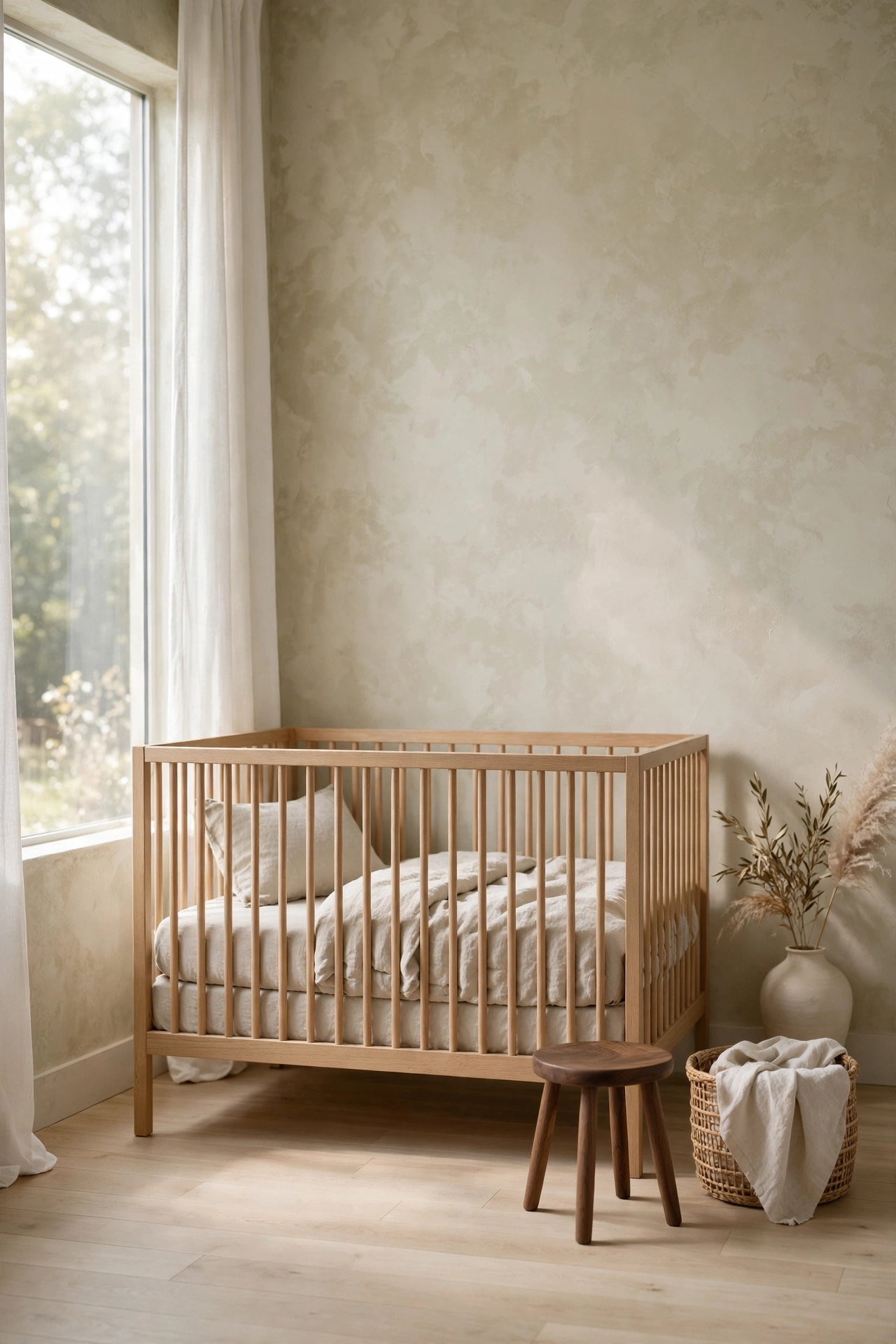
1. Limewash Walls in Warm Oatmeal
Flat white walls bounce light around in a way that can feel a little clinical, especially in a small room. Limewash fixes that in one weekend. The finish has this soft movement to it, like plaster that was touched by hand, and in a warm oatmeal tone it makes the whole nursery glow without any paint color shouting for attention. I did this in a client nursery last spring and she texted me three separate times just to say the walls made her happy. That is the power of texture over color.
Pick a limewash in oatmeal, warm greige, or pale clay. Keep the ceiling a simple warm white so the room still feels tall. One tip from experience. Do your test patch on the wall that gets the evening light, because that is when you will be in this room most, and limewash shifts beautifully as the light changes.
Shop This Look
This post contains affiliate links. If you buy through them, I may earn a small commission at no extra cost to you.
A few favorites featured in the ideas above:


2. The Low Floor Bed in Light Oak
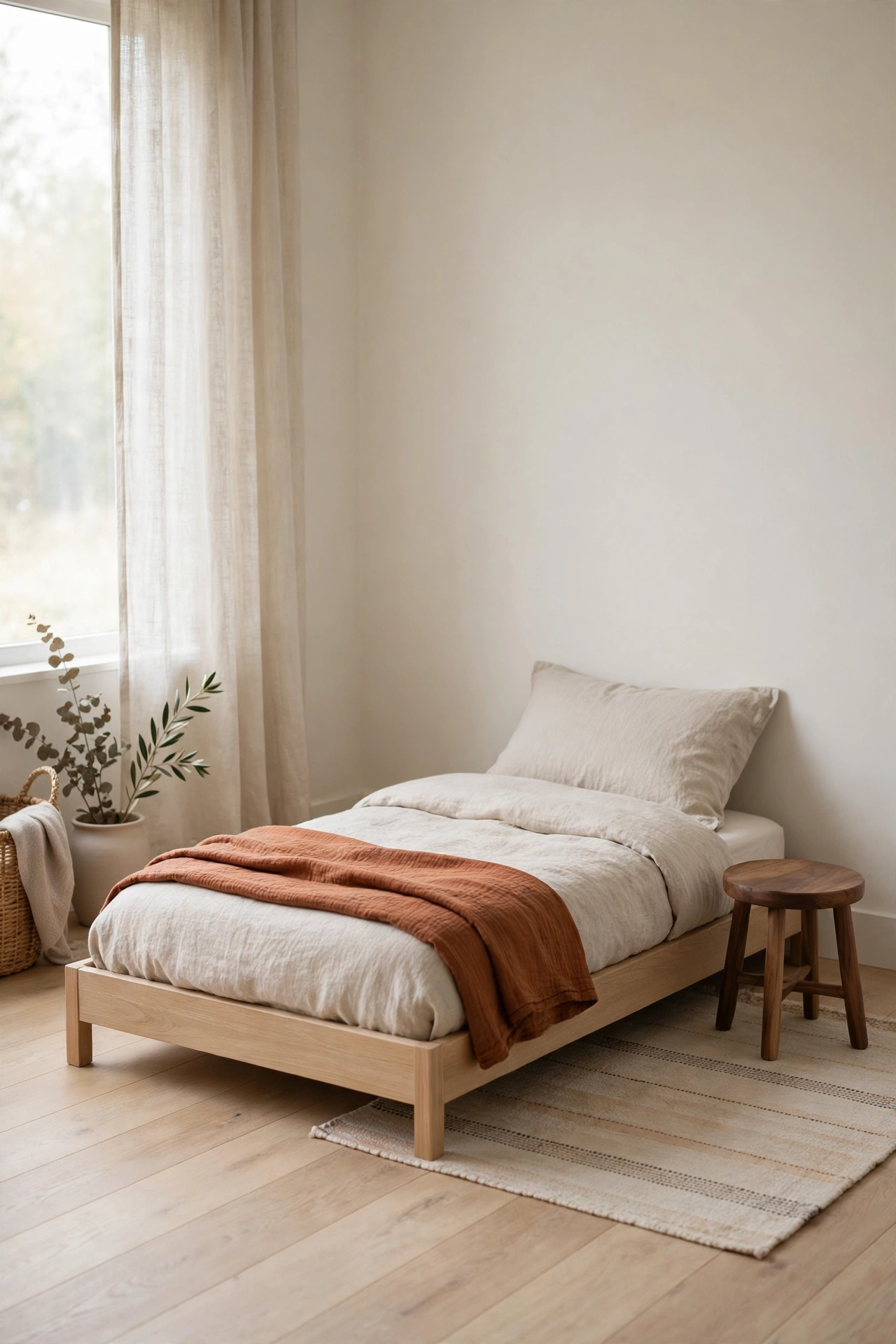
There is something deeply calming about a bed that sits close to the ground. It is a Montessori idea at heart, but it is also pure Japandi. Low furniture makes a room feel wider and quieter, and a simple light oak floor bed turns the crib zone into the calmest corner of the house. No tall rails. No visual clutter. Just a clean oak frame, an oatmeal fitted sheet, and a small pillow that will mostly be decorative until your little one is older.
What I love is how it grows with your child. Toddlers can climb in and out on their own, which means fewer 5am wakeup calls for you. Style it with one folded muslin blanket at the foot and nothing else. Let the wood do the talking. That is principle three, and a beautiful oak frame needs no help.
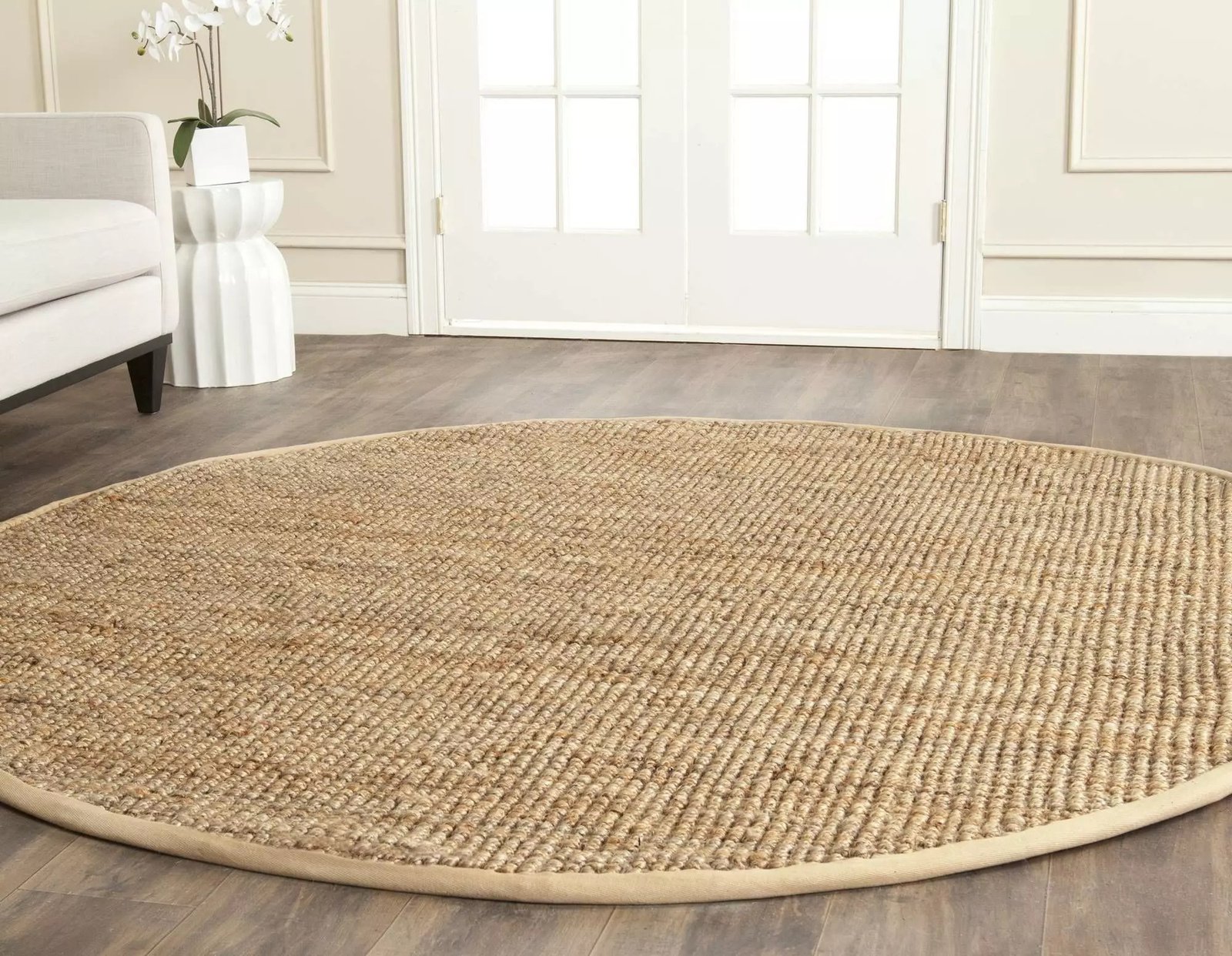
3. A Round Jute Rug Over Pale Floors
Every calm nursery needs one soft landing spot, and a round jute rug is the Japandi answer. The circle shape keeps the room feeling gentle with no hard corners, and the natural fiber adds exactly the kind of texture this style runs on. I like a five foot round centered under the nursing chair or beside the crib, big enough for little knees during tummy time and pretty enough to anchor the whole room.
Layering matters here. A jute rug directly on pale oak floors is the classic move. If your floors run dark, put a large flat weave cotton rug in oatmeal underneath first, then the jute on top. The double layer reads as intentional and it is so much softer underfoot at 3am. The SAFAVIEH natural fiber round is the one I keep recommending. Handmade, beautifully textured, and the natural brown tone sits perfectly in this palette.
4. Linen Curtains That Glow
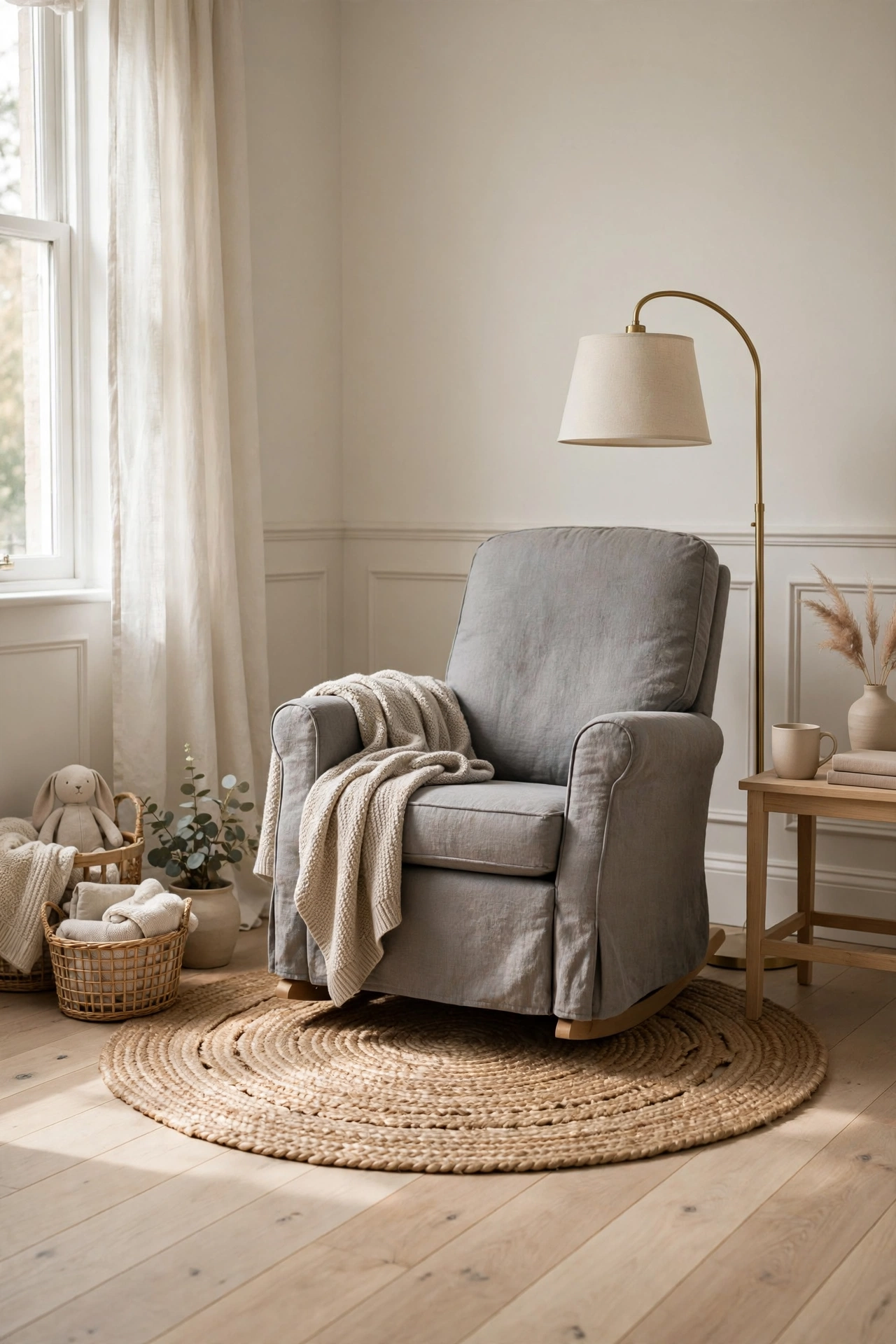
Light is everything in a Japandi nursery, and linen curtains are how you make it beautiful. When daylight filters through oatmeal linen, the whole room fills with this soft diffused glow that no lamp can copy. It is the difference between a room that is lit and a room that glows. Hang them high and wide so the window looks bigger, and let them kiss the floor just barely.
Here is the practical part. Nurseries need real darkness for naps, so layer a blackout liner behind the linen. You get the glowing daytime look and a properly dark room at noon. Choose a warm white or oatmeal linen, never a bright optic white, which can look harsh against the warm woods. The linen texture is doing quiet work here. Wrinkles and all, it is perfect.
5. A Paper Lantern Pendant
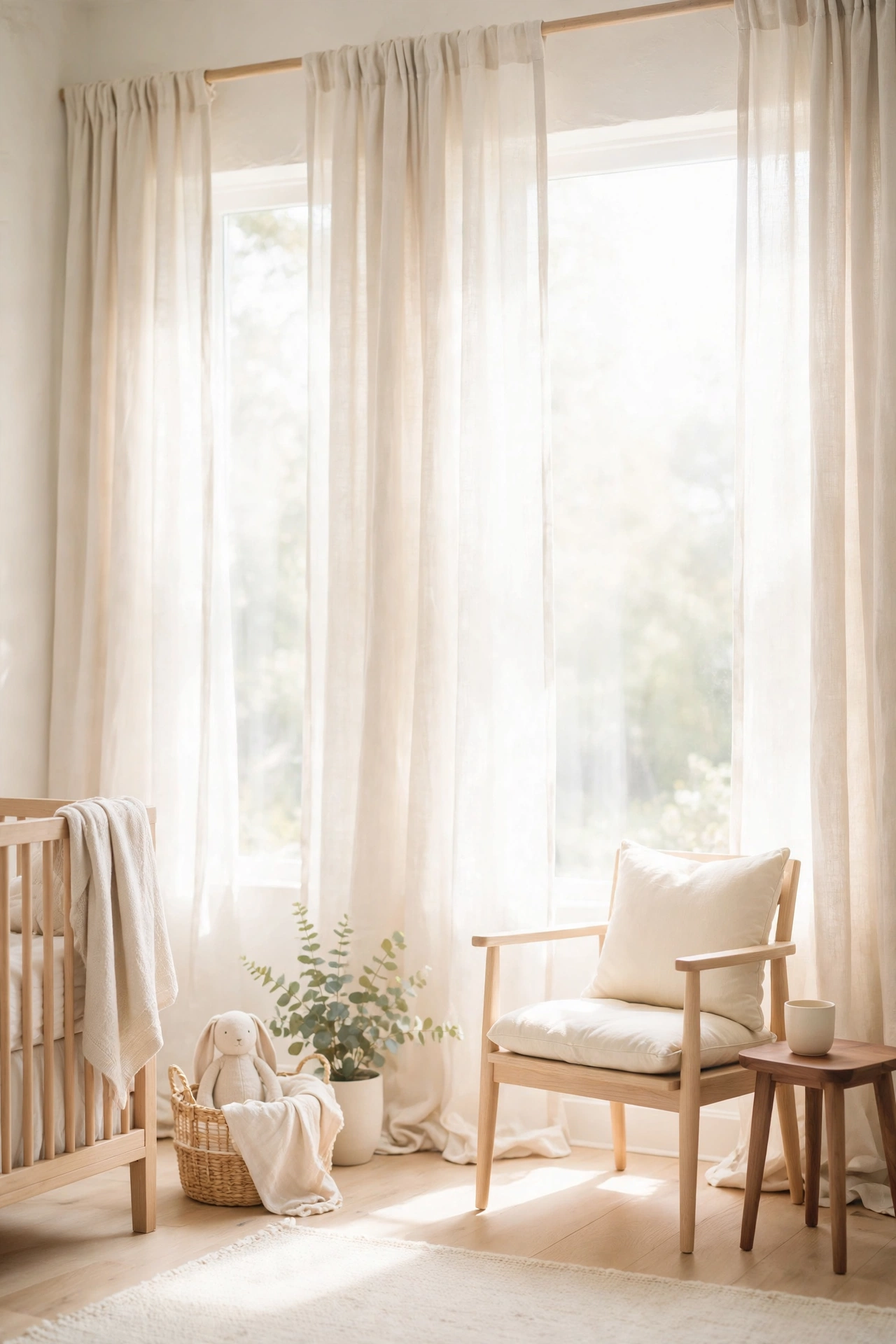
Overhead lighting in a nursery should never be a harsh ceiling fixture blasting down. A washi paper lantern pendant gives you the opposite. Soft, warm, diffused light that makes the whole ceiling glow gently. It is one of those Japanese design moves that instantly calms a room, and it costs less than almost anything else on this list. Hang it low over the nursing corner, not centered in the room, so the light pools where you actually sit.
I am opinionated about the shape. A simple globe or a soft oval reads timeless. The ribbed accordion styles can veer a little trendy. Keep the bulb warm, 2700K or lower, and put it on a dimmer if you can. At bedtime you want a faint moon glow, not a spotlight. This one small change does more for the evening mood than any decor you could buy.
The quiet corner: feeding, reading, rest
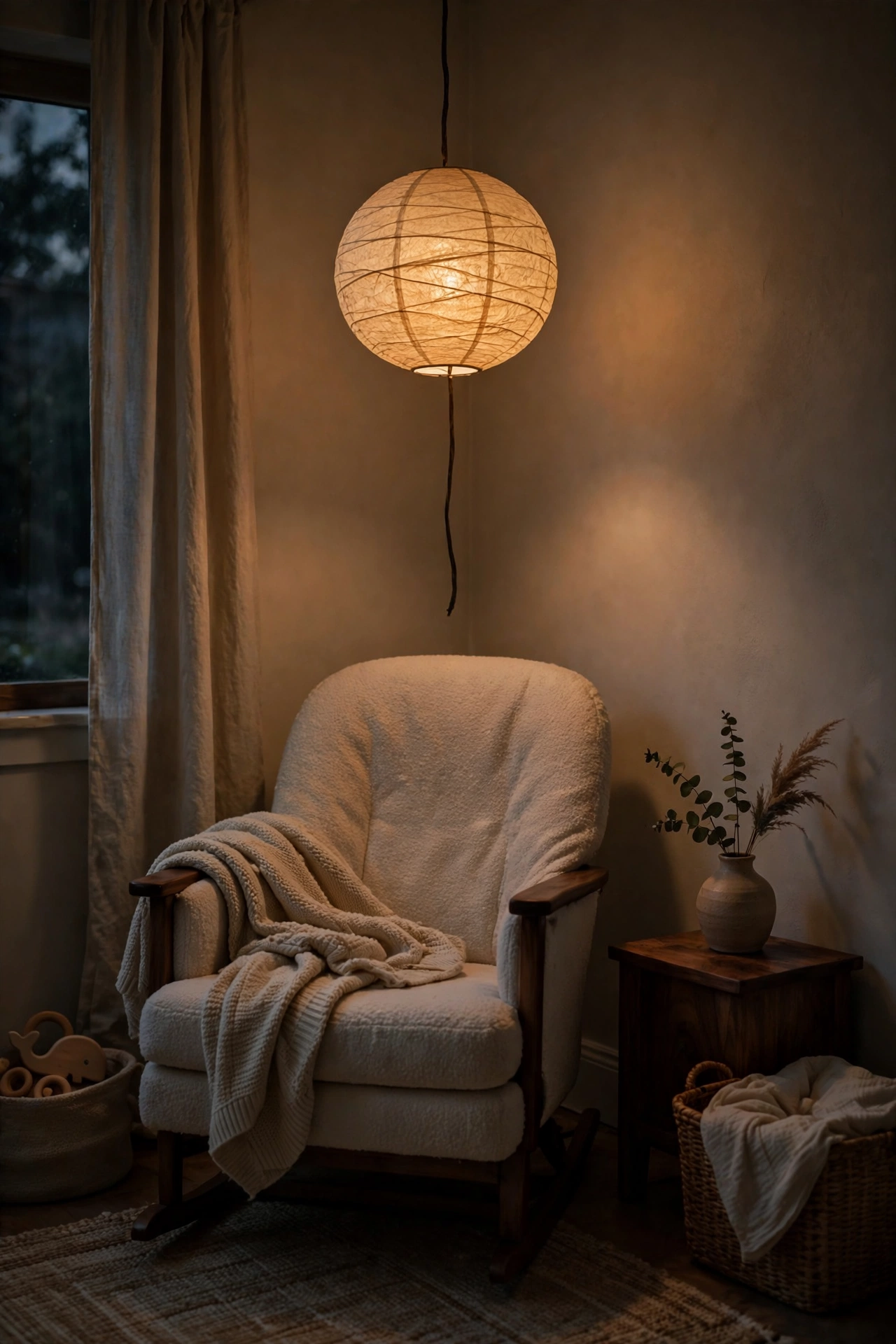
Every nursery has one chair where life actually happens. The 2am feeds. The bedtime stories. The quiet rocking while the rest of the house sleeps. In a Japandi nursery this corner gets the best light, the softest textures, and the fewest objects. It is a small ritual space, so treat it like one.
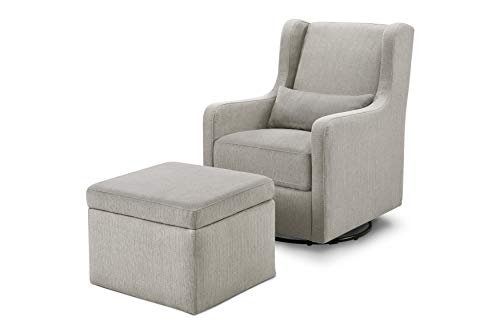
6. The Nursing Chair Worth Sitting In
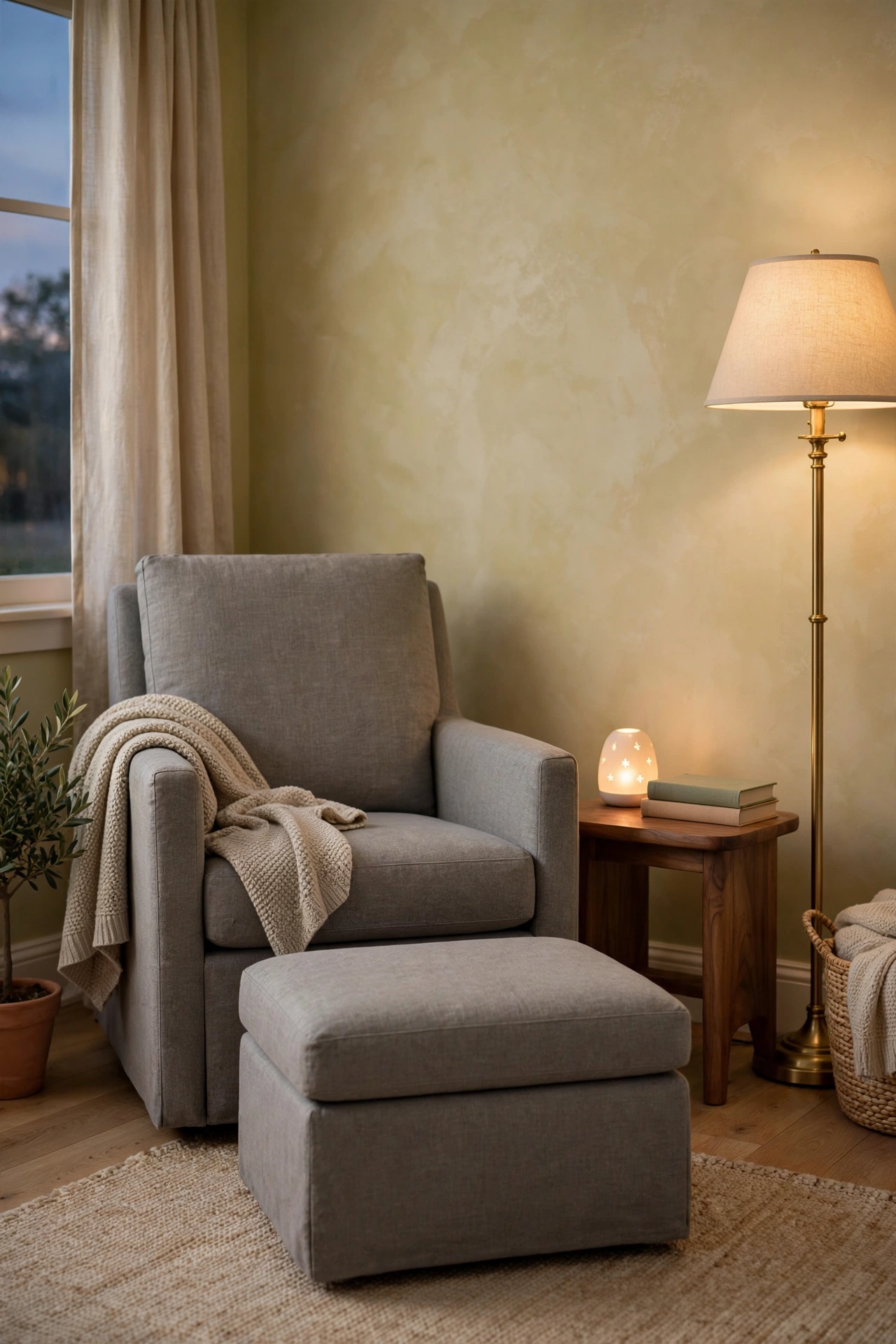
Let us be honest. You will spend hundreds of hours in this chair. It should be the most comfortable seat in your house, not an afterthought. For a Japandi nursery I love a glider with clean lines in a warm neutral. The Carter’s by DaVinci Adrian in grey linen is a workhorse. It swivels, it glides, the ottoman stores the spare swaddles, and the fabric wipes clean, which matters more than any design blog will admit.
Drape one oatmeal throw over the arm and add a small lumbar pillow in rust or olive for that one warm note. Keep a Boppy pillow nearby for the early months. It tucks right into the chair and saves your shoulders. Every piece earns its place. That is principle four, and in this corner every piece is working hard.
7. Sound and Light, Kept Simple
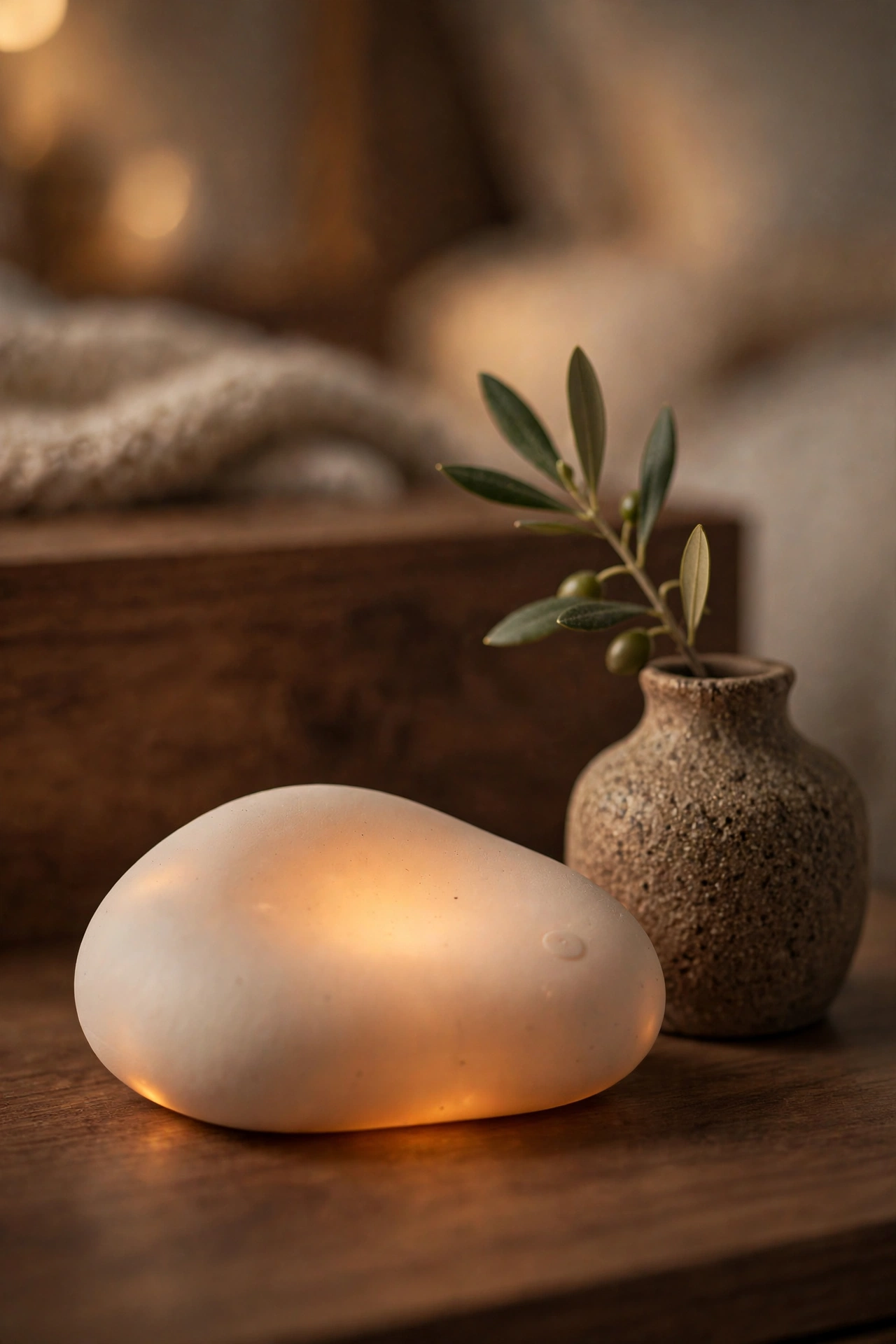
A nursery at night runs on two things. Soft sound and softer light. One good device can handle both, and keeping it to one device is very Japandi. The Hatch Rest is the classic for a reason. Warm glowing light you control from your phone, white noise that actually stays on all night, and a design that looks like a small ceramic pebble instead of a gadget. It sits on the nightstand and disappears into the room.
If you want a step up, the Nanit Sound and Light adds cry detection and temperature tracking in the same minimal shape. Either way, the rule is the same. One device, warm light only, and no bright screens glowing in the corner. Your future self, stumbling in at 3am, will thank you for the restraint.
8. One Big Piece of Art
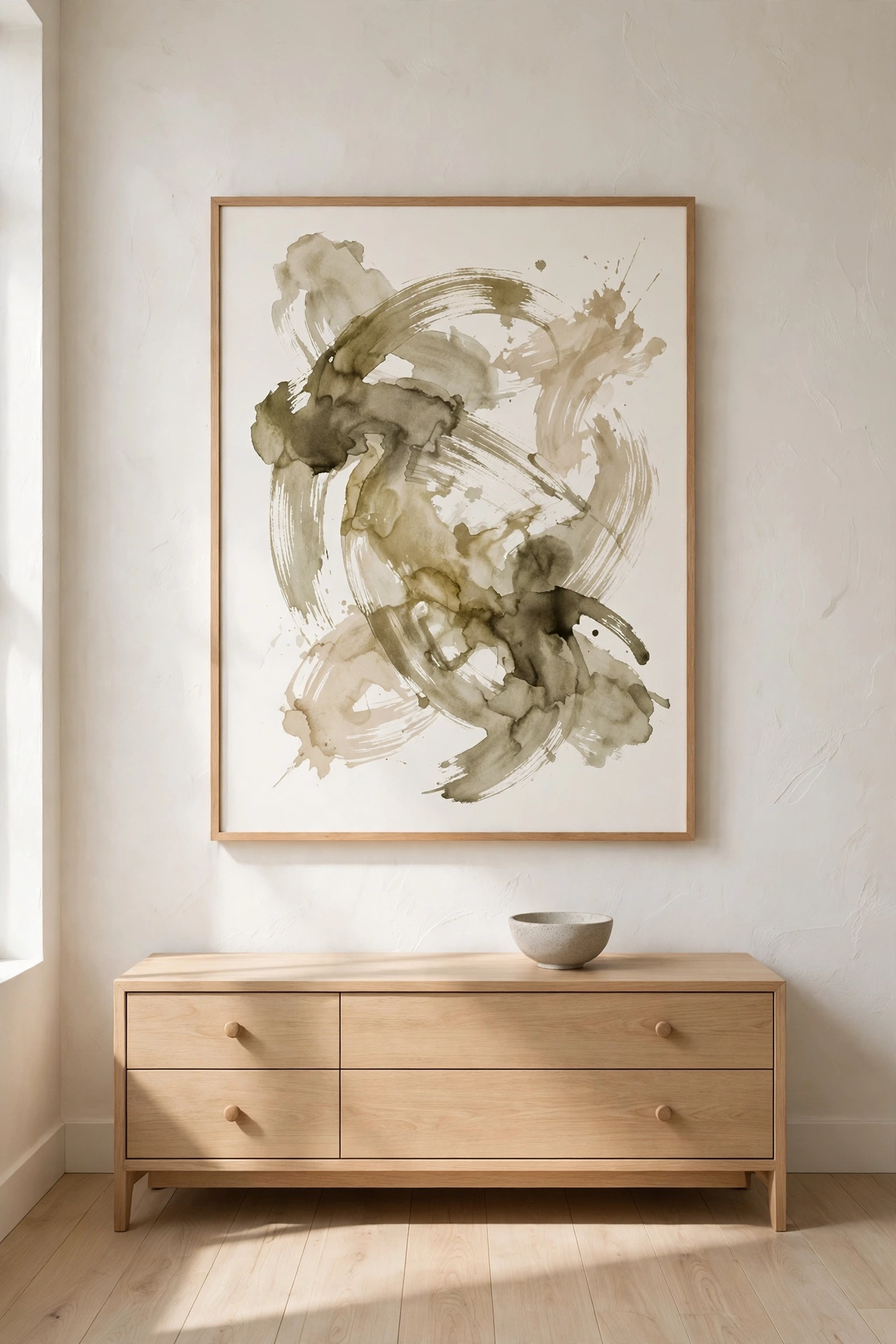
Japandi walls stay mostly bare, which means the one piece of art you hang carries real weight. Go big and go simple. A single large framed print, an abstract ink brushstroke, a soft landscape in oatmeal and olive, hung above the dresser or the nursing chair. One strong quiet moment beats a gallery wall of small frames every time in this style.
I like art with visible texture here. A print on handmade paper, a canvas with soft brushwork, even a simple line drawing of a branch. Keep the frame light oak or thin black, and hang it so the center sits at your eye level when you are seated in the nursing chair. That is who the art is really for.
9. The Low Book Ledge
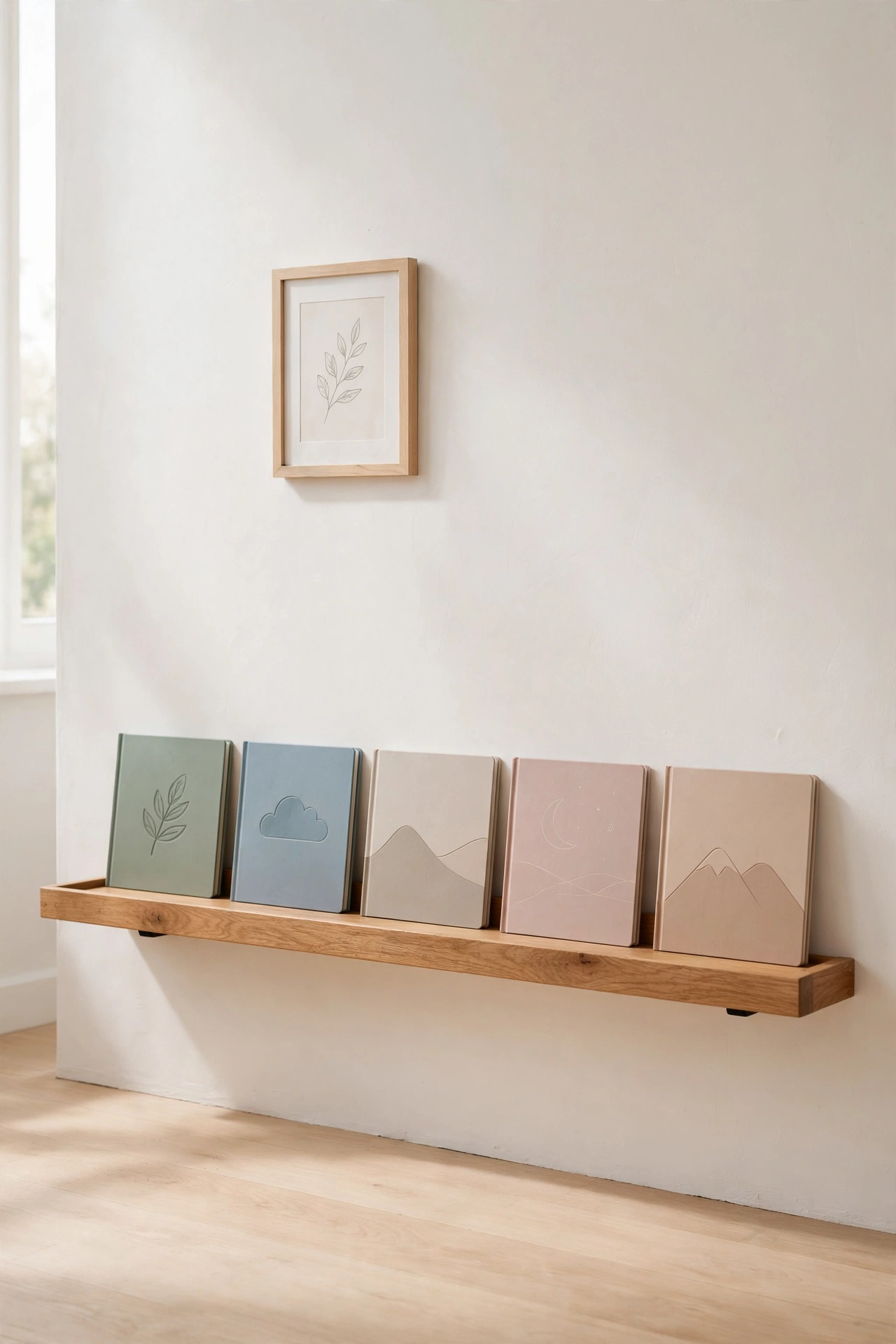
Books are decor in a nursery, so display them like it. A low oak book ledge at toddler height turns a few picture books into a rotating art installation. The covers face out, the colors stay muted if you curate them, and your little one can choose their own bedtime story, which is a lovely bit of independence to build into the room.
Keep five or six books on the ledge at a time. Rotate them monthly. It keeps the display fresh and it keeps the shelf from turning into clutter, which is the eternal nursery battle. A second ledge above the first gives you room for a small ceramic object or a tiny framed print. Just one. Remember the rule. Empty space is a feature, not a flaw.
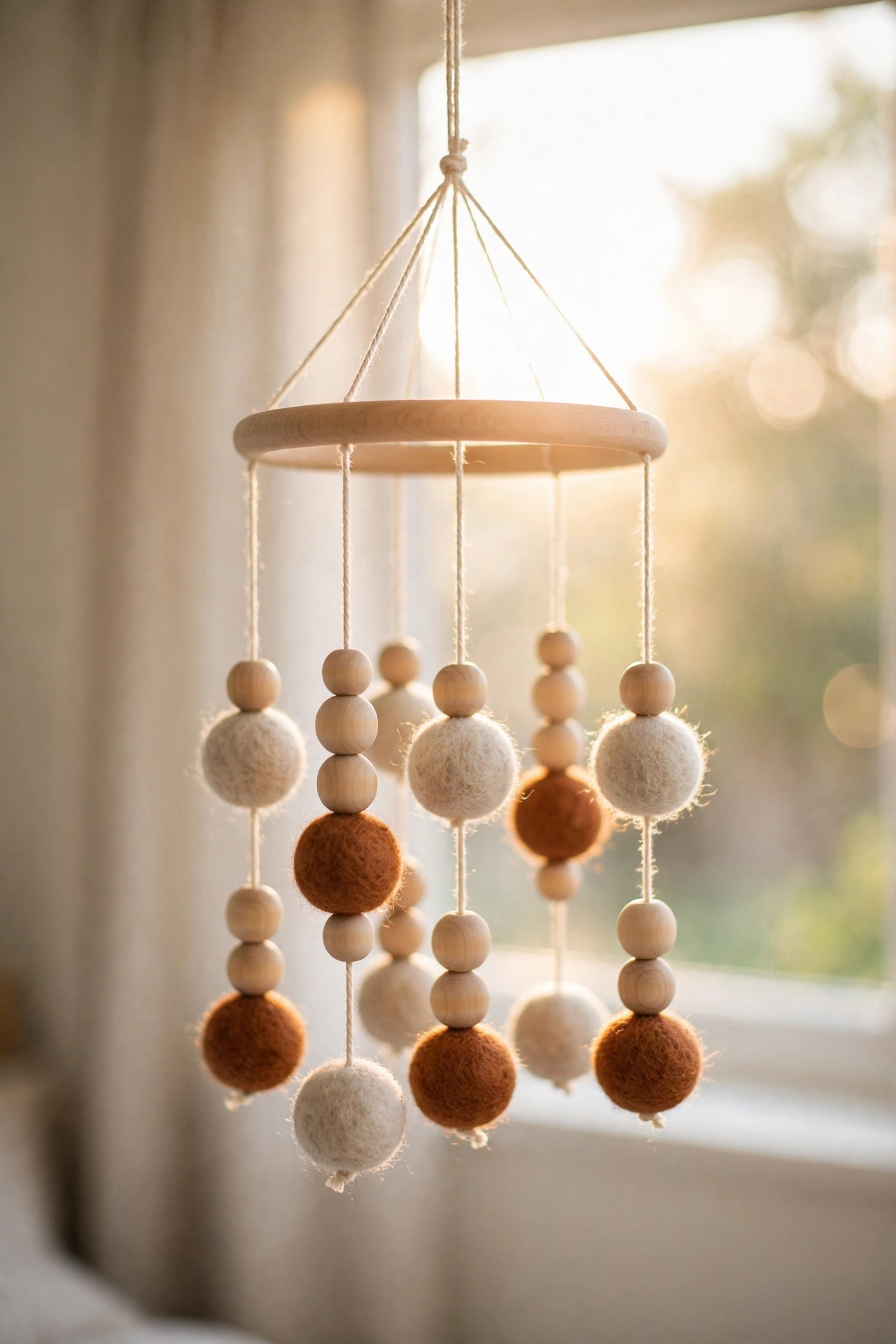
10. A Mobile That Moves Like Breath
A crib mobile in a Japandi nursery should feel like a whisper. Natural wood beads, small felt balls in oatmeal and rust, a few linen shapes, all hanging from a simple wooden ring. It turns slowly in the air from the window and catches the light. No plastic. No bright primary colors. No music box blaring tinny lullabies unless you wind it yourself.
Hang it where your baby can see it from the crib but not grab it, and keep it simple enough that it reads as sculpture when the baby outgrows it. Some of the prettiest mobiles I have seen were handmade from a wooden embroidery hoop, undyed wool felt, and cotton string. An afternoon project that costs almost nothing and looks like it came from a boutique.
Storage that disappears
Here is the secret of every calm nursery you have ever admired on the internet. The clutter is hidden. Diapers, wipes, creams, spare sheets, the seventeen muslins. It all has a home behind closed doors or inside beautiful baskets. Japandi storage is honest about real life. It just refuses to look at it.
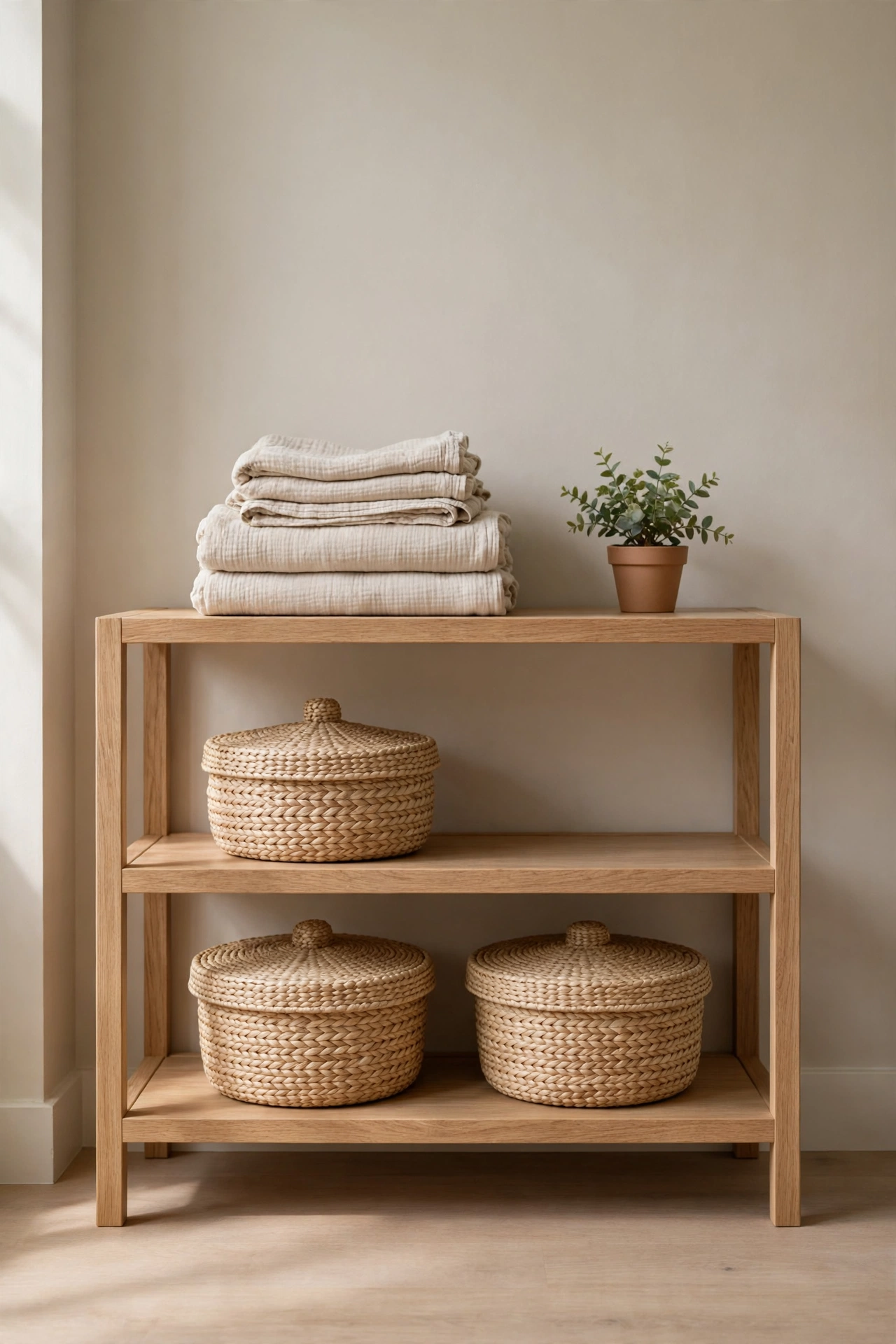
11. Seagrass Baskets on Open Shelving
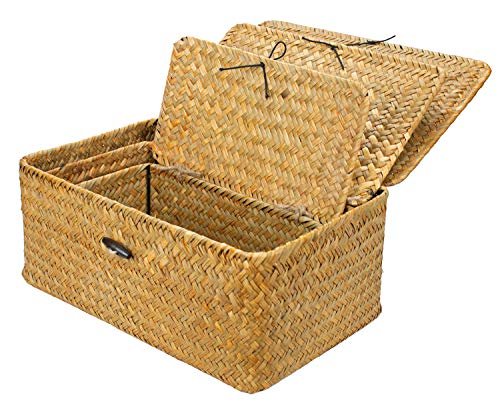
Open shelving only works if what sits on it is beautiful, and woven seagrass baskets are the easiest way to make it true. A set of lidded baskets on a low oak shelf swallows the diaper cream, the thermometer, the spare pacifiers, all of it, and all you see is that gorgeous natural weave. The Yesland set of three is my current favorite. Different sizes, removable lids, and the seagrass tone is right in the Japandi sweet spot.
Style the shelf with intention. Baskets on the lower shelves where you grab things daily. Folded muslins stacked neatly on one upper shelf. One small plant or ceramic piece and then stop. The baskets are the texture story here. They do not need competition.
12. The Dresser That Doubles as a Changer
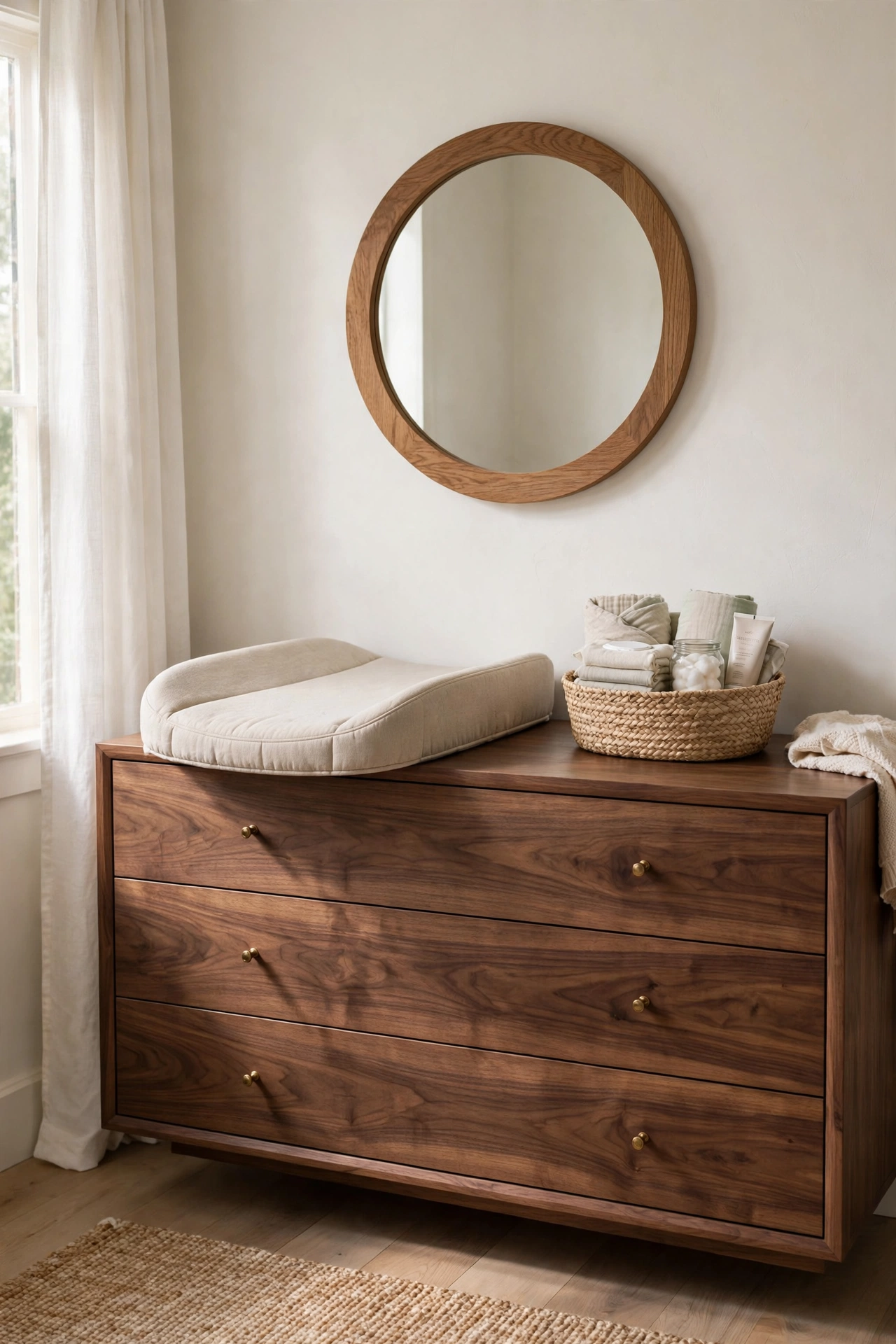
A low walnut dresser with a changing tray on top is one of the smartest moves in a nursery. You get six drawers of real storage and a changing station in one footprint, and when the diaper days end you remove the tray and it is just a beautiful dresser. Walnut is the perfect wood here. Rich enough to ground the room, warm enough to keep it soft.
Look for clean flat front drawers and simple brass or wooden knobs. Top it with a contoured changing pad in oatmeal, a small basket for the daily supplies, and nothing else. The wall above is a natural home for that one big piece of art or a round mirror in a thin oak frame, which bounces the window light around beautifully.
13. Floating Shelves With Breathing Room
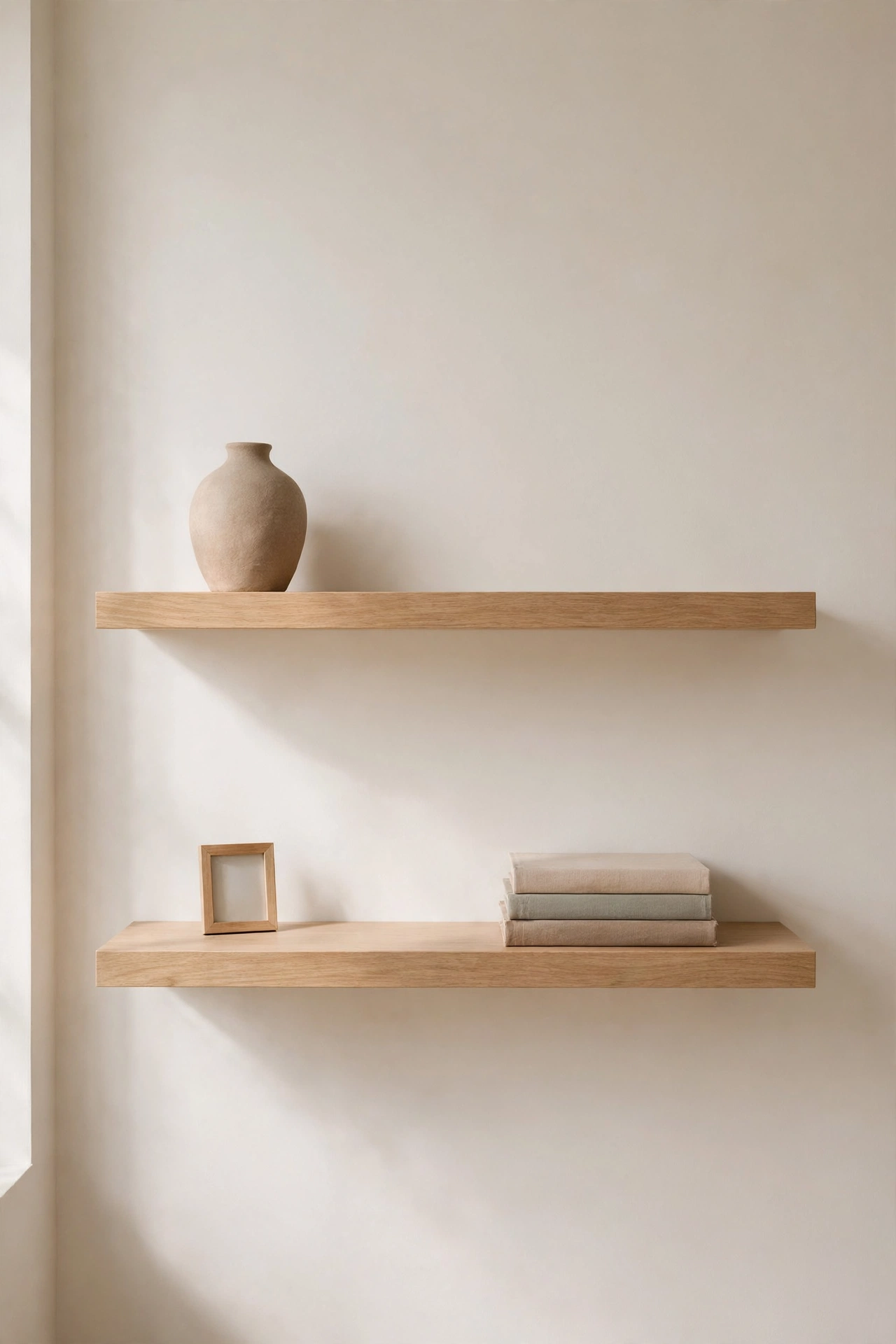
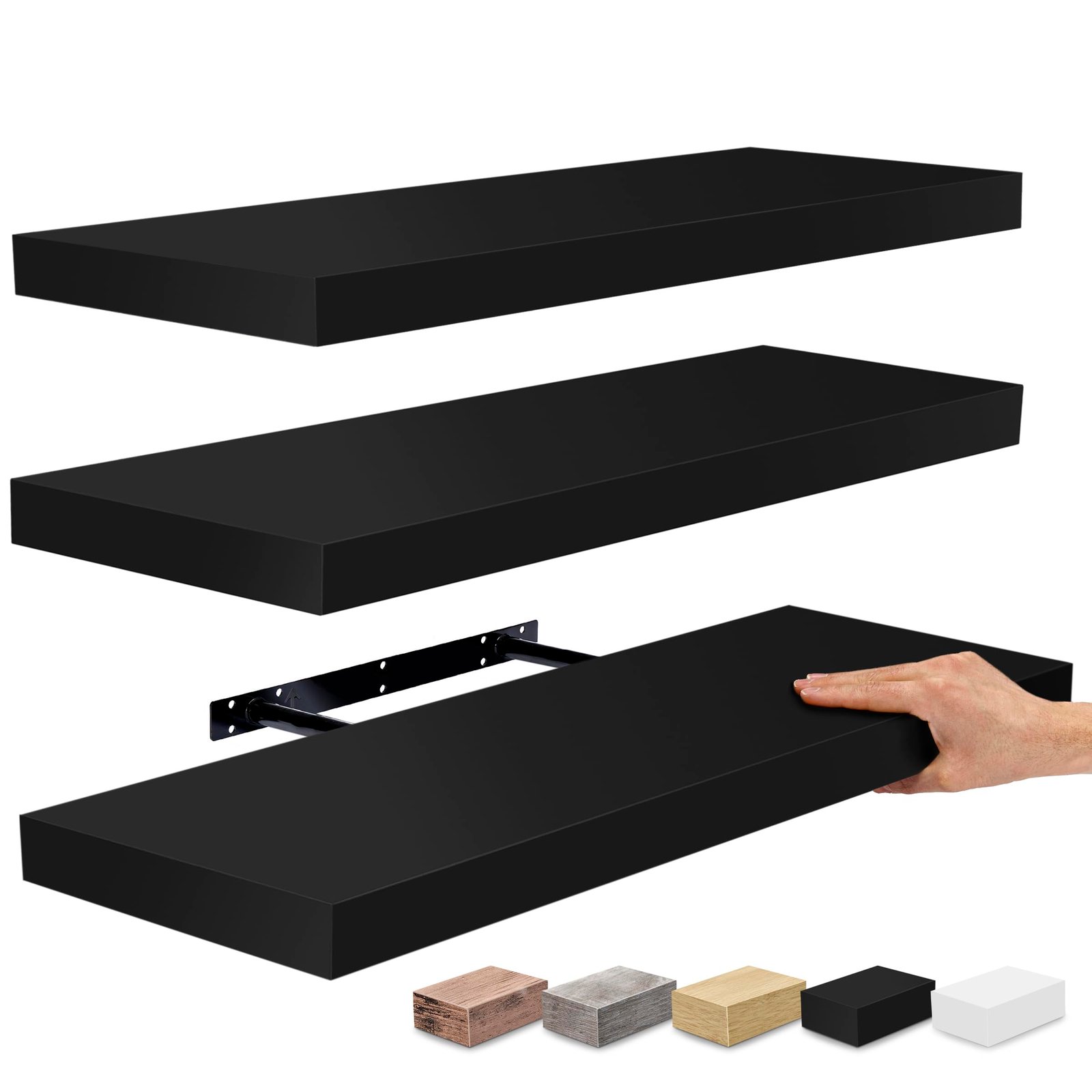
Two floating oak shelves on an empty wall can hold everything the nursery needs to display, as long as you leave them mostly empty. That is the whole trick. A small stack of books. One stoneware vase. A tiny framed photo. Then glorious empty wood between the objects. Each thing gets to be seen because nothing is fighting for attention.
The Sorbus floating shelves are a solid budget pick and the 24 inch length is perfect for this. Mount them with a level and real wall anchors, style them in odd numbers, and step back. If a shelf looks full, remove one thing. Warm minimalism, not cold minimalism. The warmth comes from the wood and the few loved objects, not from filling every inch.
14. Sliding Doors for the Wardrobe
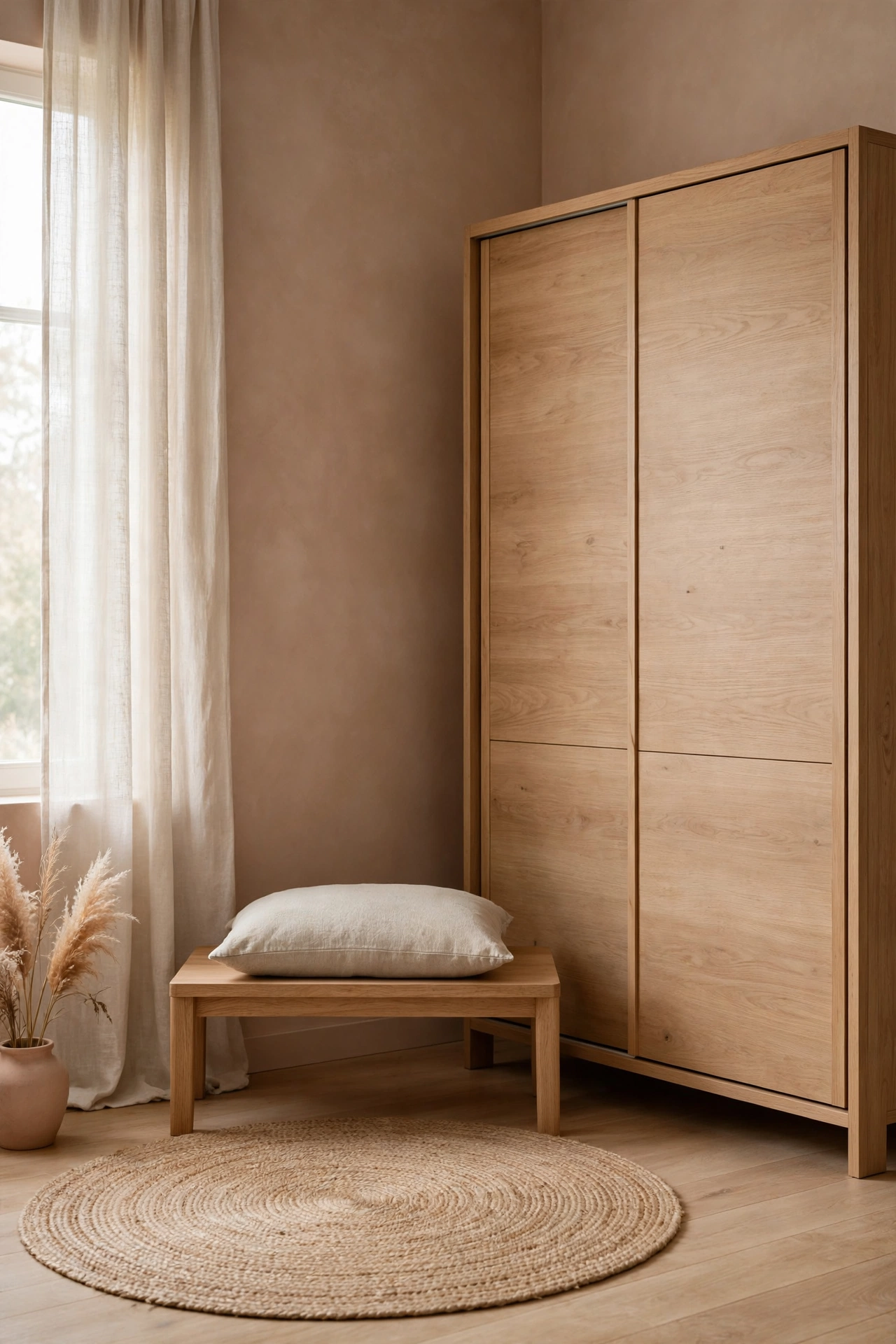
If you are choosing storage furniture, consider a low wardrobe with sliding doors. It is a quiet nod to Japanese interiors, it needs no clearance space to swing open, and the long horizontal lines make the wall feel wider and calmer. Inside, tiny clothes hang in a neat row and the doors close on all of it. Out of sight, out of mind, on purpose.
Light oak or warm white both work. Keep the hardware minimal, a slim recessed pull or a simple wooden knob. If a new wardrobe is not in the budget, add sliding door fronts to an existing closet opening with a simple track kit. The effect is the same. A clean uninterrupted wall that happens to hold an entire wardrobe.
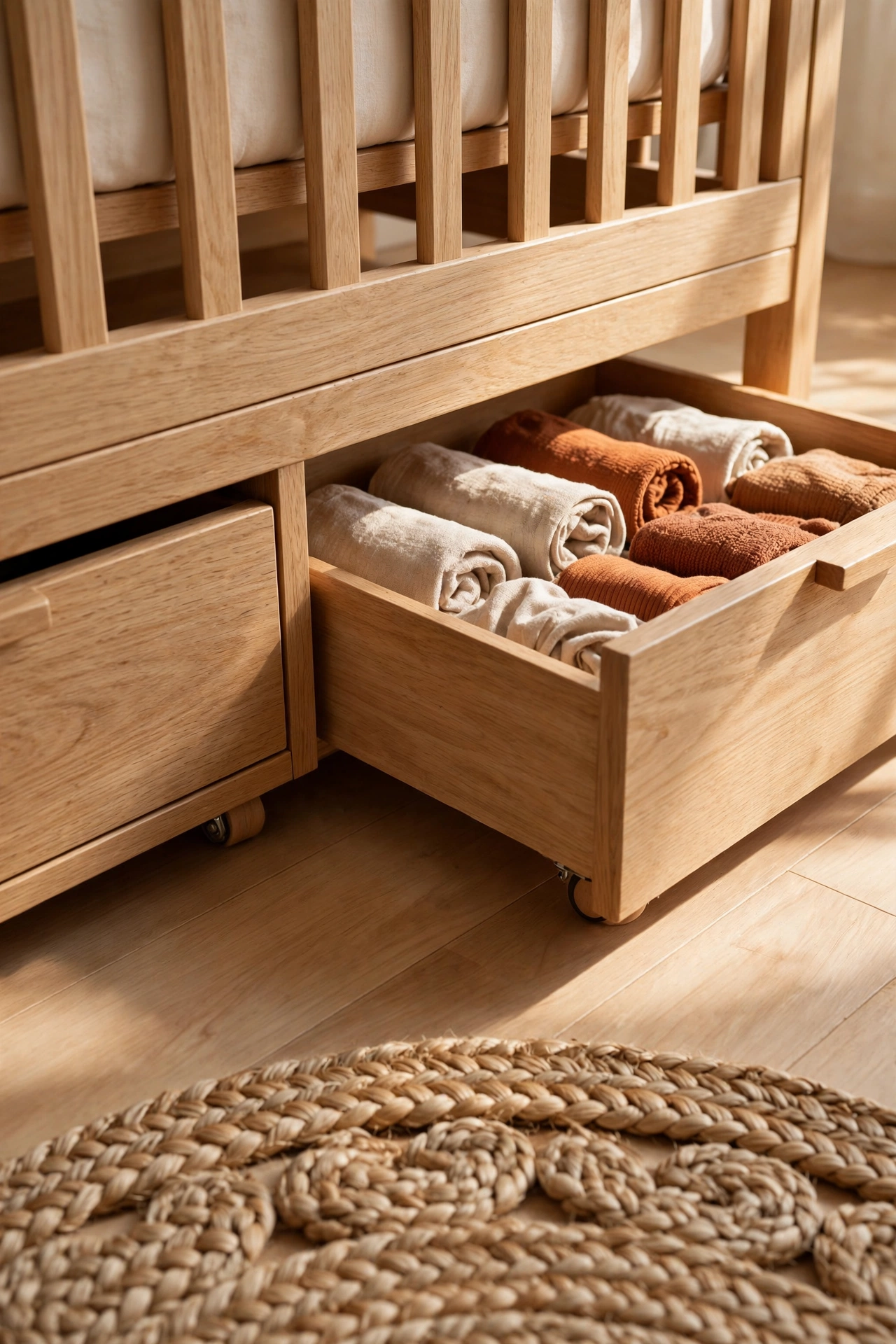
15. Under Crib Drawers in Oak
The space under the crib is free real estate, and low oak drawers on casters turn it into the tidiest spot in the room. Spare crib sheets. The next size up in sleepers. The muslin mountain. All of it rolls away under the bed and the room stays serene. It is the kind of storage that makes guests ask where you keep everything.
Match the drawer fronts to the crib wood as closely as you can. Mismatched woods under the bed read as clutter even when the drawers are closed. If you cannot find a match, choose a simple warm white drawer unit. It will read as part of the wall and disappear completely, which is honestly just as good.
Texture and ritual: the finishing touches
The room is built. The storage is hidden. Now comes the part I love most. The layers of texture and the small rituals that make a nursery feel like yours. This is where the palette sings. Oatmeal and camel and rust in soft textiles. One branch in a vase. A corner that exists just for sitting on the floor with your baby. These are the details people remember.
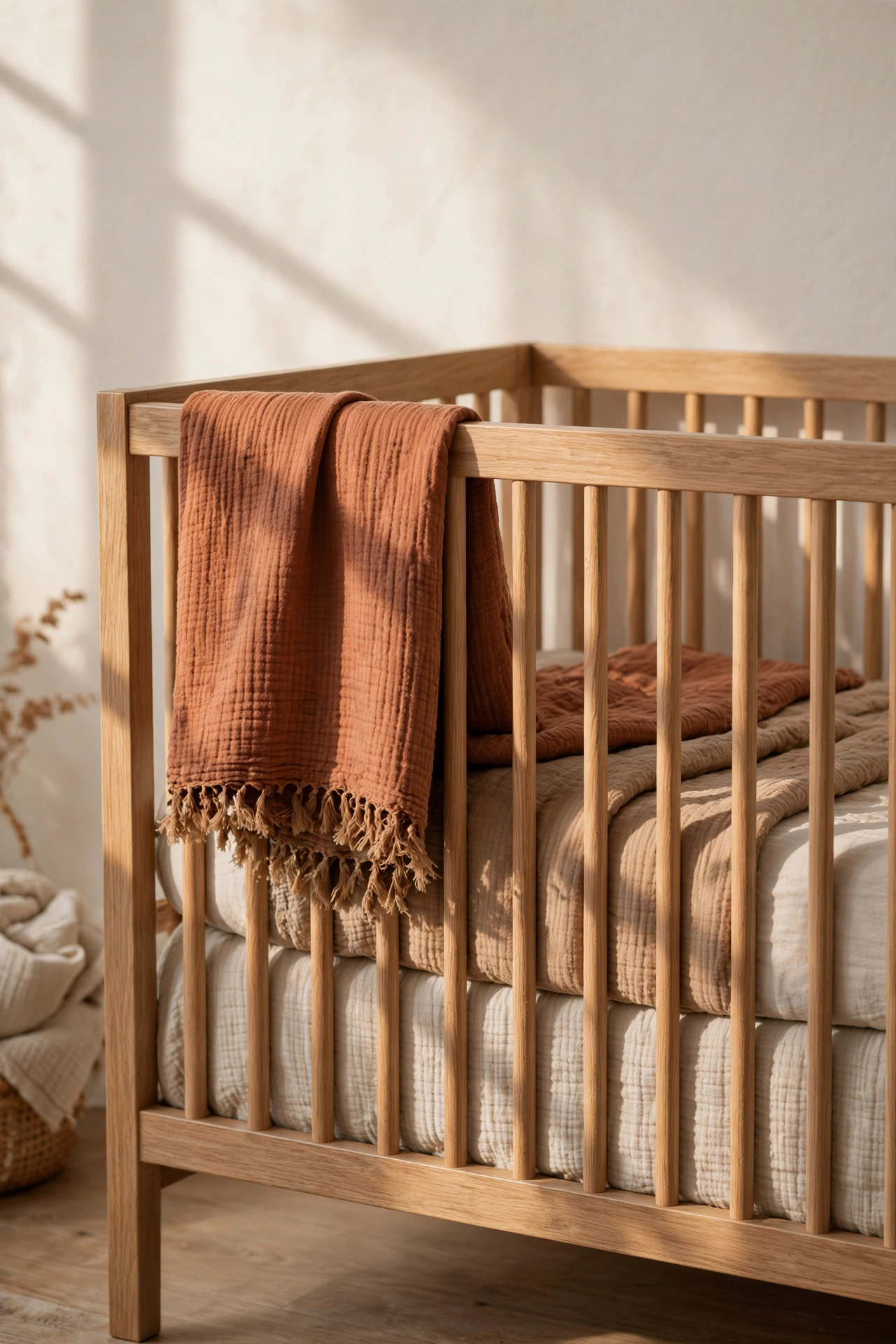
16. Muslin Layers in Oatmeal and Rust
Nothing says soft like muslin, and layering it is the fastest way to warm up a minimal crib. Start with an oatmeal fitted sheet. Fold a rust toned muslin blanket across the foot. Drape a second in camel over the rail for texture. Three layers, three warm tones, zero effort, and it looks like a styling shoot every single day. The Bedsure cotton muslin throw in linen beige is the perfect base layer. It gets softer with every wash, which is exactly what you want against baby skin.
A quick safety note because it matters. Keep the crib sleeping surface bare for infants. These beautiful layers are for styling photos and for supervised awake time. Fold them over the rail or store them in the basket beside the crib when baby sleeps. Beautiful and safe can absolutely coexist.
17. A Single Branch in Stoneware
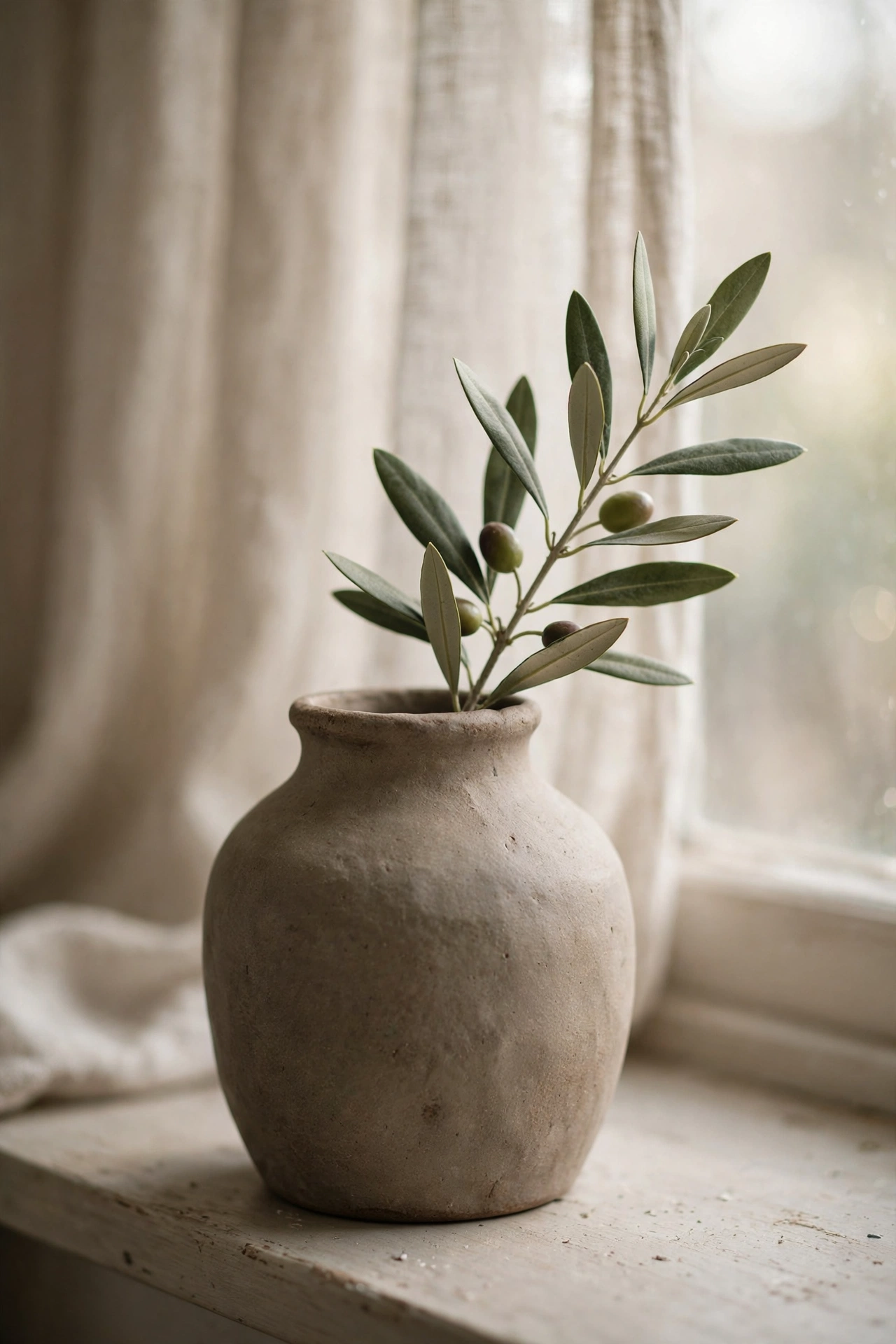
Japandi design borrows from the Japanese love of nature indoors, and the simplest version is one branch in a handmade vase. An olive branch. A stem of dried eucalyptus. A curving piece of driftwood. Set it in a stoneware vase with a matte glaze, place it on the windowsill or the dresser, and walk away. It is alive, it is sculptural, and it costs almost nothing.
This is also your seasonal refresh. Swap the branch four times a year and the room feels new without buying a thing. Cherry blossom stems in spring. Dried grasses in fall. One evergreen sprig in winter. The vase stays. The branch changes. It is the lowest effort styling ritual I know and I recommend it constantly.
18. The Floor Cushion Play Corner
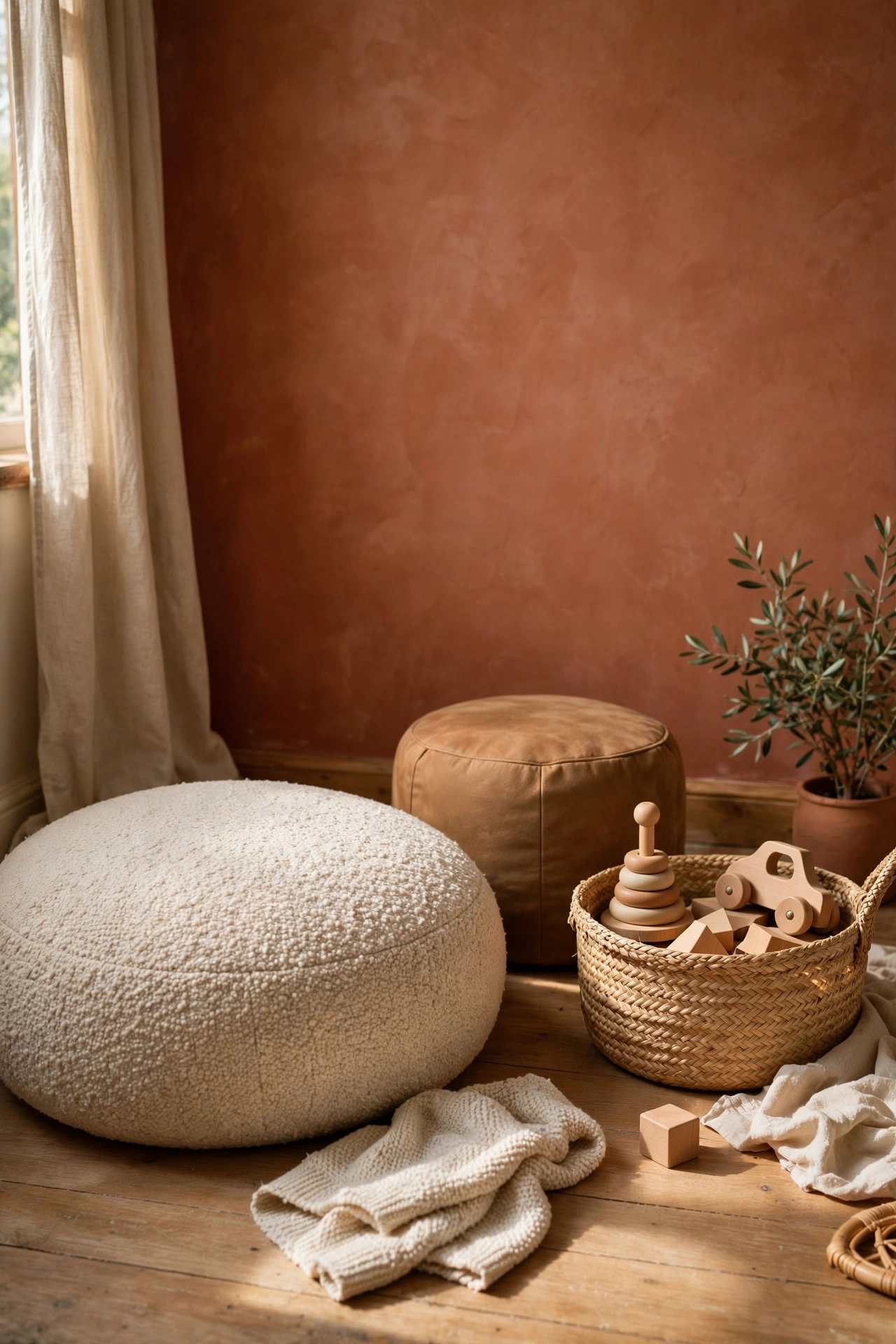
Babies live on the floor, so give them a beautiful spot to do it. A round floor cushion in oatmeal bouclé, a low camel pouf beside it, and a seagrass basket holding a few wooden toys. That is the whole play corner. No plastic play gym. No flashing activity center. Just soft surfaces and simple toys at baby level.
Wooden toys are the Japandi choice for a reason. They are quiet, they are beautiful, and they do not overstimulate. A small stacker, a few blocks, a soft ball. Rotate them weekly from a hidden basket and old toys feel new again. Sit down there with your baby. The room was designed for this exact moment.
19. Evening Light, Everything Glows
We are ending where we began. With light. The last idea is not a thing to buy. It is a ritual. As the sun drops, turn off the overheads. Let the paper pendant glow low. Let the sound machine hum. Sit in the nursing chair with the linen curtains breathing beside you and just be in the room for five minutes before the bedtime routine starts. A calm room plus a calm parent is the whole recipe.
This is the Japandi nursery working exactly as designed. Warm minimalism, not cold minimalism. Every piece earned its place. The wood did the talking. And the empty spaces you left are doing their quiet work, giving your eyes somewhere to rest at the end of a long day. If a smart monitor helps you relax into it, the Nanit Sound and Light keeps its glow soft and warm while you settle in. Then close the curtains, take the breath, and start the routine.
More Favorites
This post contains affiliate links. If you buy through them, I may earn a small commission at no extra cost to you.
A few more favorites from the ideas above:


Bring the calm home
You do not need all 19 ideas. Please do not try all 19 at once. Pick the one that made you exhale when you read it. Maybe it is the limewash walls. Maybe it is the paper lantern glowing low at bedtime. Maybe it is simply the permission to leave some empty space. Start there.
The formula for a Japandi nursery is simpler than it looks. Quiet walls, pale wood, one soft rug underfoot, warm light that glows instead of glares, and storage that hides real life. Warm minimalism, not cold minimalism. Every piece earns its place. Let the wood do the talking. Keep those three ideas in your pocket and you cannot go wrong.
If this calm minimal palette has you wanting more, my organic modern living room post carries the same grounded feeling into the main living space, and the warm minimalist living room ideas keep the warmth going. And if you want the full style foundation, the Japandi Nursery design guide has the complete palette and pairings.
Start with one quiet wall, one warm light, and one deep breath. The calm will follow.
With love and light
Get Fresh Home Ideas Every Week
Seasonal decor ideas, organizing tips, and cozy home inspiration, straight to your inbox.
More Nursery Ideas You Will Love
Keep browsing for more seasonal inspiration: