
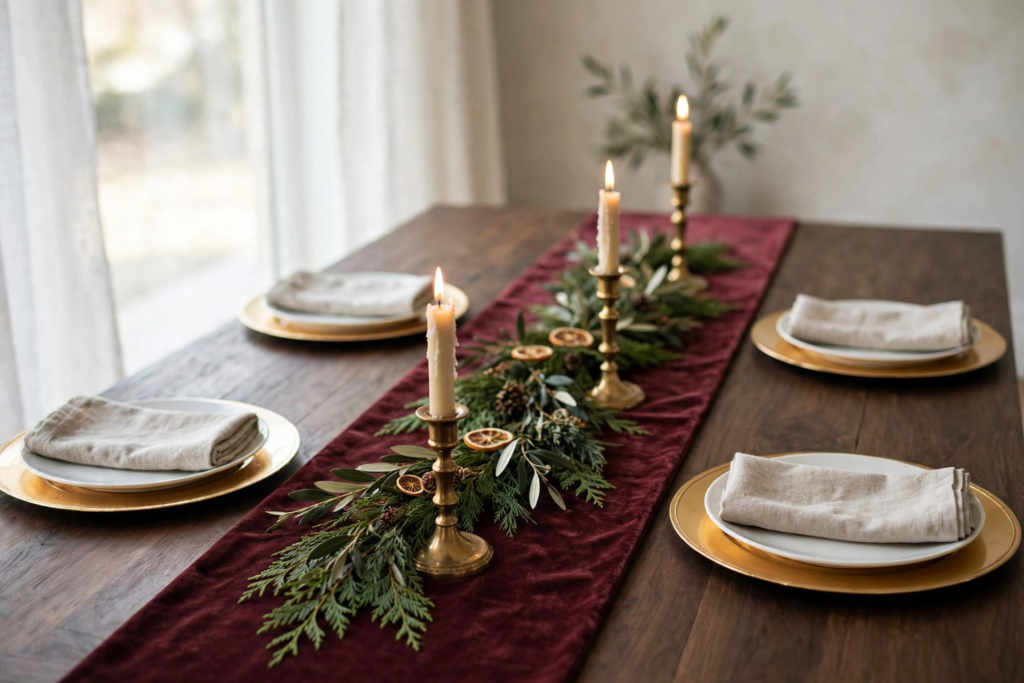
The Christmas table is where December actually happens in our house. The tree gets the glory and the mantel gets the photographs, but the table gets the people, gathered close for hours with full plates and nowhere else to be. I want that table to feel warm the second someone sits down. Candlelight low and golden, the faint smell of cedar and cinnamon drifting up from the center, velvet and linen soft under your hands when you reach for your glass. A table that feels like that does not happen by accident, and it does not need a single expensive piece either. It happens in layers, each one simple, all of them speaking the same language.
My language this year is the coordinated theme running through our whole house. Burgundy and chocolate, oatmeal linen, olive green cedar and warm brass, with the jewel tones and oversized velvet bows and matte ceramics that are everywhere this season used in small, calm doses. The table matches the tree and the mantel because the palette matches, not because I bought a set that screams Christmas at anyone who walks in. My rules are few and I lean on them hard. Linen first, always. Keep the center low enough to see the faces you love. Repeat one color in small doses until the whole table hums. And style for the evening, because candlelight is the guest who makes every other choice look better. If you want the full house picture, my guide to creating a cohesive Christmas theme walks through tying tree, mantel and table together, and my Christmas centerpiece ideas go deeper on the middle of the table alone.
Love these ideas? Get more every week.
Join the newsletter for seasonal decor and cozy home inspiration.
Start With the Bones
1. Lay a Washed Linen Tablecloth Down First
Every good table in my house starts with washed linen, and Christmas is no exception. I use an oatmeal cloth that falls softly and pools just a little at the corners, because that relaxed drape is what makes everything on top of it look calm instead of stiff. The texture does quiet work too. It softens the shine of brass, it makes plain white plates look intentional, and it forgives the odd wrinkle in a way a crisp polished cotton cloth never will. I wash mine the week before, shake it out hard, and lay it straight from the line. If your table is beautiful wood, skip the cloth and keep this same linen as oversized napkins instead. The feeling matters more than the rule.

Shop This Look
This post contains affiliate links. If you purchase through these links, we may earn a small commission at no extra cost to you. Read our full disclosure here.
A few favorites featured in the ideas above:


2. Run a Burgundy Velvet Runner Down the Middle
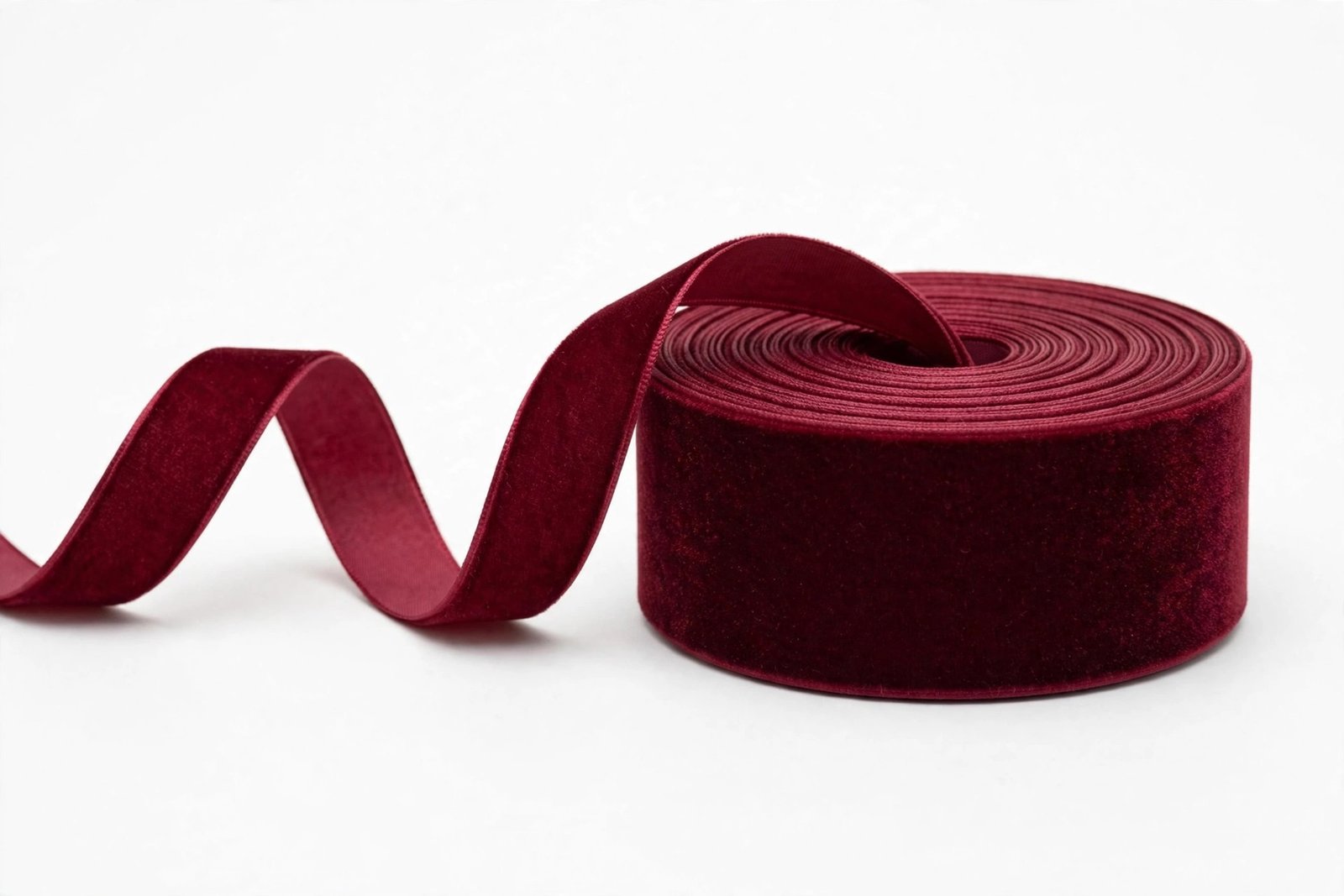
This is the one piece I would save if the whole list burned down. A deep burgundy velvet runner gives the table its spine. Color lands in one strong line down the middle, the settings on either side stay quiet, and suddenly the whole table reads as coordinated without a single matching set in sight. Velvet also drinks in candlelight in the prettiest way, going almost chocolate colored at the edges of the table and glowing wine red near the flames. I let mine pool slightly over both ends rather than cutting it short. That small bit of drama at the ends makes an ordinary dining table feel like it belongs to a much grander room.

3. Keep the Cedar Garland Low and Loose
Greenery belongs on the table, but it has to behave at dinner. I run a cedar garland straight down the center and keep it low and loose, fluffed out flat rather than piled up tall, so everyone can see each other over it and serving dishes still have somewhere to land. Cedar is my pick over pine because the fronds drape instead of poking, and the smell when a warm dish passes over it is honestly half the reason I bother. I tuck the ends under so the wire never shows, and I leave gaps in the green on purpose. A garland with breathing room looks gathered. A solid green wall looks like a hedge wandered indoors.

4. Mix Brass Candlesticks in Three Heights
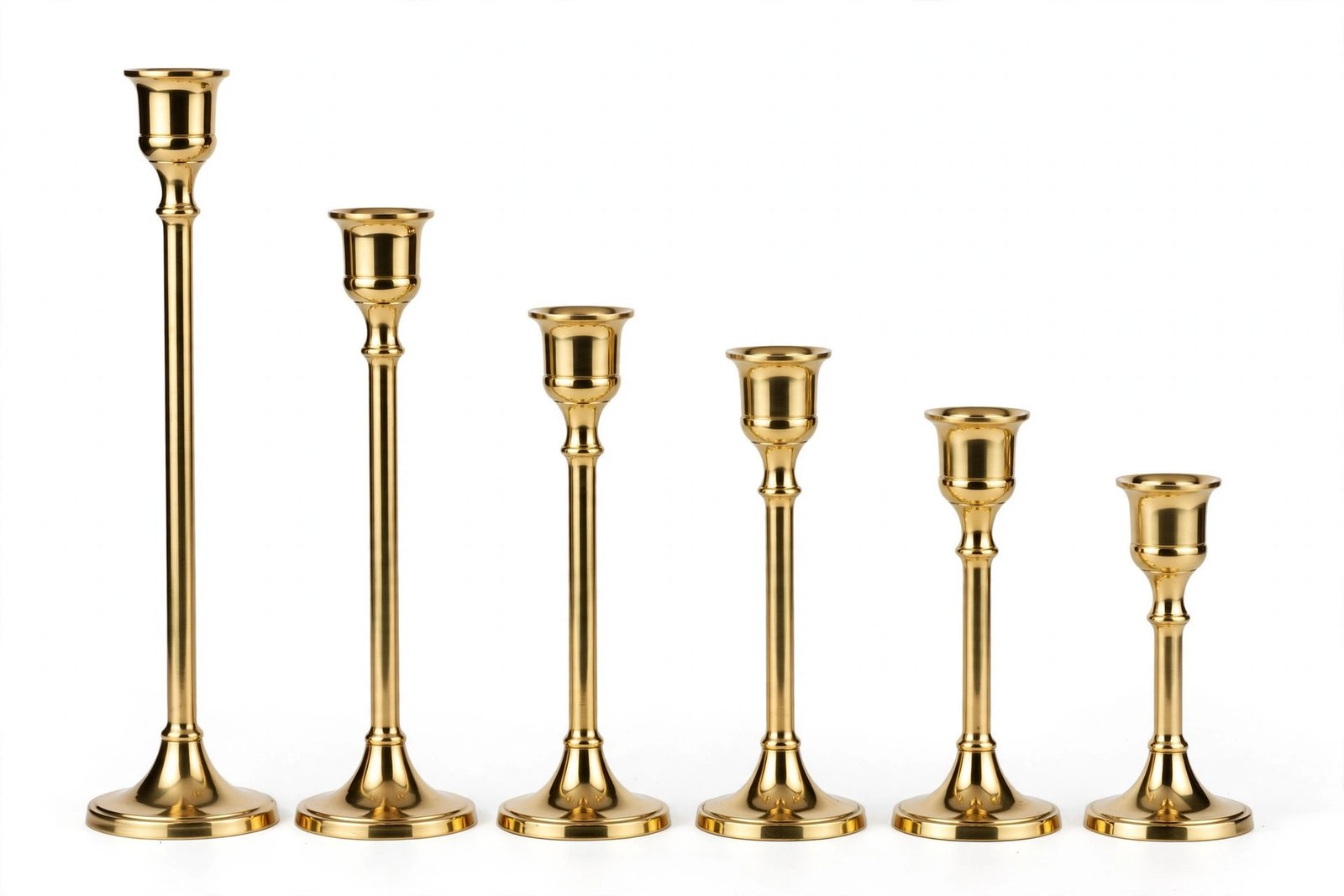
Uniform candlesticks look like a shop display. Mixed ones look like a family. I gather brass holders in three heights and work them down the center in loose groups, tall in the middle of the table and shorter toward the ends, so the flame line rises and falls like a skyline. The brass matters as much as the shape. Its warm tone is the bridge between burgundy and oatmeal, the color that lets those two sit together without a gap. None of mine match exactly, and that is the charm. A table collected over time always beats a table bought in one afternoon, because guests can feel the difference even when they cannot name it.

5. Weave Warm Cluster Lights Through the Greenery
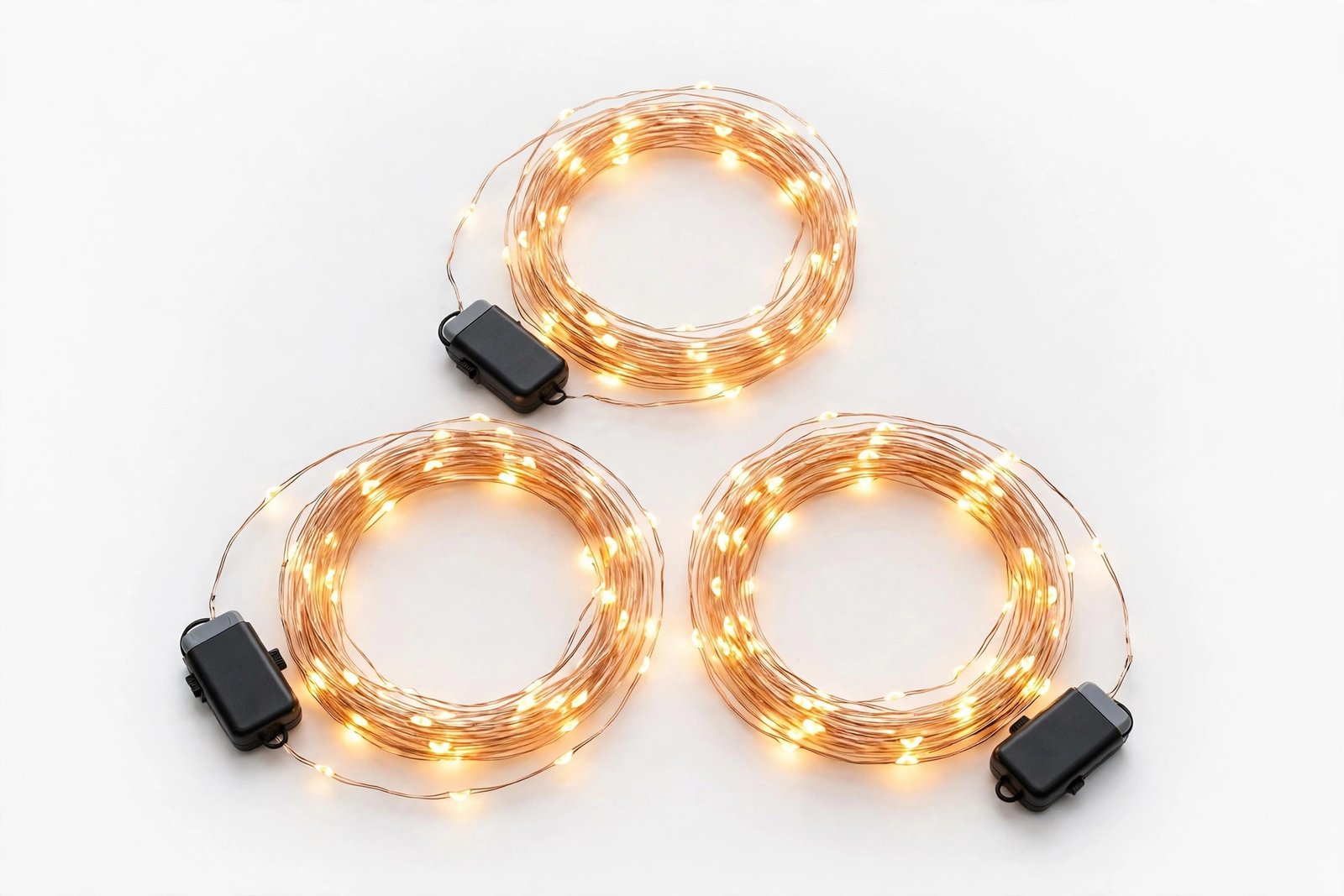
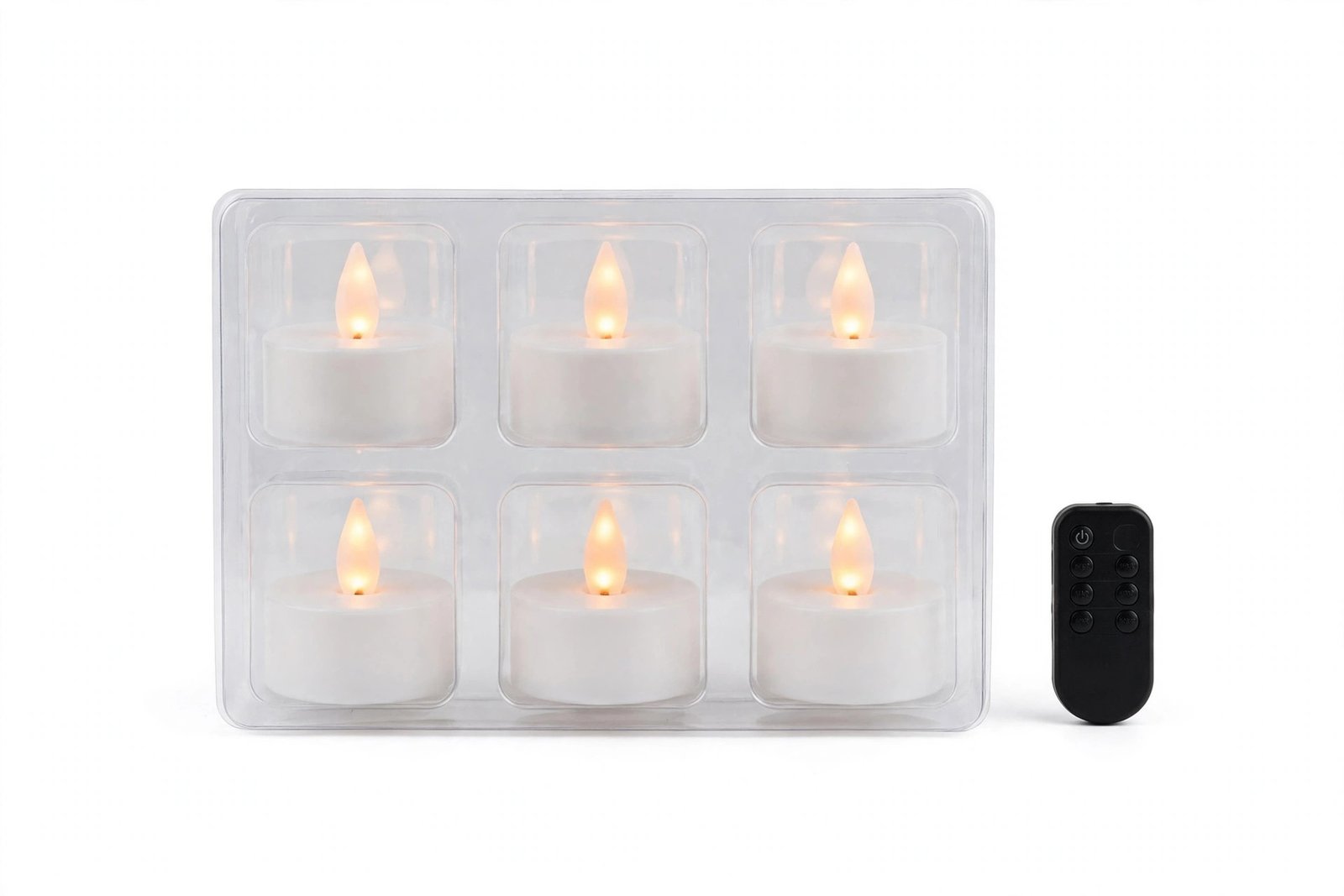
Candles alone can leave the middle of a long table feeling dim at the ends, and this is my fix. I weave one strand of warm cluster lights through the cedar garland before anything else goes down, tucking the battery pack under the runner at the far end. The tiny lights sit inside the greenery like frost catching sun, and they do the heavy lifting on the nights I use flameless candles and still want that deep golden glow. Style for the evening is a rule I repeat to myself every December. Nobody remembers a table at noon. They remember the one that glowed while the dishes came out and the room went quiet for a second.

Build Each Place Setting
6. Anchor Every Setting With a Gold Charger
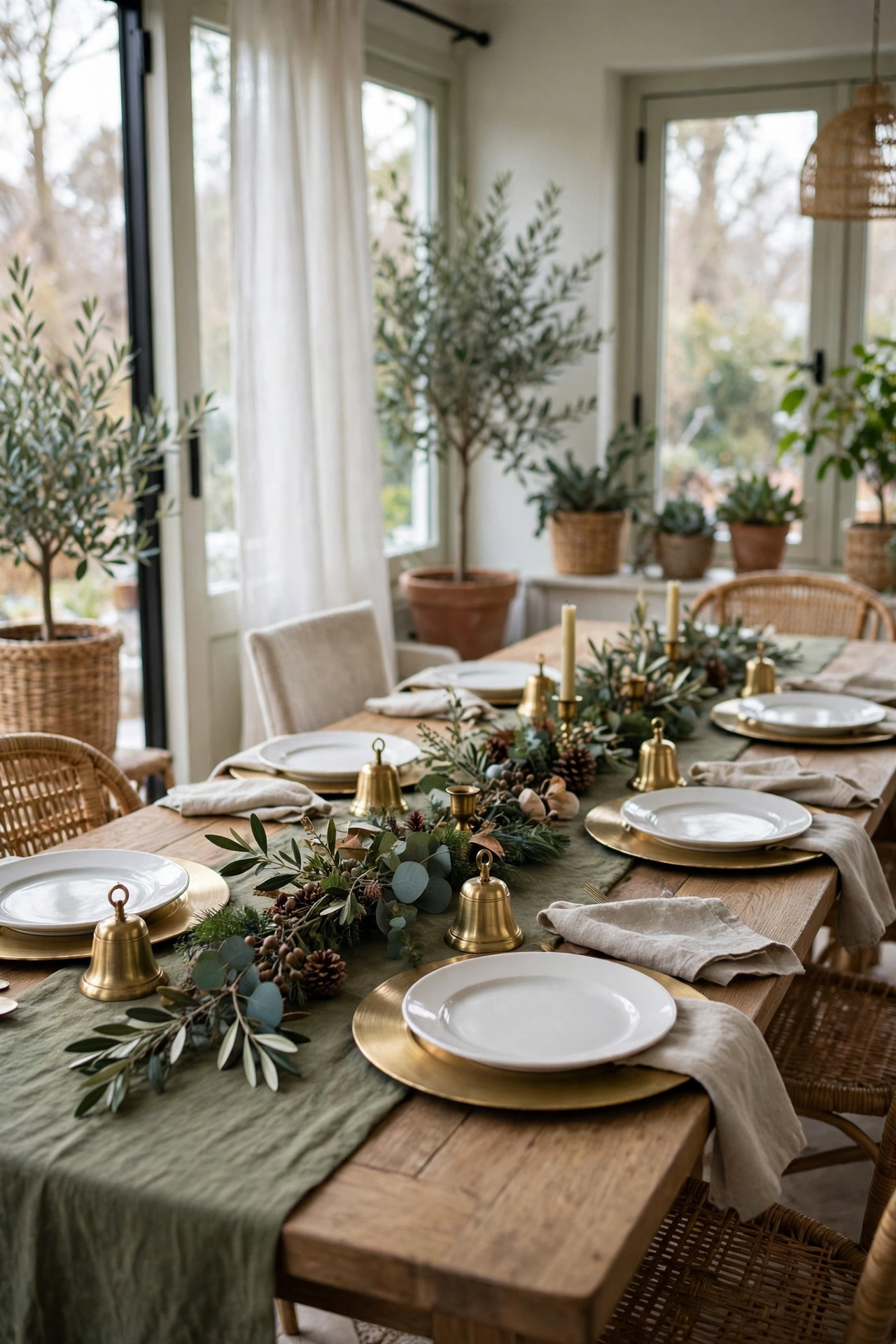
A charger is the cheapest piece of importance you can buy for a table. I slide a brushed gold charger under every white dinner plate, and instantly the plain plates I use all year look dressed for December. The charger frames the plate the way a mat frames a picture, and it gives each guest a defined little territory, which quietly makes a crowded table feel orderly. Brushed or antique gold is the finish to hunt for. It echoes the candlesticks without matching them, and it never tips into shiny wedding hall territory. Between courses the chargers stay down, so the table never looks bare or picked over while the kitchen does its work.
7. Fold Burgundy Linen Napkins Simply
I have folded napkins into trees exactly once, and I have never done it again. A simple rectangle fold in burgundy linen, laid on the plate with a single sprig of rosemary across it, looks more elegant than any origami and takes about four seconds per setting. The color does the decorating here. Burgundy against a cream plate on a gold charger is already a complete sentence, so the napkin does not need to perform. Linen softens with every wash, which means the set you buy this year will look even better next December. Buy twelve while you are at it. Two extra napkins have saved me from a gravy incident more times than I can count.

8. Tie Each Napkin With Velvet Ribbon and a Bell
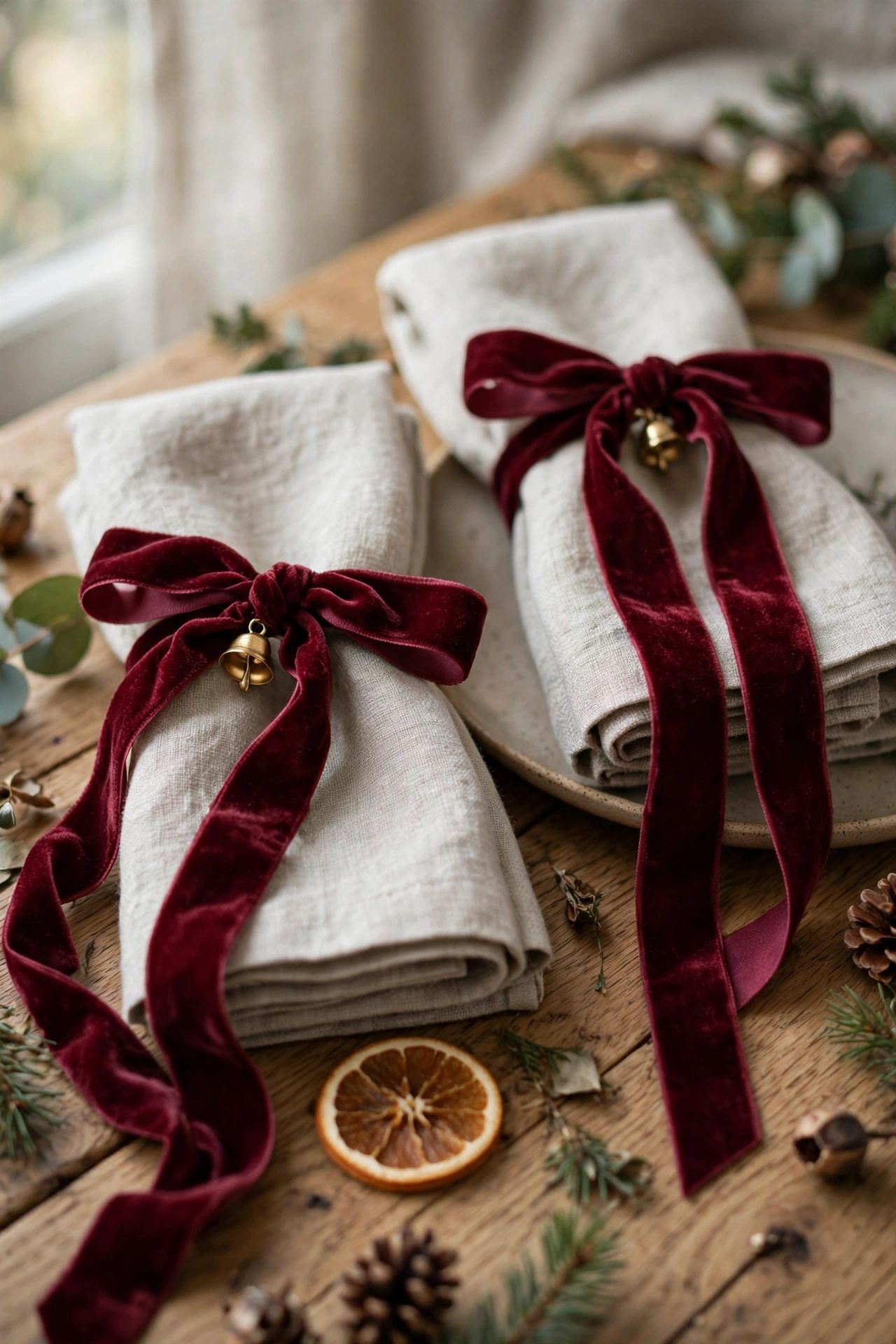
This is the detail guests photograph before they sit down. I tie each folded napkin with a length of burgundy velvet ribbon, leave the tails long and uneven, and tuck one tiny brass bell into the knot. It takes ten minutes for a whole table, it costs almost nothing, and it ties the setting back to the runner running down the center, which is exactly how a coordinated theme works. One color, repeated in small doses, in different textures. When dinner starts everyone unties their bell and the table gives a little jingle all at once. It sounds like a cliché until it happens at your table and the whole room laughs at the same moment.
9. Tuck a Handwritten Place Card Into the Greenery
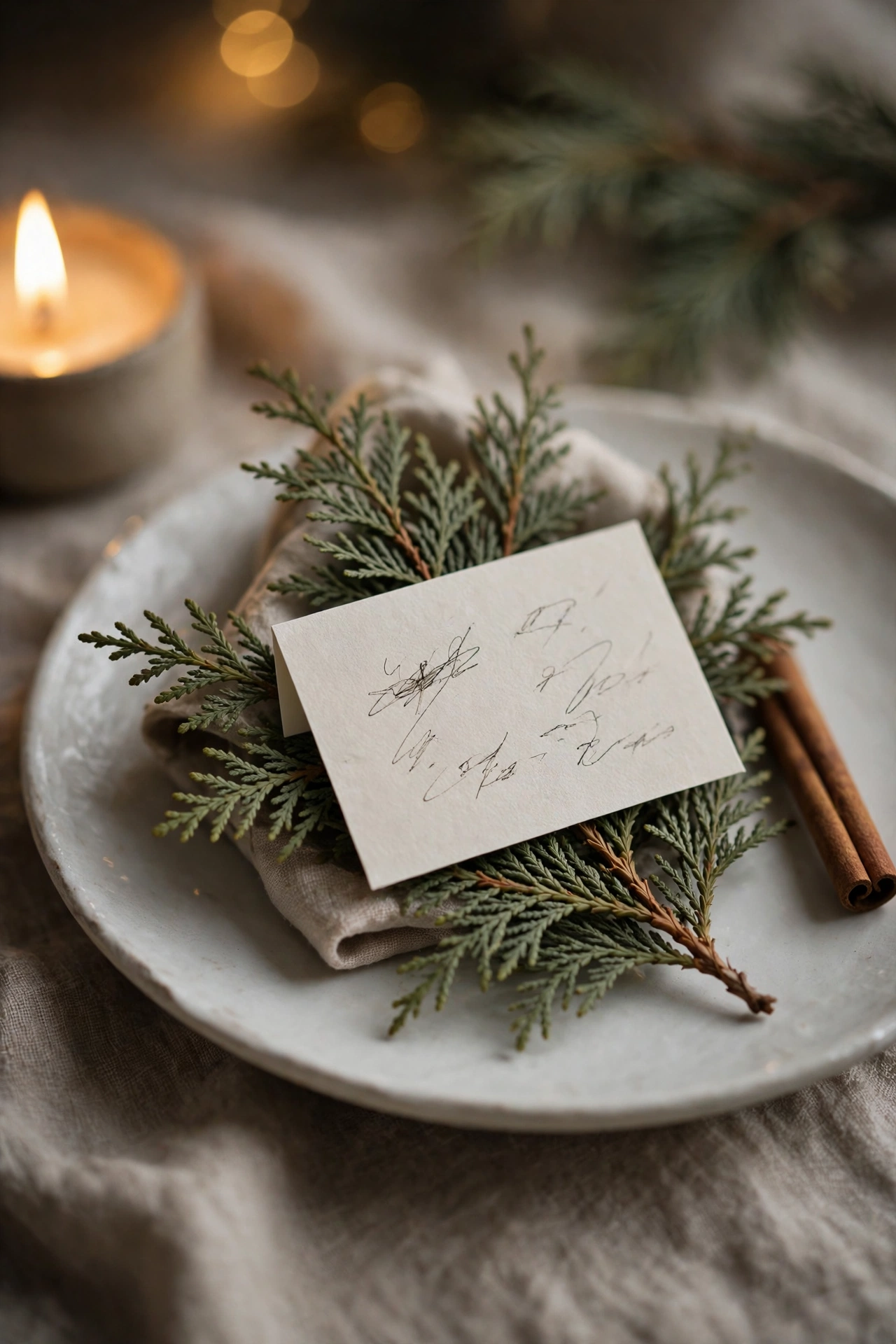
Place cards are not about control. They are about kindness. A card tells your shy brother in law that he has a spot saved beside someone he actually likes, and it tells your mother she is at the head where she belongs. I write mine on plain cream card stock with a gold pen, first names only, and tuck each one into a fold of cedar at the top of the setting with a cinnamon stick for scent. The handwriting matters more than the calligraphy. Guests keep these, I have learned. A wobbly handwritten card ends up on fridges. A printed one ends up in recycling before dessert.
10. Pour Into Amber Glassware for Warmth
Glassware is where a table gets its sparkle during the day. I use amber glasses and goblets at every setting in December, because the color warms the whole place setting before a single candle is lit, and late afternoon light through amber glass is one of the prettiest sights in my dining room. Amber also forgives. Water, wine and juice all look rich in it, and the glasses hide the little water spots that clear glass announces to the room. If a full amber set is too much, do what I did for years and use amber only for water, with your plain glasses for wine. The table still gets the warmth where it counts.

Make the Center Glow
11. Line Matte Ceramic Houses Down the Middle
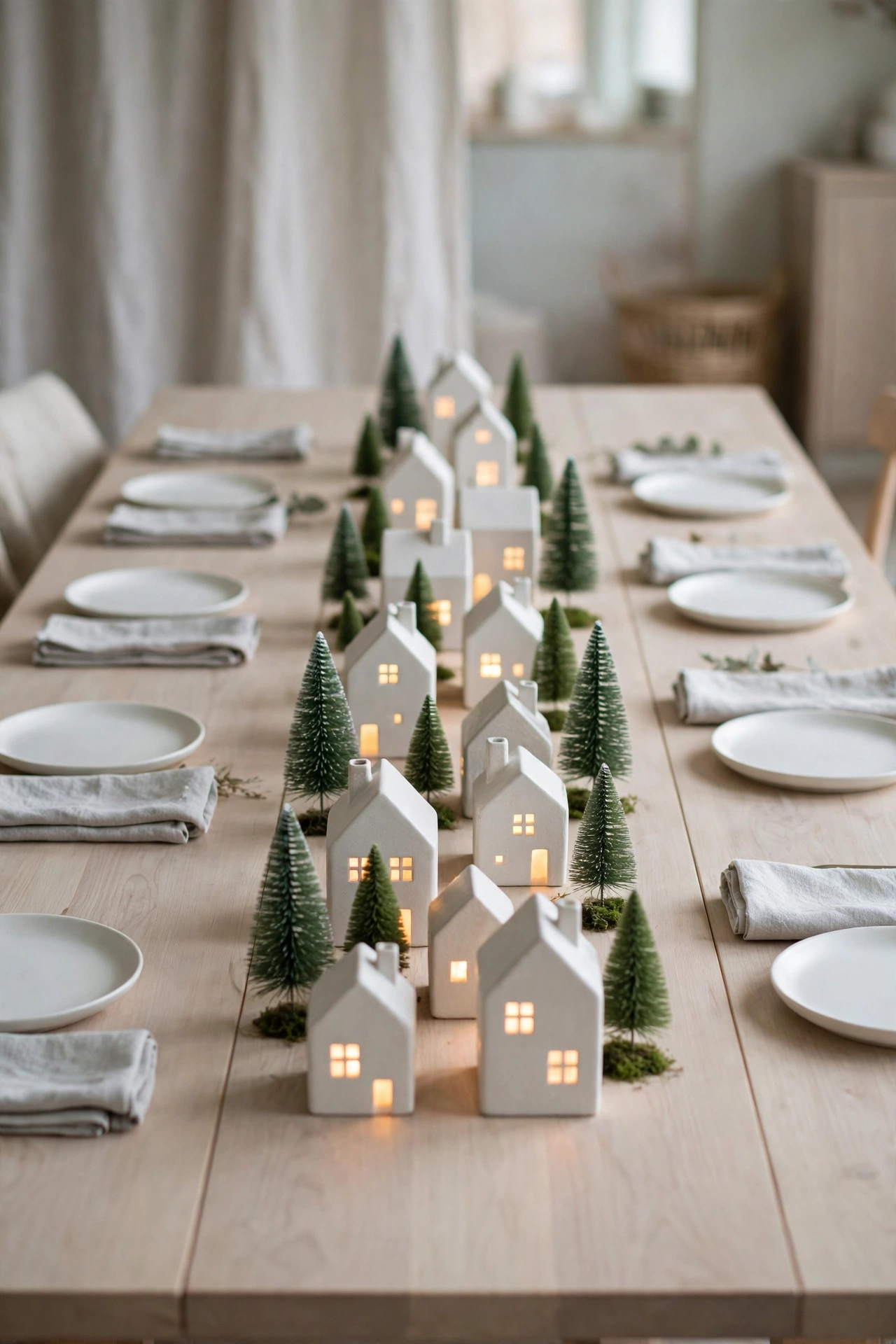
On the nights when the table is for looking at as much as eating, I swap the garland for a tiny village. Matte white ceramic houses run down the center in a loose line, windows glowing, with miniature bottle brush trees in oatmeal and olive tucked between them. It reads as calm rather than cute because everything stays in one quiet palette, and the little lit windows give the table a storybook feeling that children at the table absolutely lose their minds over. Keep the village in the middle third of the table only. The settings keep their burgundy and brass, so the table still looks grown up, just with a small snowy town visiting for dinner.
12. Scatter Artisan Glass Ornaments Through the Garland
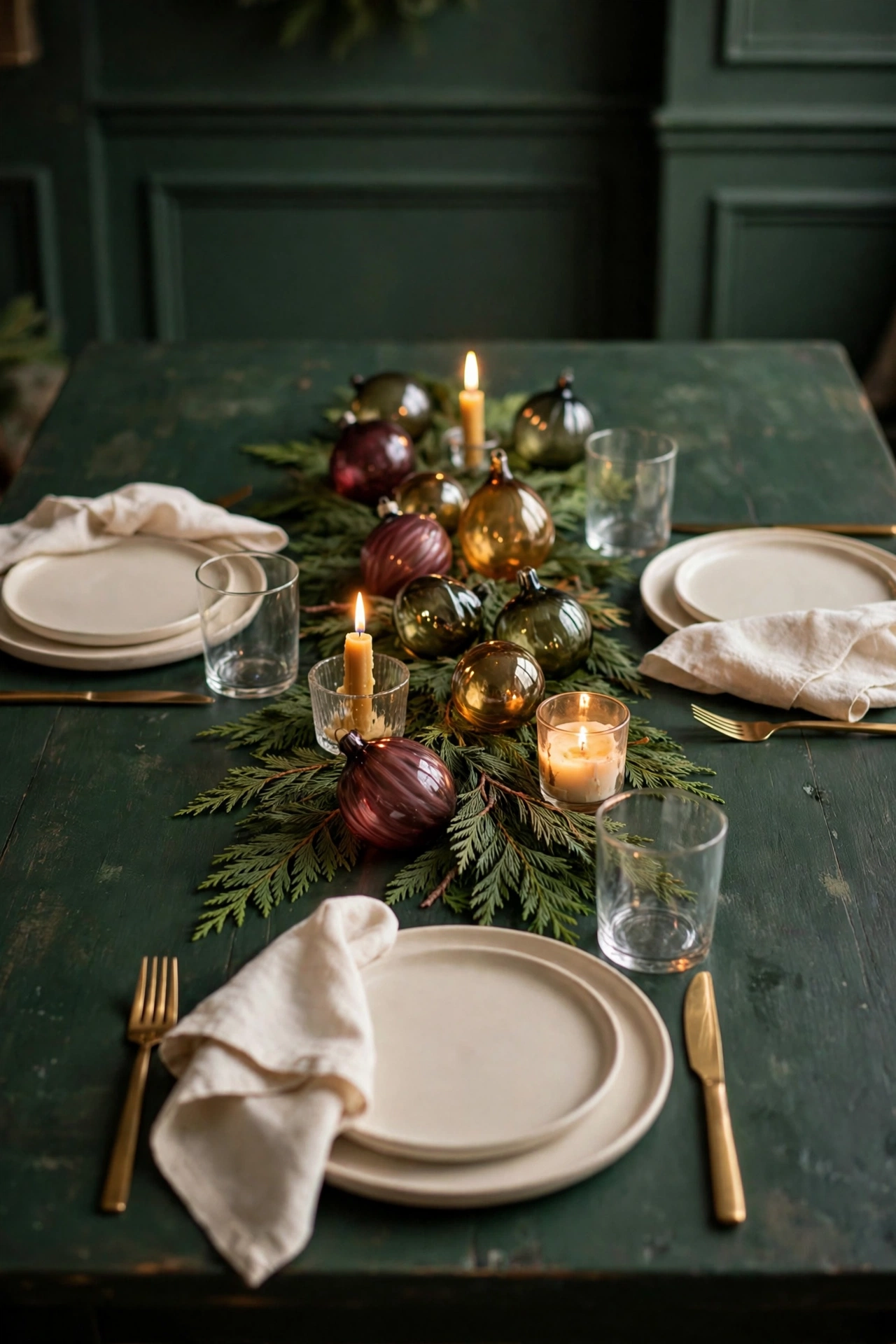
Ornaments are not only for the tree, and the table is where the artisan glass ones show off best. I scatter a handful through the cedar garland in amber, burgundy and smoky olive, the same jewel tones as the rest of the table, and let the candle flames double themselves in the curved glass. Use fewer than feels right at first. Five or seven ornaments down a whole table is plenty, because each one catches light like a small lamp and the eye needs somewhere to rest between them. This is my favorite use for the special ornaments that are too fragile for the lower branches where small hands and dog tails patrol.
13. Set Amber Bud Vases With Orange and Cinnamon
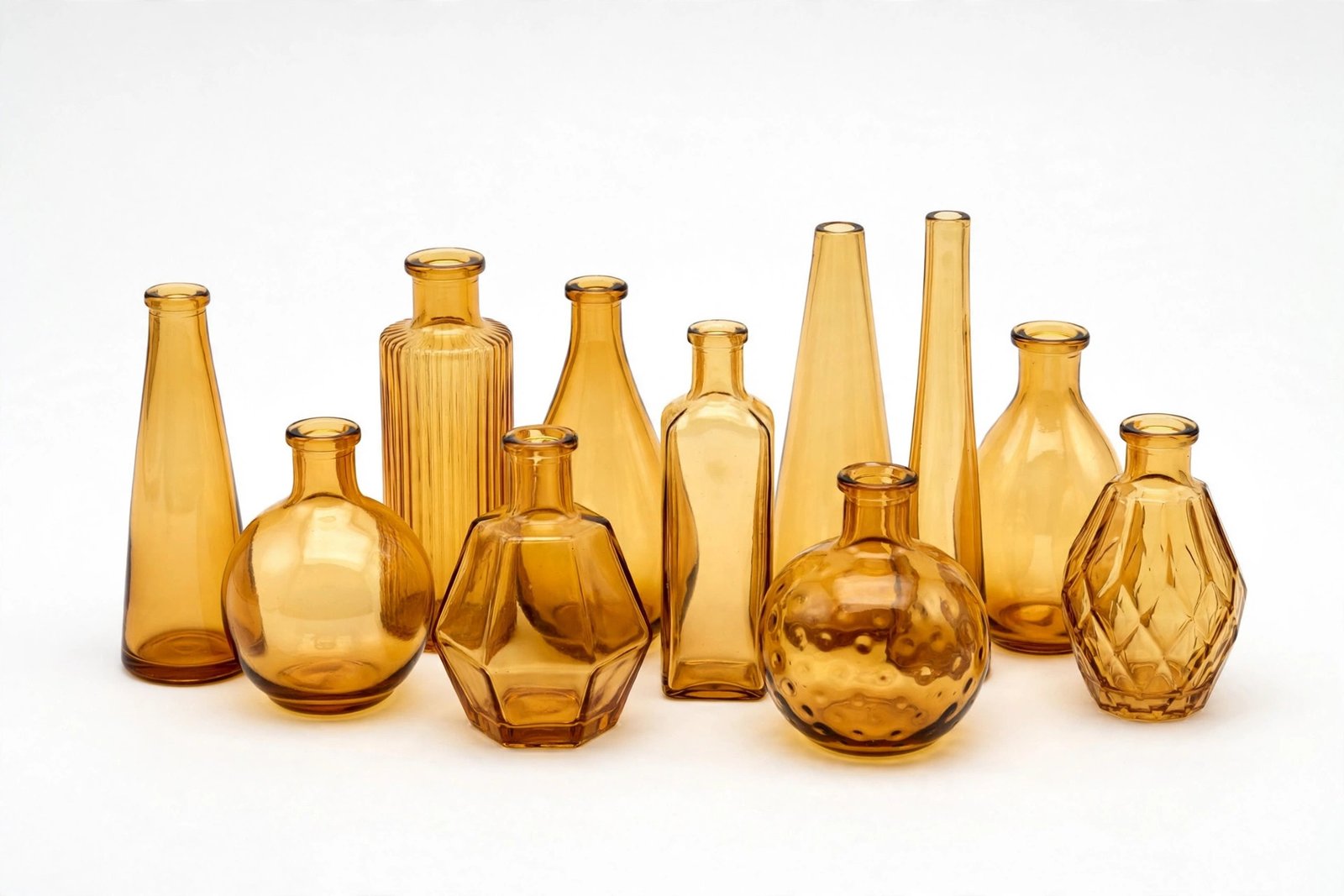
A row of small amber bud vases is my answer to the flower problem in December, because fresh flowers in winter cost a fortune and last about as long as the leftovers. Each vase gets the same simple recipe. One cedar sprig, one dried orange slice and one cinnamon stick. The row looks styled and abundant, the ingredients cost almost nothing, and the whole center of the table smells like someone has been mulling something wonderful in the kitchen. Because the vases are small and separate, a serving platter can push between them without a negotiation. Try moving a giant floral arrangement mid dinner once and you will convert to bud vases for life, I promise.

14. Use Flameless Pillars in Glass Hurricanes
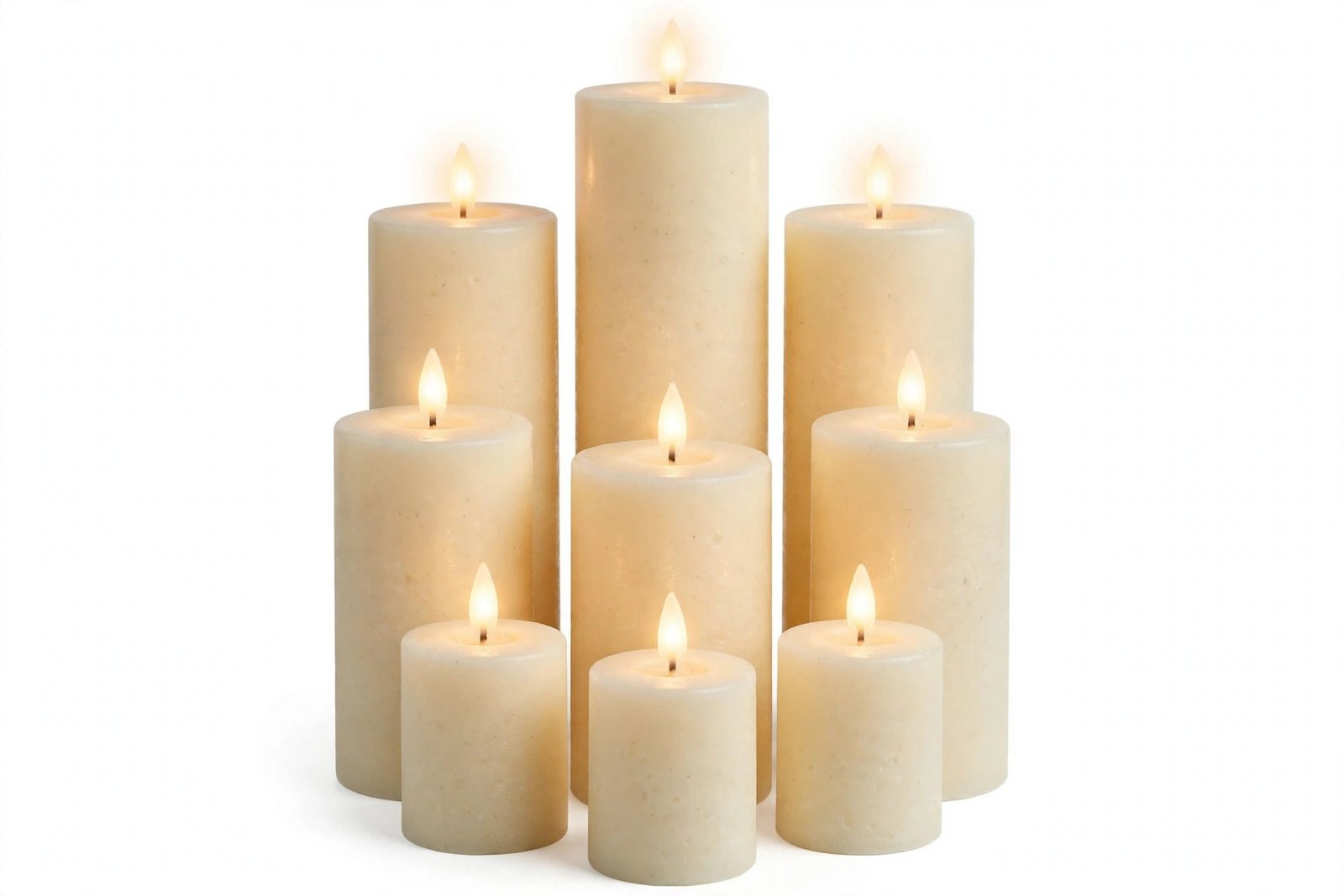
Real candlelight is my first love, but a table with children, paper place cards and a dog underfoot deserves one sensible decision. I run flameless pillars inside tall glass hurricanes down the center on our biggest nights. The glass does the work of real candlelight, softening and spreading the glow, while the flameless flame means nobody worries when a napkin waves too close. Timers are the quiet miracle here. I set the pillars to wake at dusk, and the table is already glowing when we sit down, whether I remembered or not. Group them in threes with cedar tucked around the bases and even my candle snob friends stop noticing by the main course.

15. Fill a Brass Bowl With Pinecones and Spice
Every table needs one moment that smells as good as it looks, and mine is a wide brass bowl heaped with pinecones, dried orange, cinnamon sticks and whole star anise. It sits in the exact center like a still life, it costs whatever the bulk spice bin charges, and guests lean over it all evening without knowing why the table feels so good to sit at. Scent is a design layer, same as color. This bowl is also my easiest centerpiece to move, because a centerpiece you can lift with one hand is a centerpiece that survives a real dinner, where the turkey always needs more room than anyone planned for.

Finish for Real Life
16. Match the Kids Table to the Grown Up Table
The kids table should feel like an invitation, not an exile. I cover ours with kraft paper, run a short piece of the same cedar down the middle, and use cream enamel plates with the same burgundy napkins as the big table, tied with the same velvet ribbon. The children notice the matching. They notice everything. Crayons in a brass colored cup let them draw on the paper while the adults linger, and a small bowl of clementines gives them a centerpiece they are allowed to eat, which the grown up table secretly envies. When the two tables share a palette, the whole room photographs as one celebration instead of a party and its overflow.

17. Scale It All Down for a Small Table
A small table does not need a smaller imagination. It needs editing. For our little round table I keep the same burgundy, brass and oatmeal palette but cut every element in half. One slim curve of cedar instead of a full garland, two candlesticks instead of six, chargers only and no extra layers, and the runner becomes a single wide ribbon of velvet under the centerpieces. The palette is what carries the theme, not the quantity of stuff. A tiny table in the full color story looks intentional and rich. A tiny table wearing a shrunken copy of a big tablescape just looks crowded, and nobody can find room for their elbows.

18. Lighten the Whole Palette for Christmas Brunch
Christmas morning runs on different light, so my brunch table runs on a lighter palette. I swap the burgundy for soft sage napkins, trade the velvet runner for pale cream linen, and let a low bowl of oranges and greenery do the centerpiece work in the sunshine. The bones stay identical. Linen first, one color down the middle, brass in small doses, something alive in the center. Only the mood changes, from candlelit and deep to bright and calm. It is the same coordinated theme the mantel and tree are wearing, just translated for ten in the morning, when what everyone wants is coffee, warmth and a table that does not shout.

19. Set the Table the Night Before
The calmest hosts I know all share one habit. The table gets set the night before, completely, down to the place cards and the water glasses. I do ours after dinner the evening prior, with music on and a cup of tea going cold because I keep adjusting one fork. Then Christmas cooking happens the next day in a kitchen that opens onto a finished, glowing room, and that view carries me through every stressful minute of it. A set table is also a promise to yourself that the gathering matters. It turns the meal from a task into an occasion before a single guest arrives or a single potato gets peeled.

More Favorites
This post contains affiliate links. If you purchase through these links, we may earn a small commission at no extra cost to you. Read our full disclosure here.
A few more favorites from the ideas above:
A Christmas table is never really about the table. It is about the pause before anyone picks up a fork, when the candles are lit and the food is steaming and the people you love most are all inside one small pool of warm light. Build the linen layer, run your one strong color down the middle, keep the center low and glowing, and repeat your palette in the small things until the whole room feels gathered. Then sit down and stay awhile. That lingering, that second helping nobody planned on, that conversation that runs long after the plates are cleared, is what all nineteen of these ideas are actually for.
With love and light
Get Fresh Home Ideas Every Week
Seasonal decor ideas, organizing tips, and cozy home inspiration, straight to your inbox.
More Christmas Ideas You Will Love
Keep browsing for more seasonal inspiration: