

There is a moment I wait for all year. It is early December, just after supper, when the lamps are low and the tree is lit and the mantel candles are going. The house smells faintly of pine and cinnamon. A mug is warm in my hands. And the whole main floor feels like one long held breath, calm and golden and quietly proud of itself. That feeling is not an accident, and it is not about having the most decorations. It is about every decorated corner telling the same story, so your eye can travel from the tree to the fireplace to the dining table without ever being startled awake.
For years I could not get there. My tree would be rustic one year while the mantel tried to be glamorous, and the table was set with whatever survived the other two. Each spot looked decent on its own. Together they felt like three different houses sharing one roof, and I kept buying more decor hoping quantity would fix what was actually a planning problem. It never did. What fixed it was deciding the story once, at the start, and letting that one decision decorate all three places for me. The coordinated look is very much where Christmas is heading anyway, with oversized velvet bows, jewel tones, artisan glass, matte ceramics and warm cluster lights all pulling in the same direction.
So here is the system I now use every year, and it is the same thinking behind the calm glow in my elegant Christmas living room ideas. Four principles carry the whole thing. Repeat, never match exactly, because cousins look designed and twins look staged. Let every choice show up at least three times before you call it a theme. Crown one hero material and let everything else support it. And edit at the end, because cohesion is mostly the courage to remove. Follow the nineteen steps in order and your tree, mantel and table will stop competing and start agreeing, which is when a house starts to feel like that held breath in December.
Love these ideas? Get more every week.
Join the newsletter for seasonal decor and cozy home inspiration.
Start With the Story, Not the Shopping
The first five steps happen before a single ornament comes out of a box, and they decide everything. I used to shop first and plan never, which is how I ended up owning four themes at once and displaying all of them. Decide the story on paper, in daylight, with a clear head. The tree, mantel and table will simply move into a house that already knows what it is.
1. Name Your Theme in One Sentence Before You Buy Anything
One plain sentence, said out loud, will steer every choice you make this season.
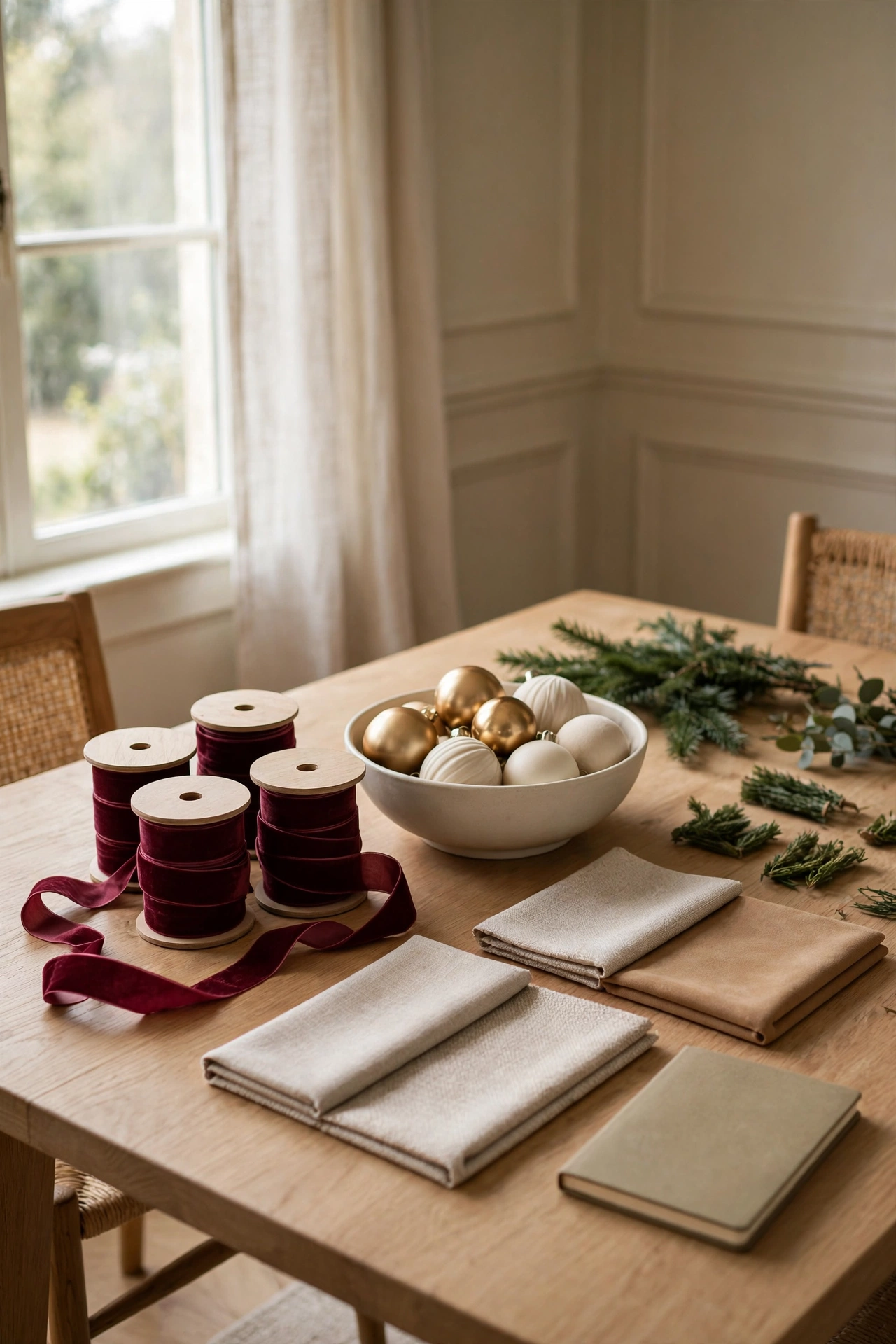
Here is the mistake I made for years. I decorated the tree on a Saturday, the mantel whenever I found the garland box, and the table about an hour before guests arrived. Each one looked fine alone. Together they argued. The tree was rustic, the mantel was glam, and the table was whatever I had left. Now I start with one sentence that names the whole story. This year mine is deep green, burgundy velvet, warm brass and cream, calm and a little bit old world. That sentence is not poetry. It is a filter. When I hold a glittery silver bauble in a store, the sentence answers for me. Silver is not in the story, so the bauble stays on the shelf and my money stays in my pocket.
Shop This Look
This post contains affiliate links. If you buy through them, I may earn a small commission at no extra cost to you.
A few favorites featured in the ideas above:



2. Lock a Tight Color Palette and Refuse to Stray
Four colors plus the green of the tree is plenty, and it is the whole secret.
My palette this year is burgundy, brass, cream and oatmeal, with the deep green of the tree and garland doing the heavy lifting underneath. That is it. No red, because burgundy is already carrying that family and a brighter red beside it looks like a quarrel. No silver, no icy blue, no bright gold that leans yellow. A tight palette feels strict for about a day. Then something lovely happens. Shopping gets faster, the rooms start to rhyme, and pieces I already own suddenly look expensive because they are no longer competing. If you love a softer look, swap burgundy for camel and olive and keep the cream and brass. The colors matter less than the discipline of stopping at four.

3. Choose One Hero Material and Let It Lead
Velvet is my lead singer this year, and every other texture sings backup.
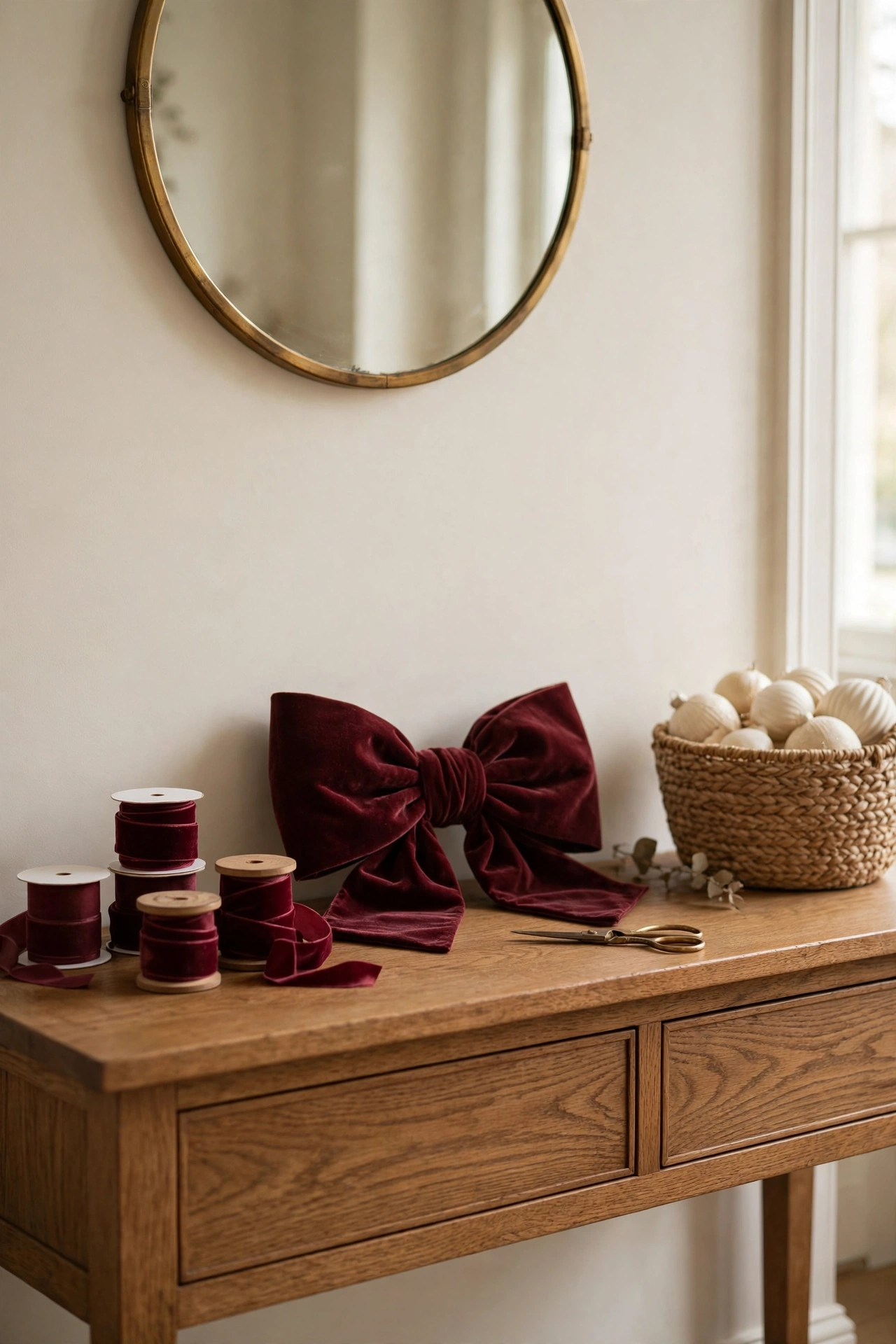
Every cohesive home I have ever walked into has one material doing the leading. This year mine is velvet, in burgundy, and it shows up as the oversized bows everyone is tying right now, the ribbon on the tree and the napkins on the table. Velvet earns the lead because it photographs rich, it feels like December, and a little of it goes a long way. Behind it, linen and knit play quiet support, and wood and brass warm the edges. What I skip is a second loud texture. No sequins dueling the velvet, no faux fur and velvet and satin all asking for attention in the same sightline. Pick your own lead if velvet is not you. Burlap, plaid wool and matte ceramic can all lead a home. Just crown one.
4. Use the Same Greenery Everywhere You Add Green
One kind of green, repeated, reads as a decision. Three kinds read as leftovers.
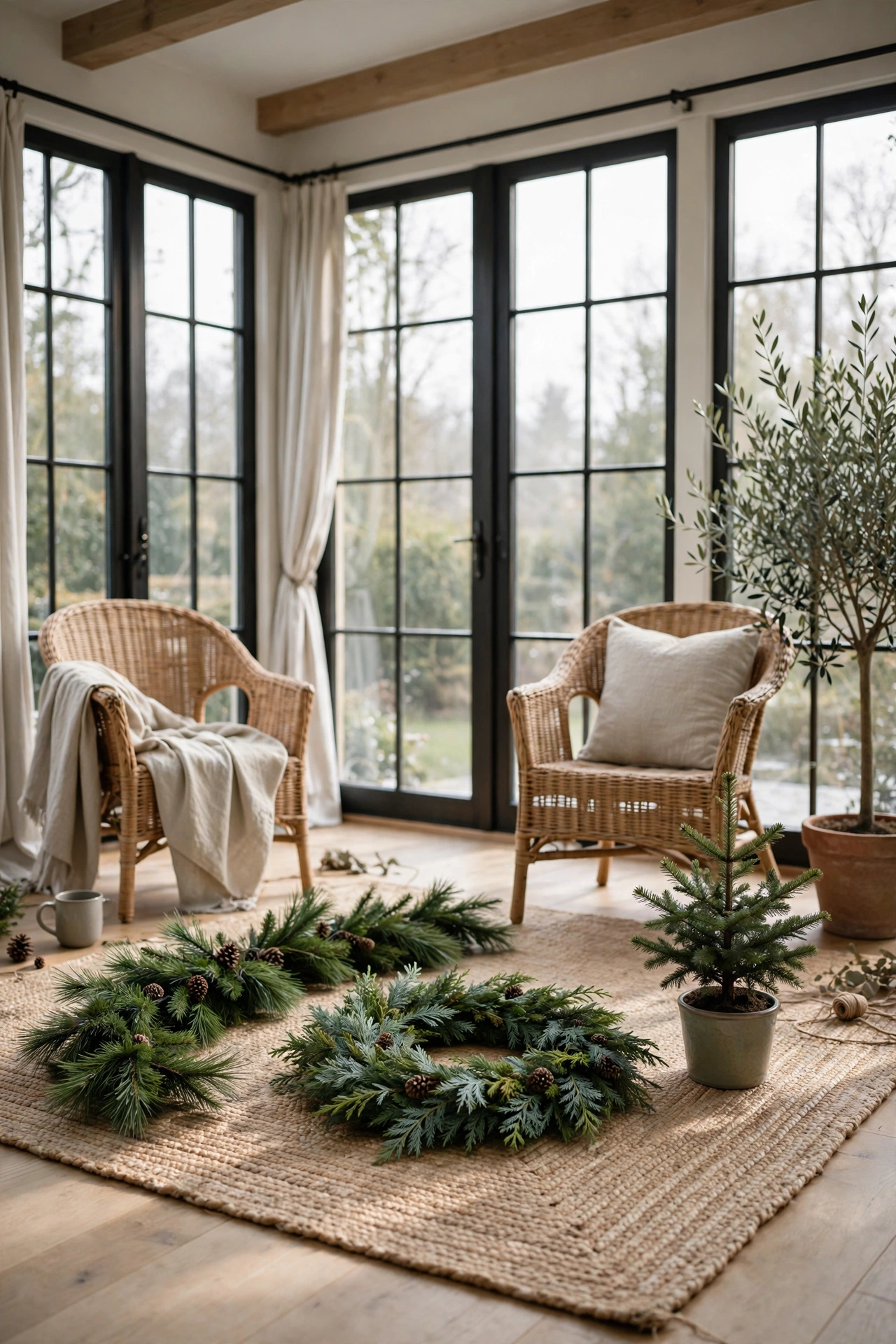
Greenery is the background music of Christmas decorating, and mixed greenery is where cohesion quietly falls apart. Pine on the tree, cedar on the mantel and eucalyptus on the table each look pretty in isolation, but side by side the greens clash in tone and shape and the eye cannot settle. I choose one greenery family and let it travel. Norfolk style pine is mine this year, on the tree, across the mantel and down the center of the table, so every room hands you the same green handshake. Real or faux both work. What matters is that the leaf shape and the color stay cousins. If you already own mixed pieces, layer the odd one deep underneath as filler where only its fullness shows, never on top where its shape shows.
5. Pick One Metal and Repeat It in Every Room
Brass on the tree, brass on the mantel, brass on the table, and the rooms shake hands.
Metal is the easiest thread to pull through a whole house because small brass pieces are cheap and everywhere. My rule is one metal, one finish. Brushed warm brass is mine. It appears as ornaments and bells on the tree, candlesticks on the mantel, and flatware and candle holders on the table. Because the pieces are small, no single one shouts, but together they hum the same note in every room and guests feel it without knowing why. Mixing metals is where I see good decorating go sideways. Chrome beside brass beside black iron makes each vignette feel borrowed from a different house. If your home already leans silver, then silver is your metal and you should commit to it fully. Commitment is the whole trick.

Dress the Tree Like It Is the Headline
The tree is the largest decorated object in the house, so it sets the terms for everything else. I dress it in a strict order, lights, ribbon, ornaments, base, topper, and I let each layer repeat a choice the mantel and table will borrow later. Get the headline right and the supporting pieces almost style themselves.
6. Put the Lights On First and Keep One Warm Tone
Lights are the foundation, and one warm tone everywhere keeps the glow even.
I used to hang ornaments first because they are the fun part, and then I would wrestle light strands around them and knock half of them off. Lights go on first now, always, and they go deep into the branches rather than skating across the surface. Deep lights make the tree glow from inside, which is the difference between a tree that twinkles and a tree that looks decorated in a hurry. The second half of this step matters just as much. Every strand in my house is the same warm white. The tree, the mantel garland and the little cluster lights on the table all share that one tone, because mixed light temperatures are the fastest way to make a room feel off. One strand leaning blue can sour a whole evening view.

7. Dress the Tree With the Same Ribbon as the Mantel
The ribbon is the sentence the tree and the mantel say together.
If I could keep only one trick from this whole guide, it would be this one. Buy one generous spool of your hero ribbon and use it in both headline places. On the tree I work it in loose loops, pushing the ribbon deep and letting it billow out between branches, which gives that soft cascading look that is everywhere this year. On the mantel the same ribbon becomes one oversized bow, and suddenly two separate pieces of furniture are telling the same story. Guests will not name what you did. They will just say the room feels pulled together, which is the highest compliment Christmas decorating gets. Wired ribbon holds its shape best on the tree, while the softer lengths make the prettier bow, so I buy wired and loosen my expectations for the bow.

8. Hang Ornaments in Your Palette and in Three Sizes
Big, medium and small, placed in that order, gives the tree its rhythm.
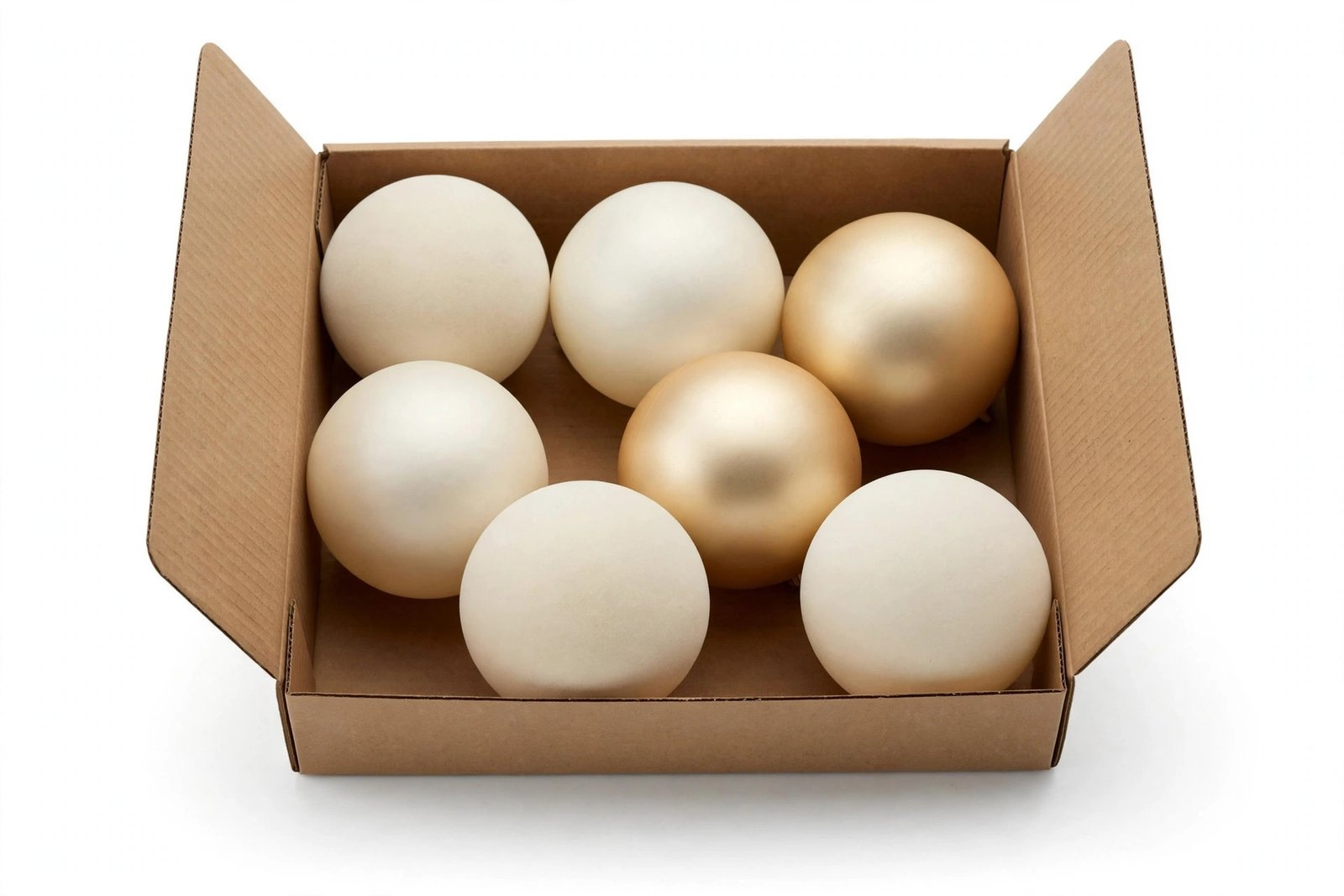
Ornaments are where a palette either proves itself or falls apart in public. Mine are cream, burgundy and brass, a mix of matte ceramic, artisan style glass and a few treasured old pieces that happen to fit the colors. Sentimental ornaments in wild colors get their own small tree in the hallway, where they are honored instead of hidden. On the main tree I hang in size order. The largest ornaments go on first, deep and low, where they fill the gaps. Medium ones fill the middle. The smallest and prettiest go last, out on the branch tips where the light catches them. That order sounds fussy and takes ten extra minutes, and it is the reason a tree looks styled rather than sprinkled. Stand back every few minutes. The tree will tell you where it is hungry.

9. Finish the Tree Base With a Texture the Room Already Owns
The base of the tree should echo a texture nearby, not start a new story.
The bottom of the tree is the most forgotten square foot of Christmas, and it shows. A tree skirt or collar in a clashing fabric undoes the calm you built above it. My answer is to borrow a texture the room already speaks. The woven collar I use matches the seagrass and jute tones in my rug and baskets, so the tree seems to grow out of the room instead of landing on it. A cream knit throw draped as a skirt works the same way if your room leans soft. What I avoid is the novelty skirt, the glitter one and the plaid one from another theme entirely, however sentimental. If a skirt carries memories, fold it into the hallway tree display. The main tree base has one job, and that job is quiet agreement with the floor around it.
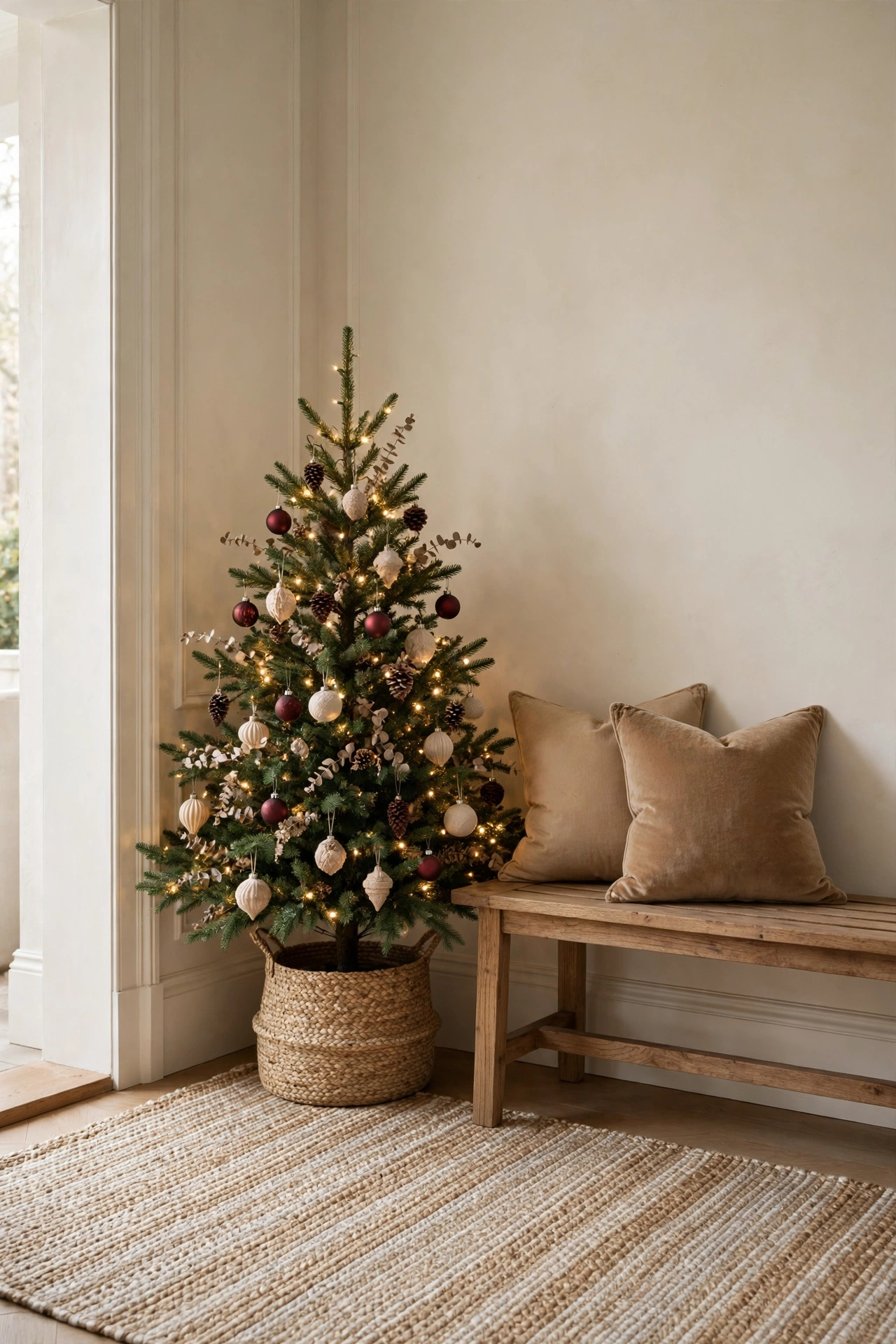
10. Let the Topper Say the Theme One Last Time
The topper is the full stop at the end of the tree, so make it speak your language.
A topper in the wrong material can quietly contradict everything below it. I have seen a rustic twig star undo a glamorous tree and a glitter angel fight a calm one, and in both cases the topper won the argument because it sits at eye level against the ceiling where nothing competes with it. Mine is a simple brass star, plain and warm, with a burgundy velvet bow tied just beneath it. The star repeats my metal, the bow repeats my hero material, and the tree finishes its sentence in the same voice it started with. If your theme leans Alpine and sparse, a plain wooden star or a bundle of bare branches can be beautiful. Whatever you choose, hold it up against the finished tree in daylight before you commit. Toppers are easier to judge before the ladder comes out.

Carry the Same Story Across the Mantel
The mantel is the tree’s closest relative, and it should look like one. Same greenery, same ribbon, same metal, same warm light, translated into garland and stockings and candlelight. When the tree and the mantel agree, the whole living room relaxes, and guests feel it the moment they sit down.
11. Build the Mantel From the Same Garland as the Tree Story
Same greenery, same ribbon family, same lights, and the mantel joins the tree.
The mantel is where most homes accidentally start a second theme. The garland is a different green, the ribbon is a brighter red, and the whole fireplace becomes a cousin instead of a sibling to the tree. I build my mantel like a small echo of the tree. The garland is the same Norfolk style green, fluffed wide and laid with the fullest part forward. The warm lights woven through it match the tree strand for strand. Then the ornaments come out of the same trays, a few cream and burgundy pieces tucked into the green exactly as they sit on the branches across the room. Stand where the two are visible together, which in my house is the doorway, and squint. If the greens and the glow read as one family, you have done it.
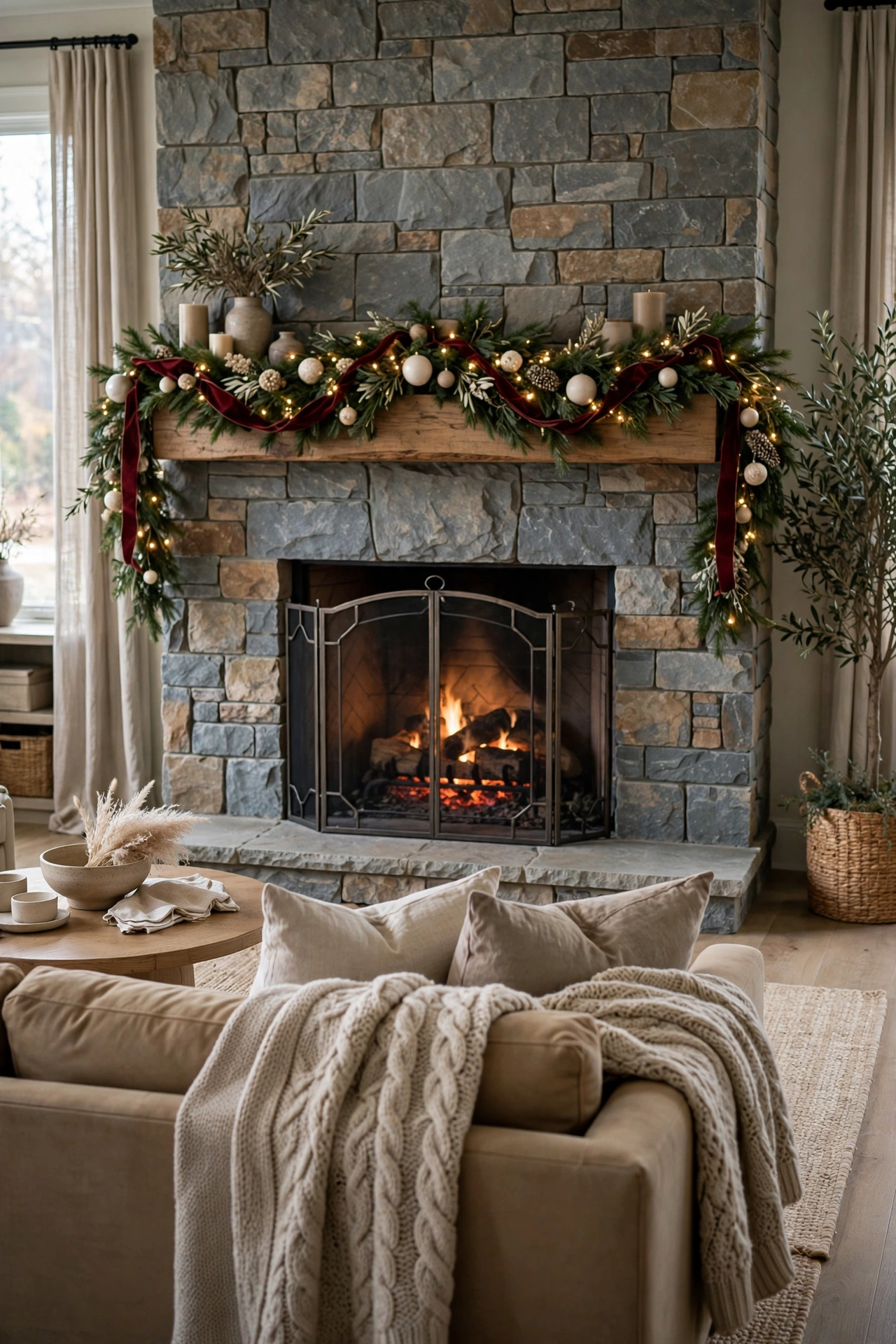
12. Hang Stockings in the Palette, in Fabrics That Belong
Stockings are textiles at eye level, so their colors carry more weight than you think.
Stockings hang right at the center of the mantel picture, which makes them some of the loudest textiles in the room. Mine are cream and oatmeal knit, quiet and nubby, with our names kept off them because the knit itself is the decoration. They support the palette instead of performing in it, and the burgundy stays where it belongs, in the bow above them. When I see stockings in bright red felt or novelty patterns beside a calm tree, the mantel loses the argument every time, no matter how good the garland is. If your family stockings are beloved and loud, give them the place of honor on a hallway rail or the staircase, styled as their own moment. The mantel set can be the calm one. Both can be loved. They just do not have to share one shelf.

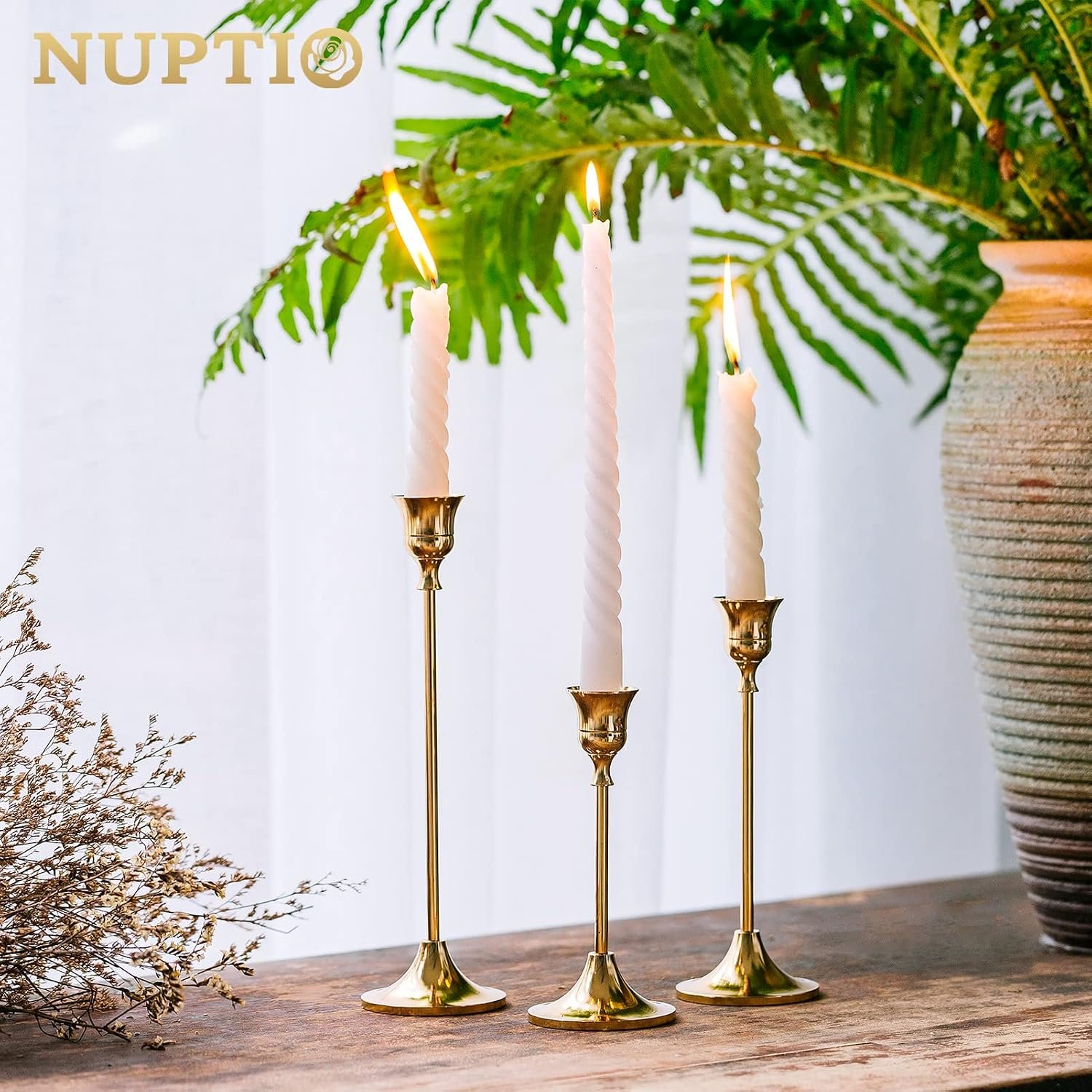
13. Set Candles in Your One Metal at Varied Heights
Candlelight is the glue, and varied heights keep it from looking like a shop shelf.
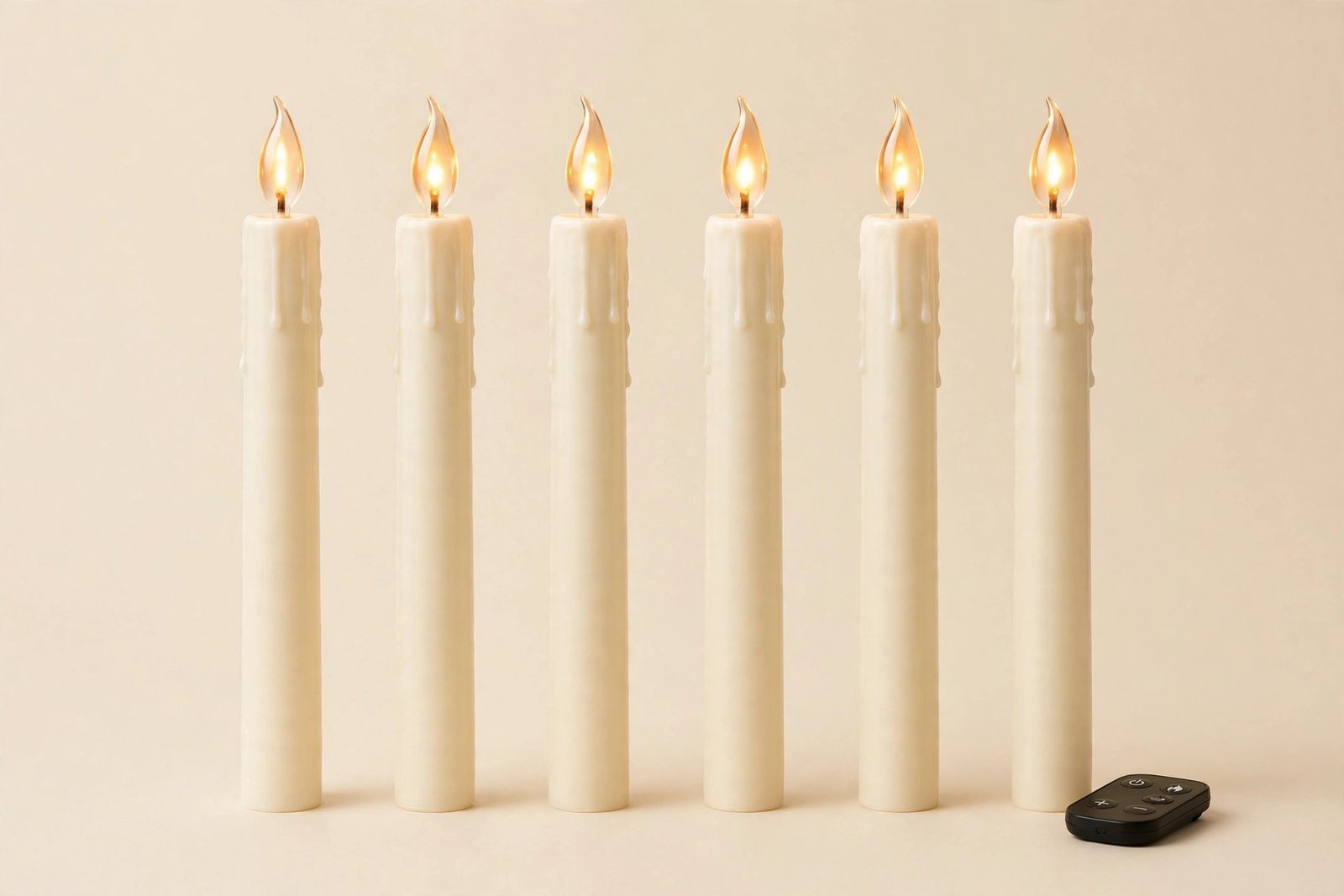
If ornaments are the words of the theme, candlelight is the tone of voice. I place brass candlesticks on the mantel in uneven groupings, tall at the ends and shorter toward the middle, with ivory tapers in every one. The brass repeats the tree bells and the table holders, the ivory repeats the cream ornaments, and when they are lit the whole fireplace end of the room glows at the same warmth as the tree lights. Flameless tapers have honestly won me over for the mantel. The newest ones flicker well, they can run on a timer, and I never spend an evening watching wax threaten the garland. What matters is that every flame in the room shares one warm color, from the tree bulbs to the last taper.

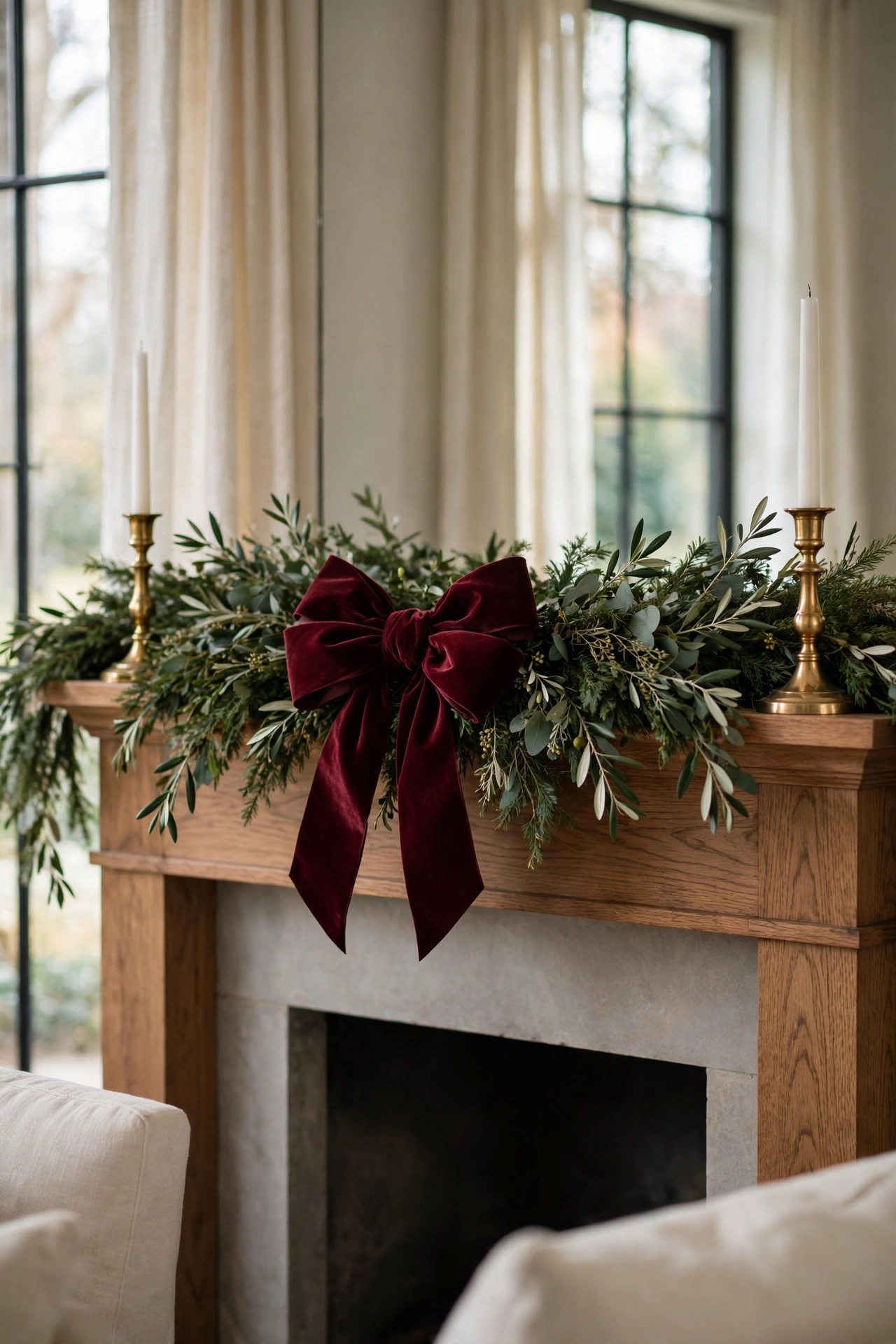
14. Give the Mantel One Oversized Bow Moment
One big bow, placed once, does the work of a dozen small decorations.
This is the trend I have happily surrendered to. Oversized velvet bows are everywhere this Christmas, on trees, on wreaths, on chair backs, and the mantel is where a single one earns its keep. Mine sits at the center of the garland, made from the same burgundy velvet as the tree ribbon, with long tails that fall almost to the hearth. It is the mantel answering the tree in the same accent. One bow is a statement. Three bows are a craft project. I fluff the loops in the morning when I pass, the way you would straighten a picture frame, because velvet relaxes overnight and a crisp bow at breakfast keeps the whole mantel looking freshly done. If your mantel is narrow, one bow at the corner where the garland spills down looks just as intentional and keeps the center calm.
Set the Table to Match, Then Do the Final Edit
The table is where the theme gets touched, sat with and tested over a long dinner, so it deserves the same care as the tree. Cloth first, then a centerpiece borrowed from the tree and mantel, then the small metal repeats at every setting. Finish with a slow walkthrough and a ruthless little edit, and the house is done.
15. Start the Table With a Runner and Napkins From the Theme
The table wears the theme in cloth first, before a single dish arrives.
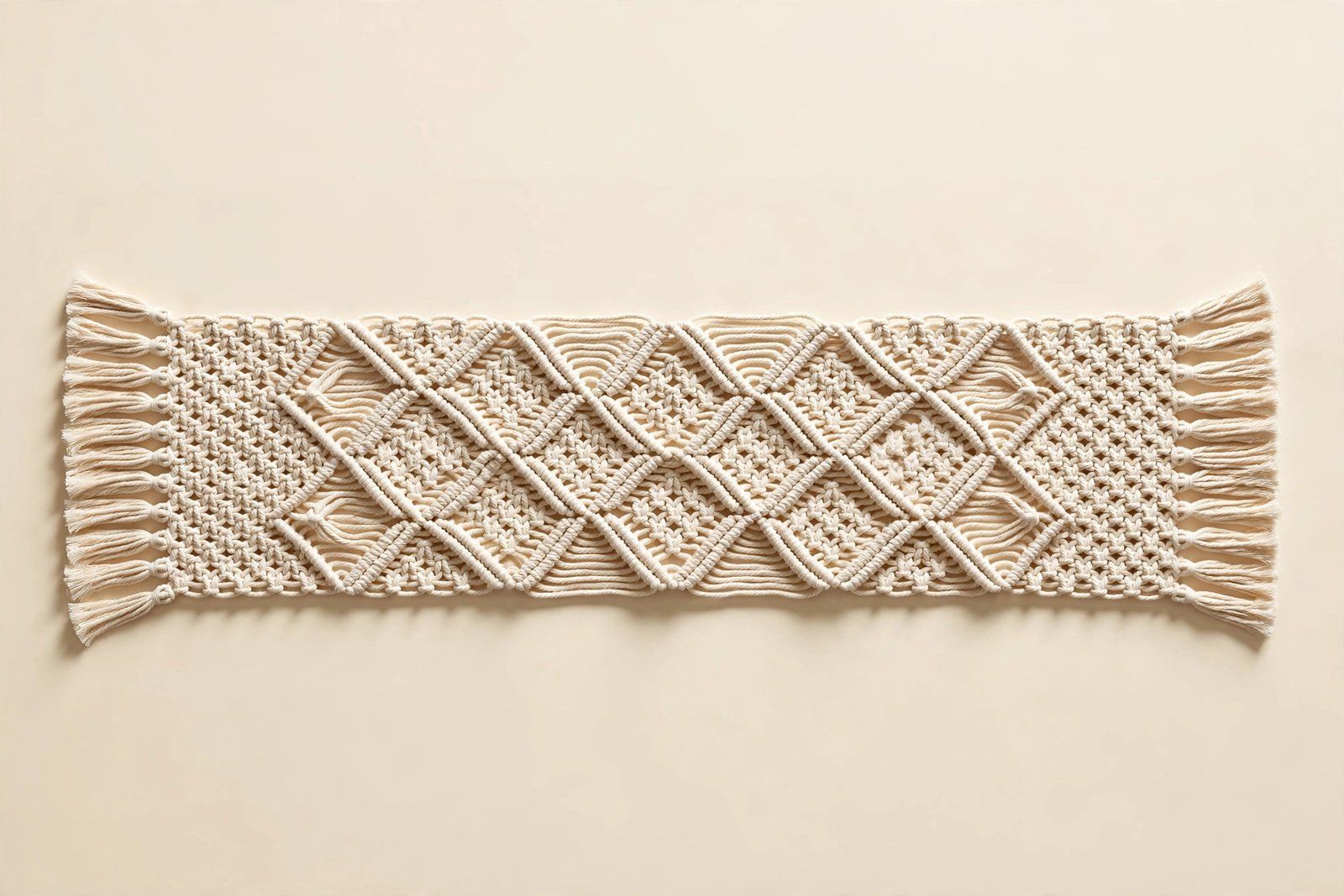
A Christmas table joins the theme fastest through its textiles, because cloth covers more of the table than any centerpiece ever will. My runner is cream and textured, in the same family as the knit stockings and the tree skirt tones, and my napkins are burgundy linen, which is the velvet bow translated into a fabric guests actually touch. That pairing means the table is already speaking the language of the tree and the mantel before I set down a plate. I keep a fall table the same way, and the layered linen approach in my fall tablescape ideas works here with the colors swapped to your palette. Iron the napkins. It takes four minutes and it is the difference between a table that looks dressed and a table that looks stored.

16. Build the Centerpiece From Tree and Mantel Leftovers
The best centerpiece is made of pieces the tree and mantel already introduced.
Here is my favorite money saving truth. A centerpiece built from the same greenery, the same ornaments and the same ribbon offcuts as the rest of the house costs almost nothing and matches perfectly, because it is literally made of the theme. I run a low length of the Norfolk style greenery down the middle of the table, tuck in the spare cream and burgundy ornaments from the trays, and add small brass bells where the green looks thin. Nothing stands tall enough to block a face, because a centerpiece you have to peer around is a guest repellent in a pretty disguise. Fresh cedar cuttings from the garden can layer underneath the faux green for scent, and a bowl of whole walnuts or oranges adds the kind of honest, edible texture that styled tables often miss.

17. Repeat Your Metal in the Place Settings
Flatware and holders are small, and that is exactly why they tie the table in.
Place settings are where the table either shakes hands with the mantel or ignores it. My brass appears again here, in the flatware handles and in a small brass candle holder at every other setting. Nobody will point at a fork and praise your cohesion. But the eye travels from the tree bells to the mantel sticks to these small warm glints at every plate, and the whole room registers as one thought. If your household flatware is stainless and buying a brass set is not in the cards, use what you have and let the holders, the chargers or a simple brass napkin ring carry the metal instead. One brass touch per setting is enough. This step is about a thread, not a takeover, and threads are what stitch separate pieces of furniture into one home.

18. Match the Glassware and Evening Glow to the Tree Lights
Warm glass and warm light keep the table inside the same evening as the tree.
By the time dinner is served, light is doing half the decorating, and the table needs to glow at the same temperature as the tree. I use amber and clear glass in warm tones rather than icy crystal, because amber glass throws the same honeyed color as the warm white strands across the room. The cluster lights that are having such a moment this year help here too. A small strand woven through the centerpiece greenery connects the table to the tree without a cord in sight if you choose a battery strand and hide the pack under the runner. Then I dim the overheads. Every cohesive Christmas room I have ever loved was lit low in the evening, with the tree, the mantel candles and the table all burning at one shared warmth.

19. Do a Final Walkthrough and Edit Like You Mean It
Cohesion is mostly removing, so the last step is a slow walk with honest eyes.
When everything is up, I make tea and walk the whole route a guest walks, from the front door to the tree, across to the mantel and into the dining room. I am looking for the piece that breaks the sentence. It is always there. A silver frame I forgot, a bright cushion, a stray ornament in a color I swore off in step two. Each one gets moved, turned around or quietly retired to another room, and the theme tightens like a belt. Then I check my own rule, that every choice appears at least three times. Burgundy in the tree ribbon, the mantel bow and the napkins. Brass in the bells, the candlesticks and the flatware. Cream in the ornaments, the stockings and the runner. Three sightings make a pattern, and a pattern is what makes a house feel designed on purpose.

More Favorites
This post contains affiliate links. If you buy through them, I may earn a small commission at no extra cost to you.
A few more favorites from the ideas above:

If your tree, mantel and table have spent past Decembers politely ignoring each other, I hope this year they finally get introduced. None of these steps is expensive on its own, and most of them are about decisions rather than purchases. One sentence. Four colors. One hero material. One green, one metal, one warm light. Repeat each choice three times, then walk the house and take away the few things that argue. That is the entire recipe, and it works in a small apartment just as well as it works in a house with a dining room, because it was never about the size of the stage.
Start with the sentence this week, before the bins come down from storage. Shop your own boxes against it first. You will be surprised how much of a beautiful theme you already own, once a clear story tells you which pieces belong together. Then pour something warm, light the candles, and enjoy a home that feels like one story told three ways. For the quieter corners of the house, my cozy fall bedroom ideas carry the same calm into the rooms where December slows down.
With love and light
Get Fresh Home Ideas Every Week
Seasonal decor ideas, organizing tips, and cozy home inspiration, straight to your inbox.
More Christmas Ideas You Will Love
Keep browsing for more seasonal inspiration: