
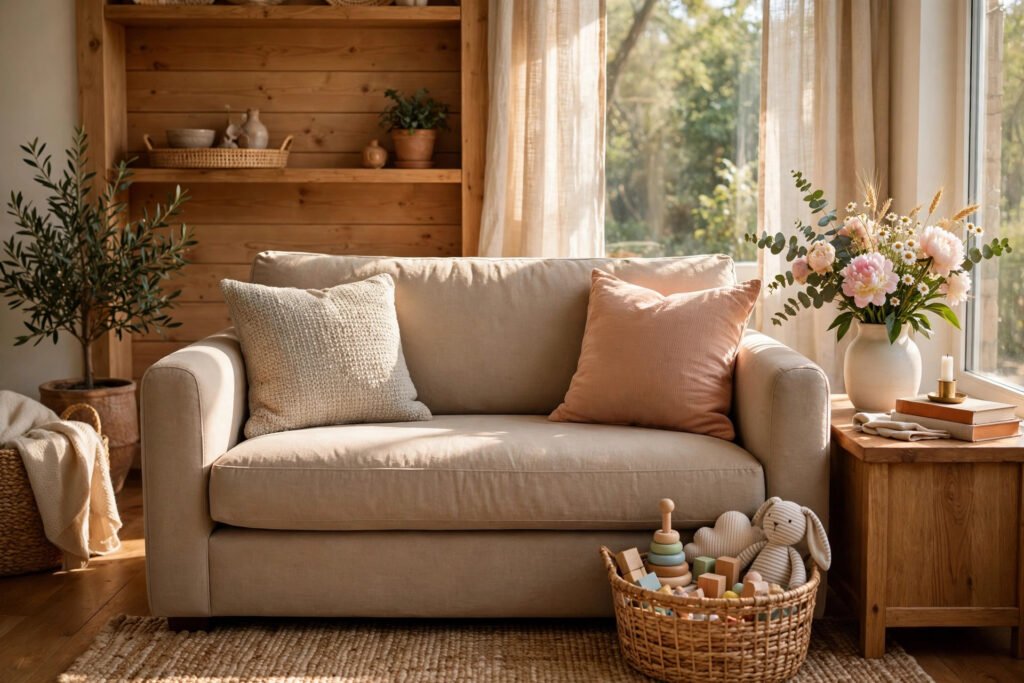
If a text that says we are five minutes away sends you into a full body panic, welcome. You are my people.
I used to treat a playdate like a home inspection. Laundry shoved into the oven. Toys kicked under the couch like I was hiding evidence. A frantic spritz of cleaner in the bathroom while my kid yelled from the front door, “MOM, THEY ARE HERE.”
And here is the part I wish someone had told me sooner. The other mom is not checking your baseboards. She is checking whether her kid will have fun and whether she can sit down for five minutes without stepping on a Lego. That is it. That is the whole test.
So I stopped deep cleaning for playdates and started resetting for them instead. A reset is faster, kinder, and honestly more honest. It takes twenty minutes. It hits the rooms that matter, skips the rooms that do not, and leaves you standing at the door with a smile instead of sweat dripping down your back.
This is my exact system. The route, the timing, the snack station, the playdate basket my kids think is pure magic. Follow it once and you will never panic over a surprise playdate again.
TL;DR: The 20 Minute Playdate Reset
- Reset, do not clean. Tidy visible spaces in a set order: entryway, living room, bathroom, kitchen, play area. Twenty minutes on a timer, then you are done.
- One basket is your whole toolkit. A laundry basket collects every stray item fast, and you sort it later. No decision making in the moment.
- Bathroom and entryway matter most. Five minutes each. Fresh hand towel, emptied trash, clear floor. First impressions live here.
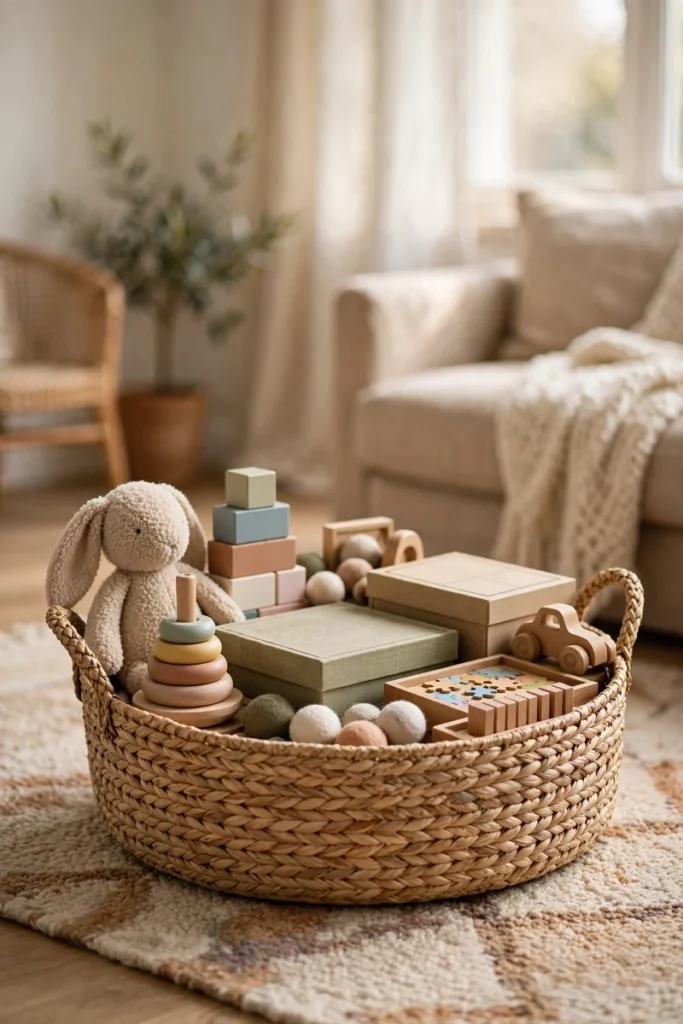
- Keep a playdate basket of special toys that only come out for guests. Novelty ends toy fights before they start.
- Set out a simple snack station the moment kids arrive. Full kids play longer and calmer, and it buys you a real conversation with the other parent.
Love these ideas? Get more every week.
Join the newsletter for seasonal decor and cozy home inspiration.
Nobody’s House Is Playdate Ready All the Time
Let me say the quiet part out loud. Nobody’s house is playdate ready all the time. Not the mom with the white couch. Not the mom whose stories always look calm. Nobody.
Homes with kids in them are lived in. There are crumbs in places crumbs should never be. There is a single sock in every room, and science cannot explain how it got there. The couch has a mysterious sticky spot that appeared sometime in March and is now just part of the family.
Here is what I have learned after years of hosting playdates and going to other people’s houses. Guests care about feeling welcome, not about perfection. Think about the homes where you felt most comfortable. I bet they were not the spotless ones. They were the ones where the mom said, “Come on in, ignore the mess,” and you actually believed her.
Kids do not notice dust. They notice whether there is something fun to do and something good to eat. Other moms do not notice your cluttered bookshelf. They notice whether you look stressed or relaxed. Your energy sets the tone of the whole playdate more than your baseboards ever will.
So give yourself permission to stop aiming for guest ready and start aiming for playdate ready. Playdate ready means the floors are clear enough to walk, the bathroom is fresh, there are snacks, and there is something fun to play with. That is the whole list. Everything else is bonus.
Once I let go of perfect, hosting got fun again. I started saying yes to last minute playdates instead of making excuses. My kids got more social time. I got more coffee with a friend time. All because I stopped trying to pass an inspection nobody was conducting.
The Plan: Your 20 Minute Reset Route
Here is the core of the whole system. You work in a specific order, on a timer, and you do not go back to rooms you already finished. The order matters because it follows what guests actually see and use.
The route is simple: entryway, living room, bathroom, kitchen, play area. Entryway first because it is the first thing everyone sees. Bathroom early because it takes focus and every guest uses it. Play area last because it will be destroyed again in ten minutes anyway, and that is fine.
Set a timer for twenty minutes. Not twenty five, not “about twenty.” Twenty. The timer keeps you moving and stops you from falling into the trap of reorganizing a drawer when you should be wiping the sink. When the timer dings, you are done. Whatever is not finished goes in the basket and gets sorted tonight.
This is not a replacement for regular cleaning. If you want a bigger picture system for keeping the house clean with little kids, start there on a calm weekend. This reset is your emergency playbook for the other 90 percent of life.
One more thing before we start. Get your kid involved if they are old enough. Not as punishment, as a team mission. “We have twenty minutes to get the house ready for your friend” turns chaos into a game. Little kids love a timer. Big kids love being the host.
Step 1: Gather Your Reset Tools
One laundry basket, one trash bag, and one damp cloth are the entire toolkit.
That is not a metaphor. You do not need a caddy full of products or a checklist on a clipboard. Grab a laundry basket from the laundry room, a small trash bag, and a damp microfiber cloth. Carry all three with you from room to room like a little cleaning parade.
The laundry basket is the hero of this system. Every stray toy, random sock, stray paper, and mystery object goes into the basket. You do not sort, you do not put things away properly, you do not decide where the random Lego piece lives. You collect. Sorting happens tonight after the kids are in bed, when your brain works again.
The trash bag is for actual trash, and you will be amazed how much of the “mess” is just trash. Wrappers, broken crayons, crumpled papers, the apple core someone left on the stairs. Trash out first makes every room look 50 percent better in about ninety seconds.
The damp cloth is for the one wipe pass you will do in the bathroom and kitchen. One cloth, wrung out well, handles sinks, counters, and sticky spots. If you want to add a spritz of cleaner, go for it, but plain water on a microfiber cloth handles most of what guests will ever touch.
Leave everything else in the cabinet. The moment you open the cleaning closet, you will start a project. We are not doing projects. We are doing a reset.
Step 2: The Entryway Reset
The entryway gets the first five minutes because first impressions live here.
Walk in your front door like you are the guest. What do you see? Probably a shoe avalanche, a coat pile, and a floor that has seen things. Fix it fast.
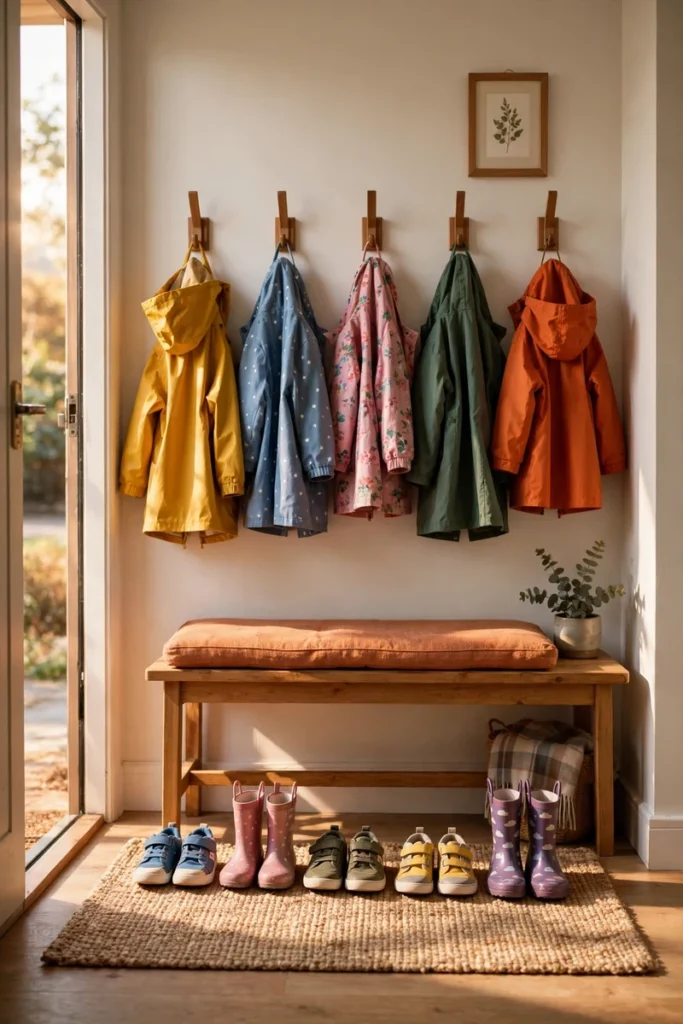
Shoes first. Line up the pairs you actually wear and toss the rest into a basket or the closet. You do not need to organize the whole shoe situation. You need a clear path from the door to the living room. Clear path, clear mind.
Coats next. Hang up what fits on hooks, drape the rest over a chair in a bedroom, or honestly just toss them on your own bed for now. Guests hang their coats where you tell them to. Point to the hooks and say, “Hang yours right here.” Done.
Wipe the door handles and light switch with your damp cloth. These are the two things every guest touches, and they collect fingerprints fast. Ten seconds, huge payoff.
Last, make it smell like someone cares. Open a window for two minutes, light a candle if you have one handy, or toss a dryer sheet behind the entryway bench. Scent is the fastest way to make a home feel fresh, faster than any amount of dusting.
Leave a clear spot for guest shoes and guest coats. When kids arrive and there is an obvious place for their stuff, the entryway stays tidy by itself. Chaos at the door sets the tone for chaos everywhere else.
Step 3: The Living Room Reset
The living room needs only three passes: floor, surfaces, soft things.
Pass one is the floor. Walk the room with your laundry basket and pick up everything that does not belong on the floor. Toys, books, blankets, shoes, the remote that migrated to the hallway. Basket everything. If the floor is clear, the room reads as clean even if the shelves are a mess.
Pass two is surfaces. You are not dusting or styling. You are stacking and straightening. Stack the books, line up the remotes, fold the throw blanket instead of leaving it in a heap. Straight lines trick the eye. A coffee table with three neat stacks looks tidy even if the stacks are random stuff.
Pass three is soft things. Plump the couch cushions, smooth the throw pillows, shake out the blanket. This takes sixty seconds and makes the biggest visual difference of anything in this step. Lumpy cushions scream chaos. Plump cushions whisper calm.
What about the toys that live in the living room? If you have a toy corner or a basket system, great, use it. If the toys are everywhere, they go in the laundry basket for now. Do not organize them. A basket of toys in the corner is completely fine for a playdate. Kids will dump it out in four minutes anyway.
If you have decent toy storage ideas that actually look good in place, this step takes two minutes. If you do not, the basket method still gets you there. The system works either way.
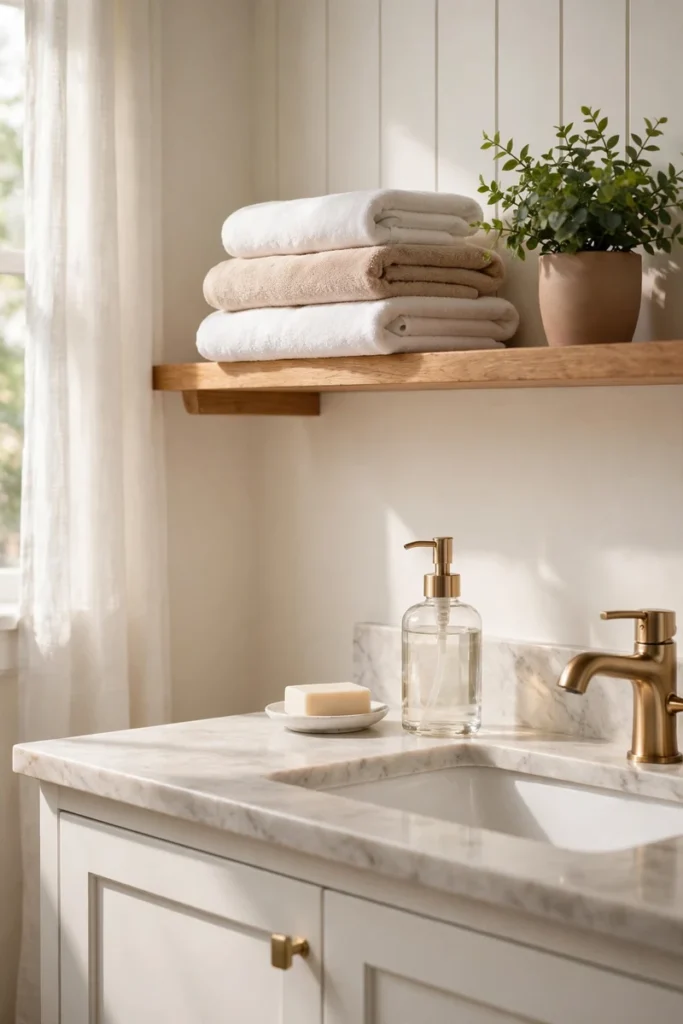
Step 4: The 5 Minute Bathroom Refresh
Guests judge your whole house by your bathroom, so give it five focused minutes.
I am not saying this is fair. I am saying it is true. Every guest uses the bathroom. Nobody uses your bedroom. The bathroom is the one private space every visitor sees up close, so it gets priority.
Start with the trash. Empty it or at least press it down and put a fresh bag in. An overflowing bathroom trash can undo every other thing you did in this room. It takes twenty seconds. Do it first.
Next, the toilet. Quick swish with the brush, wipe the seat and handle with your damp cloth. You are not scrubbing grout. You are making the two surfaces people actually touch look and feel clean. Thirty seconds.
Now the sink and mirror. Wipe the sink basin and faucet with the damp cloth, then do one fast pass over the mirror with a dry corner of the cloth or a bit of toilet paper. Toothpaste spots on the mirror are the number one thing that makes a bathroom look dirty, and they wipe off in seconds.
Put out a fresh hand towel. This is the single highest impact move in the whole bathroom. A clean, dry hand towel signals “this house is cared for” louder than anything else you can do. If you do not have a fresh one ready, hang the least damp one you own and fold it neatly. Folded reads as fresh.
Check the soap. Make sure there is some, liquid or bar, it does not matter. An empty soap dispenser is a small thing that feels like a big oversight to a guest washing their hands.
Last, close the shower curtain and shut the cabinet doors. Out of sight really is out of mind. Nobody opens your medicine cabinet at a playdate, but everyone sees an open shower full of bottles. Curtain closed, doors shut, done.
If you want to go one step further, keep a small bathroom caddy under the sink with a fresh hand towel, a spare roll of toilet paper, and a mini trash bag. Then this whole refresh is grab and go. I will show you how to build one tonight in the quick win section below.
Step 5: Set Up the Snack Station
A simple snack station buys you calm the second kids arrive.
Here is what happens at every good playdate. The kids walk in, they get excited, they run around for about six minutes, and then someone says, “I am hungry.” If you have snacks ready, the playdate continues smoothly. If you do not, you are raiding the pantry while two kids melt down in your kitchen.
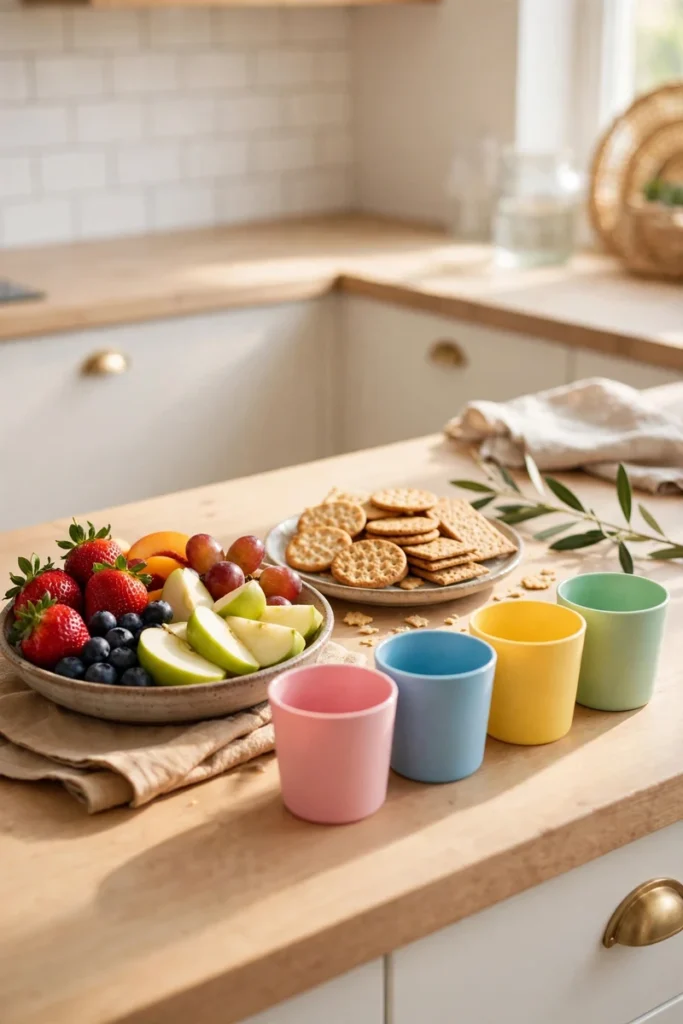
Clear one stretch of counter or the kitchen table. Wipe it with your damp cloth. That is your station. You do not need a fancy setup. A clear surface with food on it looks intentional and welcoming.
Put out water first. A small pitcher or a few cups of water, and you are already winning. Kids get thirsty fast when they are playing, and having water visible means nobody has to ask you for a drink every ten minutes.
Now the food. Keep it simple and sturdy. Cut fruit, crackers, cheese cubes, pretzels, popcorn. Two or three options is plenty. Put them in bowls or on a tray so it looks like a spread instead of a pantry raid. A muffin tin makes a perfect little snack tray for small kids, one treat per cup.
Think about the mess factor. This is not the moment for chocolate pudding or red juice. Choose snacks that do not stain the couch if they migrate. Fruit, crackers, and dry cereal are your friends. Save the art projects for after snack time.
Set out napkins and a small trash bowl on the station. Kids will use a trash bowl if it is right there. They will drop wrappers on the floor if it is not. Make the easy choice the tidy choice.
One safety note. Before kids arrive, do a quick scan of the kitchen for anything sharp or hot at kid height. Knives go in a drawer, not the counter block if little ones are coming. Hot drinks go up high. This takes thirty seconds and it is the most important thirty seconds of the whole reset.
When the kids arrive, walk them straight to the snack station. “Snacks are here, water is here, eat as much as you want.” Full kids play longer, fight less, and give you actual time to talk to the other parent. The snack station is not just hospitality. It is strategy.
Step 6: Bring Out the Playdate Basket
Keep a basket of special toys that only come out when guests arrive.
This is my favorite trick in the whole system, and it works like magic. The playdate basket is a collection of toys that live hidden away and only appear for playdates. Because the toys are “new” every time, they hold kids’ attention far longer than the everyday toys they are bored of.
Novelty is the whole game. Your kid has played with their own toys a thousand times. The guest has never seen them. But a toy that is special and rare feels exciting to both kids, and excited kids share better, argue less, and stay busy longer.
What goes in the basket? Aim for activities that work for two or more kids. Building sets, dress up clothes, a doctor kit, play food and a little kitchen, coloring supplies with fresh paper, sticker books, a simple board game. Avoid anything with tiny pieces that will end up in the couch, and avoid anything your kid will guard with their life. More on that in a minute.
Rotate the contents every month or two. Swap in a few “new” things from the toy closet or the donation pile you have not taken in yet. Rotation keeps the magic alive. If the same basket comes out every time, it stops being special.
Let your kid help choose what goes in. This matters. When they have a say, they feel ownership over the basket instead of resentment that their toys are being shared. Ask, “Which toys should we put in the guest basket this month?” and let them pick. You can veto the beloved stuffed animal they sleep with. That one stays private.
Store the basket somewhere the kids cannot reach on their own. A high closet shelf, the top of your closet, a cabinet with a child lock. If the basket is always available, it is not special. The hiding is the point.
When guests arrive, bring the basket out with a little ceremony. “I got the special basket out for you guys.” Watch their faces. It never gets old. If toy clutter is an ongoing battle in your house, this pairs perfectly with a bigger plan to stop the toy flood without the mom guilt. Fewer everyday toys plus one magic basket changes the whole dynamic.
Step 7: Decide What to Hide and What to Leave Out
Hide the fragile and the fight worthy. Leave out the sturdy and the shareable.
Not every toy should be available during a playdate, and that is okay. You are the host, and part of hosting is setting the kids up to succeed. A little editing before guests arrive prevents most toy fights before they start.
Hide anything fragile or precious. The Lego masterpiece your kid spent three days building. The new birthday present they are still obsessed with. Anything with small pieces you will be finding under the couch until next spring. Put these in your bedroom with the door closed. This is not selfish. It is smart.
Hide anything that causes fights every single time. You know the toy. Every family has one. The thing both kids always want at the same moment. If it disappears for the afternoon, nobody misses it and everybody has more fun.
Also hide anything dangerous for the age group. If your kid is older and has small piece sets, and the guest is a toddler, those sets go away. Choking hazards are not worth it. Same with anything with strings, magnets, or sharp edges that a younger guest might not handle safely.
Leave out the sturdy, shareable stuff. Balls, big blocks, the playdate basket, art supplies, dress up clothes, play kitchen food. Things that work for two kids at once. Things that can survive being thrown, because something will be thrown.
Leave out one or two open ended activities. Playdough, coloring, building blocks. Open ended toys keep kids playing side by side without needing the exact same piece at the exact same time. That is where most sharing fights start, with two kids wanting the one special piece.
Tell your kid the plan ahead of time. “I put your Lego city in my room so it stays safe. Everything else is fair game.” Kids accept boundaries way better when they hear them before the guest arrives instead of in the middle of a conflict. It also teaches them a real hosting skill: thinking about what a guest needs.
If getting your kid to put toys away before guests arrive is normally a battle, check out these ideas to get your kids to tidy up without nagging. The reset goes twice as fast when little hands help.
Step 8: Run the Landing Routine
Greet arriving kids with a job, not a list of rules.
The first five minutes after kids arrive set the tone for the whole playdate. If the start is chaotic, the middle will be chaotic. If the start is warm and directed, kids settle in fast.
Meet them at the door with genuine excitement. “You are here! We have been waiting for you!” Kids can tell when they are truly wanted. That welcome matters more than any activity you planned.
Give your kid a hosting job before the guest arrives. “You are the tour guide. Show them the snack station and the playdate basket.” A job turns your kid from a competitor into a host. Hosts share. Competitors guard. The mindset shift is real and it starts with one small responsibility.
Walk the kids to the snack station first, every time. Food first, play second. Hungry kids are cranky kids, and the kids just arrived from wherever they were, which means they are probably due for a snack. Let them eat, drink some water, and decompress for a few minutes.
Then bring out the playdate basket together. Let your kid do the honors. “Do you want to show them the special basket?” Pride is a powerful sharing motivator. When your kid gets to be the one who reveals the fun, sharing feels like generosity instead of loss.
Skip the big rule speech. You do not need to announce every house rule at the door. If something comes up, handle it in the moment, kindly. A long list of rules at arrival makes kids anxious and makes your home feel strict instead of fun. Save the boundaries for when they are actually needed.
For the parents, have a spot ready. Clear one chair or one end of the couch. Put out coffee, tea, or water without being asked. “Can I get you something to drink?” is the universal signal for “relax, you are welcome here.” The other parent will remember how they felt in your home long after they forget what your living room looked like.
Try It Tonight: Build Your Playdate Basket and Bathroom Caddy
This takes under twenty minutes and it makes every future reset twice as fast. Do it tonight after the kids are in bed.
First, the playdate basket. Grab any basket, bin, or even a paper grocery bag. Walk through the house and collect six to eight toys that are good for two kids: building toys, dress up items, play food, coloring supplies, sticker books. Skip anything your kid would cry over sharing. Put the basket on a high closet shelf where little hands cannot reach it. Done. That is the whole project.
Next, the bathroom caddy. Find a small bag or bin and put in a fresh hand towel, a spare roll of toilet paper, a mini trash bag, and a pack of disinfecting wipes. Slide it under the guest bathroom sink. Next time you do the five minute bathroom refresh, everything you need is in one grab.
That is it. Two small kits, one quiet evening, and you are permanently more playdate ready than you were this morning. Future you says thank you.
Mistakes to Avoid
I have made every one of these mistakes, some of them more than once. Learn from my chaos so you do not have to repeat it.
Mistake 1: Deep Cleaning Instead of Resetting
This is the biggest trap. The timer is running, and suddenly you are scrubbing the grout behind the toilet or reorganizing the pantry. Stop. Deep cleaning before a playdate is like repainting the house before a dinner party. Nobody will notice the grout. Everybody will notice that you are stressed and sweaty when they arrive.
A reset is about what guests see, touch, and use. Floors clear, bathroom fresh, snacks out, fun available. That is the job. The baseboards can wait for a Saturday when no small humans are coming over. If you catch yourself starting a project, ask one question: will a seven year old notice this? If the answer is no, walk away.
Mistake 2: Hiding Everything Fun
In a panic, some of us shove every toy out of sight so the house looks clean. The house looks great. The kids are bored in eleven minutes. Then they start inventing games with your couch cushions and your throw pillows, which is worse than any toy mess would have been.
Playdate ready does not mean toy free. It means the right toys are out. The playdate basket, a few sturdy favorites, something to build and something to draw with. Kids need stuff to do. A house with nothing to play with is not relaxing for anyone, least of all you.
Mistake 3: Apologizing for the Mess Over and Over
“Sorry about the mess, sorry, it is usually cleaner, sorry, we have been so busy.” Every apology puts the other mom in the awkward position of reassuring you. Say it once if you must, then let it go. Better yet, do not say it at all.
Here is the truth. She is not thinking about your mess. She is thinking about her own mess at home. Every time you apologize, you remind both of you about the clutter instead of enjoying the visit. Confidence is welcoming. Constant apologizing is exhausting, for you most of all.
If you need a line, try this one: “Come on in, we live here.” Warm, honest, done. Then offer her a drink and move on with your afternoon.
Mistake 4: Saying Yes to Playdates You Dread
This one is sneaky. Sometimes the panic is not about the house at all. It is about the playdate itself. The kid who breaks everything. The parent you do not click with. The timing that ruins nap time or dinner.
You are allowed to say no. You are allowed to suggest the park instead. You are allowed to say, “This week is crazy, how about next week?” Hosting out of guilt leads to resentment, and kids pick up on that energy fast.
Save your hosting energy for the playdates that feel good. When you actually want the company, the twenty minute reset feels easy. When you are dreading it, no amount of cleaning will fix the feeling. Protect your yes.
What About…?
You asked, I am answering. The real life curveballs that make playdates feel complicated.
What about last minute notice playdates?
You get the text: “Can we come over in ten minutes?” Do the five minute version. Entryway, bathroom, snacks. That is it. Clear the entryway floor, do the fast bathroom refresh, put out water and one snack. Skip the living room deep reset and just basket the floor toys. Bring out the playdate basket, which is already packed because you did the try it tonight project.
And remember, a last minute playdate is a compliment. They wanted to come to your house. They are not expecting a magazine spread. They are expecting your kid and a good time. Lower the bar, open the door, and enjoy the fact that someone chose your home on short notice.
If ten minutes still feels impossible, suggest meeting at the park or the backyard instead. “We are a disaster zone today, want to meet at the playground?” is a perfectly good answer. No guilt required.
What about kids with allergies or dietary needs?
Ask before they come. A quick text works: “Any allergies I should know about?” Most parents will tell you gladly, because they ask everyone the same question. Write it down if you need to. Forgetting is worse than asking twice.
Keep the snack station simple and readable. Put snacks in separate bowls so nothing is mixed together. If you know about a nut allergy, skip anything with nuts entirely, including the granola bars with the tiny warning on the back. Cross contact matters, so use clean bowls and clean hands when you set things out.
Label anything homemade. A little note that says “oatmeal cookies” lets the other parent decide in two seconds. When in doubt, stick to whole foods for the shared station: fruit, veggie sticks, cheese, crackers with clear packaging. The original labels do the communicating for you.
And keep any unsafe foods completely out of reach, not just off the station. If the guest cannot have dairy, the cheese for your own kid’s lunch stays in the fridge until later. It is a small accommodation that means everything to an allergy parent.
What about when my kid does not want to share?
First, this is normal. Sharing is a skill, not a personality trait, and it develops at different speeds. Your kid is not rude. They are learning. The goal is progress, not perfection.
Prep before the guest arrives, not during a conflict. “Your friend is coming at two. Which toys should we put away to keep safe, and which ones will you share?” Giving them control over what gets hidden makes sharing the rest feel like their choice. That choice matters.
Let them keep one special thing private. The stuffed animal they sleep with, the brand new toy from grandma. One protected item is healthy. It teaches them that boundaries are okay, which is a lesson they will use forever.
During the playdate, use timers for high demand toys. “Five minutes each, then switch.” Timers feel fair to kids in a way that adult judgment does not. And praise the sharing you see: “You let him try your truck, that was kind.” Kids repeat what gets noticed.
If a real meltdown happens over a toy, it is okay to put that toy away for the rest of the visit. “This one is causing big feelings, so it is taking a break.” Calm, kind, done. The playdate has plenty of other things to enjoy.
What about hosting in a small space?
Small spaces are actually great for playdates. Less room to clean, everything within reach, and kids naturally play closer together. Playdate ready is about flow, not square footage.
Designate one play zone. It can be a corner of the living room, the kitchen table for art, or a blanket on the floor. One defined zone keeps the chaos contained and gives kids a home base. The playdate basket lives in the zone. When the basket comes out, everyone knows where the fun is.
Use vertical space and doors. Hang a shoe organizer on the back of a door for art supplies. Keep the playdate basket on a high shelf. In a small home, clutter feels bigger, so the hide step matters even more. Fewer things out means the space feels calmer.
Take it outside when you can. A small yard, a balcony, or even the front sidewalk extends your space for free. Sidewalk chalk, bubbles, and a ball need almost no room and buy you ages of play. Fresh air also lowers the volume, which your neighbors will appreciate.
And cap the guest list at one or two kids. Small space plus small group equals actually enjoyable. You do not need to host the whole class. One good friend is a perfect playdate.
You Are More Ready Than You Think
Here is what I want you to take away from all of this. Playdate ready was never about having a perfect house. It was about having a simple plan you trust. Now you have one.
Twenty minutes. Five rooms in order. One basket, one snack station, one bathroom refresh. A playdate basket waiting on a high shelf. A landing routine that starts with food and ends with happy kids.
The next time that text comes in, you will not panic. You will set the timer, grab the basket, and get moving. And when the doorbell rings, you will open the door calm, smiling, and genuinely glad they came. That feeling is the whole point.
Start tonight with the two little kits. Then the next playdate, planned or surprise, is just twenty minutes away from ready. You have got this, mama.
Here is to playdates that end with tired kids, full hearts, and a mama who never broke a sweat.
With love and light
Get Fresh Home Ideas Every Week
Seasonal decor ideas, organizing tips, and cozy home inspiration, straight to your inbox.
More Parenting Ideas You Will Love
Keep reading for more calm-home inspiration: