
If you referee more fights than a boxing judge, pull up a chair. You are in the right place.
Last Tuesday at 4:47 in the afternoon, my two kids were screaming at each other over a crayon. Not the last cookie in the jar. Not the good seat in the car. A broken, half chewed, waxy crayon that neither of them had touched in a week.
One was screeching my name like the house was on fire. The other was wailing like the crayon had personally betrayed him. I stood there holding a spatula, dinner starting to burn, wondering how two small humans I grew myself could generate this much noise over absolutely nothing.
If that scene feels familiar, I want you to know something important. The fights are not the real problem. The real problem is that you have become the full time referee, judge, and jury of your own living room, and you are exhausted.
Love these ideas? Get more every week.
Join the newsletter for seasonal decor and cozy home inspiration.
Sound Familiar?
Maybe your mornings start with an argument over who gets the blue bowl. Maybe your car rides sound like a courtroom drama. Maybe bedtime, which should be the sweet part of the day, has turned into one more round of he said, she said.
And somewhere in the middle of all of it, a guilty little voice whispers that good moms do not have kids who fight like this. That voice is lying to you, and we are going to silence it today.
Here is my promise. I cannot make your kids stop fighting forever. Anybody who promises that is selling you something. Kids who never fight are kids who never play together, negotiate, or learn to share space with another human.
What I can promise is this. By the end of this article, you will have a simple system that prevents most fights before they start, coaches your kids to solve the small stuff without you, and repairs the big blowups so nobody goes to bed angry. Fewer fights. Calmer evenings. A mom who is not refereeing at 9 pm.
Sound good? Let us get into it.
The Short Version (TL;DR)
- Most fights are prevention problems, not behavior problems. Feed them, rest them, and move their bodies before you try to fix anything else.
- Give each kid a corner of the house that belongs only to them, and buy “same but different” versions of the toys they fight over most.
- Stop saying “share” and start using a turn timer kids can see and hear. Concrete beats vague every time.
- Teach one simple conflict script, practice it when everyone is calm, and let them solve the small stuff without you.
- Step in for safety, step back for growth, and always repair after a big fight. The repair is where the real learning happens.
First, Let Me Say This Out Loud
Sibling fighting is normal. I mean completely, developmentally, textbook normal.
Kids between about three and ten are learning how to share space, share attention, and share stuff with the person they live closest to. That learning is messy. It sounds like yelling. It looks like a toy flying across the room. But it is learning all the same.
Here is the part nobody tells you at the baby shower. Kids fight the most with the people they feel safest with. Your children are not fighting because your home is broken. They are fighting because your home is safe enough to have big feelings in. That does not make the screaming fun, but it does mean you are not failing.
I used to scroll past those perfect family photos and wonder what was wrong with us. Then I started asking other moms, real ones, in real kitchens, and every single one had a story. The mom with the angel daughters? They fight in the car where nobody can hear. The family that looks so peaceful at church? Sunday afternoons are a war zone.
You are not raising enemies. You are raising two people who are practicing, on each other, how to handle conflict for the rest of their lives. Your job is not to eliminate the practice. Your job is to coach it so the practice actually teaches them something.
So take the guilt off the table. You are not a bad mom. You are a tired mom with normal kids, and today we are going to make your life easier.
The Plan: Seven Steps That Prevent Most Fights
These steps work best in order. The first three remove the triggers. The middle two teach the skills. The last two handle the heat of the moment and the cleanup after. None of them require you to be perfect. They just require you to be consistent enough.
Step 1: Feed the Peace Before You Fix the Fight
Most sibling fights are not about the toy. They are about an empty tummy, a tired body, or a bored brain.
Here is a pattern I finally noticed after months of playing detective in my own house. Almost every epic fight happened in one of three windows: right before a meal, right before bed, or during that long stretch of afternoon with nothing planned. Hungry, tired, bored. Every single time.
Parenting experts call this the HALT check: hungry, angry, lonely, tired. Before you address the behavior, check the basics. A kid running on empty cannot share, take turns, or use kind words. That is not a character flaw. That is biology.
The Snack Fix
The after school hour is the danger zone in most houses. Kids walk in the door starving, even if they ate lunch two hours ago. Growing bodies burn through food fast, and low blood sugar turns sweet kids into tiny monsters.
We fixed this with a snack station. A low shelf in the pantry with a few parent approved options they can grab without asking. Apple slices, cheese sticks, crackers, a banana. Protein and fiber beat pure sugar here, because a sugar rush just sets up a crash and another fight an hour later.
The rule is simple. Snack first, homework and play second. It takes ten minutes and it has prevented more fights in our house than any parenting book I have ever read.
Tired Kids Are Cranky Kids
Overtired kids do not say, Mom, I am tired and I need rest. They say it by picking a fight over who breathed near whom. If your evenings are a nightly battle royale, look at bedtime first.
Most school age kids need more sleep than they are getting, and the witching hour before bed is prime fight time. Moving bedtime even thirty minutes earlier can change the whole evening. I know that sounds too simple. Try it for a week and watch.
Quiet time counts too. Even kids who have outgrown naps need a daily reset. Twenty minutes of calm, separate, low stimulation time in the afternoon keeps the evening from exploding. Separate is the key word there. More on that in step two.
Boredom Is a Fight Waiting to Happen
Bored kids do not sit quietly and contemplate the universe. They poke their sibling. Literally. Poking, teasing, and starting drama is how an understimulated brain entertains itself.
The fix is not a packed schedule. It is movement. Kids who have run, climbed, or wrestled with a parent for twenty minutes are dramatically less likely to wrestle each other. A walk around the block, ten minutes of dancing in the living room, or some time outside after school burns off the fizzy energy that turns into fighting.
And here is a sneaky one. Mornings. Half of all sibling fights happen before 9 am, usually over clothes, bathrooms, or who gets what seat. We cut morning fights in half by laying out clothes the night before and keeping our weekly laundry from piling into chaos. If laundry day is a pain point in your house, this laundry system that actually works for busy moms saved my Sunday nights.
Step 2: Give Each Kid a Corner That Belongs to Them
Kids fight less when each one has a corner of the house that belongs only to them.
Think about it from their side. They share your attention. They share the bathroom. They share the back seat. If they also share every inch of the house, there is nowhere to go when they need a break from each other. No wonder they snap.
You do not need a spare bedroom. A corner counts. A special chair, a beanbag, a shelf, a bin with their name on it. Some physical spot they can point to and say mine. That little bit of ownership lowers the background tension between siblings more than you would expect.
The Personal Corner
Let each kid choose their spot and decorate it their way. One of mine picked the corner behind the couch. The other claimed a patch of floor under the stairs. Neither is fancy. Both are sacred.
The rule for the rest of the family is simple. When someone is in their corner, they are left alone. No following them to continue the argument. No grabbing their stuff. It is a tiny embassy of peace in a busy house, and kids learn to use it before they explode once they trust it will be respected.
Same but Different
Now the toys. You know the ones. There is always one hot toy that causes ninety percent of the fights. In our house it was a particular stuffed dinosaur. We solved it with a strategy I call same but different.
Buy two of the hot item, in different colors or styles. Two dinosaurs, one green, one purple. Two scooters, different colors. Two water bottles with different designs. Each kid gets their own, so the fight over the one special item disappears, but they are not identical, so nobody can claim theirs is the better one.
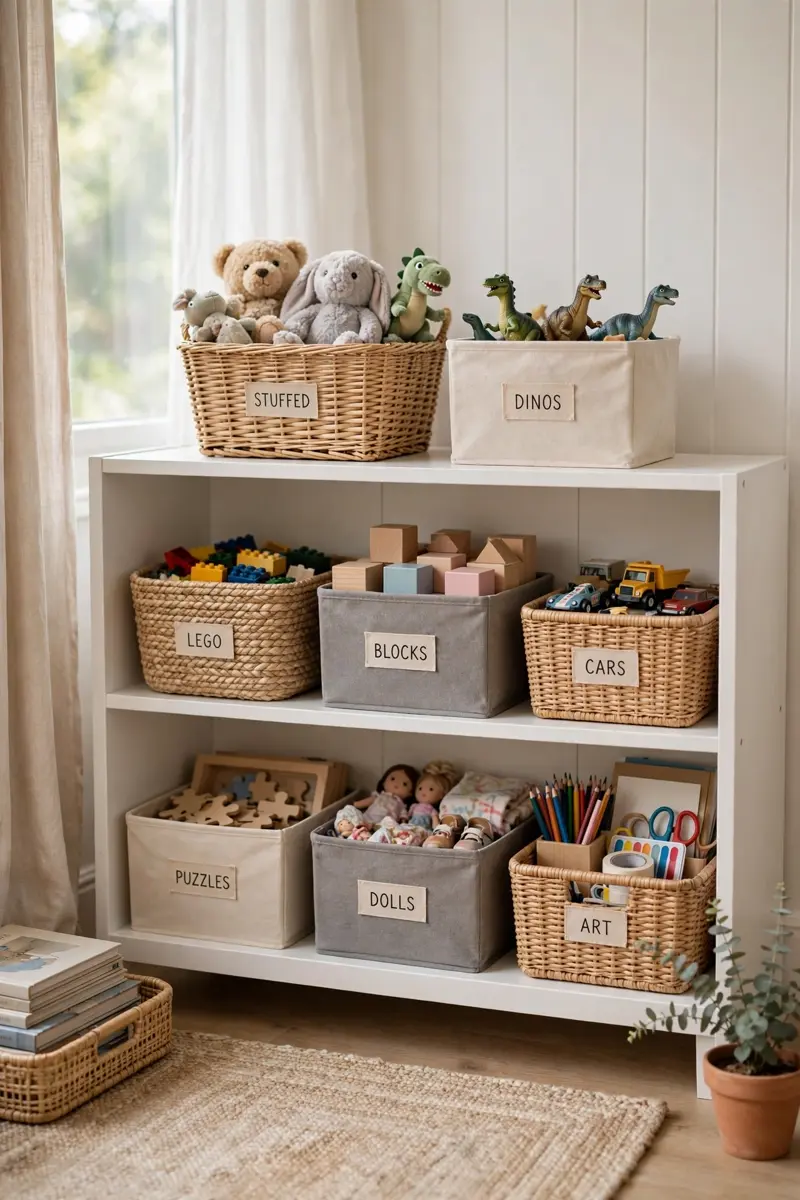
It feels like giving in. It is not. It is removing a trigger so your kids can practice sharing on the hundred other toys instead of going to war over the one that matters most. Fewer total toys helps here too. When we cleared the toy clutter with my toy flood system, the fights dropped because there was simply less to fight over. And giving every toy a real home with these toy storage ideas that actually look good means cleanup stops being its own argument.
Step 3: Make Sharing Concrete With a Turn Timer
Share is a vague word. A timer is a fact.
Here is why telling kids to share never works. To a five year old, share means give it to your sibling right now and never see it again. Of course they scream. They are not being selfish. They are protecting their stuff from what feels like a permanent loss.
A timer changes the whole conversation. When the timer dings, the turn is over. It is not mom taking sides. It is not the sibling winning. It is the timer, and the timer is neutral.
How the Turn Timer Works
Get a visual timer kids can see, like a sand timer or a simple kitchen timer. When both kids want the same thing, set it for a turn. Five minutes works for little ones. Ten for bigger kids. The child holding the toy sets the timer, which gives them control and makes giving it up feel like their choice.
Two rules make this work. One, the waiting child may not grab, whine, or hover. They go do something else. Two, when the timer dings, the turn ends right away, no five more minutes. If you bend this rule, the timer loses its power.
Practice it once when everyone is calm, and then it is a tool you can reach for in the heat of the moment. Kids who have used the timer three or four times start suggesting it themselves. That is the dream.
When the Timer Backfires
Two honest warnings. First, do not use the timer for comfort objects. A lovey, a blankie, or the stuffed animal they sleep with is not a sharing toy, and forcing turns with it will only create bigger fights.
Second, if one child always ends up waiting because the other hogs every turn, the timer is not the problem. The schedule is. Step back in and set the turns yourself for a while. Some kids need you to hold the boundary until they can hold it themselves.
Step 4: Coach Them to Solve the Small Stuff Themselves
Your job is not to solve every fight. Your job is to coach them so they can solve most of them.
This is the step that changes everything long term. Right now you are the customer service desk for every dispute. The goal is to work yourself out of that job, one small conflict at a time.
Kids do not come with conflict skills installed. If you want them to use words instead of hands, you have to give them the words. Literally hand them the sentences.
The Words to Give Them
Teach this one script and practice it until it is boring. I feel blank when you blank. I need blank.
So instead of screaming and shoving, your child learns to say, I feel mad when you take my blocks. I need you to ask first. It will sound robotic at first. That is fine. Robotic beats hitting.
Practice at calm times, not during fights. At dinner, take turns making up silly examples. I feel silly when you make that face. I need you to do it again. Laughter makes the script stick, and then it is there when they actually need it.
The Rewind Trick
When a small conflict starts and nobody is hurt, try this before you solve anything. Say, freeze. Let us rewind. Now try that again with words.
It works because it is playful instead of preachy. Kids love a do over. And every time they rewind and retry, they are practicing the exact skill they will need for the rest of their lives. You are not ignoring the fight. You are turning it into a rehearsal.
Start by coaching the small stuff only. Name calling over a game, arguing over who goes first, the classic he is looking at me complaint. When they handle three small ones on their own, tell them you noticed. Kids repeat what gets noticed.
Step 5: Know When to Step In and When to Step Back
Step in for safety. Step back for growth.
This is the hardest step because every instinct you have screams at you to jump in the second you hear yelling. But jumping in every time teaches your kids that conflict is always an adult problem. It is not. It is a life skill, and life skills need practice.
My rule is the thirty second pause. When I hear a fight start and nobody is in danger, I wait thirty seconds before I do anything. You would be amazed how many fights fizzle out on their own when the audience does not show up.
When You Must Step In
Always step in right away when anyone could get hurt. Hitting, biting, throwing hard objects, or one child clearly overpowering the other. Safety is non negotiable, and kids need to see you protect them.
Also step in when it is completely one sided. If one child is always the target and the other is always the aggressor, that is not practice. That is bullying with a family discount, and it needs an adult.
And step in when they ask you to. If a child comes to you and says we need help, that is not tattling. That is a kid using a healthy strategy. Honor it.
When You Should Stay Out of It
Stay out of the verbal sparring over small stuff. Who got the bigger half. Whose turn it is. Who started it. If you referee every one of these, you train them to bring every dispute to court.
Stay out when they are already working it out, even if it is messy. If you hear the I feel script, even a clumsy version of it, bite your tongue and let them finish. Messy practice is still practice.
And stay out of the blame game. The second you start investigating who started it, you have two kids performing innocence for a judge instead of solving a problem. Skip the trial. Focus on the fix.
Step 6: Build a Calm Down Corner That Kids Actually Use
A calm down corner only works if your kids helped build it and it is never used as punishment.
Most calm down corners fail for one reason. They are introduced mid meltdown, which makes the corner feel like exile. Of course kids hate it. To them it is just a time out with cushions.
The corner has to exist before the big feelings arrive, and your kids have to feel ownership over it. Build it together on a calm day, and it becomes a tool. Impose it during a fight, and it becomes a threat.
What Goes Inside
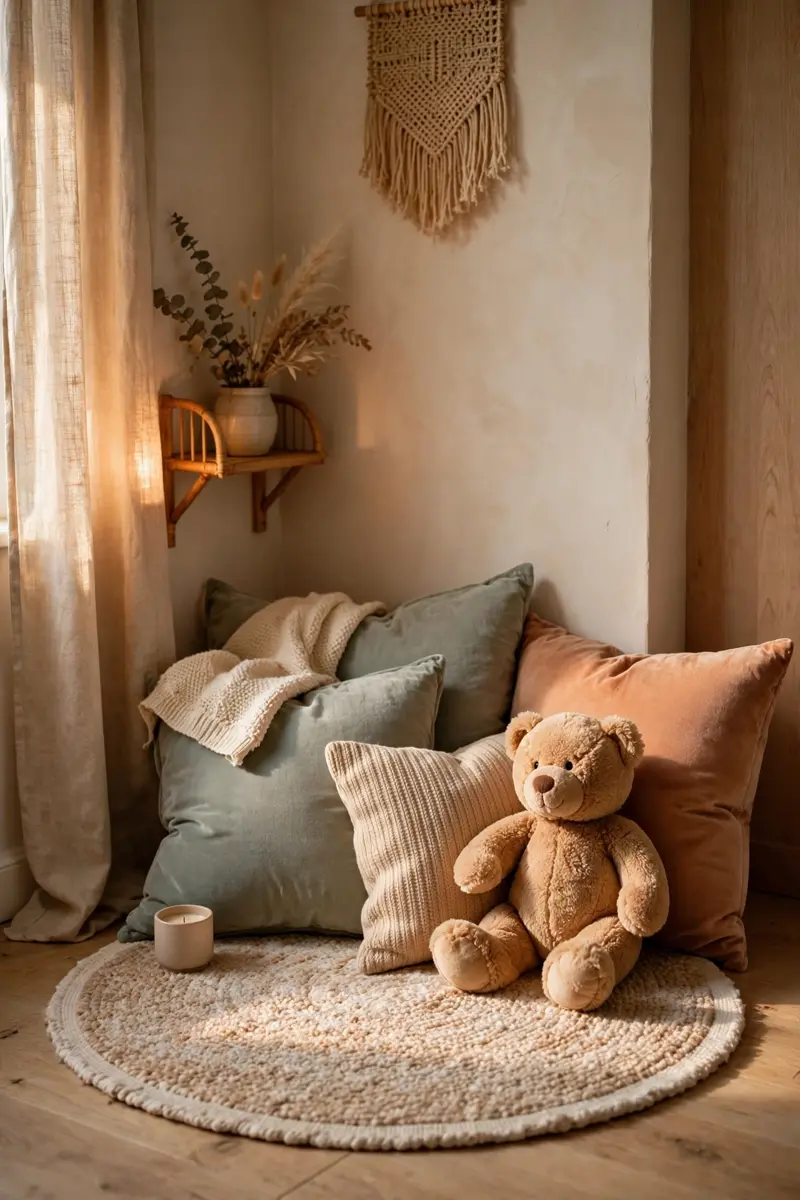
Keep it simple. A soft place to sit, like a beanbag or a pile of pillows. Something to squeeze, like a stress ball or a stuffed animal. Something to look at, like a feelings chart or a favorite picture book. Something to do with busy hands, like fidget toys or coloring pages.
Let each kid pick one special item for the shared corner, or build two mini corners if you have the space. Choice is the whole point. A corner they chose is a corner they will actually walk to.
One thing to skip: screens. A tablet in the calm down corner teaches kids to numb big feelings instead of moving through them. Save the show for after everyone is calm.
How to Introduce It
Build it together on a Saturday morning when everyone is happy. Let them arrange the pillows. Let them pick the stuffed animal that lives there. Give the corner a fun name together. Ours is called the cozy cave, and yes, the kids named it.
Then practice. Take turns pretending to be mad and stomping over to the corner. Make it silly. The goal is for the corner to feel familiar and safe long before anyone actually needs it.
When big feelings hit for real, offer it like an invitation, never an order. Your feelings look really big right now. Want to visit the cozy cave? If they say no, do not force it. Forced calm is not calm. Just stay nearby and try again in a minute.
Step 7: Repair After the Storm
The fight is not the lesson. The repair is the lesson.
Here is what most of us do after a big fight. We separate the kids, lecture everyone, extract a mumbled sorry, and move on. The kids learn nothing except that mom is scary when she is mad. The same fight happens again tomorrow.
Repair is different. Repair happens after everyone is calm, and it teaches your kids that conflict has an ending and that endings can be kind. This is the skill that will save their friendships, their marriages, and their work relationships someday. No pressure.
The Four Part Repair
Wait until everyone is genuinely calm. Not quiet. Calm. Then walk through four parts together.
One, name the feelings. Each kid says how they felt, not what the other kid did. I felt angry. I felt left out. No commentary from you. Just listen.
Two, tell the story. Each kid tells what happened from their side. You will hear two completely different versions of the same thirty seconds. That is normal. Do not correct. Just let them feel heard.
Three, fix what broke. Not feelings, things. The tower got knocked over, so we rebuild it together. The picture got ripped, so we tape it. Kids understand fixing things, and it gives the repair a concrete ending.
Four, plan for next time. Ask them, what could we do differently tomorrow? Even little kids can come up with ideas. Next time I will use the timer. Next time I will ask first. Write the plan down if they are old enough to think it is cool.
What About the Apology
Here is my hot take. A forced apology is worthless. Say you are sorry right now teaches kids that sorry is a magic word that ends the lecture. It teaches them nothing about the other person’s feelings.
A real apology comes at the end of the repair, not the beginning. Once a child has heard how their sibling felt and helped fix what broke, sorry often comes out on its own. And when it does, it means something.
If it does not come, do not force it. The repair still worked. You are raising a human who understands impact, not a parrot who says sorry on command.
Try It Tonight: Your 20 Minute Peace Setup
You do not need a perfect weekend to start. You need twenty minutes tonight after dinner. Here is the whole plan.
Minutes one to five: pick the calm down corner spot together. Let the kids choose it. A corner of the living room, a closet with the door open, anywhere they both agree on. Their choice, their corner.
Minutes five to fifteen: gather three things for the corner. One soft thing to sit on, one thing to squeeze, one book or coloring page. Send the kids on a scavenger hunt through their rooms to find their picks, and set a timer to make it a game. If cleanup usually ends in a standoff, these ideas for getting kids to tidy up without nagging work like magic.
Minutes fifteen to twenty: agree on one turn timer rule as a family. Write it on a sticky note and put it on the fridge. Something like: when we both want the same toy, we set the timer. Sign it together like a treaty. Kids take rules more seriously when they helped write them.
That is it. Corner picked, items gathered, one rule agreed. Tomorrow you will have two brand new tools, and your kids will have helped build both of them.
Mistakes to Avoid (I Have Made Every Single One)
Before we wrap up, let us talk about the traps. I have fallen into every one of these, and each one made the fighting worse instead of better.
1. Always punishing the older one. You are bigger, you should know better. Sound familiar? When the older child always takes the blame, two things happen. The younger one learns that starting fights has no consequences, and the older one learns that being bigger means being guilty. Resentment builds, and resentment fuels more fights, not fewer. Judge the behavior, not the birth order.
2. Forcing instant apologies. Say sorry right now. We covered this in step seven, but it deserves a spot here because it is so tempting in the moment. A forced sorry ends the awkwardness for you, but it teaches your child nothing about empathy. Worse, it teaches the hurt child that apologies are cheap. Do the repair first. Let the sorry come on its own.
3. Taking sides and declaring a winner. The moment you announce who was right, you have created a winner and a loser under your own roof. The winner learns that mom is a weapon to be aimed at siblings. The loser learns that the system is rigged. Either way, the next fight is already brewing. Stay out of the courtroom. Focus on what happens next, not who started it.
4. Solving it for them every single time. It is faster to swoop in, divide the toys, and assign the turns yourself. I know. But every fight you fully solve is a fight they did not practice solving. You are not being a good mom by handling it all. You are being a good mom by handling less, coaching more, and tolerating the messy middle while they learn.
5. Punishing both kids to keep it fair. You are both in trouble. It feels even handed, but think about how it lands. The child who was minding their own business just got punished for being attacked. That does not teach fairness. It teaches that telling mom is pointless and that the victim and the aggressor are the same. Address each child’s behavior separately, even when it takes longer.
6. Lecturing in the heat of the moment. Nobody learns anything while adrenaline is pumping. Not you, not them. The big speech about kindness and family values, delivered to two red faced screaming kids, goes in one ear and out the other. Save your words for later. In the moment, keep it short. Separate, calm down, repair later. The lecture can wait until everyone can actually hear it.
What About…? Your Questions Answered
What if there is a big age gap between my kids?
My kids are six years apart. Nothing is fair. I hear this one a lot, and the answer is that fair does not mean equal. A ten year old and a four year old have completely different needs, and pretending they are the same creates fights, not harmony.
The older child needs more independence, more privacy, and projects the little one cannot touch. Protect that. Give them a space or a set of supplies that are officially off limits to the younger sibling. When big kids feel their stuff is safe, they are far more generous with everything else.
The younger child needs more supervision and simpler rules. Keep their turns shorter, their choices smaller, and their expectations realistic. A four year old cannot share like a ten year old, and that is not defiance. That is development.
And stop saying you had your turn when you were little. It never helps. Instead, narrate the difference kindly. Your sister needs quiet homework time right now, and you and I are going to build the giant block tower. Different needs, both met.
What about twins? They do everything together.
Twins get a special kind of sibling intensity because they are never apart. Same age, same stage, same everything. The togetherness that looks so sweet from the outside can feel suffocating from the inside.
The antidote is separate identity. Not separate bedrooms necessarily, but separate things. Different colored toothbrushes, different backpacks, separate playdates when you can manage it. Even fifteen minutes of solo time with you, one twin at a time, lowers the tension between them noticeably.
Also watch for the twin trap of treating them as a unit. They are two whole people who happen to share a birthday. Use their names, notice their differences out loud, and let them have different friends, different favorites, and different corners. The less they have to compete for identity, the less they fight over everything else.
One of my kids always starts it. What do I do about the provoker?
First, take the label off. The second a child becomes the problem child in your mind, every fight looks like their fault, even when it is not. Kids live up to the labels we give them, so retire this one.
Then get curious. A child who constantly provokes is usually trying to meet a need in the worst possible way. Are they bored? Are they jealous of the attention the sibling gets? Are they overtired? Are they feeling disconnected from you? Provoking is often a bid for connection wearing a very ugly costume.
Fill the need directly. Ten minutes of solo time with you, the provoker’s choice of activity, can do more than a week of consequences. And when you catch them being kind to their sibling, name it loudly. I saw you share the red car without being asked. That was generous. Kids repeat what gets noticed, especially when they are used to being noticed for the wrong things.
If the provoking is constant and nothing shifts it, that is worth a conversation with your pediatrician. Sometimes there is something else going on, like big emotions they do not have words for, and getting support is not failure. It is good parenting.
When does normal fighting cross the line into something serious?
This is the most important question here, so let us be clear. Normal sibling conflict is verbal, roughly equal, and stops when someone is truly upset. It crosses the line when it becomes physical on a regular basis, when one child is always the target, or when a child seems afraid of their sibling.
Biting, hitting, kicking, hair pulling, or throwing hard objects are safety issues, not teaching moments. Step in every time, separate calmly, and address it after everyone is regulated. If it keeps happening despite consistent boundaries, that is a sign to bring in backup.
Backup can be your pediatrician, a family counselor, or a parenting coach. Asking for help is not an admission that you failed. It is what you do when you love your kids enough to get them the support they need. Trust your gut here. You know the difference between bickering and something darker, and if your stomach says this is not normal, listen to it.
You have got this, mama. Fewer fights, calmer nights, and kids who are learning to love each other well, one rewind at a time.
Get Fresh Home Ideas Every Week
Seasonal decor ideas, organizing tips, and cozy home inspiration, straight to your inbox.
More Parenting Ideas You Will Love
Keep reading for more calm-home inspiration: