
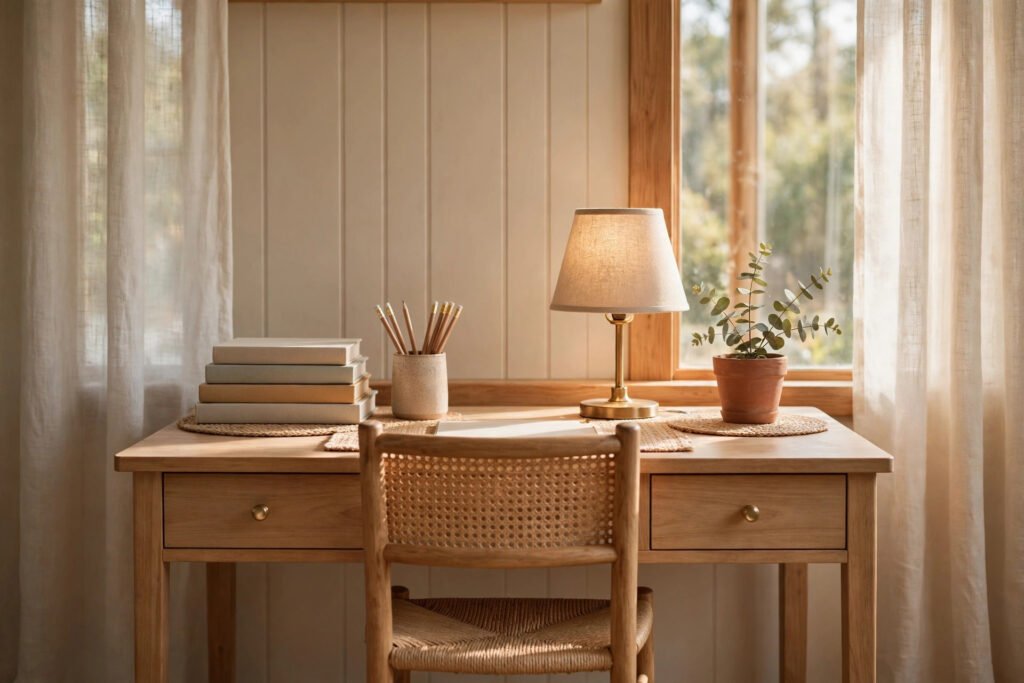
Picture this. It is 4:45 pm. Your kid finally sits down to do homework at the kitchen table, which is currently also holding the mail, someone’s half finished craft, a drying dish rack, and the dinner ingredients you have not put away yet. Within three minutes, they need a pencil. Then an eraser. Then they are distracted by the sibling making a snack. Then they are crying because the worksheet is “too hard” and honestly, at this point, you are crying a little on the inside too.
The kitchen table is where homework goes to die. It is too busy, too central, too full of distractions and interruptions. What your kid needs is not more willpower. It is a dedicated homework station: one small, calm, well stocked spot where homework happens the same way every day. This post shows you exactly how to set one up, even in a small house, even on a budget, and even if you have multiple kids. No more hunting for pencils. No more kitchen table chaos.
Love these ideas? Get more every week.
Join the newsletter for seasonal decor and cozy home inspiration.
TL;DR: The Homework Station Setup
- Give homework a dedicated home: one small desk or table spot, used only for homework, beats the kitchen table every time.
- Stock it once: a caddy with every supply they need removes the number one homework delay tactic.
- Control the environment: good light, a chair that fits, and distractions out of sight do more than any motivational speech.
- One station per kid if you can: separate spots prevent sibling wars; a shared station needs clear turns and boundaries.
- Pair it with a routine: same time, same spot, same order. The station plus the after school routine ends the nightly battle.
Why the Kitchen Table Fails (Every Single Time)
The kitchen table seems like the obvious homework spot. It is big, it is central, and you can supervise while you cook. But think about what else happens at the kitchen table: meals get prepped, snacks get eaten, mail gets sorted, crafts happen, siblings wander through, the TV plays in the next room, and you are trying to cook dinner three feet away. It is the busiest intersection in your house. Asking a child to focus there is like asking them to read in the middle of a food court.
Kids, especially young ones, have very little ability to filter out distractions. Adults can sort of tune out background noise. Kids cannot. Every movement in their peripheral vision, every interesting sound, every sibling walking past pulls their attention away. Then refocusing takes enormous effort, and after the tenth interruption, they are done. The tears, the stalling, the “I can’t do it” are often not about the homework at all. They are about the environment.
A dedicated homework station fixes this with physics instead of willpower. A quiet corner, facing a wall instead of the room. Supplies within reach so there is no reason to get up. Nothing interesting to look at except the work. You are not asking your child to try harder. You are removing the things that made trying hard in the first place. That is a much kinder approach, and it works so much better.
The Plan: Build Your Homework Station
Step 1: Pick the Spot (Small and Boring Wins)
The best homework spot is quiet, low traffic, and a little bit boring. A corner beats the center of the action.
You do not need a whole room. You need about three feet of wall. Good candidates: a corner of their bedroom, a nook in the hallway, a section of a home office, a quiet corner of the living room facing away from the TV, or even a converted closet (desk in, doors off, instant study nook). Walk through your house and look for the spot with the least foot traffic and the fewest interesting things to stare at.
For younger kids who still need you nearby, the spot can be close to you without being in the chaos. A small desk in the dining room corner, facing the wall, works beautifully. They can see you, you can see them, but they are not in the middle of the kitchen tornado. Proximity without chaos is the goal.
Avoid windows with exciting views if your kid is easily distracted, and avoid spots right next to the toy storage. If the Legos are visible from the homework chair, the Legos will win. Face the desk toward a plain wall. Boring is a feature here.
Step 2: Get the Furniture Right (Comfort Matters More Than Cute)
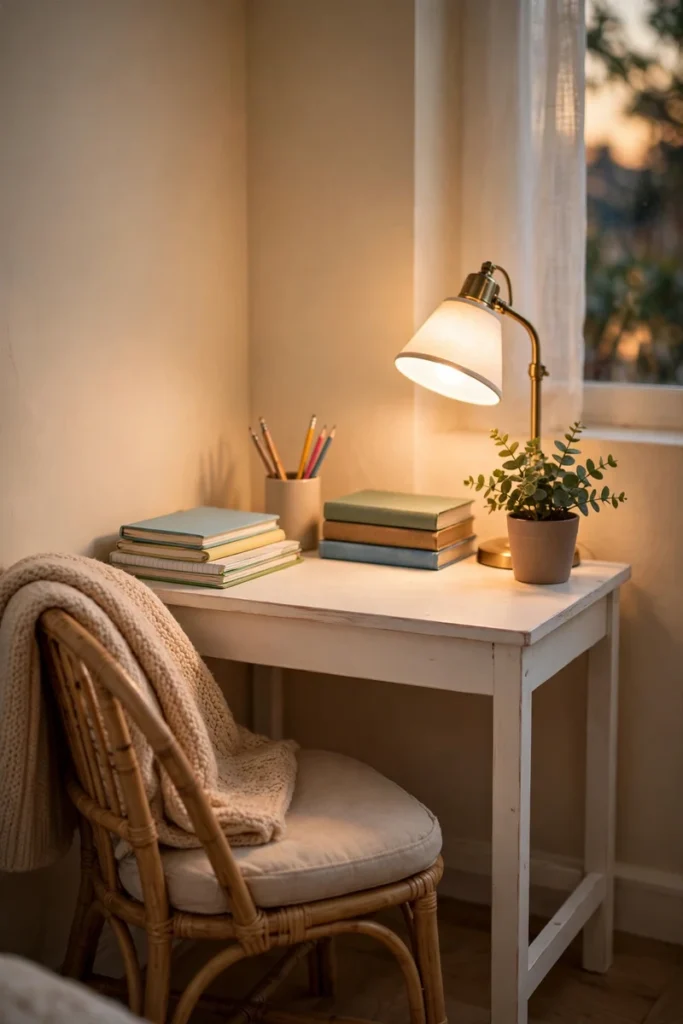
A chair that fits and a desk at the right height prevent half of homework complaints.
So much homework misery is secretly physical discomfort. A chair that is too big means dangling feet and fidgeting. A table that is too high means hunched shoulders and tired arms. Before you buy anything, check the fit: when seated, your child’s feet should touch the floor (or a footrest), their elbows should rest comfortably at desk height, and they should be able to see their work without craning their neck.
You do not need expensive furniture. A simple small desk or even a sturdy folding table works. An adjustable chair that grows with them is worth the investment if you are buying new. Add a footrest (a stack of books works) for little kids whose feet dangle. Good lighting is non negotiable: a desk lamp with warm light, positioned to avoid shadows and glare.
Keep the desk surface mostly clear. The homework station is not a display shelf. Current work, the supply caddy, and maybe one comforting item. Everything else lives elsewhere. A clear desk signals a clear mind, and it removes the temptation to fidget with desk toys instead of working.
Step 3: Stock the Supply Caddy Once
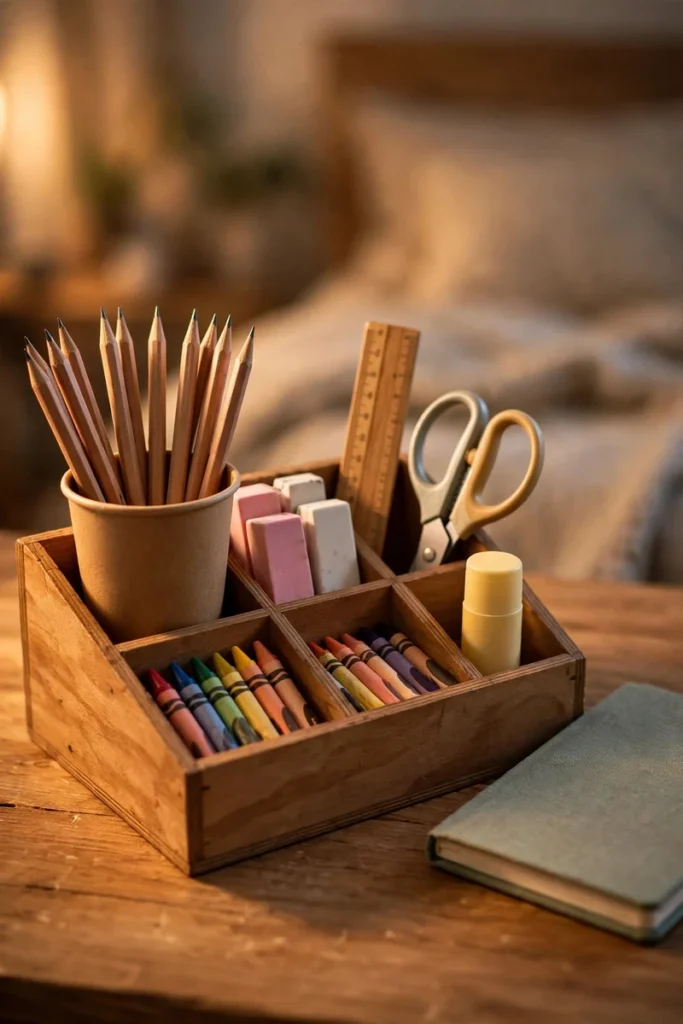
Every supply they could need, in one caddy, refilled monthly. No more pencil hunts.
“I need a pencil” is the number one homework stall tactic in history, and it works because it is often true. If supplies are scattered around the house, every homework session starts with a scavenger hunt that kills all momentum. The supply caddy ends this forever.
What goes in the caddy depends on the age, but the basics are universal: pencils, a good eraser, a pencil sharpener, crayons or colored pencils, markers, scissors, glue stick, a ruler, scratch paper, and sticky notes. For older kids, add highlighters, index cards, and a calculator. Put it all in one caddy, bin, or desktop organizer that lives on the desk permanently.
Refill it on the first of the month. Check for broken crayons, dried out markers, and pencil nubs. Five minutes of maintenance keeps the station functional all month. And let the kids help choose the caddy and the supplies. A kid who picked their own pencil case takes better care of it. Ownership again, working its quiet magic.
Step 4: Set Up the Focus Environment
Light, sound, and visual calm do more for focus than any pep talk.
Once the spot and supplies are set, tune the environment. Lighting first: natural light is ideal, so place the desk near a window if you can (facing the wall beside the window, not staring out of it). Add a warm desk lamp for darker afternoons. Harsh overhead fluorescents make everyone cranky. Warm, layered light makes the nook feel inviting instead of institutional.
Sound matters too. Some kids focus best in silence. Others do better with soft background sound that masks household noise. A little white noise machine, a fan, or a calm instrumental playlist through headphones can work wonders, especially in a busy house. Let your kid experiment and tell you what helps. They often know.
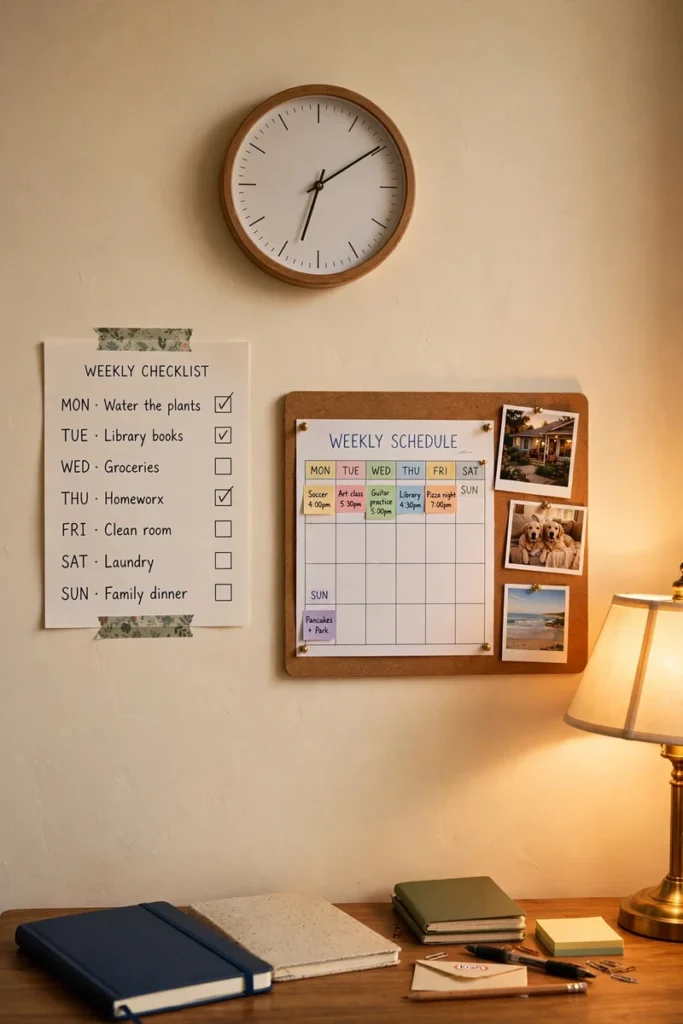
Keep the visual field calm. A small pinboard with the weekly schedule, a clock they can see (so “ten more minutes” is concrete), and one personal touch like a photo or a plant. That is plenty. If the wall above the desk is covered in stimulating posters and flashing things, simplify it. The station should feel like a deep breath, not a carnival.
Step 5: Solve the Multi Kid Problem
Two kids, one station, zero peace. Give each kid their own spot, or give the shared spot strict turns.
If you have more than one homework aged kid, this step is critical. Siblings doing homework side by side sounds lovely in theory. In practice, it is pencil stealing, copying, whisper fighting, and competitive sighing. If you have the space, set up a separate station for each kid, even if one is just a lap desk in a bedroom corner. Separation is worth more than square footage.
If space truly only allows one station, run it in shifts. Older kid does homework first while the younger one has playtime, then they switch. Put the schedule on the wall so there is no arguing about whose turn it is. The key is that the station is never shared simultaneously. Shared simultaneous homework is just sibling fights with worksheets.
For the kid who is waiting their turn, have a ready list of independent activities: reading, coloring, the busy box, outdoor play. The waiting time should feel like a bonus, not a punishment. And if the age gap is big, the older kid might actually prefer doing homework at the kitchen table while the little one uses the station. Follow what works for your actual kids, not the ideal.

Step 6: Connect the Station to the Routine
A station without a routine is just furniture. Same time, same spot, every day.
The homework station reaches its full power when it is part of the daily rhythm. Homework starts at the same time each day, the kid goes to the station, opens the caddy, and begins. No decisions, no negotiations, no “where should I do it today.” The routine carries them through the starting friction, which is honestly the hardest part of homework.
Build a simple start ritual: clear the desk, get out the folder, check the assignments, start the timer if you use one. Two minutes of ritual signals the brain that it is focus time. End with a closing ritual too: pack the folder, put supplies back in the caddy, check off the day. The closing ritual keeps the station ready for tomorrow and gives the kid a satisfying sense of done.
If you have not built the broader afternoon rhythm yet, our after school routine guide walks through the whole system: snack, movement, homework at the station, then free time. The station is one piece of a calm afternoon. Together, they end the homework battles for good.
Step 7: Maintain It With a Weekly Two Minute Reset
Stations drift into junk drawers without maintenance. Two minutes a week keeps it a homework station.
Every station slowly accumulates stuff: old worksheets, broken pencils, random toys, notes from school. Once a week, do a two minute reset with your kid. Toss the trash, file or recycle old papers, sharpen the pencils, put stray items back where they belong. It is the same tiny maintenance habit that keeps the whole house calm, applied to one small desk.
Do it together at first, then hand it over. A kid who maintains their own station owns their own station. And the weekly reset is a good moment to ask: is anything not working? Is the chair still comfortable? Do we need more scratch paper? Small tweaks keep the station fitting as your kid grows and homework gets harder.
This is also where a school paper system connects. Homework generates paper, and paper needs a home. Give the station one inbox tray for papers that need your attention and one folder for finished work to keep. Once a week, empty both. Paper with no system becomes a pile, and piles become chaos.
Homework Stations for Different Ages
The basic setup works for everyone, but the details change a lot between kindergarten and high school. Here is how to tune the station for your kid’s stage.
Early elementary (ages 5 to 7): Keep it simple and sturdy. A small table and chair, a caddy with chunky pencils and crayons, and very little else. At this age, homework is short and you will be sitting with them most of the time, so your own chair nearby matters as much as theirs. Use a visual timer so “ten more minutes” is something they can see. Expect wiggles. Build in movement breaks every 15 minutes. The station teaches the habit of sitting down to work, which is the real lesson at this age.
Upper elementary (ages 8 to 10): This is the golden age of the homework station. Homework gets real, independence starts growing, and a dedicated spot pays off enormously. Add a pinboard for the weekly schedule, a clock, and more complete supplies. Let them personalize the space with their own choices. Start teaching them to pack their own folder and check their own assignments. The station is now training them for middle school.
Middle school (ages 11 to 13): Tweens need the station to feel like theirs, not like a little kid setup. Upgrade the chair, add better lighting, and give them input on everything. Many middle schoolers do homework better with music, so headphones become part of the station. The phone boundary becomes critical here: phone charges outside the room during homework. Respect their growing independence while keeping the structure that makes focus possible.
High school (ages 14+): Teens mostly need you to provide the environment and get out of the way. A good desk, a comfortable chair, strong wifi for research, and good lighting. Let them choose the location, even if it is their bedroom. Your job shifts from manager to consultant: available for help, not directing traffic. If they have a system that works, do not fix it. If they do not, offer to help them build one, once, without nagging.
The Complete Supply List by Age
Stocking the caddy is easier with a list. Here is what actually gets used at each stage, so you are not buying things that sit untouched.
Kindergarten to grade 2: fat pencils, a big eraser, crayons, washable markers, blunt scissors, glue sticks, a pencil sharpener with a catcher, scratch paper, and a folder for papers going back to school. That is the whole list. Resist the fancy stuff. They will lose half of it and chew on the other half.
Grades 3 to 5: everything above, plus regular pencils, colored pencils, a ruler, sticky notes, index cards, highlighters, a small stapler, and a calculator for math checks. Add a dictionary or a bookmark to an online dictionary. This is when the caddy starts looking like a real workstation.
Grades 6 to 8: everything above, plus pens in a couple of colors, a planner or agenda (paper or digital), dividers for binders, graph paper for math, and earbuds or headphones. Many middle schoolers live out of their planner, so help them actually use it for the first month until it becomes habit.
High school: let them build their own kit. Provide the budget and the basics, then step back. Most teens know exactly what they like: specific pens, a particular notebook system, sticky tabs, highlighters in their colors. Your only job is making sure the basics are always stocked: paper, writing tools, and a working printer or printer access.
For all ages, keep one backup set of the essentials somewhere you control. When the caddy runs dry on a Sunday night before a big project is due, the backup stash saves the evening. A gallon zip bag with pencils, an eraser, and paper, tucked in your desk or the pantry. Future you says thanks.
When Homework Takes Over the Evening
Sometimes the problem is not the station. It is the sheer volume of homework eating the whole evening. If homework regularly takes more than an hour for elementary kids or more than two for older ones, the station cannot fix that alone.
Set a homework end time, not just a start time. When the time is up, homework stops. Write a quick note to the teacher if work is unfinished. An evening swallowed whole by worksheets costs more than it gains: no play, no family time, a late bedtime, and a kid who starts hating school. Protect the rest of the evening. It matters more than the last three problems.
Talk to the teacher if it is constant. One heavy night is normal. Every night is a pattern worth a conversation. Teachers often do not realize how long assignments take at home, and most will adjust once they know. You are not complaining. You are giving them information they need.
Watch for the real issue. Homework that takes forever is sometimes a sign of something else: trouble with the material, vision problems, attention struggles, or anxiety about getting it wrong. If your gut says something is off, trust it and dig a little. The station gives them the best possible environment. If the work still will not fit in the evening, the work is the problem, not the kid.
Try It Tonight: The 20 Minute Station Starter
You do not need new furniture to start. Tonight, prototype the station with what you have:
- Pick the corner. Walk through the house and choose the quietest three feet of wall. Clear it.
- Set up a surface. A card table, a cleared dresser top, even a lap desk on the bed. Temporary is fine.
- Gather supplies into one box. A shoebox works. Pencils, eraser, crayons, scissors, scratch paper. Everything in the box.
- Add light. Move a lamp over, or position near a window. Warm light, no glare.
- Try it tomorrow. One homework session at the new spot. Notice the difference.
If the prototype works, upgrade it this weekend with a real desk and chair. If it does not, try a different corner. You are experimenting, not committing.
Mistakes to Avoid
Setting up the station in the middle of everything. A desk in the living room facing the TV is not a homework station. It is a homework themed decoration. The spot must be genuinely low traffic and low stimulation, or the whole thing fails.
Buying everything before testing the spot. Start with a prototype using what you have. Confirm the location works for a week before investing in furniture. Nothing is sadder than an expensive desk in a corner your kid refuses to use.
Forgetting the chair. Parents obsess over the desk and ignore the chair, but discomfort is the top reason kids abandon their station. Feet supported, back supported, right height. Test it by sitting in it yourself and imagining an hour of worksheets.
Letting the station become storage. The fastest way to kill a homework station is letting it collect non homework stuff. Old art projects, random toys, your own mail. Guard the surface. If it is not for homework, it does not live there.
Hovering. Once the station is set up and the routine is running, step back. Sitting next to your kid for every worksheet teaches them they cannot work alone. Be nearby and available, not perched. Independence is the goal, and hovering slows it down. Check in at natural breaks, not every three minutes.
What About…?
What about really small houses with no spare corner? Think vertical and convertible. A wall mounted drop leaf table folds down for homework and up when done. A desk in a closet with the doors removed. A rolling cart that lives in a closet and rolls out to any quiet spot. The station does not need a permanent footprint. It needs a consistent setup ritual: same cart, same spot, same order.
What about kids who insist they work better at the kitchen table? Some kids genuinely do, especially social ones who focus better with background hum. If the kitchen table truly works for your kid, make it work better: clear it completely before homework, face them away from the action, give them headphones, and move dinner prep to after homework starts. But be honest about whether it is actually working or just familiar. Familiar chaos is still chaos.
What about homework that requires my help the whole time? Young kids do need support, and that is normal. Set up your own spot nearby with your own work: answer emails, read a book, fold laundry. You are present but busy, which models focus instead of hovering. Help in bursts: get them started, step away, check back. Gradually lengthen the independent stretches. This is how homework independence is built.
What about teens who want to work in their room with the door closed? Let them, with two conditions: the door stays open a crack (or you can check in), and the phone charges in the kitchen during homework time. Teens need autonomy, and a bedroom desk can be a great station. The phone boundary matters more than the location. If grades slip, revisit the arrangement together.
Here is to the end of kitchen table chaos. Pick your corner tonight, box up the supplies, and watch what happens when homework finally has a home. Your evenings are about to get so much calmer, and your kitchen table can go back to being a table.
Get Fresh Home Ideas Every Week
Seasonal decor ideas, organizing tips, and cozy home inspiration, straight to your inbox.
More Parenting Ideas You Will Love
Keep reading for more calm-home inspiration: