
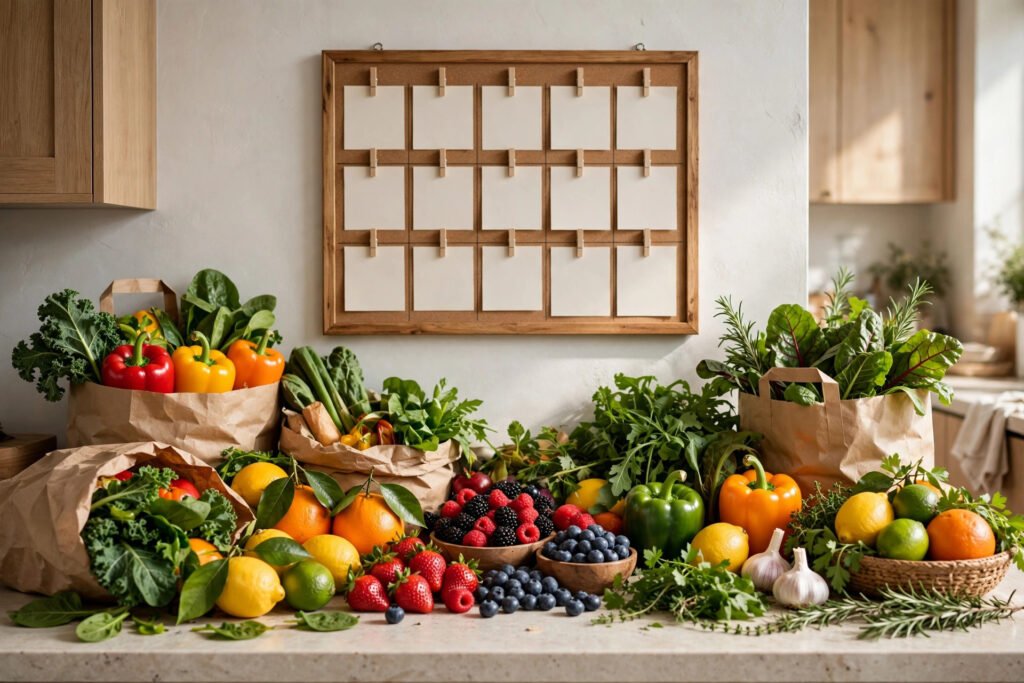
If 5 pm finds you staring into an open fridge with zero ideas and hungry kids circling like tiny sharks, this post is for you.
I have been that mom. The one standing in the cold air of the refrigerator, hoping dinner will assemble itself. The one who ordered takeout for the third night in a row and then felt a little sick looking at the bank balance. The one who swore she would get organized this week and then absolutely did not.
Here is what changed everything for me. It was not a complicated system. It was not a subscription box or a color coded binder. It was a simple weekly meal plan that took about 20 minutes to build and saved my evenings, my grocery budget, and honestly my sanity.
In this post I am going to walk you through the exact system I use every single week. It works with picky eaters. It works when money is tight. It works when you hate cooking. And it works on the weeks when everything falls apart, because the plan is built for real life, not perfect life.
By the time you finish reading, you will know how to decide dinners before the week starts, how to build a grocery list that stops impulse buys, and how to make your kitchen stop feeling like a crisis zone at 5 pm. No fancy tools. No perfection required. Just a calmer week.
TL;DR: The whole system in five lines
- Plan once a week for about 20 minutes. Pick a day, protect that time, and decide dinners before the week begins.
- Use theme nights to remove decisions. Taco Tuesday and Pizza Friday mean you never start from a blank page.
- Shop your pantry and fridge first. Plan meals around food you already own and waste almost nothing.
- Keep a master grocery list and a short rotation of simple meals. Familiar recipes beat brand new ones on busy nights.
- Give leftovers a job and keep backup meals ready. Your plan should survive real life, not just good intentions.
Love these ideas? Get more every week.
Join the newsletter for seasonal decor and cozy home inspiration.
Decision Fatigue Is Real and Dinner Is Where It Hits Hardest
Here is something nobody tells you about motherhood. You will make approximately ten thousand decisions a day, and the very last one, made when you are at your most tired, is what is for dinner.
Researchers call it decision fatigue. I call it the 5 pm meltdown, and it is not a character flaw. Your brain has been choosing snacks, settling arguments, answering work emails, remembering permission slips, and deciding whether that cough needs a doctor since 6 in the morning. By dinner time, your decision making tank is empty.
That is why the fridge stare happens. It is not that you do not know how to cook. It is that your brain has run out of choosing power. And when the tank is empty, you do one of two things. You order food you cannot really afford, or you throw together something random that half the family refuses to eat.
Both of those outcomes cost you. Takeout three times a week can quietly eat hundreds of dollars a month. And the thrown together meal that nobody eats? That is wasted food, wasted effort, and one more evening that ends with you feeling like you failed at the most basic mom task.
You did not fail. The system failed you. Dinner was never supposed to be decided at 5 pm with an empty brain and an empty stomach.
You Are Not Bad at This. You Are Just Tired.
I want to say this clearly because I need you to hear it. If meal planning has never worked for you before, it is not because you lack discipline. Every system you tried was probably designed for someone with more time, more energy, or fewer small humans demanding snacks at all hours.
The internet is full of meal plans that require you to cook seven brand new recipes a week, shop at three stores, and prep for two hours on Sunday. That is a hobby, not a survival strategy. A busy mom does not need a hobby. She needs dinner on the table without crying.
What I am sharing here is different. It is built for the mom who works full time, or stays home with toddlers, or both at once somehow. It is built for the mom whose kids eat the crusts off bread but reject the same bread in sandwich form. It is built for real kitchens with real budgets and real chaos.
This is not about becoming a different person. It is about moving one decision from 5 pm, when you are exhausted, to a calm 20 minutes earlier in the week, when you are thinking clearly.
That single shift changes everything. And once dinner is handled, you might be surprised how much lighter the rest of the week feels, including keeping the house under control while the kids are little, which gets so much easier when you are not in a nightly dinner panic.
The Plan: Seven Steps to a Calmer Dinner Week
Here is the full system, one step at a time. You do not need to do all seven steps today. Read through them, then start with step one this week. Add the rest as they feel doable.
Step 1: Pick Your Planning Day and Protect It
Choose one day and one 20 minute window, then treat it like an appointment you cannot cancel.
Everything starts here. Meal planning fails when it is a vague intention like “I should plan meals sometime.” It works when it is a specific time on a specific day. Sunday morning with coffee works for a lot of moms. Friday works if you grocery shop on Saturdays. Pick the day that sits right before your usual grocery run.
Put it on your calendar. Set a phone reminder. Tell your partner that this is your 20 minutes and you are not available. This sounds dramatic for meal planning, but it is the whole game. The plan only works if the planning actually happens.
During those 20 minutes, you do three things. You check the family calendar for the week ahead. You peek in the fridge, freezer, and pantry. And you write down dinners for the next seven days. That is it. No elaborate spreadsheets. A piece of paper on the fridge works beautifully.
Just like a laundry system that finally works, this only pays off if you do it every week. The first session might take 30 minutes while you figure out your rhythm. By week three, you will be done in 15. It becomes as automatic as brushing your teeth.
Step 2: Use Theme Nights to Remove Decisions
Assign a theme to as many nights as you like, and let the theme make the decision for you.
This is the laziest genius trick in the whole system. Instead of asking “what should we have for dinner,” you ask “what kind of tacos are we having.” That is a much smaller question, and your tired brain can handle it.
Here are theme ideas that real families actually use. Taco Tuesday. Pasta Wednesday. Slow cooker Thursday. Pizza Friday. Breakfast for dinner on Monday. Sheet pan Saturday. Leftover or takeout Sunday. You do not need all seven. Even three theme nights cuts your weekly decisions almost in half.
The magic of theme nights is that they are flexible, not rigid. Taco Tuesday can be beef tacos, chicken tacos, taco bowls, or quesadillas. The theme gives you a lane, not a locked door. Your kids will also start to love the rhythm of it. Kids thrive on knowing what to expect, and “it is pasta night” ends the daily “what is for dinner” interrogation.
If your family gets bored, rotate themes seasonally. Soup night feels perfect in October and terrible in July. Swap it for grill night in summer. The themes serve you. The moment they feel boring or forced, change them.
Step 3: Plan From the Pantry First
Before you write a single grocery item, look at what you already own and build meals around it.
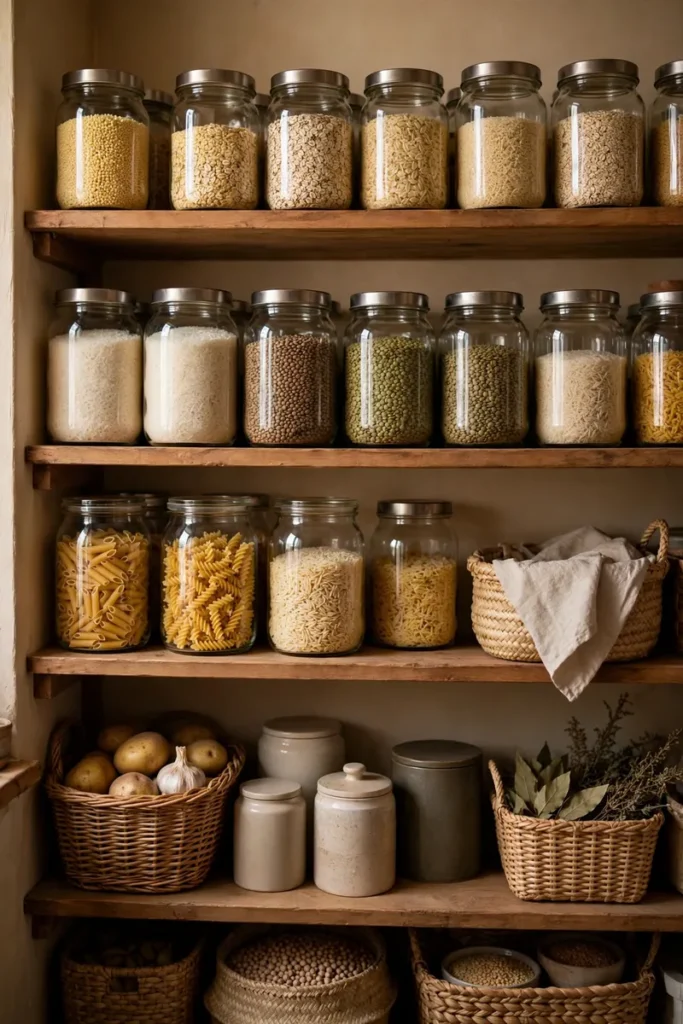
This step alone can cut your grocery bill by a shocking amount. Most of us have a pantry full of food we bought with good intentions and then forgot about. Cans of beans. Half a bag of rice. Pasta in three shapes. A freezer with mystery bags from two months ago.
Here is how to do the pantry first scan. Open the pantry and write down the main ingredients you see. Open the fridge and note what needs to be used soon. Check the freezer for proteins you already bought. Then plan at least two or three dinners around those ingredients before you think about the store.
That bag of frozen chicken thighs becomes slow cooker salsa chicken for Taco Tuesday. The half box of penne becomes Pasta Wednesday with whatever sauce is in the cupboard. The eggs and the sad looking peppers become breakfast for dinner night.
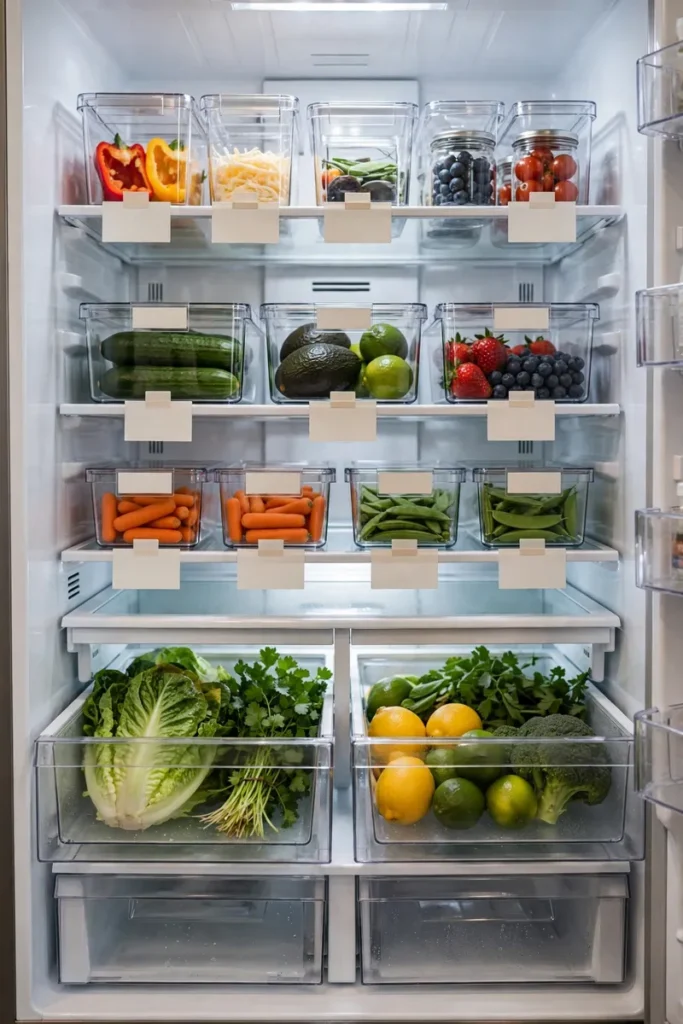
This is also where food waste dies. The average family throws away a painful amount of food every year, and most of it is produce that went soft in the crisper drawer while everyone forgot it existed. When you plan from the fridge first, that spinach gets used on purpose instead of discovered as green slime next week. You are not just saving money. You are respecting the food you already paid for.
Keep a running “use it up” list on the fridge. When you spot something that needs eating soon, write it there. It becomes a built in prompt for your next planning session.
Step 4: Build a Master Grocery List That Does the Thinking for You
Create one reusable list organized by store section, and never start from a blank list again.
Starting every grocery list from scratch is exhausting and it is where impulse buying sneaks in. A master list fixes both problems. You build it once, then each week you just check off what you need.
Here is how to build yours. Think about everything your family buys regularly and sort it by where it lives in the store. Produce. Meat and seafood. Dairy and eggs. Bread and bakery. Frozen. Canned goods and pantry. Snacks. Household. Write it all down in those sections, one time.
Print a few copies or keep it as a note on your phone. Each planning day, you go through the list and circle or check only what you actually need for the week. The list reminds you of the things you always forget, like the butter you are almost out of, and it keeps you from wandering the aisles “just looking.”
The wandering is where the budget dies. Stores are designed to make you buy things you did not plan to buy. A list organized by section lets you move through the store with purpose, skip the tempting middle aisles you do not need, and get out before the impulse buys pile up.
One more tip that saves real money. Add a “do not buy” note at the top of your list for things you already have plenty of. It sounds silly, but it stops the classic mistake of buying your fourth bottle of ketchup because you could not remember if you had any at home.
Step 5: Keep a Short Rotation of Simple Weeknight Meals
Collect 10 to 12 dinners your family actually eats, and rotate through them without guilt or boredom.
Here is a truth the food internet does not want you to know. You do not need new recipes. You need reliable recipes. The fanciest meal plan in the world is useless if your kids will not eat it or if it takes 90 minutes on a Tuesday.
Your rotation should be built from meals with five ingredients or fewer, meals that take 30 minutes or less, and meals your family has already proven they will eat. Write them on an index card or a phone note. This is your dinner bench, and you only call plays you know work.
Some ideas to get your list started. Spaghetti with meat sauce. Sheet pan chicken and vegetables. Tacos or taco bowls. Stir fry with frozen vegetables and rice. Breakfast for dinner, meaning scrambled eggs, toast, and fruit. Slow cooker pulled pork. Homemade pizza on store bought dough. Soup and grilled cheese. Baked potato bar with toppings.
Notice something about that list? Nothing impressive. Nothing that would get a single like on social media. And that is exactly the point. Weeknight dinner is not a performance. It is fuel for your family, served by a mom who also has a life.
When you feel like trying something new, add one new recipe a week at most, and schedule it for a night when you have extra time and patience. New recipes belong on calm Saturdays, not on Wednesdays when everyone has activities and homework.
Ask your kids to each pick one meal for the rotation. When a child chooses the dinner, two wonderful things happen. They are more likely to eat it, and they stop complaining about the menu because it was partly their idea. My youngest picked breakfast for dinner and defends it like she invented it.
Step 6: Give Every Leftover a Job
Plan for leftovers on purpose, and decide in advance what they will become.
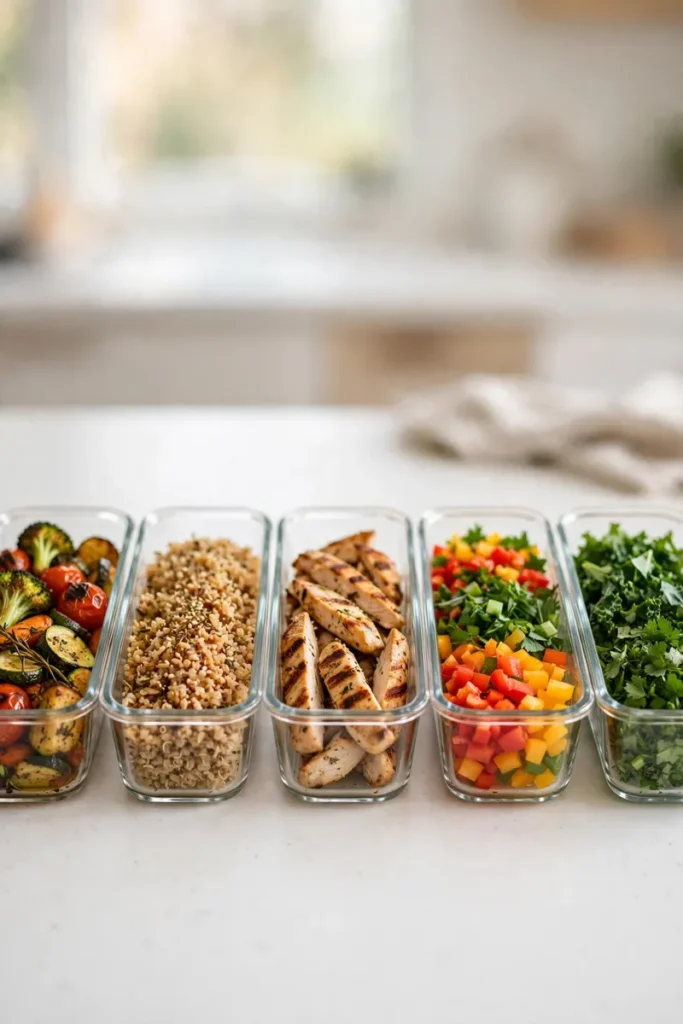
The trick is to cook once and eat twice, on purpose. When you make a big batch of taco meat on Tuesday, you are also making Wednesday’s quesadilla filling. When you roast a tray of chicken on Sunday, you are also making Monday’s chicken soup or Tuesday’s chicken wraps. The second meal takes ten minutes because the hard work is already done.
This is called cook once eat twice, and it is the closest thing to a weeknight miracle that exists. You get the feeling of a home cooked meal with the effort of reheating. Your future self will want to hug your past self.
For this to work, you need a leftovers plan, not just leftovers. When you write your weekly plan, actually write “leftover night” on the calendar for one or two evenings. That is your buffer. It catches the extra food before it goes bad, and it gives you a night with almost zero cooking.
Label everything with the date. A piece of masking tape and a marker take five seconds and end the game of “is this still good or is this a science experiment.” If it has been in the fridge more than four days, it goes. No guilt, no sniff test debates.
And if your family truly hates the word leftovers, rename them. Call it a “remix night” or “encore dinner.” Kids who would revolt at reheated chicken will happily eat chicken quesadillas made from the same chicken. Presentation is half the battle.
Step 7: Use Budget Stretchers That Never Feel Like Sacrifice
Stretch your grocery dollars with smart swaps that your family will not even notice.
Saving money on food does not have to mean sad meals. The best budget stretchers are invisible. Nobody at the table knows you spent less, and that is the whole idea.
Start with the mighty meat stretch. You can use half the ground meat in tacos, pasta sauce, or chili by bulking it up with beans, lentils, or extra vegetables. The flavor stays rich, the texture stays hearty, and the cost drops dramatically. A bag of dried lentils costs very little and stretches across multiple meals.
Next, embrace the cheaper proteins without apology. Eggs are one of the most affordable complete meals on earth. A frittata with whatever vegetables need using up feeds a family for a few dollars. Bean based meals like chili, burrito bowls, and lentil soup are filling, healthy, and kind to the budget. Canned tuna and frozen fish are weeknight heroes.
Buy produce in season and on sale, then plan around it instead of the other way around. If bell peppers are expensive this week but zucchini is cheap, your stir fry features zucchini. Flexible cooks save money. Rigid recipe followers pay full price.
Frozen fruits and vegetables deserve more respect. They are picked at peak ripeness, they cost less than fresh, and they never go slimy in your crisper drawer. Frozen berries for smoothies, frozen broccoli for stir fry, frozen peas for everything. Frozen produce is not a compromise. It is a strategy.
Finally, watch the unit prices, not just the sticker prices. The bigger bag is not always the better deal. A quick glance at the price per ounce on the shelf tag takes three seconds and can save you real money over a year of groceries.
None of this requires coupons, extreme bargain hunting, or driving to four stores. It is just cooking a little smarter with what the store already offers. Your budget stretches, your family eats well, and nobody feels deprived.
Try It Tonight: Your 20 Minute Quick Win
You do not need to build the whole system tonight. You just need one small win that makes tomorrow easier. Set a timer for 20 minutes and do only these three things.
Tonight’s quick win
- Write down seven theme nights. Just the themes, not the recipes. Taco Tuesday, Pasta Wednesday, whatever fits your family. Stick the list on the fridge.
- Do a two minute pantry and fridge scan. Write down five ingredients you already own that could become a meal this week.
- Pick your planning day. Choose the day before your usual grocery run, put it on your calendar with a reminder, and tell your partner it is happening.
That is it. In 20 minutes you will have themes for the week, a head start on meals from food you already own, and a protected planning slot on your calendar. You will wake up tomorrow already more organized than you were today.
Mistakes to Avoid
Most meal plans do not fail because the idea is bad. They fail because of a few predictable traps. Here are the ones I see most often, so you can sidestep them.
Mistake 1: Planning seven brand new recipes. This is the number one plan killer. New recipes take longer, create more dishes, and carry the risk that nobody likes the result. One new recipe a week is plenty. The rest should come from your trusted rotation. Boring dinners that get eaten beat exciting dinners that get rejected.
Mistake 2: Having no backup meals. Some nights the plan will fall apart. The chicken is still frozen. Soccer practice ran late. You are just done. Every week needs one or two backup meals that require almost no thought. Frozen pizza, breakfast for dinner, or pasta with jarred sauce. A backup meal is not a failure of the plan. It is part of the plan.
Mistake 3: Shopping without a list. Walking into a grocery store without a list is like walking into a toy store with your kids and no budget. You will come out with things you did not need and forget the one thing you went in for. Your master list from step four exists to protect you from yourself. Use it every single time.
Mistake 4: Ignoring the family calendar. Planning a slow cooker meal for the night everyone has activities until 7 is setting yourself up to fail. Check the calendar first, every time. Busy nights get the fastest meals. Calmer nights can handle the recipes that take a little longer. The plan has to fit your life, not the other way around.
Mistake 5: Making the plan too rigid. A meal plan is a guide, not a contract. If Wednesday’s meal sounds terrible on Wednesday, swap it with Thursday. If a friend invites you out, go and shift the plan. The moms who stick with meal planning longest are the ones who treat it as flexible. Rigid plans break. Flexible plans bend and survive.
Mistake 6: Trying to change everything in week one. If you currently do zero planning, do not attempt all seven steps at once. Start with theme nights and a planning day. Add the pantry scan next week. Add the master list the week after. Small changes stack up. Massive overhauls collapse by Thursday.
What About…?
You probably have objections, and they are all fair. Let us handle the big ones.
What about picky eaters?
Build the plan around the meals everyone will eat, then add variety through toppings and sides.
Picky eaters and meal planning actually get along beautifully, because the whole point is to stop serving surprise dinners. When your child knows it is taco night, the anxiety drops. Serve meals deconstructed when you can. Tacos where everyone builds their own. A baked potato bar. Pasta with sauce on the side. The base meal is the same for everyone, and each person customizes it.
Also, involve the picky eater in choosing. A child who picked Wednesday’s dinner is dramatically more likely to eat Wednesday’s dinner. And keep exposing them to new foods without pressure. Put the new vegetable on the table next to the safe food. No battles, no bribes, just quiet repeated exposure. It takes time, but it works.
One more thing. Stop cooking two separate dinners. It is exhausting and it teaches kids that refusing works. Make one family meal with at least one component everyone likes. The picky eater might eat only the plain pasta and the fruit tonight. That is fine. They will not starve, and you will not lose your mind.
What about dietary restrictions?
Theme nights and rotations work even better with restrictions, because they shrink an overwhelming job into a manageable one.
Whether your family is dealing with gluten free needs, dairy free needs, vegetarian meals, or food allergies, the system does not change. You just build your rotation from meals that already fit the rules. In fact, restrictions make the rotation even more valuable, because safe meals are harder to improvise at 5 pm.
Keep a separate section on your master grocery list for the specialty items you always need, like gluten free pasta or dairy free milk. And when you try a new recipe, test it on a low pressure night and get a family verdict before it earns a spot in the rotation. A new allergy friendly recipe that nobody likes is not a win, even if it checks every dietary box.
If different family members have different restrictions, lean hard on build your own meals. Taco bars, grain bowls, and baked potato bars let everyone eat safely from the same table without you cooking three versions of dinner.
What if you hate cooking?
Good news. This system was made for you.
You do not need to love cooking to feed your family well. You just need a plan that keeps the cooking part as short and painless as possible. That is exactly what the rotation of simple meals and the cook once eat twice strategy are for.
Lean on your slow cooker, your sheet pan, and your grocery store’s shortcuts without a drop of shame. Rotisserie chicken is a legitimate dinner foundation. Frozen meatballs, bagged salad, store bought pizza dough, and pre cut vegetables exist so that busy moms can get dinner on the table. Using them does not make you less of a cook. It makes you a smart one.
Also, divide the labor. If your partner can grill, give them two grill nights a week. If your kids are old enough, they can assemble tacos, wash vegetables, or stir a pot. Dinner does not have to be a solo performance. And on the nights when even 20 minutes of cooking feels like too much, that is what your backup meals are for. Hating cooking is not a flaw in the plan. It is the reason the plan exists.
What about the weeks when everything falls apart?
The plan is designed to bend, not break, and falling off for a week is not failure.
There will be weeks with sick kids, work deadlines, houseguests, or just pure exhaustion. During those weeks, shrink the plan to its smallest useful version. Three theme nights instead of seven. Backup meals twice. Takeout once without guilt.
Keep an emergency shelf in your pantry for exactly these weeks. Pasta, jarred sauce, canned soup, rice, frozen vegetables, and a few frozen pizzas. When life explodes, you can still feed everyone from that shelf without a grocery trip or a single decision.
And when the chaotic week ends, do not try to “make up for it” with an ambitious plan. Just return to your normal rotation like nothing happened. Consistency over months matters. Perfection over one week does not. The moms who win at this are not the ones who never fall off. They are the ones who always climb back on.
Dinner Does Not Have to Be the Hardest Part of Your Day
Here is what I want you to take away from all of this. The 5 pm panic is not a permanent condition. It is just what happens when an important decision gets made at the worst possible moment, over and over.
Move that decision to a calm 20 minutes earlier in the week. Give yourself themes so you never start from zero. Shop your pantry before the store. Keep a list, keep a rotation, give your leftovers a job, and stretch your budget with swaps nobody notices. That is the whole system. It fits on an index card.
Start tonight with the quick win. Pick your themes, scan your pantry, and choose your planning day. Next week, add one more step. Within a month, you will wonder how you ever survived the fridge stare era.
And once dinner stops being a daily crisis, you might find you have energy left for the other chaos, like taming the toy flood that is currently swallowing your living room. One system at a time, mama. You are doing better than you think.
With love and light, and wishing you a calm, delicious week ahead.
Get Fresh Home Ideas Every Week
Seasonal decor ideas, organizing tips, and cozy home inspiration, straight to your inbox.
More Parenting Ideas You Will Love
Keep reading for more calm-home inspiration: