

If you are reading this with a cold plate of untouched broccoli in front of you and a small person announcing that dinner is ruined forever, I need you to know something first. You are not alone in this moment. I have stood in that exact spot in my own kitchen, holding a fork, feeling my shoulders climb up toward my ears, wondering how a vegetable the size of a thumb turned into the biggest fight of our whole day.
It usually goes the same way in our house. Dinner smells good. Everyone is hungry. I set the plates down with a little hope in my heart. Then my child spots the green thing. The face changes. The arms cross. And suddenly we are not eating dinner anymore. We are negotiating like it is a hostage situation, and the hostage is a carrot stick.
I used to take it so personally. I planned the meal. I bought the food. I stood at the stove after a long day of work and school runs and laundry. So when my child pushed the plate away, it did not feel like a comment about the broccoli. It felt like a comment about me. Maybe you know that feeling too. It stings more than we admit out loud.
Here is the promise I want to make you before we go any further. You can end the vegetable standoff without bribing, begging, hiding, or turning into the dinner police. It will not happen in one meal. It might not even happen this week. But there is a calm, steady system that works in real kitchens with real kids, and it asks far less of you than the nightly battle does.
I know because I lived the other way first. I tried the airplane spoon long past the age when it was cute. I tried dessert as a reward and watched it turn every vegetable into a toll my child had to pay. I tried the clean your plate rule and sat across from a crying kid for forty minutes while both of our dinners went cold. None of it worked. It just made dinner feel heavy for everyone.
What finally worked was almost embarrassingly simple. I stopped trying to win the meal in front of me and started building trust over many meals instead. I learned from other moms, from our pediatrician, and from a whole lot of trial and error at my own table. If picky eating has been running your evenings, you might also love the approach in How to Feed Picky Eaters Without Cooking Two Dinners, because the two systems fit together like puzzle pieces.
So take a breath. Put the cold broccoli down. Let me walk you through exactly what changed in our house, step by step, in the order I wish someone had handed it to me years ago.
Love these ideas? Get more every week.
Join the newsletter for seasonal decor and cozy home inspiration.
The short version
- Serve vegetables often, in tiny amounts, with zero pressure attached.
- Always pair a new or tricky vegetable with a food your child already loves.
- Keep your words neutral. Describe the food. Never sell it, praise it, or warn about it.
- Let your child stay in control of what goes in their mouth. You stay in control of what is served and when.
- Expect slow progress measured in weeks, and count touches, licks, and curious looks as real wins.
Why this happens
Let us start with the part nobody tells you at the playground. Most kids are wired to be suspicious of vegetables, and it is not a character flaw in them or a failure in you. It is biology doing its old, stubborn job.
Vegetables taste bitter to young taste buds in a way they simply do not taste to us. Children have more sensitive taste buds than adults do, and bitter flavors read as a warning signal. Way back in human history, that warning kept little kids from eating things that could hurt them. Your child is not being dramatic when they gag at a Brussels sprout. Their body is honestly telling them this tastes intense and possibly unsafe.
There is also a built in fear of new foods that peaks in the toddler and early school years. Researchers call it food neophobia, but at my table it just looked like a child staring at a pea like it had personally offended her. This caution is normal. It fades with safe, repeated exposure. The key word there is repeated, and the other key word is safe. A child who feels cornered does not feel safe, and a child who does not feel safe does not get braver. She gets louder.
Then there is control. Think about how little of the day a young child gets to decide. Adults choose the wake up time, the clothes, the school, the car seat, the bedtime. Food is one of the very few places where a child has real power, because nobody can physically make a child chew and swallow. When we push hard at the table, eating becomes the one battlefield where our kids can actually win. And kids, being smart, dig in exactly where their power is.
Pressure also teaches the wrong lesson over time. When a vegetable becomes the price of dessert, the vegetable becomes the enemy and dessert becomes the prize. When we praise one bite like it is a miracle, kids hear that eating this food must be truly awful if it earns that much applause. When we hide vegetables in other foods and get caught, and we always get caught eventually, trust takes a hit that reaches far beyond dinner.
So if the standoff has been happening at your table, please hear this clearly. Your child is not broken, and you have not failed. You have a normal kid with a normal nervous system, and you have been using the tools most of us were handed by our own childhoods. Those tools just do not work very well. The good news is that better tools exist, and they are kinder for everyone, including you.
The plan
Here is the whole system, in the order that worked at our table. You do not need to start all of it on the same night. Pick step one, live with it for a week or two, then add the next. Slow and steady is not a compromise here. Slow and steady is the entire strategy.
Step 1. Shrink the serving until it feels silly
Serve a portion so small it cannot scare anyone: one pea, two corn kernels, a single sliver of pepper.
I know how this sounds. It sounds like giving up. It is the opposite. A mountain of broccoli on a plate is a demand, and demands start fights. One pea is a curiosity. It asks nothing. It can be looked at, poked, moved around, and ignored without any drama at all.
Small servings also protect your own heart. When I served a full portion and watched it get rejected, I felt the waste in my chest. The money, the effort, the hope. When I serve one pea and it gets ignored, I feel nothing at all. It costs me nothing to stay calm, and staying calm is the whole game.
Here is how to do it in practice. Put the tiny vegetable portion on the plate alongside the regular dinner, the foods your child already eats happily. Say nothing about it. Do not announce it, point at it, or watch for a reaction. If your child eats it, wonderful, and if they ask for more, serve more with the same casual energy you would use to pass the salt. If they ignore it, clear it away with the rest of the plate when dinner ends. No comment either way. The silence is doing quiet work for you.
Step 2. Always bring a safe food to the table
Every meal needs at least one food your child already loves, served alongside anything new or tricky.
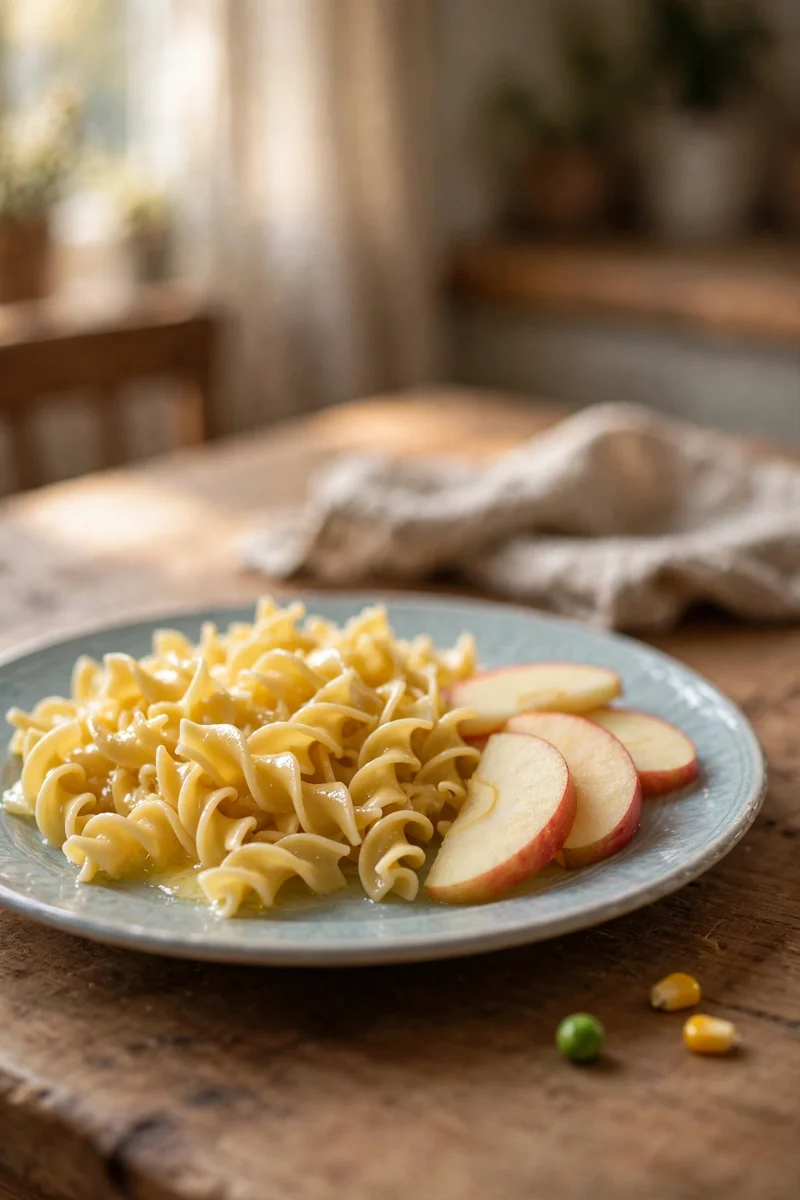
This one rule changed our dinners more than any other. A plate that holds only challenges is a plate a child will refuse before the first bite. A plate that holds buttered noodles, a dinner roll, apple slices, and one small piece of roasted carrot is a plate a child can approach. The safe food lowers the stakes of the entire meal.
It also protects you from the short order cook trap. When there is a safe food on the table, your child will not go hungry, and you never have to jump up mid meal to make a backup dinner. That freedom lets you stay seated, stay calm, and actually eat your own food while it is warm. Imagine that.
If you are tired of planning meals that work for everyone, the framework in The Weekly Meal Plan That Saves Your Sanity pairs beautifully with this step, because a simple weekly rhythm makes safe foods automatic instead of one more thing to think about at five in the evening.
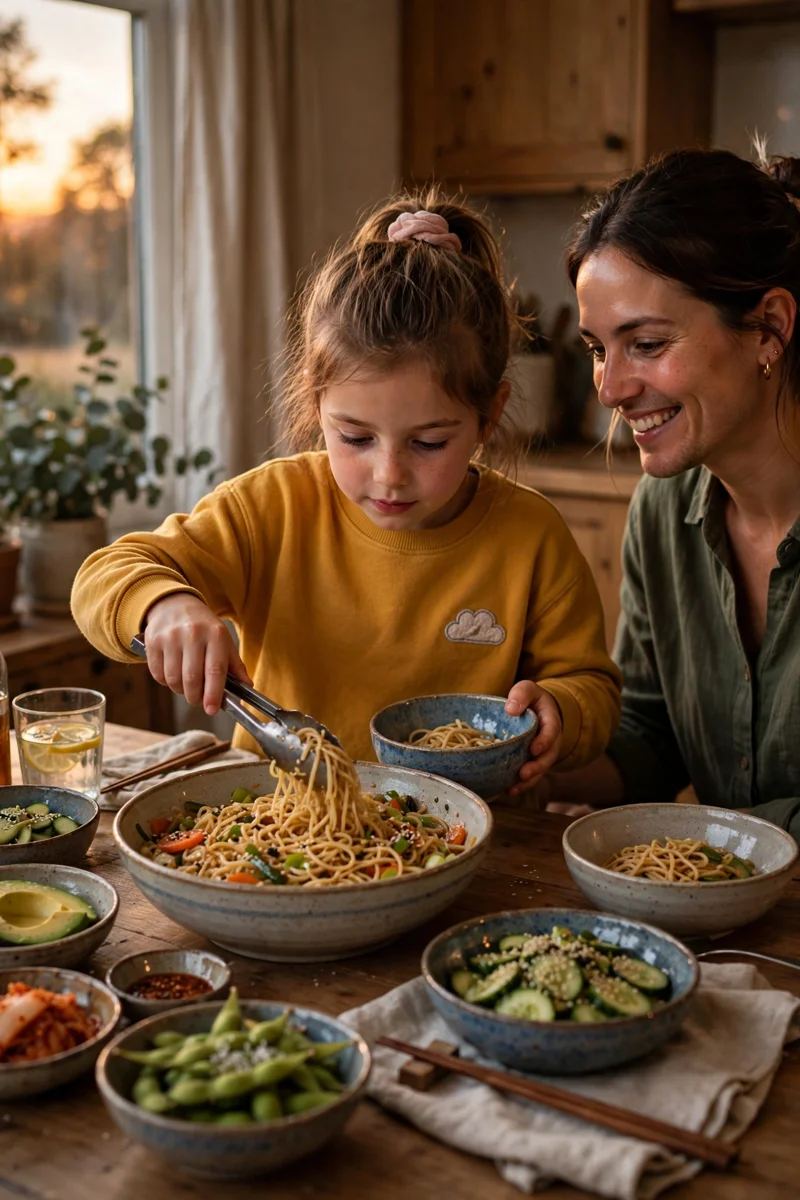
A note on family style serving, because it helps this step shine. When you can, put the food in bowls in the middle of the table and let your child serve their own plate, with help for little ones. Kids who spoon the noodles onto their own plate feel in charge, and kids who feel in charge are far more likely to let a vegetable land on that plate too. Even if it just sits there. Sitting there counts.
Step 3. Change your words, not just your menu
Talk about vegetables the way you talk about the weather: plain facts, no sales pitch, no warnings, no cheerleading.
Most of us sell vegetables without noticing. We say things like, this is so yummy, or, carrots help your eyes, or, just try it, you will love it, I promise. Kids hear the pitch and their guard goes up. If this food were truly wonderful, they reason, mom would not need to work this hard to convince me.
Neutral words sound like this instead. The peppers are crunchy. This corn is sweet. Dinner is ready, come sit down. That is it. You are a narrator, not a salesperson. When your child says a vegetable is gross, resist the urge to argue. A calm, that is okay, you do not have to eat it, ends the moment before it becomes a standoff. When your child does taste something, keep your reaction small and warm. A simple, you tried the pepper, is plenty. Save the fireworks for birthdays.
This step also covers what happens away from the table. Try not to label your child as picky in front of them, to grandparents, or to other parents while little ears are listening. Kids live up to the stories we tell about them. In our house we say she is still learning about that food. It sounds small. It changes what a child believes is possible for herself.
Step 4. Build a gentle ladder of brave tastes
Let your child climb toward a new food in tiny steps: look, touch, smell, lick, taste, and only much later, eat.
We expect kids to go from never seeing a food to eating a full serving in one leap, and then we call them stubborn when they cannot. No adult learns that way. You would not expect to love a brand new cuisine in one bite at a restaurant. You would look at it, smell it, try a small taste, and decide slowly. Kids deserve the same staircase.
So make the steps official and fun. In our house a vegetable on the plate that gets touched is progress. A vegetable that gets lifted to the lips is a celebration inside my head, even if it never goes in. A lick counts. A tiny nibble that gets politely spit into a napkin counts, and yes, we allow the napkin spit without a single comment. Each step teaches the brain that this food is safe, familiar, and not a trap.
You can make this playful if your child enjoys games. We kept a simple chart on the fridge where brave food moments earned a sticker, and the sticker was the whole prize. No dessert, no toy, no money. Just the quiet pride of a chart filling up. If charts cause pressure in your house, skip them entirely. The ladder works with or without the decorations, because the real reward is a child who feels safe enough to be curious.
Step 5. Bring vegetables into the day before dinner
Let your child meet vegetables when nobody is hungry, tired, or sitting under dinner table pressure.
Dinner is honestly the worst classroom for this lesson. Everyone is tired. The day is almost done. Patience is thin on both sides of the table. So move the learning earlier, when the stakes are low and the mood is light.
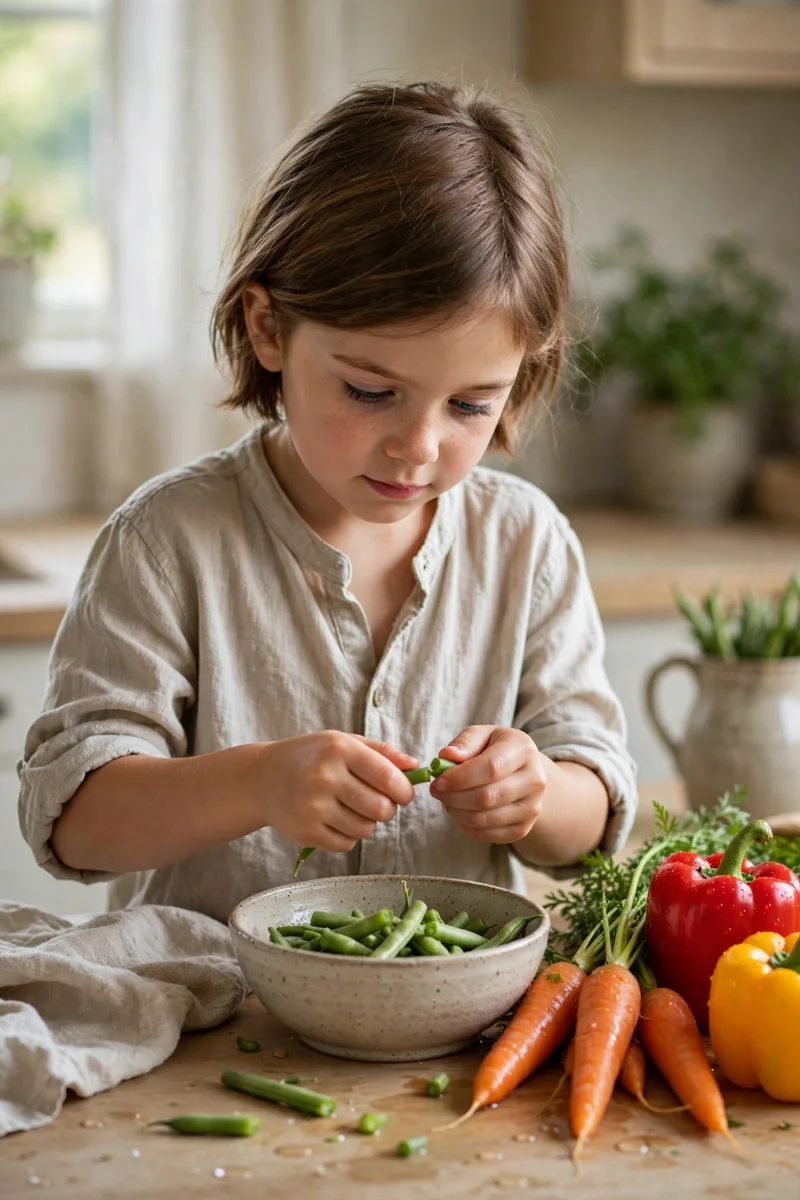
Let your child wash the carrots. Let them snap the ends off the green beans and drop them in the bowl with a satisfying plop. Let them pick the pepper at the grocery store, carry it home like treasure, and tear lettuce leaves for the salad. Kids who have handled a food with their hands, in a calm moment, are far less suspicious of it later on a plate. The food is no longer a stranger. It is the thing they helped make.
Snacks are another low pressure doorway. A small plate of cucumber rounds and dip while a show is on asks nothing of anyone. A veggie tray set out during homework or play often gets grazed on without a single thought, precisely because nobody called it dinner and nobody is watching. Grazing counts. Every relaxed encounter is a deposit in the trust bank, and dinner is where you spend from it.
Step 6. Make vegetables taste genuinely good
Cook vegetables the way you would cook food for a guest you like: roasted, seasoned, and served with something delicious to dip.
Let us be honest with each other. A pile of plain steamed vegetables with no salt and no fat tastes like a punishment, and our kids are not wrong for noticing. Somewhere along the way many of us started serving vegetables like medicine, stripped of everything that makes food enjoyable, and then blamed the children for the review.
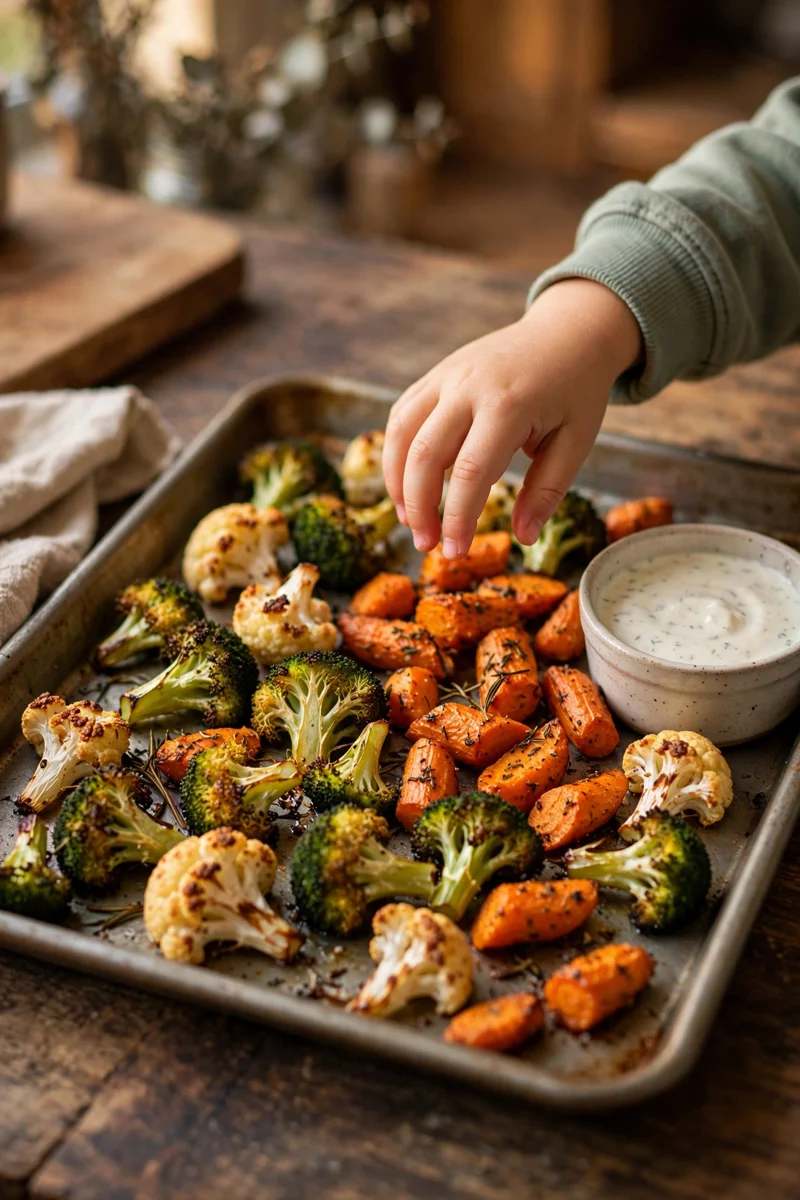
Roasting changes everything. Heat and a little oil turn carrots sweet, make broccoli edges crispy, and give cauliflower a deep, nutty flavor that steaming never will. Season them like you mean it. A pinch of salt, a little garlic, a squeeze of lemon at the end if your crew likes it. And bring back the dip without shame. Ranch, hummus, ketchup, cheese sauce, whatever your child loves. If a dip is the bridge that gets a pepper strip into a small mouth, that bridge is a triumph, not a cheat.
Also pay attention to texture, because for many kids texture is the real issue, not flavor. A child who hates mushy cooked carrots may happily crunch them raw. A child who gags on a tomato chunk may drink tomato soup by the bowl. There is no moral difference between these forms. It is all the same vegetable, arriving in a costume your child can accept.
Step 7. Keep the rhythm boring and kind
Hold a steady meal and snack rhythm, end dinner calmly whether or not a vegetable was eaten, and never follow a refused dinner with a rescue snack.
This step is the frame that holds the whole picture. When kids graze all afternoon, they arrive at dinner barely hungry, and a barely hungry child has no reason to be brave. A loose rhythm of meals and planned snacks means your child sits down with an honest appetite, and appetite is the quiet engine behind every brave bite.
Ending dinner matters just as much. When dinner is over, dinner is over. The kitchen closes with kindness. If a child chose not to eat much, a regular bedtime snack that is always on the routine, like milk and a banana, is fine. What we skip is the special replacement meal made in response to the refusal, because that teaches a clear lesson: hold out long enough and the food you actually want will appear. That lesson will be used against you tomorrow night, and the night after that, by a very smart small person.
If the late afternoon hours are when your house falls apart, you are not imagining it, and it is not just about food. The strategies in How to Survive the Witching Hour With Little Kids helped our family calm the whole stretch before dinner, which made dinner itself start from a much better place.
Try it tonight: the two bite buffet
Tonight, alongside whatever dinner you already planned, set out one small plate in the middle of the table. On it put exactly three things: one baby carrot, one cucumber round, and one pepper strip, with a tiny pot of your child’s favorite dip beside them. That is the whole assignment. Say one sentence only: I put a little tasting plate out if anyone wants it. Then talk about your day. Ask about school. Tell the story about the dog. If your child tastes something, smile and move on. If nobody touches the plate, clear it away without a word when dinner ends. Total extra effort: under five minutes. Total battles: zero. You just ran step one, two, and five in a single move.
Mistakes to avoid
Before we talk about objections, let me save you from the traps I fell into myself, because each one of these quietly undoes the plan above.
Bribing with dessert. It works tonight and costs you for months. The moment a vegetable becomes the toll and dessert becomes the treasure, your child learns the vegetable must be truly terrible. Serve dessert sometimes as a simple part of life, on nights that have nothing to do with what was eaten, and watch the drama around it cool down.
The clean your plate rule. Forcing the last bites teaches kids to ignore their own fullness signals and turns the table into a power contest you can only win by making a small person cry. Serve small. Allow seconds. Let done be done.
Hiding vegetables and getting caught. Purees blended quietly into a sauce your child already loves are one thing, and I have no quarrel with adding nutrition where it fits naturally. The trap is deception as a strategy: promising there are no vegetables while smuggling them in. When kids discover it, and they almost always do, every future meal gets interrogated. Trust is the real nutrient in this whole system.
Making a separate kid dinner. One meal for the grown ups and a different meal for the kids doubles your work and guarantees the standoff never ends, because why would a child climb the ladder toward the family food when a personal menu arrives every night. One meal, with a safe food built in, is both kinder and easier.
Commenting on every bite. Running commentary, whether it is praise, warnings, or negotiations, keeps all eyes on the vegetable and all pressure on the child. The food becomes a performance. Quiet, ordinary meals where vegetables are simply present will do more in a month than a week of dinner table speeches.
Expecting a straight line. Your child will eat a carrot on Tuesday and reject the same carrot on Friday like it is a brand new enemy. That is not failure and it is not manipulation. Appetites shift with growth, tiredness, mood, and the mysterious weather systems inside small children. Judge this plan in months, not meals, and you will see the line moving in the right direction.
What about…?
What about grandparents who push food or sneak the dessert bribe?
This one needs a kind, private conversation away from the table and away from your child. Share the short version of the plan: we are keeping food pressure low, tiny portions are on purpose, and it helps so much when everyone stays relaxed about what gets eaten. Most grandparents push because they love and because they worry, and worry melts when they hear there is a plan. Give them a job if you can. Grandma can be the official dip maker, or the person who lets a small helper snap beans at the counter. A grandparent with a role rarely stays a food pusher for long.
What about a tiny kitchen and no room for family style everything?
You do not need a big table or a pile of serving bowls for this to work. The tasting plate in the try it tonight box fits on any table, counter, or even a tray on the couch for a picnic style dinner. Tiny portions are actually a gift in a small space, because there is less to cook, less to store, and less to throw away. A single tray of roasted vegetables made once can serve the plan for days in small amounts. Small kitchen, small portions, same calm result.
What about toddlers who throw food instead of tasting it?
Throwing is communication at that age, and it usually means done, bored, or thrilled by gravity. Keep portions tiny so there is less ammunition, put only one or two pieces in front of them at a time, and end the meal calmly when the throwing starts, without a lecture. The ladder still applies. A toddler who touches, squishes, licks, or wears a vegetable is exploring it with every sense they have. It is messy progress, but it is progress, and it is exactly how tasting begins.
What about the grocery budget? Fresh vegetables that get ignored feel like money in the trash.
I feel this one in my wallet too. Start with frozen vegetables, which cost less, keep for months, and taste sweet and mild in small portions. A handful from the bag is all this plan ever asks for. Buy one fresh vegetable a week for the tasting plate instead of five, and let the family eat the rest. And remember the math of the tiny portion: one pepper strip a night means a single pepper serves the plan all week. This system is honestly cheaper than the backup dinners and wasted full portions it replaces.
A calmer table is coming
I will not promise you a child who asks for salad by name next week. Anyone who promises that is selling something. What I can promise is this: the standoff itself can end long before the eating is perfect. In our house the fighting stopped within the first couple of weeks, because I stopped bringing a fight to the table. The eating followed slowly, in its own time, one pea and one pepper strip at a time.
And slowly really does add up. The child who once cried at the sight of green now eats roasted broccoli when it is crispy, picks the peppers out of the stir fry to eat first, and still, for the record, regards Brussels sprouts with deep and personal suspicion. I will take it. That is what real progress looks like. It is uneven, ordinary, and completely wonderful.
So tonight, start small. One tasting plate. One calm sentence. One dinner where nobody has to win. You are not behind, your child is not stubborn beyond help, and this is not a battle either of you has to fight anymore. You are just a mom teaching a small person about food, with patience as the main ingredient. That is a job you are already good at, even on the nights it does not feel like it.
One last thought before you go. Take a photo of the first tasting plate if you like, even if nobody touches a thing on it. Months from now, when your child reaches for a carrot without thinking, that photo will remind you how far a little patience can travel. Small steps, taken calmly and often, are how big changes quietly arrive at a family table.
With love and light
Get Fresh Home Ideas Every Week
Seasonal decor ideas, organizing tips, and cozy home inspiration, straight to your inbox.
More Parenting Ideas You Will Love
Keep browsing for more seasonal inspiration: