
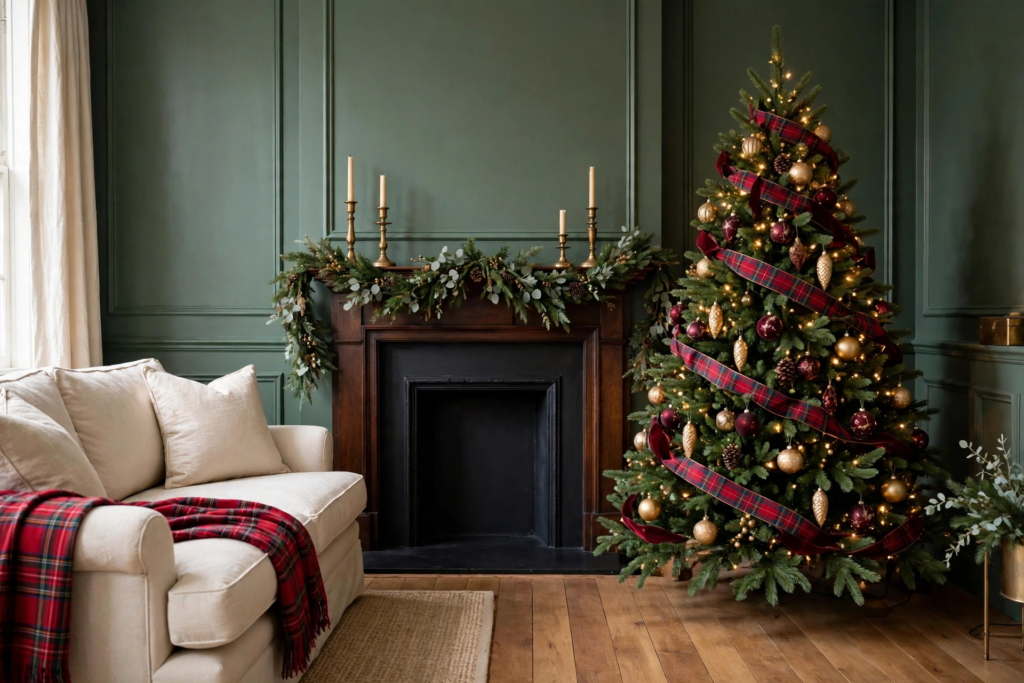
A classic Christmas home should feel like a deep breath the moment the door opens. Warm light low in every room. The faint smell of pine and cinnamon in the air. Wool and velvet soft under your hand, brass catching the glow from the tree, and deep green everywhere your eye lands. I want guests to slow down in the entry before they have even taken off their coats. That feeling is not about owning grand things. It is about one palette walking through the whole house with you, room after room, like a good host who never leaves your side.
My palette this year is borrowed from the old Ralph Lauren look I have loved forever. Tartan plaid, deep green, worn brass, burgundy velvet, warm wood and calm cream. Nothing bright, nothing shouty, nothing that will embarrass us in photographs ten years from now. And I hold myself to a few rules on this tour. Repeat tartan, brass and deep green in at least three places in every room, so each space looks planned instead of decorated. Add texture before you add one more ornament. Let one strong color lead each room and let the rest support it. And style every room for the evening, because that is when a classic home does its best work. If you want the mantel story in more depth, my Christmas mantel decor ideas go all in on that one spot. Now come in out of the cold and walk it with me.
Love these ideas? Get more every week.
Join the newsletter for seasonal decor and cozy home inspiration.
Start at the Front Door
1. Style the Entry Console Like a Welcome
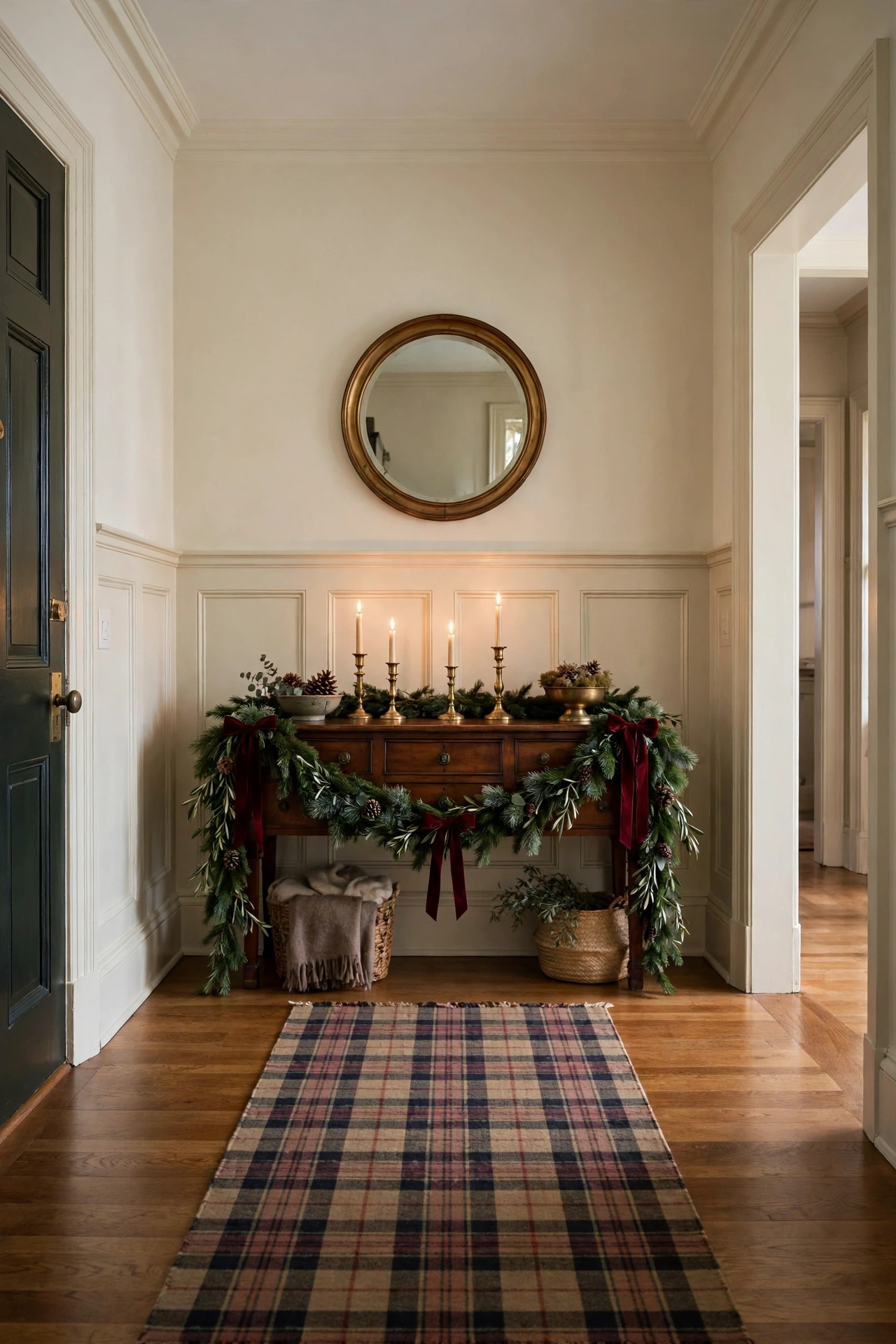
The entry sets the tone for the entire tour, so I give it the full palette in miniature. A dark wood console against a deep green wall, a swag of greenery draped soft across the top, and brass candlesticks in two heights with real tapers lit by five in the afternoon. Above it hangs a round brass framed mirror, which doubles every flame and makes our small entry feel twice its size. I keep the styling to three groups only. Candles on one side, a small stack of beautiful books in the middle, and a brass bowl for keys and mail that would otherwise scatter across the surface. A tartan runner on the floor below pulls the plaid in at ground level, so the first room already repeats tartan, brass and deep green in three places. Guests read all of that in about four seconds, even if they could never tell you why the house feels so calm. First impressions in a home work exactly like first impressions with people. You do not get a second chance to make one, so I spend my best five minutes of decorating right here.
Shop This Look
This post contains affiliate links. If you purchase through these links, we may earn a small commission at no extra cost to you. Read our full disclosure here.
A few favorites featured in the ideas above:
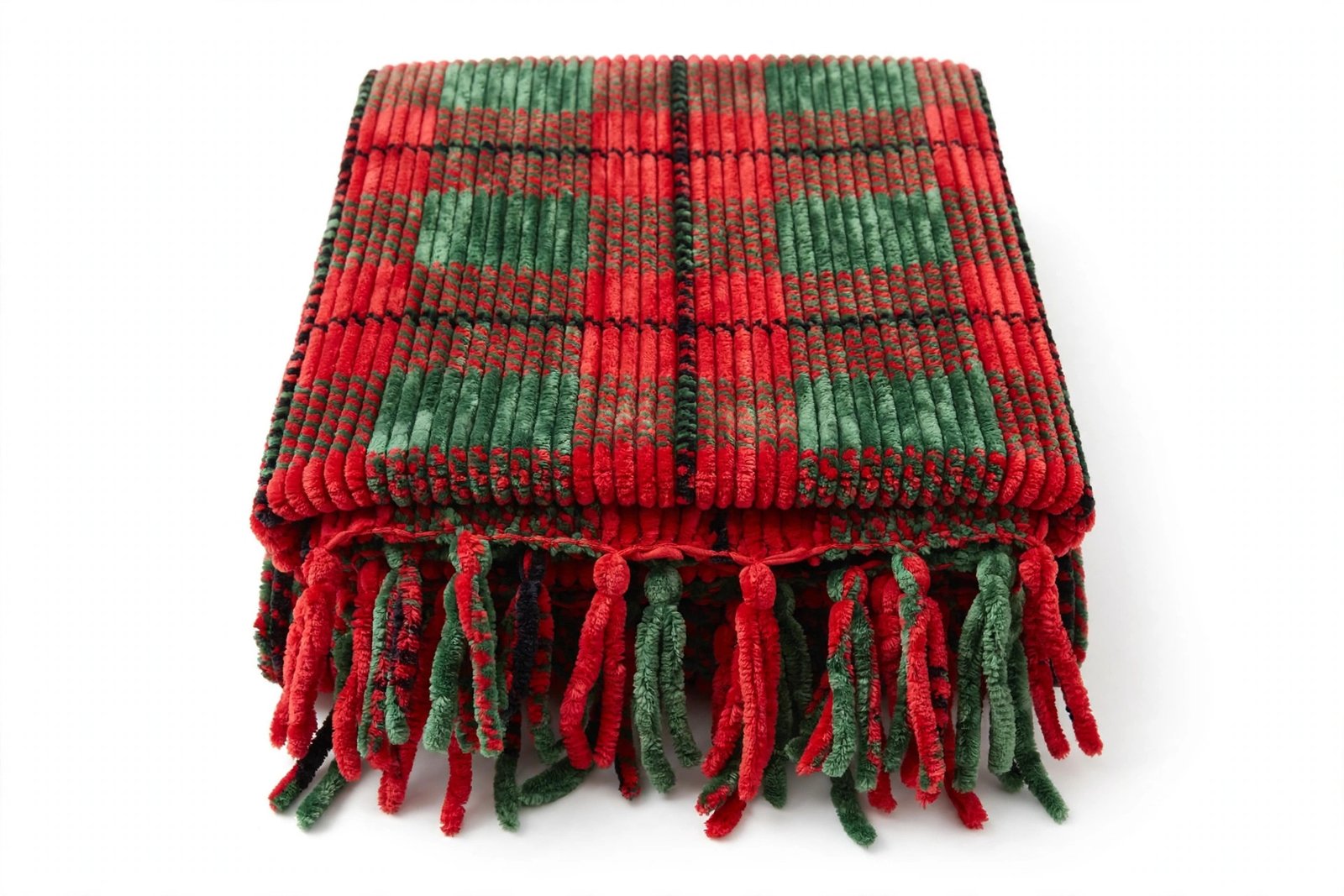



2. Fold a Tartan Throw Over the Entry Bench
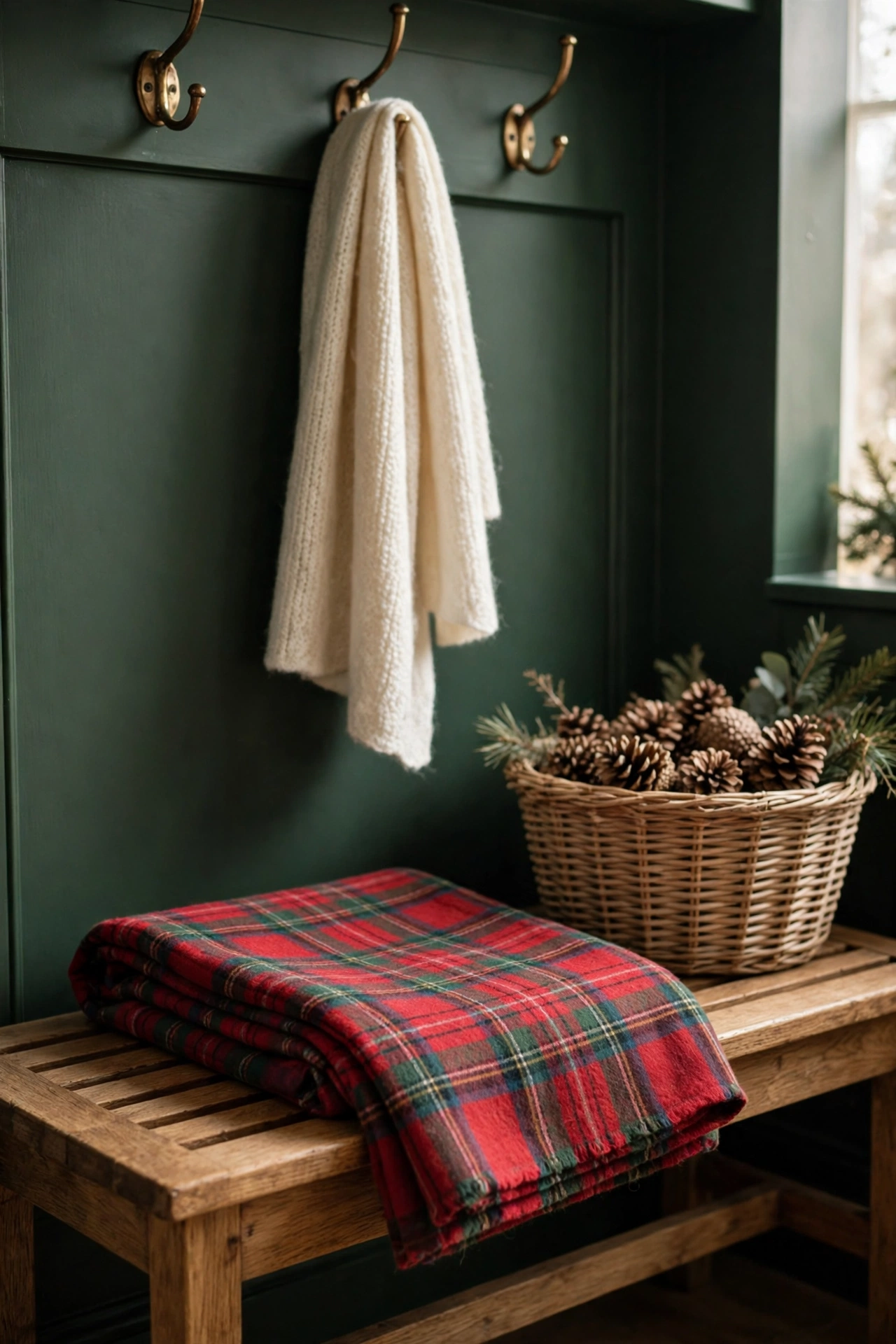
Every entry needs a place to sit down with boots in December, and ours earns its keep twice over because it carries the plaid. I fold a red tartan throw over the warm wood bench in a loose third, tassels hanging, and let it do the talking for that whole wall. Beside the bench sits a woven basket of pinecones, which costs nothing, smells faintly of the woods, and gives wet mitts a home that is not my console. Brass hooks above hold one cream wool scarf and nothing else. That restraint is the point. An entry bench piled with everyday mess reads as storage. The same bench with one beautiful throw and one basket reads as a styled moment, and it takes me ninety seconds to reset it each morning. This is also where the tour palette starts teaching itself to guests. They have now seen the tartan twice, once underfoot and once at sitting height, and by the time they reach the living room sofa the pattern will feel like an old friend instead of a theme.
3. Set a Brass Lantern by the Front Door
The last thing I place in the entry is a tall brass lantern on the floor beside the door, with a cream pillar candle inside and a burgundy velvet ribbon tied at the handle. It fills the awkward empty corner every entry seems to have, and at dusk it throws the kind of low golden light that makes wood floors look expensive. Floor level light matters more than people think. Ceiling light flattens a room, but light that starts low and pools upward makes everything above it look warm and tall. I use a flameless pillar on a timer in ours, because this lantern sits right where coats swing and bags land, and I have learned that lesson the smoky way. A small potted evergreen in a brass pot stands guard on the other side of the door, and together the pair frames the doorway like bookends. When the door opens on a cold night, this little scene is the first and last thing anyone sees, and I want both of those moments to glow.

Settle Into the Living Room
4. Dress the Sofa in Tartan and Burgundy
The living room is where this tour slows down and stays awhile, so the sofa gets dressed like the main event it is. Our cream sofa carries one tartan throw across the back, two burgundy velvet cushions, and one plain cream cushion to give the eye a rest. That is the whole recipe, and I protect it fiercely, because a sofa wearing seven Christmas cushions looks like a gift shop display that fell over. Texture does the work here instead of quantity. Velvet against linen, wool plaid against smooth cotton, each one making the others look richer. The coffee table in front keeps the story going with a brass tray, a small stack of books and a bowl of pinecones, nothing more. I want people to be able to set down a mug without moving decor first. A classic room should still work like a room. When I sit here in the evening with the tree lit and the fire going, the sofa feels like the best seat in a very old, very loved hotel, and that is exactly the feeling I was chasing.

5. Run Garland All Along the Mantel
The mantel is the living room altar in December, and I dress ours in the oldest combination I know. Deep green garland, laid full and loose along the whole length, burgundy velvet bows at each end, and brass candlesticks standing in the greenery like they grew there. I let the garland drape slightly in the middle rather than pinning it stiff and straight, because a gentle sag reads as real greenery and a ruler straight line reads as plastic. Tuck the bows in last, tails long, and step back to the doorway to judge the whole wall at once. The fire below does the rest. Garland this simple only works if the green is good, so this is the one place I spend on the most realistic greenery I can find, with mixed pine and cedar tips that drape instead of poking. Cheap shiny garland will undo a classic room faster than any other single purchase. Buy one great garland for the mantel, and let the staircase and hallway share the simpler lengths if the budget needs a say in things.
6. Wind Tartan Ribbon Down the Tree
Our tree stands in the living room corner where two deep green walls meet, and tartan ribbon is what makes it belong to this house instead of any house. I wind wide tartan ribbon down in loose loops, tucking it deep into the branches and letting it surface again, so the plaid reads as part of the tree rather than a belt tied around it. The ornaments stay in the family palette. Burgundy and gold balls, a few brass bells, cream wood beads, and the old family pieces tucked where the lights catch them best. Warm white lights only, always, because cool light turns deep green walls a strange gray color I cannot unsee. At the base I use a woven collar and a pile of gifts wrapped in cream and burgundy paper with velvet ribbon offcuts. Nothing under our tree is wrapped in cartoon paper, and I know how that sounds, but the base of the tree is a piece of furniture in December. Dressing it calmly is what keeps the whole corner feeling like a portrait instead of a present pile.

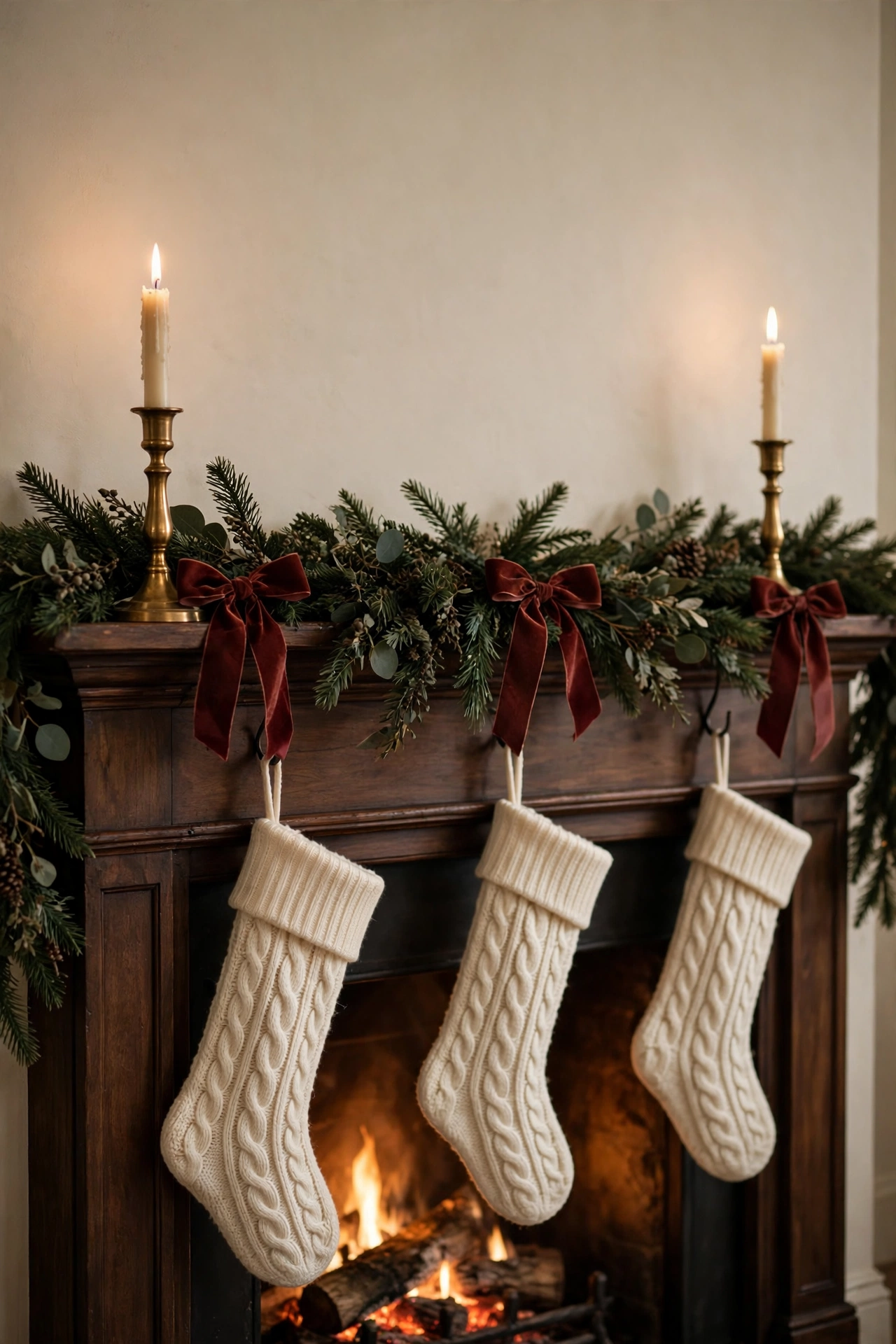
7. Hang Knit Stockings From Brass Hooks
Below the mantel garland, the stockings hang in a calm row from simple brass hooks, and I choose knit over velvet for this one job. Cream, burgundy and khaki cable knit, thick and a little slouchy, like sweaters waiting for Santa. The knit texture softens all the polish around it, the brass above, the velvet bows, the shiny ornaments on the tree nearby, and a classic room needs that softness or it starts to feel like a showroom nobody lives in. I hang ours unevenly on purpose, a thumb lower here and there, because a measured row looks like a shop and a relaxed row looks like a family. Each stocking gets one small brass bell at the cuff, so anyone who bumps the mantel in the dark announces themselves to the whole house, which has saved at least two surprise gift stuffing missions over the years. If your family stockings are a loved mix of everything, hang them proudly and keep only the hooks matching. The brass row is enough of a uniform for the most personal decor in the house.

8. Build a Reading Corner by the Fire
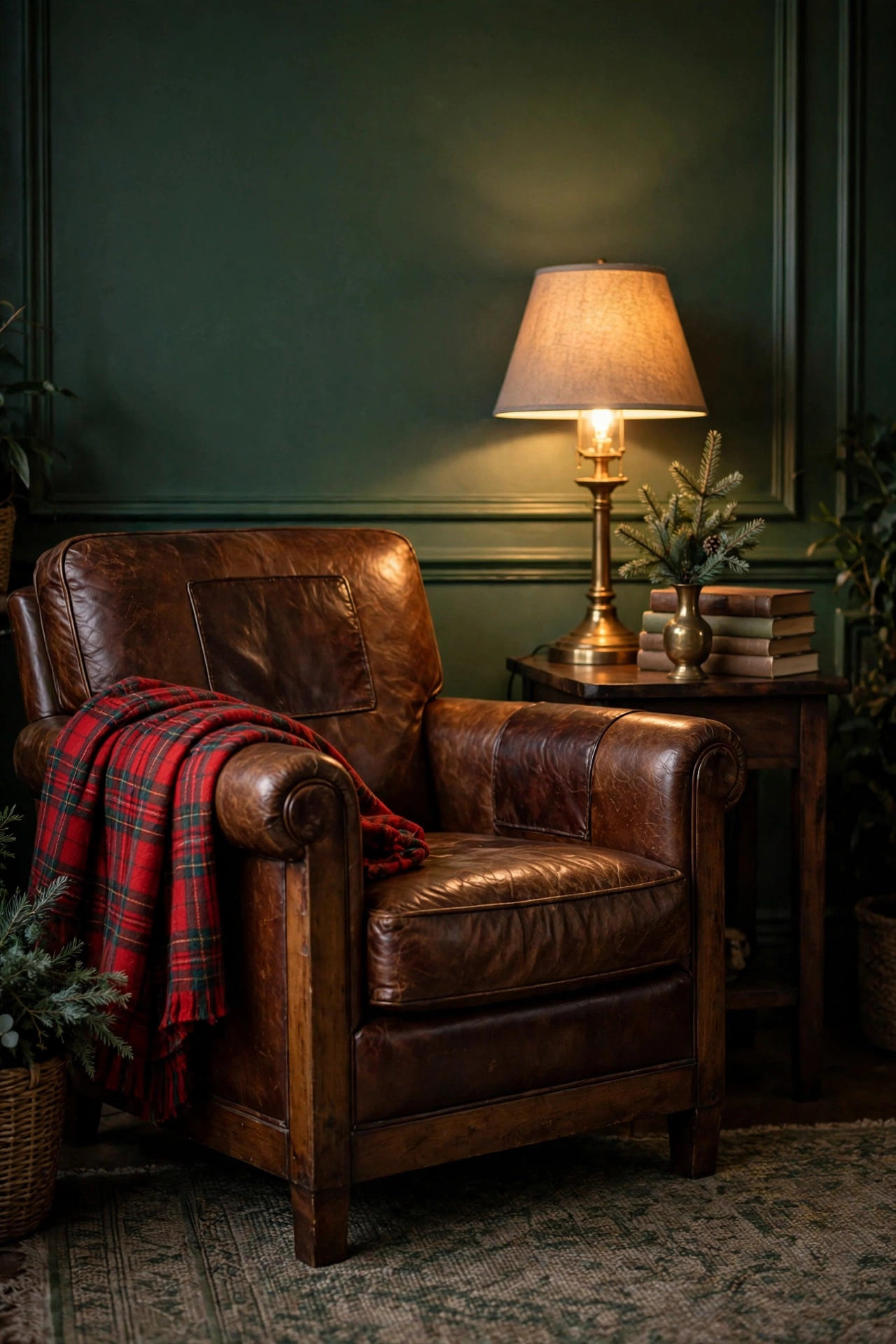
Every classic living room needs one chair that belongs to whoever gets there first, and ours sits at an angle to the fire with the tartan throw over its leather arm. A small dark wood side table holds a brass lamp, a short stack of books and room for exactly one mug. That is the entire formula, and it gets used more than any other seat in the house. I add one tiny Christmas touch only. A sprig of greenery in a brass vase on the table, swapped fresh each week. The corner works because it borrows everything from the rooms around it. The plaid from the sofa, the brass from the mantel, the deep green wall behind, all repeated in one small square of floor. This is the repetition rule doing quiet work again. Nothing here is new, yet the corner feels complete. On Sunday mornings this chair is where the house wakes up, with coffee and the tree lights on and nowhere to be, and I would trade the fanciest decor in this tour to keep that feeling.
Gather in the Dining Room and Kitchen
9. Lay a Tartan Runner Down the Dining Table
The tour moves to dinner now, and the dining table wears the tour plaid in its boldest moment. A tartan runner down the warm wood table, brass candlesticks in a loose row, and a low line of greenery that never blocks a single face. This is where tartan gets to lead the room, so everything else steps back. Cream chairs, plain cream napkins with burgundy velvet ribbon, white plates on the wood with no charger fuss on ordinary nights. I learned the hard way that a dining table has to serve dinner first and look classic second, in that order, every time. So the center stays low, the candles stay at the edges of the greenery, and serving dishes get real estate in the middle where they belong. In the evening, with the brass chandelier dimmed and the tapers lit, this table glows like a painting of itself. Guests always linger here longer than they plan to. I have stopped apologizing for it and started planning dessert around it, because a table that holds people is doing the best work in the house.

10. Style the Sideboard With Brass and Greenery
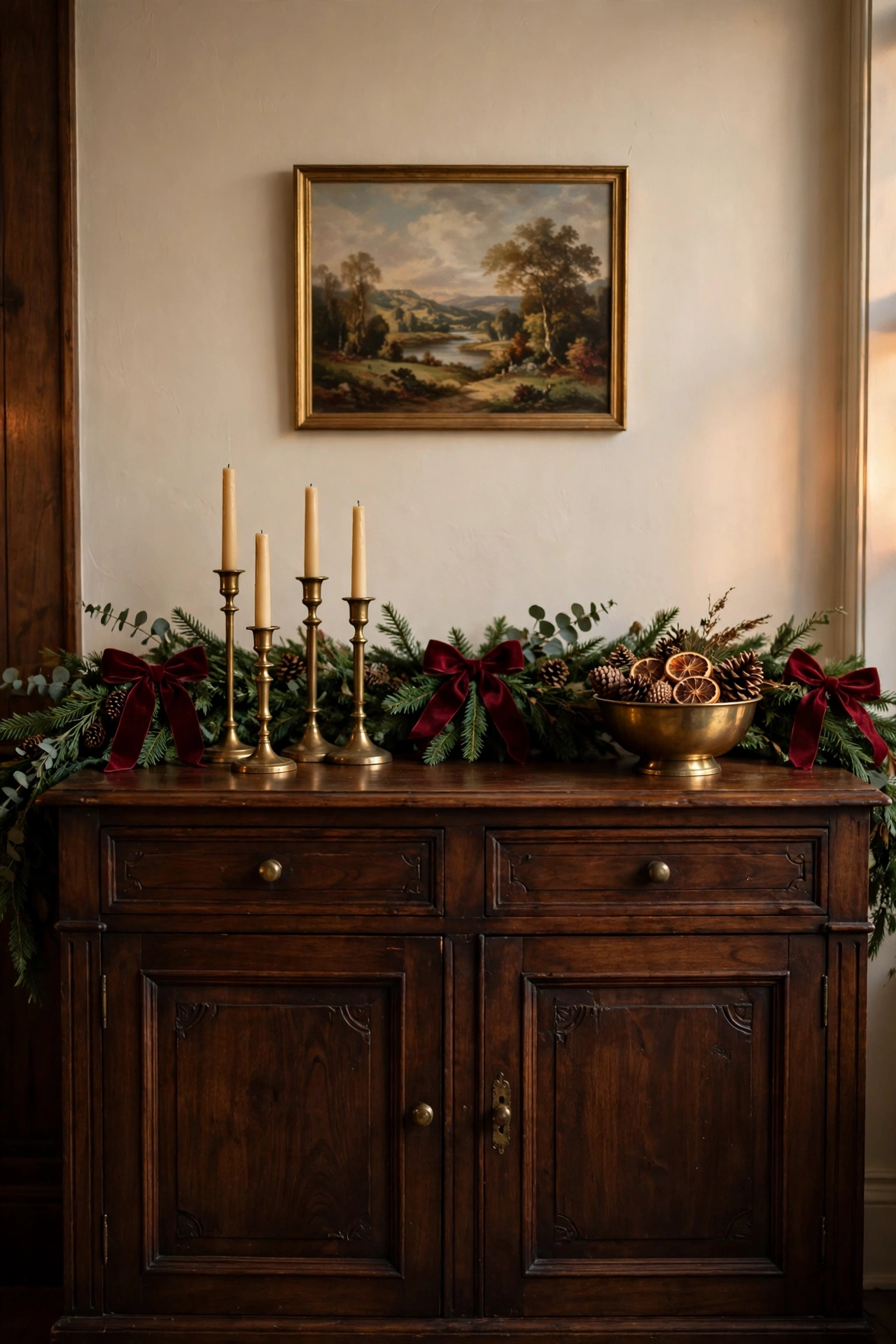
Against the dining room wall, the sideboard is my serving station and my second mantel in one. I run a shorter length of greenery along the back edge, stand brass candlesticks at both ends, and set a brass bowl of pinecones and dried oranges in the center where hands can actually reach the scent. Above it, one framed landscape in a thin gold frame echoes every brass note below without adding a word of Christmas anywhere. That picture stays up all year, and that is the trick I most want you to steal. A classic room should not need every surface to announce the season. The greenery and brass say December. The art says this room was loved in July too. When we host, the sideboard holds drinks and dessert, and the styling simply slides to the ends to make room, because I arranged it in three groups from the start. Decor that cannot move for a party is not decor to me. It is an obstacle with good lighting, and December has enough of those already.
11. Hang Small Wreaths in the Kitchen
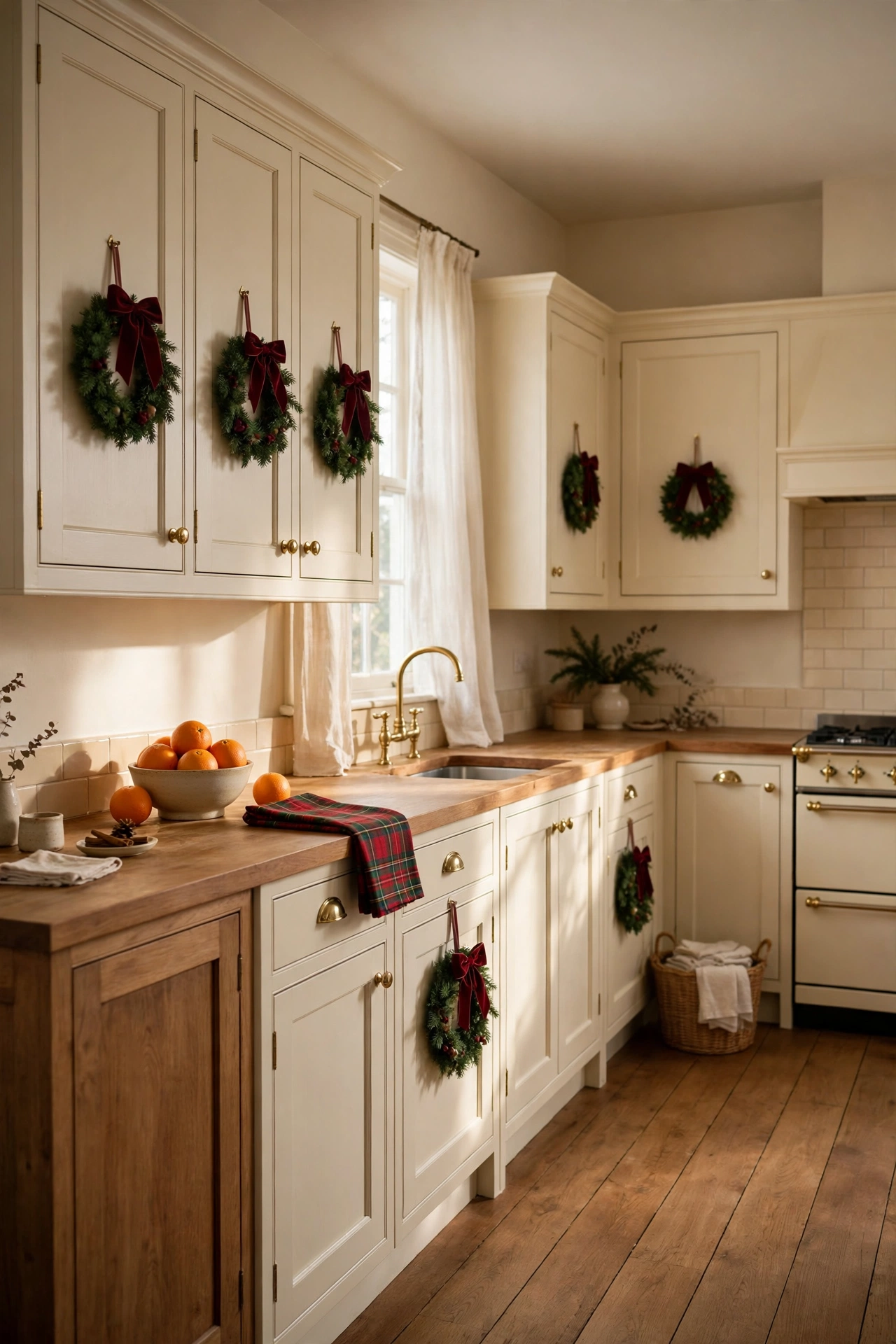
The kitchen on this tour stays calm, because a working kitchen in December has enough chaos scheduled already. My whole kitchen plan is small wreaths on the cabinet doors above the counter, each one green with a single burgundy bow, hung from ribbon over the door top so no hardware touches the paint. They take twenty minutes to hang and they transform the room out of all proportion to their size, because repetition at eye level is powerful. Six little wreaths in a row read as architecture, not clutter. Below them the counters stay clear for actual cooking, with only a bowl of oranges and one tartan tea towel joining the party. I keep the palette discipline strictest in this room of all. No red appliances out, no novelty mugs on display, nothing that breaks the green, burgundy, brass and cream story. In the morning light, with coffee brewing and those wreaths catching the sun, this kitchen feels like the farmhouse kitchen of a house that has hosted a hundred Christmases, even on a Tuesday.
12. Set Up a Cocoa Corner on the Counter
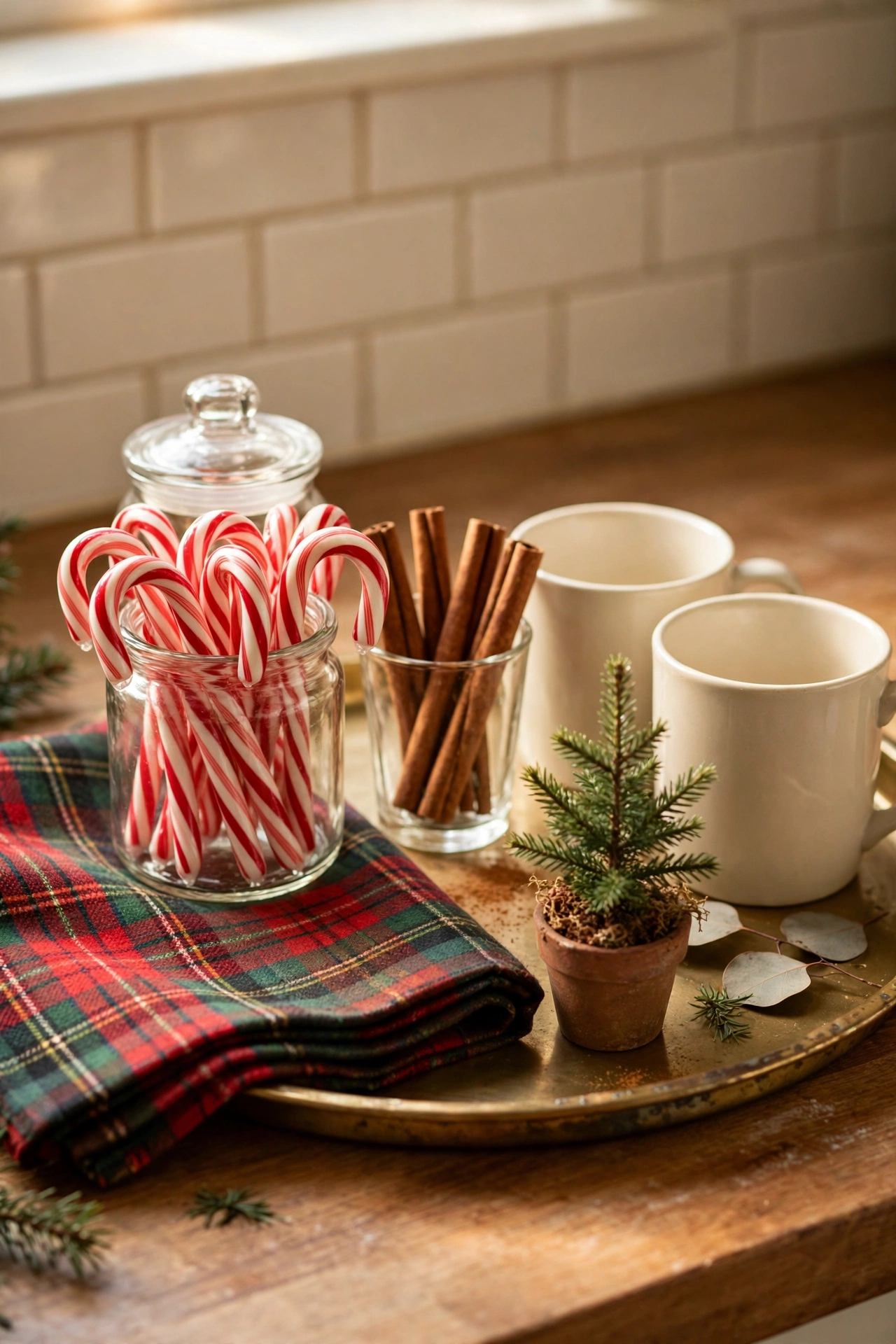
One corner of the kitchen counter does get to be pure pleasure, and it earns its space every single day of December. A brass tray corrals the whole thing. Cream mugs, a jar of candy canes, cinnamon sticks standing in a glass, marshmallows in a small jar, and a tiny potted evergreen keeping watch at the back. Because everything lives on one tray, the corner lifts away in one motion when I need the counter for rolling pastry, and it returns just as fast. This is my answer to the big cocoa station trend, shrunk to fit a real kitchen that also has to produce dinner. Guests help themselves here all evening, children conduct serious marshmallow business here in the mornings, and the tartan napkin under the mugs ties the corner back to the dining table two rooms away. Small repeats like that are the whole secret of this tour. Nobody notices the napkin. Everybody feels the house holding together, and then they go home and wonder why their cocoa corner at home feels scattered. Now you know.
Up the Stairs to Bed and Bath
13. Wrap the Staircase in Garland and Bows
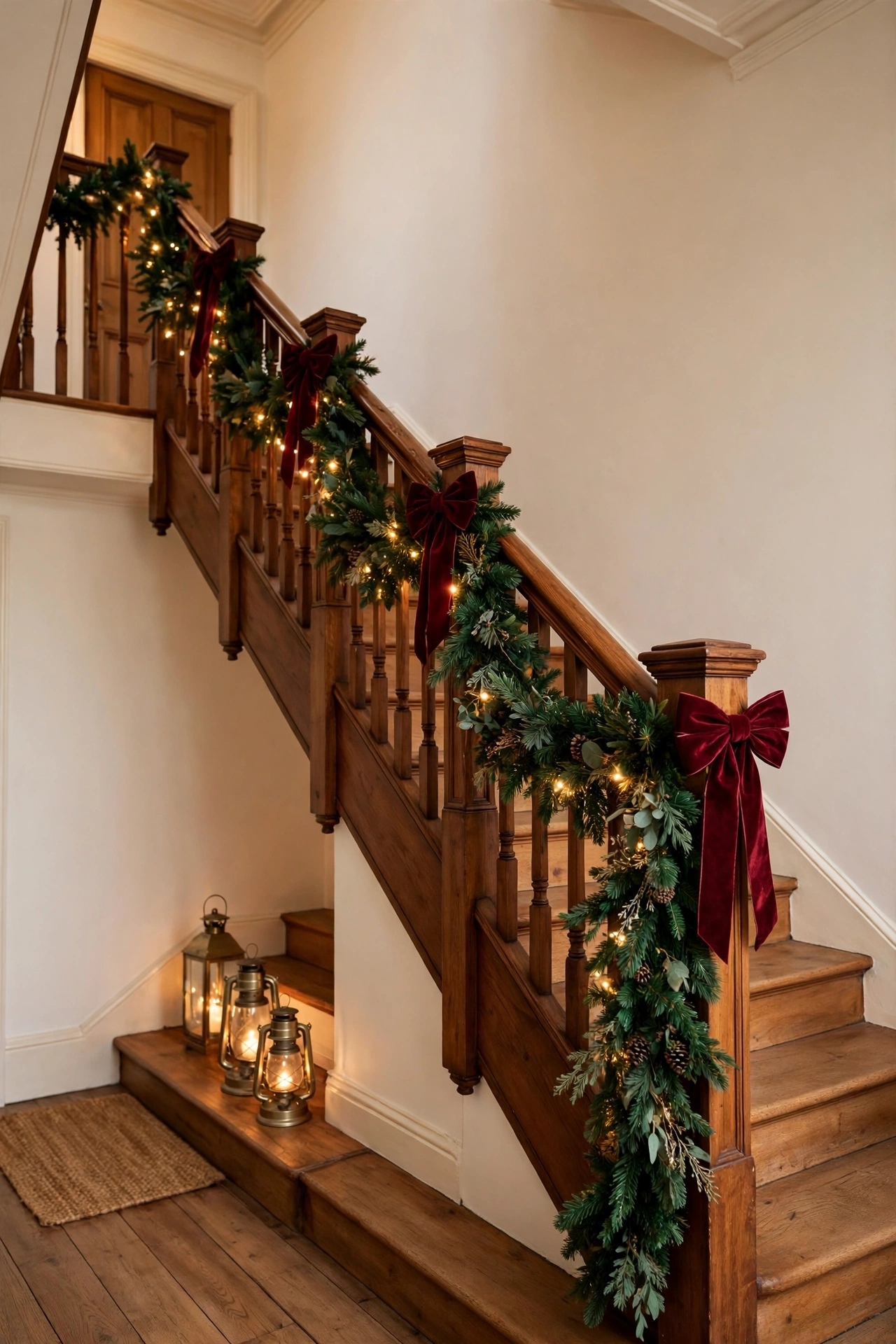
The staircase is the bridge of this tour, and it should feel like part of the celebration, not a hallway with ambitions. I wrap the same deep green garland along the banister, securing it with burgundy velvet bows at every post so the bows do the holding and the decorating at once. Warm white lights weave through the green, switched on at dusk, and suddenly the trip upstairs at night feels like walking through the house at its best. Two brass lanterns sit on the wide bottom steps, flameless candles inside, marking the start of the climb like runway lights for a very cozy airport. Stairs teach the repetition rule better than any room. From the living room doorway you can see the tree, the mantel garland and the staircase garland in one glance, three fields of the same green tied with the same burgundy, and the whole ground floor reads as one thought. If you decorate only three things this year, make them those three, in matching greenery, and your house will feel more coordinated than homes with ten times the stuff.
14. Place a Small Tree in the Hallway
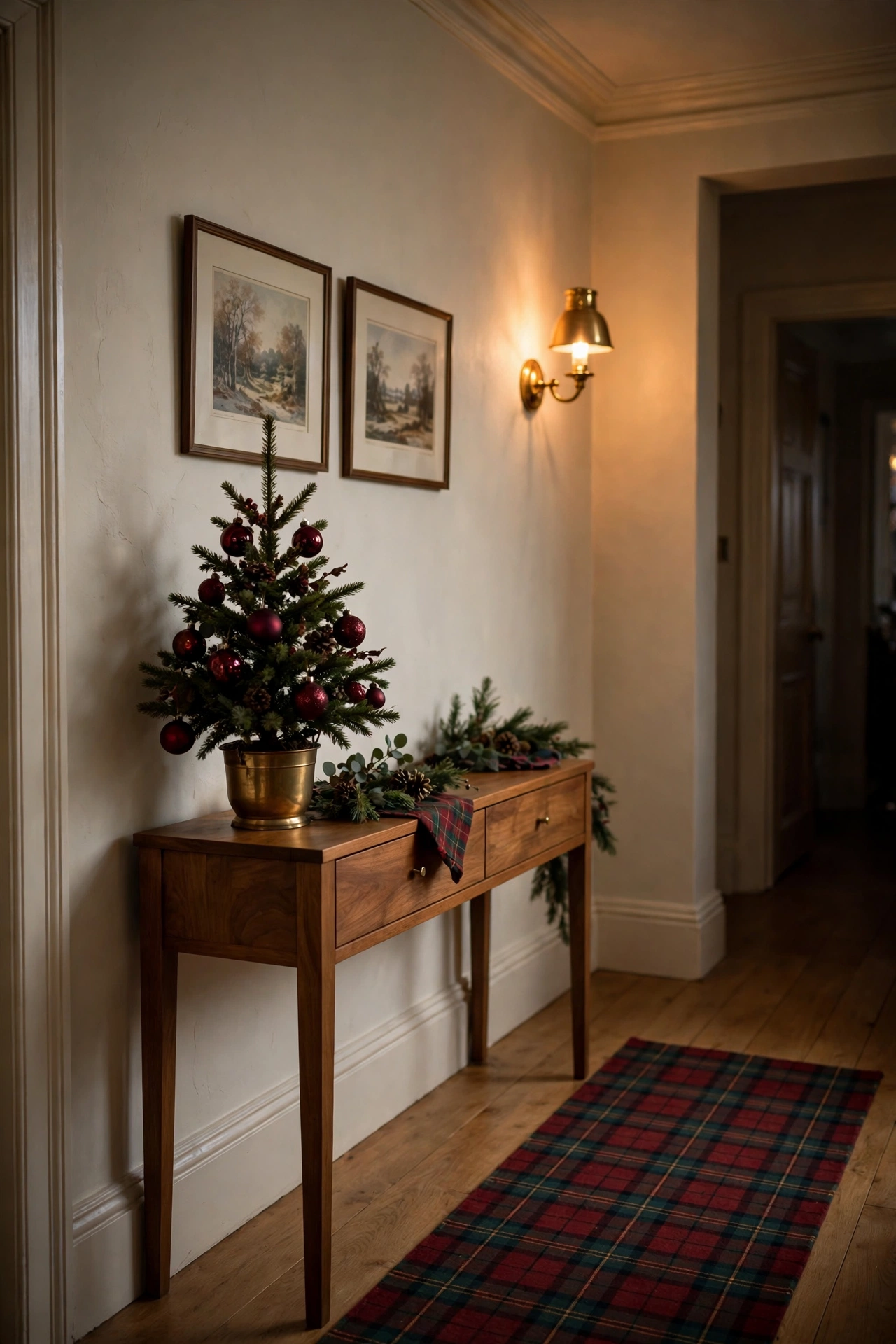
Upstairs gets its own small moment of Christmas, because the tour should not end at the top step. A slim tabletop tree stands on the hallway console in a brass pot, dressed with tiny burgundy ornaments and one strand of warm fairy lights, nothing more. The tartan runner on the hall floor below repeats the entry rug story, and a brass sconce above washes the whole scene in warm light. Hallways are the most ignored square footage in most homes, and a small tree here changes how the whole upper floor feels at night. Bedroom doors open onto a soft glow instead of a dark landing. Children walking to the bathroom meet a lit tree instead of a shadowy hall, which any parent will tell you is a genuine quality of life upgrade in December. Keep the hallway tree small and calm. It is a night light with better styling, not a second main tree, and it should never compete with the living room tree it waves to from the stairs.
15. Fold a Tartan Throw at the Foot of the Bed
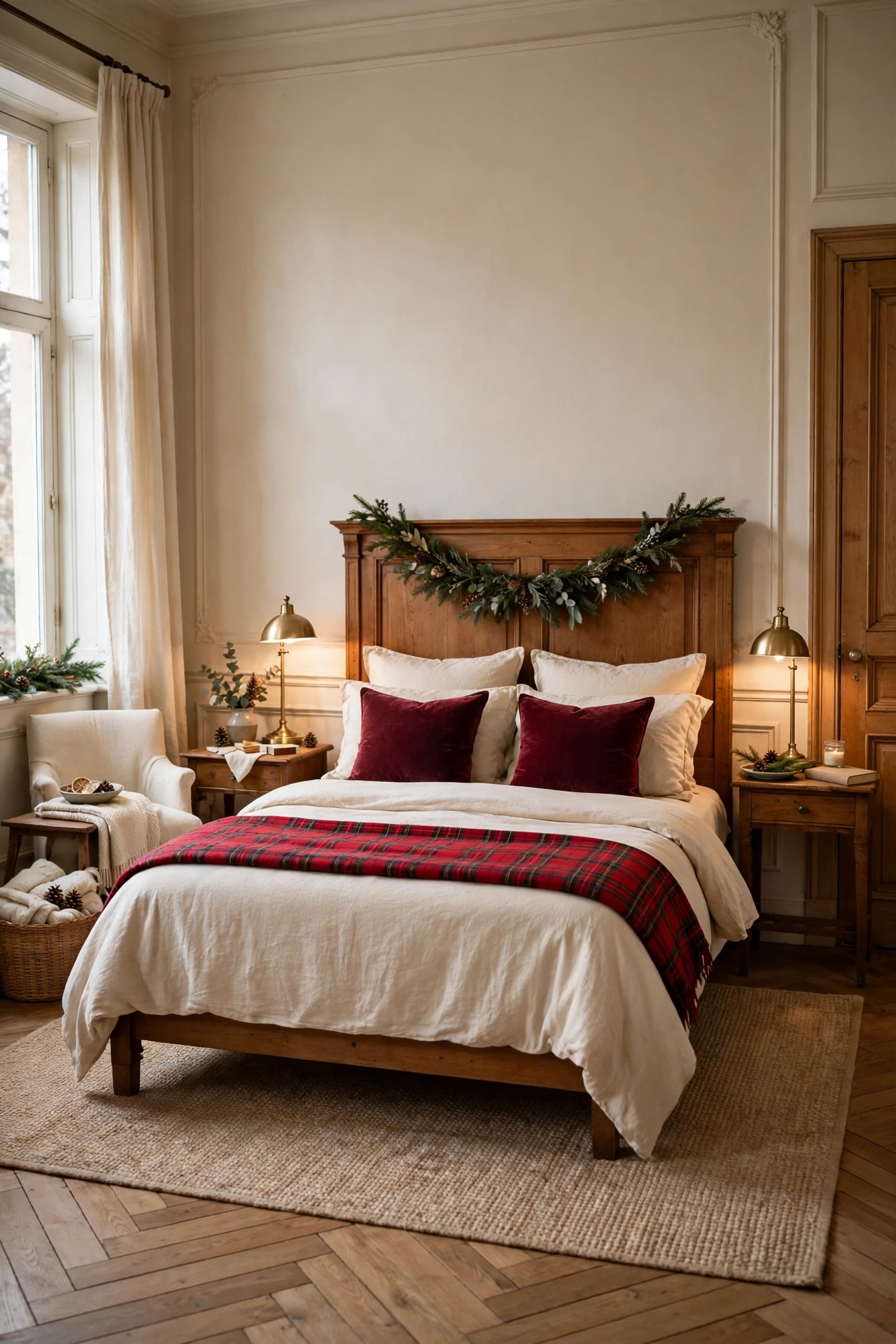
Our bedroom joins the tour with exactly two changes, and I am strict about that number because bedrooms should stay restful. The tartan throw folds at the foot of the bed over cream bedding, and a short garland rests along the headboard with no lights, no ornaments, nothing that blinks or glitters above our pillows. Burgundy velvet cushions repeat the living room sofa, and the brass lamps that live here all year suddenly look seasonal just by sitting near greenery. That is the deep pleasure of a house wide palette. Rooms you barely touch still join the story, because their everyday brass and wood and cream were already speaking the language. Sleep experts can keep their advice, because mine is simpler. A bedroom at Christmas should feel like the quiet end of the novel, not another chapter of decorating. In the morning, light comes in over that tartan fold and the room looks like a country inn, and I make the bed a little more carefully just to keep the picture intact.
16. Make the Guest Bed Feel Expected
The guest room gets the warmest small gesture on this whole tour, and it costs me ten minutes. The bed is made with cream bedding and a burgundy cushion, a small wreath hangs above the headboard, and the bedside table holds a brass lamp, a carafe of water, and a little plate of shortbread under a glass cover. A folded tartan throw waits on the end of the bed in case the room runs cold at night. Guests notice these things in a way they never notice a decorated hallway. A carafe says someone thought about you at midnight before you ever arrived. Shortbread says the visit is a pleasure, not a logistics problem. I learned this from my grandmother, whose guest room always had a mint on the pillow and whose house is still my gold standard for welcome. Classic style is not really about tartan or brass at all when you get down to it. It is about care, repeated in small visible ways, until a guest can feel it from the doorway.

17. Add One Wreath to the Bathroom Mirror
The bathroom gets one wreath, and only one, hung on the mirror with a burgundy bow at its base. That single green circle against the brass framed mirror does more for this small room than a shelf of themed extras ever could, because small rooms reward restraint like nowhere else in the house. Deep green hand towels repeat the wreath color below, a brass tray holds a lit candle beside the sink, and the story is complete in three moves. Guests always comment on this room, which still surprises me, until I remember that the bathroom is the one room every guest sees alone and up close. It is your house, unguarded, at sink height. A calm classic bathroom tells them the whole home is cared for, not just the rooms arranged for company. Use a flameless candle here too if the tray sits near towels, and choose a wreath small enough that nobody has to peer around it to find their own face in the morning.

Finish at the Front Porch
18. Hang the Big Wreath on the Front Door
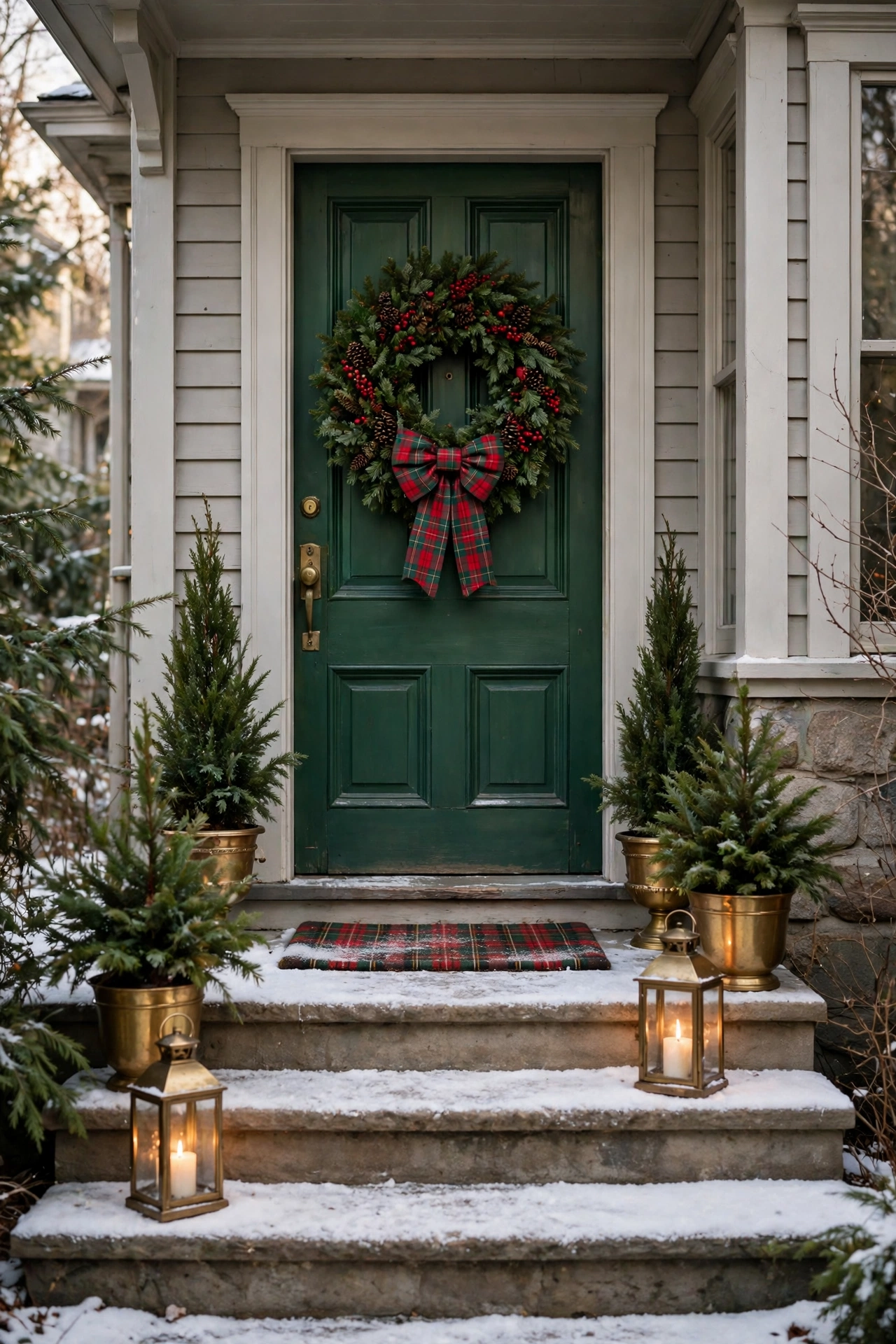
The tour ends where it began, at the front door, and now we step outside and give the house its face. The big wreath hangs here, deep green and full, with pinecones, berries and the widest tartan bow of the whole house tied at the top. This is the one place tartan goes large outdoors, and it earns it, because the bow is readable from the street and tells the whole palette story before the door even opens. Brass lanterns stand on the steps with flameless candles, potted evergreens in brass pots flank the door, and a tartan mat waits underfoot. Notice what is not here. No inflatables, no blinking colors, nothing that shouts. A classic porch whispers, and the whisper carries further than people expect. Our neighbors slow down on evening walks to look at this door, and more than one has knocked just to ask about the bow. When a front door makes strangers feel welcome, the tour has done its job before it even starts.
19. Light the Porch and Windows at Dusk
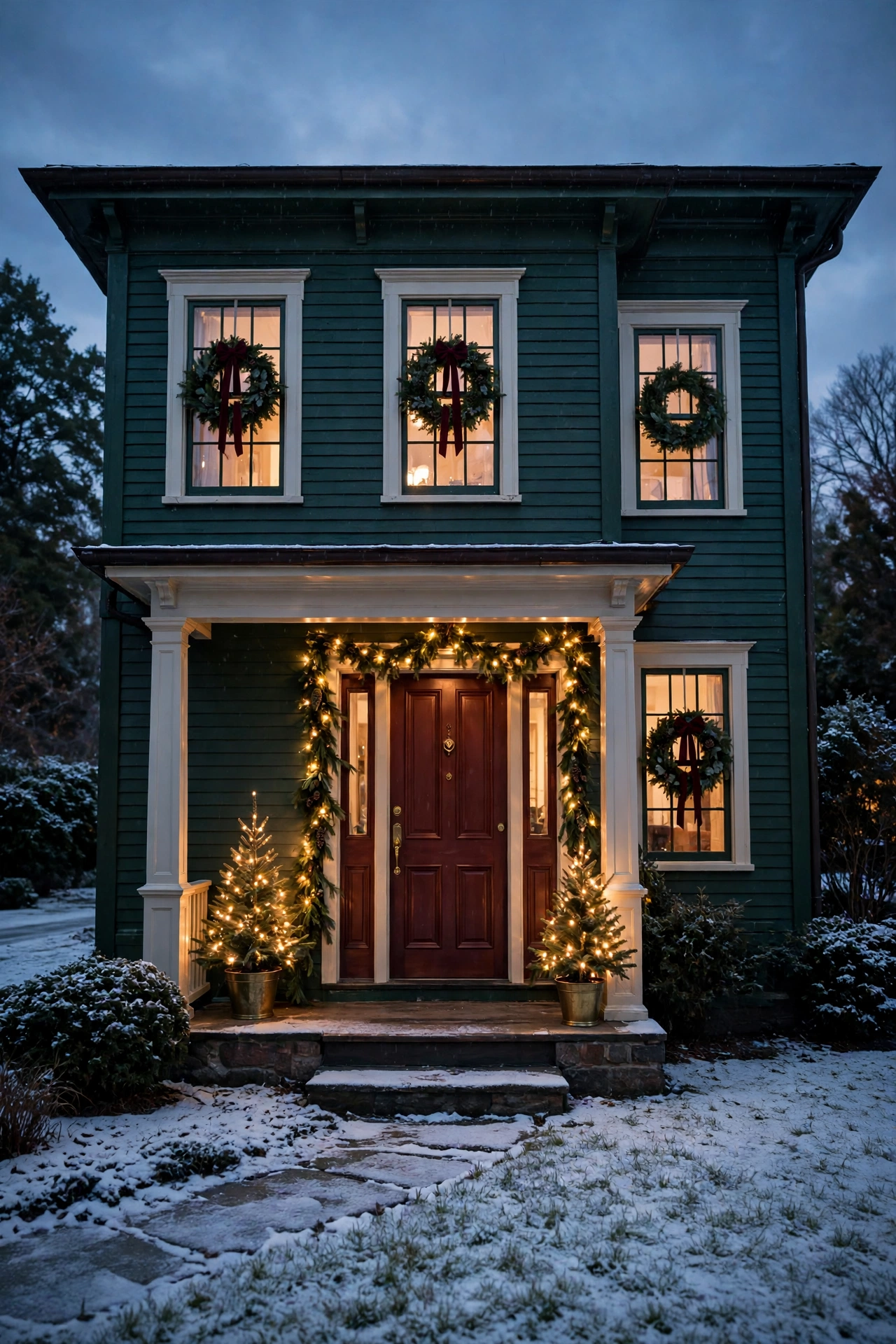
The last idea is the one I save for the end of the day, because it is a feeling more than a purchase. At dusk the whole house lights up in order. Garland with warm lights around the door, wreaths glowing softly in the front windows, the porch lanterns on, and warm light spilling from the living room where the tree stands near the glass. From the street, our home looks like a held breath of warmth on a cold street, and I never get tired of walking up to it. This is why I style for the evening all through this tour. December darkness comes early and stays long, and a house that glows kindly at five in the afternoon is a gift to everyone who passes it, not just the people who live inside. Keep every outdoor bulb warm white, put the whole display on one timer, and let the deep green and burgundy do their quiet work in the blue dusk. Classic does not try to be the brightest house on the street. It tries to be the warmest, and warm wins every time.
More Favorites
This post contains affiliate links. If you purchase through these links, we may earn a small commission at no extra cost to you. Read our full disclosure here.
A few more favorites from the ideas above:


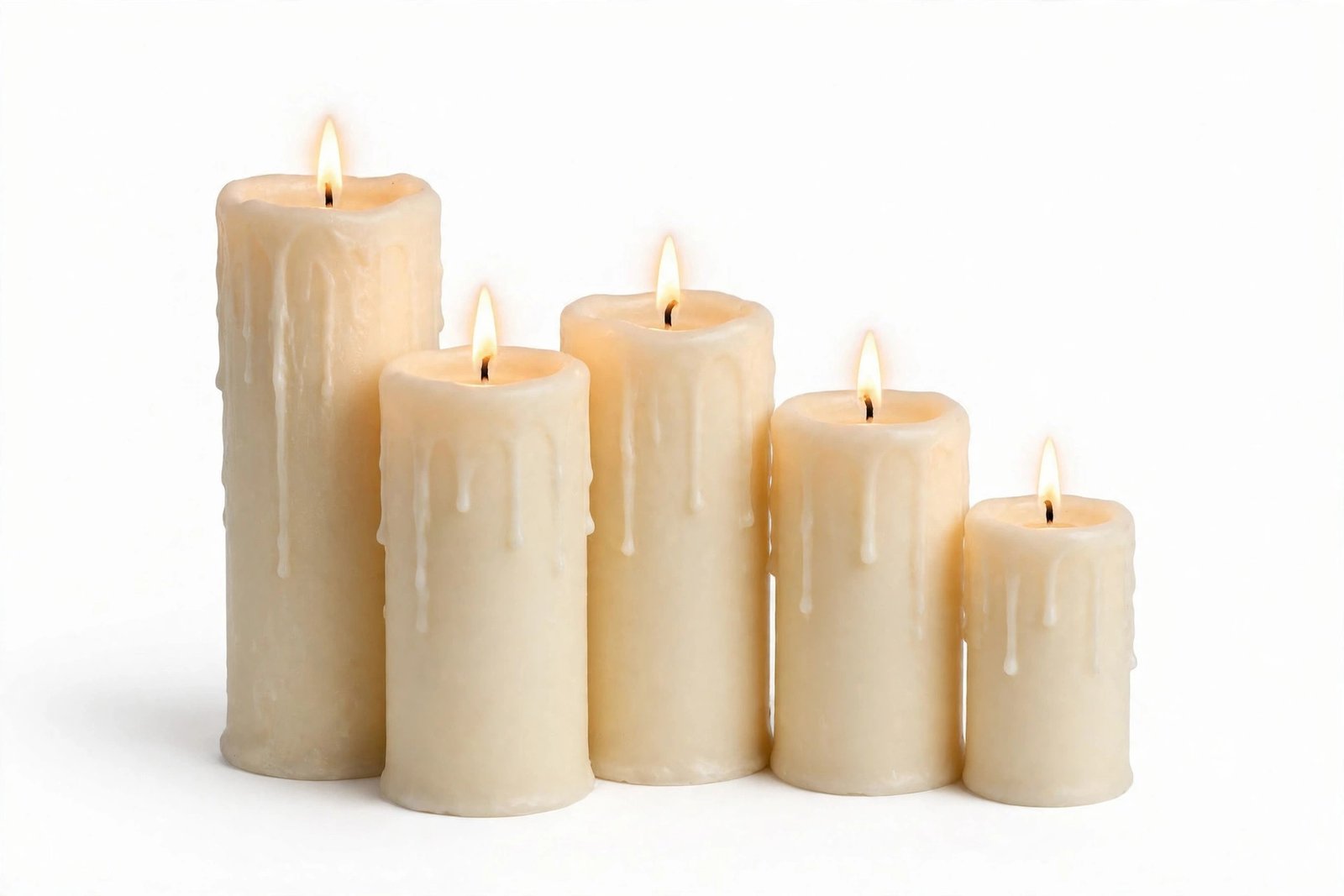
That is the whole walk, from the first candle in the entry to the last light on the porch. If you take one thing from this tour, let it be the repetition. Choose your three colors and your one plaid, then let them shake hands in every room until the house feels gathered instead of decorated. You do not need a grand home for a classic Christmas. You need a palette you trust, texture in every room, light kept low and warm, and the patience to edit out everything that argues with the story. Start at the front door, work room by room, and stop when each space feels calm. The house will tell you when it is done. It always does.
With love and light
Get Fresh Home Ideas Every Week
Seasonal decor ideas, organizing tips, and cozy home inspiration, straight to your inbox.
More Christmas Ideas You Will Love
Keep browsing for more seasonal inspiration: