

I want the first steps inside our door in December to feel like a small exhale. The light is warm and low, something green smells faintly of cedar, a soft rug waits under your boots, and the whole little space seems to say that someone was expecting you and is glad you came. Our entryway never gave me that feeling on its own. It gave me a pile of coats, a tangle of boots, school papers on the console and a door that opened straight into the busiest mess in the house. Guests stepped into the mess first and into the welcome second, and I know I am not the only one who has apologized for an entryway while a friend was still standing in it.
So I gave myself one honest hour and a strict order of work, and that changed everything about this space. I do not decorate the entry by wandering around with random pieces anymore. I clear it, I ground it, I add greens and height, I layer the light, and only then do I touch the pretty small things. The hour works because the order works. An entryway is a tiny room with an outsized job, and my first principle for it is simple. First impressions are built in layers, from the floor up, so that is exactly how we are going to build this one.
If your entry needs a full seasonal refresh in the fall as well, my fall front entryway ideas follow this same floor up thinking, and they pair beautifully with the Christmas version you are about to build. Keep your palette in your head as you work. Mine for this post is oatmeal and cream at the base, deep olive greens, camel and chocolate brown for warmth, brass for a little shine and burgundy saved for the bow and one or two small moments. That quiet palette is my second principle. One palette, repeated calmly, makes a small space feel generous instead of busy.
Love these ideas? Get more every week.
Join the newsletter for seasonal decor and cozy home inspiration.
The First Fifteen Minutes: Clear and Set the Base
1. Clear Everything Out and Start With a Clean Sweep
A bare entryway for ten minutes is the fastest design tool you own.
I start every entryway reset the same way, by taking absolutely everything out, even the pieces I am fairly sure will go back in. Coats go to a bed, boots go to the hallway, the console gets emptied into a basket and the rug gets shaken outside the door. It feels drastic for about two minutes, and then the room starts telling the truth. I can finally see how much light the space gets, where people naturally drop things and how much floor I actually have to work with. Then I sweep properly, wipe the baseboards and the door handle, and clean any glass while the room is empty and easy to reach. Decorating over dust and clutter is where most rushed entryways go wrong, because every pretty layer just sits on top of a problem. Starting bare also means each piece that returns has earned its place, and in a space this small, that honesty is worth more than any new purchase I could make in the same hour.

Shop This Look
This post contains affiliate links. If you buy through them, I may earn a small commission at no extra cost to you.
A few favorites featured in the ideas above:
2. Lay a Layered Rug Foundation at the Door
Two thin rugs layered together look richer than one good rug alone.
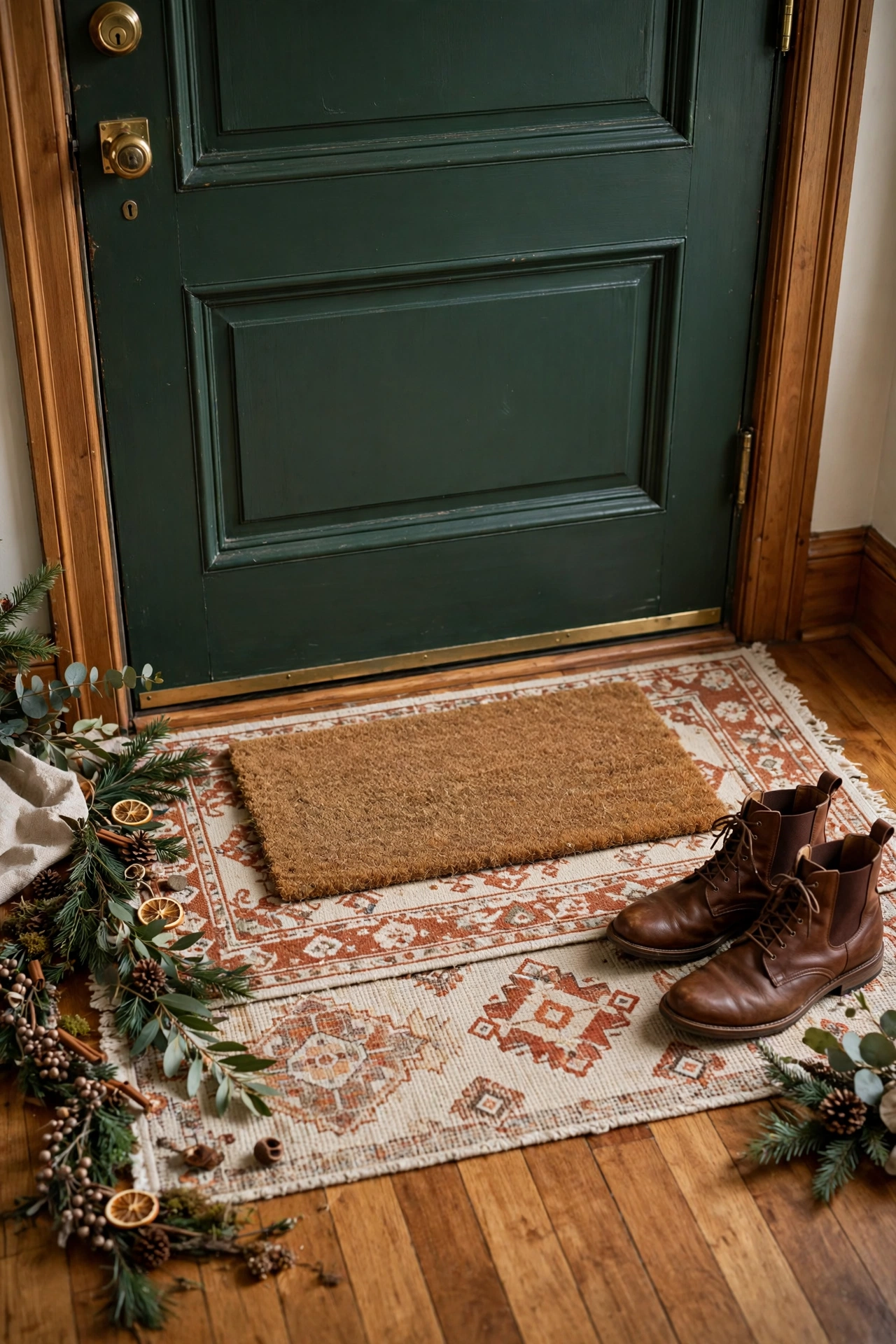
Once the floor is clean, the rug goes down before anything else, because it sets the footprint for the whole room. I lay a larger flat rug first, in a cream and rust pattern or a simple natural weave, and then I center a smaller sturdy mat on top of it right where boots will land. The border of the bottom rug showing all the way around is what makes the doorway look styled instead of simply covered, and it costs nothing beyond using two rugs I already own. Size matters more than pattern here. The bottom rug should reach past the swing of the door and under the front edge of the console or bench, which ties the furniture to the door and stops the room feeling like separate islands. In a Winnipeg winter this layering is practical as well as pretty, since the top mat takes the snow and salt and can be shaken out daily while the pretty rug underneath stays clean and calm.
3. Anchor the Space With One Console or Bench
One grounded piece of furniture makes the entry a room, not a passage.
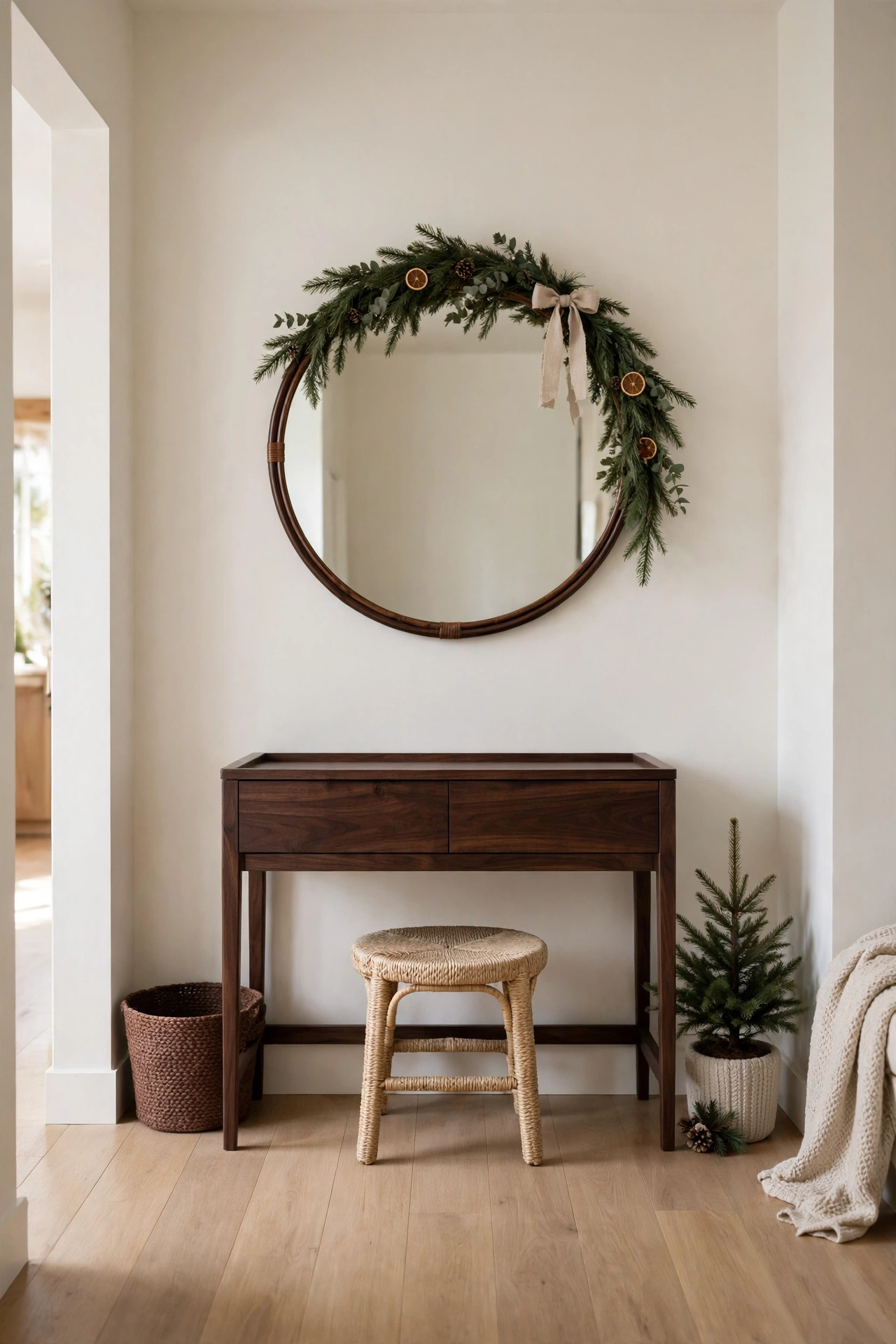
Every entryway needs one anchor, and in ours it is a narrow console table that was honestly a hallway leftover for years. A bench works just as well, and a small chest can be even better because it hides things. What matters is that one piece claims the wall and gives everything else a reason to be there. I center it on the longest stretch of wall, or under the mirror if the mirror came first, and I check that the door can still swing fully and that a person carrying bags can pass without turning sideways. If your entry is truly tiny, a floating shelf with two hooks beneath it can play the same role at a smaller scale. The anchor also decides your working height. Everything tall will rise above it and everything soft will gather on or under it, so placing it well in minute fifteen saves you from rearranging furniture in minute fifty when the light is fading and your patience is going with it.
Greens That Do the Heavy Lifting
4. Hang a Full Wreath on the Inside of the Door
The wreath belongs where you will see it all evening, and that is inside.
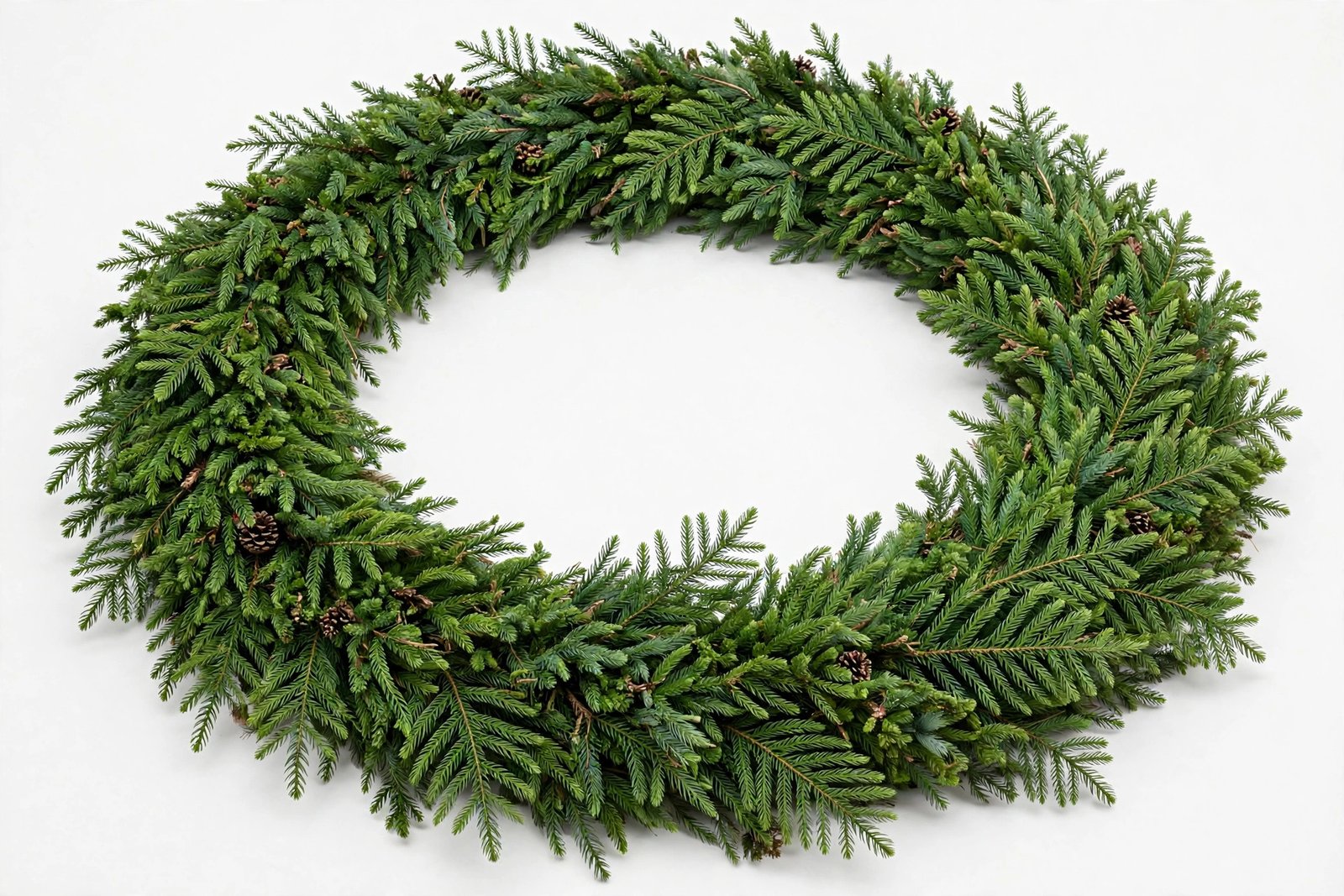
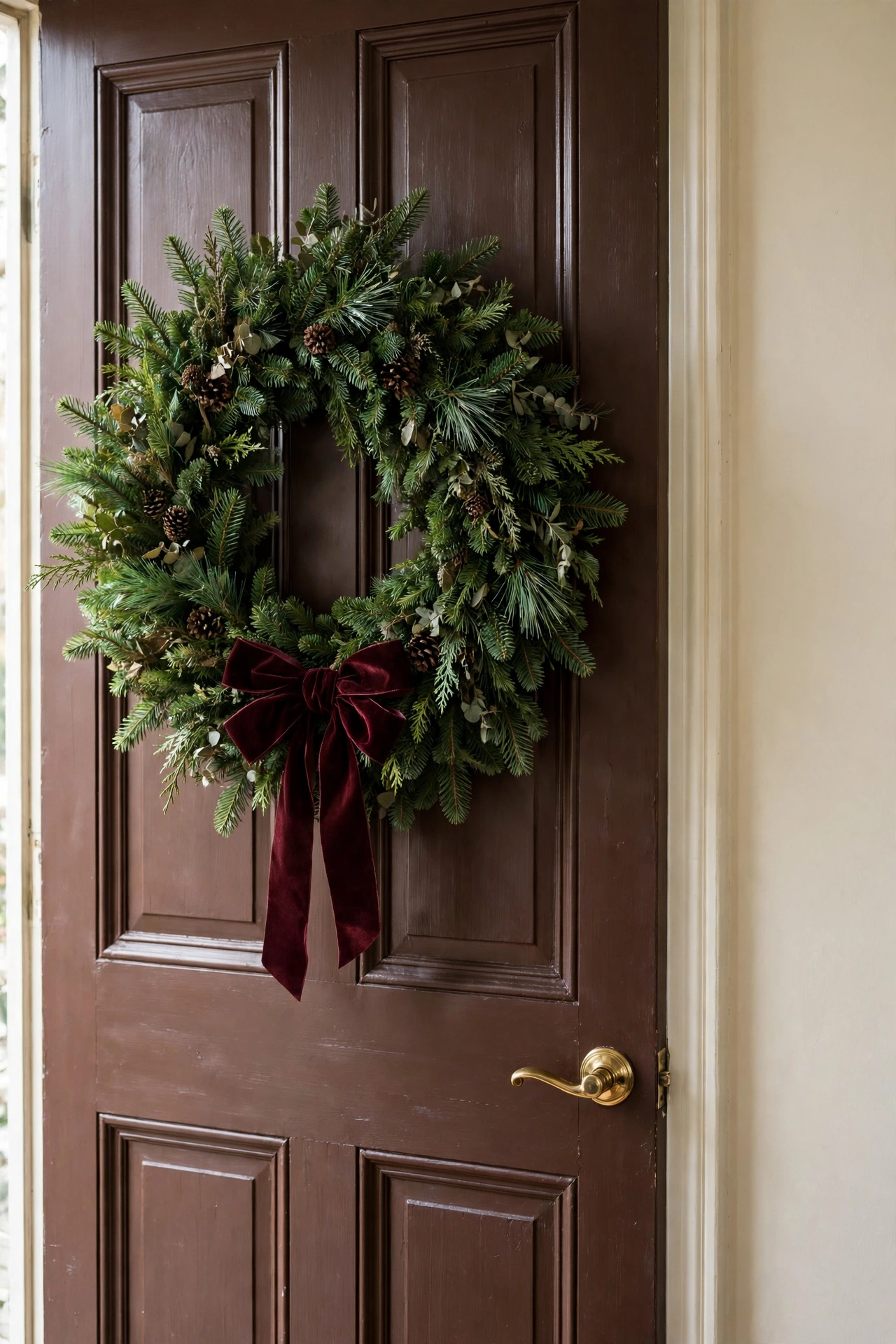
Most people hang their wreath outside, admire it in photographs and then never look at it again until January. I hang my best wreath on the inside of the front door, where it greets me every single time I come down the stairs. Choose the fullest wreath you own, fluff every branch outward with your hands, and tuck in a few pinecones or a cluster of berries if it looks thin in one spot. Hang it at eye level from a simple hook or a length of velvet ribbon over the top of the door, and step back to check it from the far end of the hall, because that long view is the one your guests get as they take off their coats. A door wreath also does quiet practical work. It softens the echo of a hard door, it fills the biggest blank surface in the room in under two minutes and it sets the green that every later layer will echo.
5. Drape Garland Over the Mirror for Instant Height
Garland over the mirror lifts the whole room without taking one inch of floor.
If I could only keep one green in the entry, it would be the garland over the mirror, because it works on three levels at once. It draws the eye up, it frames the one reflective surface that doubles your light, and it softens a hard rectangular shape with something loose and generous. I use a full Norfolk pine style garland, let it sit heavier on one side than the other, and allow one end to trail a little further down, because perfect symmetry reads as stiff in a small space. Small clear hooks hold it without a single nail, and I weave the stems into each other so there are no bare wire moments showing. The mirror below it then reflects your tree lights or your lantern glow from the next steps, which quietly doubles the Christmas you actually bought. This is the same trick I lean on in how to style a fall mantel in 5 easy steps, where the garland always goes on loose, uneven and a little wild.

6. Tuck a Slim Alpine Tree Into the Corner
A narrow tree gives an entryway a heartbeat without stealing the walkway.
There is one corner in almost every entry that collects nothing but dust and good intentions, and a slim sparse tree turns that dead corner into the reason the room feels magical. I choose an Alpine style tree with open branches rather than a dense one, because in a small footprint the air between the branches is what keeps it elegant. It lives in a woven basket rather than on a stand with a skirt, which hides the mechanics and adds the natural texture this space needs at floor level. Decoration stays deliberately light. A few large ornaments in cream, clear glass and brass, spaced far apart, plus warm lights wound close to the trunk so the glow seems to come from inside the tree. Guests always comment on this little tree more than on our big living room tree, which taught me something I now repeat often. Scale that suits the room beats size that impresses nobody up close.

7. Fill a Tall Vase With Fresh Looking Branches
Height in a vase costs almost nothing and balances everything low in the room.
On the console itself, my first move is always a tall vase of branches, because every other object on that table will be short and the eye needs one thing that reaches upward. I use a heavy matte ceramic vase so it cannot tip, and I fill it with cedar and pine stems cut long, a couple of bare branches for shape and sometimes one stem of berries for a whisper of burgundy. Real clippings from the yard or the tree lot are my favorite, and good faux stems are a close second now. Arrange them taller at the back and looser at the front, then turn the vase a quarter turn at a time until the silhouette looks good from the door, not just from where you are standing. This arrangement also perfumes the room in the gentlest way when the stems are real, and it lasts for weeks with nothing more than fresh water and the occasional trimmed end.

8. Tie On One Oversized Velvet Bow
One big bow in deep burgundy does the work of a dozen small decorations.
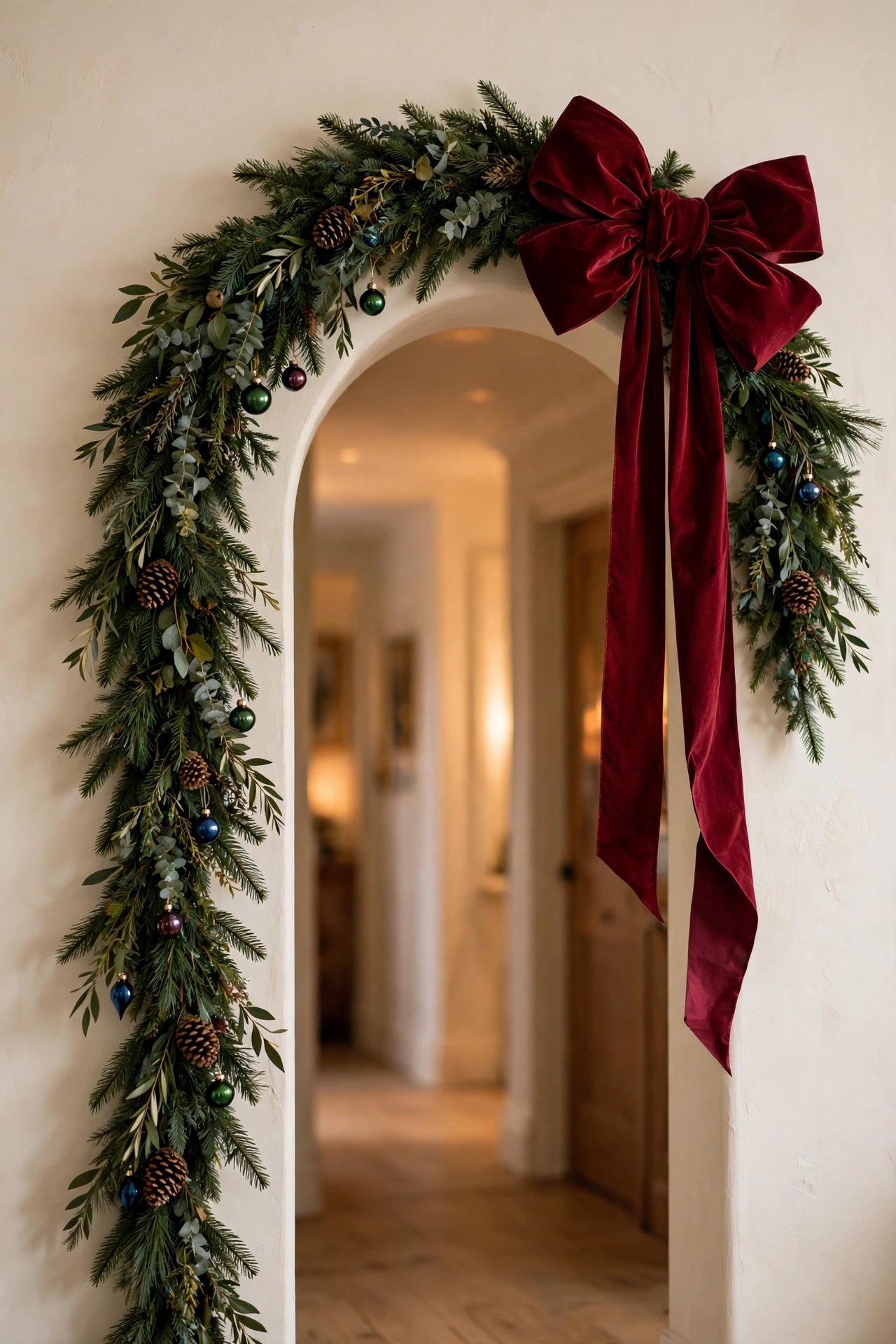
This is the trend I have loved most this Christmas, and the entryway is where an oversized velvet bow shines brightest. I tie one generous bow, with long tails that move a little when the door opens, and I give it the single best spot in the room. That might be the top corner of the garland, the center of the wreath or the newel post if your stairs meet the entry. The velvet matters as much as the size. It drinks the light instead of reflecting it, so burgundy reads as rich and calm rather than bright, and it sits beautifully beside olive greens, brass and oatmeal. Resist scattering small bows everywhere to match it. My third principle lives here. One hero accent, given room to breathe, looks expensive and intentional, while ten small copies of the same idea look like a craft project that got out of hand. Choose your one spot and commit to it fully.
Light It Low and Warm, Then Soften the Edges
9. Cluster Warm Lights Where the Eye Lands First
Lights grouped in a few warm pools glow twice as bright as lights spread thin.
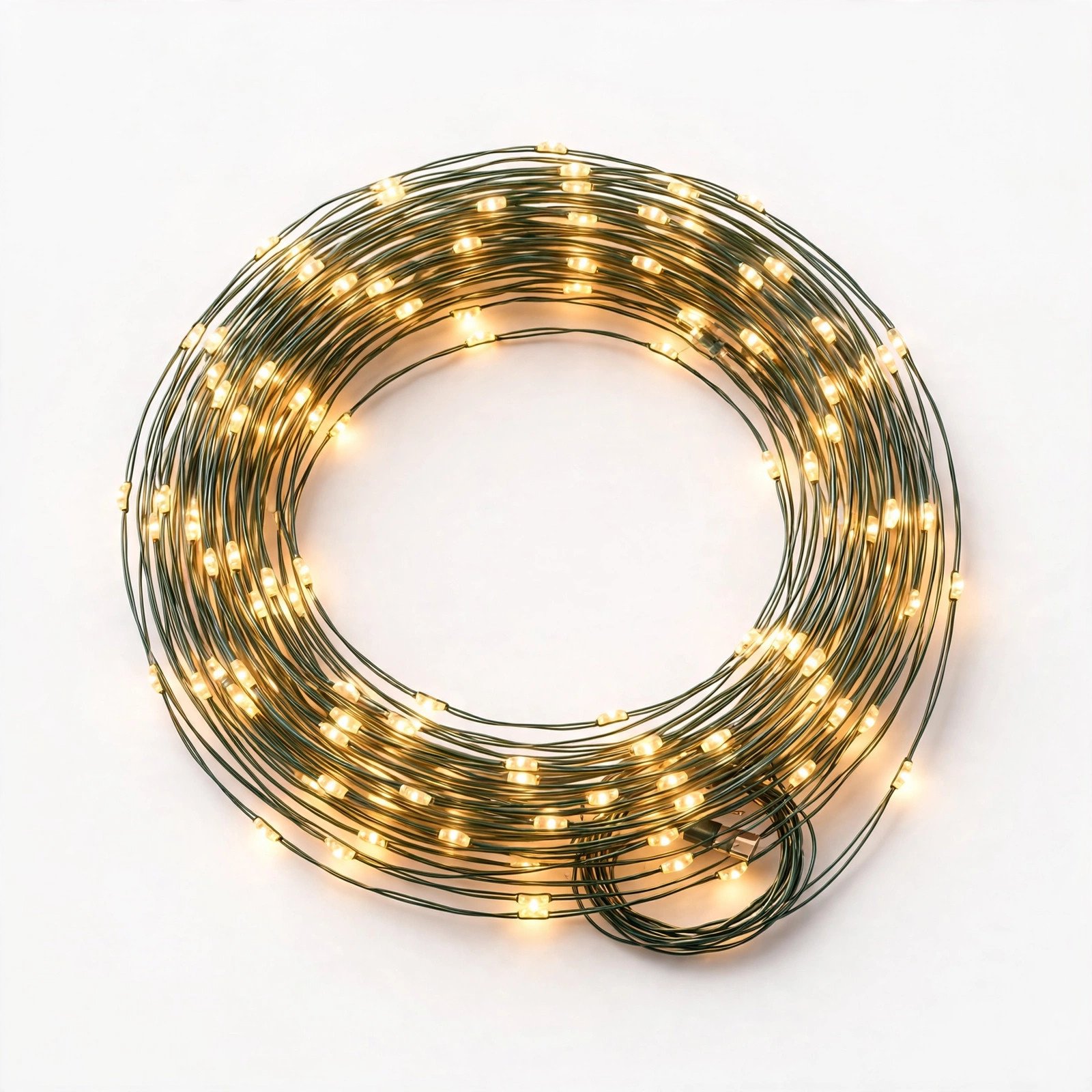
I used to string one strand of lights evenly around everything and wonder why the room felt flat. Now I cluster them. A generous tangle goes into the garland over the mirror, another wraps the little corner tree close to its trunk, and a short strand coils inside a large glass vessel on the console where it becomes a lantern in its own right. Between those three pools of light I leave honest darkness, and that contrast is what makes an entry feel like evening instead of a showroom. Warm white is the only color temperature I allow here, because cool white light turns olive greens grey and burgundy muddy. Battery strands on timers are the quiet heroes of this step. Set them once in this hour and they will switch themselves on every afternoon for the rest of the season, which means the welcome you built today keeps happening on the days you come home tired and late.

10. Set a Pair of Lanterns Low by the Bench
Low lantern light at floor level is what makes an entry feel like a welcome.
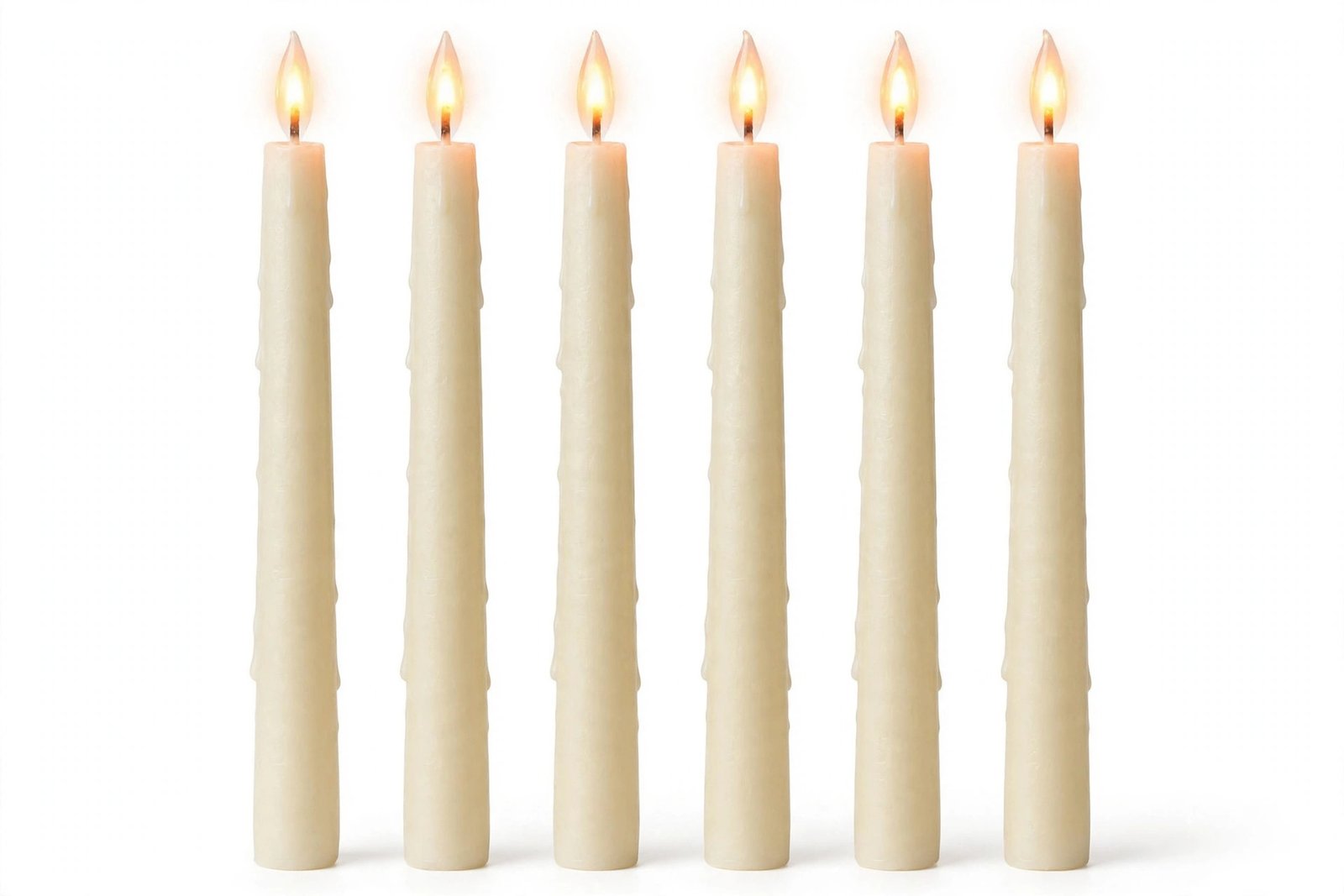
Overhead lights are for finding lost mittens, not for atmosphere, so the glow I rely on most sits low. Two lanterns flank the bench or the console, one a little taller than the other, each holding a flameless candle and a small sprig of pine tucked inside the glass. Flameless is non negotiable in our entry, with coats, scarves and paper parcels moving through a narrow space all day. On timers, these lanterns are already glowing when we get home, and that small moment of being greeted by your own house never gets old. Keep the pair in odd company. Two lanterns and the little tree make a natural triangle of low light that your eye travels happily, while a long even row of lanterns starts to look like a runway. This low glow is also the kindest light for faces, which matters in the room where every guest is first seen up close.

11. Add One Small Lamp for a Pool of Warm Light
A small lamp turns a console from a surface into a place.
If your entry has an outlet, a small lamp is the single upgrade I would argue for longest, because lamplight does what string lights cannot. It gives the room a steady warm pool at standing height, somewhere between the low lanterns and the tall garland, and layered heights of light are the whole secret to a room that feels finished after dark. I keep a little brass lamp with a cream linen shade on the console, and its glow makes the branches in the vase cast soft shadows that move slightly and make the wall feel alive. Choose the warmest bulb you can find and keep the shade small enough that it never crowds the mirror or the art. On evenings when guests are coming, this lamp is the only overhead alternative I need. The entry reads as calm and golden in photographs too, which is why your holiday pictures by the door will suddenly look better this year.

12. Dress the Bench With a Throw and Two Pillows
Soft textiles are what let a hard working entry feel gentle for ten seconds.
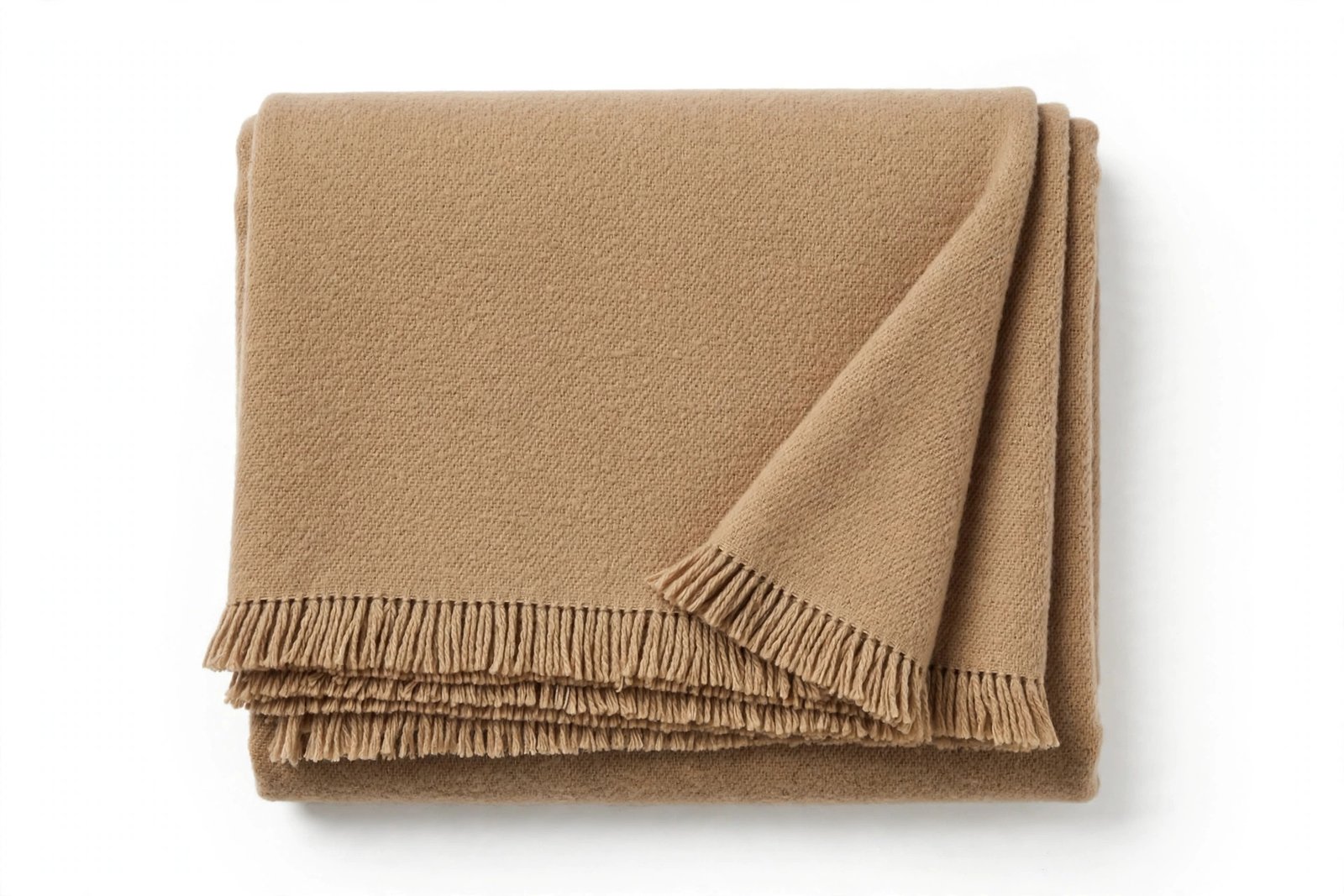
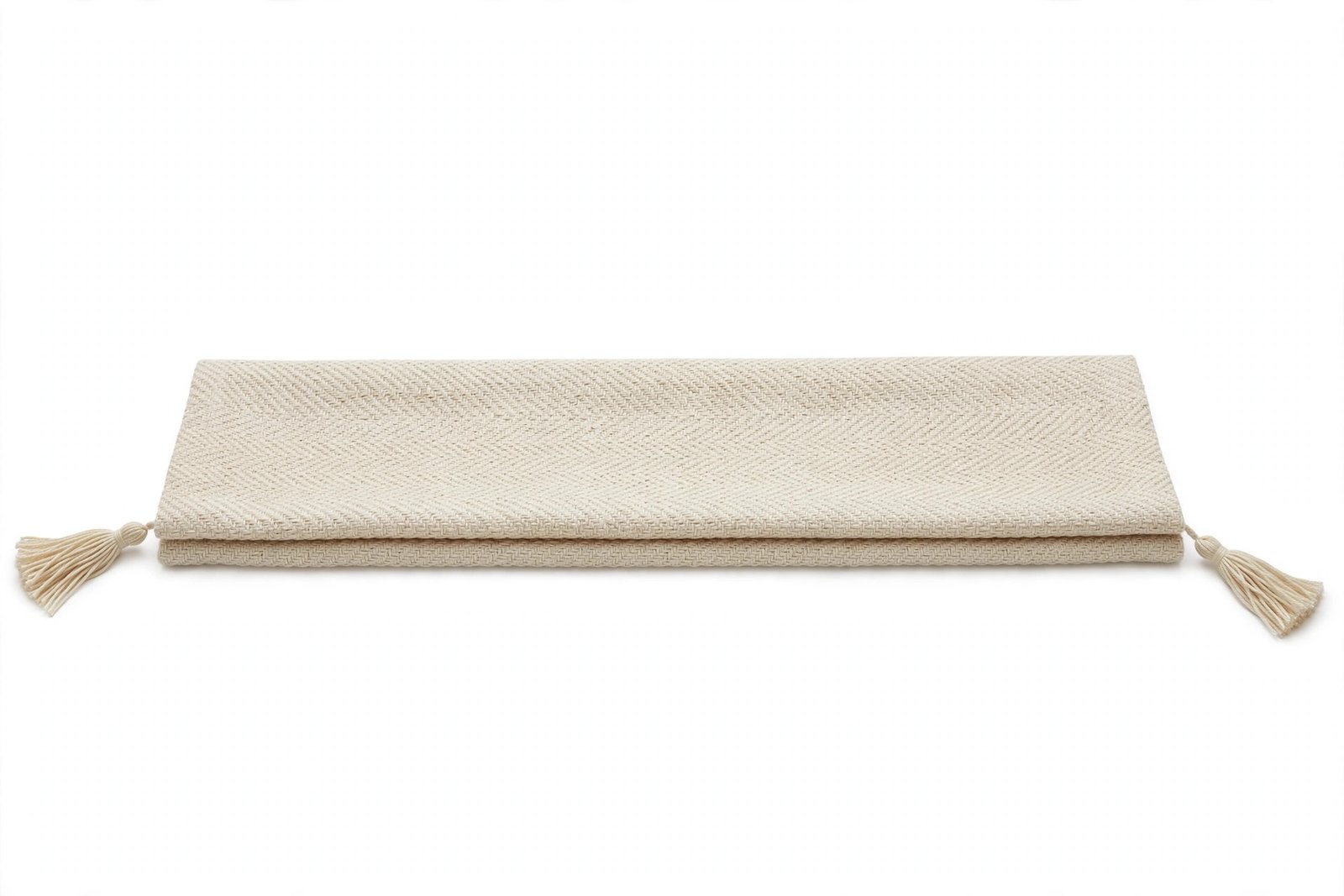
Benches and consoles are all hard edges and straight lines, and an entry decorated only with hard things feels like a shop display. A folded throw over one end of the bench fixes that in seconds. I reach for camel or oatmeal, drape it so the fringe or edge shows, and add exactly two pillows, one in a quiet stripe or plaid and one in deep burgundy velvet that echoes the bow without copying it. Two is the honest number here. Guests still need somewhere to sit while they wrestle with boots, and a bench buried under five pillows sends the message that sitting was never really invited. The throw earns its keep all season, pulled over laps on the porch, wrapped around shoulders during a doorstep chat and shaken out in seconds when it gathers crumbs or snow. Texture, more than color, is what your hand notices in this room, so choose things that feel as good as they look.

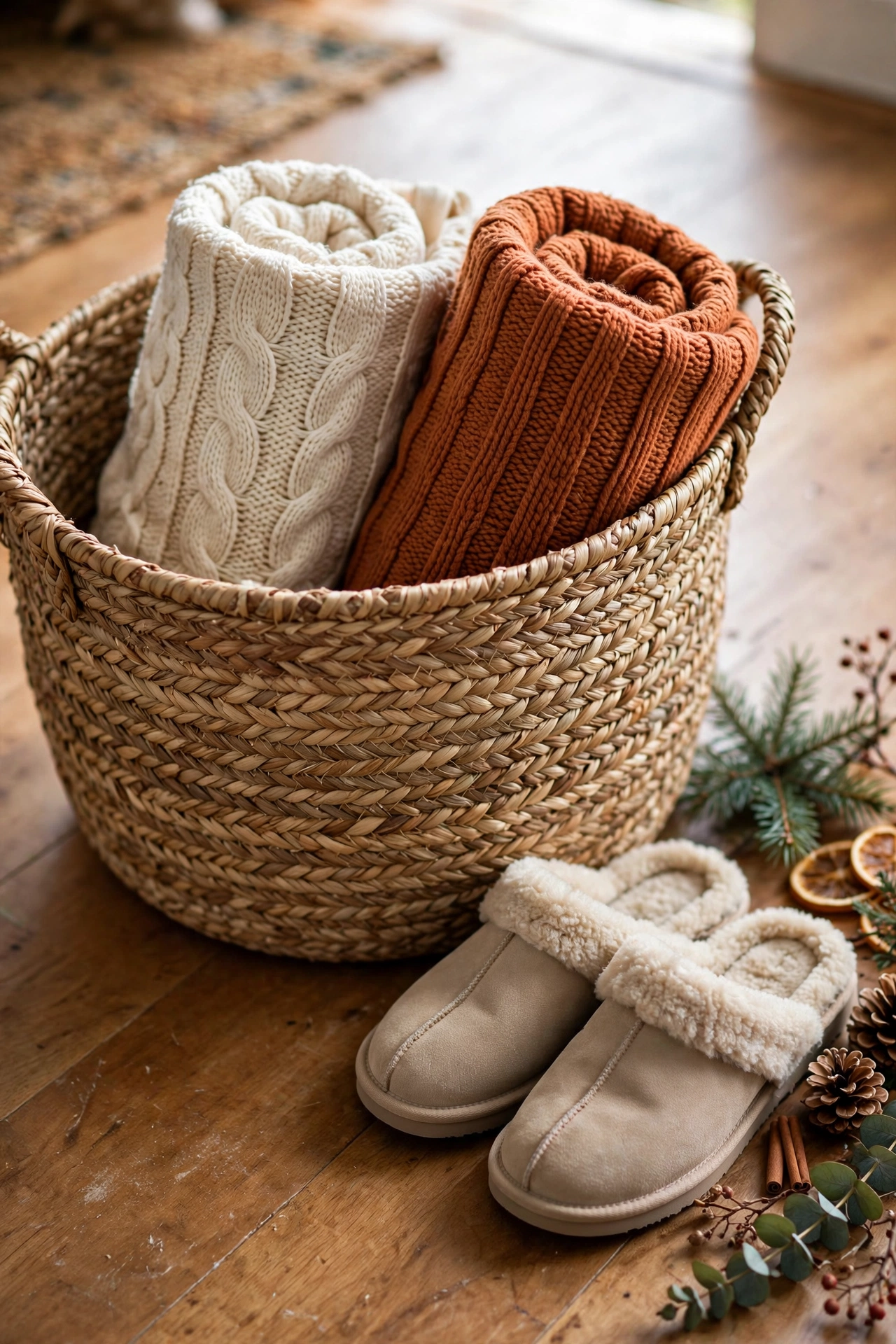
13. Roll Throws Into a Basket Guests Can Actually Use
A basket of spare warmth by the door is hospitality you can see.
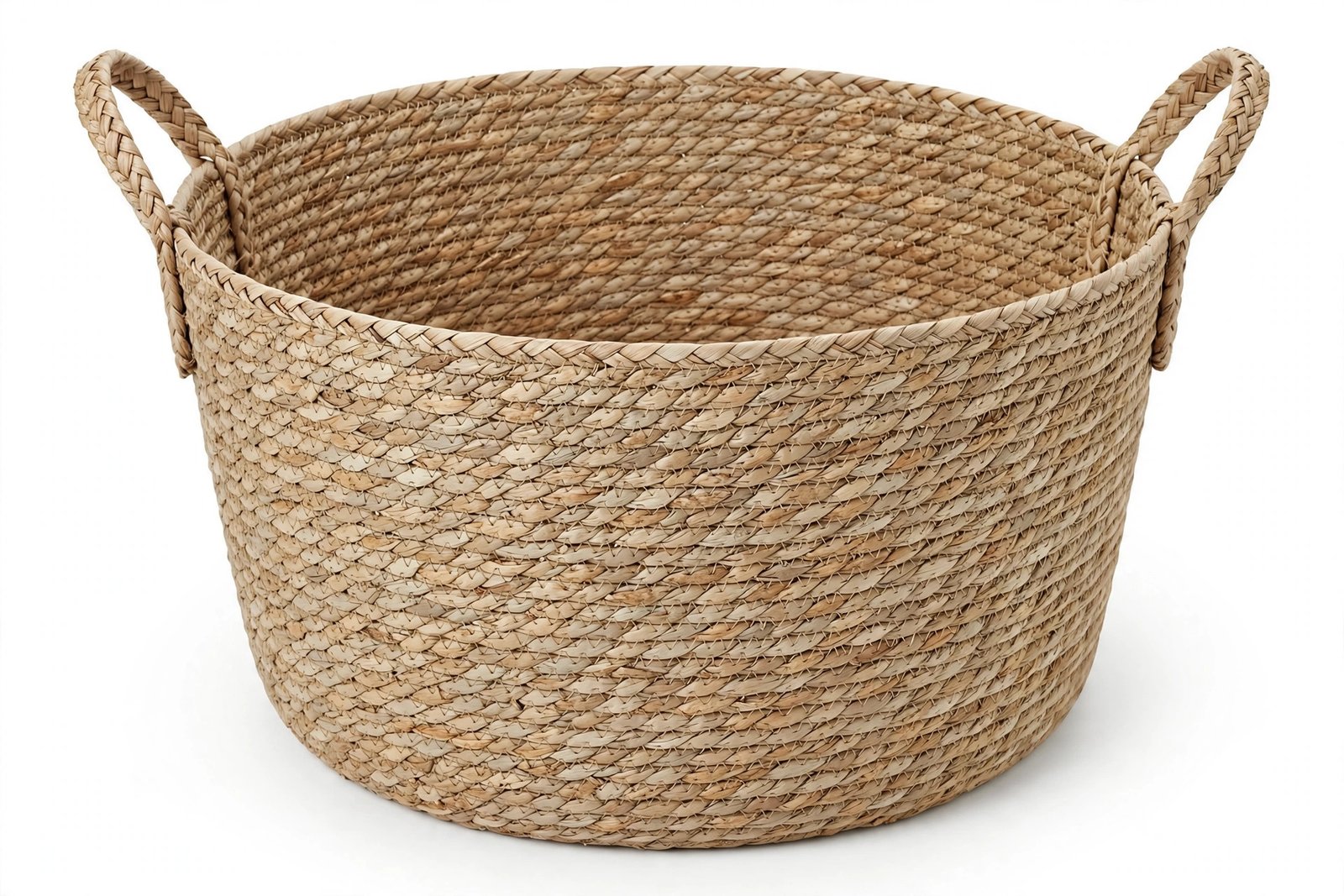
My favorite entryway habit came from my grandmother, who kept a basket of blankets near her door for anyone heading out to the porch with coffee. I keep a large woven basket beside the bench with two or three throws rolled upright, plus a pair of spare slippers tucked at the side in winter. Rolled, not folded, because rolls show their colors and textures like a little display and guests can pull one out without unfolding your styling. The basket also quietly swallows the overflow that entries attract. A scarf with no hook, a delivered parcel waiting for its owner, the library book that must go back tomorrow. One contained basket looks intentional, while the same objects scattered across the console look like a mess. Choose the biggest basket the corner can hold. In an entryway, storage that is too small is just decoration, and decoration that stores nothing has to work very hard to justify its floor space.
The Finishing Touches That Make It Feel Finished
14. Make the Boot Tray Look Like Part of the Plan
A boot tray you style on purpose stops being an eyesore and starts being a border.
Winter entries live or die at floor level, and the boot tray is where ours used to fall apart visually. Now I treat it like part of the design. A simple black tray sits square with the door, boots stand in one tidy row with the tallest pair at the back, and nothing else is allowed to migrate onto it. That discipline matters in a Canadian December, when a tray can hold melt water, grit and salt all at once and still look calm if the edges stay clear. I tuck one small sprig of pine at the corner only on the day guests come, because daily decor on a working tray just becomes another thing to clean around. Rinse the tray in the tub once a week and let it dry while you mop, and it will look new all season. Practical pieces styled with intention are the backbone of an entry that real families can actually keep up.

15. Corral the Small Things on One Pretty Tray
Keys and mail behave themselves when they have exactly one beautiful place to land.
Every entryway has a snowfall of small things, and fighting it is pointless. I give it a tray. A wood or brass tray on the console holds a matte ceramic bowl for keys, a small cluster of brass bells tied with a scrap of the same burgundy velvet as the bow, and one sprig of cedar that I replace when it fades. Mail stands upright behind the bowl for one day only and then moves to the kitchen, because a tray is a landing pad, not a filing system. The bells are my favorite kind of decor, pretty in the bowl and genuinely joyful when the tray gets nudged and they chime softly. Keeping this tray to three elements is my fourth principle in action. Contained abundance, where a few generous things sit inside clear borders, always reads as richer than many small things spread across every surface the room owns.

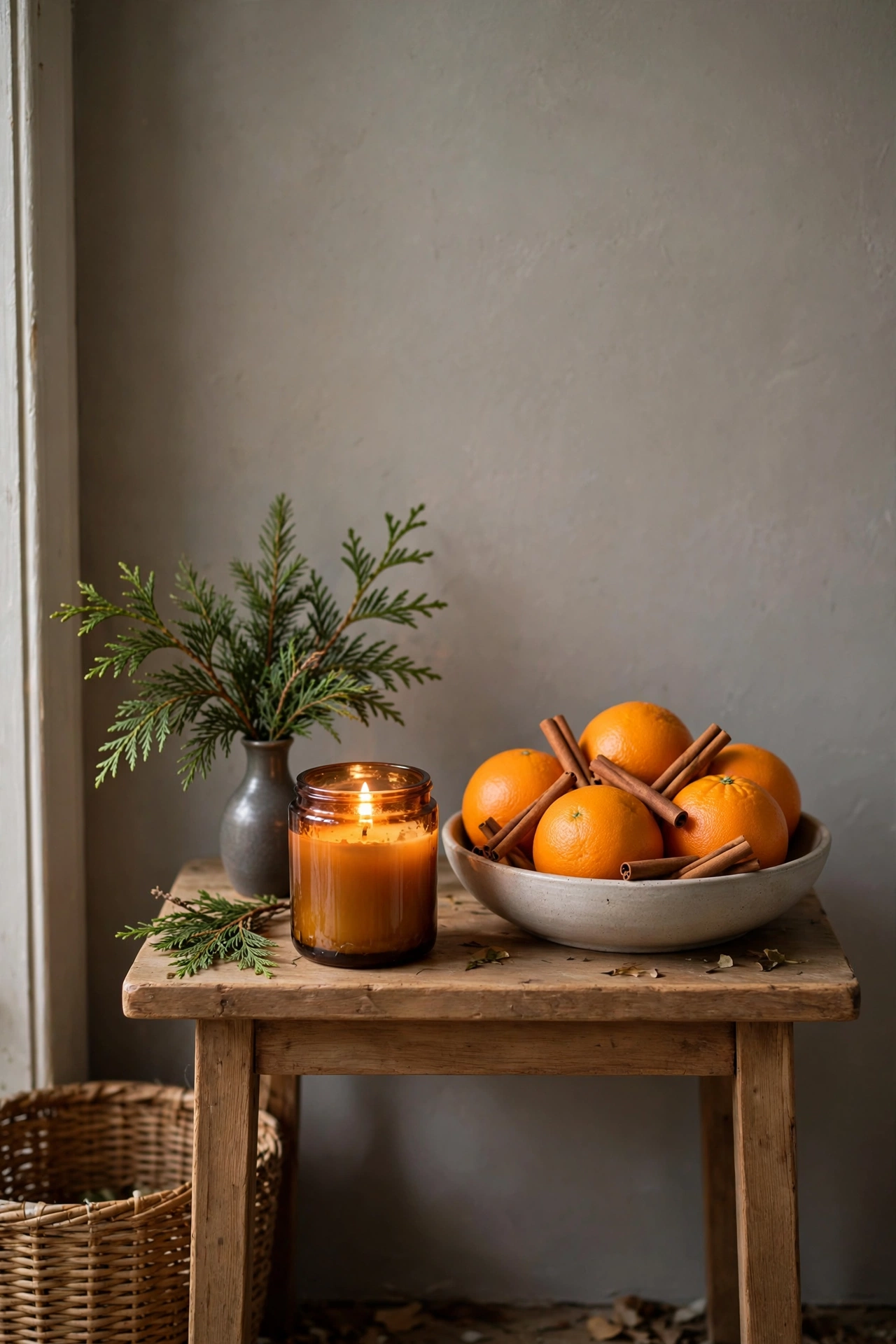
16. Give the Entry a Scent People Notice at the Door
Scent is the layer guests remember longest and see the least.
Ask anyone about a home they loved visiting and they will mention how it smelled before they mention a single object. In the entry, I build scent from things that also look beautiful, so the layer works twice. A cedar candle in amber glass on the console, lit only when we are home and awake, a shallow bowl of oranges studded with a few cloves, and the fresh branches in the vase all breathe together into one warm, woodsy welcome. If candles make you nervous even attended, a small reed diffuser in cedar and orange does the same job silently. What I avoid is anything that smells like a dessert buffet. Sweet bakery scents in a small entry can feel heavy within minutes, while green and citrus notes stay clean and bright even when the door has been closed all day. Scent also covers the honest truth of a winter entry, which is that boots and wool coats have their own perfume, and it is not cedar.
17. Swap in One Piece of Winter Art Above the Bench
Changing one picture is the cheapest room refresh in the entire house.
Above the bench or beside the mirror, I swap whatever hangs there for one piece of calm winter art, a simple landscape with snow, a bare branch print or even a framed page from a beloved Christmas book. The swap takes four minutes because the frame and the nail never move, only the print inside changes, and yet the whole wall reads as newly decorated for the season. Keep the palette inside the art close to the room palette, oatmeal skies, olive trees, a little chocolate brown, so it settles in rather than shouting. A short swag of leftover garland along the top of the frame ties it to the mirror garland across the room, and using leftovers like this is how an hour long entry starts to look like a plan that was always coordinated. My minimalist living room ideas use this same one swap thinking room by room, and it is the habit that saves me the most money every December.

18. Stack Wrapped Parcels Where Coats Would Pile Up
A small stack of wrapped gifts fills the awkward gap and buys you a calm corner.
Near the hooks or under the little tree, I keep a modest stack of wrapped parcels through December, tied in kraft and cream paper with the same burgundy velvet ribbon as the bow. Some are real gifts waiting for their day, and I will be honest with you, one or two are empty boxes that exist purely to keep this corner looking composed. The stack does visual work that nothing else does as well. It fills the low gap beside the hooks, it repeats your palette at floor level, and it quietly claims the spot where coats and bags would otherwise be thrown. A thrown coat covers a chair, but nobody throws a coat on top of pretty parcels, which makes this the sneakiest organizing trick in the whole post. Keep the stack to five boxes at most and rebuild it when gifts leave, because a shrinking stack that gets topped back up looks abundant all season long.

19. Do a Five Minute Edit and Check It After Dark
The last five minutes, spent taking things away, are worth the first fifty.
When the hour is nearly up, I stop adding and start editing, and this is the step that separates a styled entry from a decorated one. I stand in the doorway the way a guest would, look slowly from floor to ceiling, and remove one thing. There is always one thing, a candle too many, a sprig too large, a pillow that crowds the bench. Then I put the everyday essentials back with intention, coats on hooks with space between them, one pair of boots on the tray, the basket holding only what it should. Finally, I come back after dark and look once more with only the lamps, lanterns and tree lights on, because Christmas entries live their real life in the evening. If a corner goes dead at night, that is where tomorrow you will move one light, and if the whole room glows warmly and the surfaces breathe, you are done, and it took one hour.

More Favorites
This post contains affiliate links. If you buy through them, I may earn a small commission at no extra cost to you.
A few more favorites from the ideas above:
An hour is not a limitation, friend. It is a kindness. It stops the entryway from becoming a weekend long project that eats your December, and it forces the kind of clear decisions that make a small room sing. Clear it, ground it, green it, light it low and warm, and then have the courage to take one thing away. That is the whole method, and it works in a grand foyer and in a one door apartment entry with equal grace. Once your entry is glowing, the rest of the house feels easier to face, and if you want to carry the same calm into the room where guests gather for cocoa, my fall coffee bar and hot cocoa station ideas are a lovely next hour to spend. Now go put the kettle on. Your doorway is about to make people smile before they even knock.
With love and light
Get Fresh Home Ideas Every Week
Seasonal decor ideas, organizing tips, and cozy home inspiration, straight to your inbox.
More Christmas Ideas You Will Love
Keep browsing for more seasonal inspiration: